Jews from Ukraine: Aaron David Gordon – Ukrainian roots of the Zionist ideologist and the history of “Gordonia”

Aaron David Gordon – Ukrainian Jew, philosopher and ideologist of working Zionism. His ideas inspired the youth in Alia and the creation of kibbutsev in Palestine. The history of the path from the Zhytomyr region to Dgania in our constant column “Jews from Ukraine“.

Childhood and youth in Troyanov

Aaron David Gordon Born on June 9, 1856 in The town of Troyanov (Modern Zhytomyr region, Ukraine) in a wealthy Jewish family. His childhood passed among traditional Jewish values. Due to poor health, a private teacher was engaged in him. Later, Gordon independently learned Russian, German and French, received a wide education and studied for a year in Vilna.

Troyanov of that time was a typical place with the Jewish population, which made up a significant part of the inhabitants. According to the 1897 census, 7224 people lived in Troyanov, of which 1469 Jews. The Jewish community Troyanov owned two synagogues and supported active religious and cultural life.

The story of Troyanov

Troyanov is mentioned as a place with a rich history. In the XVIII century, a significant Jewish community already existed here. There was a synagogue in the village, a Jewish prayer house, a church and two Orthodox churches. In the XIX century in Troyanovo there were:

  • Brovarnya (brewer)
  • Garbarny (leather production)
  • 136 artisans
  • 28 stores

The total population in 1897 was 7224 people, of which 4957 were Orthodox, and 1469 – Jews.

Jewish cemetery Troyanov

The Jewish cemetery of Troyanov is an important historical monument. About 250 tombstones have been preserved on its territory. The oldest tombstone dates from 1858, and the last – 1991.

Main data on the cemetery:

  • Location: Northeast outskirts of the village of Troyanov
  • Perimeter length: 314 meters
  • State: non -coniferous, partially overgrown with vegetation
  • Coordinates: 50.11655, 28.54232

Problems of saving the cemetery

There is no fence on the territory of the cemetery. Many tombstones need restoration, and the site requires cleaning from seasonal vegetation. Despite this, the cemetery remains an important witness to the history of the Jewish community of Troyanov.

Periods of tragedies and recovery

During the revolution of 1905-1907, the Jewish community of Troyanov was attacked. More than a dozen Jews were killed, and property was looted. In 1941, after the Nazis arrived, Jews who did not manage to evacuate were shot.

Today, the Jewish cemetery of Troyanov is a reminder of the rich past of the community, its tragedies and a contribution to the history of the region.

Life before resettlement to Palestine

After Gordon was released from service in the army for health reasons, he married and 23 years old worked as a clerk for his relative, Baron G. O. Ginzburg, in the village of Mogilna. However, the death of parents in 1904 changed his fate. Gordon decided to move to Palestine.

Despite the lack of experience of physical labor, he chose agricultural work on vineyards and orange plantations of Petes-Tikva and the Vinnoye Plant of Rishon-Leo-Sta. This hard work affected his health, and soon his family had to take care of him.

The beginning of literary activity

Since 1909, Aaron David Gordon began writing articles for the Ha-Poel Ha-Tsair magazine. In them, he promoted the ideas of labor as the foundations of the Jewish national revival. He believed that only through work Jews can conquer the right to land of Israel.

Gordon Quote:

“Labor is not only a means of survival, but also the path to spiritual revival and freedom.”

Relocation in Galilee and participation in the Zionist Congresses

In 1912, Gordon moved to Galileo, where he continued to work as an agricultural worker. In 1913, he participated in the XI Zionist Congress in Vienna, and in 1920-in the conference of the Ha-Poel Ha-Tsair movement in Prague.

After the outbreak of World War I, he was persecuted by the Turkish authorities. Despite the difficulties, he continued his literary and public works.

“Gordonia” – the legacy of Aaron David Gordon

Gordon’s ideas inspired the youth of Eastern Europe, where Jewish communities faced anti -Semitism, economic difficulties and lack of prospects. In 1923, groups of young Jews began to form in Galicia, striving for spiritual and national revival. These groups were looking for an alternative to radical ideologies that dominated in other movements.

In 1925, Gordonia officially took shape in Krakow, and its central department was in Lviv. The movement promoted Aliya in the dandective Palestine and prepared young people for agricultural work. The main tasks of Gordonia were:

  • Preparation of youth for Alia.
  • The development of agricultural skills.
  • The study of Hebrew.

The participants in the movement, mostly immigrants from poor families, sought to build the future with their own hands. By 1928, Gordonia totaled more than 4,000 participants. Young people were preparing to relocate to Eretz Israel, where they could put their ideals in practice. In 1929, the mass Aliyah of the members of Gordonia began, which became an important milestone in the history of movement. Participants actively created agricultural kibbuts in Eretz Israel.

The main kibbuts founded by the Participants of Gordonia:

The name of the kibbutz Year of foundation Description
Hulda 1909 One of the first kibbutsev in Eretz Israel
Hanita 1938 Known for his contribution to the defense of Galilee
Maale-Hamisha 1938 Kibbutz founded by immigrants from Eastern Europe

Where Aaron David Gordon died and was buried and buried

Aaron David Gordon died on February 22, 1922 in Kibbutz Dgania-Alef from cancer. He was buried there, in Dgania-Alef, one of the first kibbutsev, who became a symbol of the Zionist labor movement.

Memory of Aaron David Gordon in Israel

  • Museum in the kibbutz Dgania-Alef: The museum is dedicated to the life and works of Gordon, where his personal belongings, manuscripts and documents are presented.
  • Streets and squares: In several cities of Israel, including Tel Aviv and Haifa, the streets have his name.
  • Educational programs: His ideas are studied in schools and universities in the context of the history of Zionism and the labor movement.
  • Movement “Gordonia”: Although the movement has united with other organizations, the memory of Gordon lives through cultural events and history lessons.

“House of Gordon” (בית גורוון) – history, exposition and significance

Here is a museum on the map – https://maps.app.goo.gl/tsqbzk6wkzgw2gb77

“Gordon’s House” is one of the first museums in Israel dedicated to nature and life history in the Kineret region. It was founded in 1941 in Kibulu Dgania-ALEFIn order to perpetuate the memory of Aaron David Gordon – a philosopher, a labor Zionist and the first defender of nature in Palestine.

The museum combines Natural exposition, Archaeological finds and materials on the history of the first settlers in the region.

The main sections of the museum:

  1. Natural studies of the Kineret region
    The exposition covers the variety of flora and fauna of Galilee and the environs of Lake Kineret. The museum’s halls represent a stuffed of rare birds and animals, collections of minerals, herbarium of local plants and fossils.

  2. Multimedia installation
    The new interactive hall allows visitors to plunge into the history of the development of the region through animation. It shows how the environment of Kineret has changed from the beginning of the Zionist settlement to the present day.

  3. Archaeological finds
    The exhibition contains household items and instruments of the first Jewish settlers used in agricultural work. Archaeological artifacts talk about the ancient history of Galilee.

  4. History of Kibutz Dgania-Alef
    This section is dedicated to the history of the creation of the first kibbutz in Palestine and the roles of Aaron David Gordon in the formation of labor Zionism. Visitors can see Gordon’s personal belongings, his manuscripts and documents reflecting his life and activity.

Educational programs and excursions

The museum offers Educational programs for schoolchildren and studentsorganizes excursions across the territory of Kibbutz and the surroundings. Particular attention is paid to the history of the early Zionist movement and the ecology of the region.

Recognition by national heritage

In 2010, the Israeli government recognized the “Gordon House” by a national monument. This is not only a cultural and historical center, but also an important place for those who want to understand how nature and man coexist in Galilee.

NAnews : Aaron David Gordon’s heritage today

The history of Gordon is not only a part of Jewish history, but also an important link in the relationship between Israel and Ukraine. Today, his name reminds us of the strength of the spirit and the meaning of labor. Persons such as Aaron David Gordon became a bridge between two cultures.

Website Nanovo He continues to cover the events and stories that connect Ukraine and Israel, talking about the Jewish roots and the paths that our ancestors passed.

Conclusion

Aaron David Gordon is an example of a person who, despite difficulties, managed to become a symbol of the whole movement. His life and ideas continue to inspire many, and the history of Gordonia remains an important part of Zionist history.

Today, when we are talking about Jews from Ukraine, such as Gordon, we are again convinced of the deep connection of our peoples. On NAnews  The news of Israel and Ukraine, we continue to tell such stories that the memory of them lives and inspire new generations.

In the heading “Jews from Ukraine”: Aaron David Gordon – Ukrainian roots of the ideologist of Zionism and the story of “Gordonia”

“Save the treasures from destruction”: Jewish monuments of Ukraine are being digitized before they are destroyed by war

«We are saving the last. We are saving at least through digitization, to preserve the possibility of restoration in the future after the war in Ukraine», notes Prof. Kotlyar in an interview with the UJE portal.

On the platform “Ukrainian-Jewish Encounter” (UJE – Ukrainian Jewish Encounter), an article by Israeli journalist Shimon Briman was published about a project that sounds almost like a verdict and simultaneously as a rescue plan: “Saving Treasures from Perishing“. It’s not about another “cultural news” and not just about one exhibition.

It’s about an attempt to document what may not survive the war and simple neglect: unique wall paintings and architectural details of Bukovinian synagogues, created before the Holocaust, and preserved only in a few cities in Ukraine.

Why the project appeared now, and what Israel has to do with it

Professor Yevhen Kotlyar (Kharkiv National Academy of Design and Arts) speaks directly: German colleagues launched an exhibition-research project against the backdrop of Russian aggression against Ukraine — and especially after the tragedy of October 7, 2023, in Israel. This connection is important: for some European institutions, the Jewish theme after 7/10 became not an abstraction but a personal moral challenge, and the Ukrainian context is read differently in it.

Kotlyar formulates the task harshly and without romance: “we are saving the last”, at least through digitization, to leave a chance for restoration after the war.

Who and how is doing this: UAAC, an international team, and Ukrainian Skeiron

The initiator and sponsor of the project was The Ukraine Art Aid Center (UAAC) — a German non-profit organization created in the spring of 2022 as a network of specialists and cultural institutions (Germany, Switzerland, Austria, Ukraine) to support Ukrainian cultural institutions during the full-scale invasion.

“Save the treasures from perishing”: Jewish monuments of Ukraine are being digitized before they are destroyed by war

The working group on the topic of Bukovinian synagogues included Kilian Heck, Jörg Gaspel, Stefan Hoppe, Yevhen Kotlyar, and Mykola Kushnir. The curator is listed as Professor Oleksandra Lipinska (University of Cologne).

The key practical part is not words and not posters.

The technical work on digitizing three synagogues in Bukovina was carried out by the Ukrainian company Skeiron: laser 3D scanning, detailed documentation of architectural and artistic details. Skeiron, as emphasized, has been engaged in digitizing monuments at risk of disappearing due to the Russian war since the beginning of 2022.

And then another layer of international cooperation kicks in: based on Skeiron’s scans, specialists from the Institute of Architecture of Mainz University of Applied Sciences created an animated 3D model of the synagogue in Novoselytsia — and this is called a “special highlight” because it shows how digital technologies can work both as documentation and as a presentation of heritage.

What exactly is being saved in Bukovina: three buildings and three different fates

The project documents specific objects in Chernivtsi and Novoselytsia — with biographies where architecture constantly encounters politics, war, and indifference.

1) Synagogue “Groyse Shil” (Chernivtsi).

Construction lasted from 1799 to 1854. Until 1877, it was considered the main synagogue of the city. In the fall of 1941 — winter of 1942, the building was part of the Jewish ghetto. Since 1959, the premises were transferred to the city council for a cinema — and since then, in essence, it has been used not for its intended purpose.

2) Synagogue “House of Prayer of Benjamin” (Chernivtsi).

Built in 1923. Around 1938, the interior walls were repainted. In 1941–1942 — again a ghetto. After 1945, it became one of the three synagogues in the city whose operation was allowed by the Soviet authorities; in the 1960s–80s, as noted, — the only one. It opened for the community in 1994.

3) Novoselytsia Synagogue (Novoselytsia).

Built in 1919, when about 5000 Jews lived in the city. After the Holocaust, religious life declined. The vacant premises were repurposed as a Pioneer House — it existed until the early 1990s. Then the building has been vacant ever since. In 2009, Kyiv restorers discovered wall paintings inside.

For the reader in Israel, one thought is especially important here: the question is not only about restoration “someday”. The question is whether future restoration will have any original material left at all — a line, a layer of plaster, a fragment of ornament, the exact geometry of the vaults.

Why these paintings are not like “ordinary” synagogue paintings

Kotlyar explains the phenomenon of Bukovina through the history of the region: a long stay “at the crossroads of different states” made the local culture open to influences, and in the decoration of synagogues, this is especially evident — the Jewish religious theme is combined with the traditions of European palace paintings.

But the most valuable in the text is not the general formula, but the details that sound like evidence.

In Bukovinian synagogues, sacred plots were “translated” into the local visual language. The walls of Jericho were painted as Khotyn Fortress. The symbol of the tribe of Issachar (“bony donkey” in the Torah) turns into a pack donkey pulling a typical Bukovinian cart with books. The symbol of the tribe of Zebulun — a ship — is depicted as a mid-19th-century paddle steamer.

There is an even more telling scene: a fresco with a quote from Psalm 137 about the “rivers of Babylon” shows not abstract harps, but instruments characteristic of a Bukovinian klezmer ensemble.

And “Jerusalem” in Chernivtsi, Kotlyar describes almost as a joke: the artist, who clearly had not seen Jerusalem, copied a city view from a postcard brought by pilgrims from the Holy Land. In the center is a domed structure resembling the Temple, but in essence, it is the Church of the Holy Sepulchre, on the dome of which the artist added the Star of David.

At the same time, even at the beginning of the 20th century, as emphasized, in these paintings there are no images of people — a sign of preserving the old tradition. Therefore, if the fresco shows the exodus and the parting of the Red Sea, the viewer sees only Moses’ hand directing the staff to the water.

This is not “about an exhibition” — this is about insuring history

Yes, the material mentions the opening in the city library of Cologne, and there they indeed showed the results — fragments of paintings, digital models, a presentation of laser scanning capabilities. But the exhibition here is more of a showcase.

The essence is different: digitization becomes insurance. When a building is destroyed, when walls “crumble” from time or alterations, when an object stands empty for decades — the digital layer may remain the only accurate testimony of what existed at all. And for reconstruction, scientific description, legal documentation of damage, community archives — this is sometimes more important than loud ceremonies.

And another nuance that is often overlooked: such projects create a network of trust between countries. Germany provides infrastructure and expertise, Ukraine — the subject of preservation and technical work on site, and the Israeli experience of tragedy and memory (especially after October 7, 2023) becomes a moral context that helps Europe hear the topic differently. In the news about Ukraine, we more often see the front and strikes, but cultural heritage disappears quietly — without sirens.

The end of this story is still open. Kotlyar speaks of “the remnants of these artistic treasures perishing before our eyes.” And this is not a metaphor, but a description of the pace: war accelerates everything — destruction, looting, repurposing, “fatigue” towards memory.

For the Israeli reader, this is also a reminder: the heritage of Jewish life in Ukraine is part of a common history, not a “foreign museum.” And if today it is possible to save at least a digital copy — then tomorrow there will be a chance to return not only the walls but also the language of symbols that connected Chernivtsi, Novoselytsia, and Jerusalem in one painting. NANews — News of Israel | Nikk.Agency

Source (Ukr.) December 18, 2025 – https://ukrainianjewishencounter.org/uk/vryatuvati-skarbi-vid-zagibeli/

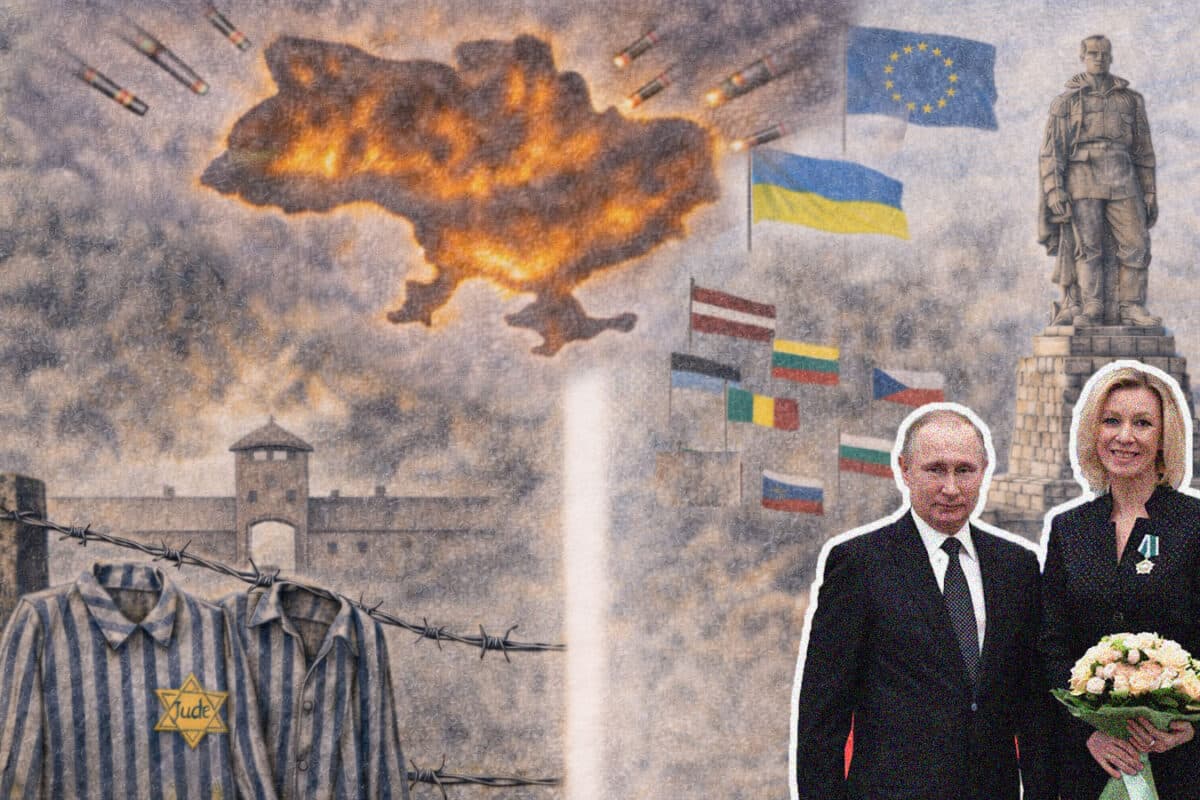
“Demolition of memorials = rise of anti-Semitism”: RF pressures Israel — cynical lie under the guise of protecting Holocaust memory; rashism uses the tragedy as a screen for its own aggression

On February 8, 2026, Russian state resources spread a statement by the official representative of the Russian Foreign Ministry Maria Zakharova that Moscow is “trying to convince” Israel: the dismantling of memorials to Soviet soldiers in Europe is allegedly linked to the rise of anti-Semitism.

The quote sounded like this:

“We are trying, among other things, to convince our Israeli colleagues that the destruction of memorials to Soviet soldiers (including Jews) who stopped the Nazi Holocaust is one of the factors in the rise of anti-Semitism in Europe,” she said.

At the time of publication, the Israeli Foreign Ministry had not publicly responded.

Why this does not look like “fighting anti-Semitism”

Because here you can hear not fear for the Jews of Europe, but a scheme familiar to Moscow: take a topic that cannot be calmly objected to and attach it to its current policy.

The Holocaust is not a “trump card” in a diplomatic skirmish. In Israel, it is family memory, names, archives, graves, empty places at the table. When official Moscow inserts this into a press construction, the effect is the opposite: people get the feeling that their pain is being used as a tool of pressure.

“Soviet” does not equal Russian, and this is a key deception

“Dismantling memorials = rise of anti-Semitism”: Russia pressures Israel — cynical lie under the guise of protecting Holocaust memory; rashism uses tragedy as a screen for its own aggression

The second problem is the privatization of victory.

The Soviet army was the army of a multinational USSR. Russians, Ukrainians, Belarusians, Jews, peoples of the Caucasus and Central Asia fought and died there. Therefore, the “Soviet victory” cannot automatically turn into a “Russian monopoly on morality.”

When Moscow talks to Israel as if it alone is the main heir and everyone else should “remember correctly,” it sounds like a political substitution of history.

This is where what readers of NANews — Israel News | Nikk.Agency instantly recognize: it’s not about memory, but about trying to get a moral “shield” for today’s policy.

The price of victory: what Moscow prefers to speak quietly about

In the USSR, victory was real — and at the same time terribly expensive.

And yes, in conversations about the war, an uncomfortable layer increasingly surfaces: how many people Soviet commanders sacrificed, how often they advanced “at any cost,” how little a soldier’s life meant in the logic of a totalitarian system.

And here arises what many find particularly vile: a country that is waging war today tries to speak from the position of a moral arbiter — while its critics see the same logic of “the task is more important than life” in current practice.

Kremlin critics formulate this harshly: both then and now, tens of thousands of soldiers are sacrificed without regard for losses — only now it’s about the death of Russian soldiers in the war against Ukraine. This is not a “historical reference,” it’s a political accusation, and it directly undermines the attempt to lecture others.

Sovereign countries decide for themselves what stands on their land

The third thing Moscow stubbornly ignores: monuments are located on the territory of independent states.

Riga, Warsaw, Kyiv or Vilnius are not “branches of foreign memory.” These are sovereign societies that have the right to decide which symbols remain in public space, which are moved, and which are dismantled.

You can argue with these decisions. You can condemn them. You can engage in dialogue.

But when Russia presents this as a reason to “educate” countries and demand the correct reaction from Israel, it is perceived not as concern for the victims, but as a continuation of the imperial habit of dictating rules.

Why comparisons with Nazi Germany keep resurfacing

It’s important to say carefully: no one claims that history repeats itself literally. But in public debate, parallels in methods emerge — and they emerge largely because Moscow itself imposes the language of “fighting Nazism” on everyone.

What critics of current Russian policy usually compare:

aggression against a neighbor under ideological justification;

propaganda that explains the war as a “historical mission”;

language that divides people into “correct” and “hostile,” replacing the conversation about facts with moral labels.

And when these elements accumulate, any attempt to speak on behalf of the memory of the Holocaust looks not like the protection of Jews, but like an attempt to cover one’s own aggression with a high theme.

Separately — about “rashism.” In this text, this word is used as a journalistic label: about the practice of propaganda and pressure, where someone else’s pain and common history are used as justification for war and as a reason to lecture others.

What Russia is doing now with Ukraine

Russia’s war in Ukraine has long become not only a front but also constant pressure on the country’s everyday life. The logic is simple: not to give Ukraine a “normal day” — if it’s quiet in one place, it hits in another, if the network is restored, a new wave of strikes begins.

Strikes on cities and infrastructure

Regular missile and drone attacks hit residential areas and critical infrastructure — energy, transport, communications. The result for people is down-to-earth: destroyed homes, interruptions in water and electricity, problems with heating and medicine. This is not a “background,” but a way of exhausting the population and the state.

Occupation and pressure

In the occupied territories, the key is control and coercion. Pressure on local residents, the displacement of Ukrainian identity from public space, persecution of dissenters. Around this, accusations of filtration and forced relocations constantly sound — something that rarely gets into short reports but creates long-term trauma.

Refugees, families, economy

Millions of people are forced to leave or relocate within the country. Families are torn apart, children grow up in foreign languages, the elderly are left alone — this is a demographic blow for years. Simultaneously, attacks on logistics and economic hubs undermine Ukraine’s ability to earn and recover: less export, less money for social payments and defense, more dependence on external aid.

Price and cynicism

Even for Russia, the war means large human losses, including the death of Russian soldiers, and the depletion of resources. And this is what makes any attempts to speak to Israel in the language of the Holocaust especially cynical: it is impossible to appeal to the memory of the catastrophe while simultaneously causing new large-scale destruction and human suffering in Ukraine.

What this means for Israel

For Israel, it is most advantageous to maintain a cold distance here.

Because any word can be taken out of context and used as “evidence” — either of support or hostility. And the topic of the Holocaust is too important to allow it to be turned into a bargaining chip in someone else’s information war.

Conclusion

Russia is not just “convincing Israel” of the danger of anti-Semitism.

It is trying to impose a framework on Israel: monuments as an indicator of morality, and Moscow as the main guardian of history.

The problem is that this framework looks not like the protection of memory, but like the exploitation of memory — primarily the memory of Jews and veterans — for the sake of whitewashing its own aggression, justifying the current war, and the right to dictate to others.

USA – Not an Ally? Why the Thesis of Broken Expectations is Returning to the Agenda Again

In the Ukrainian and Israeli discussion, a harsh thought is increasingly heard: Washington is no longer perceived as a guarantor of automatic support. This does not necessarily reflect the real strategy of the White House, but it shapes the mood of societies and influences political decisions.

The conversation is about trust, the price of promises, and what happens when expectations diverge from actions.

Where the feeling of a recurring scenario comes from

Critics of American policy cite a long list of examples where allies or partners expected one thing but received another. In these stories, there is almost always the same logic: situational tasks turn out to be more important than long-term commitments.

In public perception, this turns into the formula “promised — retreated.”

Middle Eastern lessons

The Kurds are often remembered. Their role in the fight against extremist groups is recognized even by opponents. But then there were moments when the geopolitical balance required other agreements, and support was reduced.

Similar arguments are made regarding the reaction to protest movements in Iran. Promises of moral and political solidarity were loud, but the real tools of influence turned out to be limited.

Latin American and Asian context

Venezuela also figures in the discussions. Skeptics believe that the routes of pressure chosen by the US did not bring the country closer to a sustainable democratic model but increased uncertainty.

In Asia, attention is focused on Taiwan. Many analysts suggest that Beijing’s strategy will be built on gradual strangulation and political destabilization, rather than direct invasion.

The question opponents of Washington ask: will America decide to intervene if the price turns out to be too high?

Ukraine as part of the general debate

The Ukrainian example constantly arises in these conversations. It is emotional, politicized, and therefore rarely neutral.

It is about the balance between support, limitations, and how far the ally is willing to go.

It is in this knot that observers, whose position is regularly analyzed by NAnews — Israel News | Nikk.Agency, see the main nerve of the current stage: expectations have grown faster than the capabilities of Western capitals.

Israeli dimension

In Israel, pro-American sentiments are traditionally strong. Military cooperation, political cover on international platforms, technological projects — all this creates the foundation of partnership.

But historians and experts remind us: the relations between the two countries have never been linear. There have been periods of close rapprochement and moments of serious disagreements.

Therefore, part of Israeli society perceives the current doubts not as a rupture, but as another phase of a complex cycle.

Transactional policy

The main accusation of critics is that in American decisions, short-term benefit increasingly prevails. Values are declared, but when faced with risks, they give way to pragmatism.

This approach is called transactional.

The question that remains

Authors of such views emphasize: it is not about anti-Americanism. At different times, US policy has changed, and allies have adapted to these changes.

But if interests begin to contradict proclaimed values, perhaps it is worth reconsidering the interests themselves.

This thought is becoming part of the global conversation today — from Eastern Europe to the Middle East.

Trump rushes to June: what the new deadline for negotiations on Ukraine means

Washington wants to see a framework peace agreement between Russia and Ukraine by June. Such a target, according to Kyiv, is being discussed by the American side in closed contacts.

This information was disseminated by the portal Axios, citing statements from the Ukrainian leadership.

What Zelensky Said

President of Ukraine Volodymyr Zelensky told journalists: The White House seeks to accelerate the process so that the attention of US President Donald Trump can then shift to the midterm election campaign in Congress.

This explains the sharp increase in the pace of diplomatic initiatives.

Change in Moscow’s Behavior

A separate point Zelensky noted concerns the negotiations in Abu Dhabi. According to him, the Russian delegation began to speak differently — fewer historical declarations, more discussion of practical parameters.

At the same time, the Kremlin’s demands remain the same: the withdrawal of Ukrainian troops from the non-occupied part of Donbas. But for the first time, Moscow agreed to discuss the American idea of a free economic zone.

Why Acceleration Raises Questions

The desire of the US to hasten events is understandable: a prolonged war exhausts allies, creates pressure on markets, and affects domestic politics.

But simultaneously, a troubling episode has arisen.

“Energy Truce”

In the same consultations, the Americans proposed another regime of restrictions on strikes on infrastructure. Kyiv agreed.

Russia’s response was quick — massive attacks on substations ensuring the operation of nuclear generation.

Situation in the Energy System

According to official data, by morning, power units remain forcibly unloaded due to damage to transmission lines. The deficit is growing.

In the capital, electricity is supplied for only a few hours a day. Meanwhile, meteorologists warn of a new wave of cold.

This is not just a humanitarian problem. It is pressure that directly affects the stability of the state.

Risk of a Higher Level

The Ukrainian side interprets what is happening as a step dangerously bringing the situation closer to nuclear risks. Strikes on nodes related to the operation of nuclear power plants create the likelihood of emergency scenarios even without direct hits on reactors.

The issue is not only in military logic but also in what signals are being read in Moscow.

This is where analysts, followed by NAnews — News of Israel | Nikk.Agency, see the key contradiction: negotiations are accelerating, and the cost of pressure is increasing.

What This Means for Diplomacy

If one side shows readiness to discuss economic models while simultaneously intensifying strikes on critical infrastructure, the space for trust narrows.

The absence of an immediate reaction from the US may be perceived as an opportunity to continue the war of attrition.

In such a configuration, the deadline itself does not guarantee a result. It may become not a point of completion but a new bargaining tool.

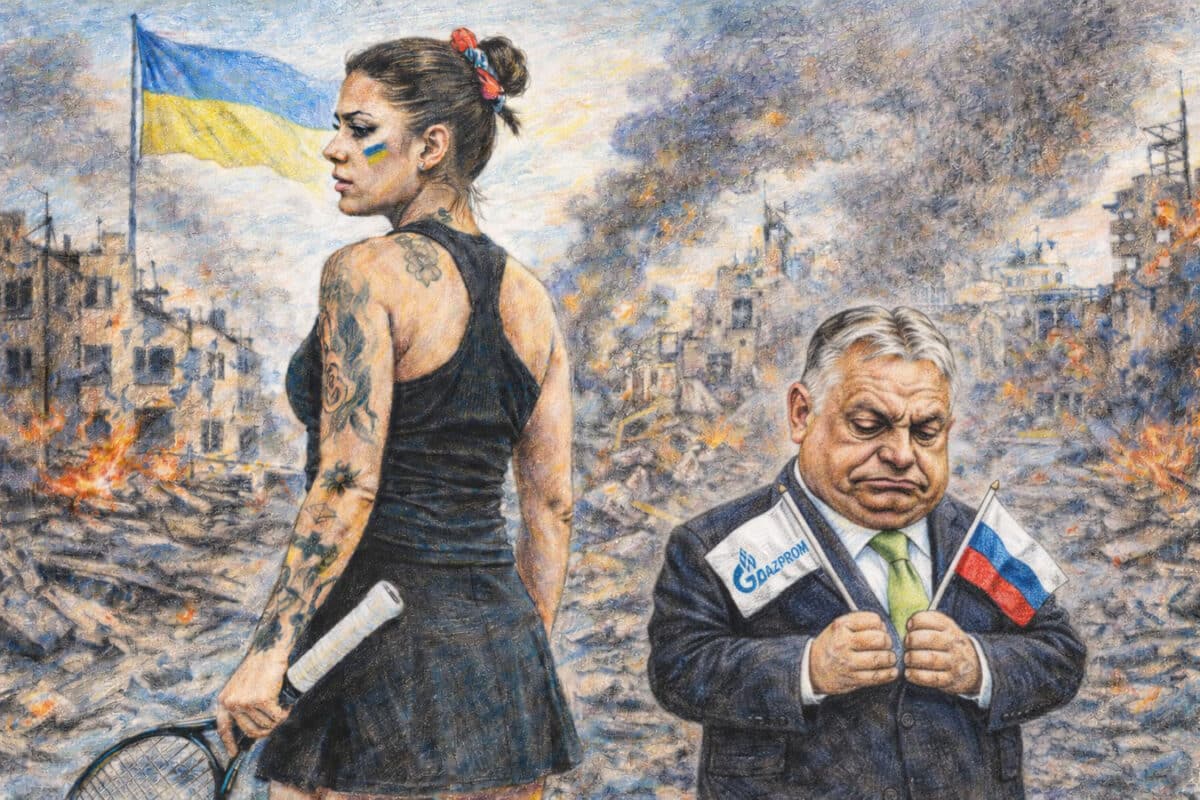
“The same evil — only 80 years later”: Ukrainian tennis player Oleynikova refused to shake hands with her Hungarian opponent because of her trip to Russia, comparing it to awards at the expense of Jews killed by the Nazis.

Ukrainian tennis player Alexandra Oleynikova refused on February 3, 2026 at the WTA 250 tournament in Cluj-Napoca to participate in the traditional joint pre-match photo and refused to shake hands with her Hungarian opponent Anna Bondar.

This decision was announced before entering the court. Calmly. Officially. With a detailed explanation of the reasons.

And it was these reasons that turned the sports episode into a political and moral event.

Why she refused

Oleynikova linked her decision to Bondar’s participation in December 2022 in the exhibition tournament “Trophies of the Northern Palmyra,” which took place in Russia.

The Ukrainian calls that tournament a demonstrative disregard for sanctions, and its funding — connected with Gazprom.

Her wording was extremely harsh:

“These are the very funds for which Russia kills and maims Ukrainian women and children. These are the same funds that destroy our fathers, brothers, and men who defend their families, cities, and villages on their land.”

The time when the decision was made

Oleynikova separately emphasized: Bondar’s trip took place when the world had already seen the consequences of the actions of the Russian army.

Bucha.
Irpin.
Izyum.

After the liberation of Kherson, mass graves, torture chambers, and documented torture and sexual violence were discovered.

In her logic, it is a conscious choice made after everything became obvious.

The most discussed quote

It was this that caused international resonance.

“To go to a tournament in Russia in December 2022 and accept payment from Gazprom funds — from a moral point of view, it’s the same as going to play a tournament in Nazi Germany in 1941 and receiving rewards with jewelry from Jews exterminated in the death camps of Auschwitz and Treblinka. The same evil — only 80 years later.”

“The same evil — only 80 years later”: Ukrainian tennis player Oleynikova refused to shake hands with her Hungarian opponent due to her trip to Russia, comparing it to rewards at the expense of Jews killed by Nazis

This is not a personal war, says Oleynikova

The Ukrainian athlete specifically stated: it is not about personal animosity.

“This is a matter of humanity, humaneness, and basic human values. I cannot ignore this. The global tennis community should not ignore this. Fans should not forget about this.”

“Therefore, I do not consider it possible for myself to take a photo or shake hands with a person who received money from sources directly connected with the war against my country.”

The reaction of the Hungarian Foreign Ministry — and where it led the conflict

The story quickly went beyond the court.

The head of the Ministry of Foreign Affairs Peter Szijjarto publicly criticized the Ukrainian’s act and called it “outrageous and scandalous”. He also disliked the historical parallels drawn.

According to him, mixing sports and geopolitics is unacceptable, and the responsibility for political decisions should not be transferred to athletes.

Thus, the dispute over the handshake turned into a diplomatic episode.

The political background that cannot be ignored

The story with the match flared up not in a vacuum. Relations between Kyiv and Budapest have been tense for a long time, and the Hungarian leadership regularly engages in sharp disputes with Ukraine in the EU arena.

On February 7, Prime Minister Viktor Orban stated that Ukraine is “an enemy of Hungary” because it insists on a pan-European refusal of Russian energy resources.

According to him, stopping supplies will lead to “an increase in Hungarian families’ utility costs by at least 8% per year”.
In such an atmosphere, any episode — even a tennis one — inevitably becomes part of a larger political picture.

Is a way back possible

Yes — and this is an important part of the Ukrainian’s position.

“I admit that Anna could have made a mistake in making this decision — although it was an extremely serious mistake. I am ready to shake her hand in the future if she publicly acknowledges this mistake, apologizes to the Ukrainian people, and clearly and directly condemns Russian aggression against Ukraine, the aggressor state Russia, and the war criminal Putin.”

Relations with the WTA

Oleynikova emphasizes that she remains part of the system and does not intend to act contrary to the organization.

“I am part of the WTA and respect our organization. That is why I am ready to work together with the WTA — openly, constructively, and responsibly — to protect tennis as a sport from cases that compromise its values with their inhumane and anti-human nature.”

“Tennis cannot exist outside the bounds of humanity, and we must respond when these boundaries are consciously violated.”

Why this is understood or not understood in Israel

For a society where historical memory is part of everyday life, the moment is very familiar when a person says: there is a limit beyond which a polite gesture turns into a lie.

This is the dimension seen by NAnovosti — News of Israel | Nikk.Agency.

Not a scandal.
Not a diplomatic skirmish.
But an attempt to maintain moral clarity.

And here arises another, uncomfortable but honest moment.

Many Israelis continue to travel to Russia — for family matters, business, cultural projects, tours, competitions. For some, it is a personal necessity, for others a habit, for others an attempt to stay out of politics.

But the world is changing. And Ukrainian sensitivity to such trips is also changing.

Oleynikova’s story shows: one day any public person may find themselves in a situation where the Ukrainian side will say — for us, this looks like normalization.
And then a handshake, a photo, a joint stage, or a tournament will suddenly become impossible.

Not out of hatred.
But out of pain and memory.

What this story shows

The Ukrainian did not demand sanctions.
Did not demand exclusions from the tournament.
Did not organize a boycott.

She refused to participate in a symbolic act of normalization.

And that is why for many, her act seems right.

As long as the war continues, the question will return again and again:
can one smile as if nothing is happening.

Alexandra Oleynikova gave her answer.

Who is Alexandra Oleynikova

Alexandra Denisovna Oleynikova (born January 3, 2001, in Kyiv) is a Ukrainian professional tennis player, winner of three WTA tournaments in singles.

Born in Kyiv, she also spent her childhood in Odessa. When Alexandra was ten years old, the family moved to Croatia.

She started playing tennis at the age of five. Prefers clay courts.

Oleynikova competes in the ITF Women’s World Tennis Tour. At this level, she has won four singles titles and two doubles titles. She won her first title in 2018 and reached several finals.

In 2021, the athlete decided to regain Ukrainian citizenship.

In 2022, she won her second ITF title in her professional career.

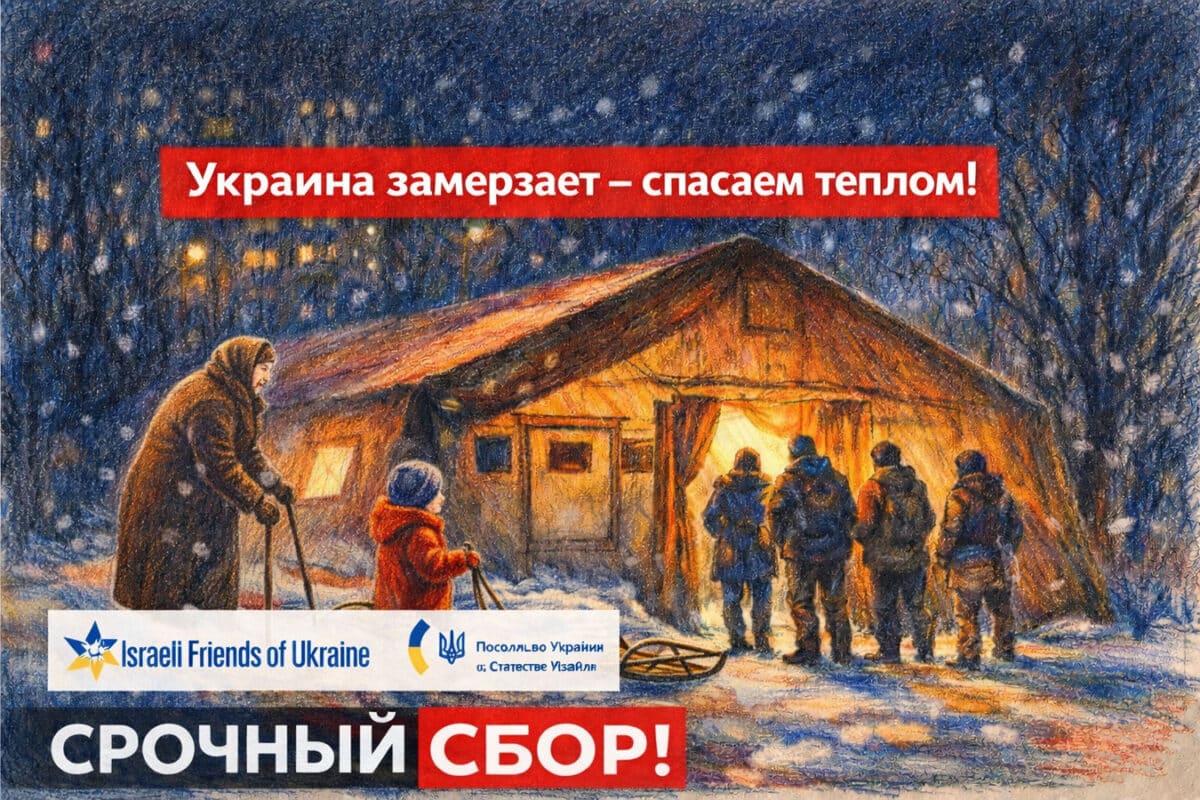
Ukraine is freezing — let’s save with warmth! “Israeli Friends of Ukraine” are raising funds for “Points of Invincibility” — urgently

The collection is organized by the initiative “Israeli Friends of Ukraine” with the support of the Embassy of Ukraine in Israel

Russia continues its military aggression against Ukraine not only on the front but also in cities — with strikes on energy and critical infrastructure. It is Russian aggression and targeted attacks on civilian infrastructure that have made this winter one of the toughest for Ukraine: power, water, and heating outages occur in waves and return again.

Critical schedules are in effect in most regions. Kyiv is living in a state of actual humanitarian winter: more than half of the city is almost constantly without power. At temperatures of –10…–14°C, this means cold in apartments, darkness in homes, and a situation where basic survival conditions — heat, water, communication — become a matter of luck and time.

Ukraine is freezing — saving with warmth! 'Israeli Friends of Ukraine' have launched an urgent collection for 'Points of Invincibility'
Ukraine is freezing — saving with warmth! ‘Israeli Friends of Ukraine’ have launched an urgent collection for ‘Points of Invincibility’

What “Israeli Friends of Ukraine” say

The initiative “Israeli Friends of Ukraine” describes the situation very directly in their address:

“Ukraine is freezing — saving with warmth!”

“Today, Ukraine is experiencing one of the most severe energy crises of the entire war.”

“The enemy strikes not by chance — the country’s energy infrastructure is being deliberately destroyed.”

“In most regions, there are critical power outages.”

“The capital of Ukraine, Kyiv, is in a state of actual humanitarian winter: more than half of the city is almost constantly without power.”

“This is cold in apartments, darkness in homes, and shelling that deprives people of light, water, and heating — basic conditions for survival.”

“Children are among the most vulnerable! Schools are forced to send children home because they cannot provide basic conditions: warmth, light, safety.”

“This is more than a crisis. Once, Ukrainians were destroyed by hunger. Today, they are trying to break them with cold. Cold has become a weapon.”

Why this is terror and why it is the responsibility of Putin’s Russia

Strikes on power plants, substations, heating lines, and water supply systems in winter are terror against civilians. The goal of such strikes is fear, cold, darkness, and mass suffering of peaceful people.

Putin’s Russia makes the population a hostage: it destroys infrastructure without which it is impossible to live and turns frost into a tool of pressure. This is state terror — when cold, outages, and panic become part of a military strategy.

When frost becomes a weapon

Have you ever been in minus 15 degrees, without shelter nearby?

We hope not. Unfortunately, this is the current reality for more than a million Ukrainians. Russia attacks critical infrastructure in Kyiv, leaving thousands of residential buildings without water supply and heating. This is no longer about ideologies and “disputes.” These are basic humanitarian needs — warmth, water, light — that should concern anyone in the world.

On January 22, 2026, another harsh formulation was heard in the information field: “genocide by cold”. At a meeting of the OSCE Forum for Security Cooperation, the Deputy Permanent Representative of Ukraine to international organizations in Vienna, Rostyslav Palagusinets, reported that Ukraine has information about the preparation of further Russian strikes on the energy sector and critical infrastructure, including facilities and networks serving Ukrainian nuclear power plants.

According to him, only in the current heating season, Russia has carried out 256 air attacks on the energy and critical infrastructure of Ukraine, and since January 11, strikes on energy facilities have been occurring almost every day. The speech also mentioned that the winter campaign is synchronized to maximize the suffering of the population at extreme temperatures, and the deprivation of heat, electricity, and water is considered a calculation for the physical destruction of people.

Amid constant outages, Ukrainian authorities report attempts to transition from “extreme” outages to more predictable schedules. First Deputy Prime Minister and Minister of Energy Denys Shmyhal wrote that the situation in the energy system remains extremely tense, and extreme outages are in effect in Kyiv.

Earlier, after a massive Russian attack on January 20, Kyiv experienced serious disruptions with power and water supply, and 5635 multi-story residential buildings were left without heating. There were also reports of damage to several key substations, resulting in the Chernobyl Nuclear Power Plant being completely disconnected from external power supply, and power lines leading to other nuclear power plants were affected. The Minister of Foreign Affairs of Ukraine Andriy Sybiha stated that Russian strikes on energy infrastructure mean using the threat of a possible nuclear catastrophe as a tool of pressure.

Urgent initiative from Israel: places to warm up

Against this backdrop, on January 22, 2026, the initiative “Israeli Friends of Ukraine” announced an urgent collection for the creation of “Points of Invincibility” — places where people can survive outages in the cold. The campaign is conducted with the support of the Embassy of Ukraine in Israel.

The purpose of such points is to give people a point of salvation when it is dark and cold at home. There, you can:

  • warm up and wait out the most difficult hours,
  • charge phones and communication devices,
  • get hot water,
  • receive basic support — tea, food, basic assistance.

How much does one “Point of Invincibility” cost

The organizers provide a calculation for one aid point:

  • 3000 shekels — generator with a capacity of 6–7 kW
  • 300 shekels — heat gun
  • 500 shekels — water heater (15 l)
  • 300 shekels — extension cords for charging gadgets
  • 900 shekels — fuel, tea, food, and disposable tableware

Every donation is specific help: the opportunity to warm up, charge communication, and survive another night without light and heating.

Who are “Israeli Friends of Ukraine”

“Israeli Friends of Ukraine” / “Израильские друзья Украины”https://www.facebook.com/IFofU — an Israeli civic initiative that has been helping Ukraine since 2014 and carries out practical humanitarian projects to support peaceful people. The collection for “Points of Invincibility” is exactly such a project: about warmth, water, electricity, and survival in conditions where Russia is knocking out infrastructure with strikes.

The organizers also ask for reposts so that as many people in Israel as possible see the information and can join the collection.

It’s time to put an end to this.

It’s time to unite against terror worldwide — and support those who are trying to survive the winter without light and heat. That is why NAnews — Israel News | Nikk.Agency talks not only about the front and diplomacy but also about specific humanitarian actions that really save people.

How to help

Donation link:
https://lnk.ua/xVmBJmyNv

The organizers conduct the fundraising through the UPAY (uPay) payment system — this is an Israeli platform for accepting payments and managing payments through a web cabinet and application.

You can help in two main ways:

  • Credit Card — payment by bank card through the UPAY payment page/cabinet;
  • Bit — transfer through the popular Bit application in Israel, which is used for quick P2P payments and transfers.


“Maccabi Haifa” is out of the race? Bruninho’s future may be decided within the Ukrainian Premier League

The transfer situation around the attacking midfielder of Lviv’s “Karpaty” has quickly changed. Recently, Israel was considered the main direction, but now the likelihood of an internal transfer within Ukraine seems higher, as of February 6, 2026.

The resolution may come in the coming days.

Who is vying for the player

According to Ukrainian sources, the favorite for signing is considered to be Metalist 1925.

The club has made a concrete offer and is said to have advanced further than others in the specifics of the terms.

Interest from European teams remains, but it is the Kharkiv side that first moved from consultations to numbers.

Why the chances of Maccabi Haifa have decreased

The negotiation process between the Israelis and “Karpaty” has slowed down. As a result, the team from Haifa is no longer considered the main candidate.

This does not mean a complete exit from the dialogue, but at the moment the initiative has shifted to competitors.

The football market rarely tolerates pauses. While some clarify details, others close deals.

The position of Bruninho himself

It was previously reported that the 25-year-old Brazilian was inclined to move to Israel.

Now he faces an alternative — to maintain an adapted environment, championship, logistics, and at the same time receive a new sports offer without changing the country.

Sometimes such factors are decisive.

When the finale might occur

If the player agrees to the Ukrainian option, the arrangement could be finalized as early as next week.

Football market sources speak of a high dynamic in the process. The parties understand that delays increase the risk of third-party intervention.

The editorial team of NAnews — Israel News | Nikk.Agency notes: the situation is indicative for Israeli fans — competition for players from the UPL is intensifying, and the window of opportunity may close in just days.

What this means for the clubs

For “Karpaty,” the speed and transparency of the deal are important.

For the potential buyer — the opportunity to acquire a player who has already proven effective in the league.

For the Israeli market, this is a signal: even with interest from the country’s clubs, the fight for talents is becoming increasingly fierce.

The decision now lies with the player.

And there is little time for it.

Two regimes, two names, one face: September 22 is the anniversary of the Soviet-Nazi parade in Brest in 1939 – which paved the way for the outbreak of World War II and the Holocaust

September 22, 1939 an event took place that they still try not to remember in Russia – a joint parade of Nazis and communists in Brest. It was a symbol of cooperation between two totalitarian regimes, which became a dark spot in the history of World War II.

It is especially important to realize that the alliance between the USSR and Nazi Germany in 1939 also contributed to one of the worst tragedies of the 20th century: HolocaustThe Nazis used the resources they received from the Soviet Union to wage war and establish control over territories where they would later begin the extermination of millions of Jews, Roma and other minorities.

The parade in Brest symbolized the victory over Poland, a country in which about 3 million Jews. This parade was just one of the scenes preceding the tragedy, when German troops would later occupy Polish territories and set up a system of concentration camps there, including Auschwitz And TreblinkaPoland itself, divided and oppressed by two regimes, witnessed the mass extermination of its citizens.

The Soviet Union, collaborating with the Nazis in the early years of the war, turned a blind eye to the repressions against Jews and other minorities. Moreover, after the war ended, it actively hushed up the Holocaust, promoting the version that the victims of the war were exclusively Soviet citizens, thereby ignoring the scale of the Nazi genocide.

Today, when some countries try to deny or distort historical facts, such as the Holocaust or the Soviet-Nazi alliance, it is important to remember the lessons of the Brest parade. Totalitarian regimes, if not stopped in time, can lead to irreversible tragedies, and cooperation for short-term gain can lead to large-scale catastrophes, as happened in 1939.

Meeting on the Bug

September 1, 1939 Nazi Germany invaded Poland, starting World War II. Seventeen days later, under the pretext of defending “blood brothers,” the Soviet Union joined the aggression. About 30-50% of the defenders of Brest were Ukrainians and Belarusians, who fought to the last, but soon both armies captured the city.

According to the secret protocol of the Molotov-Ribbentrop Pact, Brest was given to the USSR. However, before the German troops were to leave the city, the two regimes decided to demonstrate their brotherhood to the public by staging a joint parade – a parade that was to become a symbol of the alliance.

Friendship Parade

On September 22, 1939, at 2:00 p.m., in front of the flagpole with the Nazi flag, the commanders of the Wehrmacht and the Red Army, General Guderian And Brigade Commander Krivosheincame out onto the wooden platform. The procession began with the passage of German equipment, followed by Soviet equipment.

After the parade, the command of the two armies held a banquet. Toasts to the health of Hitler and Stalin were loudly sung, and soldiers from both sides fraternized, smoked cigarettes and drank beer. They were united by the joy of the joint partition of Poland. The Nazi flag was replaced by the Soviet one, as a symbol of the new government.

However, the Germans did not leave for long. After just two years, June 29, 1941Brest was again captured by the Nazis, becoming a symbol that this “union” was temporary, and the friendship put on display concealed preparations for future betrayals.

The Forgotten Truth

Soviet historiography carefully avoids mentioning collaboration with the Nazis from 1939 to 1941. After all, the USSR not only became an accomplice in unleashing World War II, but also actively helped Nazi Germany, supplying it with oil, copper, grain and timber in huge quantities. During this period, the Soviet Union handed over to the Nazis 856 thousand tons of oil, 14 thousand tons of copper, 1.4 million tons of grain and more than a million tons of timber.

Parade or march?

The facts of the meeting of Soviet and Nazi troops are not in doubt, but there is disagreement over what to call this event – a parade or a march. Historian Alexander Dyukov insists that it was a “routine march” because military formalities were not observed. However, it is clear that it was a military show, demonstrating the alliance of two totalitarian regimes who wanted to show the world that they were acting in concert.

Brest historian Vasily Sarichev states: “If this is officially recognized as a parade, then this will be a sanctioned recognition that Hitler and Stalin, the Wehrmacht and the Red Army, acted together, demonstrating their unity.”

Propaganda campaign

Soviet propaganda always tried to hush up or distort the events of September 22, 1939. In Germany itself, this parade was actively filmed by Nazi propagandists, making it a show for the domestic audience and a message for the West, especially for England and FranceThe moment when Nazi and Soviet troops marched together was supposed to be a clear signal: “We are allies.” However, the Soviet side preferred to call it a “ceremonial procession” or ignore the event altogether.

Yuri Tsurganoveditor-in-chief of the magazine “Posev”, emphasizes: “Modern Russian propaganda is trying to erase this episode from memory, because it destroys their myth about the Great Patriotic War, where the USSR is depicted as a liberator and a victim of aggression.”

Poland – a victim of two tyrannies

For Poland, the events of September 22 are just one episode in a series of tragedies that began with the signing of the Molotov-Ribbentrop Pact. According to Andrzej Nowakprofessor at the Jagiellonian University, “September 17, 1939 is the day when the USSR stabbed the Polish army in the back, becoming an accomplice in the destruction of Poland.” This blow became the final step on the path to the liquidation of the Polish state.

Projection onto today’s realities: the union of two regimes

When one recalls the joint parade of Nazis and Soviets in Brest, one cannot help but see parallels with contemporary world events. Today, many authoritarian regimes, like those led by Hitler and Stalin, are seeking allies to consolidate their power and suppress freedom in other countries. These new coalitions, as in the past, are based on implicit support for totalitarianism, with the suppression of human rights and the destruction of democratic values ​​becoming a common goal.

In the 21st century, for example, Russia has close ties with countries such as Iran, China, and North Korea. These regimes, supporting each other, oppose Western democracies, seeking global influence through confrontation and destabilization of the international order. Russia, like the USSR in the past, is again playing a double game, participating in international conflicts, supporting authoritarian regimes, and interfering in the affairs of other states.

Iranwith its nuclear ambitions and anti-Semitic rhetoric, is similar to the Nazi regime in its aims and methods, while receiving support from Russia in the form of weapons and political support. Russia, unleashing a full-scale war in Ukraine and seeking geopolitical expansion, once again finds itself in the role of an aggressor, as in 1939. The parallels between how the USSR helped Germany then and how Russia now supports terrorist organizations and authoritarian regimes are obvious.

Modern parallels and the role of the international community

The parade in Brest is not just a historical fact, it is a warning that any alliances built on violence and suppression will sooner or later lead to disaster. The international community should not turn a blind eye to the emerging alliances of totalitarian regimes, as was the case in 1939. Every step, every concession to aggressors and dictators leads to new wars and new genocides.

Ukraine, which is now at the forefront of the fight for its independence, understands this lesson better than anyone. That is why it is fighting not only for its freedom, but also to ensure that the world does not repeat the mistakes of the past. Totalitarian regimes always seek allies to strengthen their influence, but it is international support for democracies, the alliance of Israel, Ukraine and the Western world that must become a bulwark against resurgent threats.

Leave a comment↓

Jews from Ukraine: Solomon Frankfurt. “Solomon’s Temple” near Kyiv: how a Jewish scientist promoted Ukraine’s agro-industry

In the section Jews from Ukraine read the story of Solomon Frankfurt — a Jewish scientist and organizer of science, who in the early 20th century helped Ukraine build what today would be called “agro-innovation infrastructure”: laboratories, experimental fields, breeding stations, seed quality standards, and applied research tied to the real economy.

This biography (Ukr.) was compiled by Israeli author Shimon Briman on the website Ukrainian Jewish Encounter. He writes about Frankfurt without romanticizing — as a person who spoke equally confidently in the language of chemistry, agricultural practice, and state decisions. And that is why in Ukrainian agricultural history, Frankfurt has a figurative nickname: the network of scientific centers around Kyiv was later called the “Temple of Solomon” — not in a religious sense, but as a metaphor for a “built system” that survived the change of eras.

Who is Solomon Frankfurt — briefly, but to the point

Jews from Ukraine: Solomon Frankfurt. “Temple of Solomon” near Kyiv: how a Jewish scientist promoted Ukraine's agro-industry
Jews from Ukraine: Solomon Frankfurt. “Temple of Solomon” near Kyiv: how a Jewish scientist promoted Ukraine’s agro-industry

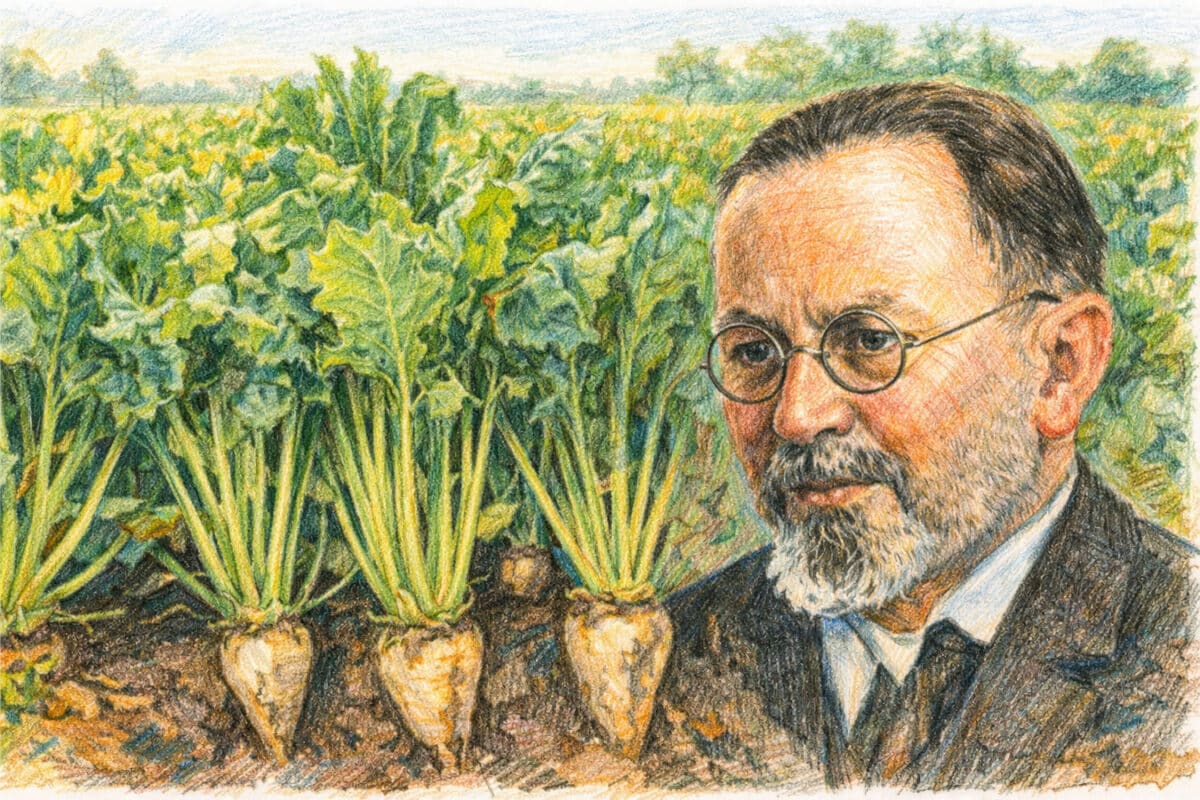
Solomon Lvovich (Shlomo Meirovich) Frankfurt was born in 1866 in Vilno (now Vilnius). He received a European education and a doctorate in chemistry in Zurich, researching sugars in plants — a topic that directly intersects with Ukrainian beet growing and the sugar industry of the early 20th century.

But an “imperial career” for a Jewish scientist at the end of the 19th century often did not depend on abilities. Briman cites a telling episode: in 1898, Frankfurt was denied a professorship at the Moscow Agricultural Institute precisely because of his religion. In simple terms, it sounds like this: the road to universities is closed — so science must find a way through practice.

And Frankfurt found this way in Kyiv.

Kyiv: the laboratory from which the system grew

Moving to Kyiv was a turning point for Frankfurt. In 1901–1920 (Briman highlights this period as the most productive), he worked where science meets real production: sugar factories, agrochemistry, seed quality, yield.

Frankfurt headed the agrochemical laboratory of the Kyiv Agricultural Syndicate and began promoting what today seems obvious but was then new managerial thinking: seeds should not just be bought and sown, but checked, compared, improved, standardized. Science should measure results, not serve beautiful reports.

Briman emphasizes that from this laboratory over time grew a functioning scientific center at the specialized Institute of Agriculture. That is, it is not about a “flash of talent,” but about creating an institutional base: structure, people, methods, a habit of experimentation.

Experimental fields and fertilizers: work not in theory

Frankfurt did not confine himself to office chemistry. According to Briman, he participated in creating a network of experimental fields in several provinces — to test ideas not on paper, but in soil and weather. This is important: Ukraine is vast and diverse, and universal recipes in agriculture work poorly.

A separate direction was work with mineral fertilizers. At that time, it sounded like a “modernization tool” — an opportunity to increase yield and stabilize product quality. In the text, Frankfurt appears as a person who explained to producers and landowners: yes, it’s money, yes, it’s technology, but without it, the agro-economy will lag behind.

Briman essentially shows a “transition model”: from agriculture as a tradition — to agriculture as an industry where decisions are confirmed by data.

Myronivka and “Ukrainka”: when selection becomes part of the country

One of the key episodes is the organization in 1909 of the Central Research Station for Sugar Beet Culture near Myronivka. Briman writes that the station was supported by local sugar manufacturers: this is an important link between science and business, without which infrastructure usually does not survive.

Later, based on these initiatives, the Myronivka Breeding Station (today — the Institute of Wheat) appeared. And here Briman gives a detail that catches even people far from the agricultural topic: Frankfurt is credited with the authorship of the idea of naming the winter soft wheat variety “Ukrainka 0246.”

This is not a trifle. The name of the variety is a symbol that “Ukrainian” can be not only a political declaration but also a specific product of science: grown, tested, distributed.

Frankfurt and Ukrainian statehood: a choice that was not “neutral”

Briman shows Frankfurt as a person who did not hide from politics — although he was not a political tribune. During the Ukrainian revolution, Frankfurt participated in creating professional and scientific structures, worked in commissions, and dealt with what often remains behind the scenes: the institutional design of the industry.

The text contains a thought that Briman formulates harshly and without embellishments:
“He believed in Ukrainian statehood more than many Ukrainians” — writes Briman.

Separately noted is the work under the Hetman government, where Frankfurt dealt with agriculture and food issues and participated in preparing agricultural legislation. That is, it was not “sympathy in words,” but involvement in managerial routine: documents, norms, rules.

Negotiations of 1918: economic diplomacy and sugar

There is also an international layer. Briman cites the position of historian Ruslan Piroh: Frankfurt twice represented Ukraine in complex economic negotiations with Germany and Austria-Hungary in 1918. The essence — the Ukrainian side defended economic conditions, including a fair price for Ukrainian sugar.

Briman emphasizes: it was not a “symbolic trip,” but negotiation work where each figure had political weight.

The text also mentions Frankfurt being awarded a German order — as a marker of recognition of his role in these contacts.

Emigration and World ORT: continuation of the Ukrainian biography in the world

After the defeat of the UNR, Frankfurt, according to Briman, refused to cooperate with the Bolsheviks and emigrated at the end of 1920. Then another part of life begins — but it logically continues the first: building a system, only now at an international level.

For decades, Frankfurt worked at World ORT — an organization engaged in technological education and support for artisans and farmers. Briman lists the cities and stages of ORT’s European work, and then the move to the USA. From 1947, Frankfurt became the president of World ORT.

He died in 1954 and was buried in New York State. But the Ukrainian trace in his biography did not disappear: Briman builds the line so that the reader sees — the experience of creating agricultural infrastructure in Ukraine became part of his broader, global project.

Why “Temple of Solomon” sounds especially poignant today

The metaphor “Temple of Solomon” Briman associates with the assessment of academician Viktor Vergunov: it is about the agricultural scientific centers of Ukraine created by Frankfurt, which worked even after him. The meaning of the metaphor is in the built “architecture of science”: when the system continues to function, even if the creator is long gone.

The finale with Briman is modern and very direct: he reminds that Jewish school No. 141 in Kyiv, operating under the aegis of ORT, is experiencing a difficult military winter — with shelling, power, and heat outages. The story of a person from the early 20th century suddenly turns out to be close to the reality of 2026.

Main conclusions for the section “Jews from Ukraine”

Frankfurt is an example of a Jewish intellectual who became part of the Ukrainian modernization project not with slogans, but with infrastructure.

His contribution is not one “loud idea,” but a habit of scientific verification, standardization, and systematic experimentation in agriculture.

During the Ukrainian revolution, he made a conscious choice in favor of Ukrainian statehood and worked in real managerial mechanisms.

His subsequent work at World ORT shows the continuation of the same logic: education, applied skills, community support — through institutions, not declarations.


Text: Shimon Briman (Israel). https://ukrainianjewishencounter.org/uk/hram-solomona-bilya-ki%d1%94va-yak-%d1%94vrejskij-vchenij-prosuvav-agroindustriyu-ukra%d1%97ni/

The author is grateful to the employee of the World ORT Archive in London, Jennifer Brunton, for assistance in finding materials and providing a photograph of Solomon Frankfurt.