Virtual phone number in Israel without a SIM card: calls within Israel and from around the world for individuals and businesses – Zadarma

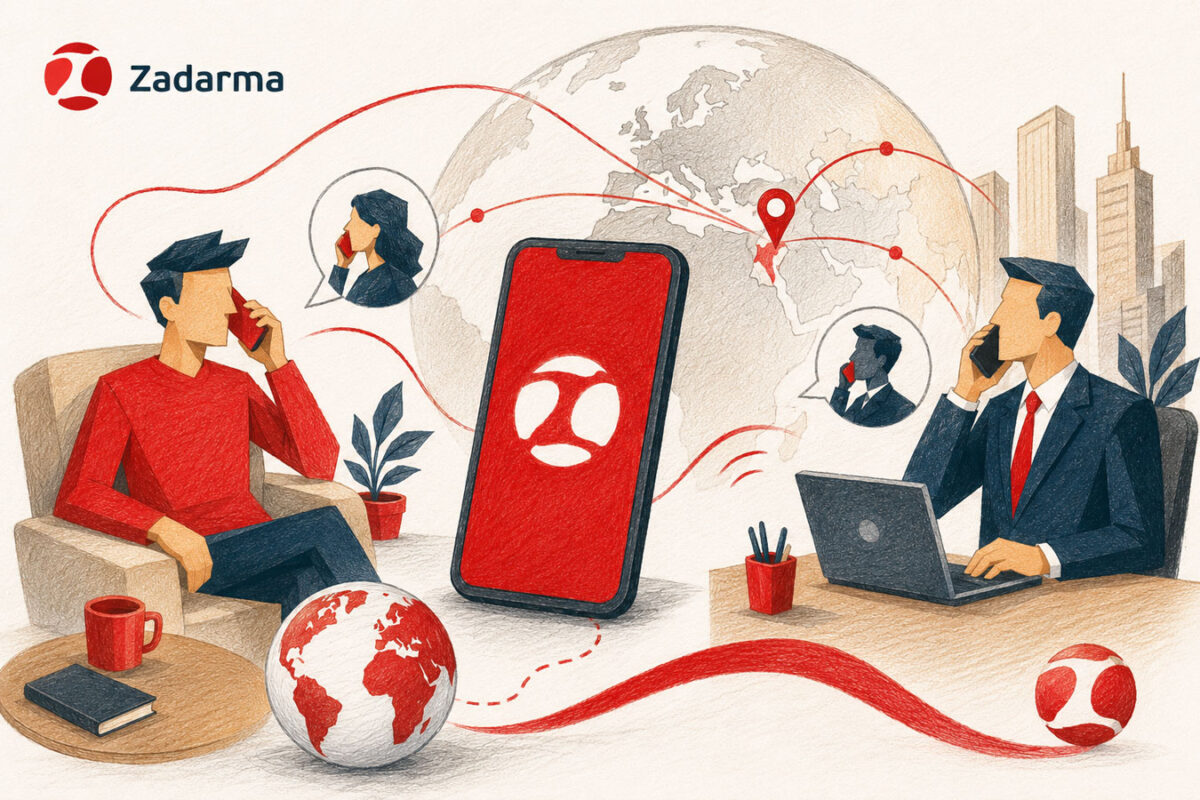
A virtual phone number allows you to receive calls over the internet without purchasing a physical SIM card for the desired country. Let’s figure out how this communication works, what numbers can be connected in Zadarma, who they are suitable for, and what restrictions should be known in advance.

A person can live in Israel but work with clients in the USA, UK, Germany, France, Poland, Canada, or another country. An international number on the website is not always convenient for local clients, and purchasing and maintaining several physical SIM cards becomes a separate problem.

In such a situation, you can connect a virtual number of the desired country. Clients will call a regular local number, and the owner will be able to receive calls over the internet on a smartphone, computer, IP phone, or using call forwarding.

Physically being in the country whose number is connected is usually not required. However, the rules depend on the specific state: sometimes, to register a number, it is necessary to confirm identity, address, or provide company documents.

The editorial team of NANews uses the Zadarma service, so we decided to explain in detail and without complex technical terms how virtual telephony works, who it can really be useful for, and what restrictions need to be checked before paying for a number.
Virtual phone number in Israel without a SIM card: calls across Israel and worldwide for individuals and businesses - Zadarma
Virtual phone number in Israel without a SIM card: calls across Israel and worldwide for individuals and businesses – Zadarma

What is a virtual phone number

A virtual number is a full-fledged phone number not tied to a physical SIM card or a specific device.

It can have the code of the selected country and city. For example:

  • +972 — Israel;
  • +1 — USA or Canada;
  • +44 — UK;
  • +49 — Germany;
  • +33 — France;
  • +34 — Spain;
  • +39 — Italy;
  • +48 — Poland;
  • +380 — Ukraine;
  • +995 — Georgia.

The client dials a familiar number, and the call is transmitted over the internet to the number owner. To receive calls, you can use an app, a program on a computer, an IP phone, a cloud PBX, or forwarding to a regular mobile.

Zadarma offers more than 30,000 virtual numbers in 110 countries. Depending on the country, local, national, mobile, and toll-free numbers for the caller are available.

A virtual number should not be confused with temporary free numbers published on open sites for receiving a single message. This is a permanent number that a person or company can use as long as its service is paid for and the operator’s conditions are met.

How a number works without a SIM card

The principle of operation is quite simple.

The user registers with the service, selects a country and an available number, undergoes the necessary verification, and sets up the method of receiving calls. After that, calls are received over the internet.

Usually, the process looks like this:

  1. A person selects a country.
  2. Determines the appropriate type of number.
  3. Checks the cost and document requirements.
  4. Connects the number.
  5. Installs an app on a smartphone or computer.
  6. Sets up incoming and outgoing calls.
  7. If necessary, connects forwarding or a cloud PBX.

For the app to work, a stable Wi-Fi or mobile internet is required. If the internet is unavailable or unstable, calls can be directed to a regular phone number. Zadarma officially supports receiving calls through apps and IP phones, forwarding, its own cloud PBX, and third-party server PBXs.

It turns out that one smartphone can be used simultaneously for a personal SIM card and one or several virtual work numbers.

Which countries’ numbers can be connected

Zadarma provides numbers in 110 countries. This does not mean that the same conditions are available in all states: somewhere you can choose a local number of a specific region, somewhere a national or mobile number is offered, and in some countries, 800 format numbers are available.

Among popular destinations:

  • Israel;
  • USA;
  • Canada;
  • UK;
  • Germany;
  • France;
  • Spain;
  • Italy;
  • Poland;
  • Czech Republic;
  • Austria;
  • Belgium;
  • Netherlands;
  • Switzerland;
  • Sweden;
  • Norway;
  • Finland;
  • Romania;
  • Bulgaria;
  • Greece;
  • Cyprus;
  • Georgia;
  • Moldova;
  • Ukraine;
  • Kazakhstan;
  • Turkey;
  • United Arab Emirates;
  • India;
  • Japan;
  • South Korea;
  • Singapore;
  • Australia;
  • New Zealand;
  • Mexico;
  • Brazil;
  • Argentina;
  • Chile;
  • South Africa.

Before connecting, you need to open the page of a specific country and check what type of number is offered, whether it can be registered by a non-resident, what documents are required, and whether the number supports SMS.

What types of virtual numbers exist

The choice depends on what the phone is needed for.

Local number

Such a number contains the code of a specific city or region. For example, a company can connect a number in Tel Aviv, London, New York, or another city, even if employees work remotely.

A local number is suitable for websites, consulting services, repair companies, real estate agencies, clinics, online stores, and small offices.

National number

A national number is not always tied to a specific city. It can be used by a company that works with clients throughout the country.

In Israel, for example, there are virtual national numbers with the code +972 77. Connection conditions and costs need to be checked directly before ordering.

Mobile number

In some countries, Zadarma offers virtual mobile numbers. They can support not only voice calls but also receiving SMS.

For example, the Israeli virtual mobile number +972 55 allows receiving calls and SMS through an app, forwarding, PBX, or CRM while being outside Israel. At the same time, a specific number may be issued automatically, without the possibility of choosing a beautiful combination of digits.

Number 800

This is a number where the call is usually paid for by the owner, not the client. Such numbers are used by support services, sales departments, and large companies.

Rates for incoming calls and the availability of 800 numbers vary depending on the country.

Why a number from another country is needed

A virtual number solves not one, but several tasks at once.

Working with foreign clients

An Israeli company can connect a number in the USA, UK, Germany, France, or another country. The client will call a familiar local number, and the employee will receive the call in Israel.

For a foreign client, such a call is usually more understandable than a call to an unfamiliar international number.

However, a foreign phone number itself does not mean that the company is registered or has a physical office in the corresponding country. The website must honestly indicate the actual location and legal details of the business.

Moving to another country

After moving, a person can continue working with their former clients. For example, a specialist lives in Israel but receives calls from Germany, Poland, the UK, Ukraine, Canada, or the USA.

Clients do not need to be informed of a new foreign mobile number: they continue to call the familiar number of their country.

Separate room for work

Many entrepreneurs publish their personal mobile number on the website, on social networks, and in advertisements. As a result, work calls mix with personal ones, and the number ends up in numerous databases.

A virtual number allows you to separate communication:

  • personal calls go to a regular SIM card;
  • work calls go to a separate application;
  • a voicemail message is activated during non-working hours;
  • missed calls are saved in statistics;
  • calls can be recorded if necessary.

Work during trips

A virtual number is not tied to one SIM card and one country. If a person temporarily leaves Israel, they can continue to receive work calls via the internet.

The main condition is a stable network connection.

Work of several employees

One number can be connected not only to one person. With the help of a cloud PBX, calls are distributed among employees, departments, or branches.

For example, the call first goes to a manager, then to a second employee, and if no one answers, it is directed to voicemail.

Virtual number of Israel

For readers of NANews, several scenarios are particularly relevant:

  • an Israeli number for a company whose employees are abroad;
  • a second number for business without a second SIM card;
  • a separate number for the website or advertising;
  • a +972 number for receiving calls from Israel;
  • a Tel Aviv or other region number;
  • a mobile number with the ability to receive SMS;
  • a common number for several employees.

Zadarma offers city, national, mobile, and toll-free numbers for Israel. Incoming calls can be received through smartphone and computer applications, forwarding, cloud PBX, or CRM.

To connect an Israeli number, a passport or ID, current address, or company registration documents may be required. The exact list depends on the type of number chosen.

Therefore, it cannot be promised in advance that any +972 number is connected instantly and without verification.

Numbers of the USA, Canada, and European countries

American, Canadian, and European numbers are especially in demand for business.

USA number

An American number can be useful for a company working with clients in the USA, an internet project, a consultant, or a remote specialist.

Depending on the offer, you can connect a city, mobile, or toll-free number. Zadarma’s American mobile numbers allow you to receive calls and SMS through the application, forwarding, PBX, and CRM. Activation is carried out after verifying the provided data.

UK number

A British number +44 can be connected to a computer, smartphone, IP phone, office PBX, or another device with SIP support. Calls can also be forwarded to a regular number.

Numbers of Germany, France, Poland, Spain, and Italy

European numbers are suitable for companies that:

  • sell services in several countries;
  • consult foreign clients;
  • accept orders through the website;
  • have organized a remote support service;
  • want to use separate numbers for different markets;
  • analyze advertising effectiveness by region.

It is necessary to consider that European countries may set different rules for registering numbers. For some city numbers, it is required to confirm the address or connection with the corresponding region.

One phone — several work numbers

To use a virtual number, it is not necessary to buy a second smartphone.

On one device, you can simultaneously have:

  • a personal SIM card;
  • a virtual Israeli number;
  • a USA number;
  • a European number;
  • a common company number.

This is convenient for lawyers, realtors, consultants, marketers, online store owners, repair companies, travel agencies, and other specialists.

When an incoming call is received, the application shows which virtual number the client called. The employee understands which market or project the call relates to.

Number separation also allows for different greetings, work schedules, and forwarding rules.

How NANews editorial uses Zadarma

The NANews editorial uses the Zadarma service for virtual telephony. That is why we consider it not as an abstract advertising platform, but as a practical tool for people and companies working between several countries.

The service can be useful when it is necessary to:

  • receive calls via the internet;
  • separate the work number from the personal one;
  • maintain availability during trips;
  • connect a number from another country;
  • direct calls to several employees;
  • record and analyze work conversations;
  • integrate calls with CRM.

At the same time, virtual telephony requires initial setup, and call quality depends on the internet connection. Before connecting, it is also important to check the cost of calls, documents, and SMS support for the selected number.

How to connect a Zadarma number

First, you need to register an account and choose a country. Then you should open the page of the desired type of number and carefully study the conditions.

You can register and view available directions via the NANews partner link:

https://zadarma.com/en/?ref=23b32c008f2740949f1ac024ef29097f

After registration, the usual order of actions is as follows:

  1. Choose a country.
  2. Choose a city, national, mobile, or toll-free number.
  3. Check the connection fee and monthly service charge.
  4. Clarify the cost of incoming and outgoing calls.
  5. Check the possibility of receiving SMS.
  6. Upload documents if necessary.
  7. Connect the number.
  8. Install the application.
  9. Set up call reception.
  10. If necessary, connect a cloud PBX and forwarding.

Do not choose a number solely based on a low price. Sometimes a cheaper option does not support SMS, requires confirmation of a local address, or has usage restrictions.

How to receive calls on a smartphone and computer

Zadarma allows you to receive calls in several ways.

Smartphone application

The application can be installed on Android or iPhone. After authorization, the virtual number works via Wi-Fi or mobile internet.

This is the simplest option for one user.

Computer program

Calls can be received on a computer with a headset. This option is suitable for consultants, support operators, and employees who spend most of their workday at the computer.

IP phone

In the office, you can install a familiar desktop device that connects not to a regular phone line, but to the internet.

Forwarding

If a person does not want to use the application or is temporarily without internet, calls can be forwarded to a regular mobile or landline number.

It is necessary to remember that forwarding itself may be charged as an outgoing call from the virtual number to the destination number.

Cloud PBX

For a team, it is better to use a cloud PBX. It allows you to distribute calls among employees and add business functions that are not available on a regular SIM card.

What is a cloud PBX

A cloud PBX is a virtual telephone system for a company. You do not need to buy and install a physical office station for it.

With a PBX, you can:

  • connect several employees;
  • assign internal numbers;
  • set up a voice greeting;
  • create a menu “press 1 to contact the sales department”;
  • distribute calls in a queue;
  • transfer the call to another employee;
  • set working hours;
  • enable voicemail;
  • record conversations;
  • view statistics;
  • connect CRM.

Zadarma Cloud PBX supports call forwarding, call recording, call queue, call hold, and phone activity analysis.

This is especially useful for companies whose employees work from home, are in different cities, or even in different countries.

Call recording and statistics

Call recording helps restore agreements, control the quality of consultations, and resolve disputes.

In Zadarma, recordings can be listened to through the cloud PBX statistics section. They are stored in the cloud, and important conversations can be saved separately.

Before enabling recording, it is necessary to check the legislation of the country where the participants of the conversation are located. In some jurisdictions, the interlocutor must be notified in advance about the recording.

For this, you can add an automatic voice message before connecting to an employee.

Statistics allow you to see:

  • the number of incoming and outgoing calls;
  • missed calls;
  • duration of conversations;
  • waiting time;
  • the employee who answered the call;
  • the source of the inquiry when using call tracking.

Telephony integration with CRM

When integrated with CRM, an employee can see the client’s card during an incoming call, make calls with one click, and save the communication history.

Depending on the system used, the following are available:

  • automatic opening of the client’s card;
  • saving the date and duration of the call;
  • attaching the call recording;
  • creating a new contact;
  • distributing clients among managers;
  • employee performance statistics.

Zadarma offers integrations with various CRMs and services. For example, integration with Bitrix24 supports one-click calls, client card opening, call recordings, and full call statistics.

Is it possible to receive SMS

The ability to receive SMS depends on the country and the specific type of number.

Not all landline, national, and mobile numbers support SMS. In some cases, the function needs to be activated separately, identity confirmed, and the number paid for immediately for the established minimum period.

Zadarma’s official conditions provide for receiving messages through:

  • Android app;
  • iOS app;
  • Windows program;
  • email;
  • personal account;
  • some messengers;
  • CRM and integrated services.

The tariff page separately states that SMS reception is available only for mobile numbers of certain countries. Activation may require connecting the number for at least three months and uploading identity documents. At the same time, the service does not guarantee receiving messages from foreign senders.

Therefore, before payment, it is necessary to open the conditions of the specific number and ensure that it indeed supports the required type of messages.

Is a virtual number suitable for WhatsApp and Telegram

This is one of the most common questions, but it is impossible to give a universal guarantee.

Some virtual numbers accept registration codes for WhatsApp, WhatsApp Business, Telegram, and other platforms. However, the platforms themselves may restrict the use of VoIP numbers, change verification rules, or refuse to send codes to certain ranges.

Even having the SMS function does not mean that a message from a bank, government service, or messenger will necessarily arrive at the number.

Therefore, a virtual number is best chosen primarily for calls and business communication. The possibility of registration in a specific application should be considered as a separate function that needs to be checked before purchase.

Zadarma publishes instructions on using virtual numbers for WhatsApp Business but also indicates the need to choose a suitable number and provide the requested documents.

It cannot be promised to the reader that any Zadarma number will be guaranteed suitable for WhatsApp, Telegram, bank account, or two-factor authentication.

What documents may be required

A virtual number cannot be considered a completely anonymous tool.

Requirements are set by operators and the legislation of the country. Depending on the direction, they may request:

  • passport;
  • identity card;
  • photo of the owner;
  • proof of home address;
  • company registration documents;
  • office address;
  • proof of connection with the chosen city or region;
  • description of the intended use of the number.

For some numbers, it is enough to undergo a standard identity check. Others are available only to residents, companies, or people with an address in the corresponding country.

Before payment, it is important to carefully read the connection conditions. If the required document is missing, the number may not be activated.

How much does a virtual number cost

There is no single price. The cost depends on:

  • country;
  • city;
  • type of number;
  • mobile or landline range;
  • SMS reception capability;
  • payment term;
  • chosen tariff plan;
  • number of employees;
  • additional functions.

Expenses may include:

  • one-time connection fee;
  • monthly or annual subscription fee;
  • outgoing calls;
  • call forwarding;
  • incoming calls to 800 numbers;
  • record storage;
  • additional workstations;
  • additional numbers.

On Zadarma’s official pages, prices are displayed separately for each country and type of number. Some numbers are connected without a one-time fee, but this does not mean that their further use will be completely free.

Before ordering, it is necessary to calculate not only the cost of the number itself but also the estimated number of calls.

Advantages of a virtual number

The main advantages include:

  • no physical SIM card required;
  • can connect a number from another country;
  • calls are received from anywhere with the internet;
  • one smartphone can service multiple numbers;
  • personal and work communication are separated;
  • the number does not depend on one device;
  • multiple employees can be connected;
  • call forwarding and voice menu are available;
  • calls can be recorded and analyzed;
  • integration with CRM is possible;
  • the number is convenient to use during trips;
  • the company can create a local communication channel for foreign clients.

Disadvantages and limitations

Virtual telephony is not suitable for everyone. The following should be considered:

  • call quality depends on the internet;
  • initial setup may seem unfamiliar;
  • not all numbers support SMS;
  • receiving bank and messenger codes is not guaranteed;
  • additional documents are required for some countries;
  • call forwarding may be charged separately;
  • rates vary by destination;
  • 800 numbers may have paid incoming calls;
  • a virtual number does not replace regular mobile communication in emergency situations;
  • a foreign number does not create a legal presence for the company;
  • violation of service rules or legislation may lead to number disconnection.

Who is Zadarma suitable for

The service can be useful for:

  • entrepreneurs;
  • freelancers;
  • lawyers;
  • realtors;
  • consultants;
  • online store owners;
  • repair and service companies;
  • travel agencies;
  • international projects;
  • remote teams;
  • support services;
  • people living between several countries;
  • companies that need separate numbers for different markets.

Zadarma may be excessive for a person who only needs one verification code or a temporary number for a few minutes. Permanent virtual telephony is usually not intended for such tasks.

What to check before connecting

Before paying for a number, you should answer a few questions:

  1. Is a number needed for calls or also for SMS?
  2. What country and city code is required?
  3. Can a non-resident register the number?
  4. What documents are required?
  5. How much does the connection cost?
  6. What is the monthly fee?
  7. Are incoming calls charged?
  8. How much do outgoing calls cost?
  9. Is call forwarding charged?
  10. Can multiple employees be connected?
  11. Is call recording needed?
  12. Is the used CRM supported?
  13. Are there any restrictions for WhatsApp or Telegram?
  14. What happens to the number if payment is late?

This approach will help avoid a situation where an inexpensive number turns out to be unsuitable for a specific task.

A virtual number is a tool, not a magic solution

A virtual number allows you to live in one country, work with clients in other countries, and receive calls over the internet without multiple physical SIM cards.

It can become a separate work number, a phone line for an international project, or the basis of a full-fledged cloud PBX with multiple employees, call recording, and CRM.

However, before connecting, it is necessary to carefully check the conditions of the chosen country, SMS support, document requirements, call forwarding costs, and the rules of third-party services.

The editorial team of NANovosti uses Zadarma and considers virtual telephony a convenient practical tool for international communication. However, the choice of a specific number should depend not on advertising, but on the user’s tasks.

You can view available countries, numbers, and connection conditions via the NANovosti partner link:

https://zadarma.com/en/?ref=23b32c008f2740949f1ac024ef29097f

This is a partner link. If the reader registers and starts using the service, the NANovosti editorial team may receive a reward. Clicking the link does not change the rates published on the Zadarma website for the user.

Virtual phone number in Israel without a SIM card: calls within Israel and from around the world for individuals and businesses – Zadarma

A virtual phone number allows you to receive calls over the internet without purchasing a physical SIM card for the desired country. Let’s figure out how this communication works, what numbers can be connected in Zadarma, who they are suitable for, and what restrictions should be known in advance.

A person can live in Israel but work with clients in the USA, UK, Germany, France, Poland, Canada, or another country. An international number on the website is not always convenient for local clients, and purchasing and maintaining several physical SIM cards becomes a separate problem.

In such a situation, you can connect a virtual number of the desired country. Clients will call a regular local number, and the owner will be able to receive calls over the internet on a smartphone, computer, IP phone, or using call forwarding.

Physically being in the country whose number is connected is usually not required. However, the rules depend on the specific state: sometimes, to register a number, it is necessary to confirm identity, address, or provide company documents.

The editorial team of NANews uses the Zadarma service, so we decided to explain in detail and without complex technical terms how virtual telephony works, who it can really be useful for, and what restrictions need to be checked before paying for a number.

Virtual phone number in Israel without a SIM card: calls across Israel and worldwide for individuals and businesses - Zadarma
Virtual phone number in Israel without a SIM card: calls across Israel and worldwide for individuals and businesses – Zadarma

What is a virtual phone number

A virtual number is a full-fledged phone number not tied to a physical SIM card or a specific device.

It can have the code of the selected country and city. For example:

  • +972 — Israel;
  • +1 — USA or Canada;
  • +44 — UK;
  • +49 — Germany;
  • +33 — France;
  • +34 — Spain;
  • +39 — Italy;
  • +48 — Poland;
  • +380 — Ukraine;
  • +995 — Georgia.

The client dials a familiar number, and the call is transmitted over the internet to the number owner. To receive calls, you can use an app, a program on a computer, an IP phone, a cloud PBX, or forwarding to a regular mobile.

Zadarma offers more than 30,000 virtual numbers in 110 countries. Depending on the country, local, national, mobile, and toll-free numbers for the caller are available.

A virtual number should not be confused with temporary free numbers published on open sites for receiving a single message. This is a permanent number that a person or company can use as long as its service is paid for and the operator’s conditions are met.

How a number works without a SIM card

The principle of operation is quite simple.

The user registers with the service, selects a country and an available number, undergoes the necessary verification, and sets up the method of receiving calls. After that, calls are received over the internet.

Usually, the process looks like this:

  1. A person selects a country.
  2. Determines the appropriate type of number.
  3. Checks the cost and document requirements.
  4. Connects the number.
  5. Installs an app on a smartphone or computer.
  6. Sets up incoming and outgoing calls.
  7. If necessary, connects forwarding or a cloud PBX.

For the app to work, a stable Wi-Fi or mobile internet is required. If the internet is unavailable or unstable, calls can be directed to a regular phone number. Zadarma officially supports receiving calls through apps and IP phones, forwarding, its own cloud PBX, and third-party server PBXs.

It turns out that one smartphone can be used simultaneously for a personal SIM card and one or several virtual work numbers.

Which countries’ numbers can be connected

Zadarma provides numbers in 110 countries. This does not mean that the same conditions are available in all states: somewhere you can choose a local number of a specific region, somewhere a national or mobile number is offered, and in some countries, 800 format numbers are available.

Among popular destinations:

  • Israel;
  • USA;
  • Canada;
  • UK;
  • Germany;
  • France;
  • Spain;
  • Italy;
  • Poland;
  • Czech Republic;
  • Austria;
  • Belgium;
  • Netherlands;
  • Switzerland;
  • Sweden;
  • Norway;
  • Finland;
  • Romania;
  • Bulgaria;
  • Greece;
  • Cyprus;
  • Georgia;
  • Moldova;
  • Ukraine;
  • Kazakhstan;
  • Turkey;
  • United Arab Emirates;
  • India;
  • Japan;
  • South Korea;
  • Singapore;
  • Australia;
  • New Zealand;
  • Mexico;
  • Brazil;
  • Argentina;
  • Chile;
  • South Africa.

Before connecting, you need to open the page of a specific country and check what type of number is offered, whether it can be registered by a non-resident, what documents are required, and whether the number supports SMS.

What types of virtual numbers exist

The choice depends on what the phone is needed for.

Local number

Such a number contains the code of a specific city or region. For example, a company can connect a number in Tel Aviv, London, New York, or another city, even if employees work remotely.

A local number is suitable for websites, consulting services, repair companies, real estate agencies, clinics, online stores, and small offices.

National number

A national number is not always tied to a specific city. It can be used by a company that works with clients throughout the country.

In Israel, for example, there are virtual national numbers with the code +972 77. Connection conditions and costs need to be checked directly before ordering.

Mobile number

In some countries, Zadarma offers virtual mobile numbers. They can support not only voice calls but also receiving SMS.

For example, the Israeli virtual mobile number +972 55 allows receiving calls and SMS through an app, forwarding, PBX, or CRM while being outside Israel. At the same time, a specific number may be issued automatically, without the possibility of choosing a beautiful combination of digits.

Number 800

This is a number where the call is usually paid for by the owner, not the client. Such numbers are used by support services, sales departments, and large companies.

Rates for incoming calls and the availability of 800 numbers vary depending on the country.

Why a number from another country is needed

A virtual number solves not one, but several tasks at once.

Working with foreign clients

An Israeli company can connect a number in the USA, UK, Germany, France, or another country. The client will call a familiar local number, and the employee will receive the call in Israel.

For a foreign client, such a call is usually more understandable than a call to an unfamiliar international number.

However, a foreign phone number itself does not mean that the company is registered or has a physical office in the corresponding country. The website must honestly indicate the actual location and legal details of the business.

Moving to another country

After moving, a person can continue working with their former clients. For example, a specialist lives in Israel but receives calls from Germany, Poland, the UK, Ukraine, Canada, or the USA.

Clients do not need to be informed of a new foreign mobile number: they continue to call the familiar number of their country.

Separate room for work

Many entrepreneurs publish their personal mobile number on the website, on social networks, and in advertisements. As a result, work calls mix with personal ones, and the number ends up in numerous databases.

A virtual number allows you to separate communication:

  • personal calls go to a regular SIM card;
  • work calls go to a separate application;
  • a voicemail message is activated during non-working hours;
  • missed calls are saved in statistics;
  • calls can be recorded if necessary.

Work during trips

A virtual number is not tied to one SIM card and one country. If a person temporarily leaves Israel, they can continue to receive work calls via the internet.

The main condition is a stable network connection.

Work of several employees

One number can be connected not only to one person. With the help of a cloud PBX, calls are distributed among employees, departments, or branches.

For example, the call first goes to a manager, then to a second employee, and if no one answers, it is directed to voicemail.

Virtual number of Israel

For readers of NANews, several scenarios are particularly relevant:

  • an Israeli number for a company whose employees are abroad;
  • a second number for business without a second SIM card;
  • a separate number for the website or advertising;
  • a +972 number for receiving calls from Israel;
  • a Tel Aviv or other region number;
  • a mobile number with the ability to receive SMS;
  • a common number for several employees.

Zadarma offers city, national, mobile, and toll-free numbers for Israel. Incoming calls can be received through smartphone and computer applications, forwarding, cloud PBX, or CRM.

To connect an Israeli number, a passport or ID, current address, or company registration documents may be required. The exact list depends on the type of number chosen.

Therefore, it cannot be promised in advance that any +972 number is connected instantly and without verification.

Numbers of the USA, Canada, and European countries

American, Canadian, and European numbers are especially in demand for business.

USA number

An American number can be useful for a company working with clients in the USA, an internet project, a consultant, or a remote specialist.

Depending on the offer, you can connect a city, mobile, or toll-free number. Zadarma’s American mobile numbers allow you to receive calls and SMS through the application, forwarding, PBX, and CRM. Activation is carried out after verifying the provided data.

UK number

A British number +44 can be connected to a computer, smartphone, IP phone, office PBX, or another device with SIP support. Calls can also be forwarded to a regular number.

Numbers of Germany, France, Poland, Spain, and Italy

European numbers are suitable for companies that:

  • sell services in several countries;
  • consult foreign clients;
  • accept orders through the website;
  • have organized a remote support service;
  • want to use separate numbers for different markets;
  • analyze advertising effectiveness by region.

It is necessary to consider that European countries may set different rules for registering numbers. For some city numbers, it is required to confirm the address or connection with the corresponding region.

One phone — several work numbers

To use a virtual number, it is not necessary to buy a second smartphone.

On one device, you can simultaneously have:

  • a personal SIM card;
  • a virtual Israeli number;
  • a USA number;
  • a European number;
  • a common company number.

This is convenient for lawyers, realtors, consultants, marketers, online store owners, repair companies, travel agencies, and other specialists.

When an incoming call is received, the application shows which virtual number the client called. The employee understands which market or project the call relates to.

Number separation also allows for different greetings, work schedules, and forwarding rules.

How NANews editorial uses Zadarma

The NANews editorial uses the Zadarma service for virtual telephony. That is why we consider it not as an abstract advertising platform, but as a practical tool for people and companies working between several countries.

The service can be useful when it is necessary to:

  • receive calls via the internet;
  • separate the work number from the personal one;
  • maintain availability during trips;
  • connect a number from another country;
  • direct calls to several employees;
  • record and analyze work conversations;
  • integrate calls with CRM.

At the same time, virtual telephony requires initial setup, and call quality depends on the internet connection. Before connecting, it is also important to check the cost of calls, documents, and SMS support for the selected number.

How to connect a Zadarma number

First, you need to register an account and choose a country. Then you should open the page of the desired type of number and carefully study the conditions.

You can register and view available directions via the NANews partner link:

https://zadarma.com/en/?ref=23b32c008f2740949f1ac024ef29097f

After registration, the usual order of actions is as follows:

  1. Choose a country.
  2. Choose a city, national, mobile, or toll-free number.
  3. Check the connection fee and monthly service charge.
  4. Clarify the cost of incoming and outgoing calls.
  5. Check the possibility of receiving SMS.
  6. Upload documents if necessary.
  7. Connect the number.
  8. Install the application.
  9. Set up call reception.
  10. If necessary, connect a cloud PBX and forwarding.

Do not choose a number solely based on a low price. Sometimes a cheaper option does not support SMS, requires confirmation of a local address, or has usage restrictions.

How to receive calls on a smartphone and computer

Zadarma allows you to receive calls in several ways.

Smartphone application

The application can be installed on Android or iPhone. After authorization, the virtual number works via Wi-Fi or mobile internet.

This is the simplest option for one user.

Computer program

Calls can be received on a computer with a headset. This option is suitable for consultants, support operators, and employees who spend most of their workday at the computer.

IP phone

In the office, you can install a familiar desktop device that connects not to a regular phone line, but to the internet.

Forwarding

If a person does not want to use the application or is temporarily without internet, calls can be forwarded to a regular mobile or landline number.

It is necessary to remember that forwarding itself may be charged as an outgoing call from the virtual number to the destination number.

Cloud PBX

For a team, it is better to use a cloud PBX. It allows you to distribute calls among employees and add business functions that are not available on a regular SIM card.

What is a cloud PBX

A cloud PBX is a virtual telephone system for a company. You do not need to buy and install a physical office station for it.

With a PBX, you can:

  • connect several employees;
  • assign internal numbers;
  • set up a voice greeting;
  • create a menu “press 1 to contact the sales department”;
  • distribute calls in a queue;
  • transfer the call to another employee;
  • set working hours;
  • enable voicemail;
  • record conversations;
  • view statistics;
  • connect CRM.

Zadarma Cloud PBX supports call forwarding, call recording, call queue, call hold, and phone activity analysis.

This is especially useful for companies whose employees work from home, are in different cities, or even in different countries.

Call recording and statistics

Call recording helps restore agreements, control the quality of consultations, and resolve disputes.

In Zadarma, recordings can be listened to through the cloud PBX statistics section. They are stored in the cloud, and important conversations can be saved separately.

Before enabling recording, it is necessary to check the legislation of the country where the participants of the conversation are located. In some jurisdictions, the interlocutor must be notified in advance about the recording.

For this, you can add an automatic voice message before connecting to an employee.

Statistics allow you to see:

  • the number of incoming and outgoing calls;
  • missed calls;
  • duration of conversations;
  • waiting time;
  • the employee who answered the call;
  • the source of the inquiry when using call tracking.

Telephony integration with CRM

When integrated with CRM, an employee can see the client’s card during an incoming call, make calls with one click, and save the communication history.

Depending on the system used, the following are available:

  • automatic opening of the client’s card;
  • saving the date and duration of the call;
  • attaching the call recording;
  • creating a new contact;
  • distributing clients among managers;
  • employee performance statistics.

Zadarma offers integrations with various CRMs and services. For example, integration with Bitrix24 supports one-click calls, client card opening, call recordings, and full call statistics.

Is it possible to receive SMS

The ability to receive SMS depends on the country and the specific type of number.

Not all landline, national, and mobile numbers support SMS. In some cases, the function needs to be activated separately, identity confirmed, and the number paid for immediately for the established minimum period.

Zadarma’s official conditions provide for receiving messages through:

  • Android app;
  • iOS app;
  • Windows program;
  • email;
  • personal account;
  • some messengers;
  • CRM and integrated services.

The tariff page separately states that SMS reception is available only for mobile numbers of certain countries. Activation may require connecting the number for at least three months and uploading identity documents. At the same time, the service does not guarantee receiving messages from foreign senders.

Therefore, before payment, it is necessary to open the conditions of the specific number and ensure that it indeed supports the required type of messages.

Is a virtual number suitable for WhatsApp and Telegram

This is one of the most common questions, but it is impossible to give a universal guarantee.

Some virtual numbers accept registration codes for WhatsApp, WhatsApp Business, Telegram, and other platforms. However, the platforms themselves may restrict the use of VoIP numbers, change verification rules, or refuse to send codes to certain ranges.

Even having the SMS function does not mean that a message from a bank, government service, or messenger will necessarily arrive at the number.

Therefore, a virtual number is best chosen primarily for calls and business communication. The possibility of registration in a specific application should be considered as a separate function that needs to be checked before purchase.

Zadarma publishes instructions on using virtual numbers for WhatsApp Business but also indicates the need to choose a suitable number and provide the requested documents.

It cannot be promised to the reader that any Zadarma number will be guaranteed suitable for WhatsApp, Telegram, bank account, or two-factor authentication.

What documents may be required

A virtual number cannot be considered a completely anonymous tool.

Requirements are set by operators and the legislation of the country. Depending on the direction, they may request:

  • passport;
  • identity card;
  • photo of the owner;
  • proof of home address;
  • company registration documents;
  • office address;
  • proof of connection with the chosen city or region;
  • description of the intended use of the number.

For some numbers, it is enough to undergo a standard identity check. Others are available only to residents, companies, or people with an address in the corresponding country.

Before payment, it is important to carefully read the connection conditions. If the required document is missing, the number may not be activated.

How much does a virtual number cost

There is no single price. The cost depends on:

  • country;
  • city;
  • type of number;
  • mobile or landline range;
  • SMS reception capability;
  • payment term;
  • chosen tariff plan;
  • number of employees;
  • additional functions.

Expenses may include:

  • one-time connection fee;
  • monthly or annual subscription fee;
  • outgoing calls;
  • call forwarding;
  • incoming calls to 800 numbers;
  • record storage;
  • additional workstations;
  • additional numbers.

On Zadarma’s official pages, prices are displayed separately for each country and type of number. Some numbers are connected without a one-time fee, but this does not mean that their further use will be completely free.

Before ordering, it is necessary to calculate not only the cost of the number itself but also the estimated number of calls.

Advantages of a virtual number

The main advantages include:

  • no physical SIM card required;
  • can connect a number from another country;
  • calls are received from anywhere with the internet;
  • one smartphone can service multiple numbers;
  • personal and work communication are separated;
  • the number does not depend on one device;
  • multiple employees can be connected;
  • call forwarding and voice menu are available;
  • calls can be recorded and analyzed;
  • integration with CRM is possible;
  • the number is convenient to use during trips;
  • the company can create a local communication channel for foreign clients.

Disadvantages and limitations

Virtual telephony is not suitable for everyone. The following should be considered:

  • call quality depends on the internet;
  • initial setup may seem unfamiliar;
  • not all numbers support SMS;
  • receiving bank and messenger codes is not guaranteed;
  • additional documents are required for some countries;
  • call forwarding may be charged separately;
  • rates vary by destination;
  • 800 numbers may have paid incoming calls;
  • a virtual number does not replace regular mobile communication in emergency situations;
  • a foreign number does not create a legal presence for the company;
  • violation of service rules or legislation may lead to number disconnection.

Who is Zadarma suitable for

The service can be useful for:

  • entrepreneurs;
  • freelancers;
  • lawyers;
  • realtors;
  • consultants;
  • online store owners;
  • repair and service companies;
  • travel agencies;
  • international projects;
  • remote teams;
  • support services;
  • people living between several countries;
  • companies that need separate numbers for different markets.

Zadarma may be excessive for a person who only needs one verification code or a temporary number for a few minutes. Permanent virtual telephony is usually not intended for such tasks.

What to check before connecting

Before paying for a number, you should answer a few questions:

  1. Is a number needed for calls or also for SMS?
  2. What country and city code is required?
  3. Can a non-resident register the number?
  4. What documents are required?
  5. How much does the connection cost?
  6. What is the monthly fee?
  7. Are incoming calls charged?
  8. How much do outgoing calls cost?
  9. Is call forwarding charged?
  10. Can multiple employees be connected?
  11. Is call recording needed?
  12. Is the used CRM supported?
  13. Are there any restrictions for WhatsApp or Telegram?
  14. What happens to the number if payment is late?

This approach will help avoid a situation where an inexpensive number turns out to be unsuitable for a specific task.

A virtual number is a tool, not a magic solution

A virtual number allows you to live in one country, work with clients in other countries, and receive calls over the internet without multiple physical SIM cards.

It can become a separate work number, a phone line for an international project, or the basis of a full-fledged cloud PBX with multiple employees, call recording, and CRM.

However, before connecting, it is necessary to carefully check the conditions of the chosen country, SMS support, document requirements, call forwarding costs, and the rules of third-party services.

The editorial team of NANovosti uses Zadarma and considers virtual telephony a convenient practical tool for international communication. However, the choice of a specific number should depend not on advertising, but on the user’s tasks.

You can view available countries, numbers, and connection conditions via the NANovosti partner link:

https://zadarma.com/en/?ref=23b32c008f2740949f1ac024ef29097f

This is a partner link. If the reader registers and starts using the service, the NANovosti editorial team may receive a reward. Clicking the link does not change the rates published on the Zadarma website for the user.

NILI: Israel is searching by name for participants in the October 7 massacre — 2,800 people from the list are already dead

After the attack on October 7, 2023, Israel began an operation clearly not intended for just a few months of war. The task is to identify by name those who broke through the border, participated in the killings and kidnappings of Israelis, assisted in the attack, and in some cases later held the kidnapped in the Gaza Strip.

For this, a special structure was created NILI — a joint unit of the IDF and Shin Bet.

As of August 9, 2026, Israeli media report about 2,800 people killed who were on the NILI list. About 1,200 of them were killed directly during the repulsion of the invasion on October 7, 2023.

And here it is immediately important to draw the line of proven facts: this does not mean that NILI personnel personally eliminated 2,800 people. The unit itself appeared after the attack. Its work is to identify a person, prove their involvement, find them, and create an intelligence basis for a subsequent operation. The direct strike is often carried out by the IDF and the Israeli Air Force.

So it is more accurate to say not “NILI killed 2,800 terrorists,” but: 2,800 people from the list compiled by Israel of participants and those involved in the crimes of October 7 are already dead.

“The Eternity of Israel will not lie”

The abbreviation NILI — ניל”י — stands for נצח ישראל לא ישקר — “Netzach Yisrael lo yeshaker”, an expression from the First Book of Samuel, which can be approximately translated as “The Eternity of Israel will not lie.”

The name simultaneously refers to the historical Jewish intelligence organization NILI from the time of World War I.

The creation of a new structure with this name was reported by the Israeli press as early as October 2023, literally a few weeks after the massacre.

The initial task was extremely specific: to find those who entered Israeli territory on October 7, killed people, participated in kidnappings, and then managed to return to Gaza.

Later, the list expanded.

It included not only the direct participants of the invasion but also people involved in planning the attack, holding hostages, and crimes against them.

This is important for another reason. NILI cannot be equated with the entire Israeli campaign against the Hamas leadership.

A Hamas commander can be eliminated because of his current military role regardless of what he did on October 7. NILI works with a different logic: the personal connection of a specific person with the attack on October 7 and subsequent crimes against the kidnapped.

The terrorists themselves left Israel with a huge evidence base

The investigation of October 7 has a feature that was practically absent in past wars.

A huge part of the evidence was left by the attackers themselves.

They filmed what was happening on phones and GoPros, photographed the dead, recorded kidnappings, posted videos on social networks, and sent materials to other people.

What was supposed to be propaganda and a demonstration of “victory” ultimately turned into a huge intelligence archive.

Israel gained the ability to compare:

  • faces of people in videos and photos;
  • recordings from phones and cameras;
  • mobile device data;
  • intercepted communications;
  • testimonies of detainees;
  • testimonies of freed hostages;
  • Shin Bet’s agent information;
  • military intelligence data;
  • documents and electronic materials captured in Gaza.

According to the published description of NILI’s work, facial recognition systems and artificial intelligence tools are also used, allowing the consolidation of a huge amount of disparate information.

But the key here is not the AI itself.

A person should not end up in such a system just because an algorithm found a similar face.

It is necessary to compare different sources and establish not just the identity, but also the role of a specific person on October 7.

What did he do?

Where was he?

In which group did he come?

Whom did he kidnap?

Did he participate in killings?

Where did he return after the attack?

With whom did he maintain contact?

And only after this does the next part of the work begin.

A kidnapping video can lead to a specific person two years later

NAnews has repeatedly returned to the video evidence of October 7.

In May 2024, NAnews published a video of the kidnapping of Israeli observers from the Nahal Oz base. Part of these frames was shot directly by the terrorists themselves.

At that time, they were primarily perceived as a document of the crime.

Now another side of such recordings becomes visible.

There are faces on the video.

Voices.

Clothing.

Weapons.

Transport.

Other group members.

Sometimes — a specific house, road, or area.

All this allows returning to the recording months later not only as evidence of what happened but also as intelligence material.

Later, NAnews reported on the documentary reconstruction of the events of October 7 in Andrey Tsaplienko’s film “Very Near East”, where recordings of eyewitnesses, military personnel, and the attackers themselves were pieced together into a complete picture of what happened.

Now Israel is doing another thing with part of this digital trace: translating the event from the collective concept of “Hamas attack” back to specific people.

Not just “who attacked Nir Oz.”

But who exactly entered this house.

Who was near the car.

Who led the person out.

Who was driving.

Who held the weapon.

After establishing identity, the waiting begins

Finding a name is not enough.

The next task is to establish the current whereabouts of the person.

NILI officers told Channel 12 how detailed the surveillance sometimes becomes.

Intelligence finds out where the person lives, whom they communicate with, where they go to pray, when they appear in certain places, and even at what time they go shopping.

And this can continue for months.

Why not strike immediately after detection?

Because intelligence confirmation of identity does not automatically mean permission to use force.

His current status, surrounding people, the possibility of an operation, and legal restrictions are taken into account.

Some participants in the attack were not destroyed at all — they were detained.

According to data published in July 2026, approximately 300 suspected participants in the October 7 attack and people associated with crimes against hostages were in Israeli custody.

Therefore, the real NILI scheme is more complex than the phrase “found and eliminated”:

identification — verification of involvement — search — surveillance — assessment of operation feasibility — detention or strike.

The Bibas family: names instead of faceless statistics

The most important part of the NILI story begins where the numbers disappear.

Because 2,800 is statistics.

But for the family of the deceased, there is no “attack participant number 1487.”

There is a person who entered their home.

Or took the child.

Or put the hostage in the car.

One of these people was Asad Abu Sharia, the leader of the “Mujahideen Brigades,” a group that operated jointly with Hamas.

According to Israeli security forces, he participated in the invasion of Kibbutz Nir Oz and was associated with the kidnapping of the Bibas family members.

Shiri Bibas and her young sons Ariel and Kfir became one of the main symbols of the tragedy of Israeli hostages.

Abu Sharia was eliminated by an Israeli strike in Gaza City on June 7, 2025.

Another figure is Mohammed Hassan Mohammed Awad. Israeli security forces claimed that he commanded the kidnapping of Shiri, Kfir, and Ariel Bibas and was apparently involved in their murder.

He was eliminated on April 4, 2025 in the northern Gaza Strip.

The wording “apparently” is crucial here. This is how the degree of established involvement was described by Israeli security forces, so it cannot be turned into a categorical statement.

The kidnapper of Yarden Bibas was also found

Separately, Israel identified the person involved in the kidnapping of Ariel and Kfir’s father — Yarden Bibas.

He turned out to be a militant of Hamas’s military wing Jihad Kamal Salem Najjar.

He was eliminated on August 10, 2025.

After confirming his death, Yarden Bibas spoke of a partial “closure of the circle.”

This reaction explains what is sometimes lost in military terminology.

For the state, it is about a destroyed target.

For an intelligence officer — about a closed line in the database.

And for the person whom this militant dragged to Gaza, this news has a completely different meaning.

Noa Argamani and Avinatan Or

Another identified participant of October 7 is Ahmad Ibrahim Rajab Shaar.

Israel directly linked him to the abduction of Noa Argamani and Avinatan Or from the Nova festival.

The footage of Noa’s abduction became one of the most famous images of October 7: the girl is taken away on a motorcycle, she reaches out to Avinatan, who is being led nearby by terrorists.

But behind the world-famous video, specific names later emerged.

Shaar was destroyed by an Israeli strike on August 22, 2025. His role was confirmed later after additional intelligence verification.

And this very well illustrates the principle of NILI.

It’s not just about finding a person who resembles a figure from the video.

First, gather enough information to link a specific name to a specific episode.

Nahal Oz: the search continued even after the abduction of the observers.

Another figure associated with the Nahal Oz base is Haitham Hazem Hijazi Rajab.

Israeli military established his involvement in the attack on the base, where soldiers, including female observers, were killed and abducted.

He was eliminated shortly before the ceasefire took effect in January 2025.

And here arises an especially important connection with those videos that Israel received after October 7.

For relatives, these frames were proof of what happened to their daughters.

For society, a testimony of the massacre.

For intelligence, also an opportunity to later identify people who were near the hostages at a certain moment.

Inbar Haiman and the person who filmed the murders himself.

Another example is Jalal Karaan.

According to the IDF and Shin Bet, he was involved in the murder of Inbar Haiman, who was abducted from the Nova festival.

In addition, Israeli military stated that Karaan killed two more Israeli citizens, filmed the events and distributed these recordings on the internet.

That is, the person essentially created part of the evidence base of his own involvement.

Karaan was eliminated in 2025.

And this is perhaps one of the most vivid examples of the entire logic of NILI: the image of the crime did not disappear in the flow of social networks. It was preserved, studied, linked to a specific person — and the search for this person continued even after the direct battles of October 7 had long ended.

Even the bodies of fallen soldiers — separate investigations.

NILI deals not only with episodes involving civilians.

Husam Shafai, a militant of the Hamas battalion ‘East Khan Yunis’, participated in the invasion of Israel and, according to the IDF, was involved in the abduction of the bodies of fallen soldiers — the commander of the Southern Brigade of the Gaza Division Colonel Asaf Hamami, Senior Sergeant Tomer Ahimas, and Sergeant Kiril Brodsky.

Shafai was eliminated by an Israeli strike on July 14, 2026.

And here is another important detail.

The IDF indicated that Shafai continued terrorist activities even after October 7 and posed a threat to Israeli soldiers.

That is, participation in the 2023 attack allowed him to be identified as a figure, but the decision to strike was also related to his subsequent activities.

For accuracy, this distinction is fundamental.

Initially, there were 2,561. A month later — already 2,800.

The number changes with the ongoing work.

As of July 10, 2026, Israeli media reported 2,561 dead participants in the attack.

A few days later, data appeared on more than 2,700 dead and about 300 detained.

And on August 9, 2026, the latest disclosure about NILI’s work mentioned 2,800 people from the list.

Therefore, the figure of 2,561, which was still relevant quite recently, is now a stage of this operation, not its current result.

The exact public number of people who remain alive in the database and are wanted cannot be named now.

Something else is known.

The list is not closed.

And the work continues.

“Healing of the soul”

This system has another side that cannot be described only in the language of intelligence.

In some cases, after the elimination of a person involved in an abduction or murder, this is reported to the relatives of the deceased or former hostage.

The Wall Street Journal described an expression used in this context, which can be translated as “healing of the soul”.

It should not be turned into an official term for every NILI operation — there is no public confirmation of the existence of such a mandatory procedure.

But the logic itself is clear.

A person cannot be returned a murdered child, wife, husband, or parents.

Months of captivity cannot be erased.

But it can be reported: the person identified as involved in this specific crime has been found.

He will no longer be able to repeat this with another family.

Why the story of NILI is more important than the number 2,800.

For NANews — News of Israel, the main thing in this story is not the number of airstrikes delivered and not even the number 2,800 itself.

The main thing is the change in the principle of responsibility.

October 7 could have remained in history under general words: “Hamas terrorists invaded Israel.”

But the general wording erases the individual person.

Who exactly abducted Yarden Bibas?

Who was near Shiri and the children?

Who grabbed Noa Argamani?

Who was at the Nahal Oz base?

Who filmed the murder of Israelis and then posted this video?

Israel is trying to provide a personal answer to these questions.

Technology has made possible what would have been almost impossible a few decades ago: years later, return to a few seconds of video footage, identify a face, link it to phone data, testimonies of other people, and intelligence information, and then find this person elsewhere.

This is the real story of NILI.

Not a mythical squad of avengers.

Not a person with a gun who goes through a list of names.

But a huge system of memory, identification, and search, where a phone frame, voice, number, face, or testimony of a released hostage can, in two years, connect into one name.

As of August 9, 2026, there are about 2,800 such names, after which a death mark can already be placed in the database.

But the database is not yet closed.

And judging by how Israel built this work after October 7, the change of the calendar year does not end it.

The events of that morning continue to be analyzed literally by people.

By faces.

By names.

And by what each of them did on October 7.

Ukrainian soldier learns of his Jewish roots and undergoes circumcision after tragedy at the front

While the attention of the Israeli public is focused on the confrontation between Israel and Iran, the war in Ukraine does not subside. Russian missiles continue to strike Ukrainian cities, destroying both civilians and civilian infrastructure.

But amid the destruction, losses, and anxiety, there are also stories that inspire — especially for the Jewish community, both in Ukraine and in Israel.

One of the largest portals for the ultra-Orthodox audience in Israel, “בחדרי חרדים” (Behadrei Haredim), on June 20, 2025, published two stories from Kyiv that vividly reflect how Putin’s aggression affects Jewish life in Ukraine.

On one hand — the shelling and destruction of a Talmud Torah building in Kyiv.

We already reported about this on June 10, 2025 — in the photo — a burned Hanukkiah thrown by the explosion, Kyiv, Artem Business Center, Hlybochytska 4, June 10, 2025

On the other hand — the personal story of a Ukrainian soldier who, after witnessing the death of his comrades, discovered his Jewish roots and decided to undergo brit milah (circumcision).

These two events are about pain and hope, about war and faith, about sacrifice and choice. They touch on the deepest levels of how Jewish Ukraine experiences the war — and why it matters for Israel.

A soldier who became Jewish not by blood, but by choice

A young Ukrainian man, a musician and sound engineer by profession, was invited to a studio where a song for the Jewish community of Kyiv was being recorded. The project was coordinated with the participation of Rabbi Yaakov Bleich, whose work includes dozens of Jewish initiatives across the country.

During the recording, choir members noticed a kippah on the sound engineer’s head. The question came half-jokingly: “Are you Jewish by any chance?” The answer turned out to be unexpectedly serious:

“Yes, I’m Jewish. But I’m completely secular. I don’t know anything about religion. I just know I’m Jewish, so I wear a kippah.”

That initial interaction with the Jewish community did not go any further. The young man went to the front lines. But fate had already prepared a turning point that would bring him back to his true self.

Pain, explosion, and rebirth: how tragedy became a choice

A few weeks later, while on a combat mission with fellow soldiers, a Russian missile hit their position. It was one of the many shellings that Putin’s army relentlessly carries out on Ukrainian soil. Several of his comrades were killed instantly, and others were seriously wounded. He miraculously survived — with a hand injury, but alive.

This moment was life-changing. Having experienced fear, pain, and death firsthand, he realized he needed to rethink his life. While in the hospital, he told Avraham Bleich, the son of the Chief Rabbi of Ukraine:

“With God’s help, I want to begin getting closer to Judaism.”

A week later, in a modest yet moving ceremony, he underwent brit milah. It was not just a formality. He took the name Moshe — in honor of Moshe Rabbeinu, as he explained: “Moshe gave the Torah, and now I want to accept it.”

This story is not just about a religious act. It is a story of inner transformation, one that happens not in a synagogue, but against the backdrop of war, under the sound of sirens, when a person searches for meaning to hold on to.

While some choose faith, others lose their home: the Talmud Torah attack

At the same time, a Russian missile struck the Talmud Torah building in Kyiv. Before the war, it was a place of education for children from Kyiv’s Jewish community, including students from the Chabad movement and others connected to Rabbi Bleich’s educational programs. The building, a spiritual home for dozens of families, was completely destroyed.

Photos from the site show severe destruction: collapsed walls, destroyed classrooms and prayer halls. Study materials, religious books, ritual objects — all buried under rubble.

“We are witnessing not just the destruction of buildings, but of spiritual centers. The destruction in Kyiv echoes what we experience in Israel from Iranian attacks. But in these moments, we see more Jews returning to their roots, despite everything,” said Rabbi Yaakov Bleich.

A shared front: Israel, Ukraine, and spiritual resistance

The website NAnews – Israel News emphasizes that such stories must not be overlooked. Because they concern what is most essential — the preservation of Jewish identity, even in the midst of total war. When a young man undergoes circumcision, despite his injury and recent trauma, it is an act of inner resistance, an act of faith, an act of belonging to the Jewish people.

When Jewish schools are destroyed — it’s not just about walls. It’s about how Russia attacks not only Ukraine but Jewish roots, education, and the future.

These moments make the closeness between the Jewish and Ukrainian peoples all the more evident. In recent years, cooperation between the communities of both countries has intensified. And the way Ukraine protects its Jewish institutions — even during war — is an example to the world.

Conclusion: Moshe’s path and a destroyed school — two faces of one war

A soldier no one had known became a symbol of spiritual rebirth. He didn’t just survive — he returned to his roots and became Moshe.

And the destroyed Talmud Torah in Kyiv became a symbol that the enemy destroys not only buildings, but meaning itself. But Jewish life continues — even under fire.

The website NAnews – Israel News will continue to report on such stories. Because in them lies the truth about war and faith, about the line between loss and rediscovery.

How to prepare a large house in Israel for Shabbat and holidays: a conversation about GENIUS

Preparing a large family home for Shabbat and Jewish holidays requires not only time but also proper work distribution. Israeli blogger and author of NANews Elena Gunko discussed with a GENIUS representative the capabilities of the steam system, its limitations, and the procedure for a free home demonstration.

Information about the availability of demonstrations, travel geography, and payment options is provided by the company representative; current conditions should be clarified before contacting.

In a religious or Haredi family, house cleaning is rarely limited to one major campaign a year. Preparation for Shabbat is repeated every week, and throughout the year, it is joined by Rosh Hashanah, Yom Kippur, Sukkot, Simchat Torah, Hanukkah, Purim, Passover, Shavuot, and family celebrations.

The larger the family, the harder it is to leave all the work for the last day. The kitchen continues to be used, children move from room to room, festive dishes are prepared, spaces are cleared for guests, and additional sleeping places are organized. A freshly washed floor can get dirty again, and fingerprints quickly appear on glass doors, cabinets, and tables.

For the preparation of this material, Israeli blogger and author of NANews Elena Gunko, who has Ukrainian roots and media experience, spoke with a representative of the GENIUS steam cleaning system. The focus of the conversation was not on advertising promises but on practical questions: what tasks the equipment can really ease, for which surfaces hot steam is not suitable, how to safely use the system in a home with children, and what happens during a free demonstration.

You can clarify the possibility of a free GENIUS home demonstration, available cities, and current payment options on the website: https://green-cleaner.nikk.co.il/

Home for Shabbat and holidays without a marathon: how large families in Israel change their cleaning approach

A large house needs a different cleaning order

The usual advice “start cleaning in advance” is of little help to a family where the kitchen operates several times a day, the living room simultaneously serves as a place for rest, study, and children’s games, and the bathroom is constantly used by all family members. During the conversation, the GENIUS representative explained that it is more practical to divide the house into zones and determine in advance which tasks can be completed over several days and which inevitably have to be left for the eve of Shabbat or a holiday.

In advance, you can tidy up window and door tracks, grout lines, space under furniture, guest rooms, and hard-to-reach areas of the kitchen. It is also better to perform work in advance that requires moving tables, chairs, or other pieces of furniture.

Closer to the holiday, floors, sinks, work surfaces, the dining table, the entrance area, and rooms that the family continues to use every day usually remain.

This distribution does not make cleaning instantaneous. But it helps avoid a situation where, in the last few hours, the whole family tries to simultaneously clean the kitchen, prepare rooms, set the table, and make space for guests.

Why the kitchen takes the main load

In a home where large family meals are regularly prepared, the kitchen usually becomes the most challenging area.

Grease settles around the stove and oven, steam rises to the hood and cabinets, crumbs fall under appliances, and dirt gradually darkens in the grout lines between tiles. Cabinet handles, countertop edges, chair legs, and the sides of the refrigerator quickly get dirty.

Before the holiday, attention is most often focused on the countertop, stove, and sink. However, many contaminants remain in window tracks, under the table, around appliances, and in the joints between furniture elements.

The GENIUS representative told Elena Gunko that hot steam can ease the cleaning of some suitable hard surfaces and hard-to-reach places. It helps soften certain types of dirt and reach areas where it is inconvenient to work with a regular sponge or cloth.

At the same time, the result depends not only on the power of the equipment. The material of the surface, the nature of the contamination, the chosen nozzle, and the correct use of the system are important.

For which tasks hot steam can be used

When following the manufacturer’s recommendations, the steam system can be considered an additional tool for regular home maintenance.

This may involve grout lines, window tracks, certain tile areas, the bathroom, suitable kitchen surfaces, some glass elements, and those types of floors for which temperature and moisture exposure is allowed.

The main advantage of this approach is not in trying to clean the entire house in one day. Separate labor-intensive tasks can be distributed throughout the week: today deal with the tracks, in a few days — the bathroom grout, then — a suitable kitchen area.

As a result, preparation for Shabbat or a holiday begins not with dirt accumulated over several months, but with regular tidying up.

Which surfaces require caution

During the conversation, limitations were discussed separately. There is no universal mode suitable for absolutely all materials.

Natural wood, some types of laminate, painted coatings, adhesive joints, and delicate upholstery may be sensitive to high temperature and moisture. Damage may not appear immediately: the material can change color, deform, lose its protective coating, or start to delaminate.

Before treatment, it is necessary to check the manufacturer’s recommendations for the surface and test the impact on a small inconspicuous area. The steam jet should not be held in one spot for too long.

The fact that the system operates on water does not mean it can be used without checking on any furniture, floor, textile, or kitchen equipment.

Can household chemicals be completely abandoned

In a home with children, not only cleanliness matters but also the ability to quickly return the room to regular use. After using some strong agents, the kitchen or bathroom may need to be ventilated, and treated surfaces additionally rinsed with water.

The steam system operates on water and, when performing suitable tasks, can reduce the need for some traditional household chemicals.

However, it is not about completely abandoning cleaning agents. Some stains require special compositions, and certain surfaces cannot be safely treated with hot steam.

You can clarify the possibility of a free GENIUS home demonstration, available cities, and current payment options on the website: https://green-cleaner.nikk.co.il/

Therefore, it is wiser to evaluate each task individually. When dirt can be removed with water and steam, there is no need to automatically apply a strong-smelling agent. If the material or stain requires special treatment, the manufacturer’s recommendations should be followed.

How to safely use the system in a home with children

The system should be used by an adult. Children and pets should be kept at a safe distance from the hot steam jet, heated nozzles, and the equipment itself during operation.

During the demonstration, it is important to ask the representative to show how to prepare the device for operation, correctly install the nozzle, hold the hose, stop the steam supply, and clean the equipment after use.

It is also necessary to find out:

  • how long it takes for the system to heat up and cool down;
  • which surfaces are prohibited from being treated;
  • how to change nozzles;
  • whether water can be added during operation;
  • what actions can damage the equipment;
  • where special caution should be exercised.

Safety should be more important than cleaning speed.

How preparation changes before Jewish holidays

Each holiday has its own household tasks. Therefore, there is no single cleaning plan for the entire year.

Rosh Hashanah

Before Rosh Hashanah, the main focus is on the kitchen, festive table, chairs, living room, bathrooms, and rooms where relatives will stay overnight.

If guests are expected, it is advisable to complete deep kitchen cleaning before the active preparation of festive dishes begins. Bedding and additional sleeping places should also be prepared in advance.

Yom Kippur

Many families strive to complete major household tasks before the start of the fast. Almost immediately after Yom Kippur, preparation for Sukkot begins, so it is better not to postpone complex tasks to the short interval between holidays.

Sukkot and Simchat Torah

In addition to regular house cleaning, the balcony, yard, entrance area, sukkah installation site, and passages that guests will use are added.

After the holiday, it is necessary to clean leaves, dust, crumbs, and traces from moving tables and chairs.

Hanukkah

During Hanukkah, additional load falls on the stove, kitchen backsplash, table, and floor. Oil, frying, donuts, candles, and children’s activities can leave greasy, sticky, or waxy traces.

Wax should be removed in a way suitable for the specific material. Hot steam should not be automatically directed at it without checking the permissible method of surface treatment.

Purim

Mishloach manot, drinks, sweets, packaging, and the festive meal increase the load on the kitchen and living room.

Sticky stains are better removed immediately before they dry on the table, chairs, or floor.

Shavuot

Before Shavuot, the load on the kitchen, oven, refrigerator, and dining area increases again. It is more convenient to combine baking and dairy dish preparation with phased cleaning, not leaving all the work for the last hours.

Can steam replace koshering before Passover

Elena Gunko discussed this question separately with the representative, as before Passover, regular physical house cleaning intersects with the requirements of family religious practice.

During preparation, cabinets, drawers, the refrigerator, tracks, space between chairs, areas under appliances, and other places where crumbs might have remained are checked.

The steam system can help with the physical cleaning of suitable surfaces. However, using hot steam by itself is not halachic koshering of the kitchen, dishes, or equipment.

Questions of hagalah, libun, separation of meat and dairy, and family traditions should be discussed with a rabbi.

The physical cleanliness of a surface and its halachic status are not the same. The steam system can be a tool for cleaning but does not replace religious rules for preparing the kitchen and dishes for Passover.

Not only holidays: guests and family events

Large families prepare the home not only for dates in the Jewish calendar. Additional cleaning is required before a brit milah, bar mitzvah, engagement, Shabbat Chatan, family meal, or the arrival of relatives.

In such cases, priority is given to areas that guests will use: the entrance area, living room, dining room, kitchen, bathrooms, and prepared sleeping places.

The complex and less noticeable part of the work can be done in advance. On the day of the meeting, floor washing, table setting, and final arrangement of things remain.

How the free GENIUS home demonstration works

One of Elena Gunko’s main questions was how a family can evaluate the system before deciding to purchase.

The GENIUS offer is structured so that a person does not have to rely solely on photos, advertisements, or videos. First, a representative’s visit is agreed upon, who comes home and shows the equipment’s work on real surfaces.

The family can pre-select one or two areas that really create difficulties during regular cleaning. For example, grout lines, window tracks, tiles, glass surfaces, part of the kitchen, or a suitable floor area.

During the meeting, the representative shows the nozzles, explains the operation procedure, maintenance, limitations, and safety requirements. They can be asked questions about specific materials and check how well the equipment meets the conditions of this particular home.

According to the provided information, the demonstration is conducted for free and does not create an obligation to purchase the system. The decision is made after the family has seen the equipment in action.

Detailed information about the home demonstration is available on the website:

https://green-cleaner.nikk.co.il/

When cost and payment options are discussed

The cost and payment methods are discussed after the demonstration if the family decides that the equipment suits them.

The representative informs about the current payment options. This may include the possibility of spreading the amount over several payments.

The number of payments, payment methods, and other commercial conditions should be clarified directly before ordering, as offers may change.

This sequence allows first to see the result on one’s own surfaces, ask questions, assess the convenience of use, and only then proceed to discuss the purchase.

In which cities can the possibility of a demonstration be clarified

According to the information provided by the GENIUS representative at the time of preparing the material, the possibility of a home demonstration can be clarified in several cities in the north and center of Israel.

In the north, this includes Haifa, Kiryat, Akko, Nahariya, Karmiel, Safed, Tiberias, Afula, Nof HaGalil, Nazareth, Nesher, Tirat Carmel, Yokneam Illit, Migdal HaEmek, and Katzrin.

In the central region, the possibility of a demonstration can be clarified in Tel Aviv, Petah Tikva, Bnei Brak, Ra’anana, Hod HaSharon, Givat Shmuel, Ramla, Lod, Modi’in, and Rishon LeZion.

Representatives can also work in certain areas with a large number of religious and Haredi families. In Haifa, this includes Hadar, Ramat Vizhnitz, and Meonot Geula. In Bnei Brak — Ramat Elchanan, Zichron Meir, Kiryat Herzog, Pardes Katz, and Kiryat Vizhnitz.

The availability of visits depends on the specific address and the specialist’s schedule. Before scheduling a meeting, it is necessary to confirm whether the home is within the current service area. The list of cities and areas is provided in the material.

What questions to ask during the demonstration

The home demonstration is useful not only for the opportunity to see the result. It allows getting answers to practical questions.

It is advisable to find out in advance:

  • which surfaces are allowed to be treated;
  • which materials are sensitive to temperature and moisture;
  • how long it takes to prepare the system;
  • which nozzles are included in the kit;
  • how to clean and maintain the equipment;
  • how to use it safely in a house with children;
  • what are the existing limitations;
  • what is the current cost;
  • is installment payment available;
  • does the specific address fall within the service area.

It’s better to choose in advance a section that is really difficult to clean in the usual way. Then the demonstration will show not abstract possibilities of the system, but its operation in the conditions of a specific house.

Not a miracle remedy, but an additional home tool

The steam system does not cancel regular cleaning, is not suitable for all materials, and does not turn a large house into a constantly sterile environment.

Its possible advantage lies elsewhere: individual labor-intensive tasks can be distributed throughout the week. One day to clean the guides, another day the tile joints, then tackle the appropriate section of the kitchen or bathroom.

It is reasonable to make a final decision only after testing the equipment on real surfaces and getting answers to questions about safety, limitations, maintenance, and payment.

You can find out about the possibility of a free GENIUS home demonstration, available cities, and current payment options on the website: https://green-cleaner.nikk.co.il/

The decision to purchase is made after the demonstration. The possibility of installment payments and other commercial terms must be confirmed directly before processing.

A memorial plaque for Rabbi Levi Yitzchak Schneerson, repressed by the NKVD for preserving Jewish life, was unveiled at the Lukyanivska Detention Center in Kyiv.

A memorial plaque has appeared in the active Lukyanivska detention center for a man who was interrogated and beaten here for refusing to renounce Judaism. The story of Rabbi Levi Yitzchak Schneerson today unites Kyiv, Dnipro, Mykolaiv, Kamianske, Kazakhstan, and the entire Chabad world.

Where they tried to break him: a memorial to Rabbi Levi Yitzchak Schneerson was opened in the Lukyanivska detention center.

Memorial plaques are usually installed on the facades of houses, in universities, synagogues, or museums. In Kyiv, a commemorative sign appeared in a much more grim place — inside the active Lukyanivska detention center.

It was here in the spring of 1939 that NKVD officers brought Rabbi Levi Yitzchak Schneerson — the chief rabbi of Yekaterinoslav-Dnipropetrovsk, an outstanding scholar of the Torah and Kabbalah, the father of the future Seventh Lubavitcher Rebbe Menachem Mendel Schneerson.

The plaque was unveiled on August 3, 2026, on the 20th of Av, 5786 — the yahrzeit, or anniversary of the death of Rabbi Levi Yitzchak according to the Jewish calendar. It has been 82 years since his death in Soviet exile. Now inside the institution where he was deprived of freedom, it is officially recorded: before the Soviet system stood not a criminal, but a religious leader persecuted for serving his people.

A memorial plaque to Rabbi Levi Yitzchak Schneerson, repressed by the NKVD for preserving Jewish life, was unveiled in the Lukyanivska detention center in Kyiv.

The prison chief acknowledged the injustice.

The ceremony was attended by the head of the Lukyanivska detention center, his deputy, the chief rabbi of Kyiv Yonatan Markovich, and his son, Rabbi Ariel Markovich, who coordinates assistance to Jews in Ukrainian penal institutions.

Yonatan Markovich is also involved in religious work in the penitentiary system of Ukraine. Together with his son, he spent several months obtaining permission to install a permanent plaque inside the regime facility, which continues to be used as a detention center.

The significance lay not only in the unveiling itself. The head of the institution publicly acknowledged that Rabbi Levi Yitzchak ended up here not for a real crime. His imprisonment was a consequence of Soviet policy to destroy independent religious life.

Along with the plaque, the detention center’s library received the book “Nitzotzei Levi Yitzchak” — a collection based on his commentaries on the Torah. It is expected that Jewish inmates will be able to familiarize themselves with the book.

The very choice of location changes the meaning of the memorial. It is not a commemorative sign installed far from the events. It is located where the man was interrogated, beaten, and tried to be forced to renounce spiritual responsibility.

What is on the memorial plaque

Here is the full translation of the plaque’s text from Ukrainian:

In this building in 1939, illegally detained and repressed by the Soviet authorities

RABBI LEVI YITZCHAK SCHNEERSON
1878–1944

The chief rabbi of the city of Dnipro, one of the most outstanding rabbis, tzaddiks, and leaders of the Jewish people, the father of the world-famous Lubavitcher Rebbe.

In 1939, he was arrested and repressed by the Soviet authorities for religious, spiritual, educational, and charitable activities aimed at helping the Jewish community and spreading knowledge about Judaism.

He was illegally detained in Kyiv prisons for about five months, after which he was sent to a five-year exile in the city of Shieli in Kazakhstan.

He spent a total of 303 days in five prisons.

He passed away in exile on August 9, 1944.

In the central part of the plaque is an inscription in Hebrew from Rabbi Levi Yitzchak himself. It states that he was imprisoned in Dnipropetrovsk, Kyiv, Kharkiv, and Almaty, spending a total of 303 days in five prisons.

The lower part of the plaque:

This memorial plaque is installed in honor of the 82nd anniversary of the passing of Rabbi Levi Yitzchak Schneerson, may the memory of the righteous be blessed.

The initiators of the installation were the emissary of the Lubavitcher Rebbe, the chief rabbi of Kyiv, and the chief rabbi of the State Penitentiary Service of Ukraine, Rabbi Yonatan Binyamin Markovich, as well as his son, the emissary of the Lubavitcher Rebbe, Rabbi Ariel Gershon Shalom Markovich.

20th of Av, 5786
August 3, 2026

Arrest at three in the morning

Rabbi Levi Yitzchak Schneerson was arrested by NKVD officers around three in the morning on March 28, 1939, at his home in Dnipropetrovsk. The next morning he was transferred to Kyiv and placed in the Lukyanivska detention center.

The arrest was preceded by a broader campaign. In Kyiv, Kharkiv, and Dnipropetrovsk, at least twelve Hasidim were detained. According to Chabad org, Soviet authorities might have been preparing a show trial against the religious underground, but later Levi Yitzchak’s case was singled out for separate proceedings.

Formally, he was accused of anti-Soviet agitation, creating a religious network, and ties with foreign intelligence. NKVD documents claimed that his son was allegedly the chief rabbi of Warsaw and a Polish agent.

This was fiction. The future Lubavitcher Rebbe was neither the chief rabbi of Warsaw nor a Polish intelligence agent.

But the Soviet investigation did not necessarily require real evidence. An influential rabbi who continued to openly defend Jewish laws, support the families of the arrested, and maintain religious institutions was already perceived by the regime as a threat.

The matzah the rabbi refused to declare kosher

One of the most famous episodes preceding the arrest was the dispute over matzah production.

Soviet enterprises produced matzah, but the authorities expected to receive official confirmation of its kashrut from the chief rabbi. Rabbi Levi Yitzchak refused to put his name on such a document until the production truly met the requirements of Jewish law.

He did not agree to a compromise even under pressure and achieved compliance with the necessary conditions.

However, it would be too simplistic to claim that the rabbi was arrested only because of the matzah. This episode became part of a long-standing confrontation. Rabbi Levi Yitzchak organized assistance for the families of imprisoned Jews, supported the distribution of matzah, participated in the creation of an underground mikvah, and continued to teach the Torah in a state that declared religion a relic of the past.

For the NKVD, the problem was not a separate religious ceremony. The problem remained the person himself, capable of uniting the community and convincing others not to abandon their identity.

Five prisons and interrogations lasting 16 hours

In the following months, the prisoner was transferred between five Soviet prisons. Interrogations could last 15–16 hours.

On October 4, 1939, he was sentenced to five years of internal exile. Rabbi Levi Yitzchak was sent to the village of Chiili, now Shieli, in the Kazakh steppe.

His wife, Rebbetzin Chana Schneerson, voluntarily came to her husband. They lived in harsh conditions, faced food shortages, illnesses, and the lack of the most basic things.

Even in exile, Rabbi Levi Yitzchak continued to work on commentaries on Jewish texts. Since there was no ordinary ink, Rebbetzin Chana made it from herbs, roots, and plants. Her husband recorded his thoughts in the margins of the few books he had with him.

After her husband’s death, Chana preserved these volumes. Later, the manuscripts ended up in the USA and were published with the participation of their son — the Lubavitcher Rebbe.

In early 1944, the seriously ill rabbi was allowed to move to Almaty. He died on August 9, 1944, 20th of Av, 5704, at the age of 66. He was buried in the Jewish cemetery of the city, which is now called Almaty.

In 2020, Kazakhstan recognized the burial site of Rabbi Levi Yitzchak as a national heritage site.

The chief rabbi of Yekaterinoslav during the years of religious destruction

Rabbi Levi Yitzchak Schneerson was born in 1878. After marrying Chana Yanovsky, the couple lived in Mykolaiv, where their three sons were born. The eldest was Menachem Mendel Schneerson — the future Seventh Lubavitcher Rebbe.

In 1908–1909, Levi Yitzchak became the chief rabbi of Yekaterinoslav. In Soviet times, the city was named Dnipropetrovsk, and since 2016 it has been called Dnipro.

He led the community for about thirty years: he survived World War I, the revolution, the establishment of Bolshevik power, and the consistent destruction of independent Jewish institutions.

After the forced departure from the USSR of the Sixth Lubavitcher Rebbe Yosef Yitzchak Schneerson in 1927, Levi Yitzchak remained one of the most authoritative rabbis in the Soviet Union. It was during this period that the usual work of a rabbi turned into a daily risk.

Conducting a religious lesson, helping to build a mikvah, raising money for a needy family, or demanding kosher production meant challenging the state.

Kyiv installed a plaque, Dnipro preserved living memory

Almost simultaneously with the Kyiv ceremony, commemorative events took place in Dnipro.

A men’s farbrengen was held in the central synagogue “Golden Rose.” Rabbi Moishe Leib Weber spoke about Levi Yitzchak’s service to the Jewish people, Soviet persecutions, and his loyalty to the Torah. Participants sang Hasidic nigunim and gathered for a traditional meal.

A women’s farbrengen was held in the educational space “Kolel Torah.” It was attended by the deputy secretary of the Dnipro rabbinical court Avraham Yosef Yitzchak Karshenbaum. He spoke about Levi Yitzchak’s work in Yekaterinoslav and the preservation of his spiritual heritage.

A farbrengen is not an ordinary official ceremony. It is a Hasidic gathering during which participants study the Torah, tell stories about the righteous, sing nigunim — melodies without words — and discuss how spiritual ideas should manifest in actions.

Therefore, Kyiv and Dnipro chose two different but complementary ways of remembrance. In Kyiv, the rabbi’s name was returned to the space of a state institution. In Dnipro, his legacy continued within the community he once led.

Mykolaiv and Kamianske: memory not limited to big cities

In a publication by the Federation of Jewish Communities of Ukraine, which the editorial staff of NAnews — News of Israel reviewed, it is also reported about commemorative meetings in Mykolaiv and Kamianske.

For Mykolaiv, this story has special significance. Here, after the wedding, Levi Yitzchak and Chana Schneerson lived. Here, in 1902, their eldest son Menachem Mendel — the future Seventh Lubavitcher Rebbe — was born.

At the meeting in Mykolaiv, the rabbi of the city and region Sholom Gottlieb spoke. Participants studied Levi Yitzchak’s commentaries on the Torah and Zohar, sang nigunim, gave tzedakah, and talked about good deeds as a practical continuation of memory.

In Kamianske, a men’s farbrengen was held by participants of the “Golden Age” program. This is an important detail: it is not only about international conferences, influential rabbis, or large community centers. History is passed on during small meetings where elderly participants tell it to the next generations.

Thus, a map of memory emerges, passing through several cities:

  • Dnipro — the place of Levi Yitzchak’s thirty-year service;
  • Mykolaiv — the city of the family’s life and the birth of the future Lubavitcher Rebbe;
  • Kyiv — the place of imprisonment and interrogations;
  • Kamianske — an example of preserving the heritage of a small regional community;
  • Almaty — the place of exile, death, and burial.

KGB apology and plaque decades later

The Soviet state long did not acknowledge responsibility for the persecution of the rabbi.

Only in August 1991, in the last months of the USSR’s existence, did the Ukrainian KGB officially recognize the illegality of its predecessors’ actions. Chabad representatives were given the case documents, which were then delivered to New York to Menachem Mendel Schneerson.

Additional materials were handed over by Ukraine in 1993 and by Kazakhstan in 1999.

However, archival recognition and a memorial plaque serve different purposes.

The archive establishes a fact. The plaque returns the person to the physical space from which they tried to erase him.

That is why the ceremony in the Lukyanivska detention center has significance beyond the history of Chabad. State institutions bear responsibility not only for preserving documents. They decide which names remain visible and what language society uses to describe repressions.

Why this story is important for Israel

For the Israeli reader, the name Schneerson is most often associated with the Seventh Lubavitcher Rebbe and the worldwide network of communities, educational institutions, and Chabad emissaries created under his leadership.

But the story of the Kyiv plaque reminds us: this global system did not grow in a historical vacuum. Behind it is the experience of a family that went through Soviet bans, arrest, prisons, exile, and forced emigration.

Ukraine in this story is not a distant backdrop. Here served the Rebbe’s father, here Menachem Mendel Schneerson himself was born, here his early experience was formed, and here the Soviet system tried to destroy the religious environment from which one of the most recognizable Jewish movements of modern times later emerged.

For NAnews — News of Israel, it is fundamentally important to see in such events not just another protocol gesture, but part of a shared Israeli-Ukrainian memory.

What is confirmed, and what we do not yet know

The editorial staff verified the information from the Kyiv Chabad community with publications from Chabad.org, i24NEWS, materials from the Jewish communities of Dnipro, and previously published biographical documents.

Confirmed are the date of the plaque’s unveiling, the location of the ceremony, the participation of Yonatan and Ariel Markovich, the presence of the detention center’s leadership, the transfer of the book to the library, and the public acknowledgment of the injustice of the imprisonment.

At the time of preparing the material, the editorial staff did not find a separate open statement from the Ministry of Justice of Ukraine or the State Penitentiary Service with the names of the participating detention center leaders. In the organizers’ publications, the director and his deputy are mentioned without names.

NAnews did not attend the ceremony and does not have its own photographs from the regime facility. The published images come from JCC Kyiv and Chabad-related sources.

This limits the ability to independently verify every detail of the ceremony but does not change the main confirmed fact: a permanent memorial sign is installed inside the very active detention center where Rabbi Levi Yitzchak Schneerson was held in 1939.

Jewish life in Ukraine did not stop under Russian missiles

The unveiling of the memorial plaque in the Lukyanivska detention center should be viewed not only as a restoration of historical justice. It is another testament that, despite Russian aggression, daily air raids, missile and drone strikes, Jewish life in Ukraine has not disappeared and has not turned solely into a memory of the past.

In Kyiv, a memorial to a repressed rabbi is being installed. In Dnipro, men’s and women’s farbrengens are held. In Mykolaiv, commentaries on the Torah and Zohar are studied. In Kamianske, participants of community programs gather to talk about Jewish history and pass it on to the next generations. Synagogues, charitable centers, educational projects, chaplains, and community organizations continue to operate.

And all this is happening in a country that Russia continues to strike.

Russian aggression destroys homes, schools, hospitals, and religious buildings, forces people to leave their native cities, and creates a threat to all citizens of Ukraine, regardless of their origin and faith. But Putin’s missiles could not stop prayers, Torah study, Jewish holidays, or community work.

Moreover, Ukrainian Jews today remain not passive observers of the war. They serve in the ranks of the Ukrainian Defense Forces, work as military chaplains, engage in volunteering, provide vehicles and necessary equipment to units, help the wounded, hospitals, displaced persons, and the civilian population. The Federation of Jewish Communities of Ukraine has directly reported on Jews fighting in the ranks of the Armed Forces of Ukraine, as well as on the spiritual and material support of Ukrainian servicemen.

Therefore, the participation of the Ukrainian state in preserving Jewish memory cannot be perceived only as a formal demonstration of tolerance. The permission to install a permanent plaque inside an active regime facility, the participation of the detention center’s leadership, and the acknowledgment of the illegality of Soviet persecution show: Jewish history is considered part of Ukraine’s own history.

The state is not doing a favor to some separate community. It recognizes the contribution of citizens of Jewish origin to the defense of the country and helps preserve the heritage of people whom the previous imperial system destroyed or persecuted.

This is especially symbolic today. The Soviet authorities declared independent Jewish religious life a threat and sent rabbis to prisons. Modern Ukraine, opposing new Russian aggression, opens a memorial plaque on the territory of the same prison to one of the repressed Jewish leaders.

Of course, one ceremony does not solve all problems and does not eliminate the need to combat anti-Semitism, preserve Jewish cemeteries, restore synagogues, and protect historical memory. But it shows the direction: Ukrainian Jews are not guests and not a separate historical minority existing alongside the state. They are part of Ukrainian society, Ukrainian history, and the country’s overall defense.

Today, Jewish communities help Ukraine withstand, and Ukraine creates conditions in which these communities can preserve their faith, culture, and own memory. This is one of the most important conclusions of the Kyiv ceremony: Russian aggression brought destruction but could not break the connection between Jewish life and modern Ukraine.

Memory returned to the place of imprisonment

In 1939, the Soviet system wanted to silence the rabbi. His name was replaced with a case number, his service was called anti-Soviet activity, and his connection with his own son was turned into a fabricated accusation of espionage.

In 2026, a plaque with his name was installed inside the same prison, and a book with his teachings was donated to the library.

The NKVD had cells, investigators, interrogations, and exile. Levi-Yitzchak Schneerson had a few books, homemade ink, and the conviction that renouncing his own faith would be a more severe defeat than prison.

Eighty-seven years after his arrest, it turned out that the Soviet system was able to take away his freedom, health, and the opportunity to return home. But it was never able to destroy what he was persecuted for.

Russia shot at Kyiv like in a shooting range: 17 dead, more than 40 injured, and not a single missile shot down

Tonight, terrorist Russia once again killed the capital of Ukraine.

Not on the front line. Not in the trenches. Not during a battle with Ukrainian soldiers.

Putin’s troops struck Kyiv and the Kyiv region with ballistic missiles, anti-ship missiles, and jet drones. The railway station, warehouses of civilian enterprises, building materials production, a brewing company, and ordinary civilian logistics facilities were hit.

As of 09:32 on August 5, 2026, Volodymyr Zelensky reported 17 dead and 44 injured. The President of Ukraine published these figures on the official Telegram channel, expressing condolences to the families of the deceased.

This number reflects the situation exactly at 09:32. Rescue operations continued, so earlier and later separate reports from Kyiv and the region might contain different figures. They cannot be mechanically summed up: data came in at different times and could be clarified after identifying the deceased and checking the lists of the injured.

143 means of attack against Kyiv and the region

Russia shot Kyiv like a shooting range: 17 dead, 44 injured, and not a single missile shot down

The Russian attack began on the evening of August 4. According to the Ukrainian Air Force, from 18:00 Russia used 143 air attack means.

Among them:

  • 24 Iskander-M/S-400 ballistic missiles;
  • four Zircon/Onyx anti-ship missiles;
  • 115 drones Shahed, Gerbera, Italmas, Parody, and other types;
  • a significant part of the Shahed strike drones were equipped with jet engines.

The main direction of the attack was the Kyiv region. As of 08:30, Ukrainian air defense reported the destruction or suppression of 98 drones. The official morning report did not mention the interception of any of the 28 launched missiles.

This needs to be formulated precisely.

It cannot be claimed that all anti-missiles in Ukraine have run out or that air defense has completely ceased to exist. Ukrainian forces destroyed dozens of Russian drones. However, there was not enough protection against the salvo of ballistic and anti-ship missiles that night.

And the result is measured not by interception percentages. It is measured by the bodies of people.

Eight people died because they didn’t make it to the last train

The most terrible story of this attack happened at the Kvitneva railway station in the Brovary district of the Kyiv region.

The head of the Brovary district military administration, Vitaliy Bigun, reported that eight people died on the platform. The electric train was delayed, so people did not manage to board the last train and stayed waiting at the station. Nearby, Russian troops attacked logistics and warehouse facilities.

Ukrzaliznytsia confirmed that the deceased were found on the territory of the railway platform near the attacked logistics centers. During the massive strike, train traffic and station operations were temporarily halted, and passengers and staff were evacuated.

A few minutes of delay.

Just a few minutes between an ordinary trip and death.

People stood on the platform, waiting for the train, and probably thought about home, work, relatives, or how to get to the next station. They were not involved in the war. They did not operate weapons. They were not at a military facility.

Russia killed them near the last train.

And after this, Russian propaganda will again talk about some ‘logistics strikes,’ as if the word ‘logistics’ cancels the presence of living people.

Russia destroyed enterprises that ensure ordinary life

Zelensky specifically emphasized that the main targets of the attack were the warehouses of civilian enterprises. He listed a brewing company, building materials warehouses, and civilian logistics — objects not related to military operations.

One of the heaviest blows was dealt to the infrastructure of the Epicenter group of companies — Ukraine’s largest retailer of building materials and home goods.

The company reported the complete destruction of two large warehouse complexes. In the logistics and production complex in Kalynivka, an employee died, and three more workers were injured and hospitalized.

A missile also hit the production site of Epicentr Ceramic Corporation. Industrial furnaces were destroyed, forcing the enterprise to stop. About 20 employee cars burned completely near the complex. Full restoration of production may take from one and a half to two years.

This is not just the loss of a few buildings.

These are destroyed jobs, disrupted supplies, halted production, and years of work destroyed in a few minutes by Russian missiles.

Russia is fighting not only against the Ukrainian army. It is trying to destroy Ukraine’s ability to live: to build houses, transport goods, produce products, send parcels, use the railway, and maintain the economy.

NANews — News of Israel has already written about how Russian terrorists deliberately destroy Ukrainian warehouses, publishing houses, enterprises, and civilian infrastructure. The current attack continues this line: Moscow seeks not just to cause material damage but to make normal life impossible.

What is known about the cluster warhead

The specialized Ukrainian publication ‘Militarny’ reported that among the missiles used on Kyiv were Iskander missiles with a cluster warhead. Similar information was disseminated by other Ukrainian publications, citing the nature of multiple detonations after the strike.

A cluster warhead opens over the territory and scatters many individual combat elements. This sharply increases the area of impact and danger to people nearby.

However, the editorial office must draw a clear line: in Zelensky’s post, the type of warhead was not specifically mentioned, and the final conclusion should be given by military specialists, police, and investigative bodies.

Therefore, the correct wording is as follows:

According to reports from specialized Ukrainian sources, Iskander missiles with a cluster warhead may have been used during the attack. The final official confirmation of the examination results has not been published at the time of preparing the material.

What Zelensky said about interceptors

Volodymyr Zelensky directly linked human casualties to the lack of means capable of intercepting ballistic missiles.

“Ballistic interceptors are what could have saved the lives of those who died today.”

He stated that delays in supplies and the reluctance of partners to transfer anti-ballistic defense means to Ukraine lead to such casualties and destruction. Zelensky also demanded new sanctions against Russian enterprises involved in the production of ballistic missiles, as a significant part of this industrial chain is still not under restrictions.

NANews previously analyzed in detail why the problem is not the complete disappearance of Ukrainian air defense, but the acute shortage of specific interceptors needed against ballistic missiles. Even working Patriot batteries cannot protect cities if the stock of missiles does not match the scale of Russian salvos.

In a previous article on the massive strike on Kyiv, the editorial office already asked allies the same question: why do interceptor missiles remain in warehouses while Russian ballistic missiles hit Ukrainian cities?

After the night of August 5, this question became even more terrifying.

Now, alongside it stand 17 dead.

The helplessness of the West has become part of Putin’s calculation

Russia sees the shortage of Ukrainian missile defense.

It sees how many interceptors allies are transferring, how long new supplies are discussed, and how many months can pass between a political promise and the arrival of ammunition.

And Russia uses this window.

When Putin understands that ballistic missiles can reach the target, he does not become more cautious. He launches them by the dozens.

When Western politicians again call to ‘avoid escalation,’ Russia turns this caution into permission for the next strike.

When partners delay supplies, it is not the West that pays. It is the passenger at Kvitneva station. The warehouse worker. The driver. The guard. The woman sleeping in her apartment.

Russia shoots one of the largest cities in Europe almost like a shooting range — and does so because it has not yet faced a price that would make it stop.

Condolences after the strike do not intercept missiles.

Condemnation does not destroy the launcher.

Another promise does not bring home people who did not make it to the train.

Ukraine must have the right to destroy the infrastructure of missile terror

Ukraine cannot just try to shoot down Russian missiles over its cities.

If Russia retains the ability to prepare launches with impunity, deploy installations, produce ballistics, receive foreign components, and choose the time of the next attack, the initiative remains with the aggressor.

Ukraine must receive modern means and the political right to destroy:

  • launchers before launch;
  • stockpiles of ready missiles;
  • strike control centers;
  • enterprises of the Russian missile program;
  • transport hubs used for weapon transfer;
  • supply chains of electronics and components;
  • financial intermediaries servicing military production.

This is not revenge. This is the protection of people.

The state is not obliged to wait until a missile is launched towards its capital and then try to shoot it down over residential areas.

What this attack means for Israel

Israelis do not need an explanation of how a ballistic missile differs from a diplomatic statement.

Israel has been building a multi-layered missile defense system for decades because it understood: one complex is not enough, one type of interceptor is not enough, and even the most modern system is powerless without a stock of missiles.

For Israel, the story of Kyiv is not a distant war ‘somewhere in Europe.’ Relatives and friends of Israelis live in Kyiv, Jewish communities, diplomats, volunteers, and people connected with Israel by thousands of family and historical ties work there.

Israel has already participated in strengthening Ukrainian missile defense: Ambassador Michael Brodsky confirmed the transfer of Patriot systems to Ukraine, previously in service in Israel.

But the night of August 5 showed that even transferred systems do not solve the problem without a sufficient number of interceptors.

NANews — News of Israel considers this attack as part of the overall Israeli-Ukrainian security agenda. Ukraine and Israel are in different military conditions, but both countries face one basic question: will their citizens receive protection before the next salvo — or will politicians again start acting only after the appearance of the deceased?

Personal position of Pavlo Shveyko

I was born in Kyiv.

For some, it’s a name in an international news feed. For me, it’s a city that shaped my understanding of home, memory, and belonging.

When I read that Russia launched 24 ballistic missiles at Kyiv and the region, I don’t see an air raid map. I think about the streets, stations, courtyards, and people who continue to live in the city despite Putin’s attempts to turn their lives into endless anticipation of the next explosion.

Eight people didn’t make it to the train.

One Epicenter employee died at work.

Dozens more people were injured.

And all this happened not because Russia ‘missed the target.’ The main targets, according to Zelensky himself, were civilian warehouses, infrastructure, and logistics.

Russia destroys the possibility of normal life and expects the world to once again limit itself to words.

The term ‘genocide’ has a precise international legal content, and the final legal qualification is given by competent courts. But no legal caution should hide the moral essence of what is happening: the Russian state systematically kills Ukrainian citizens, destroys cities, enterprises, energy, culture, and the country’s infrastructure.

The West must stop this policy of destruction.

Not after winter. Not after the next attack. Not after a new death toll.

Now.

What the editorial confirms and what is still being verified

At the time of preparing the material, it is confirmed:

  • Zelensky reported 17 dead and 44 injured at 09:32;
  • Russia used 24 ballistic missiles;
  • four Zircon/Onyx missiles were launched;
  • 115 drones were used, a significant part of the Shahed strike drones were jet-powered;
  • Air defense destroyed or suppressed 98 drones;
  • the morning report did not mention the interception of Russian missiles;
  • eight people died at the Kvitneva station after missing the delayed train;
  • an employee of ‘Epicenter’ died, and three other workers were injured;
  • two large warehouse complexes and a ceramic tile production were destroyed.

Information about the use of a cluster warhead has been published by specialized Ukrainian sources, but requires final confirmation by official expertise.

The main primary source of the material is the official statement of Volodymyr Zelensky, published on August 5, 2026, at 09:32. Data on the means of attack are verified with the report of the Air Forces of Ukraine, information about the Kvitneva station is checked with the statements of the head of the Brovary RVA and ‘Ukrzaliznytsia’, and the consequences for ‘Epicenter’ are verified with the company’s report.

The number of dead and injured may change after the completion of rescue operations and data verification.

Why Putin “convicted” Bandera again: a fake court, a court historian, and a new “denazification of Ukraine”

The Russian aggressor state, after more than four years of full-scale war, has not been able to destroy Ukrainian statehood and force the Ukrainian people to abandon resistance. Therefore, for the domestic audience, the Kremlin once again resorted to the familiar Soviet cliché: if Ukraine resists Russia, then it is not the struggle of an independent country against an invader, but supposedly the continuation of ‘Bandera Nazism.’

Now a judicial seal has been added to television propaganda.

On August 4, 2026, the Tverskoy District Court of Moscow satisfied the application of the General Prosecutor’s Office of Russia. Stepan Bandera, his brother Vasyl, Roman Shukhevych, Andriy Melnyk, six other figures of the Ukrainian national movement, as well as the Organization of Ukrainian Nationalists and the Ukrainian Insurgent Army were declared

“accomplices of Nazi Germany in war crimes and crimes against humanity committed during the Great Patriotic War against the Soviet people.”

“The court’s decision is necessary to perpetuate the memory of the victims of the genocide of the Soviet people, to debunk the illegal actions of the regime in Kyiv, to annul decisions on the rehabilitation of war criminals, and to prevent acts of extremism against our country.”

“Given the above, the court fully satisfied the claims of the Russian Prosecutor General’s Office and recognized them as accomplices of Nazi Germany in war crimes and crimes against humanity.”

This was not an ordinary criminal case. All the named individuals have long been deceased, and no punishment was assigned to anyone. The Prosecutor General’s Office requested to establish a ‘fact of legal significance,’ and the court agreed with the ‘historical-legal construction’ prepared by Russian state bodies.

The practical result of the process is clear: previously, Russian propaganda claimed that Bandera, the OUN, and the UPA were Nazis. Now it can add: ‘This was established by the court.’

But it was not only long-deceased people who were ‘judged’ here.

Russian historian Mikhail Myagkov, involved in the case as an expert, directly stated that the current Ukrainian authorities, the SBU, the Main Intelligence Directorate of Ukraine, and Ukrainian military units are ‘factual and legal heirs’ of the OUN and UPA. He claimed that Russia is today fighting with the direct heirs of the Banderites.

Thus, the modern political goal of the court was not even hidden. Formally, its decision is dedicated to the events of the 1940s. In reality, it is intended to justify today’s Russian aggression against Ukraine.

What exactly happened in the Tverskoy court

The General Prosecutor’s Office of Russia asked the Tverskoy District Court of Moscow to officially recognize ten figures of the Ukrainian national movement as ‘accomplices of Nazi Germany’: Stepan and Vasyl Bandera, Roman Shukhevych, Andriy Melnyk, Mykola Arsenych, Taras Borovets, Dmytro Klyachkivsky, Mykola Kozak, Myron Matviyko, and Yaroslav Stetsko.

The Organization of Ukrainian Nationalists (OUN) and the Ukrainian Insurgent Army (UPA) were also included in the same accusatory construction.

The Russian side stated that the listed individuals and organizations were involved in ‘terror against the population of occupied territories,’ ‘punitive operations, mass executions, fighting against the Red Army, and the destruction of Soviet partisans.’ All these actions were combined by the Prosecutor General’s Office under the general formulation of crimes against the ‘Soviet people’.

As the main episodes, the Russian authorities named the ‘Lviv pogrom, the destruction of Belarusian Khatyn, and the mass killings of the Polish population in Volhynia and Eastern Galicia.’ In some Russian publications, Babi Yar was also added to this list, although responsibility for this crime has a different organizational and historical structure.

Regarding Lviv, the Russian version claims that mass killings took place under the command of Roman Shukhevych, and the total number of dead Russians, Ukrainians, Jews, and Poles exceeded eight thousand.

The destruction of Khatyn is linked by the Russian side to the 118th auxiliary police battalion, which in public materials is presented as a formation consisting of members of the OUN and UPA.

In Volhynia and Eastern Galicia, the OUN and UPA are attributed with the killing of at least 120 thousand Poles. At the same time, Russian publications do not explain in detail by what methodology this exact figure was obtained, which territories and periods were included in the calculation.

But the most important political element of the accusation was not the description of the events of the 1940s. Mikhail Myagkov and the Russian Military-Historical Society transferred the responsibility of historical organizations to modern Ukraine, calling Ukrainian state, intelligence, and military structures direct heirs of the ‘Banderites.’

Thus, the Russian construction includes several levels at once. First, real crimes and confirmed cases of cooperation of individual Ukrainian nationalists with Nazi structures are listed. Then different organizations, units, and periods are combined into one system. After that, the responsibility of people from the 1940s is transferred to the Ukrainian state of the 21st century.

This version cannot simply be declared completely fabricated. The Lviv pogrom, the participation of local auxiliary police in the persecution of Jews, the crimes of Ukrainian collaborators in Belarus, and the mass killings of Polish civilians in Volhynia did indeed take place.

But in the Moscow presentation, reliable facts are combined with unproven personal accusations, controversial figures, incorrect identification of the OUN, UPA, auxiliary police, and German security units, as well as with direct political propaganda against modern Ukraine.

It is this mixed construction — part of which is based on real crimes, and part on generalizations and political conclusions — that the Tverskoy court formalized as a legally significant fact.

What documents were presented to the court

The Russian side reported that it used documents from archives:

  • FSB of Russia;
  • Ministry of Defense of Russia;
  • Ministry of Foreign Affairs of Russia;
  • State Archive of the Russian Federation;
  • archives and courts of Belarus.

Written explanations were prepared by Mikhail Myagkov.

However, in the published RVIO retelling, there are no archival codes, a complete list of investigated cases, copies of documents, or an explanation of which specific source confirms each individual conclusion. There is also no full motivated court act with an analysis of the reliability of the evidence.

This is fundamentally important because the expression ‘document from the FSB archive’ in itself proves nothing.

In the former archives of the NKVD and KGB, the following may be stored:

  • authentic documents of the OUN and UPA captured by Soviet authorities;
  • German orders and reports;
  • leaflets and internal reports of the underground;
  • agent reports;
  • interrogation protocols obtained under pressure;
  • materials of Soviet show trials;
  • propaganda notes compiled for a predetermined conclusion.

A document stored in the KGB archive is not necessarily created by the KGB. But a paper with an archival number does not automatically become reliable.

It is necessary to know who, when, and under what circumstances compiled the document, whether the original has been preserved, and whether it is confirmed by independent German, Polish, Ukrainian, Jewish, or Western sources.

The Moscow process did not provide the public with the opportunity to conduct such a check.

Mikhail Myagkov: a historian who has already chosen a side

Mikhail Myagkov has a professional historical education, a doctoral degree, and academic positions. Therefore, it would be incorrect to claim that he is a historian only by name.

But he cannot be presented as an independent expert in a case directly related to justifying Putin’s policies.

Myagkov was an official trustee of Putin in the 2024 presidential elections. His name is present in the list published by the Central Election Commission.

He holds the position of scientific director of the Russian Military-Historical Society — a state ideological structure involved in the preparation of textbooks, methodological materials, and programs of so-called patriotic education.

In February 2025, Myagkov participated in the presentation of a manual on the history of the ‘Ukrainian question.’ The authors openly stated that they relied primarily on Putin’s statements. Myagkov called Ukrainians and Russians ‘two parts of a single people,’ claimed that Ukraine was artificially separated from Russia, and expressed hope for the dissemination of materials in territories he called occupied by the ‘Kyiv neo-Nazi regime.’

As early as 2023, he claimed that Ukrainian society was supposedly brought up in such a way that it was ready to ‘exterminate’ Russians, and compared modern Western technology to German ‘Tigers’ and ‘Panthers’ of World War II.

In the Tverskoy court, Myagkov continued the same line. He did not limit himself to analyzing documents from 1941–1944, but immediately transferred the accusation to modern Ukraine.

Therefore, the problem is not that Myagkov does not have a diploma. The problem is that his politically biased conclusion is presented as a neutral historical expertise.

It turns out to be a closed system:

  1. Russian security agencies select archival materials;
  2. The Prosecutor General’s Office formulates the required conclusion;
  3. Putin’s trustee gives the conclusion an academic appearance;
  4. the Russian court declares it a legally significant fact;
  5. state propaganda transfers the decision to modern Ukraine.

The main substitution: crimes against which ‘Soviet people’

The Russian Prosecutor General’s Office and RVIO constantly use the formula ‘crimes against the Soviet people.’

Formally, by 1941, the residents of Lviv and Volhynia indeed found themselves under Soviet rule. But the Russian formulation deliberately hides how exactly these territories became Soviet.

Until September 1939, Lviv was part of Poland. On September 17, 1939, the Soviet Union invaded Poland from the east — sixteen days after Nazi Germany attacked it. The division of Polish territory between the two totalitarian states was provided for by the secret agreements of the Molotov-Ribbentrop Pact. Soviet troops occupied Lviv on September 22, 1939.

During the next twenty-one months, Soviet authorities conducted arrests, deportations, and executions in Lviv. Before retreating in the summer of 1941, the NKVD killed two to three thousand prisoners in local prisons — mostly Ukrainians suspected of ties to the nationalist underground.

Thus, the residents of Lviv became ‘Soviet citizens’ after military occupation and annexation, not as a result of free political choice.

A similar situation developed in Volhynia. Before the Soviet invasion, it was the territory of the Second Polish Republic. The main victims of the mass killings of 1943–1945 were Polish civilians, many of whom were citizens of pre-war Poland. The Polish Institute of National Remembrance directly calls these lands the eastern territories of pre-war Poland.

The Russian formula turns the murdered Poles of Volhynia into an impersonal part of the ‘Soviet people,’ although it was the USSR in 1939 that participated in the destruction of Polish statehood in these territories.

Khatyn was located in the Minsk region of the Belarusian SSR — on the territory of present-day Belarus. Its victims were residents of a Belarusian village destroyed during a joint punitive operation by the Dirlewanger German unit and the 118th auxiliary police battalion.

Today, Russia builds such a scheme:

  • Lviv was Soviet — so its victims belong to Russian memory;
  • Volhynia was Soviet — so Polish victims can be called ‘Soviet people’;
  • Khatyn was in the USSR — so Russia can use Belarusian victims in its own accusatory process;
  • modern Russia declares itself the sole heir of the USSR and gains the right to speak on behalf of all the dead.

But the Soviet Union is not equal to modern Russia.

Belarusians, Ukrainians, Jews, and Poles do not become Russians just because during the war Moscow called them ‘Soviet citizens.’ The memory of the Jews of Lviv, the Poles of Volhynia, and the Belarusians of Khatyn is not Putin’s property.

Especially cynical is the dissolution of Jewish victims in the general Soviet category. Even at Babi Yar, the Soviet monument installed in 1976 spoke of about one hundred thousand dead citizens but did not indicate that the main execution on September 29–30, 1941, was the targeted extermination of Jews.

Russia inherits not only the Soviet victory mythology but also the Soviet habit of erasing the nationality of victims when it interferes with a convenient state narrative.

What is really known about the Lviv pogrom

The Lviv pogrom was a real crime. Denying it or the participation of Ukrainian nationalists in it is impossible.

After the entry of German troops on June 30, 1941, the German occupiers and OUN-B activists began inciting anti-Semitic violence. The pogrom involved German soldiers, the newly created Ukrainian militia, Ukrainian nationalist activists, as well as some local Ukrainian and Polish residents.

Jews were beaten, robbed, humiliated, raped, and killed. The United States Holocaust Memorial Museum estimates the number of victims of the pogrom itself at a minimum of several hundred and possibly several thousand people. The most frequently cited figure of four thousand is now considered exaggerated, as it may include Jews shot by German units later in July.

The Russian side claimed more than eight thousand dead ‘Russians, Ukrainians, Jews, and Poles’ from June to August and attributed the mass killings to the command of Shukhevych.

But the public Russian retelling does not show a document that would prove that Shukhevych gave the order for the pogrom or directly commanded its execution.

This does not exonerate Shukhevych and does not remove questions about his service in formations associated with Nazi Germany. But a personal accusation of leading a mass murder requires a specific chain of evidence: an order, a report, a testimony of a direct participant, or documented subordination.

The formulas ‘nationalists participated in the pogrom’ and ‘Shukhevych personally commanded the pogrom’ are not the same.

Babi Yar: UPA could not have been there

In some Russian publications about the Moscow decision, Babi Yar was named among the proven episodes.

On September 29–30, 1941, 33,771 Jews were killed there. The organizers and main executors of the mass shooting were Sonderkommando 4a of Einsatzgruppe C, SS units, and German police with the participation of auxiliary forces.

The role of specific local policemen and collaborators should be investigated separately.

But declaring Babi Yar a crime of the UPA is impossible at least chronologically: the Ukrainian Insurgent Army in its main organizational form emerged later.

The Russian substitution is constructed as follows:

  • among the auxiliary forces were residents of Ukraine;
  • some Ukrainian policemen may have been connected to the nationalist movement;
  • therefore, the crime is declared a crime of the OUN and UPA;
  • then responsibility is transferred to the entire Ukrainian independence movement.

Thus, specific perpetrators disappear, and instead, a convenient propaganda collective image of the ‘Banderite’ emerges.

Khatyn: the Ukrainian battalion was not a UPA unit

On March 22, 1943, Belarusian Khatyn was destroyed during a joint operation of the 118th auxiliary police battalion and the SS special unit Dirlewanger.

Historian Per Anders Rudling established that the 118th battalion was a collaborationist formation within the German police system. A significant part of its composition consisted of Ukrainians, including people with a nationalist past. The participation of the battalion in the destruction of Khatyn is confirmed by research.

Therefore, it is impossible to deny the participation of Ukrainian collaborators in the crime.

But the Russian message takes the next step: it calls the battalion a unit consisting of members of the OUN and UPA.

This misleads the reader.

The 118th battalion was part of the German auxiliary police, not a military unit of the UPA. Even if some of its members were previously part of the OUN or later joined the nationalist underground, this does not turn the entire battalion into a UPA structure.

It is necessary to distinguish:

  • German command;
  • auxiliary police;
  • nationality of the personnel;
  • previous political affiliation of individuals;
  • their subsequent fate;
  • specific participation in the crime.

The Moscow trial replaced this complex work with a single general label.

Volhynia: a crime that cannot be denied

The most serious grounds for the Russian accusation relate to the mass killings of Polish civilians in Volhynia and Eastern Galicia.

The Polish Institute of National Remembrance qualifies the actions of the OUN-B and UPA as genocide and estimates the total number of Polish victims at about one hundred thousand people. On July 11, 1943, UPA units carried out coordinated attacks on almost one hundred Polish settlements.

The Russian Prosecutor General’s Office named a figure of at least 120 thousand dead, but did not explain the counting methodology and territorial boundaries in the public message.

The Ukrainian Institute of National Remembrance acknowledges that the main victims of the tragedy on both sides were unarmed civilians. It also emphasizes: people who participated in the killings of civilians cannot be unconditionally heroized. At the same time, the Ukrainian side reminds of the retaliatory killings of Ukrainians by Polish armed formations.

The historical context — pre-war Polish policy, German occupation, Soviet terror, and retaliatory crimes — is necessary to understand the reasons.

But no context justifies the mass killings of women, children, and other civilians.

That is why exposing Russian propaganda should not turn into Ukrainian glossing over history.

Did the KGB fabricate all the evidence

No.

The Soviet special services did indeed fabricate cases, extract confessions, conduct propaganda campaigns against Ukrainian emigration, and tried to present any independence movement as a Nazi conspiracy.

Therefore, Soviet interrogation protocols require critical verification.

But modern studies of the crimes of the OUN, auxiliary police, and individual UPA units are based not only on NKVD and KGB materials.

Historians use:

  • German reports of Einsatzgruppen, SS, and police;
  • documents of the occupation administration;
  • materials captured by Western allies;
  • German photographs and newsreels;
  • documents of the Polish underground;
  • testimonies of Jews recorded outside the USSR;
  • Yad Vashem archives;
  • documents of the OUN and UPA themselves;
  • diaries, letters, and memoirs;
  • materials of American, German, Polish, and other court processes;
  • databases of victims and results of exhumations.

The newsreel of the Lviv pogrom was filmed by the Germans and then presented by the allies at the Nuremberg trial. The original materials are stored in American archives and Yad Vashem. The KGB could not fabricate them.

Yad Vashem, in its own reference on the OUN, points to cooperation with Germany, participation of organization members in German battalions, the formation of Ukrainian administration and police, as well as subsequent German repressions against the leadership of the proclaimed Ukrainian state.

American studies also conclude the participation of OUN members and UPA units in the destruction of Jews in Western Ukraine.

At the same time, modern researchers expose Soviet exaggerations. For example, they do not confirm the Russian thesis that almost the entire Ukrainian auxiliary police consisted of OUN members. The composition of the police was much more complex and included people of different nationalities, biographies, and political beliefs.

Therefore, both extremes are incorrect:

“The KGB proved everything” — false.

“All the crimes of the OUN and UPA were invented by the KGB” — also false.

What the Nuremberg trial decided

The Nuremberg Tribunal did not recognize the OUN or UPA as criminal organizations.

The indictment included the leadership corps of the Nazi party, Gestapo, SD, SS, SA, Reich government, General Staff, and High Command of the German armed forces. The OUN and UPA were not included in this list.

Bandera, Melnyk, and Shukhevych were also not defendants of the International Military Tribunal.

Therefore, Nuremberg did not condemn them.

But it also did not acquit them: the question of their personal criminal responsibility was simply not considered.

On February 11, 1946, the Soviet prosecution presented the testimony of former Abwehr officer Erwin Stolze. He claimed to have contacted Bandera and Melnyk and gave them instructions to organize anti-Soviet subversive activities after Germany’s attack on the USSR.

This is important evidence of cooperation with German military intelligence.

However, accepting the document as evidence of Abwehr activity is not a verdict on Bandera, Melnyk, or the OUN.

The correct formulation looks like this:

  • Nuremberg received evidence of Bandera and Melnyk’s contacts with the Abwehr;
  • Bandera and Melnyk were not defendants;
  • The OUN and UPA were not considered as organizations that the tribunal should recognize as criminal;
  • there was no separate decision on their guilt or innocence.

The Moscow court of 2026 did not repeat Nuremberg’s decision. It created a new internal Russian act for a modern political purpose.

Why Putin needed this now

The Russian propaganda construct works because it starts with real facts.

Some Ukrainian nationalists collaborated with Germany.

Some OUN activists participated in anti-Semitic violence.

Ukrainian collaborators served in the auxiliary police.

UPA units committed mass killings of Polish civilians.

But then substitutions begin.

Different factions of the OUN, UPA, Taras Borovets’ formations, German auxiliary police, and individual guard battalions are declared a single organization.

Different crimes — Lviv, Babi Yar, Khatyn, and Volhynia — are combined into one accusatory package.

The responsibility of specific individuals is transferred to the entire Ukrainian independence movement.

Then it is transferred to modern Ukraine.

A simple scheme emerges for the Russian domestic audience:

  1. The OUN collaborated with Germany.
  2. Ukraine honors some figures of the national movement.
  3. Therefore, modern Ukraine is a Nazi state.
  4. Consequently, the Russian invasion is supposedly a new fight against Hitler.

The last conclusion is a lie.

The United States Holocaust Memorial Museum stated back in February 2022 that Putin distorts and appropriates Holocaust history, falsely claiming that democratic Ukraine needs ‘denazification’.

The Moscow court added legal decoration to this propaganda.

This is especially needed by the Kremlin now, when the promised quick victory did not happen, Ukraine continues to resist, and the Russian audience needs to be explained again why the war is dragging on and why the aggressor cannot subdue the Ukrainian people.

Instead of acknowledging the failure, the Kremlin again offers the usual answer: the ‘Nazis’, ‘Banderites’, and the West are to blame.

What Ukraine must acknowledge

Russia has no right to use the crimes of the 1940s to justify modern aggression.

But Ukraine should also not respond to Russian propaganda with unconditional heroization of all OUN and UPA figures.

The struggle for independence is not an automatic indulgence.

A person could oppose Soviet totalitarianism and at the same time:

  • hold anti-Semitic views;
  • collaborate with Germany;
  • participate in criminal structures;
  • bear political or command responsibility for the killings of civilians.

An honest Ukrainian memory policy should include opening archives, continuing exhumations, publishing the names of victims, cooperating with Polish and Israeli researchers, and rejecting sterile biographies of historical heroes.

Such an approach does not weaken Ukraine.

It demonstrates the difference between a democratic society capable of discussing its own crimes and Putin’s Russia, where the court, prosecutor’s office, and state historian jointly produce the only permitted version of the past.

Israel should not choose between two myths

For the Israeli audience, this story has special significance.

Israel has the right to demand from Ukraine an honest conversation about the anti-Semitism of the OUN, the participation of nationalists in the auxiliary police, and the killings of Jews.

People and organizations with such a past cannot be turned into impeccable heroes without explaining the price paid by Jewish and Polish civilians for their activities.

But Israel should also not allow Russia to privatize the memory of the Holocaust.

Putin uses Jewish victims not to protect Jews, but to justify the war against Ukraine. The Russian state first dissolves the Jews of Lviv and Babi Yar into the category of the ‘Soviet people’, then declares itself the owner of their memory, and then uses this memory as an accusation against Ukrainians of the 21st century.

A consistent Israeli position should include four points:

  • crimes against Jews must be named regardless of the nationality of the perpetrators;
  • criminals cannot be unconditionally heroized;
  • modern Ukraine is not a Nazi state;
  • the memory of the Holocaust cannot serve as justification for Russian aggression.

NANews — News of Israel considers the Moscow process precisely from this point of view: acknowledging the crimes of Ukrainian nationalists does not mean recognizing the Kremlin’s version of history.

The memory of the Jews of Lviv, the Poles of Volhynia, and the Belarusians of Khatyn does not belong to Russia.

Putin condemned Bandera again, but the verdict is intended for Ukraine.

Stepan Bandera was killed by an agent of the Soviet special services in Munich in 1959. 67 years later, a Russian court issued him another symbolic verdict.

But Bandera can no longer respond to the accusations. The OUN and UPA in their historical form of the 1940s have long ceased to exist.

There exists a modern Ukraine, which Russia is trying to destroy and subjugate.

That is why Mikhail Myagkov in court spoke not only about the past. He directly called the current Ukrainian authorities and military structures the ‘legal successors’ of the Banderites and stated that Russia is fighting precisely against them today.

With this phrase, he revealed the meaning of the entire process.

The Russian authorities needed not only archives, not only Bandera, and not only the memory of the victims. They required judicial confirmation of the main propaganda thesis of the war: Ukraine is allegedly a continuation of the Nazi movement, and Russia is the liberator.

But the crimes of people from the 1940s are not inherited by an entire nation.

They do not turn a democratic state of the 21st century into the Third Reich.

They do not give Russia the right to attack, occupy territories, destroy cities, and kill Ukrainians.

Putin ‘condemned’ Bandera again because it is increasingly difficult for the Russian aggressor state to explain to its own audience why the heroic resistance of the Ukrainian people could not be broken.

The Moscow court did not restore historical justice.

It took real crimes, mixed them with unproven accusations, appropriated the memory of other peoples for Russia, and turned the deceased Jews, Poles, and Belarusians into tools of today’s Russian war.

How the material was prepared

The NANews editorial team compared the public statement of the Russian Military Historical Society about the process with materials from the United States Holocaust Memorial Museum, Yad Vashem, documents of the Nuremberg Trials, publications of the Ukrainian and Polish Institutes of National Memory, and academic studies of the destruction of Khatyn.

The editorial team did not receive its own copies of the materials presented by the Prosecutor General’s Office to the Tver Court and does not claim that every document in the case was falsified. The main complaint of the article relates to the absence of verifiable connections between individual documents and the broad political conclusions of the court in the public Russian retelling.

The original editorial value of the material lies in comparing specific Russian accusations with independent sources, analyzing the appropriation of the concept of the ‘Soviet people,’ and explaining why this process is important for the Israeli-Ukrainian audience.

The mechanics of “resetting”: why there are no riots in the Russian Federation, even though the war against Ukraine has long become a systemic humiliation of its own citizens

The question “why doesn’t Russia rebel” is being asked in Ukraine and increasingly in Israel, where the war in Europe is not seen as a “distant conflict” but as part of a common axis of threats: Moscow–Tehran (Hamas, Hezbollah, Houthis, and other allied RF terrorist formations), suppression technologies, drones, missiles, sanctions, Syria. On the surface, the answer seems simple: fear and propaganda. But that’s too narrow. NV report offers a set of explanations — weak horizontal connections, targeted “deals” of the state with families, a repressive environment, fatigue without organization. The essence is that the Kremlin has turned the war into a controlled conveyor, where the “human cost” does not turn into political action.

We will add our own analysis to this: which arguments really hold, where they are insufficient, and what might break the current model.

Mechanics of 'zeroing': why there are no riots in the Russian Federation, although the war against Ukraine has long become a systemic humiliation of its own citizens
Mechanics of ‘zeroing’: why there are no riots in the Russian Federation, although the war against Ukraine has long become a systemic humiliation of its own citizens

1) Disunity and lack of horizontal connections — this is not a metaphor, it’s infrastructure

The argument about “weak horizontal connections” often sounds like a psychological diagnosis, but in reality, it is institutional. Protest is not an emotion, but logistics: where to gather, how to spread information, who organizes legal protection, who coordinates mutual aid, where are the media channels, how to collect money, how to connect different cities.

In Russia, this infrastructure has been systematically dismantled for years: public organizations were declared “foreign agents,” independent media were closed, local activists were imprisoned, any “self-organization” was labeled as a threat to the state. The result: even if there are many dissatisfied people, they do not form an active network. This explains the paradox: high fatigue coexists with a low capacity for collective action.

Another important point: disunity is not a “national character,” but the result of policy. The regime encourages atomization: let people compete with each other for resources, status, safety. Disunited people are easier to control. This is not unique to Russia; it is a standard tool of authoritarian systems that fear not protests, but solidarity.

2) “Deals” with families and private compensation instead of public justice

The second pillar is targeted “tension relief” through money and administrative decisions. The family of a deceased person may receive compensation, benefits, “help” with documents. From a moral standpoint, this does not negate the tragedy. But from a management standpoint, it works: the pain becomes a private matter for the family, not a public conflict.

This mechanism has two bonuses for the authorities. The first is the neutralization of a potential pressure group. Relatives of the deceased could become a mass movement, as has happened in other wars. But when each case is “closed” separately, a unified subject does not form.

The second is the attachment of a person to the state. The family becomes dependent on payments and decisions of officials. This encourages silence: “just so it doesn’t get worse,” “don’t take away benefits,” “don’t start problems.” In an authoritarian system, even formal assistance often acts as a tool of control.

3) Fear is important, but not directly: fear is a network of small threats

Yes, repression suppresses protest. But the risk of prison is not as effective as the sum of small threats: job loss, problems at the university for children, pressure on business, fines, searches, “preventive conversations,” the risk of being listed as unreliable. This makes publicity toxic. A person may hate the war but chooses the strategy of “not sticking out.”

Here is an important detail: fear works as long as people believe that the regime has long arms and that resistance is pointless. As soon as there is a sense of the regime’s instability, fear begins to fail. Therefore, repressive regimes often appear “monolithic” right up to the moment when they break down sharply. Not because people suddenly became brave, but because fear ceased to be rational.

4) Propaganda is not the main engine. The main engine is the habit of powerlessness and the lack of experience of results

Explaining everything with propaganda is convenient, but it’s an oversimplification. Propaganda helps justify the war in conversation and reduces cognitive dissonance. But even many of those who do not believe the TV do not protest.

The reason is deeper: a significant part of society has no experience that protest brings change. If a person sees for decades that the authorities do not respond, elections do not change reality, rallies end in detentions — a habit of political helplessness forms. Not “I support,” but “I decide nothing.” This is the foundation of passivity.

The scheme looks cynical: the regime can tolerate growing discontent if this discontent is not organized and does not turn into action. Therefore, the authorities fear not criticism in the kitchen, but coordination on the street.

5) The war is unevenly distributed: capitals lived “as if nothing was happening” for a long time

Our key addition to NV’s logic is the unevenness of pain. The war in Russia has long been “smeared” across the periphery. Recruitment, losses, death notices, material incentives hit harder on poor regions, small towns, national outskirts. And large cities — especially Moscow and St. Petersburg — tried to live in showcase mode: cafes, shopping centers, services, holidays.

The regime does everything to prevent the war from becoming “capital.” Because the protest potential in capitals is higher: more people with resources, more connections, more media coverage. As long as the war remains “regional” in terms of human cost, the likelihood of a nationwide explosion is lower. This is not an excuse. This is an explanation of the mechanics.

6) The alternative to protest is departure, evasion, internal sabotage

Another reason for the “silence” is not because people are satisfied, but because the protest has gone into other forms. Some have left (including to Israel). Some have gone into “internal emigration”: silence, refusal to participate in politics, minimizing contact with the state. Some evade: relocations, fake certificates, gray schemes, avoiding military enlistment offices, refusal of publicity.

This slowly but steadily destroys the social fabric. The problem is that such “quiet protest” does not give an immediate political effect but undermines trust and manageability. The regime can live with this as long as it maintains forceful control and financial cushions.

7) The army as a mirror of society: money becomes a tool of coercion

NV describes an important point about the “contract model” and payments. On paper, this looks like a voluntary choice. In practice, more often — as economic coercion. When there is no decent work in the region, high payments for a contract turn into a trap. The regime buys the loyalty of poverty.

At the same time, the increase in payments is a sign of a problem, not strength. If recruitment were stable, there would be no need to constantly raise the price of human life. When the price rises, it means motivation falls, and the risk of refusal increases.

And then a toxic internal economy of the army appears: extortion, “paid” decisions, corruption, violence. This destroys morale and discipline. And this is also a factor that can lead to unexpected breakdowns — not necessarily mass riots in the squares, but to a loss of manageability within the institution that should be the regime’s support.

8) Does this mean there will be no rebellion? No. It means that rebellion depends not on morality, but on manageability

The most common mistake is to expect a rebellion as “moral retribution”: since the war is unjust, people must come out. In reality, mass protests arise when manageability breaks down: when the usual model “you endure — we maintain the appearance of normality” stops working.

Triggers that can really change the picture:

— Mobilization affecting large cities massively.
If the war ceases to be “regional” and becomes “capital,” the protest risk rises sharply.

— Economic blow that cannot be masked by payments and loans.
When incomes fall, jobs disappear, “peaceful” expectations collapse — passivity decreases.

— Management collapse in the regions.
If local elites stop “resolving” the consequences of the war, accumulated anger can become massive.

— Major military failure.
Not in the form of “news,” but in the form of a breakdown of the sense of control, when even apolitical people begin to think that the authorities are leading the country to disaster.

9) Why is this important to Israel

For Israel, the question is not academic. Russia has long ceased to be a “neutral player” and actively interacts with Hamas, with Iran, its terrorist proxies — Hezbollah, and other terrorists) and its military capabilities. Any strengthening or weakening of Russian stability reflects on regional threats: technology supplies, sanctions regimes, political deals in Syria, export of repressive practices.

As long as the Kremlin maintains internal stability through disunity and redistribution of pain, it can continue the war and simultaneously negotiate in the Middle East. But this model has a limit. When the war begins to “come home” — to capital families, to the economy, to everyday life — the regime faces what it fears most: not criticism, but a mass refusal to be governed.

This is precisely the practical meaning of the “zeroing theory.” The war turns into a mechanism that nullifies a person — their rights, safety, dignity, choice. But the system holds as long as the nullification remains individual, fragmented, “one by one.” As soon as it becomes collective and synchronous — the walls begin to crack.

NAnews — Israel News | Nikk.Agency