Jews from Ukraine: How Natives of Ukraine Shaped “Mossad” – Ukrainian Trace in Israeli Intelligence

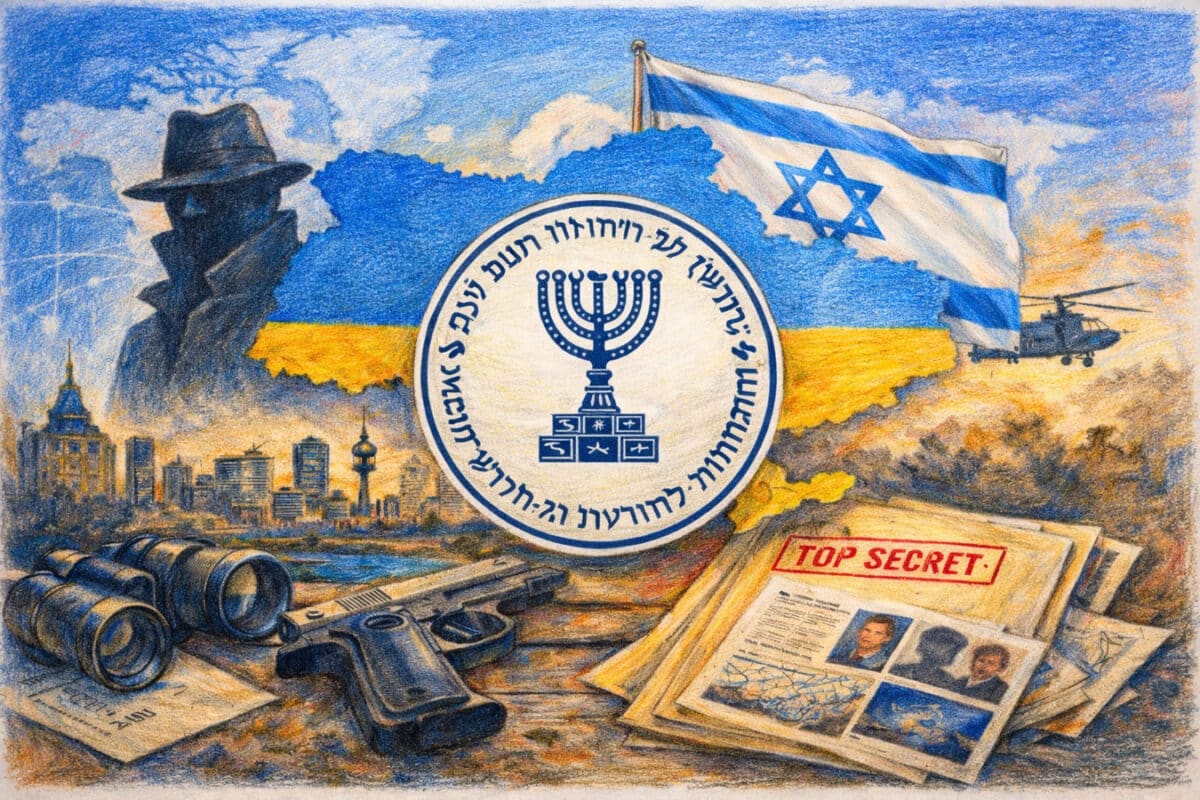
Israeli intelligence has long become part of a global political myth. Mossad is spoken of as an almost abstract force — without faces, without biographies, without a past. However, any institution has a human dimension. If you look closely at the history of Mossad’s leadership, especially in the second half of the 20th — early 21st century, it becomes clear: the key stages of the formation and strengthening of Israeli intelligence are connected with people whose roots go back to Ukraine.

This is not about the influence of states or external control. It’s about people shaped by the experience of Jewish life in Odessa, Kharkiv, Kherson — cities where security was never guaranteed, and the ability to survive became part of everyday culture. This experience was in demand at a time when the young state of Israel needed not just intelligence, but a survival system. This was noted by Valery Boyanju in “Odessa Life”.

Ukrainian Jewish Reality as a Factor of Thinking
Jews from Ukraine: how immigrants from Ukraine shaped 'Mossad' - the Ukrainian trace in Israeli intelligence
Jews from Ukraine: how immigrants from Ukraine shaped “Mossad” – the Ukrainian trace in Israeli intelligence

Jewish Ukraine at the end of the 19th and the first half of the 20th century was a space of constant risk. Pogroms, revolutions, changes of empires, the Civil War, Stalinist repressions, Nazi occupation — all these are not abstract chapters of textbooks, but personal memories of thousands of families. For these people, the state was rarely a source of protection. More often — a source of threat or, at best, indifference.

It was in such an environment that a type of thinking was formed, based on three principles: not trusting declarations, verifying reality, and acting in advance. This approach later became one of the unspoken foundations of the Israeli security system.

Mossad as a Product Not Only of the State but Also of the Diaspora

Officially, Mossad was created in 1949, after the declaration of Israel’s independence. At an early stage, it was a compact structure with limited resources. However, it quickly began to rely on people with experience in underground struggle, military intelligence, and living under constant threat.

Immigrants from Eastern Europe, including Ukraine, fit organically into this logic. They did not perceive security as something given. For them, it was always a process, not a state.

Meir Amit (1963–1968): Kharkiv Roots and Systemic Transformation

Meir Amit (Hebrew: מאיר עמית, born Meir Haimovich Slutsky) led Mossad from 1963–1968, during a period when Israeli intelligence was transitioning from the stage of formation to the stage of institutional maturity. Although Amit was born in Israel, his parents came from Kharkiv — one of the largest Jewish intellectual centers in Eastern Europe.

Article in the Ukrainian Wikipedia – Meir Amit.

In English biographies, it is consistently mentioned that he was a cousin of the poet Boris Slutsky, and Slutsky himself grew up/was formed in Kharkiv (this is about the poet).

This background was reflected in his management style. Amit was opposed to improvisation for the sake of heroism. He insisted on analytics, data structuring, and strategic planning. It was under him that Mossad became not just a set of operations, but part of a unified architecture of national security.

During his leadership, intelligence played a key role in preparing for the Six-Day War. After leaving his post, Amit did not disappear from public life: he became a member of the Knesset, participated in economic and technological projects, including telecommunications and the defense industry. This highlights an important detail: for this generation, intelligence was not an isolated profession, but part of the general state thinking.

Yitzhak Hofi (1974–1982): Odessa Pragmatism in an Era of Crisis

Yitzhak Hofi (Hebrew: יצחק חופי, born Yitzhak Poberesky) led Mossad from 1974–1982 — one of the most challenging periods in Israel’s history. His leadership came after the Yom Kippur War, the rise of international terrorism, and the strengthening of threats beyond the Middle East.

Article in the Ukrainian Wikipedia – Іцхак Хофі.

Hofi was born in Mandatory Palestine, but his parents emigrated from Odessa. The Odessa Jewish environment always combined irony, caution, and harsh realism. This cultural code was reflected in his management style.

Hofi avoided publicity and believed that the best operation is the one that neither journalists nor politicians know about. Under him, Mossad significantly expanded its international agent networks and strengthened its ability to operate beyond the region, including in Europe and other continents.

Meir Dagan (2002–2011): Kherson, the Holocaust, and the Rejection of Illusions

The most famous figure with Ukrainian roots was Meir Dagan (born Huberman, in another transcription Huberman), who led Mossad from 2002–2011. He was born in Kherson in 1945 to a family that survived the Nazi occupation. (in some sources, 1947 is indicated; Odessa is also named as Dagan’s place of birth).

His grandfather was killed during the Holocaust, and this family tragedy became part of his worldview.

Article in the Ukrainian Wikipedia – Meir Dagan.

Dagan came to intelligence from the army, went through key Israeli wars, and formed a reputation as a person who does not believe in the “goodwill” of the enemy. In his office, a photograph of a deceased relative was kept for many years — not as a symbol of revenge, but as a reminder of the price of strategic mistakes.

Under Dagan, Mossad focused on preventive actions against strategic threats, including the nuclear programs of Israel’s adversaries. He consistently opposed the illusions of diplomatic appeasement and believed that intelligence must prevent threats before they become the subject of public discussions.

Behind the tough image was a person with unexpected interests. Dagan was fond of painting and sculpture, was a vegetarian, and valued unconventional thinking. This combination of internal reflection and strategic toughness made him one of the most controversial figures in the history of Israeli intelligence.

Common Denominator: Experience of Instability

What unites these people is not geography per se, but the experience of living in conditions of instability, characteristic of Jewish Ukraine. This experience formed several key principles that later became the foundation of Israeli intelligence culture:

absolute distrust of declarations without confirmation;
willingness to act in conditions of uncertainty;
understanding that the weakness of the state is always perceived as an invitation to aggression;
orientation towards long-term survival, not short-term political comfort.

Myths Around the “Ukrainian Trace”

In recent years, the topic of the Ukrainian roots of Mossad leaders is often used for propaganda purposes. This is a distortion of reality. Mossad has always been and remains an instrument of the Israeli state, subject to its laws and political leadership.

The Ukrainian roots of its leaders are part of the history of the Jewish diaspora, just like the Polish, Lithuanian, German, or Iraqi. Attempts to turn this fact into a political sensation only simplify the complex and tragic history of the 20th century.

Why This Matters Today

Against the backdrop of the ongoing war in Ukraine and the protracted conflict around Israel, the historical context takes on new significance. Ukrainian Jews are not a “bridge of influence” or a political tool. They are part of the common historical fabric, in which the destinies of Ukraine, Israel, and the Jewish people are intertwined.

Understanding this allows for a better view of the logic of Israeli security — a logic formed not by abstract doctrines, but by real experiences of loss, flight, and survival.

Instead of a Final Point

The history of Mossad is the history of specific people who brought not only professional skills but also personal memories of what happens when security is underestimated. The Ukrainian Jewish trace in this history is not a sensation and not an argument in political disputes.

It is a reminder that from Odessa, Kharkiv, and Kherson, the path sometimes led not only to emigration but also to the very heart of the system responsible for the survival of the state.

Category: “Jews from Ukraine” | NANews – news of Israel

Israeli radio in Ukrainian? – did you know about Dmitry Gershenzon’s program “Fafa-Lyala” on the First Radio 89.1 FM? – we recommend

In Israel, there is a radio station that many turn on out of habit — in the car, at work, at home. “First Radio 89.1 FM” has long become a part of everyday life for Israelis. But there is a program on its airwaves that not everyone knows about: a Ukrainian-language broadcast entirely dedicated to Ukraine.

This is the program “Fafa-Lalya”, hosted by Honored Artist of Ukraine Dmytro Gershenzon. It is a rare format for Israeli FM radio — a broadcast in Ukrainian, dedicated to Ukrainian music, culture, and famous Ukrainians.

A program about famous Ukrainians, great Ukrainian culture, and unique Ukrainian music. The host of the program, Honored Artist of Ukraine Dmytro Gershenzon, introduces music and songs from different years and styles. He presents premieres and shares stories about the creation of songs, VIA, conducts interviews — and all this in Ukrainian” – the creators present their program.

Here, for example:

What is “First Radio 89.1 FM”

“First Radio 89.1 FM” https://www.891fm.co.il/

and https://www.facebook.com/891pervoe

and https://www.youtube.com/@PervoeRadio89.1

is a commercial FM radio station in Israel. It began broadcasting on October 14, 2001 and has since remained one of the most recognizable stations for the country’s audience.

The radio operates in the FM band daily from 07:00 to 23:00, and online broadcasting is available 24/7. In addition to classic radio reception, the station can be listened to via the internet and on television platforms. This gives “First Radio” a wide audience and makes it an important media platform for different cultural voices.

Israeli radio in Ukrainian: did you know about Dmytro Gershenzon's program 'Fafa-Lalya' on First Radio 89.1 FM? - recommended
Israeli radio in Ukrainian: did you know about Dmytro Gershenzon’s program ‘Fafa-Lalya’ on First Radio 89.1 FM? – recommended

Ukrainian program on Israeli radio

Against this backdrop, the appearance of a program in the Ukrainian language within the schedule looks particularly noteworthy. “Fafa-Lalya” is not a short segment or a one-time project, but a full-fledged author’s program that has been regularly broadcast for several years.

The format of the program is musical and educational. The focus is on:

  • Ukrainian music from different eras and genres,
  • stories of famous songs’ creation,
  • tales of legendary VIA,
  • contemporary performers,
  • interviews and cultural context.

And all this — with Ukrainian speech on Israeli radio, without adaptation and translation “for convenience.”

Dmytro Gershenzon: biography and creative path

Dmytro Lazarevich Gershenzon is a Ukrainian musician, singer, composer, arranger, and radio host, Honored Artist of Ukraine. He was born on March 9, 1956 in the city of Balta, Odessa region (at that time — Ukrainian SSR).

Gershenzon received his musical education at the Bălți Music College, graduating in 1976. By the late 1970s, he began his professional musical career and quickly entered the Ukrainian pop scene.

Since 1977, Dmytro Gershenzon worked with various vocal-instrumental ensembles. Over the years, he was a member and soloist of well-known groups, actively performing, recording, touring, and collaborating with other Ukrainian musicians. His activities covered both performance work and composing and arranging.

In the 1990s, Gershenzon became widely known as one of the representatives of the Ukrainian pop scene. His contribution to the development of Ukrainian music was officially recognized: in 1996, he was awarded the honorary title of Honored Artist of Ukraine.

In addition to concert activities, Dmytro Gershenzon actively worked in the studio, wrote music, engaged in arrangements and production, and participated in the creation of musical projects and programs. His professional biography is connected with Ukrainian musical culture of the late 20th — early 21st century.

In 2013, Dmytro Gershenzon repatriated to Israel. After moving, he did not cease his creative activities and continued to work with Ukrainian cultural material already in the Israeli context. It was during this period that he became the author and host of the Ukrainian-language radio program “Fafa-Lalya”, dedicated to Ukrainian music, culture, and famous Ukrainians.

here – https://www.facebook.com/dmitrij.gersenzon

Thus, Dmytro Gershenzon’s creative path unites several stages — the Soviet and post-Soviet period of Ukrainian pop, independent Ukraine, and the Israeli stage, where he continues to popularize Ukrainian culture beyond the country.

When “Fafa-Lalya” airs

The program airs in the evening, usually in the format of a one-hour broadcast at 20:00 on Tuesdays.

In the broadcast schedule, it has established itself as a regular program, not a one-time project. In addition to the live broadcast, individual episodes can be found in the radio’s archive recordings.

Why it matters

“Fafa-Lalya” is not just a music program. It is an example of how Ukrainian culture sounds in Israel not episodically, but systematically.

On the radio, in the country of repatriation, where dozens of identities intertwine, the Ukrainian program in the Ukrainian language becomes a form of cultural presence — calm, natural, and lively.

It is not nostalgia or exoticism. It is a normal conversation about music, people, and memory — in one’s own language.

Question to readers

Have you ever accidentally come across “Fafa-Lalya” — in the car, at home, at work?
And if so: which Ukrainian song or performer sounds like “home” to you, even while in Israel?

Where and how to listen

“First Radio 89.1 FM”

“Fafa-Lalya”

at 20:00 on Tuesdays.

Ukrainian Symphony Orchestra Lords of the Sound in Israel January 11-20, 2026: the magic of symphonies, iconic soundtracks, and Ukrainian authenticity

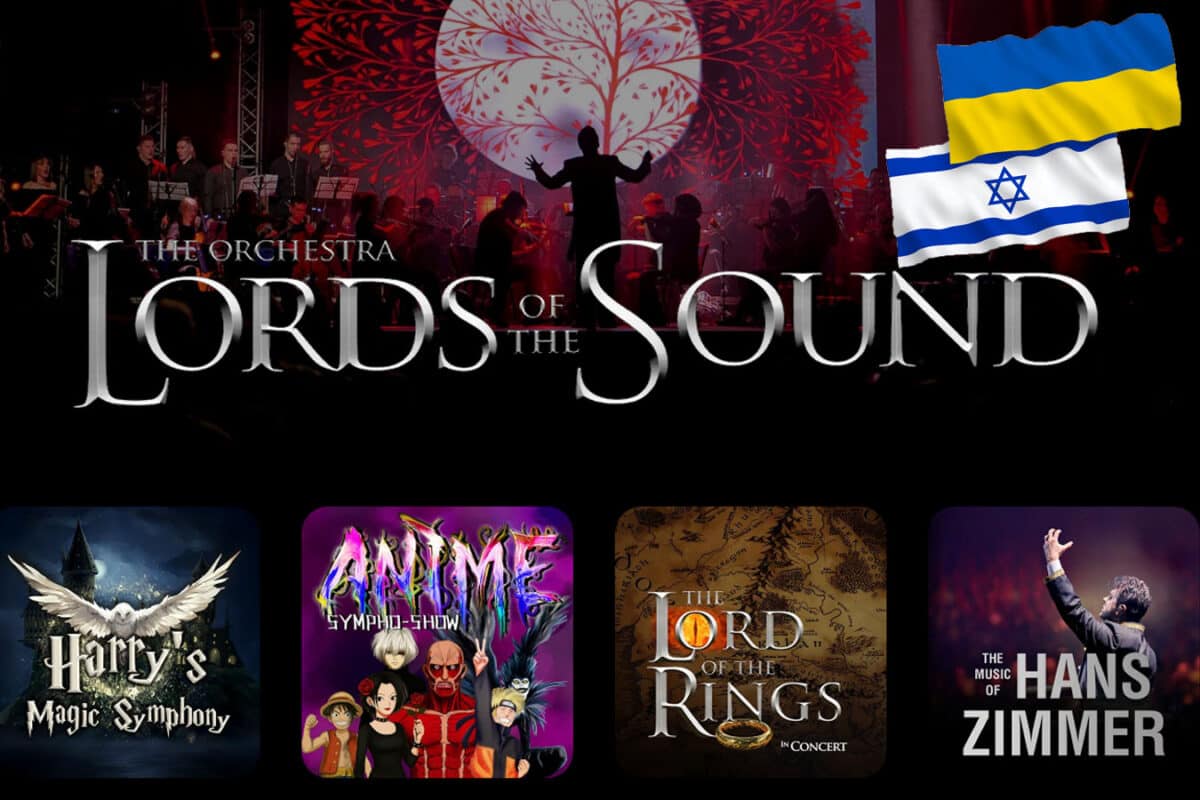
One of the most famous symphony orchestras of Ukraine — Lords of the Sound — is coming to Israel in January 2026 (Jerusalem, Tel Aviv, Haifa, Ashkelon) with a series of impressive programs that have been filling halls across Europe for many years. Founded in 2014 by Andrey Novatorov, the ensemble is renowned for combining symphonic classics, Ukrainian folk instruments, and cinematic sound, turning each concert into a vibrant musical show.

In many of the orchestra’s programs, classical symphonic music is seamlessly combined with arrangements, cinematic themes, and original works with a folkloric sound.

Thanks to this synthesis, Lords of the Sound have become cultural ambassadors of modern Ukraine, presenting a country whose music unites ancient traditions and modern sound to the world.

The orchestra will bring four major programs to Israel: “Harry’s Magic Symphony“, “The Music of Hans Zimmer“, “Lord of the Rings in Concert“, and a new anime show from the project 38 SAMURAI. The Israeli audience will see the orchestra in full composition, with soloists, choir, visual effects, and special stage productions. The orchestra’s musical team consists of 52 people,

A musical style recognizable from the first note

Lords of the Sound have long become ambassadors of modern Ukrainian culture in Europe. From the very beginning, Lords of the Sound have carried the mission to show that symphonic music can be modern, emotional, and close to every listener, without losing the depth of the Ukrainian orchestral school. This school is known for its expressiveness, ensemble precision, and special sound color, formed over generations.

A distinctive feature of the orchestra is the use of authentic Ukrainian folk instruments in symphonic arrangements. Among them: bandura, cymbals, kobza, lyre, flute, trembita, ocarina, drymba, surma, bagpipes, basol, and torban — each with its own history, construction, and unique performance technique.

These instruments require special skills and a deep understanding of traditional Ukrainian intonation and phrasing. Their performance is not just a technique but a part of cultural heritage that is not taught or practiced in music schools worldwide.

Programs to be brought to Israel

Ukrainian symphony orchestra Lords of the Sound in Israel January 11-20, 2025: magic of symphonies, iconic soundtracks, and Ukrainian authenticity

«Harry’s Magic Symphony» 

«Harry’s Magic Symphony» immerses the audience in the world of Harry Potter through live performances of the best musical themes from all the films. The concert combines symphonic sound, soloists, choir, light effects, and visual projections, creating an atmosphere of magic.

The audience follows a familiar path — from platform 9¾ and the appearance of Hogwarts to the climactic battles. The music of Williams, Doyle, Hooper, and Desplat is revealed anew thanks to the orchestra’s voluminous sound.
Visual installations replicate the atmosphere of forests, castles, and magical scenes, enhancing the effect of presence.

The program is suitable for audiences of all ages and makes the concert a true theater of emotions, where music and magic merge into a single show.

«The Music of Hans Zimmer» 

This program opens the world of Hans Zimmer — a composer who changed film music. Themes from «Interstellar», «Gladiator», «Dune», «The Dark Knight», «Inception», «Pirates of the Caribbean», and other films are performed on stage.

The orchestral performance shows the depth of Zimmer’s scores: powerful brass, expressive strings, dramatic percussion. The audience hears details that remain hidden in the cinema.
Visual direction supports the dynamics of the music and creates an atmosphere of movement, light, and tension.

This is an emotional show where music becomes a narrative — from quiet, intimate themes to epic climaxes.

«Lord of the Rings in Concert» 

Howard Shore’s music comes alive in concert performance, creating the effect of a complete journey through Middle-earth. Themes of hobbits, elves, Rohan, and Mordor are conveyed through the power of the orchestra, choir, and soloists.

Warm melodies of the Shire are replaced by majestic elven harmonies and dark rhythms of the dark lands. Lighting solutions convey the atmosphere of each world — from the green tones of the Shire to the cold shades of Mordor and Gondor.

The program provides a deep emotional immersion into Tolkien’s legend and turns music into a separate epic action.

«Anime Sympho-Show» (38 SAMURAI) 

«Anime Sympho-Show» is a bright symphonic show created by the project 38 SAMURAI. Soundtracks from Naruto, One Piece, Attack on Titan, Evangelion, Demon Slayer, Death Note, Tokyo Ghoul, and other iconic anime are performed on stage.

38 musicians, a rock band, choir, and soloists create a powerful sound that combines symphony and the drive of the modern scene.
Visual effects use the aesthetics of Japanese animation: dynamic colors, flashes, montage transitions — all of this enhances the immersion effect.

The program is suitable for both anime fans and those discovering this music for the first time. It is a spectacular and emotional concert in the style of symphonic crossover.

The history of the Lords of the Sound orchestra

Foundation and concept

The symphony orchestra Lords of the Sound was founded in 2014 by producer Andrey Novatorov, who conceived the project back in 2012. Working with a theater in Bila Tserkva, he noticed that the local orchestra was idle. Being a fan of film music, Novatorov proposed creating an ensemble that would play soundtracks and music from films and video games — a direction almost unrepresented on the academic stage.

The goal was to combine cinematic music and symphonic art, attract a new audience, and show that film music can sound just as powerful in a concert hall.

The first program was «100% Soundtrack Hits» (2014), where due to a lack of material, works by Bach and Beethoven were added. Despite initial difficulties, the orchestra quickly attracted public attention and began gaining popularity in Ukraine and beyond.

Growth and international development

Gradually, the ensemble turned into an international project, where besides musicians, sound engineers, designers, and video engineers work. After the first successes, the orchestra expanded its touring geography: Ukraine, Poland, Czech Republic, Baltic countries, Germany, Italy, France, Spain, Israel, and other countries.

Significant performances took place in Kyiv:

  • March 3, 2018 — the first solo concert of the symphony orchestra in the Palace of Sports (full house),
  • March 30, 2018 — a full house in the Palace «Ukraine».

These concerts cemented the status of Lords of the Sound as a phenomenon of the Ukrainian scene.

Repertoire and creative evolution

Since 2014, the orchestra has created about 20 thematic programs, simultaneously maintaining 6–7 active ones. Besides film shows, the ensemble experimented: programs with ballet, projects with an academic choir, symphonic rock, cross-over productions.

In 2024, the program «Electro Symphony» started, where classical instruments are combined with electronic music. For the orchestra, it is fundamentally important that technology complements, rather than replaces, live sound.

Musical directors and soloists

Many of the orchestra’s programs are prepared under the direction of conductor Shahrokh Fathizadeh, a musician of Iranian origin, who created original arrangements, including music by Hans Zimmer.

Ukrainian conductor Nazar Yakobenchuk also works with the ensemble, leading part of the foreign tours.

The vocal part is an important component of the show. Among the soloists:

  • countertenor Yaroslav Radionenko (famous for performing the Diva’s aria from «The Fifth Element»),
  • soloists Yaroslava Taran and Margarita Meleshko.

For some projects, special video sequences are created, turning concerts into full-fledged visual productions.

International achievements

Today, the orchestra’s repertoire includes more than 300 works: film soundtracks, music from games, original compositions, classics, and jazz. Lords of the Sound give dozens of concerts across Europe, including large-scale tours:

  • about 60 performances in France,
  • about 30 in Germany, — all with full houses.

In 2025–2026, the orchestra is going on tour in the USA for the first time, including a debut at the legendary Town Hall in New York.

Critics note that the ensemble managed to turn a symphonic concert into a modern emotional show, maintaining high performance quality. The combination of symphony, rock, electronic music, video direction, and effects has become the key to international success, but at the center of performances is always live music.

The role of the orchestra in supporting Ukraine since 2022 

When explosions were heard over Ukraine again in February 2022, the orchestra Lords of the Sound did not disappear. On the contrary — it seemed to gather strength. Their stage, which was once just a place for soundtracks, turned into a space where they speak about the war not with slogans, but with music. And this is heard from the first notes.

By spring of that year, they were already standing on European stages — Warsaw, Prague, Riga, Berlin. Sometimes in large theaters, sometimes at solidarity events outdoors. Zimmer’s music, Howard Shore’s themes, which everyone knows from movies, suddenly sounded different: more collected, sharper. Many evenings were held as charity events — funds were sent to refugees, Ukrainian volunteers, those who needed help here and now. Each concert became a small diplomatic mission, where instead of long explanations — emotions and flags on the musicians’ shoulders.

Almost immediately, Ukrainian works were included in the repertoire. Sometimes it was a folk melody, sometimes a modern patriotic song, sometimes music by Ukrainian composers. At each concert, at least one Ukrainian piece is performed — this is how the orchestra introduces the world to a culture many hear for the first time. Soloist Yaroslav Radionenko has repeatedly told audiences: «Music can no longer be outside politics». And the audience understood this.

At the same time, charity grew. In 2022–2023, part of the tours was conducted in a fundraising format — people brought donations, and a share of the concert profits went to support the Ukrainian army and humanitarian projects. At festivals and telethons dedicated to Ukraine, the orchestra performed alongside artists who helped the country from the first day of the war. These were not just performances — rather, moments when the hall turned into one big family.

The Ukrainian diaspora especially supported them. At concerts in France, Lithuania, Latvia, Germany, people who have lived abroad for a long time and those who left Ukraine during the war came.

Halls were filled with embroidered shirts, flags, children’s drawings. After performances, people approached the musicians, thanked them for the feeling of home — even if just for two hours, but home.

In Ukraine itself, the orchestra performed where it was safe: before soldiers, medics, displaced persons. They played for those living amid alarms and forced relocations. Several concerts were organized specifically for volunteers — people who unloaded humanitarian aid for days but still came to listen to music, just to catch their breath.

In 2022, the ensemble recorded several patriotic video messages — symphonic versions of Ukrainian songs that spread on social networks as short musical letters of hope.

And then — tours again. In 2023–2024, Lords of the Sound covered almost all of Europe: from small towns to large venues like Arena Riga, from theaters in the Baltics to prestigious halls in France and Germany. Many concerts were sold out — full halls, standing ovations, dozens of countries where Ukraine sounds through music.

Ahead is a new step: the first tour in the USA in 2025, including performances at legendary venues where Ukrainian orchestras have rarely reached. And in every hall — from Riga to Los Angeles — it all starts the same way: a short pause, the conductor’s glance at the musicians, a breath… and a quiet but distinct
«Glory to Ukraine».

Today, the orchestra has become not just an ensemble, but the voice of the country. Their music is a weapon that unites instead of destroying. Their stage is part of Ukrainian resistance. And as long as instruments sound in their hands, the world will hear the story of Ukraine: alive, stubborn, bright.

Tickets and concert schedule in Israel (January 2026) 

10.01 — Jerusalem, “Sherover” Hall — The Lord of the Rings in Concert

11.01 — Haifa, Teatron ha-Tzafon — The Music of Hans Zimmer

12.01 — Haifa, Teatron ha-Tzafon — Anime

13.01 — Haifa, Teatron ha-Tzafon — Harry’s Magic Symphony

14.01 — Jerusalem, “Usishkin” Hall — Harry’s Magic Symphony

15.01 — Jerusalem, “Usishkin” Hall — The Music of Hans Zimmer

16.01 — Tel Aviv, “Smolarsh” — The Lord of the Rings in Concert

17.01 — Tel Aviv, “Smolarsh” — Anime

18.01 — Ashkelon, Cultural Center — The Music of Hans Zimmer

19.01 — Tel Aviv, Bronfman Auditorium — The Music of Hans Zimmer

20.01 — Tel Aviv, Bronfman Auditorium — Harry’s Magic Symphony

Tickets can already be purchased on the orchestra’s Israeli tour website:

https://lotstour.com/

The musical power that unites cultures

Lords of the Sound carry the Ukrainian orchestral tradition around the world and create programs that resonate with audiences of all ages. Their Israeli tour is an opportunity to hear live music created with great love for art and respect for the audience.

January promises to be a truly symphonic month — bright, emotional, and full of magic.

NAnews News of Israel Nikk.Agency

Extradition in question: can Israel extradite Timur Mindich to Ukraine – precedents have already occurred

The key figure in the large-scale NABU and SAP investigation into corruption in the energy sector, Timur Mindich, who is accused of treason in Ukraine under martial law, has left the country and is in Israel. Sources in diplomatic circles confirm: the theoretical possibility of his extradition exists, but the path to it is complex, multi-step, and entirely depends on the legal competence of the Ukrainian side.

This is not about a purely political decision, but about a procedure in which evidence, formal requirements of Israeli law, and the position of the courts play a decisive role.

Extradition in question: can Israel extradite Timur Mindich to Ukraine

Israel is not rushing with extradition

Israel is traditionally extremely cautious about extraditing its own citizens. The basic principle is the protection of Israelis from being handed over to other states. However, this principle is not absolute. In exceptional cases, if it concerns serious criminal offenses and if the evidence meets high standards, extradition is possible.

Lawyers point out: having Israeli citizenship in itself does not guarantee protection from extradition. Especially if the investigation proves that the crimes were serious and had a transnational element, including actions on Israeli territory.

This is the scenario currently being discussed in the context of the Mindich case.

Revocation of citizenship as a factor

Under Israeli law, the state has the right to revoke the citizenship of a person who has committed serious criminal offenses. This mechanism is rarely applied, but it exists. If used, the legal position of the suspect weakens sharply: further extradition may be considered within the framework of international treaties and criminal cooperation.

However, everything here also depends on evidence. The Israeli side will not act based on political statements or media pressure.

NABU’s position

NABU Director Semyon Kryvonos stated directly that Israeli citizenship is not an insurmountable barrier.

“There are cases when Israel has extradited its citizens to other states. These are legally complex processes, but they are possible. We will work in this direction,” he noted in a comment to Radio Liberty.

Historical precedents

Extradition from Israel to Ukraine has already occurred. In 2010, Israel extradited its citizen to Ukraine, accused of murdering a police officer in Dnipro. The crime was committed back in 1997, and the final decision after lengthy legal proceedings was made by the Supreme Court of Israel.

This case shows: with sufficient evidence and properly formatted requests, the Israeli judicial system is ready to proceed with extradition.

But there are also reverse examples.

The failure of the Stavitsky case

The story of former Ukrainian Energy Minister Eduard Stavitsky remains a negative example for Kyiv. Having obtained Israeli citizenship under the name Nathan Rosenberg, he remained unreachable for Ukrainian justice for many years.

Despite requests from the Ukrainian Prosecutor General’s Office, extradition never took place. The Israeli side considered that the materials presented did not prove guilt to the extent required by local standards. Later, the criminal proceedings in Ukraine were closed due to the statute of limitations, which finally removed the issue from the agenda.

The key moment — the prosecutor’s office

In extradition cases, the decisive link is the Israeli prosecutor’s office. It evaluates the evidence received from a foreign state and decides whether to refer the case to court.

The process then becomes purely judicial: Israeli prosecutors must prove that the charges are justified and meet the criteria of Israeli law. Even a positive decision by the Supreme Court does not automatically mean extradition — it must be approved by the Israeli Minister of Justice.

The finale — only by law

The extradition of Timur Mindich is possible only in one case: if the Ukrainian side can legally, not politically, prove his guilt. Without this, the case risks repeating the Stavitsky scenario — with years of requests, refusals, and reputational losses.

For Israel, this is a matter of the rule of law. For Ukraine, it is a test of the quality of the investigation and the prosecutor’s office.

This is precisely where the story of Mindich’s possible extradition stands today, closely watched in both Jerusalem and Kyiv. In this context, it is important to understand: decisions here are made not by politicians or the media, but by courts and prosecutors acting strictly within the framework of the law — as is customary in Israel and in international practice.

In the finale of this story, much depends on whether the Ukrainian prosecutor’s office can navigate this complex legal route without errors — because this is how real extradition works today, as regularly reported by NANews — News of Israel | Nikk.Agency.

Hair Loss? Hair Health Center Haifa: Treatment, Hair Restoration and PRP Therapy

#promotion

  • Hair loss?

  • Baldness?

  • Thinning hair?

  • Hair damage?

  • Scalp problems?

  • PRP therapy

“Abramsky” – Hair Health Center in Haifa
Check-Post, HaHistadrut Ave 44, Haifa, 3296034

>>>go to the website and find out more>>>

Sign up today for a hair diagnostic at the Abramsky Center for free and without any obligations:


Hair and skin are the most important indicators of a person’s overall health.

Shiny, smooth and fresh skin, thick and shiny hair are clear signs of health.

It should be noted, however, that in most cases, treatment of hair loss or changes in the structure and condition of the hair necessarily requires treatment of the scalp.

Hair loss — a condition characterized by partial or complete hair loss due to disruption of the hair growth cycle: observed reduction in the number of hair follicles in the growth phase and an increase in the number in the degeneration phase, as a result of which hair becomes brittleand hair loss depends on the quality of the hair follicle.

Hair Health Center in Haifa – Don’t neglect your hair and be healthy!

PRP therapy — an innovative procedure in trichology that allows you to cope with many diseases of the scalp and hair in a short time.

The essence of the method is to introduce a special preparation based on the patient’s blood plasma, enriched with platelets, into the scalp. Plasma therapy can work wonders, because it contains more than 1 million cells per 1 microliter, responsible for regeneration and rejuvenation.

After completing the course of treatment, you will forget about hair loss, brittleness and split ends.

PRP therapy is absolutely safe and has a minimum of contraindications.

Thousands of patients around the world have already tried this method and were very satisfied. In their reviews, they note that after undergoing PRP therapy of the scalp, the hair became thicker, shinier, stopped falling out and began to grow faster.

The results of the procedure last for several years.

Hair Health Center “Abramsky”

offers a wide range of hair and scalp care treatments!

Check-Post, HaHistadrut Ave 44, Haifa, 3296034

>>> go to the website and find out more >>>

If your hair requires restorative treatment after repeated dyeing, look tired, started to fall out or do you suddenly have scalp problems appeared –

Zsign up today for hair diagnostics at the Abramsky Center

free of charge and without any obligations.

We stand for individual treatment protocol patient, performing his work using professional materials and based on the degree of development of each problem.

We also use various treatment methods, such as equipment using devices, mesotherapy, massages and much more.

The diagnosis is made using computerized technology.developed specifically for the diagnosis of hair and scalp.

The most important step is to distinguish that with the help of correct diagnosis (diagnosis) the correct and best treatment is suitable for everyone who suffers from hair loss or damaged hair.


  • Restoration of damaged hair structure.

  • Strengthening the hair follicle.

  • Increases moisture in dry hair and scalp.

  • Nourishing hair with vitamins.

  • Acceleration of hair growth.

  • Stop hair loss.

  • Complete restoration after painting, sun exposure or facial exposure.

  • Treatment of scalp problems (increased oiliness, dandruff)


Hair Health Center “Abramsky”

offers a wide range of hair and scalp care treatments!

Check-Post, HaHistadrut Ave 44, Haifa, 3296034

>>> go to the website and find out more >>>

Sign up today for a hair diagnostic at the Abramsky Center for free and without any obligations:


Hair Health Center in Haifa – Don’t neglect your hair and be healthy!

Jews from Ukraine: Philip Kotler – the father of global marketing with roots in Nizhyn and Chernivtsi

“… The UN is a major problem. It was created to maintain world peace and engage in peacekeeping when needed. Unfortunately, they did not create armed forces to support all nations. Moreover, Russia is part of it, and I understand that all members want to change the charter and remove it. Ultimately, we want them (Russia – ed.) not to appear on the UN map at all because they set a bad example for the world…

In our regular column “Jews from Ukraine”Philip Kotler, by blood, is a Ukrainian Jew whose family roots go deep into Ukrainian soil, from which his parents were forced to emigrate to the United States in the early 20th century.

Who is Philip Kotler

Jews from Ukraine: Philip Kotler – father of global marketing with roots in Nizhyn and Chernivtsi #євреїзукраїни NAnews Israel news July 1, 2025

Philip Kotler is an American economist and professor at Northwestern University (Kellogg School of Management), known as the “father of modern marketing”. He developed the concepts of the marketing mix (4P), social marketing, demarketing, and Marketing 3.0, which emphasizes values and humanism.

By combining marketing with psychology and economics, he laid the scientific foundations for modern marketing practice.

One of his most famous works, Marketing Management, is used worldwide as a key university textbook. His theories help companies build customer-oriented strategies and gain competitive advantages in global markets.

He has written over 80 books, and his flagship work Marketing Management is used in over 60 countries and translated into dozens of languages, including Ukrainian and Hebrew. Throughout his career, he received 22 honorary doctorates, including from Ukrainian institutions.

Family and Jewish roots

Kotler was born in 1931 in Chicago, in a family of Jewish immigrants from Ukraine. His father, Maurice Kotler (original surname Kotliarevsky), was born in Nizhyn in 1905, and his mother, Betty Bubar, was born in Berdychiv or Chernivtsi in 1910. They emigrated to the U.S. in 1917.

“I grew up in an environment where everyone knew you had to be not only successful but also useful.” — Philip Kotler

Nizhyn: Jewish pain and strength

Nizhyn is one of Ukraine’s oldest Jewish centers. In the early 20th century, Jews made up about 30% of the population. The city had 10 synagogues, schools, doctors, and craftsmen. The pogroms of 1905 and 1919 led to mass Jewish emigration.

Chernivtsi: Capital of Jewish intelligentsia

Chernivtsi was the cultural capital of Bukovina. It was home to Zionists, poets, and scholars. On the eve of World War I, Jews made up up to 40% of the city’s population. Famous Jewish natives include Paul Celan, Joseph Schmidt, Eliezer Steinbarg. Kotler’s mother was raised in this unique cultural atmosphere.

The path to success

Philip studied at the University of Chicago and MIT. He was the first to apply an economic-mathematical approach to marketing. His ideas became the foundation of strategic management and humane business thinking.

Philip Kotler: I was deeply disappointed by India’s and China’s neutrality on Ukraine

Philip Kotler in 2022:

“I’m very interested in peacemaking and marketing peace. We must identify areas and zones of war, like Syria and others. The truth is that the UN is a major problem. It was created to maintain world peace and intervene when needed, but it failed to create armed forces to defend nations. Moreover, Russia is part of it, and I understand that members want to change the charter and remove them. Ultimately, we want them to disappear from the UN map because they are a bad example for the world. We also must demand compensation for the destruction they’ve caused. Yes, there are people in Russia who don’t want war, but they too bear responsibility.

When the war against your country started, I hoped that all great powers, like India and China, would support Ukraine. I was deeply disappointed when they chose neutrality. The U.S. and other allies should be more active in addressing those countries publicly about what Russia is doing.”

Kotler and Ukraine

  • 2006 — Honorary doctorate from Kyiv-Mohyla Academy
  • 2009 — Visits to Kyiv and Odesa with lectures
  • 2022 — Online lecture in support of Ukraine
  • 2023 — His genealogy published by Ukrainian researchers
  • 2025 — Featured in article “The Father of Marketing with Ukrainian Roots” on Shotam.info

“When the war against your country began, I hoped all leading nations would support Ukraine. I was disappointed when that didn’t happen. But that’s no reason to give up.” — Kotler, 2022

NAnews – Israel News

On the website NAnews – Israel News, we highlight individuals who connect Ukraine and Israel. Kotler is one of these symbols. His name is known in every business school, and his voice speaks for Ukraine.

Kotler and Israel

  • 1997 — Lectures at Tel Aviv University as part of the Kellogg-Recanati MBA program
  • 2002Marketing Management published in Hebrew
  • Collaboration with Professor Yaakov Hornik
  • Cited in Israeli media and business forums

“If business can sell Coca-Cola to every village, why can’t we sell the idea of peace?” — Kotler on peace marketing

Conclusion: Jews from Ukraine — a global legacy

Philip Kotler is one of the most influential intellectuals of the 20th and 21st centuries. His roots are in Nizhyn and Chernivtsi, his ideas have reached the entire world, and his voice speaks for justice and enlightenment.

Read more in our ongoing series “Jews from Ukraine on NAnews – Israel News.

Protests in Iran: Is escalation to war in the Middle East possible?

Anti-government protests in Iran, the largest since 2022, have been ongoing for several days and go beyond the usual surges of discontent. Donald Trump publicly stated the possibility of US intervention in case of force being used against demonstrators. In response, the entourage of Iran’s Supreme Leader Ali Khamenei warns of the risk of large-scale destabilization of the entire region.

This rhetoric emphasizes that it is not only about internal unrest but also about the intersection of internal crisis with external pressure.

Economy as a Trigger

The main reason for the protests is the sharp decline in living standards. The collapse of the rial has deprived income and savings from those segments of the population that were recently considered the social support of the regime. This is a qualitative change: not only traditional groups of discontent are protesting, but also people who were previously oriented towards stability at any cost.

At the same time, expectations of a quick collapse of power have not been met. Instead of a revolutionary explosion, a different dynamic has emerged — a slow, heavy realization of systemic defeat. The protests are not so much radicalizing as they are expanding and deepening in their social base.

Who Iranians Blame

Within Iranian society, there is no single explanation for what is happening. Some place responsibility on the Islamic Revolutionary Guard Corps, accusing it of militarizing the economy and foreign policy adventures. Others blame moderate politicians — including President Masoud Pezeshkian — for their inability to change course.

There are also those who directly point to Ali Khamenei or the very model of Islamic governance as the source of the crisis. The range of opinions is extremely wide, and this becomes a problem: society criticizes but does not formulate a single alternative project.

The key question remains unanswered — if not an Islamic state, then what instead?

Weakness of the Opposition and Limits of Dialogue

The Iranian opposition remains fragmented and institutionally weak. Attempts to create a united front regularly fail, reducing the likelihood of a quick political breakthrough. Against this backdrop, Pezeshkian tries to engage in dialogue with society, which noticeably distinguishes him from his predecessors.

However, this approach balances on the edge. For part of the population, it looks like a chance for evolutionary changes. For conservative elites, it appears as a manifestation of weakness that could undermine the foundations of the system.

“Velayat-e Faqih” as a Systemic Node

The principle of “velayat-e faqih” is a key pillar of the Iranian political model. The Supreme Religious Leader controls not only the spiritual sphere but also foreign policy, the army, intelligence services, and strategic state decisions. This principle was enshrined in the Constitution after the 1979 revolution and remains the foundation of the theocracy.

The scenario of significant changes is directly related to the figure of Khamenei. In the event of his departure, a revision of the very structure of power is possible if the elites conclude that “velayat-e faqih” has become a hindrance to the regime’s survival. This is not inevitable, but it is not fantasy either.

External Pressure and the Israel Factor

The situation is exacerbated by the external context. Israel consistently conducts informational, cyber, and psychological operations against Iran, and the threat of direct military escalation remains real — especially in the first half of 2026.

For Benjamin Netanyahu, the domestic political calendar is also important: the election factor can influence the harshness of decisions. In this sense, the Iranian crisis ceases to be solely Tehran’s internal affair.

Trump and the Risk of Backfire

Donald Trump’s statements about possible US intervention can play a dual role. On one hand, it is a signal of support to the protesters. On the other hand, in Iran, such threats are often perceived as a humiliation of national dignity, which can consolidate part of society around the regime.

Pezeshkian tries to avoid this scenario by betting on internal dialogue and reducing the degree of confrontation. But this approach may provoke a harsh reaction from radical conservatives.

Window of Uncertainty

Iran today is in a state of rare convergence of internal and external pressure factors. Economic crisis, loss of a sense of security, regional threats, and the erosion of the legitimacy of power increase the likelihood of change.

However, Iranian society remains heterogeneous, and the development scenarios are extremely risky. There are no quick solutions, and any abrupt movement may lead not to reforms but to a new phase of instability.

Context of Expertise

The author’s analysis is based on the assessments of Orientalist and political scientist Igor Semivolos — Executive Director of the Center for Middle Eastern Studies, a specialist in the history and cultural anthropology of the region.

It is in such a complex intertwining of internal crises and regional politics that the situation in Iran is being considered today — and its development is closely monitored by NANews — News of Israel | Nikk.Agency.

During the period of martial law, Ukraine received medical humanitarian aid worth ₴21.52 billion, including from Israel – Ministry of Health of Ukraine

During the period of martial law, Ukraine received medical humanitarian aid worth more than 21.52 billion hryvnias. This data was published by the Ministry of Health of Ukraine on January 2, 2025. Behind the dry numbers is the real work of the healthcare system in wartime conditions, where each delivery means saved lives.

Since the beginning of the full-scale war, Ukraine has received 18,454 tons of medical humanitarian aid. This is not a one-time action or symbolic support, but a continuous flow of resources without which the treatment of the wounded, emergency medicine, and the basic resilience of hospitals are impossible.

The structure of the aid shows the scale of efforts. Ukraine received 440,768,449 units of medicines, as well as 260,924,210 units of medical devices, personal protective equipment, and components. These are consumables that are used daily in operating rooms, intensive care units, and stabilization points.

A separate category included 36,099 units of medical equipment and IT solutions, including diagnostic systems and digital infrastructure. In addition, 987 units of medical and specialized transport, 876 generators, more than 139,000 medical instruments, and 3,026 units of medical furniture and inventory were delivered.

In wartime conditions, the protection of personnel is also important. The deliveries included 4,815 bulletproof vests and helmets, including armor plates and plate carriers. Ukraine also received 9 mobile buildings and hospitals, 595 Starlink terminals for communication, and another 17,289,499 units of aid categorized as “other”.

The Ministry of Health emphasizes that humanitarian aid is distributed not only among institutions subordinate to the Ministry of Health. It is also directed to municipal and departmental medical institutions, including those operating within the security and defense system. The key principle is priority.

First of all, aid is received by medical institutions in the combat zone and near the front line, as well as hospitals treating the wounded. A separate focus is on regions with a large number of internally displaced persons, where the burden on healthcare is many times higher than pre-war levels.

Deputy Minister of Health for Digital Development Maria Karchevich notes that each delivery has practical significance: containers and batches of aid turn into system resilience and the ability to work even under shelling.

Medical humanitarian aid was provided by international and non-governmental organizations, the business sector, and the governments of the following countries:

USA, Italy, Luxembourg, Czech Republic, Germany, France, Austria, Malaysia, Slovakia, Denmark, Spain, India, Switzerland, Poland, Latvia, Sweden, South Korea, Pakistan, Finland, Lithuania, Liechtenstein, Belgium, United Kingdom, Canada, Norway, Azerbaijan, Netherlands, Romania, Israel, Serbia, Kenya, Moldova, Argentina, Slovenia, Hungary, United Arab Emirates, Turkey, Japan, Mexico, Estonia, Australia, Bulgaria, China, Ireland, Singapore, Brazil, Cyprus, Greece, Indonesia.

This list is not just a collection of flags. It is a map of international support, where countries from Europe, the Middle East, Asia, America, and Africa coexist. Including Israel, whose aid has become part of Ukraine’s overall medical survival infrastructure.

The contribution of Israeli society to supporting Ukraine deserves special attention. In addition to state and institutional aid, Israeli volunteers, charitable foundations, medical organizations, and private initiatives played a significant role. From the first days of the war, medicines, equipment, protective gear, mobile medical solutions, and humanitarian cargo for the civilian population were sent from Israel to Ukraine.

Israeli doctors, paramedics, and emergency medicine specialists shared their experience of working under constant threat of shelling, and Israeli technological and medical startups participated in providing hospitals with communication, diagnostic solutions, and autonomous life support systems. Jewish communities, volunteer networks, and civil activists played a separate role, consistently coordinating the collection and delivery of aid to frontline regions of Ukraine.

This support has become an expression not only of international solidarity but also of the direct civic responsibility of a society that understands the cost of war and the vulnerability of the civilian population. Such efforts—at the level of people, not just states—turn humanitarian aid into sustainable support and long-term cooperation between countries.

The amount of 21.52 billion hryvnias is not an accounting report. It is an indicator of how global solidarity transforms into specific saved lives, functioning operating rooms, and hospitals that continue to operate despite the war. It is about such connections between Ukraine, Israel, and the world in crisis conditions that NAnews — News of Israel | Nikk.Agency consistently reports.

Svyatoslav Vakarchuk in Israel February 15, 17, 2026: music that keeps Ukraine in the heart – Okean Elzy

Duration of the concert: 1 hour 30 minutes Performance is in Ukrainian

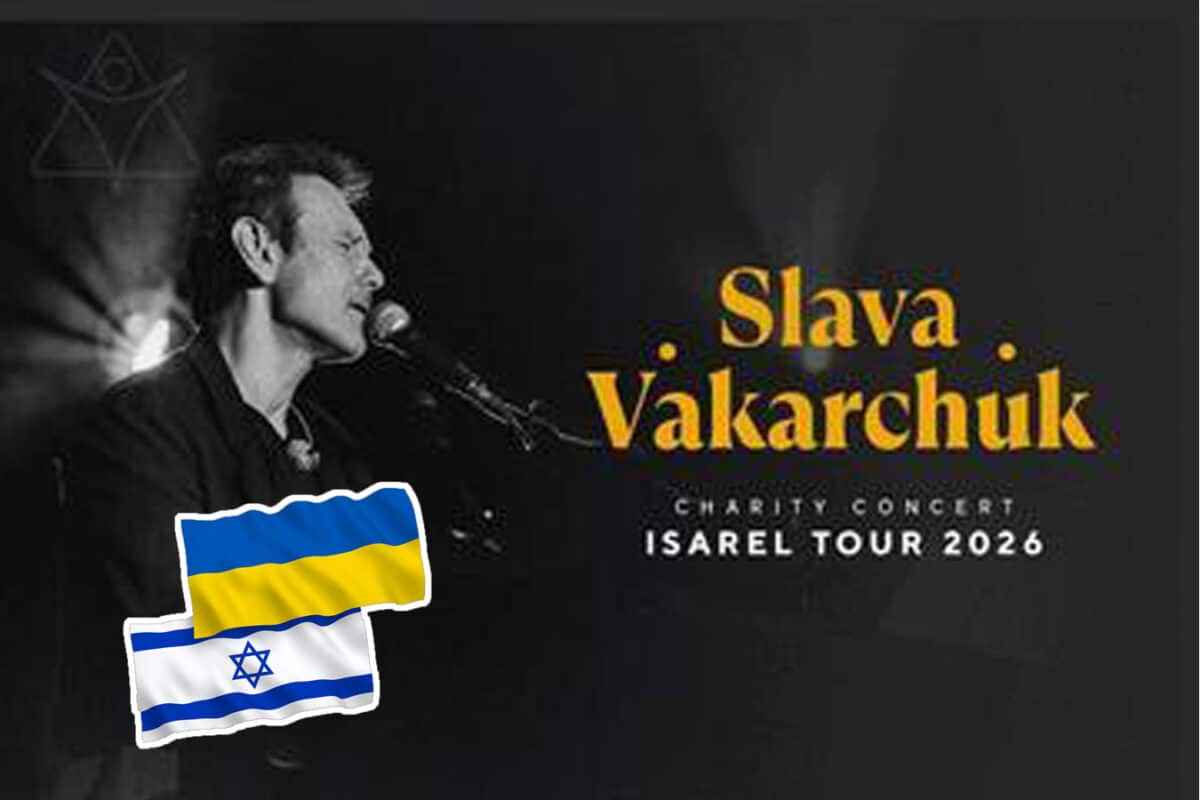
February in Israel promises to be especially warm — and not because of the weather. In the middle of the month, a person whose music has accompanied the most important moments of Ukrainian history for many years — both joyful and tragic — will arrive here. Sviatoslav Vakarchuk, the frontman of the legendary Ukrainian rock band “Okean Elzy,” is bringing a chamber charity tour to Tel Aviv and Haifa, which will also visit America, Canada, and Europe.

Each such evening is not just a concert, but a space of living memory and community, where people from different cities of Israel gather to feel Ukraine nearby, hear familiar melodies, and support a country where the war has been ongoing for almost 4 years.

Two cities — two evenings that will become points of strength

The tour includes two performances:

  • February 15, 2026 — Tel Aviv, Beit HaHayal
  • February 17, 2026 — Haifa, Auditorium

Tickets – https://nikk.kassa.co.il/announce/Vakarchuk

Sviatoslav Vakarchuk in Israel February 15, 17, 2026: music that keeps Ukraine in the heart - Okean Elzy
Sviatoslav Vakarchuk in Israel February 15, 17, 2026: music that keeps Ukraine in the heart – Okean Elzy

Both concerts are designed to be chamber — without large screens, complex stages, and the usual rock energy that “Okean Elzy” fans are accustomed to. Here, the aesthetic is different: soft light, guitar, piano, lyrics that sound like a personal address to each listener.

Vakarchuk chose this format for a reason. He says that in this “small” form, music most honestly reflects what is happening with Ukraine, its people, its defenders, and those who were forced to leave.

The voice of the nation that sounded even where there was no light

Sviatoslav Vakarchuk is called different things — a cultural symbol, the voice of a generation, a person who knows how to be close. But for Ukrainians, his role is much deeper: he is the voice of a country that lives with war and continues to fight for its future.

Since 2022, he has given almost 300 performances on the front line — in shelters, dugouts, at train stations, in liberated cities where explosions had just ceased. People who survived the occupation say that his appearance became a moment that restored faith that Ukraine would endure.

And it is this experience that became the basis of the new chamber tour. There are no loud effects here — only voice, instrument, and stories that cannot be told on a big stage.

What the artist himself says

Vakarchuk’s words are not an advertising preparation, but a confession backed by real war experience:

«You know what an Okean Elzy concert is like — it’s drive, powerful energy, big movement.
But this solo project is completely different. It’s about the connection between people. About help. It’s personal — warm, calm, truly sincere.
I started these performances in 2022 when the war covered the whole country. Since then, I have sung almost three hundred times on the front line — in shelters, dugouts, at train stations, and in newly liberated cities. Where much is destroyed… but people remain unbreakable.
I sang Ukrainian songs, classics, and Okean Elzy compositions to our defenders.
Now I invite you — I will sing to you just as I sang to them.
I will tell their stories — of courage, love, pain, and hope.
And together we will do something truly important — gather support that Ukraine needs now».

This quote is the key to understanding what exactly awaits the audience in Israel: not an entertainment show, but a meeting with a person who lived through the war with his people.

Performance format: two acts, two states

The chamber concert is divided into two parts, each carrying its own emotional meaning.

I. Guitar — music of the front

In the first part, he comes on stage with only an acoustic guitar. This is a reference to those very performances on the front line, where he came without security, without a stage, just to be close to the soldiers.

Such a presentation creates a special atmosphere — as if the audience finds themselves in the same space where music was played for those who defend Ukraine every day.

People say that at this moment, something almost physical is felt in the hall — tension, gratitude, all the unspoken words.

II. Piano — the place where his music was born

In the second part, a piano appears on stage. Most of Vakarchuk’s songs were written at the instrument — and this part of the concert sounds like a return to the origins.

This is a more intimate, soft, thoughtful part. Here, the music reveals the lyrics — often familiar for decades — in a completely new way.
Even those songs that have long become hits sound in this format as if they were written yesterday, under the wail of sirens.

What will be heard: from “Taka yak ty” to “Cheremshyna”

The setlist of the concerts is formed according to the mood of the specific evening, but traditionally includes:

  • legendary hits of “Okean Elzy” —
    “Taka yak ty”, “Same ta”, “Misto Mariyi”, “Obiymy”, “Bez boyu”, “Na nebi”
  • solo compositions
  • Ukrainian folk songs
  • world classics, which he performs with special emotional precision

Audiences in Europe and the USA note that in acoustics, the songs gain new depth — you hear not only the melody but also every pause, breath, internal dynamics, which is often lost on a big rock stage.

Why these concerts are so important for Ukrainians in Israel

The Ukrainian community in Israel has been growing since 2022. Thousands of people were forced to leave their homes, many experienced shelling, evacuations, the loss of loved ones.

For them, such evenings are an opportunity to feel not like a fragmented community, but as part of a united people.
Here they sing standing, here they hold flags, here they cry and smile at the same time.

Vakarchuk’s music helps return to that state when you feel connected to home, even being thousands of kilometers away.

Charitable goal: music that works to help Ukraine

This tour is not just a commercial project. Part of the proceeds goes to humanitarian initiatives, support for the military, and volunteer programs.

Every ticket purchased is an investment in the future of Ukraine, in those who now live under shelling, in those on the front line, in those waiting for their return home.

For the diaspora, this is an opportunity not just to be spectators, but real participants in a common cause.

What the audience will feel

  • the chamber atmosphere of a small hall
  • an honest dialogue through songs and stories
  • a new interpretation of hits that everyone knows
  • Ukrainian classics that unite people of different generations
  • the feeling that you are in a place where music is heard not only with ears but also with the heart

Such evenings are remembered for a long time. And judging by the audience’s reaction, each concert turns into a small island of Ukraine — where it’s warm, where you can hear the breath of the hall, where no one is indifferent.

Tickets: The tour includes two performances

  • February 15, 2026 — Tel Aviv, Beit HaHayal
  • February 17, 2026 — Haifa, Auditorium

Tickets – https://nikk.kassa.co.il/announce/Vakarchuk

NANews News of Israel Nikk.Agency

Venezuela, Iran, and the Logic of Power: Why the World Reacts So Contradictorily

Venezuela, like Iran, has long been in the same geopolitical camp as Russia. Therefore, discussions about “international law” in this context sound detached from reality — it is Moscow that has consistently destroyed it for years. From this perspective, the US operation against the regime of Nicolás Maduro is perceived not as an abstract forceful step, but as a factor weakening Russia’s positions on the world stage. And thus — indirectly strengthening Ukraine’s resistance.

The logic here is simple and harsh. The faster the regimes friendly to Moscow in Venezuela and Iran collapse, the closer the strategic limit for Russia itself will be. Not for moral reasons, but due to the loss of support points and resources of influence. This is how many analysts see it, regardless of their attitude towards Donald Trump.
Amen.

Against this backdrop, the global reaction to the US actions in Venezuela turned out to be heterogeneous. The Israeli Ministry of Foreign Affairs refrained from commenting until the end of Saturday, but there is no doubt in diplomatic circles: the Israeli leadership generally supports the American military steps against the Maduro regime. This fits into the broader context of confrontation with the Iranian-Russian axis.

South Africa called for an emergency meeting of the UN Security Council. However, real criticism of Washington came only from a limited number of states. Most preferred cautious wording or a wait-and-see position.

Just last week, Russia and China were demonstrating readiness to support Maduro in his confrontation with the US. It was reported that shortly before the start of the American operation, the Venezuelan president met with China’s special representative for Latin America. However, today it is becoming clear: declarations were not followed by real actions. Beijing remains silent, and Moscow speaks extremely cautiously, clearly unwilling to engage in direct confrontation with Washington over Venezuela.

The Russian Ministry of Foreign Affairs, nevertheless, officially called the US actions “an act of armed aggression.” The statement mentions “fabricated and unfounded reasons” for Maduro’s arrest and emphasizes the need for guarantees of “Venezuela’s right to self-determination.” Moscow supports the convening of the UN Security Council and declares solidarity with the Venezuelan people — rhetoric well known from other crises.

Meanwhile, in the US, Attorney General Pam Bondi announced charges against Maduro in a “narco-terror” case. This step shifts the situation from a purely military plane to a legal-political one and expands the field of pressure on the regime.

The reaction of other countries was indicative. Turkey, which had previously consistently supported Maduro, this time avoids direct defense. The statement from the Turkish Ministry of Foreign Affairs only mentions the need for stability and well-being of the Venezuelan people — without the previous harsh rhetoric.

In the European Union, it is emphasized that Maduro does not possess democratic legitimacy. Brussels does not directly condemn the US actions but expresses concern about the state of international law and order. The head of European diplomacy, Kaja Kallas, stated that the EU is closely monitoring the development of events and insists on taking into account the norms of international law.

The President of the European Commission, Ursula von der Leyen, emphasized the need to support the people of Venezuela and the peaceful transfer of power, highlighting the importance of legal procedures — a formula reflecting the traditional European balance between principles and realpolitik.

In individual European countries, reactions vary. UK Prime Minister Keir Starmer emotionally emphasized that London is not participating in the US operation, reminding of the importance of international law. Spain offered mediation in resolving the crisis. In Germany, positions diverged: some parliamentarians sharply criticize Trump, while the official line of the German Foreign Ministry remains unvoiced.

Ukraine took a predictable position. Foreign Minister Andriy Sybiha stated support for the right of peoples to freedom and democracy, pointing to systemic violations by the Maduro regime. Kyiv emphasizes the importance of international law but clearly sees the connection between the weakening of Moscow’s allies and its own security.

Iran reacts cautiously. Supreme Ayatollah Ali Khamenei limited himself to general statements about “support for the people” and hope for salvation from the “enemy,” avoiding direct threats against the US or open defense of Maduro. This silence is as indicative as loud statements.

The US operation in Venezuela has already become not just a regional episode, but an element of a broader restructuring of forces. The reactions of countries show: the world is increasingly speaking less in the language of principles and more in the language of interests and calculation. It is in this logic that the events are being considered today in Israel, Ukraine, and far beyond — as regularly written by NAnews — News of Israel | Nikk.Agency.