Ukrainian stand-up in Israel: Anton Lirnyk will perform in four cities in February 2026

From the end of February 2026, Ukrainian comedian and showman Anton Lirnik will conduct a series of solo stand-up concerts in Israel. Over four days, he will perform in four cities — Netanya, Tel Aviv, Haifa, and Ashdod. The poster promises smart humor without censorship, proven charisma, and a promise: laughter backed by convictions and actions.

Concert Route: Where and When

  • February 26, 2026 (Thursday), 20:00 — Netanya
    Eshkol HaPais, Golda Meir Ave. Ticket price — 205 shekels.
  • February 27, 2026 (Friday), 20:00 — Tel Aviv
    Center for Music and Performing Arts, Sheerit Israel St. 10. Tickets: 185–225 shekels.
  • February 28, 2026 (Saturday), 19:00 — Haifa
    Beat Club, Shderot HaNasi 124. Price — 205 shekels.
  • March 1, 2026 (Sunday), 20:00 — Ashdod
    Monart Concert Hall, Derech Eretz St. 8. Cost — 205 shekels.

Before the War: Comedian, Screenwriter, Showman
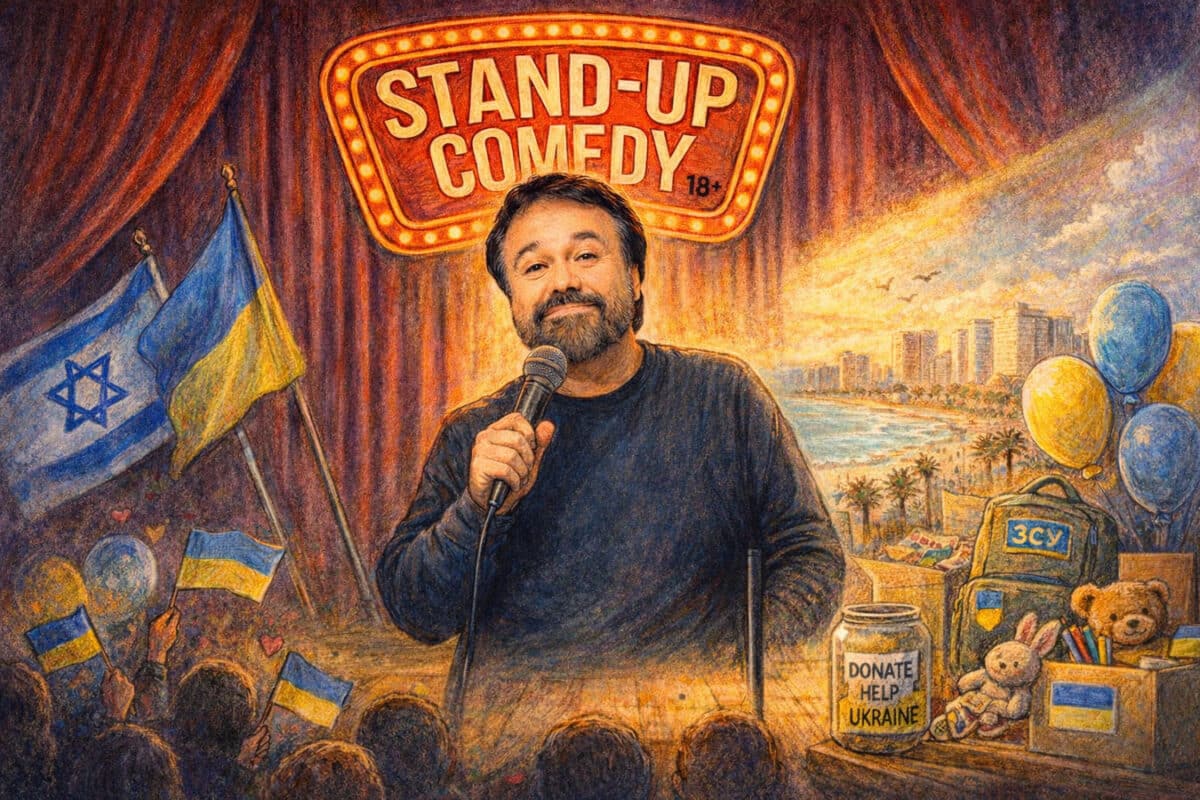
Ukrainian Stand-up in Israel: Anton Lirnik to Perform in Four Cities in February 2026

Before 2022, Anton Lirnik was a prominent figure on the Ukrainian and post-Soviet stage. His creative path began back in the 1990s — with KVN, radio, and work as a screenwriter. In the 2000s, he co-authored dozens of popular TV shows, worked on radio and television, and developed music and internet projects.

In 2006, together with Andrey Molochny, he created “Chekhov’s Duet” — a comedy project that quickly became a resident of Comedy Club (TNT) and gained wide popularity in both Russia and Ukraine.
“Chekhov’s Duet” is a well-known Ukrainian comedic duo that became popular thanks to performances on television, including shows like “Evening Quarter” and “Make the Comedian Laugh”. The group became famous for satirical sketches with elements of absurdity and everyday irony. Their performances on politics, everyday life, and social issues found a wide audience in Ukraine and the CIS countries. Many sketches are still available on YouTube and gather views due to their relevance and accuracy.

In parallel, Lirnik worked as a screenwriter and editor:

  • Comedy Club, Comedy Woman, Nasha Russia, Laughter Without Rules, Killer League, Comedy Battle, Jokes from A to Z, HB

  • He was an author and host on TV channels STB, ICTV, 1+1, New Channel

He also created the music project “Lirnik BAND”, performed as a singer, shot music videos, and hosted author YouTube shows (“Jokes in the Elevator” and others). He was a coach in “League of Laughter” (1+1), producing original formats for Ukrainian TV.

By 2022, Lirnik had almost 30 years of experience in media: from morning broadcasts and television hits to his own concert tours. After the start of the full-scale war, he completely changed the vector of his public activity.

From Show Business to Conscious Emigration

Anton Lirnik was born in Chisinau, studied in Odessa, and became known as a Ukrainian TV host and comedian. In the early 2000s, he actively worked on Ukrainian and Russian projects: “Chekhov’s Duet” brought him recognition, tours, and contracts. But after 2014, he increasingly returned to the Ukrainian information field — first as an author, then as an actor and producer.

On February 24, 2022, the day of the invasion, Lirnik was in Moscow.

He published an anti-war post, and a few days later recorded a video message to Putin asking to open a “green corridor” for the evacuation of civilians from Volnovakha. The appeal caused a wave of criticism in Ukraine — the tone seemed too soft to many, and the very fact of addressing the head of the aggressor state caused indignation. Later, Lirnik explained: he was under surveillance, threatened with consequences, and it was the only possible way to convey the message and try to help.

Soon after, he left Russia. He lived with his family in Turkey for some time, then moved to Spain. He still lives there.

“I have no ties with Russia. No property, no friends, no plans. Only the fear that I won’t be able to help those who remain in Ukraine,” he said in an interview.

Helping the Armed Forces of Ukraine and Children of War: Concrete Actions

Despite the difficult start of 2022 and the wave of hate after the appeal to Putin, Anton Lirnik did not fade into the background. He remained public, openly spoke about Ukraine, and got involved in real charitable initiatives.

His parents and two brothers remain in Ukraine. One of the brothers has been serving in the Armed Forces of Ukraine since the start of the full-scale war.

“My brother is fighting. And I help as much as I can. This is not for the press, but I know where he is, and we are in touch,” Lirnik explains.

He emphasizes that he regularly helps his brother and his unit — with funds, equipment, and support.

“I help the Armed Forces of Ukraine,” he says directly.

He also admits that he seriously considered joining the Ukrainian Defense Forces:

“I wanted to serve. But then I realized that I could be more useful here — with words, on stage, with resources.”

Since 2023, Lirnik has been conducting stand-up concerts with a charitable component, directing proceeds to humanitarian needs. The main focus is on helping Ukrainian children affected by the war. He collaborates with the UA Alive 2022 foundation, donating to the Camp for Kids program — rehabilitation camps for children who have experienced evacuations, shelling, and occupation.

🧾 Collection Facts:

  • Spring 2023 — 105,000 UAH

  • Autumn 2023 — 97,000 UAH

  • December 2023 — 109,000 UAH
    Total — over 300,000 UAH in just one year

The collections took place during tours in Spain, Germany, the Baltic countries, and Israel. All transfers are confirmed by stories, photos, and foundation reports.

Anton also helped personally: in Turkey, he bought clothes and brought humanitarian aid to Ukrainian orphans evacuated by the Ruslan Shostak foundation:

“I personally dressed these children. We brought boxes of clothes — and I saw a child put on a new jacket and smile for the first time. It’s unforgettable.”

Since 2024, the practice has become permanent. On posters, he wrote:

“Every concert of mine is another chance. One ticket — one day of normal childhood for someone.”

He emphasizes that the performances are not about a career, but about a mission of help:

“It’s hard for me to be in the rear, but I know I can be useful. If I can do something with words — I will do it. If laughter gives money for life — I will joke every day.”

Lirnik’s wife explained in an interview with NV:

“We are not returning to Ukraine because Anton is touring, and these concerts are a way to help his brother and those who remain there.”

In 2025, the Russian Ministry of Justice included Lirnik in the list of “foreign agents” — for supporting Ukraine, sharp anti-war statements, and refusing to work in Russia.

“If my concert is an opportunity to send at least one child to camp, I will go on stage every day,” he concludes.

Why Israel and Why Now

The Jewish audience has long been among the artist’s fans. He performed in Israel even before the war, but now these concerts are not just tours. They are a platform for dialogue, a form of communication with the Ukrainian diaspora, and a way to raise donations.

The poster description on the website states: “Smart humor without censorship. Possible bouts of uncontrollable laughter. Possible sudden empathy.”

The audience can expect a balance between satire, self-irony, bitterness, and absurdity. Lirnik talks about emigration, everyday life, conflicts, old age, and parenting. But the underlying theme is Ukraine, war, trauma, and the search for meaning. These are not slogans, not sermons. This is stand-up. But not out of context, with an open heart.

Lirnik Today: Not a Hero, but a Citizen

Anton does not call himself a volunteer or political activist. He emphasizes that he does what he knows: writes, performs, organizes, and donates. He is not visible at rallies, but he is visible in foundation reports. He is not public in the Ukrainian TV space, but he is well known in the diaspora. He does not use tragedy for hype, but he does not remain silent.

In 2025, the Russian Ministry of Justice included him in the list of foreign agents — for supporting Ukraine and sharp statements. Including for interviews where he called Russia’s actions “military madness” and criticized artists who remained in Russia.

What Will Happen in Israel

Four stages, four cities, one artist. Lirnik returns to the stage not as a TV host and not as a clown. But as a person who lives in reality and tries to do what he can.

Concerts in Israel are not propaganda, not a show of suffering. This is an honest stand-up of a person who remained Ukrainian — not by registration, but by essence.

Tickets and Support

Organizers advise booking in advance — in previous years, the halls were overcrowded. Part of the income, as before, will be directed to humanitarian programs.

If you want to laugh without turning off your conscience — this is the place for you.

Anton Lirnik. Solo Stand-up. Israel, February–March 2026.

Tickets – https://showman.co.il/e/anton-lirnik-solnyy-standup/
Video: “SHO?” – how trials, faith and support turned the restaurant into a “place of power” for Ukrainians in Israel – Ganna Andrienko on the UDM Israel channel

Hanna Andriienko shares the story of transforming a karaoke club into the restaurant “SHO?”, the wave of challenges she faced, and how her project brings together the Ukrainian and Jewish communities in Tel Aviv and Israel.

On July 9, 2025, the second episode of the “Balachky” podcast was released on the UDM Israel channel, in which Hanna Andriienko, owner of the “SHO?” restaurant, spoke about her journey from economist to the hostess of one of the most heartfelt Ukrainian establishments in Tel Aviv.

Below we will reveal the main topics of the conversation and recommend watching the full video to hear all the details firsthand:

Main Topics of the Conversation

  • The story of turning a karaoke club into the “SHO?” restaurant
  • Adapting “SHO?” to wartime restrictions and switching to takeout and delivery
  • Cultural mission: gastronomic evenings, “Territory Show” and “Odessa Courtyard”
  • The role of “SHO?” in the life of the Ukrainian community in Israel: support, gatherings, and traditions
  • Challenges and achievements of Ukrainians in Tel Aviv: how the community unites and develops

The “SHO?” Restaurant – A Home for the Ukrainian Soul in Israel

  • Origin story: a sudden call from the former owner of a karaoke club and Hanna’s bold decision to create a “place of strength.”
  • Atmosphere and menu: interior with Ukrainian rushnyky, family recipes for borscht, varenyky, deruny, and six types of signature nalivky.
  • Supporting guests: the switch to takeout and delivery during the crisis when it was important to keep warmth in the community.

Subscribe to the “SHO?” Restaurant on Facebook: facebook.com/shoukrainianfood

3 Karlibach Street, Tel Aviv, Israel

The Ukrainian Community in Israel: Challenges and Achievements

Community Challenges

Emotional burnout after intense months, lack of coordination among initiatives, adaptation of new arrivals, and the need to preserve traditions.

Main Achievements

Regular “Zdybanka” gatherings with hundreds of participants, cultural projects “Territory Show” and “Odessa Courtyard,” volunteer campaigns, and the growth of the UDM Israel channel, confirming keen interest in the topic.

UDM Israel and the “Balachky” Podcast

UDM Israel https://www.youtube.com/@udmIsrael is the first Ukrainian-language channel from Israel where activists and entrepreneurs share stories of resilience and support in the “Balachky” format.

The high production quality and live format make this project a true bridge between cultures.

On the NAnews — Israel News website, we continue to tell stories of resilience and mutual aid. The stories of “SHO?” and UDM Israel inspire and show: together we are stronger.


Ukrainian-Jewish origins of Mark Zuckerberg’s family: historical documents discovered

At one time, humorous images of Facebook founder Mark Zuckerberg wearing an embroidered shirt were popular on Ukrainian social networks.

The combination of American-Jewish Zuckerberg and a traditional Ukrainian shirt looks funny, although in fact it is possible. After all, the ancestors of FB’s “father” come from Ukraine, namely from the Lviv region.

Historians have found evidence of the Ukrainian-Jewish roots of Facebook founder Mark Zuckerberg. As part of the study of archival records, it became known that his ancestors came from the city of Rozdol, Lviv region.


Ukrainian-Jewish origins of Mark Zuckerberg’s family: archival finds

History of ancestors: discovery of archival documents

Historical research published on the website “JewishNews“, revealed that the roots of Facebook founder Mark Zuckerberg stretch to Western Ukraine. The discovery became possible thanks to the work of Ukrainian historian Oksana Lobko within the framework of the project “Mandri Rozdilski”. Archival records from Lviv and Warsaw showed that Zuckerberg’s ancestors lived in the city of Rozdol, located 40 kilometers from Lviv.

Road to America: how the Zuckerbergs left Ukraine

Research shows that Zuckerberg’s great-grandfather, Isaac Zuckerberg, was born in Rozdol in 1866. As JewishNews points out, his parents, Sender and Ruhel Grunshtein, were engaged in trading activities and had 11 children. The family bore the surname Zucker, which after emigrating to the United States was changed to Zuckerberg – which translates as “sugar mountain” (Ukrainian “tsukrova gora”, “sugar” in Ukrainian “tsukor”).

The family emigrated to America at the end of the 19th century, and according to archival data, Isaac left Europe at the age of 27, arriving in New York in 1893. At that time, the family had already adapted their surname to American pronunciation, which was one of the steps towards assimilation in the new country.

“Mark Zuckerberg’s ancestry in Ukrainian lands highlights the multifaceted history of the Jews of Ukraine and their contribution to world culture,” quote NAnews“.

Zuckerberg family tree

The path of the Zuckerberg family continued through a generation: one of Isaac’s sons, Max, married a native of the Ternopil region – Mana (Minni) Wiesenthal, a native of the village of Skala-Podilskaya. Their son Jack became Mark Zuckerberg’s grandfather.

Surname Place of origin Emigration date Additional data
Zucker (later Zuckerberg) Rozdol, Ukraine 1893 Isaac Zuckerberg moved to the USA from Bremen

Archival finds: evidence of Ukrainian roots

An important confirmation of the Ukrainian origin of the Zuckerberg family was an archival document found in the newspaper “Gazeta Lvivska”. He points out that in 1902, the district court of the city of Nikolaev tried to find Isaac Zuckerberg in connection with the death of his mother Ruhel Grunshtein. This recording became another significant evidence of the family ties of the founder of Facebook with Ukraine.

“These archival finds add a new layer to the historical picture of Jewish life in Ukraine and show how far and deep the roots of this culture go,” Jewish News emphasizes.

Possible connections with other cities

Historians have also hypothesized that the Zuckerberg family could be connected to other cities in Western Ukraine. In particular, it is assumed that the ancestors could have come from Drohobych, where the Zuckerbergs also lived. However, there is no exact confirmation of this information yet, and the research is ongoing.

The significance of the discovery for Ukrainian-Jewish history

The research, conducted with the participation of Oksana Lobko, opened an important page in the history of the Jewish people on Ukrainian soil. The story of Zuckerberg’s ancestors is not only an interesting fact about the famous entrepreneur, but also part of a larger picture showing the significant influence of the Jewish community in Ukraine.

What does he think? NAnewssuch finds help strengthen cultural ties and remind us of the centuries-old history of the Jewish presence on the territory of Ukraine.

Leave a comment in Telegram – NAnews channel↓

Friends, you can support us: ₪ or $ — one-time or regular subscription! Let’s develop NAnews together!

Why is your support important?

Greetings, dear readers!

NAnews (Nikk.Agency) is a project created by Israelis with Ukrainian roots.

We write about what we believe is truly important, and it concerns both Israelis with Ukrainian roots, all residents of Israel, the Jewish community of Ukraine, Ukrainians, and all decent people.

We do not just publish news – we analyze key events, examine their impact, and offer a unique perspective on what is happening.

What do we write about?

📌 Israel and Ukraine – what connects them, the challenges and perspectives they face
📌 The War in Ukraine and Israel – events, their impact on the world, and the reaction of society and authorities
📌 Israelis with Ukrainian roots – their life, challenges, and contributions to society
📌 The Jewish community of Ukraine – its role, influence, and current situation
📌 History of the relationship between the peoples – from ancient times to the present day and a look into the future
📌 Personalities of Ukraine and Israel – those who made and continue to make our shared history

We are independent of political parties, sponsors, or government structures. This allows us to write honestly and objectively, without aligning ourselves with anyone’s interests.

However, for NAnews to continue existing and growing, we need support. You can help us if you are able. Even $1 or ₪25 – this is an investment in the future of NAnews.

You can support us monthly via Patreon or one-time via PayPal, as well as Buy Me a Coffee.

Choose a convenient option!

What are the funds from Patreon, Buy Me a Coffee, and PayPal used for?

Every donation helps NAnews exist and develop.

Content expansion – more news, more analysis
Translations and editing – articles are published in Russian, Ukrainian, English, and Hebrew
Website and technical support
Distribution of materials, so more people can learn about them

Even small support makes a difference!

How to support NAnews?


🔹 Patreon subscription (monthly support)

Patreon allows you to set up a convenient subscription that helps the project grow steadily.

💙 $1/month – “Subscriber”
A small contribution, but it is truly important!

💙 $3/month – “Subscriber +”
Your contribution helps release more articles.

💙 $10/month – “Subscriber +++”
You help us develop and make the content deeper.

💙 $20/month – “Subscriber ++++”
Extended support, allowing us to improve materials and work on new projects.

💙 $50/month – “VIP Subscriber”
Maximum support for those who want to actively participate in the project’s development. A 7-day trial period is available!

https://www.patreon.com/nikk_agency


🔹 One-time donations via PayPal

If you prefer to support us one-time, you can use PayPal or a bank card:

💰 Fixed amount (₪ 25 – 1000):

https://www.paypal.com/ncp/payment/LP37PYWEU37M4

💰 Flexible amount:

https://www.paypal.com/ncp/payment/9DKJUMGMGA6NJ


🔹 One-time donations or monthly support via Buy Me a Coffee

💙 Flexible amount or monthly support

https://buymeacoffee.com/nikk.agency


You can help NAnews grow!

The project NAnews – news about 🇮🇱🇺🇦 Israel and Ukraine exists thanks to you.

If it is important for you that we continue releasing materials, analyzing events, and providing objective information, support us!


2026 on the threshold: the world after a year of wars and the map of new hotspots

The year 2025 went down in history as the year when conflicts ceased to be regional and began to merge into a single chain of instability. Clashes between Thailand and Cambodia, the escalation between India and Pakistan — two nuclear powers, the direct confrontation between Israel and Iran, the end of the war in Gaza without a final settlement, the stalemated war in Ukraine, military coups in West Africa, mass massacres in Sudan and Congo — none of this seemed like exceptions. It became a system.

Against this backdrop, Europe and other regions of the world began an accelerated buildup of military capabilities — at a pace not seen in decades. Russia is acting more boldly, China more assertively, and the US is concentrating significant forces in the Caribbean. The combination of these processes forms an extremely tense picture for 2026.

Below are the key risk points where the next year could become pivotal.

The most explosive zone: China, Taiwan, and the Far East

Western analysts increasingly refer to 2027 as the unofficial deadline for a possible conflict around Taiwan. Chinese President Xi Jinping, who has concentrated unprecedented power in his hands, has openly set the task of preparing the People’s Liberation Army for a forceful scenario.

Taiwan has effectively existed as an independent state since 1949, but Beijing continues to consider it a rebellious province. With the start of 2026, tensions are noticeably increasing: Chinese military exercises are increasingly practicing scenarios of blockade and encirclement of the island.

Japan, previously extremely cautious in its formulations, has begun to publicly hint at possible participation in the defense of Taiwan. These statements come against the backdrop of increasingly aggressive rhetoric from Beijing and heighten anxiety in the region.

The Taiwan Strait plays a special role — an artery through which about half of the world’s maritime cargo traffic passes. Any incident here could trigger a chain reaction affecting Korea, the Philippines, Japan, and the entire Pacific region. Against the backdrop of the concentration of American forces in the Caribbean, Beijing may decide to test the limits of Washington’s strategic ambiguity.

Weakening of the “Shiite axis”: Middle East

The Middle East is traditionally perceived as a region where escalation often seems manageable. In 2026, this perception may prove deceptive.

Iran, Hamas, and the Houthis enter the year with weakened positions. A number of key figures in the pro-Iranian camp have been eliminated. The removal of leaders such as Hassan Nasrallah has undermined previous coordination mechanisms. New commanders have been unable to restore the previous level of deterrence.

This has led to the breaking of tacit taboos. Voices from Beirut and Aden increasingly allow for negotiations with Jerusalem. The very fact of such statements seemed impossible just a few years ago.

In Yemen, the situation is taking on a paradoxical character. Separatist forces are strengthening and striving to overthrow the Houthis, but Saudi Arabia — their longtime adversary — threatens strikes against the separatists if they do not recognize the authority of the exiled government in Sana’a.

In Syria, tensions are rising around the course of the government of Ahmad al-Sharaa, which is promoting strict centralization and Sunni legislation. Three key players oppose this: Druze leader Hikmat al-Hijri, Alawite sheikh Ghazal Ghazal, and Kurdish general Mazloum Abdi, who demands official recognition of Kurdish autonomy. Damascus’s refusal to compromise could simultaneously open several fronts.

Europe and Russia: war is already near

February 28, 2025, became a symbolic date for transatlantic relations. After a public conflict in the White House, Ukrainian President Volodymyr Zelensky was effectively shown the door. The signal was crystal clear: American involvement is not guaranteed.

The updated US national security strategy showed a massive shift from the model that defined European security after World War II and especially after the collapse of the USSR.

Attempts to stop the war in Ukraine are stalling, despite the optimistic rhetoric of the American president. In Europe, scenarios of direct conflict with Russia are increasingly being discussed. The response has been rearmament on a scale unseen since the Cold War.

At the NATO summit in The Hague, countries agreed on the goal of increasing military spending to 5% of GDP by 2035. The European Commission presented a rearmament plan worth 800 billion euros. Germany, France, and the United Kingdom announced new waves of conscription.

In fact, the conflict is already underway. Drones disrupt air traffic over Europe, sabotage on railways is recorded in Poland, and hybrid warfare attributed to the Kremlin is reaching its peak. The question of provocations in the Baltic countries is becoming louder.

The NATO Secretary-General has designated 2029 as a target for full readiness. But it is 2026 that may become the year when the trajectory becomes irreversible.

Africa: coups and the rise of jihad

In West Africa, 2026 could be decisive. The region is increasingly plunging into confrontation between states and Islamist groups operating across borders and eroding sovereignty.

The region is splitting. ECOWAS countries lean towards the West. Mali, Burkina Faso, and Niger, which have experienced military coups, are forming an alternative bloc with a clear orientation towards Russia and China.

In Mali, the situation is close to critical. The group “Jama’at Nusrat al-Islam,” linked to Al-Qaeda, has approached Bamako. There is a real risk of losing the capital. The same forces are active in Niger and Burkina Faso. In response, the three countries announced the creation of the “Sahel Regional Forces.”

In Central Africa, the conflict in the eastern part of the Democratic Republic of Congo continues unabated. M23 militants, supported by Rwanda, continue to seize territories, threatening the stability of the entire region.

Caribbean and Latin America: the return of the Monroe Doctrine

“Venezuela is surrounded by the largest fleet in South American history,” wrote Donald Trump. And it was no exaggeration. The American military presence in the region continues to grow, and the consequences of this move are difficult to predict.

Under the slogan “America First,” the Trump administration is actively operating outside the US while simultaneously claiming the Nobel Peace Prize. The Western Hemisphere is becoming a zone of special attention.

From Greenland to the Caribbean, from pressure on Venezuela to support for conservative leaders in Latin America — all this looks like a revival of the two-hundred-year-old Monroe Doctrine.

The main focus is the regime of Nicolás Maduro and drug trafficking. Seizures of oil tankers, naval operations, attempts to declare the regime a foreign terrorist organization — the pressure is increasing. The administration is clearly counting on a split within Caracas’s elites.

However, more direct use of force cannot be ruled out. And the question remains open: will it be limited to Venezuela? The US midterm elections in November could trigger an expansion of operations, including Colombia and Mexico — countries directly affecting US internal security.

The year 2026 begins without illusions. The world is entering a phase where local conflicts increasingly become elements of global confrontation. Understanding these processes is not a matter of theory but of survival, and this is precisely what NAnews — News of Israel | Nikk.Agency dedicates its attention to.

RDK Commander Alive: How the Operation of Russian Special Services Failed

The Main Intelligence Directorate of Ukraine confirmed on January 1: the commander of the Russian Volunteer Corps, Denis Kapustin, is alive. The information about his death, which appeared on December 27 after a drone strike in the Zaporizhzhia direction, was not confirmed. Reports of his “elimination” turned out to be part of a more complex story.

According to Ukrainian intelligence, rumors of Kapustin’s death were launched as part of a multi-step operation. Russian special services indeed attempted to organize his elimination. A sum of half a million dollars was offered for the elimination of the RVC commander.

The operation, overseen by the GUR of Ukraine, lasted more than a month. Its logic was structured not only to prevent the assassination but also to identify specific perpetrators and contacts within Russian structures. As a result, individuals directly preparing the crime were identified.

Ukrainian intelligence emphasizes: it was not a random leak, but a controlled process that allowed the exposure of the enemy’s channels and methods of operation. For the GUR, this was a rare opportunity to play ahead.

The head of Ukrainian intelligence, Kyrylo Budanov, contacted Denis Kapustin via video link and publicly congratulated him on the operation’s completion without losses. He separately noted the symbolic nature of the situation: the announced reward for the “elimination” effectively turned into a resource for continuing Ukraine’s struggle.

Kapustin himself confirmed that he is safe and intends to return to fulfilling tasks. He stated his readiness to continue commanding the corps and participating in further operations.

Kapustin’s biography has long attracted the interest of special services and media. He was born on March 6, 1984, in Moscow, but moved with his parents to Germany as a child. There, he became involved in far-right subcultures, gained fame among football fans, and participated in organizing mixed martial arts tournaments.

In 2019, German authorities annulled his permanent residence permit, and entry into the Schengen zone countries was closed. After the start of the full-scale war, Kapustin moved to Ukraine, where he became one of the founders of the Russian Volunteer Corps.

The RVC unites Russian volunteers opposing Vladimir Putin’s regime. The unit operates in coordination with Ukrainian intelligence and declares its goal to restore Ukraine’s territorial integrity within the 1991 borders, as well as to dismantle the current government in Russia.

The corps participated in combat operations and raids, including on Russian territory. This made Kapustin one of the priority targets for Russian special services and a constant focus of international observers.

Russian authorities have in absentia recognized him as a terrorist and extremist, sentencing him to two life terms. Kapustin himself calls these accusations part of a propaganda war and emphasizes that his actions are directed against a repressive state, not against the civilian population.

The story of the RVC commander’s “death” showed how much information warfare has become part of real combat operations. And how such operations unfold behind the scenes of the front remains an important topic for understanding the conflict — as regularly written by NAnews — News of Israel | Nikk.Agency.

New Year at Mar-a-Lago: Trump, a promise of peace, and signals for 2026

Donald Trump and First Lady Melania celebrated the New Year at a reception at the Mar-a-Lago residence in Florida. Formally — a festive evening. In fact — a political stage where statements were made that could set the tone for the coming years.

During a conversation with journalists, Trump announced his intention to achieve peace by 2026. The wording was brief, without details or a roadmap, but such statements traditionally become markers of future political steps. At Mar-a-Lago, it sounded not like a toast, but like a promise.

The evening was accompanied by a charity auction. A painting depicting Jesus, created right during the event, was sold for $2.75 million. Half of the amount was directed to St. Jude Children’s Hospital, the other half to the local sheriff’s office. This gesture became an important part of the evening’s public image: a combination of religion, charity, and politics.

Among the guests was Israeli Prime Minister Benjamin Netanyahu with his wife. His appearance added an international context and heightened interest in the informal contacts that traditionally accompany such receptions at Mar-a-Lago.

The question of when words about peace might turn into real negotiations remains open. Vladimir Gorbach, Executive Director of the Institute for the Transformation of Northern Eurasia, believes that current consultations between Russia, Ukraine, and the USA are more symbolic in nature. In his assessment, real negotiations are still far off.

Gorbach suggests that a serious diplomatic process is possible no earlier than 2026. Key conditions are the depletion of Russia’s resources and increased pressure from a potential Trump administration. As a guideline, he names the period after April 2026, when real levers of influence may appear.

Particular attention was drawn to Trump’s meeting with Ukrainian President Volodymyr Zelensky. It took place on December 28 in Florida and lasted more than two and a half hours. The negotiations continued in the format of a video conference with the participation of European leaders, emphasizing their political significance.

Following the meeting, Trump stated that he sees the possibility of reaching a peace agreement between Ukraine and Russia. However, disagreements emerged within his team. Public support for Zelensky from Keith Kellogg contradicted Trump’s more restrained statements, indicating a lack of a unified line on the Ukraine issue.

The New Year at Mar-a-Lago became not just a social event, but a platform for signals — to allies, opponents, and voters. How these signals will translate into concrete decisions will become clear later. How personal statements by American politicians, international contacts, and the Israeli context intertwine in the global agenda will continue to be monitored by NAnews — News of Israel | Nikk.Agency.

Shockwave therapy (SWT) for pain. Pain treatment clinic in Haifa and Petah Tikva Israel. Center – North with home visit to the client

#promotion

If you have already visited an orthopedist due to pain, legs, shoulders, knees, spur, joints, tendons, sciatic nerve, slagging, …

… and after checks and help from specialists, the pain continues…

Shock wave therapy (SWT) for pain. Pain clinic in Haifa and Petah Tikva Israel. Center - North with home visit to the client
David Sendler, Practitioner Leader

then today you have the opportunity for FREE at your home:

  • get advice from a physiotherapy specialist;
  • 1 trial procedure for quick pain relief!

We are working – Northern Israel – areas: Hadera, Haifa, Krayot, Akko, Nahariya, Nazareth, Afula…

We are also open for business in Petah Tikva!

Pain Treatment Clinic David Sendler

>> go to the pain clinic website >>>

call —

055-951-4135

Shock wave therapy (SWT) for pain. Haifa Pain Clinic Israel North – Center with a visit to the client’s home.

Shock wave therapy

Shock wave therapy – a modern and effective method of physiotherapeutic treatment.

It is successfully used for treatment by specialists of many specialties. Shock wave therapy has proven itself especially well in the treatment of orthopedic diseases And in case of injuries. The method is also widely used neurologists, urologists, cardiologists, cosmetologists.

Indications for the use of shock wave therapy:

  • osteochondrosis (spondyloarthrosis) of the spine arthrosis, including deforming osteoarthrosis of the joints (knee, ankle, hip, shoulder, elbow, wrist, interphalangeal joints of the foot and hand),
  • heel spur (plantar fasciitis),
  • chronic sports injuries,
  • Achilles tendon diseases (Achilles bursitis) epicondylitis (tennis elbow) bursitis,
  • tenosynovitis slow bone fusion (delayed consolidation of fractures) scars and ligaments of various origins,
  • joint contracture ,
  • cellulite.

Therapeutic effect of shock waves in the short term:

  1. improving blood circulation in the area of ​​the procedure,
  2. reduction of pain in the long term,
  3. the disintegration of calcified fibroblasts, bone growths, fibrous foci and the gradual resorption of their fragments,
  4. microvascular growth at the site of the procedure,
  5. improving tissue nutrition,
  6. persistent reduction of pain syndrome,
  7. increased mobility in the damaged body segment,
  8. increasing the resistance of ligaments and tendons to physical stress and injuries.

David Sendler Pain Clinic

We are working – Northern Israel – areas: Hadera, Haifa, Krayot, Akko, Nahariya, Nazareth, Afula…

We are also open for business in Petah Tikva!

Pain Treatment Clinic David Sendler

>> Pain Clinic – go to the clinic website >>>

call —

055-951-4135

Shock wave therapy in the treatment of orthopedic diseases

Under the influence of a shock wavewhich affects pathologically altered areas of tissueis happening destruction microcrystals of calcium salts and their removal from muscles, tendons and ligaments.

Microcirculation and metabolism in the affected area are enhanced. The effect is manifested in decrease or the disappearance of pain syndrome, muscle spasm, increased elasticity of ligaments and tendons, which allows for an increase in the range of motion in the spine and joints.

Painful conditions often bother patients for many years, manifesting themselves in the form of decreased joint mobility, weakness of the limb, and leading to temporary or permanent disability.

Hardware methods have triumphantly taken the leading positions in the hit parade of the most popular procedures throughout the world.

And in the first place Shock wave therapythese procedures:

  1. non-traumatic,
  2. painless,
  3. and compared to plastic surgery services they cost several times less.

The device is used to make facelift And skin smoothing on the face, chin, and also lifting And correction nasolabial folds at the same time no surgical intervention is performed.

In our clinic we carry out procedures on equipment from an Israeli manufacturerwhich has no competitors in the world in terms of reliability and quality of work!

If the patient is concerned about his health and prefers treatment methods that do not involve surgical intervention, then our treatment is ideal in this case.

David Sendler Pain Clinic

We are working – Northern Israel – areas: Hadera, Haifa, Krayot, Akko, Nahariya, Nazareth, Afula…

We are also open for business in Petah Tikva!

David Sendler Pain Clinic

>> go to the pain clinic website >>>

call —

055-951-4135

The procedure does not require rehabilitation; it is performed both on an outpatient and home basis and is completely painless.

During the procedure microcirculation improves 40 timesdue to which the cells are nourished and restored. The main advantage of such a procedure for the face is that with its help you can remove not only the external manifestations of age-related changes (wrinkles, stretch marks, sagging), but also the reasons for their occurrence.

1. This is the only method that truly rejuvenates the face, neck and body of a person, since the ESWT method is aimed at the deep layers of the skin and subcutaneous tissue, restoring the production of its own collagen and elastin in the tissues of the face and body of a person.

2. This is a procedure without injections, without operations. The skin is tightened, wrinkles around the eyes and on the bridge of the nose are smoothed, nasolabial folds are reduced, deep wrinkles, creases are eliminated, and the skin is made more elastic and fresh.

The result of shock wave therapyenhancing cell regeneration, improving blood circulation, collagen synthesis, new hyaluronic acid is synthesized, due to which the normal condition of the skin is restored (its color, elasticity and plasticity, smooth relief), swelling is reduced, and then disappears completely.

If you have already visited an orthopedist due to pain – legs, shoulders, knees…

… and after checks and help from specialists, the pain continues…

then today you have the opportunity for FREE at your home:

  • get advice from a physiotherapy specialist;
  • 1 trial procedure for quick pain relief!

Shockwave therapy (SWT) I work – Northern Israel – areas: Hadera, Haifa, Krayot, Akko, Nahariya, Nazareth, Afula …

David Sendler Pain Clinic

We are working – Northern Israel – areas: Hadera, Haifa, Krayot, Akko, Nahariya, Nazareth, Afula…

We are also open for business in Petah Tikva!

David Sendler Pain Clinic

>> Pain Clinic – go to the clinic website >>>

call —

055-951-4135

Moshe Sharett (1894-1965) – Israeli politician, born in Kherson (Ukraine), Prime Minister of Israel. He played a key role in the formation of the State of Israel and was one of the authors of the Declaration of Independence of Israel

Many prominent political leaders Israel, including 2 presidents and 3 prime ministers, come from UkraineOne of such famous natives is Moshe Sharett.

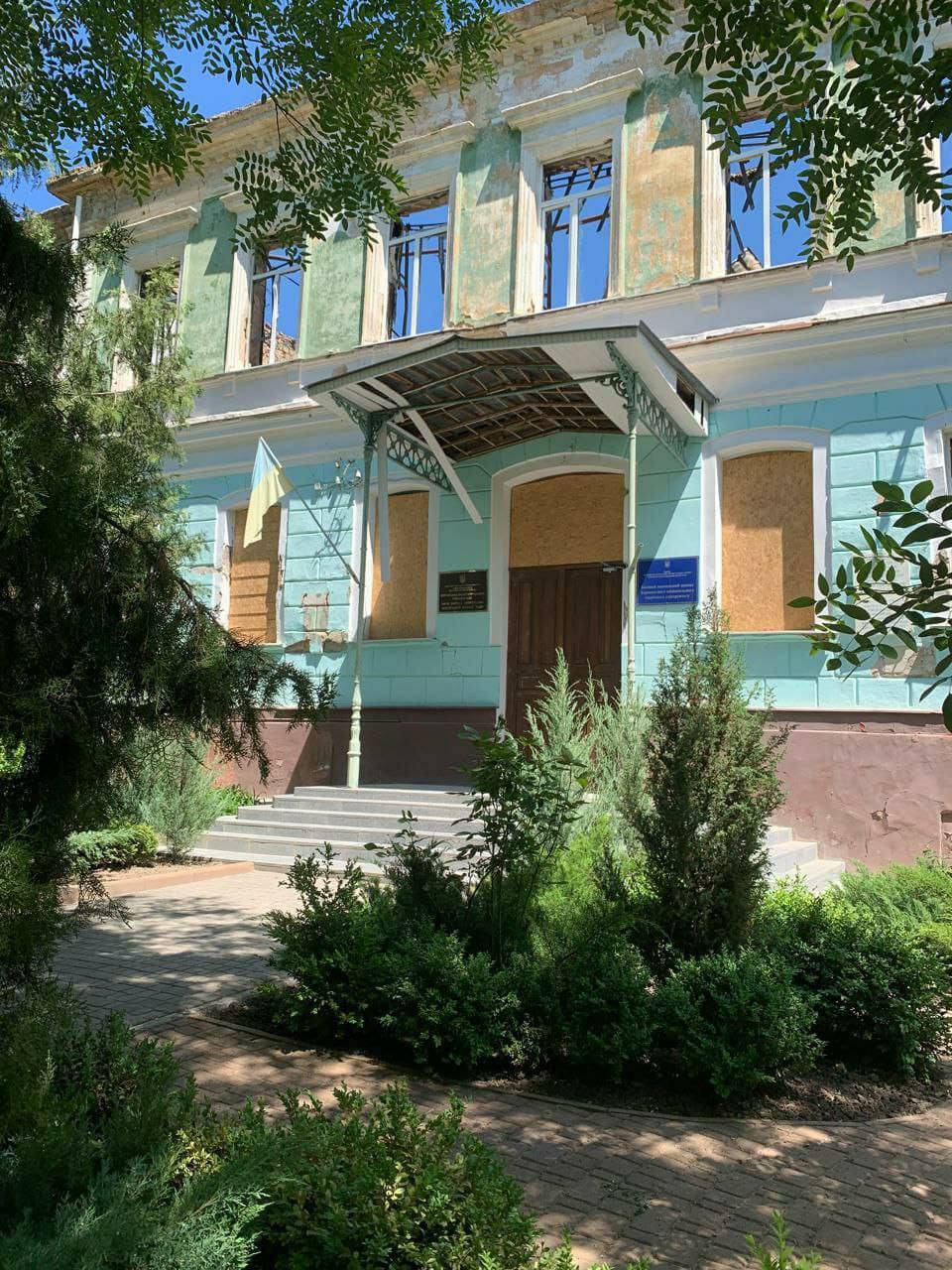
In 2018, a memorial plaque to the first head of the Ministry of Foreign Affairs of Israel and the second prime minister of the country, Moshe Sharet, appeared at the oldest gymnasium in Kherson – gymnasium No. 20, formerly the first Kherson men’s gymnasium, where he studied.

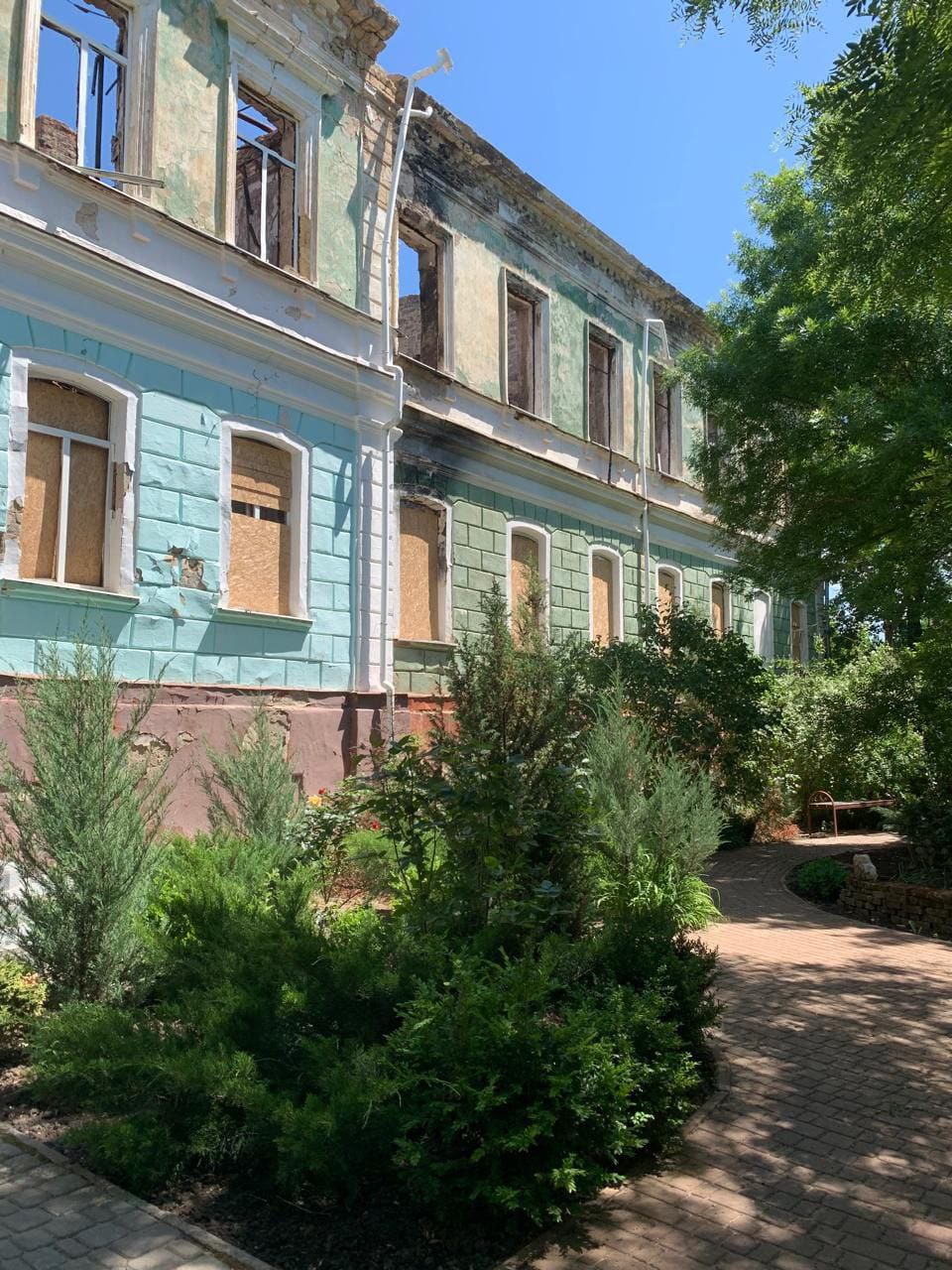
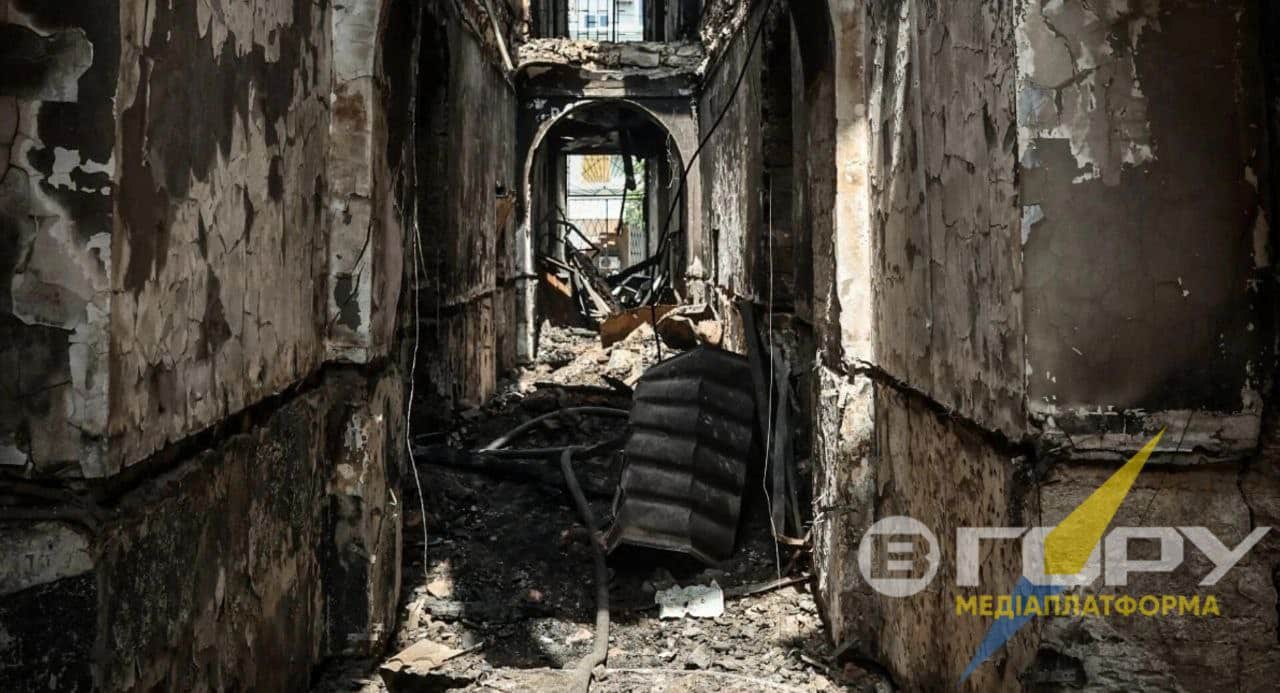
During the Russian invasion of Ukraine, it was fired upon by Russian troops several times. On May 11, 2023, the shelling of the high school burned down.

After the publication of the material, reader M., who managed to leave Kherson, which was occupied by Rashists, to Israel, said that he studied at this school and was present at the opening of the memorial plaque to Moshe Sharet on the facade of the school.

“After leaving Kherson, the Russian Nazis destroyed the school, which survived the occupation in the First and Second World Wars. Currently, there is no school, only ruins, no boards,” he wrote and sent a photo.

According to him, “On the left, next to the flag of Ukraine, you can see an unpainted place where Sharet’s board was. Now the board is being preserved in the Jewish community of Kherson.”


He was born in 1894 in the city of Kherson and was named Moisei Yakovlevich Chertok at birth. His father had left the Russian Empire, fleeing a wave of pogroms, and settled in Palestine: first in Jaffa, then in Jerusalem.

A few years later he returned and settled in Odessa, where he soon married Fanya Lev. The couple subsequently moved to Kherson, where they had three daughters and two sons, including Moshe.

From childhood he grew up inquisitive and active, distinguished by his interest in learning. Moshe attended cheder, and then graduated from the boys’ gymnasium in Kherson.

His love for linguistics bore fruit: the guy spoke eight languages, including Hebrew. His knowledge gave him a lot to translate, which he practiced, in particular translating into Hebrew.

In 1906, the Chertok family was forced to leave their home again: as a result of the growing threat of pogroms in the then Russian Empire, they decided to leave for the Ottoman Empire, and later for Palestine. By that time, Moshe was 12 years old, and he was forced to actively help his parents with their daily life and the formation of the family. In 1908, they settled in Jaffa, one of the areas from which Tel Aviv was once built.

After successfully completing the Jewish gymnasium, Moshe entered the University of Istanbul, where he began to actively study law. At the outbreak of World War I, he fought as a volunteer in the Ottoman Empire. In 1919, Moshe began working in the secretariat of the Zionist Commission. In the early 1920s, he studied at the London School of Economics. His role in the formation of the state of Israel is special.

His path began with the position of deputy editor-in-chief of the daily newspaper of the General Federation of Workers, Histradut, and experience as editor of the English weekly Davar.

Moshe Chertok was one of the authors of the Declaration of Independence of Israel, signed on May 14, 1948. It was then that he became the first Minister of Foreign Affairs in the country’s history and changed his last name to Sharett, which means “an employee fulfills a duty.” As a minister, Moshe Sharett headed the Israeli delegation at the ceasefire negotiations during the War of Independence and managed to establish diplomatic relations with dozens of countries around the world.

After leaving government service, he ran the Am Oved publishing house and Beit Berl College.

In addition, he was the head of the World Zionist Organization, to which he was elected in 1960. Despite his struggle with a serious illness, Sharett led an active public life and until his death spoke to the public, talking about his views on the construction of the state of Israel.

Moshe Sharett died on July 7, 1965, at the age of 70. He was buried in the Trumpeldor Jewish cemetery next to his wife Tzipora. Today in Ukraine, in Moshe Sharett’s native Kherson, a memorial plaque in his honor was installed on the oldest gymnasium in the city.

Leave a comment↓

Read us in channels Israel News Nikk.Agency News from Israel V – TelegramFacebook,Google News

“Well, shall we go?” – through hiking, the new “Ukrainian” community is discovering Israel – and invites everyone interested

“Well, shall we go?”

In Israel, a new non-profit community for lovers of routes, nature, and live communication is rapidly developing. The initiative “Well, shall we go?”, created in November 2025 by “Ukrainians” in a broad cultural sense, gradually unites various Israelis — from new immigrants to those who grew up here but maintain a connection with the Ukrainian language, as well as people of any origin who feel closer to the Ukrainian cultural atmosphere.

The group is open to everyone. There are no and never have been any nationality restrictions. The only rule is communication takes place in Ukrainian, because the language here is not a “filter” but a cultural center of gravity. It helps to create a comfortable environment but does not exclude anyone who respects the format.

“Do you think there’s only desert and sea here? How about the waterfalls in the Golan, the green forests of Carmel, or the Martian landscapes of the Negev?
We are launching the Ukrainian Hiking Community in Israel!
Who is this channel for:
✅ For those who can’t live without movement.
✅ For beginners who want to start hiking but don’t know the routes.
✅ For those looking for active Ukrainian friends.
We gather groups, share coordinates, organize picnics, and just have a great time.
👇 Your ticket to adventures is here”,  – invite the organizers.

Why now

Relocations, adaptation, new realities — all this creates a need for a space where you can move, communicate, and feel part of something alive. Many “Ukrainians” in Israel have long sought a format where they could combine nature recreation and cultural identity. But it turned out that around this idea, other Israelis easily unite: some are interested in routes, some in communication, and some just in the format of going out into nature together.

The community is built entirely on voluntariness: no commercial elements, no formal structures. Someone suggests routes, someone helps gather a group, someone just comes and goes along. This organic approach makes the initiative lively.

Hiking without complex explanations

In Israel, hiking is not an elite activity or a sport for the prepared. It’s a format where everyone chooses their level — from easy one-day walks to dynamic ascents.

Short routes take about an hour and are suitable for absolutely everyone. Medium ones range from 6 to 12 kilometers, usually 2.5–5 hours, with moderate ascents. Difficult ones can stretch up to 20 kilometers or include steep climbs lasting 5–8 hours.

The group selects hikes so that no one feels “too weak,” “too inexperienced,” or “too prepared.” The balance forms naturally.

What is available for hiking in Israel: a live overview, not a catalog

Israel surprises people who are just beginning to get acquainted with the country’s nature. Several climatic zones fit within a compact distance, and each offers its own routes.

In the north, in Galilee and the Golan, routes usually take three to five hours — about 7–12 kilometers. These are green gorges, waterfalls, terraces, forest areas, and views of the Kinneret. The climate here is milder, the trails vary in level, and many Israelis start their hiking acquaintance from here.

In the Haifa and Krayot area — short walks of 3–5 kilometers that can be completed in an hour or two. The routes are warm, shady, simple in terrain, making them suitable for beginners, families, and those who want to immerse themselves in nature gradually. Carmel is one of the most comfortable regions for calm yet rich hiking.

Further — the Judean Desert. Contrasting, sunny, sharp. Here you can walk 2–3 kilometers to the Ein Gedi waterfalls in just an hour, or choose a three to four-hour route along the Nahal Arugot stream. The ascent to Masada takes about an hour but requires more strength: the elevation change is significant, the terrain rocky.

The southern part of the country — Negev and Makhtesh Ramon — is a completely different experience. Routes here are usually 8–12 kilometers, lasting three to five hours. The ascents are steeper, but this area offers “Martian” landscapes that attract people from all over the country.

There are also gentle options: the Mediterranean coast, where walks of 3–7 kilometers take an hour and a half, maximum three, and are suitable for absolutely everyone. These are the routes you can take even after a workday.

The Eilat Mountains offer routes for all levels: short canyons for an hour, panoramic ascents for two to four hours, and a desert atmosphere that becomes especially comfortable in winter.

Such a range of formats makes Israel an ideal country for people who want to hike regularly and without logistical complexity.

Why the community turned out to be important for “Ukrainians” and Israelis alike

Hikes create a space where boundaries disappear: age, cultural, professional. People walk side by side, exchange experiences, discuss news, share how they are adapting or how long they’ve lived here.

The Ukrainian language has become in the community not a “divider” but a unifying factor: it helps those culturally connected to Ukraine feel safe. And Israelis who find the language interesting or close join as naturally as any other participant.

Participants say: “When you walk the trail and hear Ukrainian speech in Israel, it creates a sense of cultural support. But more importantly, you see people of very different backgrounds next to you.”

This combination explains why the group grows without advertising and formal structures.

The Ukrainian community “Well, shall we go?” has become one of the warmest nature movements in Israel. It unites people of different origins, cities, and biographies — through trails, forests, deserts, coasts, through conversations and support. Israel is ideally suited for such initiatives, and the cultural foundation in the Ukrainian language makes this space special.

NANews will continue to report on projects that strengthen the connection between “Ukrainians” and Israeli society.
NANews — News of Israel | Nikk.Agency

How to join

Everything is organized as simply as possible:
👉 https://t.me/nyshogoo

New routes, landmarks, equipment recommendations, start times, and photos appear in the chat. Any participant can suggest their trail or join a planned hike.

The community is dynamic, open, multicultural — and at the same time retains the Ukrainian language as its foundation.