Bar Mitzvah in Israel Three Years After Evacuation from Ukrainian Zhitomir from Russian Bombs: The Fate of Jewish Children from Ukraine

Three boys from the Jewish orphanage “Alumim” in Zhytomyr and two of their friends celebrated their bar mitzvah in Ashkelon three years after fleeing from Putin’s aggression. Israel became their new home — they speak Hebrew, study in Chabad schools, and dream about the future despite the trauma of the past.

This story is a symbol of the strong connection between the Jewish people of Ukraine and Israel, and proof of a true miracle made possible thanks to love, faith, and the support of the entire community.

Under bombs — into the future: children of the “Alumim” orphanage celebrate bar mitzvah in Israel

On June 26, 2025, the Israeli portal ynet reported on an emotional event: a bar mitzvah for five teenagers, three of whom are alumni of the Jewish orphanage “Alumim” in Zhytomyr, held in Ashkelon. This was not just a religious ritual. It was an act of return, maturity, recognition, and reunion with Jewish destiny.

Three years ago, these children, like thousands of other Jews in Ukraine, woke up to the sounds of explosions. Since then, their path has been full of pain — but also care, friendship, faith, and new hope in Israel.

Bar mitzvah in Israel three years after evacuation from Ukrainian Zhytomyr due to Russian bombings – the story of Jewish children from Ukraine. NAnews – Israel News, June 28, 2025

“Alumim” Orphanage: an island of love and light

The “Alumim” orphanage, founded in 2006 in the village of Zarechany, became the heart of Jewish life in Western Ukraine. It was established by Rabbi Shlomo Wilhelm with support from the Or Avner Foundation and the Federation of Jewish Communities of Ukraine.

  • Education based on Jewish traditions and Hebrew
  • Children from 2 to 18 years old, including orphans and children from disadvantaged families
  • Schooling, sports, psychological care, and a warm family atmosphere

“It was not just a structure. It was a real home,” staff members recall.

Before the war began in 2022, “Alumim” was a symbol of Jewish care and a “family home” for dozens of children. After the invasion, the building emptied — but its spirit moved to Israel.

Zhytomyr — cradle of Jewish culture

Zhytomyr is a historic center of Jewish life in Ukraine. It had schools, printing houses, yeshivot, and underground Chabad cheders in the 20th century that survived repression. Before the war, Jews made up one-third of the city’s population — over 30,000 people.

The “Alumim” orphanage became the center of Jewish childhood in the region. Living conditions, care, and religious atmosphere made it a unique place. After the war began, educators were left with 80 children and enormous responsibility — and the idea of evacuation was born.

Putin’s aggression destroys childhood

On February 24, 2022, Putin’s army launched a full-scale invasion of Ukraine. Zhytomyr came under attack, and the orphanage was in danger. Bombs fell near the home where 80 children lived.

“We woke up to deafening noise. Outside — smoke and sirens. 80 children panicked. Educators had to hide their fear while bombs kept falling,” — recalls Malka Buket.

Escape under fire

The decision to evacuate the children came quickly. First — to Chernivtsi, then — to Israel. The border was crossed on foot, without documents, with small children carried in arms. It was a heroic evacuation.

KKL-JNF and Keren LeYedidut carried out an emergency evacuation of about 100 children aged 2 to 18.

Nes Harim: first Jewish refuge

Upon arrival in Israel, children were placed in the Nes Harim center in the Jerusalem Forest. Volunteers provided clothing, toys, psychological support, and Hebrew classes. They celebrated holidays and slowly adapted to their new life.

Ashkelon: new life and bar mitzvah

In 2025, the children moved to Ashkelon. On June 26, five teenagers, three of them from “Alumim,” celebrated their bar mitzvah. The event was organized by Rabbi Shlomo Wilhelm. Rabbis, local leaders, and Minister Yaakov Margi attended.

“Each child has their own story and pain. But to see them happy, confident, and speaking Hebrew — it’s a miracle,” said Rabbi Wilhelm.

“Just as Jews received the Torah at Mount Sinai, so our children receive it here in Ashkelon — with love and light,” said Rabbi Mendel Lieberman.

Table: journey from war to bar mitzvah

Year Event
2006 “Alumim” orphanage founded
2022 Start of Putin’s aggression. Evacuation of children
2022–2023 Adaptation in Nes Harim
2024 Move to Ashkelon
2025 Bar mitzvah and integration into Israeli society

NAnews — Israel News

NAnews emphasizes: the story of the “Alumim” children is not just a humanitarian case. It is proof of the strength of the Jewish community, the bond between Ukrainian and Israeli Jews, and the ability to overcome even war.

While Putin’s army drops bombs on children’s heads, Israel extends a helping hand. The bar mitzvah in Ashkelon is not the end — it’s just the beginning. These children now have a home. A community. A future.

“Masks” and People’s Artist of Ukraine Boris Barsky in Israel in February 2026 – the comedy “Romeo and Juliet”

🎭 Announcement: “Masks Show — Romeo and Juliet” — in Israel!

The famous Odessa theater “Masks” returns with a tour in Israel with an updated version of the cult production “Romeo and Juliet” — an incredible, bright, funny, and deeply human comedy created based on Shakespeare’s tragedy. In the lead role — People’s Artist of Ukraine Boris Barsky. Performances will take place in 8 cities in Israel in February 2026.

But this tour is not just a cultural event. It is a meeting with artists who did not leave their homeland during the war, supported the Ukrainian army and the civilian population, bringing laughter and hope to people. Boris Barsky has become one of the cultural symbols of Ukrainian resistance. We tell how he helps Ukraine and why this tour is special.

Ticket sales have started, and viewers can choose a convenient city and date directly on the official tour page:

https://nikk.kassa.co.il/announce/84045

Brief Biography of Boris Barsky

Boris Volodymyrovych Barsky — an Odessan, born on September 22, 1959, an actor, director, poet, and one of the most recognizable artists of Ukraine. He studied not only art: in 1981 he graduated from the Faculty of Atomic Energy of Odessa Polytechnic, and later — GITIS (1992), finally choosing the stage.

Since 1984 he became the leading actor of the troupe “Masks”, the first Odessa theater of pantomime and clowning. His participation in 80 episodes of “Masks Show” brought him nationwide popularity, and his signature mustache became part of the legend. Barsky performed as an actor, author, and poet, publishing seven poetry collections and holding creative evenings across Ukraine.

Until 2022, he actively acted in films. Among his works: “Monsieur Robin” (1994), “The Twelve Chairs” (2003), “Ivan Syla” (2013), “The Contestant” (2016), “The Chicken” (2017). He is a member of the National Union of Cinematographers of Ukraine and the creative core of the Odessa theater “House of Clowns”.

Titles and Awards

For his many years of work, Barsky received a number of prestigious Ukrainian awards:

  • Honored Artist of Ukraine (2002)
  • People’s Artist of Ukraine (2009)
  • Honorary Badge of Odessa “For Services to the City” (2019)
  • Jubilee Medal “20 Years of Independence of Ukraine” (2011)
  • Gratitude of the Prime Minister of Ukraine (2013)
  • Yan Helman Prize (2022) — even before the full-scale invasion began

These titles confirm his status as one of the key figures of the Odessa and Ukrainian comedy scene long before the war.

🇺🇦 Boris Barsky and the War: When a Clown Becomes a Warrior of Spirit

"Masks" and People's Artist of Ukraine Boris Barsky in Israel in February 2026 - comedy "Romeo and Juliet"
“Masks” and People’s Artist of Ukraine Boris Barsky in Israel in February 2026 – comedy “Romeo and Juliet”

Boris Barsky — one of the brightest representatives of the Odessa theater scene, comedian, poet, founder of the theater “House of Clowns” and an unchanging participant of the cult troupe “Masks Show”. But since February 24, 2022, he became not only an artist but also a symbol of cultural resistance of Ukraine, a citizen who stayed in his native Odessa despite the danger and turned humor into a tool of struggle and support.

Symbol of Odessa in the Days of War

From the very beginning of the full-scale invasion, Barsky stayed in his native Odessa, refusing evacuation abroad. In an interview, he admitted that he perceived the first shelling as “Ukrainian 9/11”:

“It’s a shock. This shouldn’t have happened in the 21st century. Is this really reality?” — he shared.

With a guitar adorned with the inscription “Odessa-mama”, he became a symbol of love for his native city. His theater — “House of Clowns” — resumed work as one of the first: already in the spring of 2022, charity performances for the Armed Forces of Ukraine and displaced persons began there. The artist emphasized that if theaters work in Kyiv, then in Odessa they can open, even despite the risk.

Position Without Compromises: A Citizen of Ukraine Speaking Russian

Barsky never hid his position: he is unequivocally against Putin’s regime. Back in 2014, he sharply condemned the annexation of Crimea, stating:

“I am an Odessan. I am a citizen of Ukraine. I perform plays in Russian. What oppression?!”

After 2022, his rhetoric became even harsher. During one of the performances, when the siren wailed, he, without interrupting the play, said from the stage:

“When will this bastard [Putin] finally choke?” — causing a storm of applause.

Later he admitted that even before the war he “mentally sent Putin an ultimatum — to lie down with Lenin in the mausoleum”.

He also speaks sharply about propagandists. About his former colleague from “Masks” Evelina Bledans, who supported the aggression, he sarcastically noted:

“Her surname is telling. Nothing more to add.”

But at the same time, he speaks respectfully about those Russians who oppose the regime:

“I bow to Akhedzhakova, Basilashvili, Chulpan Khamatova. These people are the conscience of the country, even if exiled.”

Theater as a Refuge

The “Masks” theater became a cultural bunker. Barsky himself says:

“A hospital ward remains a ward. True healing is theater.”

That is why he began inviting wounded soldiers from hospitals to the theater. After the performance, their faces transform:

“Before the performance — one kind of people. After — completely different. Alive.”

He offers each soldier to leave an autograph on the wall of his office — “the wall of fame”. This creates a connection between generations — between theater, war, and future peaceful life.

Odessa Accepts

Odessa has become home to thousands of displaced persons. Barsky and the troupe initiated an action: patrons buy tickets for those in need, and actors personally give them out on the streets.

“On Deribasovskaya we find those who are especially struggling. These tickets are like a breath of warmth,” — says Barsky.

He personally thanks the benefactors: in his office, there is a wall with photos of all who help.

Comediada and International Support

Through his festival “Comediada”, Barsky established connections with European artists. One of them, Harry Owens from Germany, organized volunteer aid for Odessa and consulted with Barsky on how best to transfer funds to the Armed Forces of Ukraine.

Barsky is an informal cultural diplomat. His name inspires trust and prompts action.

Artist — Volunteer

He participates in all possible volunteer actions: either on the stage of a telethon or at a spontaneous rally on the way to the store. He says:

“I am a person of flow. Called — came. Hinted — already here.”

He believes: everyone can help. Even just with a joke. Or bread for a grandmother. And also — with inspiration. Once he invited a colleague who had fallen into depression to perform:

“He first agreed, then got scared. I would have killed him! Well, then sit and chew snot…” — Barsky comments with bitter humor.

“Language Question” and His Philosophy

Barsky continues to speak Russian. But he emphasizes:

“Many speak Russian at the front. ‘Mova’ is not an indicator of patriotism. Judge by deeds, not by language.”

He advocates for natural Ukrainization, without violence and coercion. And at the same time — for respect for the cultural heritage of Odessa.

Odessa — His Mother

When asked why he didn’t leave, he once replied:

“Mom didn’t let me go. And Mom is Odessa.”

This phrase became a meme, a quote, and a motto. He speaks of the city with love: “Odessa adopted thousands of Ukrainians fleeing the war”.

He helps protect architecture, monuments, cultural heritage. His voice is heard in international appeals, including those related to the inclusion of Odessa in the UNESCO list.

Personal Joy Amid the Horror of War

In April 2022, Barsky’s granddaughter Valeria was born. His daughter gave birth in Bulgaria, but returned to Odessa in the summer.

“Even in such times, life goes on. This is my ray of hope,” — he admits.

Awards

  • “Pride of the Nation” (2022) — awarded to famous people, volunteers, artists, for significant contribution and assistance to the Armed Forces of Ukraine.
  • Odessa Mayor’s Award “Cultural Capital” (2023) — for the theater continuing to work without budget funding.
  • Commemorative Souvenirs from Military Units — gratitude from soldiers after performances.

Barsky especially values local awards: “I am an Odessan. Everything related to Odessa is sacred to me”.

Moral Compass

He remains in Odessa despite his age and dangers. In an interview, he jokes:

“If you hear a whistle — it means it’s not flying at you.”

He teaches not to be afraid, not to lose dignity, and to see light even in the darkest times. His dream is to dance the “hopak” (Ukrainian national dance) after Victory.

“First with the troupe, then with the city, then with the whole country. And into the Guinness Book of Records!”

Boris Barsky has become a symbol of resilience, kindness, and humor in the most difficult times. He is the one who did not betray. Who stayed. Who helps. Who heals with words and laughter. His theater is an island of hope. And he himself is a person to look up to. His voice today sounds loud: in the hall, on the street, in interviews. And in every word — love for Ukraine. And faith in Victory.

Masks Show — “Romeo and Juliet”. A Great Odessa Comedy About Love in Israel

“Masks Show” returns to Israel with one of their most famous productions — a comedic version of “Romeo and Juliet”. This is not Shakespeare’s classic tragedy, but a bright Odessa interpretation, where high drama turns into explosive humor, pantomime, absurdity, and the signature style of Masks.

In this version, Juliet is a “girl” of forty-five, Romeo is a romantic who is not afraid of fate, Tybalt is a brawler, Paris is the proper relative of the prince, and the finale turns not into a tragedy, but a celebration of love, youth, and beauty.
All elements of the plot are preserved but played as only Masks can: boldly, funnily, musically, and incredibly warmly.

This is a comedy where laughter is the main character.
Masks promise the audience: it will be fun, noisy, unexpected, and soulfully Odessa-like.

Who Plays in the Performance

The legendary cast of the “Masks” theater takes the stage:

Romeo — People’s Artist of Ukraine Boris Barsky.
The main Odessa clown, poet, actor, author of the play — his Romeo is simultaneously a romantic, a hooligan, and a subtle lyricist.

Juliet — Tatyana Ivanova.
Star of the TV magazine “Kalambur” (cycle “Village of Fools”). Bright plasticity, precise humor, and Odessa temperament.

Tybalt and Apothecary — Alexey Agopyan.
Actor of “Kalambur” (“Steep Dive”, “Iron Kaput”), master of changing images and signature absurdity.

Capulet — Mikhail Voloshin.
A comedic character who turns each hero into a mini-performance.

Benvolio — Alexander Postolenko.
A plastic actor and one of the key participants in the mask style.

Paris — Igor Malakhov.
His appearance is always a separate stage miniature.

The production was created by:
Playwright — Boris Barsky
Director — Georgy Deliev
Costume Designer — Tatyana Arnautova
Sound — Yuri Savchenko
Lighting — Sergey Zakharov
Choreography — Vitaly Zalevsky

Tour in Israel — Where and When

Rishon LeZion.

On February 12, 2026, the performance will open the Israeli tour on the “Mofet” stage. Here, the audience will be the first to see the Odessa version of “Romeo and Juliet” with the signature humor of Masks — in a hall that traditionally hosts the warmest premieres.

Ashdod.

On February 13, 2026, the comedy will move to the “Matnas Duna-Yud” venue, where the Masks troupe has performed before. In Ashdod, there are always loud full houses, and the audience meets the artists especially emotionally.

Netanya.

On February 14, 2026, the production will be shown in the large Auditorium Gehal HaTarbut. It is here that Masks usually gather one of the most diverse audiences: families, youth, and connoisseurs of the old school of Odessa humor.

Tel Aviv–Yafo.

On February 15, 2026, the performance will be presented in the “Klyachkin” Auditorium of the Eretz Israel Museum. The Tel Aviv show is one of the central ones in the tour, with a large stage and traditionally the widest audience.

Be’er Sheva.

On February 16, 2026, “Masks Show” will perform at the “Goodman” School of Theater Arts. The southern capital of Israel welcomes the troupe in a warm, intimate atmosphere, making the show especially lively and direct.

Haifa.

On February 17, 2026, the performance will be seen by the northern capital — in the Rappoport Hall. This is one of the iconic places of the tour, where Odessa humor always evokes a special response from the mixed Russian-Ukrainian-Israeli audience.

Petah Tikva.

On February 18, 2026, the actors will take the stage of the “Sharet” hall. The city, with a large number of immigrants from Ukraine, traditionally welcomes Masks as “their own”.

Haifa.

On February 19, 2026, the tour will conclude with a second show in Haifa — on the “Beit Nagler” stage. The final chord of the tour usually gathers viewers who did not manage to attend the first show or want to see the performance again.

Why NANews Recommends Attending This Performance?

Because “Masks Show” is part of our shared cultural biography. We grew up on their absurd humor, on this Odessa intonation, which can both make you laugh to tears and protect you from the pain of reality. Today, when the war has changed the lives of millions, laughter has become not just entertainment — it has become a way of survival. Every performance of “Masks” is a small therapy, a meeting with true Odessa wisdom, which can heal even when the wounds still hurt.

Another Reason: This Tour is a Cultural Bridge Between Ukraine and Israel.

Hundreds of thousands of people from Ukraine live in Israel, and many of them remember “Masks” from childhood. This is a rare opportunity to see a living legend, hear the living Odessa language, feel the atmosphere that unites people on both sides of the sea. NANews supports such events because they create a space where Ukrainians, Jews from Ukraine, and everyone who loves Odessa humor can feel like one family again — even if only for an hour and a half in the theater.

Tickets Are Already Available

Ticket sales have started, and viewers can choose a convenient city and date directly on the official tour page:

https://nikk.kassa.co.il/announce/84045


Promotion of small and medium businesses in Israel on the Internet. Internet Marketing

#promotion

***
Suitable offers for small and medium businesses!
***

  • Attracting new clients for business – lead generation;
  • Promotion of businesses and websites SEO in search engines;
  • Local Business Promotion + Google My Business;
  • Conducting advertising campaigns in Google from scratch and optimizing existing ones;
  • Google Shopping Advertising Shopping campaigns and product promotions;
  • Professional creation of websites for businesses of varying complexity and budget;
  • Repair, rework, revision and redesign of websites;
  • Comprehensive online support for businesses;
  • Other services upon customer request.

In the field of medicine

053-802-3564

on WhatsApp

nikk.co.il

Suitable offers for small and medium businesses!


Who will benefit from our services:

Dental office;

Cosmetology center;

Repair of equipment and computers;

Repair of premises;

Transportation services;

Teachers’ services;

Small and medium-sized production;

Services in the service sector;

Local businesses;

Selling goods and services on the Internet;

and much more…

worth a try?
rather yes than no”… contact us – consultation is free

Haifa – Israel North

Nikk.Agency
internet marketing agency

In the field of medicine

053-802-3564

on WhatsApp

nikk.co.il

2014 – 2025

Haifa – Israel North

Opening hours: 10:00 – 17:00

We consult: 09:00 – 20:00

…………………………………………………………….

How Small and Medium Businesses in Israel Can Effectively Attract Clients and Increase Sales

Today, business competition is high, and simply opening a company is no longer enough. To attract customers and increase profits, modern marketing tools must be used. Nikk.Agency offers comprehensive solutions for online business promotion, website development, and advertising to help you stand out among competitors and achieve your desired results.

Lead Generation: Attracting New Customers

Every business needs a constant flow of new clients. We offer effective lead generation strategies to help your business find interested buyers or clients. How does it work?

  • Setting up advertising campaigns to attract an audience.
  • Creating engagement chains with customers through websites, ads, and social media.
  • Conversion analysis and ad optimization for maximum efficiency.

SEO Promotion: Improving Search Engine Rankings

Do you want your business to be found on Google without paying for ads? We conduct SEO optimization to help your website rank higher in search results. Our SEO services include:

  • Selecting keywords relevant to your niche.
  • Optimizing website content and structure.
  • Building backlinks and improving site ranking.
  • Enhancing user experience and page loading speed.

Google My Business: Promoting Local Businesses

For local companies, it’s crucial that customers can find them quickly and easily. We optimize your Google My Business profile to help you:

  • Appear in local search results and Google Maps.
  • Attract customers through reviews and ratings.
  • Set up special offers and promotions directly in your business profile.

Google Advertising: Setting Up and Optimizing Campaigns

Google Ads is one of the most powerful tools for quickly attracting customers. We:

  • Launch advertising campaigns from scratch.
  • Optimize existing ads to reduce cost per click.
  • Test strategies to improve conversion rates and return on investment.

Google Shopping: Advertising Products Online

If you sell products online, Google Shopping is a tool that can help increase sales. We create and manage advertising campaigns that display your products in Google search results with images, prices, and a “Buy” button.

Website Development: From Business Cards to Online Stores

Your website is the face of your business online. We offer website development of any complexity and budget:

  • One-page websites and landing pages.
  • Corporate websites for businesses.
  • Online stores with integrated payment systems.
  • Portals and complex web projects.

Additionally, we offer website repair, redesign, and upgrades if you already have a site that needs improvement.

Comprehensive Business Support Online

Running a business takes time and effort. We provide full digital marketing support, including:

  • Managing advertising and SEO.
  • Social media marketing.
  • Content marketing and email campaigns.

Who Can Benefit from Our Services?

Our solutions are ideal for various industries:

  • Medical Services: Dental clinics, cosmetic centers.
  • Repairs and Maintenance: Electronics, computers, apartments, vehicles.
  • Education: Teachers, tutors, online courses.
  • Logistics and Transportation: Moving services, deliveries.
  • Manufacturing and Retail: From small production businesses to e-commerce.
  • Service Industry: Beauty salons, tourism, and more.

Why Choose Us?

Experience since 2014.We operate throughout Israel.Tailored approach to each client.Free consultation!

Want to know which tools can help grow your business? Contact us!

📍 Haifa, Northern Israel
📞 053-802-3564 (WhatsApp)
🌐 nikk.co.il

Business hours: 10:00 AM – 5:00 PM
Consultation hours: 9:00 AM – 8:00 PM

🚀 Your business deserves to grow!


In the field of medicine

053-802-3564

on WhatsApp

nikk.co.il

NAnews 🇮🇱🇺🇦 – the news of Israel and Ukraine Nikk.agency in WhatsApp, Telegram, X and Facebook – about the relationship of the two countries and their history – what is happening?

NAnews Nikk.Agency – An independent information project created by a group of Israelis with Ukrainian roots.

Read news Israel – Ukraine

We talk about the relationship between Israel and Ukraine, about how the fate of the two peoples intertwine, and how historical and modern events affect our future.

Join NAnews Nikk.Agency In social networks:

🔹 WhatsApp: https://whatsapp.com/channel/0029vaztzqoiirusuqe7l1r

🔹 Telegram: https://t.me/agensnikk

🔹 X (Twitter): https://x.com/agensnikk

🔹 Facebook: https://www.facebook.com/nikk.agency.il


Our site – NAnews nikk.agency

Read news Israel – Ukraine

Website NAnews nikk.agency – This is an independent information resource that publishes materials about the relations of Israel and Ukraine in four languages:

🔹 Russianhttps://nikk.agency/

🔹 Ukrainianhttps://nikk.agency/uk/

🔹 Englishhttps://nikk.agency/en/

🔹 Hebrewhttps://nikk.agency/he/

Nanovos Nikk.agency – a private publication of Israelis with Ukrainian roots. News of Israel and Ukraine, relations between the two countries, the exposure of fakes, analyst. Read Russian, Ukrainian, English and Hebrew.

About NAnews nikk.agency

We are an independent project created by a group of Israelis with Ukrainian roots. NAnews is:

Actual news of Israel and Ukraine

Exposure of fakes and manipulations

History, culture and social life of the two countries

Honest information without political engagement

We Not related with parties, organizations or political groups and We are not financed by states. All work is carried out exclusively at the expense of project participants.


NAnews is more than news

We do not just cover events – we help to understand their depth, reveal the relationship and fight for historical truth.

We We cannot be silent About what is happening in Israel and Ukraine. This Our common world And we talk about him honestly.


Want to share the news?

Send materials, analytics, reports or announcements of important events. After checking the facts, we will post them on our website and in social networks.

📩 Send the news: https://t.me/send_news_nikk


Join the NAnews -nikk.agency

🔹 Site (in 4 languages): https://nikk.agency

Join NAnews nikk.agency In social networks:

🔹 WhatsApp: https://whatsapp.com/channel/0029vaztzqoiirusuqe7l1r

🔹 Telegram: https://t.me/agensnikk

🔹 X (Twitter): https://x.com/agensnikk

🔹 Facebook: https://www.facebook.com/nikk.agency.il

NAnews Nikk.agency – honest information without manipulations. Together we can more! 🇮🇱🇺🇦

NAnews nikk.agency – Independent information resource publishing Actual news of Israel In four languages: Russian, Ukrainian, English and Hebrew. We cover the events related to Israel and Ukraine, analyze international relations, expose fakes and represent exclusive opinions.

Follow News of Israel V NAnews nikk.agency – Honest information without manipulations.

Read news Israel – Ukraine

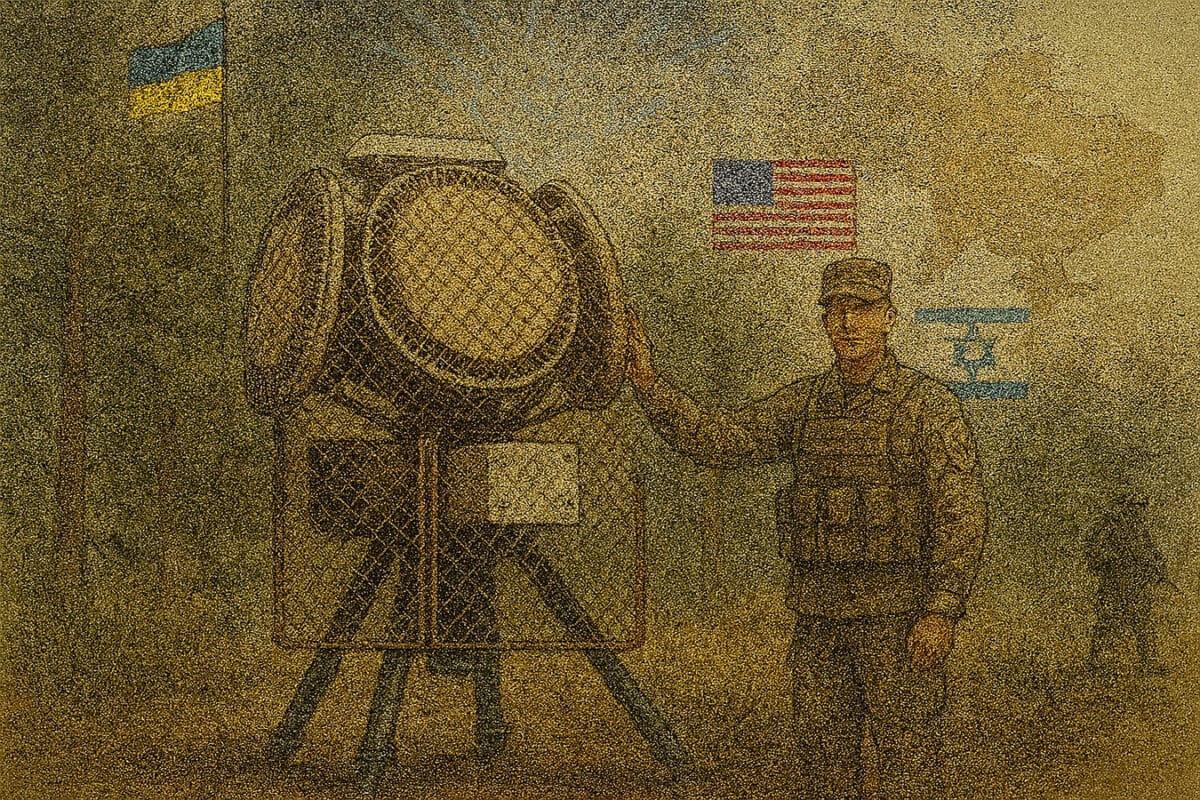
How Israeli RADA RPS-42 radars help protect the skies in Ukraine from 2023

Israel, from the very beginning of the full-scale war, took a cautious position regarding military assistance to Ukraine. Officially, Jerusalem refused to supply Kyiv with lethal weapons, fearing deterioration of relations with Moscow for a number of reasons — which are not the subject of this article.

Nevertheless, under pressure from Western allies and against the backdrop of the Iranian Shahed drone threat, Israel gradually softened its stance on “defense-related equipment”.

Export Licenses

In February 2023, according to Walla and Times of Israel, Defense Minister Yoav Galant and Foreign Minister Eli Cohen for the first time approved export licenses for two Israeli companies to supply Ukraine with electronic warfare systems against drones with a range of up to ~40 km. Officials emphasized that this was not a change in policy, but a one-time permit for “non-lethal, purely defensive systems that do not kill Russian soldiers”.

It is known that one of these systems was a multi-purpose radar produced by the Israeli company RADA (now part of the American Leonardo DRS). When making this decision, Israeli officials also considered their own interest: to obtain data on how their technology would perform against Iranian drones on the Ukrainian front.

Moscow reacted painfully to such plans: already in early February 2023, the Russian Foreign Ministry publicly warned Israel against supplying weapons to Ukraine. That is probably why Israel chose an indirect path of assistance.

It was announced that Israel would help Ukraine create an early warning system for missile and drone attacks (an analogue of the Israeli “Tzeva Adom”), which formally pertains to civil defense and not the transfer of weapons. In March 2023, meetings were reported between representatives of Israel’s Home Front Command and Ukrainian officers in Poland to implement this warning system. In May 2023, testing of the Israeli warning system began in Kyiv: it was supposed to start in the capital and then expand to other cities. Thus, Israel demonstrated its readiness to help protect Ukraine’s population from attacks, but not by supplying weapons directly.

As already known, “צבע אדום‎” — in the Kyiv region on July 24, 2025, the Israeli-provided alert system was activated for the first time against missile attacks.

At the same time, there were behind-the-scenes negotiations on supplying anti-drone systems via third countries. Already at the beginning of 2023, a group of Lithuanian NGOs (Blue/Yellow, Laisvės TV, and others) launched a campaign Radarom! to raise funds for tactical radars for Ukraine.

Lithuanian journalist Andrius Tapinas stated that they “reached an agreement with Israeli manufacturers, the radars are ready – only money is needed”. In fact, Israel’s Ministry of Defense did not object to such radars being sold to Ukraine at the expense of Lithuanian donors. This unofficial supply channel allowed Jerusalem to formally maintain neutrality while responding to US calls to help Ukraine close its skies. The Israeli press noted that the deal became possible under allied pressure and was presented as an exception for humanitarian purposes — to protect civilians from shelling.

RADA RPS‑42: Technology and Capabilities

How Israeli RADA RPS‑42 radar stations have helped protect Ukraine’s skies since 2023

RADA RPS‑42 is a mobile multifunctional radar station with an active phased array antenna (AESA), designed to detect small UAVs, missiles, artillery shells, and other aerial targets at short and medium ranges. It has been produced by the Israeli company RADA Electronic Industries Ltd. since the early 2010s.
Since 2022, RADA has been part of the American defense holding Leonardo DRS. The station is widely used to protect military facilities and critical infrastructure in various countries, including Ukraine since 2023.

Technical specifications:

  • Detection range for drones and artillery shells: up to 10–30 km (depending on target type)
  • Detection of aerial targets (aircraft, helicopters): up to 100 km
  • Weight of one radar panel: about 23 kg
  • Deployment time: several minutes, can be installed on a vehicle, tripod, or stationary
  • Technology: active phased array antenna (AESA), operates in the X-band
  • Coverage: up to 360° (with four panels)
  • Operating mode: stand-alone or integrated into complex defense systems

Purpose and applications:

  • Detection and tracking of small and medium aerial targets: kamikaze drones, UAVs, rockets, and artillery shells, mortar bombs, missiles
  • Protection of assets and troops from aerial threats: early warning of raids and missile attacks
  • Integration into air defense and C-RAM systems (protection from artillery strikes)
  • Application flexibility: suitable for protecting military convoys and bases as well as urban objects, infrastructure, and critical communications

RADA RPS‑42 is used in many armies around the world as part of modern anti-drone and counter-artillery complexes.

“Mobility, compactness, and multifunctionality — that’s why the RPS‑42 is so in demand in modern conflicts,” write analysts at Israel Defense (Israel Defense, July 2024).

Logistics and Supply Channels

The main channel through which Israeli RADA RPS-42 radars reached Ukraine was via Lithuania. On January 30, 2023, a large-scale fundraising campaign “RADAROM!” (“To the Radar!”) was launched in Vilnius to purchase tactical air target detection radars.

Within just a few weeks, Lithuanians raised about €14 million, enough to acquire 16 new-generation radar stations. The Israeli company RADA Electronic Industries (headquartered in Netanya) agreed to sell these radars. Officially, the transactions were processed through the American corporation Leonardo DRS, with which RADA merged in 2022.

This legally simplified re-export: in fact, the radars were supplied as products of the American branch (DRS RADA Technologies), and not directly from Israel. However, as Israel Defense emphasized, such transfers still required approval from Israel’s Ministry of Defense — which was obtained.

The Lithuanian side handled all the logistics.

In February–March 2023, Ukrainian military crews arrived for training on operating these radars: first in Lithuania, at ranges in Kaunas, and then part of the preparation took place in Poland together with Israeli specialists.

At the beginning of May 2023, the first stations arrived on Ukrainian soil.

On May 4, 2023, volunteers reported the delivery of the first three out of 16 radars to Ukraine.

The remaining sets were delivered as documents and equipment were prepared throughout May–June. Lithuanian TV channel LRT published footage of radar unloading and a joint photo of Ukrainian military and Radarom project volunteers in front of one of the stations. Ukrainian officials did not publicly disclose details of these deliveries (likely at Israel’s request), but Lithuanian President Gitanas Nausėda openly declared on February 24, 2023 that:

“Lithuania, to mark the anniversary of resistance, is buying modern radars for Ukraine.”

Thus, the delivery of RADA radars was carried out not directly by Israel, but through the acquisition by a third party (a NATO country) and transfer as a donation to Ukraine.

It is important to note that RADA RPS-42 radars are an integral part of the Israeli anti-drone system Drone Dome (by Rafael). The Drone Dome system uses up to four such radars for 360° coverage, electro-optical cameras, and electronic warfare equipment to suppress drones.

However, according to available information, Ukraine received specifically radar modules (RPS-42 and some newer ieMHR), without electronic warfare modules. They are integrated with other components of Ukrainian air defense.

According to reports, the company “Systems of Electronic Export” (SEE) — the Ukrainian radar integrator — together with Leonardo DRS representatives at the MSPO-2023 exhibition discussed equipping these radars with additional devices and integrating them into the national air defense system. Interestingly, SEE’s report noted: the delivered RPS-42s were regarded as “material and technical aid provided by the US government.”

Apparently, after the radar was purchased from Israel with Lithuanian money, their delivery and integration were coordinated with the US (possibly through the International Support Fund for Ukraine or directly via the Ukrainian Armed Forces command). In any case, by summer 2023 all 16 Israeli radars were in service with Ukraine.

Neither Israel nor Ukraine officially commented on this topic, but the presence of these advanced Israeli radars at the front became public knowledge thanks to volunteer reports and media publications. For example, the newspaper Haaretz on May 8, 2023 reported that “for the first time, Israeli anti-drone radars were deployed in Ukraine”, highlighting Lithuania’s role in their purchase. Walla reported that 16 units of RADA radars were acquired for Ukraine with Lithuanian funds to give citizens timely warnings of Russian attacks and provide the military with a chance to intercept threats.

Use of RPS-42 on the Ukrainian Front

After receiving the new Israeli radars, Ukrainian air defense forces quickly put them into service. According to the Lithuanian Blue/Yellow fund, the first RPS-42 units were “already deployed in their operational sectors” as of early May 2023.

According to open data, these radars are used both to cover major cities and strategic rear facilities, as well as directly on the front line. Their main function is detecting short-range air targets and issuing target designations. The multifunctional RADA radars can detect a wide spectrum of threats: from artillery mines and rockets to UAVs and aircraft. Under Ukrainian conditions, the main threats were Russian cruise missiles and Iranian Shahed kamikaze drones.

The RPS-42 stations were integrated into a unified air defense network for early detection of launches and flybys of such targets. The radar data allow operators to quickly calculate the trajectory and probable impact point of a missile, after which the warning system activates sirens precisely in those areas threatened by the attack. This sharply increases the effectiveness of civil defense: people get several extra minutes to seek shelter, and air defense units can better allocate resources.

There are photos showing Ukrainian crews training in Lithuania: a mobile RPS-42 radar on a tripod, soldiers learning to use the station interface. After training, these crews deployed radars in Ukraine.

According to OSINT observers, the first systems were installed in central regions of Ukraine in May 2023—likely to protect the capital region and energy infrastructure. Their geography later expanded.

RPS-42 radars are mobile: they can be towed on trailers, mounted on armored vehicles, or installed stationary on towers. Israeli sources note that these ground-based tactical radars can operate on the move and are adapted for field use (resistant to interference and portable). Walla reported that RADA radars can be quickly redeployed and used to protect maneuvering units on the front line. It is likely that some of the 16 systems were transferred specifically to the air defense units of ground brigades in key sectors—to detect enemy UAVs (recon and loitering munitions) as well as for counter-battery operations (detecting artillery fire).

RADA radars can detect mortar bombs and MLRS rockets at ranges up to 20–25 km, enabling rapid warning of their own units about incoming fire. Unsurprisingly, in official Ukrainian materials, these stations are referred to as “air and artillery reconnaissance radars”.

There is evidence that several RPS-42/ieMHR radars were integrated into some of Ukraine’s mobile anti-aircraft systems. For example, social networks discussed a mysterious Ukrainian counter-drone system based on a vehicle, using the Israeli radar together with Ukrainian or Western electronic warfare equipment. Details were not publicly disclosed, but logically, the targets detected by radar could be automatically handed off to fire or jamming assets (anti-aircraft guns, EW).

Ukrainian military and volunteers have repeatedly published photos and videos of RPS-42 in use.

In particular, on May 5, 2023, OSINT analyst OSINTdefender published images from central Ukraine showing the Israeli radar deployed and a Ukrainian soldier beside it. These images also appeared on Reddit and attracted wide attention. Lithuanian volunteers proudly noted that “all these radars were bought with donations from Lithuanians”, highlighting successful international cooperation.

Mobile radar reconnaissance posts allow the Ukrainian Armed Forces to monitor the airspace around the clock: a typical tactic is to place the radar on a hill or forest edge, briefly turn it on to scan the area, and then quickly change position to avoid enemy strikes. The Russian side has confirmed the effectiveness of these measures: according to the ZALA concern, Ukrainians try to minimize radar operating time, “turning them on briefly, camouflaging or placing them on mobile platforms” to make detection harder. However, as will be shown below, Russian intelligence is actively hunting for these Israeli radars.

Israeli radar use at the front was also noted by officials. For example, Ukraine’s Ambassador to Israel Yevgen Korniychuk in June 2023 said that Ukraine had started piloting the Israeli warning system and “the same ‘Red Alert’ system that has protected Israel for years has been adapted to our realities”.

This system, being implemented in Kyiv, is based on a network of short-range radars (including RADA) and electro-optical sensors to detect missile and drone launches. Korniychuk stressed that Israeli technology allows for local activation of sirens, saving air defense resources. Thus, on the front line, the RPS-42 fulfills a dual mission—military (detecting and tracking targets for engagement) and humanitarian (warning civilians about incoming attacks).

Effectiveness and Role of RPS-42 in Air Defense

The appearance of Israeli radars significantly enhanced Ukraine’s ability to counter drones and missile strikes. These radars belong to the class of multifunctional 4D AESA radars with electronic scanning, capable of simultaneously tracking dozens of targets. Here are the key advantages noted in various sources:

  • Detection of small targets. The RPS-42 can detect objects with a very low RCS—such as quadcopters or loitering munitions—at ranges around 10 km. Larger drones (the size of “Orlan”) are detected at 40–45 km, and airplanes or helicopters up to 100–150 km (in some cases up to 200 km in ideal conditions). Previously, Ukraine lacked such small tactical radars, so many enemy drones could approach at low altitude undetected. Now, a radar “cocoon” of RPS-42 units surrounds critical assets, covering the blind spots of larger radars.
  • Integration with air defense systems. Data from RPS-42 feeds into the unified information space of Ukraine’s air defense. The stations work in real time, instantly relaying coordinates and trajectory data of detected targets. This allows anti-aircraft crews (MANPADS, ZU-23-2, Gepard, Hawk, etc.) to get advance targeting and prepare to engage the target on approach. According to Israel Hayom, RADA radars “are not intended for interception, but serve as targeting systems for short-range air defense”. In effect, RPS-42 became the “eyes” of anti-aircraft complexes, increasing their effectiveness.
  • Reduction in expensive missile expenditure. Israeli experts note that an early warning system based on these radars helps conserve expensive munitions. For example, knowing the exact course and target of a missile, there’s no need to use a surface-to-air missile if the forecast shows it will fall in an uninhabited area. Israel’s “Iron Dome” operates similarly, ignoring rockets heading for empty spaces. Now, Ukraine’s air defense can manage ammunition more wisely, intercepting only truly dangerous targets. Amid Russia’s mass drone and missile barrages, this is a vital factor for air defense survivability.
  • Increased survivability of forces and assets. As mentioned, RPS-42 units are integrated with local alert systems. They allow the impact point of an enemy missile or UAV to be determined in seconds, activating sirens only in the specific locality at risk. Previously, lack of such data meant that air raids would be declared across multiple regions (covering huge areas), even if the real threat was to a single city. Now, the warning zone is narrower, support services can respond more efficiently, and people don’t spend unnecessary hours in shelters. Estimates suggest that the Israeli system (including RADA radars and Israeli algorithms) has already saved many lives by giving timely warnings of missile attacks in autumn 2023. For example, during a massive strike on power infrastructure in October 2023, sirens and mobile alerts in Kyiv were triggered precisely and in advance—thanks to the new detection system.

Ukrainian military personnel highly value the Israeli radars they’ve received. At a meeting with Leonardo DRS representatives in September 2023, the Ukrainian side presented a detailed report on combat experience with RPS-42. This feedback, according to SEE, will help improve the systems to suit Ukraine’s specifics.

Discussions covered further equipping the radars (possibly with power supplies, anti-UAV protection, compatibility with national IFF systems, etc.). The parties also agreed to organize expanded overseas instructor training so more radar crews could be trained in Ukraine. All this demonstrates that RADA radars have been successfully integrated into Ukraine’s air defense and will be used for the long term. Moreover, further acquisitions of similar systems are being considered: for example, in July 2023, the Lithuanian government decided to purchase additional mobile radars for Ukraine worth €13.5 million under a pan-European air defense initiative. Some of these funds may go to new Israeli ieMHR (upgraded RPS-42 with extended range).

The RADA company itself (Leonardo DRS ISR Division) has indirectly confirmed a surge in demand due to the war in Ukraine. Its 2022–23 financial reports record a sharp rise in tactical radar orders. Israeli press noted that “RADA shares soared 30% on expectations that the war in Ukraine would bring the company major orders”. While there was no direct report of deliveries to Ukraine, investors clearly associated RADA’s success with this situation.

Russian Claims of Destruction: Truth or PR?

Russian military forces quickly perceived the threat posed by Israeli radars in the hands of the Ukrainian Armed Forces.

From summer 2024, the Russian Ministry of Defense and pro-government media began regularly claiming to have destroyed Israeli RADA RPS‑42 radar stations (or their export ieMHR variants) in the combat zone in Ukraine.

What exactly did the Russian side publish (some examples):

  • July 14, 2024: The Russian Ministry of Defense press service announced the destruction of a RADA radar complex in the Zaporizhzhia sector. The official summary mentioned the strike location and claimed the station was hit by Russian artillery or a missile (TASS, 14.07.2024). No details—such as photos, videos, or coordinates—were provided.
  • August 24, 2024: The ZALA media group published a video allegedly showing a Russian “Lancet” kamikaze drone striking an ieMHR radar complex. The video description did not include precise coordinates, and the clip lasts only a few seconds, making it impossible to clearly identify the object.
    The very next day, Israeli outlet Israel Defense published a review that explicitly pointed out: the video contains no convincing evidence, no characteristic details of the RADA casing, no geolocation, and it’s impossible to say whether an Israeli radar was really destroyed (Israel Defense, 25.08.2024).
  • August 2, 2025: The Russian Ministry of Defense claimed in its daily briefing to have destroyed two Israeli RADA complexes—one in Donbas, the other in Sumy region. As before, there were no photos, videos, serial numbers, or geolocation (Russian MoD, 02.08.2025; direct link unavailable, only reported through internal briefings and Russian-language MoD Telegram channels).

How did Western and Ukrainian sources react?

  • All of these statements were rapidly spread across Russian and Belarusian Telegram channels, as well as various military blogs, where the mention of Israeli-made equipment was presented as proof of direct military cooperation between Israel and Ukraine.
  • However, not a single independent source—neither Western OSINT analysts (such as OSINTdefender, Ukraine Weapons Tracker, GeoConfirmed) nor Ukrainian specialized media—has confirmed any of these alleged losses.
  • According to widely accepted standards for military verification, confirming the destruction of equipment should include:
    1. geolocation of the strike site;
    2. photos or videos with clearly identifiable equipment details;
    3. time-stamped evidence;
    4. ideally—independent analysis from multiple experts.

In the case of RADA RPS‑42/ieMHR, none of this was published:

  • OSINT groups either did not attempt to analyze the Russian-reported footage due to low quality and impossibility of identification,
  • or stated outright that they found no confirming materials (OSINTdefender, August 2025).

Why does this situation stand out compared to other battlefield losses?

  • For Russian systems—such as S-300, S-400, etc.—in every high-profile case of destruction, Ukrainian forces and the OSINT community post photos and videos from the strike site, as well as satellite images and expert analysis of debris.
  • Typically, such publications appear within a day of the incident, complete with geolocation, casing details, expert commentary, and wide discussion in open sources.
  • With Israeli radars, this has never happened—all reports of RADA RPS‑42/ieMHR losses exist only at the level of official Russian statements, without real proof.

Conclusion:
As of August 2025, none of Russia’s claimed losses of RADA RPS‑42 or ieMHR have been confirmed by independent analysts, OSINT groups, or Western media. Therefore, any such claims should be treated with maximum skepticism—unlike truly verified cases of Russian equipment losses, for which details and evidence are always available.

Overview of Sources and Media Coverage

The topic of Israeli radar deliveries to Ukraine attracted significant attention both in the West and in Israel, Russia, and Ukraine itself. English-language sources provided detailed coverage of the appearance of RPS-42s in the Ukrainian Armed Forces. For example, The Kyiv Independent and Euromaidan Press reported on May 5, 2023, about the arrival of the first three radars, noting that the Radarom campaign had raised €14 million for 16 Israeli radars to protect Ukraine’s skies. Industry media (Army Recognition, Israel Defense) described technical details: what the system is, how the Israeli Red Alert works in Ukraine, what types of threats it can detect. Israeli press also actively covered the issue. Even before the delivery, Haaretz published an article, “For the First Time, Israeli Anti-Drone Radars Deployed in Ukraine”, describing the purchase of 16 systems through a Lithuanian organization. Popular publications like Israel Hayom and the site Walla ran stories on how Israel’s Defense Ministry approved the deal and how this affected the IAI state conglomerate’s radar monopoly. After reports of Israeli radar losses in Ukraine, Israeli media responded: for example, Israel Hayom in August 2024 wrote about the “Lancet” drone strike video on a RADA radar and mentioned the 16 radar deliveries to Ukraine in 2023. Thus, Israeli society was aware of these supplies, even if the government did not publicize them.

Russian media made the RPS-42 issue a part of their propaganda narrative.

Major agencies (RIA Novosti, TASS) regularly include phrases about the destruction of the “Israeli RADA radar” in their dispatches, sometimes to emphasize: look, Israel is secretly helping Kyiv, but we are destroying these “Western deliveries.” In October 2024, when the Russian army first “struck” an ieMHR radar, RIA “Novosti Krym” published a separate piece, “Israeli Radar Complex Destroyed for the First Time in the SVO Zone.” It described the radar’s characteristics in detail and even noted that RADA’s headquarters is in Israel with branches in the US.

This indicates an attempt by Russia to use the episode for diplomatic pressure—to signal to Israel that its equipment in Ukraine “will burn.”

In addition, pro-Kremlin military bloggers (Telegram channels) enthusiastically picked up the story: they posted footage of strikes on RPS-42s, called them “hunters of our drones and aircraft”, and praised “Lancets” for scoring a new high-profile target. Some of these videos later made it into Western platforms (Twitter/X, Reddit), adding to the overall picture.

Ukrainian officials do not directly comment on the Israeli radars in the media—likely due to the sensitivity for Israel. However, Ukrainian military regularly thank partners for strengthening air defenses. In Ukrainian Air Force briefings, mentions of “new tactical radars” appeared without details. Volunteers and journalists in Ukraine cover the subject more openly. For example, the Militarnyi portal reported in May 2023: “RADA ieMHR radars are on combat duty in Ukraine”, citing a report by Israeli volunteer N. Flyer. Ukrainian news sites (UP, Novoye Vremya) republished information from Haaretz and Lithuanian sources, explaining to readers what radars were received and why it matters.

Overall, the international reaction to the RPS-42 supply was positive. These radars were seen as “purely defensive assistance”, not causing direct harm to Russia, but saving Ukrainian lives. The US and allies approved Israel’s step.

Meanwhile, Israel tried to keep a balance: helping Ukraine within limits, while assuring Moscow that lethal weapons (such as missiles or the “Iron Dome”) would not be provided to Kyiv.

Nevertheless, a precedent was set—Israeli military technology on the Ukrainian front.

Their combat experience showed that RADA RPS-42/ieMHR radars have substantially strengthened Ukraine’s air defense, though they themselves have become a target in the high-tech duel of “radar versus drone.”

Ukraine received a much-needed tool for early threat detection, while Israel gained valuable experience and a real-world test for its systems amid modern drone and missile warfare.

Conclusion: Summary of the RADA RPS‑42 Issue

  • Ukraine received 16 RADA RPS‑42 radars—all delivered via Lithuania with funding from Lithuanian citizens and companies, and with Israel’s formal approval.
  • The complexes protect cities, infrastructure, and frontline positions, and are integrated into the national early warning system.
  • No new deliveries have been recorded for 2025.
  • Reports of radar losses come only from Russian sources and have not received any independent Western verification so far.

As of August 2025, despite some damage, at least eight to ten of the original sixteen radars remain in service with Ukrainian air defense, according to open sources. The remaining units continue to perform core missions—early detection of kamikaze drones, missiles, and artillery—minimizing civilian casualties and preserving critical infrastructure.

At the same time, international experts emphasize that Ukraine’s experience operating the RADA RPS‑42 has been valuable for the Israeli defense industry. Israel, despite isolated incidents, continues to adhere to a policy of limited defensive support for Ukraine and does not transfer offensive weapons.

NAnews — Israel News will continue to monitor this topic and publish only data that can be genuinely confirmed by open sources.

Jews from Ukraine: Golda Meir, born May 3, 1898 in Kyiv, became the most influential woman of the century #еевреїзаука

On May 3rd, 127 years have passed since the birth of Golda Meir. The most influential woman of the 20th century was born in Kyiv and became one of the founders of the State of Israel.

Meir was one of the most prominent figures in world politics for over 30 years. She became the Prime Minister of Israel during one of the most difficult periods in the country’s history.

Her famous quote: “You cannot negotiate peace with those who have come to kill you”, remains relevant today, both for Israel and Ukraine. Section Jews from Ukraine.

Golda Meir (born Golda Mabovich) was born on April 21, 1898 (May 3, new style) in Kyiv to a Jewish family. Her father, Moshe Mabovich, was a carpenter, and her mother, Bluma Naidich, worked at home. In 1903, when Golda was 8 years old, her family emigrated to the USA, where she finished school and a teacher’s college.

In 1921, Golda moved to Palestine, where she began her Zionist activities. She became one of the closest associates of David Ben-Gurion, playing a key role in the creation of the State of Israel in 1948. Golda Meir held several important government positions in Israel:

  • Minister of Labor and Social Welfare (1949–1956)
  • Minister of Foreign Affairs (1956–1966)
  • Minister of the Interior (1970)
  • Prime Minister of Israel (1969–1974)

Golda Meir passed away on December 8, 1978, in Jerusalem. She left a lasting legacy in Israel, with her memory preserved in street and square names, as well as memorial plaques and statues. A Golda Meir Square was named in her honor in Tel Aviv, along with streets in Jerusalem. Her contribution to the creation of Israel remains invaluable, and her name continues to symbolize strength and determination.

Golda Meir was born on April 21, 1898 (May 3, new style) in Kyiv, on Baseyna Street, to a Jewish family. Her father, Moshe Mabovich, was a carpenter, and her mother, Bluma Naidich, worked at home. The family went through difficult times, and Golda often recalled her childhood as a time of need, when there was not enough food and warmth at home. In her memoirs, she wrote about how her father nailed doors in response to rumors of possible pogroms, which left a deep mark on her consciousness and shaped her views on life.

The family lived in a modest apartment on the ground floor of a two-story house located on Baseyna Street in Kyiv, near Bessarabska Square. Golda later described this place as a “wretched and damp room.” In her memoirs, she emphasized that her father dreamed of escaping poverty and opened a carpentry shop, but his attempts were unsuccessful, and their family continued to live in need.

Family roots and childhood in Kyiv

Golda was named after her great-grandmother on her mother’s side, a woman who lived to be 94 and always added salt to her tea instead of sugar to remember the bitterness of life in the Jewish diaspora. This heritage deeply influenced her character and worldview. The Meir family was from Pinsk (modern-day Belarus), and they moved to Kyiv in search of a better life. Moshe Mabovich, Golda’s father, was a carpenter, and thanks to passing qualification exams, he was able to move with his family to Kyiv, despite the strict restrictions for Jews in the Russian Empire.

Connection to Ukraine in her memoirs

In her autobiography “My Life”, Golda Meir devoted attention to her childhood in Kyiv. She described how, at that time, there was a lack of resources in her family, and life in Russia was unsafe for Jews. Golda remembered that in Kyiv, she realized that “justice does not exist in the world.” This left a strong impression on her and shaped her resilience, which later manifested in her political life.

When she was 8 years old, the family moved to Pinsk, and then emigrated to the United States. These years in Kyiv left a deep mark on Golda, and she always remained attached to her Ukrainian roots. She was proud of belonging to a resilient Jewish family that had survived many hardships. Golda believed that her upbringing in Kyiv, as well as the experience of living in a Jewish ghetto, toughened her and prepared her for life in Israel.

Square and memorials in Kyiv

In Kyiv, in 2024, a Golda Meir Square was named on Borychev Tik Street (17, 19, 21). This square was opened in 2024, marking an important moment in preserving Golda’s memory in her hometown. A memorial plaque on House No. 5-A on Baseyna Street, where she lived until 1903, also serves as a reminder of her connection to Kyiv. The plaque was installed in 1998, and it is another sign of respect and recognition for her contribution to the history of Israel and the Jewish people.

Golda Meir Street in Kyiv was renamed in 2022. It was formerly called Krasnodarska Street and was located in the “Nivki” metro area. The renaming was part of an initiative to honor outstanding personalities and symbolized the recognition of Golda Meir as a native of Kyiv and an important figure in the history of Israel.

Famous quotes by Golda Meir

Golda Meir was not only an outstanding political leader but also a person with a bright, independent character. Her thoughts on war, politics, the role of women, and life’s challenges will forever remain in history as a symbol of strength of spirit and the pursuit of justice. Here are some famous quotes from this remarkable woman that reflect her views on life, politics, and Israel:

  1. On the position of prime minister:
    • “It was never in my plans to become prime minister. I never thought about positions. I became prime minister — and I did it, just like my milkman became the commander of our outpost on Mount Hermon. Neither he nor I particularly enjoyed the job, but both of us tried to do it as best as we could.”
  2. On Israel:
    • “Moses led us through the desert for 40 years to bring us to the only place in the Middle East that has no oil.”
  • On how to govern a small country:
    • “The world is cruel, selfish, and brutal. The suffering of small nations goes unnoticed. Even the most educated governments and democracies, led by decent people who represent decent people, are not too inclined to think about issues of justice in international relations. We cannot always rely on their advice, and thus we must have the courage to look at things realistically and act as our instinct for self-preservation tells us.”
  • On the Holocaust:
    • “ […] We couldn’t believe that such a horrible crime could be committed, or that the world would allow it to happen. No, we were not naive. We simply could not imagine something our imagination had never conceived. But now there are no horrors that I can’t imagine.”
  • On independence:
    • “Two dangers face those of us who emerged as a new independent country: the first is the danger of being stuck in the past; the second is the illusion that political independence will immediately solve all our problems.”
  • On war:
    • “We could not afford the luxury of pessimism, so we made completely different calculations, based on the fact that we all — all 650,000 of us — had such a strong will to live that it was impossible to understand outside of Israel. If we didn’t want to be thrown into the sea, we had no choice but to win. And so we won.”
  • On peace:
    • “It will be a great day when Arab farmers cross the Jordan not on tanks, but on tractors and extend a hand of friendship — farmer to farmer, human to human. Perhaps this is a dream, but I am sure that one day it will come true.”
  • On life’s challenges:
    • “I learned a very important lesson: a person can always do a little more than seemed possible yesterday.”
  • On the position of women:
    • “The fact that I am a woman has never hindered me. I never felt awkward or inferior, I never thought that men were better than women or that giving birth to a child was a misfortune. Never. And men, on their part, never gave me any special privileges. But, as it seems to me, it’s true that for a woman who wants to lead not only a domestic but also a public life, everything is significantly more difficult than for a man, because she bears a double load.”

From NAnews – “Jews from Ukraine”

Golda Meir, born in Kyiv, became a symbol of resilience, determination, and an unwavering pursuit of independence for the Jewish people. Despite the hardships of her childhood in Kyiv, she became a figure ready to fight for the rights and dignity of the Jewish people. Golda Meir, despite poverty and harsh circumstances, was able to achieve greatness and change the course of history by playing a key role in the founding of the State of Israel.

Her quotes continue to inspire millions of people around the world, and her legacy lives on in commemorative sites in Kyiv and other cities where she was born and raised. Golda Meir remains a symbol of struggle and fearlessness for all Jews, especially those coming from Ukraine, who continue to defend their rights and independence.

NAnews (news about Israel and Ukraine) takes pride in telling the story of great personalities like Golda Meir and emphasizes the importance of her connection to both Ukraine and Israel. We believe that the memory of such individuals helps preserve historical unity between the nations and inspires for the future.

Additional information about Golda Meir and her Ukrainian roots is available in articles on our website:

We have already written:

  • Golda Meir: Birth, Biography, and Career
    • Article about Golda Meir, her birth on May 3, 1898, in Kyiv, her family, and life before emigration. This article covers key moments of her childhood in Ukraine and her career before she became Prime Minister of Israel.
  • Video Teaser about Golda Meir
    • Video teaser dedicated to Golda Meir, focusing on her influence on the development of Israel and her role in world politics.
  • Streets of Golda Meir and Vladimir Jabotinsky
    • Story about how streets in Israel were named after Golda Meir and Vladimir Jabotinsky, two great figures in the history of Israel and Zionism.
  • Golda Meir’s Grandson
    • Article about Golda Meir’s grandson, who continues to support her legacy and influence, along with interesting facts about the Meir family.
  • Exhibition about Golda Meir
    • Overview of an exhibition dedicated to Golda Meir, organized in Israel, featuring information about her life, career, and achievements.
  • Square and Memorial Plaque for Golda Meir in Kyiv
    • Story about the memorial plaque on the house in Kyiv where Golda Meir lived until 1903, as well as the square dedicated to her, opened in 2024.
  • Golda Meir on Israeli Banknotes
    • History of how Golda Meir was depicted on Israeli banknotes, reflecting her significance to the state.
  • Jewish Conference of 1938
    • Article about the events of the Evian Conference in 1938, in the context of the struggle for Jewish rights and the efforts Golda Meir made in international politics to address issues related to the Holocaust.

Section Jews from Ukraine

The “Jews from Ukraine” section on the NAnews website is dedicated to the history and lives of emigrants from Ukraine who became significant figures in Israel and the world. We explore their journey, achievements, and impact on both countries, as well as important moments connected to the Jewish heritage of Ukraine.

Read more about Golda Meir and other important figures whose roots and fates are intertwined with the history of Ukraine and Israel. It is essential for us not only to preserve the memory of such individuals but also to highlight their contributions to the development of society and strengthening ties between the two nations.

Our section continues to tell the stories of notable personalities who have made significant contributions to historical processes and became symbols of the struggle for independence, human rights, and freedom. Golda Meir is a vivid example of how Jews who grew up in Ukraine managed to influence international politics and create an independent state for the Jewish people.

We take pride in being at the center of these stories and continue sharing them with our readers, supporting the unique heritage of Ukrainian Jews in Israel.

For fast and efficient house cleaning: Advanced solution Now also in Israel. Ingenious “green” steam cleaner GENIUS

#promotion

A healthy and protected environment, without the use of chemical products that are dangerous to our body

About 80% water savings
Steam cleaning for maximum water savings

Thorough cleaning
Without the use of toxic chemical cleaning agents

Healthy, clean and protected environment
Uses only water and preserves environmental quality

GENIUS GREEN STEAM CLEANER GENIUS

Steam cleaning system

055-939-8810
consultation in Russian and Hebrew

Our website (Hebrew)Green Cleaner


Genius System Capabilities

The GENIUS system cleans various types of surfaces that require the deep and thorough cleaning necessary to live in a healthy and protected environment.

  • Washing windows, screens and blinds
  • Cleaning of tiles, ceramics and parquet
  • Easy and fast fat removal
  • Cleaning showers and toilets
  • Cleaning of seat systems
  • Descaling and cleaning
  • Cleaning pots and pans
  • Cleaning of furniture and bedding

results

Why work hard when you can work with GENIUS!

Switch to smart and efficient cleaning that will save you time, effort and money and make your home cleaner and healthier.

Request a system demo GENIUS for your home in Israel

Leave your details and we will be happy to contact you to agree demonstration without obligation.

By North and Center of Israel we are coming

to your home for a demonstration from 9:00 to 21:00 on weekdays
* on Saturday by prior arrangement.

055-939-8810
consultation in Russian and Hebrew

Our website (Hebrew)Green Cleaner


Украинский фильм «2000 метров до Андреевки» на Docu.Text 2025 в Национальной библиотеке Израиля: документальное кино меняет взгляд на прошлое и настоящее — с 17 по 22 августа 2025

С 17 по 22 августа 2025 в Иерусалиме пройдет фестиваль Docu.Text: пять дней документального кино, встреч и обсуждений, где звучат голоса Израиля и всего мира. Это событие не просто знакомство с новыми фильмами, а попытка взглянуть на себя и окружающих по-новому.

Docu.Text: августовский маршрут к новым смыслам

Не каждый фестиваль способен объединить столько разных историй и судеб, как Docu.Text. С каждым годом этот проект становится всё масштабнее, и 2025-й не исключение. На этот раз организаторы — Национальная библиотека Израиля совместно с DocAviv — приглашают зрителей в Иерусалим на пять насыщенных дней документального кино, встреч с режиссёрами, обсуждений и творческих мероприятий.

Фестиваль Docu.Text давно перестал быть просто чередой кинопоказов. Здесь можно попасть на коллективную медитацию, обсудить с авторами фильмы о прошлом и будущем, услышать живую музыку и даже поучаствовать в народных танцах. Это пространство неформального диалога, где обсуждают не только искусство, но и память, травму, выживание, перемены — то, что волнует каждого.

Сайт кинофестиваля — https://docutext.nli.org.il/

Что покажут в этом году: фильмы, имена, судьбы

Ленты, попавшие в программу Docu.Text 2025, — это не только новое израильское кино, но и международные работы, фильмы об искусстве, биографии, хроники эпох.
В центре афиши — премьера картины о Йораме Гаоне: режиссёры Kobi Farage, Maurice Ben-Muir и Shai Lahav пригласили зрителя за кулисы жизни одного из главных символов израильской сцены. Сам Гаон появится на премьере, чтобы ответить на вопросы.

Завершится фестиваль историей любви и творчества — фильмом «Marianne & Leonard: Words of Love» режиссёра Ника Брумфилда, после которого прозвучат песни Леонарда Коэна в живом исполнении Иври Лидера и оркестра «Камерата Израиль».

Разнообразие и глубина: от Холокоста до современной музыки

Одна из сильных сторон Docu.Text — честное внимание к прошлому и настоящему. Программа предлагает, например, ленту о Мишеле Кичке, иллюстраторе и сыне пережившего Холокост. Есть и женские истории: фильм о хореографе Наоми Полани, портрет Ады Серени — легенды подпольной эмиграции, биографическая картина о семье Ровина, история матери и дочери Армони.

Кто-то ждёт картину о музыкальной революции братьев Реувени — основоположников стиля мизрахи. Другие — исследование культуры танца в Израиле или экскурсию по иерусалимскому некрополю, где жизнь и память соседствуют в каждом камне.

Современность через документальный взгляд

Ещё одна заметная линия фестиваля — хроники новейших трагедий. Ярив Мозер в «We Will Dance Again» рассказывает о выживших после нападения ХАМАСа 7 октября 2023 года. Картина Moran Ifergan «Waiting for Him» — о женщинах, потерявших любимых в войне. Docu.Text не избегает тем, которые трудно обсуждать, — наоборот, возвращает их в центр общественного внимания.


Истории не только о прошлом: украинский взгляд на войну глазами Мстислава Чернова

В этом году на Docu.Text будет показан и фильм, который отразит реальность другой страны, где война — не страница учебника, а ежедневная борьба. Лента украинского режиссёра Мстислава Чернова«2000 метров до Андреевки» — построена на уникальных съёмках: автор присоединился к украинскому подразделению, чтобы показать бой за освобождение деревни Андреевка в Донецкой области.

Лента рассказывает об освобождении села Андреевки под Бахмутом военными ВСУ и непосредственно 3-й штурмовой бригадой. В фильме вместе с коллегой, фотографом Associated Press Александром Бабенко, Мстислав Чернов, снимают украинских солдат и рассказывают о жизни в окопах.

Съемки фильма происходили во время контрнаступления ВСУ в 2023 году. Журналисты следят за бойцами 3-й ОШБр, которые метр за метром преодолевают узкую посадку, чтобы освободить маленькое, оккупированное россиянами и заминированное на подходах село Андреевка в окрестностях Бахмута. Чем дальше воины продвигаются по разрушенной родной земле, тем больше они осознают, что для них эта война, возможно, никогда не закончится.

«Это история украинских солдат, которые борются за каждый дюйм своей земли. Это история маленького леса и села Андреевка, расположенных всего в двух часах от моего родного города. Это история современной войны — о том, как она ведется, как ее переживают и как она меняет нас», — рассказывал сам режжисер.

Фильм «2000 метров до Андреевки» — это вторая документальная полнометражная работа украинского режиссера Мстислава Чернова, лауреата премии «Оскар», Пулитцеровской премии, Гильдии режиссеров и продюсеров Америки, BAFTA и Royal Television Society Television Journalism Awards, журналист Associated Press.

Фильм собрал отзывы на крупнейших фестивалях Европы и США. Съемки — это не реконструкция, а реальная хроника боя, снятая в окопах. Погружая зрителя в повседневность войны, Чернов показывает, как бойцы меняются, что значит для них дом, страх и надежда.

Особенно это важно израильскому зрителю: многие находят в этих кадрах параллели с собственными историями — оборона страны, столкновение с угрозой, цена свободы. Фестиваль даёт редкую возможность не только посмотреть фильм, но и встретиться с теми, кто знает войну изнутри.

Показ фильма —  20 августа 2025 .   Билеты — https://docutext.nli.org.il/en/movies/2000-meters-to-andriivka


Встречи, обсуждения и опыт участия

Docu.Text — это не просто экраны и кресла зрительного зала. Каждый сеанс сопровождается диалогами: режиссёры и герои фильмов отвечают на вопросы, слушают личные истории зрителей. Порой здесь звучат сложные вопросы о памяти и прощении, иногда — о политике, границах, миграции, мире и войне.

Организаторы подчёркивают: фестиваль открыт для всех, кто хочет смотреть и думать, даже если взгляды не совпадают. Поэтому на площадке библиотеки встречаются люди самых разных поколений, профессий, культур.

Формат, даты, билеты: что важно знать

Фестиваль Docu.Text пройдёт с 17 по 22 августа в Иерусалиме, в здании Национальной библиотеки Израиля.
Каждый день — новые премьеры, обсуждения, иногда перформансы и концерты.
Билеты можно приобрести онлайн, цены зависят от формата (разовые показы, абонементы).

НАновости — Новости Израиля рекомендует не откладывать покупку — многие сеансы быстро распродаются.

Сайт кинофестиваля — https://docutext.nli.org.il/

Почему стоит идти на Docu.Text?

Этот фестиваль — шанс увидеть Израиль и мир глазами тех, кто снимает, живёт, помнит и думает не по шаблону. Здесь всегда есть место неожиданной встрече, спору, открытию. Для евреев, которые ценят диалог культур и помнят, что история — не архив, а часть сегодняшнего дня, Docu.Text становится важной традицией августа.

НАновости — Новости Израиля считает этот фестиваль одной из самых интересных культурных площадок сезона.

Полный список фильмов Docu.Text 2025

Tonight with Yehoram Gaon (Израиль, реж. Kobi Farage, Maurice Ben-Muir, Shai Lahav) — личная и музыкальная история одного из главных символов израильской культуры, певца и актёра Йорама Гаона.

Marianne & Leonard: Words of Love (Великобритания, реж. Nick Broomfield) — документальный взгляд на сложные отношения и взаимную любовь поэта Леонарда Коэна и его музы Марианны Илен на острове Гидра.

We Will Dance Again (Израиль, реж. Yariv Mozer) — о выживших после теракта ХАМАСа 7 октября 2023 года на музыкальном фестивале Nova и их борьбе с травмой.

Waiting for Him (Израиль, реж. Moran Ifergan) — история двух женщин, потерявших своих любимых во время войны в Газе, и их пути к новой жизни.

Ada Sereni: The Lady in the Black Dress (Израиль, реж. Avigail Sperber) — биография Ады Серени, легендарной участницы подполья «Хагана» и борца за еврейскую эмиграцию.

Naomi Polani: Last Dance (Израиль, реж. Shmuel Vilozni) — портрет 96-летней Наоми Полани, выдающейся танцовщицы и хореографа, изменившей израильскую сцену.

The Rovina Legacy (Израиль, реж. Anat Zeltzer, Modi Bar-On) — фильм о судьбе известной актрисы Ханны Ровиной и её дочери Иланы, ставшей символом еврейского театра.

Girl, Woman (Израиль, реж. Rinat Klein) — история известной актрисы Эллы Армони и её матери, певицы Дафны Армони, на фоне израильской эстрады.

Kichka: Telling Myself (Израиль, реж. Haim Tabakman) — откровения иллюстратора Мишеля Кички, сына пережившего Холокост, о семье, памяти и искусстве.

Hora (Израиль, реж. Dori Ben-Zeev, Tomer Zelniker) — документальное исследование традиционного израильского танца хора, его прошлого и будущего.

Kings of the Cassettes – The Reuveni Brothers (Израиль, реж. Uri Levi) — о братьях Реувени, заложивших основу популярной музыки мизрахи в Израиле.

Necropolis (Израиль, реж. Tal Michael) — кинопутешествие по центральному кладбищу Иерусалима, жизни и памяти в камне.

My Bee Family (Израиль, реж. Miriam Gadban) — трогательная история семьи, посвящённой спасению пчёл и их влиянию на израильскую природу.

Ai Weiwei’s Turandot (Германия/Китай, реж. Friederike Schlumbom) — рассказ о необычной постановке оперы Пуччини «Турандот» знаменитым китайским художником Ай Вэйвэем.

Adaptation to Darkness (Израиль, реж. Shaked Goren) — о людях с нарушениями зрения, которые учатся видеть мир иначе.

Four Seasons of Dance (Израиль, реж. Oren Shkedy) — хроника года из жизни ведущего израильского танцевального коллектива.

The Sleeper – The Lost Caravaggio (Франция/Италия, реж. Jean-Pierre Devillers) — детективная история о поиске утраченной картины великого художника Караваджо.

Folktales (Израиль, реж. Yoav Shutan-Goshen) — исследование роли сказок и легенд в формировании израильской идентичности.

Mr. Nobody Against Putin (Германия, реж. Nadav Schirman) — хроника борьбы российского оппозиционера Владимира Карамурзы с путинским режимом.

Light Memories (Израиль, реж. Oren Saar) — фильм о фотографе, сохранившем на плёнке историю нескольких поколений израильтян.

Does Sound Heal? (Израиль, реж. Ori Gruder) — документальный эксперимент о воздействии звука и музыки на человеческое тело и душу.

The Trouble With Mr Doodle (Великобритания, реж. Benjamin Lankester) — история британского художника Mr Doodle, покорившего весь мир своими граффити.

Raving Iran (Германия/Иран, реж. Susanne Regina Meures) — о двух диджеях из Тегерана, рискующих всем ради электронной музыки и свободы.

2000 Meters to Andriivka (Украина, реж. Мстислав Чернов) — о миссии украинских солдат, освобождающих деревню Андреевка от российских оккупантов во время войны.

Показ фильма —  20 августа 2025 .   Билеты — https://docutext.nli.org.il/en/movies/2000-meters-to-andriivka


Jews and Ukrainians: a thousand-year history of neighborhood in the research of the Ukrainian YouTube channel “named after T.G. Shevchenko” – we recommend - 12.02.2026 - Новости Израиля

Netanya canceled the performance of the Putin-supporting cosmonaut after an appeal from the Ukrainian embassy and pressure from the community. - 12.02.2026 - Новости Израиля

Not “ointment for spur”: heel spur how I quickly cured it with a simple method — step-by-step plan for 10 days - 12.02.2026 - Новости Израиля
Евреи и украинский суверенитет: реакция еврейских общин и Израиля на Декларацию о государственном суверенитете Украины 16 июля 1990 года — как это было

16 июля 1990 года Верховный Совет УССР XII созыва принял Декларацию о государственном суверенитете Украины – важнейший документ, провозгласивший верховенство и самостоятельность украинской республики в пределах ее территории.

Декларация не объявляла немедленного выхода из СССР, но устанавливала приоритет украинских законов, право на собственные вооруженные силы, банк, валюту и нейтральный, безъядерный статус. Это был первый шаг к независимости Украины, вызвавший широкий резонанс как внутри страны, так и за рубежом.

Данное исследование посвящено реакции на эту декларацию со стороны еврейской общины Украины, еврейских диаспор за пределами СССР (США, Канада и др.), а также государства Израиль.

Мы рассмотрим, были ли официальные или неофициальные отклики еврейских организаций, примем во внимание участие евреев-депутатов в подготовке документа, оценим настроения еврейского населения Украины (надежды и опасения), и выясним, затрагивалась ли еврейская тематика в обсуждениях и тексте декларации.

Реакция еврейской общины Украины

Внутри Украины принятие суверенитетной декларации встретило интерес и поддержку со стороны зарождающихся еврейских организаций и активистов. Конец 1980-х – начало 1990-х годов характеризовались национально-культурным возрождением еврейской жизни в Украине на фоне ослабления советской цензуры. Уже к концу 1990 года в республике издавалось 13 еврейских газет и журналов в 8 городах, действовали общества еврейской культуры, кружки идиша и иврита.

Еврейские общественные деятели видели в демократизации и суверенитете Украины шанс для развития еврейской культуры и защиты прав. Например, Общество еврейской культуры в Киеве и аналогичные организации в других городах активно участвовали в общественной жизни и выступали партнерами украинских демократических движений.

Ключевую роль сыграло создание при Народном Рухе Украины (массовом демократическом движении за реформы и суверенитет) Совета национальностей Руха. Одним из инициаторов и лидеров этого направления был киевский еврейский активист Александр Бураковский, ставший председателем (сопредседателем) совета национальностей Руха.

В руководство Совета также входил диссидент и правозащитник Иосиф Зисельс – он позже вспоминал:

«В Народном Рухе я был очень активным, я создал совет национальностей в Рухе».

Совет национальностей выступал каналом связи между украинским национально-демократическим движением и национальными меньшинствами, включая евреев. Рух с самого начала провозгласил принцип многонационального единства и недопустимости антисемитизма. На учредительном съезде Руха (сентябрь 1989 г.) была принята резолюция, призывавшая граждан Украины решительно осудить любые проявления национальной вражды и антисемитизма:

«Мы должны встать на защиту чести еврейского народа, его культуры, образования, религии» 

Когда Верховный Совет УССР обсуждал проекты Декларации о суверенитете (летом 1990 г.), еврейские представители не оставались в стороне. Хотя специальных «еврейских поправок» не вносилось, принципы равноправия и защиты национальных меньшинств, за которые ратовали в том числе еврейские общественные деятели, нашли отражение в документе.

После принятия декларации многие лидеры еврейской общины Украины публично приветствовали этот шаг. К примеру, редактор львовской еврейской газеты «Шофар» Александр Лизен заявил, что для него как для еврея участие в украинском национальном возрождении – это

«золотая возможность… помочь Руху добиться пробуждения нации – не только для евреев, но и для русских, украинцев, поляков, венгров, для всех» .

Он и ряд других активистов (например, Борис Добривкер в Одессе) сознательно решили остаться в Украине, а не эмигрировать, именно потому, что поверили в курс на демократический суверенитет и улучшение положения евреев.

Еврейские организации начали сотрудничать с украинскими

Киевское еврейское культурное общество, например, поддержало инициативы Руха: в 1990 г. оно призвало евреев вступать в Рух или по крайней мере участвовать в его акциях. В том же году это общество внесло финансовый вклад в сооружение в Киеве памятника жертвам Голодомора 1932–33 гг., таким образом солидаризуясь с украинской болью.

Во Львове было создано первое совместное украинско-израильское общество «Україна-Ізраїль», инициировавшее установку памятника 136 тысячам евреев – жертв Львовского гетто.

Эти примеры демонстрируют: реакция еврейской общины Украины на утверждение суверенитета была скорее позитивной и деятельной. Украинские евреи увидели в новом политическом курсе шанс на возрождение своей общины и улучшение отношений с титульной нацией на основе взаимного уважения.

Как отмечал тогда Александр Бураковский, «Украина сейчас – единственная республика, где евреи могут жить в спокойствии»,   подчеркивая позитивные перемены.

В целом еврейская община Украины встретила декларацию о суверенитете скорее с энтузиазмом и облегчением.

Этому способствовали публичные жесты со стороны украинских лидеров. Уже через год после декларации, осенью 1991 г., спикер парламента Леонид Кравчук на митинге к 50-летию трагедии Бабьего Яра от имени Украины попросил прощения у еврейского народа за случаи пособничества нацистам со стороны украинцев.

Такие шаги, немыслимые в советское время, были очень важны для налаживания доверия. Видные бывшие диссиденты – Вячеслав Чорновил, Евген Сверстюк, Иван Дзюба и др. – прямо писали и говорили о необходимости нормализации украинско-еврейских отношений, призывая все политические силы усвоить мысль: «Украина должна быть в нормальных отношениях с Израилем и со всем мировым еврейством».

Эти заявления широко публиковались в украинской прессе и воспринимались еврейской общиной как гарантия ее безопасности в новой Украине.

Реакция еврейской диаспоры и государства Израиль

В еврейской диаспоре за пределами СССР события в Украине внимательно отслеживали, хотя однозначной позиции не сразу выработали.

В 1990 году главный фокус зарубежных еврейских организаций был еще связан с общей ситуацией в СССР – эмиграцией советских евреев, борьбой с антисемитизмом и восстановлением связи с еврейскими общинами в регионах Советского Союза.

Тем не менее, провозглашение суверенитета Украины заметили и оценили. Украинская республиканская власть декларировала приверженность правам нацменьшинств, и это получило положительные отклики на международной арене.

Так, Комиссия Конгресса США по безопасности и сотрудничеству в Европе (CSCE) в начале 1992 г. констатировала:

«Обращение Украины с меньшинствами внушает оптимизм; Украина, в отличие от многих бывших советских республик, по большей части избежала этнических конфликтов. Межэтнический мир сохраняется».

Этот же доклад отмечал существенный прогресс Украины в выполнении обязательств ОБСЕ по правам человека.

Показательно, что среди независимых наблюдателей за правами человека в Украине начала 90-х активно работали представители еврейской диаспоры: Союз советских евреев (Union of Councils of Soviet Jews, UCSJ) учредил Украинско-американское бюро по правам человека и верховенству права, которое отслеживало ситуацию в новой Украине. Эти организации в своих бюллетенях отмечали, что государственная политика Украины по отношению к евреям существенно изменилась в лучшую сторону – исчез государственный антисемитизм, начинается возрождение еврейской жизни, власти декларируют поддержку культурных прав меньшинств.

В западной прессе выходили публикации о положении евреев в Украине на фоне движения к независимости

К примеру, американская газета Los Angeles Times весной 1991 г. опубликовала большой очерк “Changing Lifestyles: Some Jews Forgo Israel’s Promise and Elect to Stay in Ukraine” («Изменение уклада: некоторые евреи отказываются от израильского «обетования» и решают остаться в Украине»).

В нем отмечалось, что демократическое движение Рух сумело завоевать доверие части еврейского населения, благодаря чему многие советские евреи «решили остаться, чтобы возглавить возрождение еврейской культуры в Украине – впервые за многие десятилетия», вместо того чтобы эмигрировать. Авторы приводили и статистику эмиграции: только за 1990 год из Украины в Израиль выехало рекордное число – 58 528 человек (по данным ADL), однако десятки тысяч все же оставались.

В статье подчеркивалось, что Рух осудил антисемитизм, а некоторые еврейские организации в Украине призывают евреев вступать в Рух, надеясь через участие в независимости обеспечить свои права. Такая информация в западной печати формировала у еврейской диаспоры (особенно американской) осторожно-оптимистичный взгляд на украинский суверенитет: с одной стороны, сохранялись опасения насчет национализма, с другой – признавалось, что Украина подает пример толерантности.

В Израиле на официальном уровне в 1990 году не последовало громких заявлений по поводу декларации о суверенитете Украины – в то время Израиль еще не имел дипломатических отношений с советскими республиками по отдельности. Тем не менее, израильские круги внимательно следили за развитием ситуации.

В 1990–1991 гг. через репатриацию в Израиль прибыли сотни тысяч советских евреев, из них значительная доля – уроженцы Украины.

Для Израиля было жизненно важно, чтобы распад СССР и образование новых государств прошли без потрясений для евреев. В этом контексте Украина выглядела относительно благополучно. На ее территории не происходило межэтнических столкновений, и случаи открытого антисемитизма носили маргинальный характер.

Израильская пресса отмечала, что в отличие от всплеска национализма в некоторых местах, украинское движение к независимости носит умеренный, гражданский характер и декларирует защиту всех общин. Израильские дипломаты начали неофициально контактировать с представителями украинской элиты еще до распада СССР.

По свидетельствам участников тех событий, в 1991 году сотрудники посольства Израиля в СССР (Москве) регулярно приезжали в Киев и вели неформальные беседы с народными депутатами Украины и журналистами.. Они изучали настроения и доносили в Иерусалим, что антисемитизм на официальном уровне не поощряется, а национальные меньшинства, похоже, чувствуют себя спокойно.

Израиль, правда, занял выжидательную позицию в вопросе признания независимости советских республик – было решено дождаться хода США и мирового сообщества.

Как только Украина провела референдум и провозгласила полную независимость (декабрь 1991 г.), Израиль одним из первых установил с ней дипломатические отношения (26 декабря 1991 года).

Израильские лидеры приветствовали появление независимой Украины, отмечая ее значимость как родины большой алии (выходцев) и партнера в Восточной Европе. Израильско-украинские отношения стали быстро развиваться на основании взаимоуважения.

Показательно, что уже в первые годы независимости Украина голосовала за восстановление дипотношений СССР с Израилем и сама активно сближалась с Израилем (например, во Львове в 1990 г. появилось упомянутое общество дружбы «Украина–Израиль». Все это показывает, что государство Израиль и еврейская диаспора в целом восприняли декларацию о суверенитете Украины без негативизма – скорее с осторожной надеждой.

Прямо или косвенно, зарубежные евреи поддержали устремления Украины к свободе, ожидая, что новая республика станет демократичной и безопасной для евреев.

Участие евреев-депутатов в Верховном Совете УССР

В Верховный Совет УССР XII созыва (избранный весной 1990 года) входило немало представителей национальных меньшинств – русские, поляки, евреи, татары, армяне и др. Точное число депутатов еврейского происхождения определить сложно, поскольку в биографиях национальность часто не афишировалась.

Тем не менее, источники позволяют утверждать, что евреи в парламенте УССР были и играли активную роль.

Так, в Киеве в 1990 г. предпринималась попытка создать неформальный «Еврейский совет Украины» – объединение депутатов и общественных деятелей еврейской национальности. Согласно архивным данным, в его состав предполагалось включить порядка 20 народных депутатов Украины.

Это свидетельствует, что по крайней мере около двух десятков членов Верховного Совета имели еврейское происхождение. Значительная часть из них была избрана от крупных промышленных городов и научных центров (Киев, Харьков, Одесса, Днепропетровск и др.), где традиционно проживало много евреев.

Часть депутатов-евреев принадлежала к демократической оппозиции, часть – к коммунистическому большинству, однако в вопросе суверенитета они в итоге оказались солидарны. Декларацию о суверенитете 16 июля 1990 г. поддержали 355 депутатов против 4  – очевидно, среди проголосовавших «за» были и все евреи-депутаты.

Если говорить об участии именно в разработке текста декларации, то главным автором проекта со стороны оппозиции был юрист Сергей Головатый (украинец), а со стороны руководства – рабочая группа Президиума Верховного Совета.

Прямо представителей еврейской общины в этой группе не отмечено. Тем не менее, идеи, важные для еврейского населения, нашли отражение в тексте, во многом благодаря атмосфере сотрудничества, созданной в том числе усилиями еврейских активистов Руха.

В ходе парламентских дебатов оппозиционная «Народная Рада» (125 демократических депутатов) настаивала на включении в декларацию принципов прав человека и равноправия национальностей. Эти положения поддержали и многие депутаты-коммунисты, считавшие необходимым заверить все народы Украины в защите их прав. Как вспоминали участники, сессия проходила под давлением общественности – у стен парламента митинговали люди с требованием суверенита. В таких условиях депутаты практически единогласно одобрили формулировки о гражданском равенстве.

В преамбуле Декларации закреплено, что вся власть в республике принадлежит народу Украины, а в разделе о гражданстве провозглашено: «все граждане равны перед законом, независимо от происхождения, социального и имущественного положения, расовой и национальной принадлежности, пола, образования, политических взглядов, религиозных убеждений…». Далее подчеркнуто, что граждане всех национальностей составляют народ Украины. Эти нормы прямо соотносятся с интересами еврейской общины: равноправие независимо от национальности и вероисповедания означало, что новая Украина отвергает какую-либо дискриминацию евреев. Неудивительно, что еврейские депутаты поддержали такие положения.

Таким образом, евреи в Верховной Раде УССР не были исключены из процесса принятия исторического документа. Напротив, они голосовали за декларацию и тем самым внесли свой вклад в становление украинского суверенитета. Их политическая принадлежность варьировалась: были евреи в рядах коммунистов-реформаторов, были в демократической оппозиции. Но общий консенсус состоял в том, что суверенная Украина должна стать государством равных возможностей для всех национальностей – эту идею разделяли и продвигали и еврейские парламентарии.

Надежды и опасения евреев Украины в связи с суверенитетом

Для еврейского населения Украины провозглашение суверенитета стало событием, вызвавшим смешанные чувства – надежду на изменения к лучшему и одновременно некоторую тревогу перед неопределенностью.

С одной стороны, декларация обещала прочную юридическую базу для защиты прав евреев как национального меньшинства. Впервые за долгие годы на столь высоком уровне была заявлена равноправность и гарантия свободы совести. Евреи Украины, только что пережившие эпоху государственного антисемитизма (дело врачей, «антисионистская» пропаганда 70–80-х), восприняли это как глоток свободы.

Надежды были связаны прежде всего с тем, что «Украина больше не будет проводить дискриминационной политики». И действительно, уже вскоре после обретения независимости украинская власть приняла конкретные акты в развитие декларации: в ноябре 1991 года – Декларацию прав национальностей Украины, в июне 1992-го – Закон о нацменьшинствах, предусматривавший широкие гарантии языковых, культурных и религиозных прав . Эти шаги подтвердили серьезность намерений, заложенных еще в 1990 году.

Еврейские лидеры отмечали, что государственный антисемитизм ушел в прошлое, а высшее руководство демонстрирует уважение к еврейской культуре и памяти (например, участие официальных лиц в мероприятиях памяти Бабьего Яра, начало диалога с Израилем и т.д.). Всё это внушало оптимизм, особенно у молодых активистов, которые видели будущее еврейской общины именно на украинской земле.

Как уже упоминалось, часть еврейской интеллигенции приняла решение не эмигрировать, а строить новую жизнь дома. Похожие настроения были у многих – они верили, что независимая Украина может стать демократическим домом для людей разных национальностей. Примечательно, что в первые годы независимости действительно наблюдался расцвет еврейской жизни: открывались еврейские школы, библиотеки, театры, выходили фильмы и книги на еврейскую тематик, налаживались отношения с мировым еврейством. Всё это воспринималось как подтверждение оправданности надежд 1990 года.

С другой стороны, у значительной части еврейского населения были и опасения, обусловленные историческим опытом и ситуацией неопределенности 1990 года. Во-первых, настораживала экономическая и политическая нестабильность: распад единого советского рынка грозил кризисом, впереди виднелись социальные потрясения начала 90-х.

Многие евреи опасались, что в условиях кризиса могут обостриться националистические настроения или найтись «козлы отпущения». Как отмечал киевский активист Бураковский, причина массовой эмиграции евреев тогда была не только в желании воспользоваться открывшимися возможностями, но и в «политической неопределенности, тяжелом экономическом положении и экологических проблемах (последствия Чернобыля)».  Иначе говоря, люди уезжали «на всякий случай», не будучи до конца уверены, что Украина избежит потрясений.

Во-вторых, существовала настороженность по отношению к обычным людям (погромная толпа).

По словам некоторых остававшихся евреев, «мы доверяем Руху, но не до конца уверены в простых людях», чья реакция непредсказуема. Этот страх уходит корнями в прошлое: стихийные погромы начала XX века и военные годы всегда вершились толпой при попустительстве властей.

Теперь, хотя новая власть декларировала поддержку евреям, оставался вопрос – а что думает народ? С целью профилактики возможных эксцессов демократическое руководство предпринимало усилия: пресекались попытки российской ультраправой «Памяти» открыть отделения в украинских городах (Рух добился запрета этой организации в Украине); милиция брала под охрану синагоги, когда поступали анонимные угрозы и т.д.

К счастью, никаких значимых вспышек антисемитского насилия в 1990 г. – начале 1991 г. в Украине не произошло. Тем не менее, ощущение тревоги у части евреев оставалось, о чем свидетельствует хотя бы масштаб эмиграции того периода.

Можно сказать, что уже к концу 1991 года – после референдума о независимости – большинство страхов еврейского населения начали рассеиваться.

Украина показала себя относительно мирным, толерантным государством. В докладах международных экспертов за 1992 г. Украину приводили как «модель межэтнического согласия», отмечая отсутствие конфликтов при таком крупном русском и иных меньшинствах.

Еврейская община Украины также убедилась, что их худшие опасения (вроде возрождения государственно поощряемого антисемитизма) не подтвердились. Более того, к середине 90-х стало ясно: в независимой Украине уровень антисемитизма снижается, по крайней мере на официальном и бытовом уровнях.

По данным Евро-Азиатского еврейского конгресса, с начала 90-х прекратились случаи антисемитской дискриминации со стороны госорганов; антисемитизм переместился в маргинальную сферу (небольшие тиражи экстремистских газет, выходки отдельных радикалов). Этому предшествовали именно решения 1990–91 годов, заложившие фундамент равноправия. Таким образом, надежды еврейского населения, связанные с декларацией о суверенитете, во многом оправдались, а опасения постепенно улеглись.

Заключение

Принятие Декларации о государственном суверенитете Украины 16 июля 1990 года стало поворотным моментом не только для украинского народа, но и для всех национальных сообществ республики, включая евреев. Проведенное исследование позволяет сделать следующие выводы:

  • Официальная и неофициальная реакция еврейских организаций в Украине была в целом благожелательной. Еврейские активисты активно включились в процессы перестройки и суверенизации, видя в них возможность обеспечить свои права. Уже в 1990 г. еврейские общества (Киев, Львов, Одесса и др.) сотрудничали с Народным Рухом, совместно противостоя антисемитизму и отстаивая идеалы демократии. Ни одна из значимых еврейских организаций Украины не выступила против декларации; напротив, многие ее поддержали публично. В самой декларации они увидели гарантии равноправия. За рубежом крупные еврейские структуры (например, Всемирный еврейский конгресс или Американский еврейский комитет) не делали специальных заявлений по Украине в 1990 г., поскольку их фокус был шире – весь СССР. Однако опосредованно реакция была положительной: международные еврейские правозащитники отметили отсутствие погромов или преследований в связи с ростом украинского национального движения. Государство Израиль в 1990 г. официально хранило нейтралитет, ожидая окончательного оформления независимости Украины. Но сразу после референдума 1 декабря 1991 г. Израиль одним из первых признал новую Украину. Это свидетельствует о доверии: израильтяне расценили Украину как дружественное государство, где евреи не подвергаются гонениям.


  • Евреи-депутаты участвовали в принятии и разработке текста декларации, хотя явных «авторов-евреев» у документа не было. Еврейское присутствие в Верховном Совете УССР XII созыва было заметным: по оценкам, до нескольких десятков народных депутатов имели еврейское происхождение. Они были представлены в разных политических фракциях, но единодушно поддержали суверенитет. Можно утверждать, что вклад еврейского сообщества в идеологию декларации проявился через провозглашение Украины многонациональным демократическим государством. Еврейские депутаты, вместе с представителями других меньшинств, стали своего рода «совестью» парламента, напоминавшей большинству о ценности толерантности.


  • Еврейское население Украины в 1990 г. оценивало событие двояко, но с преобладанием надежд. Значительная часть украинских евреев восприняла декларацию как долгожданный шаг к свободе, сулящий им культурное и религиозное возрождение. Еврейские лидеры говорили о новой эпохе сотрудничества украинцев и евреев. Одновременно были и страхи: историческая память о прошлом, беспокойство из-за экономической нестабильности и отдельные проявления экстремизма вызывали опасения, что все может пойти по дурному сценарию. Эти страхи подкреплялись продолжающимся массовым отъездом евреев (только в 1990 г. более 58 тыс. уехали в Израиль). Тем не менее около 400 тыс. евреев оставались в Украине , и к концу 1991 г. стало очевидно, что ситуация для них скорее улучшается – государство объявило курс на защиту меньшинств, межэтнических столкновений не было, а антисемитизм открыто осуждался всеми основными силами. Заявления еврейских активистов тех лет отражают преобладающее настроение: осторожный оптимизм. Формула была примерно такой: «Да, риски есть, но упускать шанс на достойную жизнь на родной земле нельзя». Этот оптимизм, как показала история, во многом оправдался – евреи в независимой Украине получили возможности для развития, о которых в СССР не могло быть и речи.


  • «Еврейская тема» присутствовала в декларации и ее обсуждении косвенно, через общие формулировки о равноправии и свободах. Специально еврейский народ или антисемитизм в тексте не упомянуты – и это логично, ведь документ носил универсальный характер. Однако сам дух декларации – построение государственности без дискриминации, с гарантиями для всех культур – означал, что интересы еврейской общины учитываются. Декларация фактически подготовила почву для дальнейшего принятия отдельных актов о правах национальных меньшинств и свободы вероисповедания. В дискуссиях вокруг декларации представители демократического лагеря не раз подчеркивали, что независимая Украина должна показать пример межнационального согласия, особенно после конфликтов в других республиках. Этот консенсус помог избежать упоминания какого-либо «особого статуса» для титульной нации – Украина провозглашалась общей родиной для всех ее граждан, что было крайне важно для евреев.

Подводя итог, можно констатировать: еврейская община Украины встретила провозглашение государственного суверенитета с поддержкой и активным участием, расценив его как залог демократических перемен и своей безопасности.

Еврейские диаспоры за рубежом и Израиль, хоть и без мгновенных официальных откликов, в целом положительно восприняли становление Украины как суверенного государства, особенно видя приверженность ее лидеров принципам толерантности.

Событие 16 июля 1990 года стало переломным и для еврейской истории Украины: с этого момента начался новый этап украинско-еврейских отношений, основанный на партнерстве и взаимном уважении, что подтверждают как документы того времени, так и последующее развитие независимой Украины.


Jews and Ukrainians: a thousand-year history of neighborhood in the research of the Ukrainian YouTube channel “named after T.G. Shevchenko” – we recommend - 12.02.2026 - Новости Израиля

Netanya canceled the performance of the Putin-supporting cosmonaut after an appeal from the Ukrainian embassy and pressure from the community. - 12.02.2026 - Новости Израиля

Not “ointment for spur”: heel spur how I quickly cured it with a simple method — step-by-step plan for 10 days - 12.02.2026 - Новости Израиля

«Украина убеждена, что иранской ядерной программе должен быть положен конец» — МИД Украины

НАновости — Новости Израиля публикуют официальное заявление МИД Украины, сделанное 22 июня 2025 года на фоне масштабных ударов США по ключевым ядерным объектам Ирана. Украина выразила полную поддержку действиям США и Израиля, подчеркнув, что иранская ядерная программа — это глобальная угроза, а не вопрос регионального противостояния.

В условиях продолжающейся путинской агрессии Украина чётко указала: Иран — не просто спонсор террора, но и прямой соучастник преступлений против украинцев. Об этом свидетельствуют иранские дроны, которыми Россия убивает мирных жителей и разрушает критическую инфраструктуру. Это заявление важно и для Израиля — ведь украинская дипломатия вновь подтверждает: Украина и Израиль находятся по одну сторону истории.

Заявление МИД Украины по ударам США против ядерной программы Ирана

"Украина убеждена, что иранской ядерной программе должен быть положен конец" - МИД Украины НАновости новости Израиля 22 июня 2025
«Украина убеждена, что иранской ядерной программе должен быть положен конец» — МИД Украины НАновости новости Израиля 22 июня 2025

Опубликовано 22 июня 2025 в 17:15

«Украина убеждена, что иранской ядерной программе должен быть положен конец, чтобы она больше никогда не угрожала ни странам Ближнего Востока, ни каким-либо другим государствам.

Мирные усилия по нераспространению ядерного оружия в Иране продолжались годами, но не дали результатов. Ещё весной США предупреждали Иран о последствиях в случае отсутствия конструктивных шагов.

Констатируем, что именно агрессивность действий иранского режима, его продолжительная деструктивная политика по подрыву международного мира и безопасности, включая враждебное отношение как к Израилю, так и ко многим другим нациям, привели к нынешнему развитию событий.

Иран является соучастником преступления агрессии против Украины. Иранский режим оказывает военную помощь России, в частности поставляет БПЛА и технологии, которые Россия систематически использует для убийства людей и разрушения критической инфраструктуры.

Мы неоднократно обращали внимание международного сообщества, что такие действия Ирана являются грубым нарушением резолюции Совета Безопасности ООН 2231 (2015), в частности пункта 4 приложения В к этому документу, и, следовательно, требуют необходимой реакции.

Одновременно Иран при помощи своих прокси продолжает дестабилизировать ситуацию с безопасностью на Ближнем Востоке, создавая всё больше угроз миру и безопасности в регионе.

Убеждены, что принятые США совместно с Израилем меры против иранских ядерных объектов направили чёткий сигнал иранскому режиму о недопустимости продолжения им политики, направленной на дестабилизацию ситуации с безопасностью на Ближнем Востоке.

Украина, которая сделала самый большой вклад в ядерное разоружение в истории человечества, как никто другой понимает уровень угрозы от оружия массового уничтожения. Украина имеет моральное право заявлять, что ликвидация иранской ядерной программы сделает регион Ближнего Востока и весь мир более безопасными.

Что касается будущего Ирана, убеждены, что иранский народ, имеющий славную тысячелетнюю историю, заслуживает достойной, свободной и счастливой жизни в мире и взаимопонимании как с Израилем, так и со всеми другими народами мира, а не господства нынешнего режима с его ориентацией на войну, террор, ложь и вечную конфронтацию.

В который раз призываем иранское руководство прекратить оказывать помощь Москве в её агрессивной войне против Украины.

Убеждены, что именно решительная политика «мира через силу», которая уже сейчас лишает иранский режим средств террора и дестабилизации региона, способна укрепить международный мир и безопасность не только на Ближнем Востоке, но и в Европе.

Завершение российской агрессии против Украины также требует решимости, лидерства и усиления давления на тех, кто не демонстрирует конструктивного подхода ради достижения мира. Речь прежде всего идёт об ударе санкциями по российским нефтяным доходам и военному бюджету, о давлении на Россию и укреплении оборонных возможностей Украины.

Также констатируем, что ситуация на Ближнем Востоке остаётся крайне нестабильной. Присоединяемся к международному сообществу в призыве к сторонам снизить напряжённость в регионе и сделать приоритетом поиск дипломатических решений за столом переговоров.»

Украина стала одним из первых государств, поддержавших удары по иранской ядерной инфраструктуре на официальном уровне. Это не просто дипломатическая позиция, а чёткий сигнал: Украина стремится к миру через силу и осознаёт масштаб угрозы от режима в Тегеране.

Такое заявление усиливает стратегическое партнёрство между Украиной и Израилем. Для израильтян украинского происхождения это подтверждение: обе страны противостоят общим врагам — тем, кто несёт войну, террор и разрушение


Jews and Ukrainians: a thousand-year history of neighborhood in the research of the Ukrainian YouTube channel “named after T.G. Shevchenko” – we recommend - 12.02.2026 - Новости Израиля

Netanya canceled the performance of the Putin-supporting cosmonaut after an appeal from the Ukrainian embassy and pressure from the community. - 12.02.2026 - Новости Израиля

Not “ointment for spur”: heel spur how I quickly cured it with a simple method — step-by-step plan for 10 days - 12.02.2026 - Новости Израиля