“WITHOUT LIMITS!” in Israel: one of the most powerful rock bands of Ukraine in Tel Aviv on March 13, 2026, as part of the world tour “Strong Hearts”!

March 13, 2026, at the Havana Music Club in Tel Aviv, the long-awaited concert of the Ukrainian rock band “BEZ OBMEZHEN” – as part of the world tour “Strong Hearts”!

Big Goal: The “Strong Hearts” tour is charitable. The main goal is to raise funds for vehicles and drones for the Armed Forces of Ukraine.
Your Contribution: Every ticket purchased is not just an entry to the hall, but real help for Ukrainian defenders.

Come feel the atmosphere of unity and sincere Ukrainian music. We are waiting for you!

March 13, 2026
Friday, 20:00
Tel Aviv Havana Music Club, Yigal Alon St. 126.

It will be a powerful performance by one of Ukraine’s most popular and charismatic bands, bringing live sound and sincere emotions to Israel. The band, known for its candid and strong music, will delight its fans in Israel with new hit compositions.

The band’s concert is not just music, it’s a whole story of freedom, strength of spirit, and resilience, which they embody in their work.

"BEZ OBMEZHEN!" in Israel: one of Ukraine's most powerful rock bands in Tel Aviv on March 13, 2026, as part of the world tour "Strong Hearts"!
“BEZ OBMEZHEN!” in Israel: one of Ukraine’s most powerful rock bands in Tel Aviv on March 13, 2026, as part of the world tour “Strong Hearts”!

The band’s history and their contribution to Ukrainian culture

“BEZ OBMEZHEN” has long won the love of audiences around the world. Since its founding, the band has gathered thousands of fans in different countries, and their tracks have gained millions of listens online. Winners of numerous prestigious music awards such as M1 Music Awards, “Golden Firebird”, YUNA, the band has long established itself as a symbol of independent and honest Ukrainian culture.

Since the beginning of the full-scale war in Ukraine, the band not only continued its creative activity but also actively supported its country. More than 300 concerts during the war, in which they raised over 102 million hryvnias to support the Armed Forces of Ukraine. These performances became not only an expression of their music but also incredible support for the Ukrainian military and people. Each show is not just a performance but a true act of solidarity and courage.

Concert program

The concert will start at 20:00, and doors will open for spectators at 19:00. Venue — Havana Music Club, Tel Aviv, Yigal Alon St. 126.

Ticket prices:
An entrance ticket to the event can be purchased in advance, and the ticket price will depend on the location. Don’t miss the chance to be part of a historic event — a concert of a Ukrainian rock band in Israel!

Quotes and achievements of the band

The band “BEZ OBMEZHEN” has become a symbol of the Ukrainian music scene over the years of its career. They not only gather huge audiences but also participate in the most important cultural and social projects.

For those who can’t wait for the concert, the band already has several popular hits that can be listened to online.

YouTube channel: BEZ OBMEZHEN.

What to expect from the concert

The concert of “BEZ OBMEZHEN” in Tel Aviv promises to be a real musical event of the year. The audience will not only enjoy new hits but also a true rock atmosphere filled with the energy of freedom and struggle. Live sound, powerful emotions, and a unique atmosphere will make this evening unforgettable.

“These concerts are the energy of freedom, a symbol of resilience that we bring to the world through music,” noted the organizers’ representatives.

This concert is important not only for music fans but for everyone who values freedom, independence, and supports Ukraine in its struggle.

The concert of “BEZ OBMEZHEN” in Tel Aviv is not just a musical event, it’s an opportunity to feel the spirit of Ukraine, its strength, and courage, which this legendary band carries. They continue to inspire people around the world, and their music is a living testament to the resilience of the Ukrainian people.

On the NAnews website we always follow events that unite Israel and Ukraine, and this concert is one of the bright examples of such rapprochement between the two nations. Join us and support this great musical act.

Where to buy tickets and concert information

  • Date: March 13, 2026
  • Time: 20:00 (doors open — 19:00)
  • Venue: Havana Music Club, Yigal Alon St. 126, Tel Aviv
  • Ticket price: varies depending on the location
  • YouTube channel: BEZ OBMEZHEN

Tickets are already available via the link.

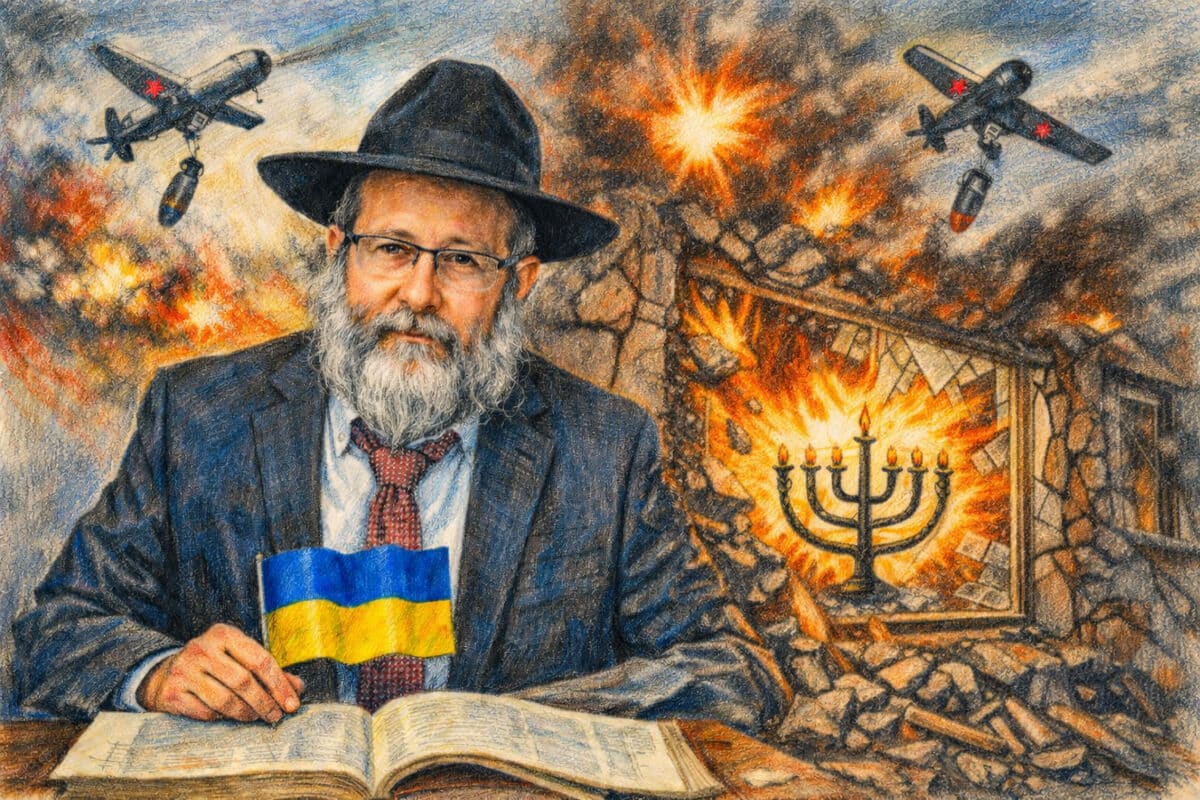
“We stay here to help communities” – the rabbi’s house in Kryvyi Rih was hit by a Russian strike: a direct hit on the Jewish community and miraculous salvation

In Kryvyi Rih on the evening of January 29, 2026, the home of the city’s chief rabbi and Chabad emissary Liron Ederi was heavily damaged by shelling. There were no fatalities. A security guard at the site sustained a minor shrapnel wound to the arm, which is currently being described as the main “bad thing that wasn’t fatal.”

The destruction affected more than just a corner or a “part of the wall.” According to the rabbi, the blast wave blew out windows and doors, damaged the parking lot, and affected community premises. He specifically mentioned the mikvah, which the community had recently finished repairing — and which was also damaged.

“The entire front part of the house was blown up. Windows, doors, parking lot, and the mikvah, which we just finished repairing — everything was damaged.”

"We remain here to help communities" - the rabbi's house in Kryvyi Rih was hit by a Russian strike: guard injured, family saved, community assesses damage
“We remain here to help communities” – the rabbi’s house in Kryvyi Rih was hit by a Russian strike: guard injured, family saved, community assesses damage

The rabbi and his family were not at home at the time of the strike. This is the rare coincidence that literally decides fate. Ederi said he heard the explosions almost immediately: he was out of town and talking on the phone with a community employee who was near the strike location.

“During the shelling, I was outside the city, but I heard the explosions in real-time. I was in the middle of a conversation with the secretary of the Chabad House, who was near the strike location. I heard the explosions over the phone — it was terrible.”

According to preliminary reports, the destruction was caused by a Russian drone that fell near the building. Kryvyi Rih is a major city in Ukraine and the hometown of President Volodymyr Zelensky; according to community estimates, thousands of Jews live in the city, and the community continues to operate despite the war and winter.

The incident was reported by the Israeli religious news site emess.co.il (article by journalist Avi Yaakov). Emess (MS) positions itself as a major Israeli news and media site for the ultra-Orthodox audience (Haredim) and explicitly states that it is part of the media group “Kol Chai”.

NANews — Israel News | Nikk.Agency emphasizes: such strikes do not necessarily mean “anti-Semitism as a motive.”

More often, it’s about something else — Russian aggressors strike cities indiscriminately, and they don’t care who lives there: Jews of Ukraine, Ukrainian-speaking families, Russian-speaking residents, the elderly, children. This is where the brutality of the regime in Russia manifests — in cold indifference to civilians and the habit of turning ordinary life into a target.

However, the alarming background remains. Ukrainian communities speak of an increase in cases where Jewish life objects are damaged: rabbi’s homes, synagogues, community centers, cemeteries. Sometimes it looks like a coincidence of war, sometimes — like an unpleasant pattern that is hard to “explain with one missile.”

A representative of the Kryvyi Rih city authority commented on the publication with the most direct language:

“Putin continues to strike peaceful people — including Jewish communities. We have seen serious destruction in Kyiv, Odesa, Dnipro, Kharkiv, Kherson, and other cities.”

In winter, this becomes even harsher at the household level. When energy is attacked, people are left without light, heating, and water — and then the war ceases to be a “report,” it becomes the temperature in the apartment and how quickly the house cools down. Ederi speaks not in slogans but in the reality he sees every day:

“People are freezing from the cold due to targeted attacks on energy and power facilities. This is a very hard and difficult winter, and we need a lot of mercy from Heaven — but we will not be broken. I, along with my brothers, the Rebbe’s emissaries throughout Ukraine, remain here to help communities.”

The Federation of Jewish Communities of Ukraine supported the rabbi and reminded the world of the hundreds of thousands of Jews in the country and the families of Chabad emissaries who remain under shelling, sometimes without basic conditions.

“We express support for Rabbi Adri, who acts with remarkable dedication. It is important that the world does not forget about the hundreds of thousands of Jews living here and the hundreds of families of Chabad emissaries who remain under shelling, often without electricity and water. Despite the suffering, we will continue to fulfill our mission and strengthen it in the hope of complete redemption.”

A separate question is how Israel reacts to such episodes. In Israeli public logic, there is a constant formula that Israel is a home and responsibility for Jews worldwide. Therefore, the expectation from official Jerusalem is simple for many: even if diplomacy requires caution, words can and should be found at least for a clear human signal — outrage and support when rabbi’s homes, mikvahs, and community infrastructure in Ukraine are hit by Russian strikes.

Reference: Who is Liron Ederi (Kryvyi Rih)

Liron Ederi is the chief rabbi of Kryvyi Rih.

He was born on 7 Iyar 5765 (April 18, 1975) in Jerusalem.

Education:
• religious school (9 grades)
• Chabad Yeshiva Ketana, Lod — 3 years
• Chabad Yeshiva Gedola, Kfar Chabad — 3 years
• Main Chabad Yeshiva, New York — 2 years

Upon graduation, he received a rabbi’s diploma.

He served 3 years in the Israeli army. After completing his service in 2001, he came to Ukraine, to Dnipropetrovsk, where he engaged in religious activities for a year and prepared to move to Kryvyi Rih.

Since 2002 — chief rabbi of Kryvyi Rih.

Family: married, four children. Wife — Zegava Ederi, children — Chaya-Mushka, Chana, Menachem Mendel, and Yosef Yitzchak.

Conclusion

The strike on the rabbi’s house in Kryvyi Rih is not a story “about damaged walls.” It is an indicator of how the Russian war blurs any boundaries: not only infrastructure and residential areas are under fire, but also religious life, community centers, people who hold entire communities in place.

And the hardest part of such episodes is the feeling that the aggressor truly doesn’t care who is on the other side of the wall. Today it’s the rabbi’s house and mikvah, tomorrow — a school, an entrance, a hospital. Therefore, public reaction and support — especially from Israel, which on a principled level calls itself a home for all Jews — is perceived not as “politics,” but as a matter of moral responsibility and basic solidarity.

“Well, Adolf, you can rejoice”: a Kyiv resident who survived the Holocaust froze to death due to a blackout caused by Putin

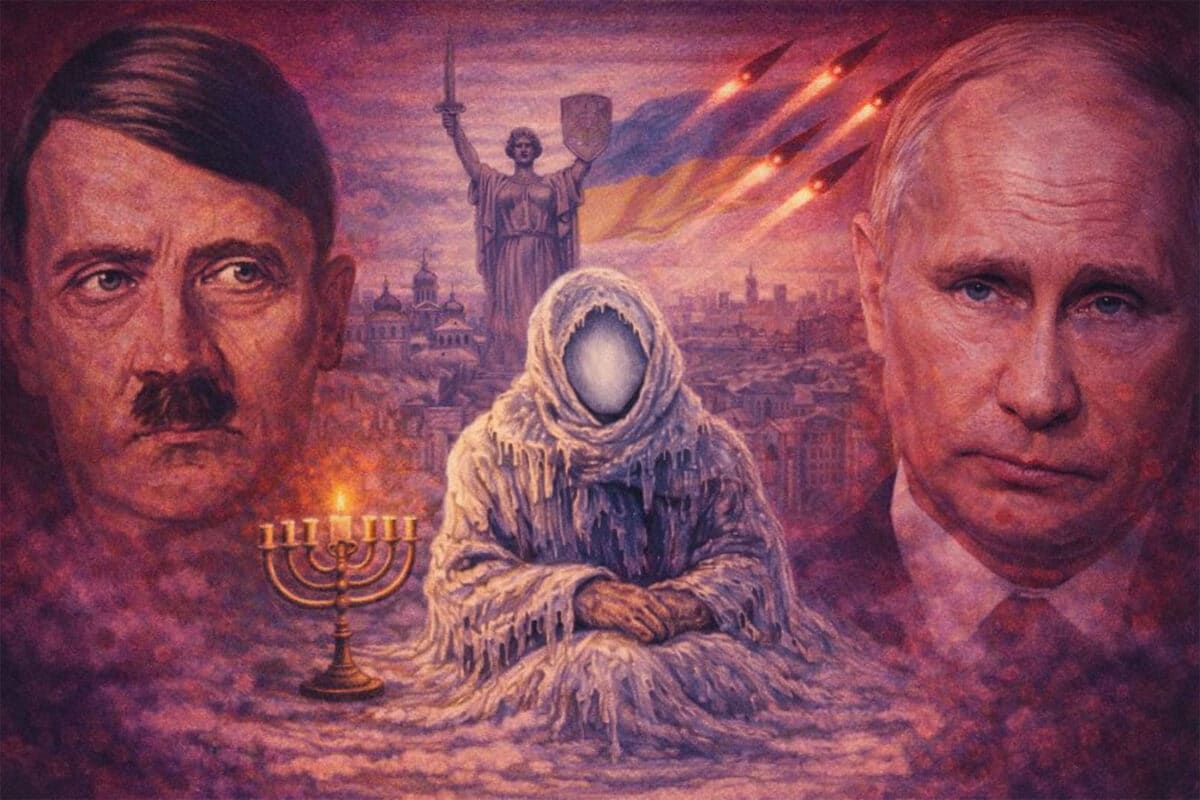
“Well, Adolf, can you rejoice? Your followers, decades later, have picked up the banner and continue the work that humanity tried to end many years ago. They have learned your lessons and methods and are creatively developing them. However, don’t rush to rejoice. They will lose, just like you. You died in a bunker, they won’t have enough bunkers for everyone, so they’ll have to make do with forests and swamps. There are no options to survive. Because you are not only murderers but also insignificant. With such a combination, you don’t win,” writes special correspondent in Kyiv Iryna Khalip in a report published on January 27, 2026, in “Novaya Gazeta Europe”.

The text is titled “The Police Didn’t Walk Through the Apartment, They Skated on Ice.” Its central line is the story of a Jewish woman from Kyiv, Yevgenia Mikhailovna Besfamilnaya, known to her neighbors as “Baba Zhenya.” The reporter pieces together her fate through fragments — through neighbors and through volunteer Yulia Grymchak, who was the first to raise the alarm and essentially insisted that the apartment door be opened.

What is Happening in Kyiv Now — and Why

“Well, Adolf?, can you rejoice”: a Kyiv woman who survived the Holocaust froze to death due to a blackout caused by Putin

In January 2026, Kyiv lives in a mode where electricity, heating, and water regularly disappear due to Russian strikes on energy and distribution networks. Ukrainian energy workers explain directly: part of the capital’s own generation is knocked out because the Kyiv energy hub has been systematically hit since autumn, resulting in a chronic power deficit.

Against the backdrop of frosts, this turns into a direct threat to residential buildings: almost 60% of Kyiv remained without electricity, and thousands of buildings without heat at temperatures around −12-20°C. Already on January 27, the President of Ukraine reported that hundreds of homes in the capital were still without heating (in some areas of the left bank — 926 homes). The communal logic in such conditions is simple: when there is no stable power and heat, pumps/nodes/in-house networks fail, water and pipe accidents quickly turn into ice, and entire entrances risk becoming “ice traps.”

Who is doing this and why — there is no mystery here.

This is done by the Russian army and its command, who deliberately target civilian energy to turn the winter rear into a continuation of the front. The goal is not a “military object” as such, but the effect on people: to freeze cities, sow panic, drive the population out of their homes, overload communal services, break the will to resist, and force society to demand concessions “just to get warm.” These are not random hits or “mistakes.” This is a calculation for mass suffering, especially among those who are physically weaker and poorer: the elderly, the lonely, the sick, families with small children.

In essence, this is an attempt to drive the capital of Ukraine into a new “Holodomor” — not by hunger, but by cold: when civilians are broken not by the front, but by turning off the basic conditions of life.

That is why the report about Baba Zhenya sounds like a warning: she died, but the mechanism that makes such deaths possible is working right now.

Baba Zhenya: What is Known About Her

Neighbors knew little about Baba Zhenya — and this is emphasized directly. By what miracle she survived as a child and did not end up in Babi Yar, how she ended up in an orphanage, why she lived alone, whether she had a husband and children — answers to these questions are unlikely to appear.

What the neighbors knew for sure: Yevgenia’s surname was given in the orphanage — Besfamilnaya, “that is, from nowhere, without roots.” The report speaks harshly and accurately about her: a person retains nationality and native language — Yiddish. Yevgenia Mikhailovna did not speak Ukrainian — only Yiddish and Russian. The patronymic, as the author suggests, could also have been invented in the orphanage: a person is “supposed” to live with a patronymic, “let it be Mikhailovna — what difference does it make.”

By nature, Baba Zhenya was reserved. She did not like to talk about herself. She hardly let anyone into her home. At the same time, she regularly went to the synagogue in Podil — two blocks from her home.

January 13: The Morning When the House Begins to Turn into an Icy Tomb

The key day of this story is January 13, 2026. That night, the house in Podil begins to flood: somewhere the pipes burst, water flows down, flooding the lower floors. Outside, it is minus 18. The author directly formulates the fear of the residents: the house could turn into a large icy tomb.

Plumbers who arrived on the call and shut off the water search for the location of the accident and quickly establish: the pipes burst on the fourth floor. They realize it is Baba Zhenya’s apartment.

At this moment, Yulia Grymchak runs to the synagogue — early in the morning, around seven. She tries to find out when Yevgenia Mikhailovna was last seen, if she said anything, if anyone took her. Yulia has a version: perhaps Baba Zhenya decided to leave — Yulia says that Israeli organizations helped Jews leave Ukraine, and maybe Baba Zhenya also chose “the warmth.”

The answer turns out to be short and terrifying: she did not leave.

The Police, the Balcony, and the Ice

Yulia Grymchak is a volunteer. She and other volunteers brought food to Yevgenia Mikhailovna. She rarely opened the door — often bags were left at the door, and she would take them later. Sometimes she would come out herself. On the day of the accident, Yulia starts calling — both the mobile and the home phone: the phones are silent. Neighbors gather at the door, knock — no answer. Behind the door — no movement.

Then an important scene appears in the text — a dispute with the police. Yulia explains that Baba Zhenya was a “difficult person”: sometimes she wouldn’t open, sometimes she would open and be capricious — “I don’t eat this,” “this doesn’t suit,” “you brought the wrong thing.” The police initially do not want to open the door, citing that the woman often does not open.

But the neighbors insist. And they insist not “politely.” They go outside, press, demand, because the house is flooding, minus 18, there are children and bedridden elderly in the entrance. Yulia formulates it bluntly: if everything freezes, “we will all just lie down with the house.”

The report contains a detail that cuts to the nerves: the police enter through the balcony because the door still does not open. And yes — at minus 18, the balcony turns out to be open.

“No Smell — No Corpse”

One of the darkest episodes is the explanation of why the police are dragging their feet. The text contains a domestic logic that becomes physically unpleasant: “no smell — no corpse.” They say, if there was a corpse, they would have smelled it.

Neighbors spend half the night picking arguments to force the police to open the apartment.

The solution turns out to be simple and monstrous: the corpse froze. The body does not decompose. It becomes, in the sense of the report, an “ice sculpture,” a monument to another victim of the Holocaust — a woman caught up by “ideological descendants” more than eighty years later.

Yes, it is in her apartment that the pipes burst. And not only the pipes: the faucet breaks, water flows, floods the apartment, goes to the lower floors and freezes. And here the headline ceases to be a metaphor: the police in the apartment do not walk — they slide on the ice. The apartment becomes an ice rink. And on the same icy bed — frozen in the cold, Baba Zhenya.

The report contains a cold, terrifying thought: “she was no longer cold, the only one of all the residents of the house.” And next to it — an even harsher one: perhaps at that moment she was “happier than everyone,” because “it was no longer painful, not scary, not cold, not dark.”

“Baba Zhenya Was Taken Away.” And What Remains for the House

That same evening, water returns to the house: the pipes are repaired. And Baba Zhenya is taken away.

Yulia Grymchak speaks about the neighbors without pathos, but with rare clarity: she is proud that in their house no one asked the main domestic question — “when will the water be fixed.” Everyone thought only about Baba Zhenya. They sympathized. They stuck together. They helped the weak and the elderly. They joked and cheered up, like people who pull themselves out of darkness and cold every day.

And in this part, an important thought for Kyiv and any city under war appears: community is not a beautiful word. It is a survival mechanism. If not for the community, it is unknown how long Baba Zhenya would have lain in this icy tomb.

This Is Happening Now

Baba Zhenya died. This is the past on the calendar, but not the past in meaning.

Because right now the war in Ukraine continues to work not only with explosions but also with outages, cold, darkness, destroyed civilian infrastructure. Hundreds of thousands of people live in a mode where electricity, heat, and water cease to be guaranteed. In such conditions, any pipe burst, any closed door, any solitary old age turns into a threat to life.

The death of Yevgenia Besfamilnaya becomes in this report not a “single case,” but a point where three things converge: war, winter, and human vulnerability. And as long as these conditions persist, the risk of repetition does not disappear.

Reaction of Israel

The publication is reacted to by Michael Brodsky, the Ambassador of Israel to Ukraine:

“This winter in Ukraine, the concept of ‘cold war’ has acquired a new meaning. As a result of Russian strikes on civilian infrastructure, most residents of Kyiv and other major cities are left practically without electricity, heating, and water. And this is at temperatures outside 10–15 degrees below zero.

The publication ‘Novaya Gazeta’ published the story of Yevgenia Besfamilnaya — a Kyiv woman who survived the Holocaust, who died in her apartment from the cold on the eve of the International Holocaust Remembrance Day.”

He emphasizes: despite the conditions, Israeli diplomats continue to work in Kyiv, the embassy operates in the usual mode.

Testimony of the Volunteer

(translation from Ukrainian)

Yulia Grymchak – story:

“Two weeks ago, my building — a multi-story building — was left without water. Completely, any.

Neighbors quickly guessed that the pipes burst in the apartment where a small, very old, dry as a winter acacia twig, lonely woman lived.

Everyone knew that this person lived a life exactly like her surname was:
Besfamilnaya Yevgenia Mikhailovna.

She had no one: no relatives, no children.

The only place where she found “her own” was the synagogue in Podil.

Yes, she was one of those Jewish children who somehow miraculously survived the Holocaust during World War II.

The surname was invented for her in the orphanage. I suspect the name and patronymic too.

No one knew her phone numbers either, although I and other women in the building fed her: brought bags of food and hygiene products, hot soups, and sweets.

Nevertheless, it was always very difficult to reach her in case of need.
And on the day the pipes burst — too.

My child then cried for an hour, thinking and remembering that this person’s crippled psyche actually saved her from death in childhood, but in old age, it killed her — because she hid from everyone and did not call for help in time.

Yes, you guessed right.

When the police entered the apartment at my insistent request, with the support of the neighbors, the corpse of Mrs. Yevgenia was found there.

In fact, the Universe forced us to finally find out that the person had long died, breaking the pipes in her apartment at minus 18 degrees outside.

A lonely, helpless life — and the same death.

For people who will survive the current war, it will never end.
For us, this war is forever. One day I realized this.

I saw the neighbor, most likely, a few days before her death. She was breathing air on the staircase of her entrance. She stood undressed, in one blouse and a bunch of robes, as always.

Alone…

(This post is dedicated to the memory of the victims of wars.)”

Name in the Martyrology

Neighbors knew little about Baba Zhenya — but enough to understand the main thing. She survived the Holocaust as a child. Lived “from nowhere,” with a surname from the orphanage, without a family, closed, stubborn, lonely. Died from the cold in an apartment in the center of Kyiv.

And this is not a literary story. This is a chronicle of a time when “never again” again becomes a test of reality, and cold becomes a weapon of war.

NAnews — News of Israel | Nikk.Agency

In Kyiv and Sokal, new memorial signs were unveiled: the rescuers of Jews – the Righteous Chereverikovs and the Galamay family are immortalized in the city’s memory.

In Kyiv, another “stumbling stone” has been installed — a mini-memorial in honor of the Righteous of Babyn Yar, Petro Chetverikov (a local honorary title within Kyiv’s memory initiatives; not to be confused with the formal title “Righteous Among the Nations” at Yad Vashem — the sources specifically use the term “Righteous of Babyn Yar”). In Sokal, trilingual information stands have been mounted near the ruins of an ancient synagogue and next to the house of the Righteous Among the Nations, Franciszka and Helena Galamay.

Why it matters: both initiatives return specific names and addresses to the urban space, strengthening the shared memory of Ukraine, Israel, and the Jewish diaspora.

Sometimes the most powerful monuments are the smallest. A brick-sized slab underfoot and a concise stand by an old foundation speak of moral choice louder than any podium. Kyiv and Sokal have recently reminded us: memory is not a museum genre but part of the everyday route. People rush to work, children go to school, tourists look for cafes, and suddenly a glance catches a surname, a year, a short line about salvation. This is how “urban memory” works: quietly but inevitably.

The material was prepared based on information from September 26-28, 2025, from the United Jewish Community of Ukraine.

Kyiv: “stumbling stone” named after Petro Chetverikov

A new element of the “stumbling stones” series has appeared in the capital. These are small metal plaques embedded in the pavement — markers of addresses where those condemned to death by the Nazis lived or were helped. The new “stone” is in honor of Petro Chetverikov, the Righteous of Babyn Yar, killed by the Nazis in 1942 for saving two Jewish girls aged 12 and 17.

His name has been returned to the city map near the Central Children’s Library named after Taras Shevchenko (Beresteisky Avenue, 25a).

It is also symbolic how this is done. The ceremony is attended by schoolchildren, historians, and representatives of cultural initiatives. It seems like a small thing, but this is how a new habit begins: knowing not only the main squares but also the addresses of courage. This approach is akin to a “memory microcircuit” that can be read in two lines — and never forgotten.

Petro Chetverikov — Righteous of Babyn Yar

The story of Petro Chetverikov is a documented example of how one person in occupied Kyiv took a step that cost him his life. In 1942, together with his wife Maria, he sheltered Jewish girls in their home. The first, a 12-year-old girl, was taken to a village to acquaintances, where she was adopted and thus saved from death.

Some time later, another girl, 17 years old, came to their home. She managed to escape a roundup, and the Chetverikovs found a way to transfer her to a partisan unit.

These actions did not go unnoticed. In 1943, the Gestapo arrested Petro Chetverikov. According to available testimonies, he was executed in Babyn Yar — a place that became a symbol of the tragedy of Kyiv’s Jewry. The exact date of arrest and execution is unknown (only the year and place are known).

Chetverikov was also connected with the underground: his house sometimes served as a meeting place for underground fighters, which only increased the risks.

Decades passed, and his name could have dissolved in archival footnotes if not for the work of researchers and public initiatives. On September 23, 2025, in Kyiv, near the Central Children’s Library named after T. Shevchenko on Beresteisky Avenue, 25a, a “stumbling stone” was installed in honor of Petro Chetverikov. The ceremony was timed to the 84th anniversary of the beginning of the executions in Babyn Yar.

This was the first “stone” after a four-year break in the project, and it is symbolic that Chetverikov’s name became the starting point of a new stage.

Thus, the biography of this man consists of a few but vivid facts: an ordinary Kyiv resident who decided to help two girls; a family that risked themselves for the lives of others; arrest and death in 1943; and the return of his name to the city map in the 21st century.

Sokal: three stands at the synagogue and the house of the Righteous

Sokal is a small town, but its history resonates far. Trilingual stands have been installed at the ruins of one of the oldest Galician synagogues: Ukrainian, English, Polish. This choice of language is not a detail but an invitation. Locals, guests from neighboring Poland, travelers from Israel — all can read the story without intermediaries.

The second stand is at the house where Franciszka Galamay and her daughter Helena Galamay — the Righteous Among the Nations — lived. During the Holocaust, they did what always requires silence: sheltered, fed, kept watch by the window, listening to night footsteps. These everyday, almost imperceptible movements make up the fabric of salvation.

Why the stand is an effective format

A stand is a short, clear story, not overloaded with academic language. It is important here to keep the focus on two or three facts: who saved, who was saved, what was risked. When all this is said simply and in three languages, the city receives a working tool of memory. Not ceremonial, but everyday.

Franciszka and Helena Galamay — the story of a mother and daughter who saved Jewish families

Franciszka Galamay was born in Sokal in 1885. Before the war, she and her daughter Helena had a small farm. When the German occupation began, Jewish families Kram, Malts, and Kindler found refuge in their home. The women hid people in hiding places above the pigsty and under the kitchen floor.

In November 1942, Franciszka herself offered shelter to cattle trader Moishe Malts and doctor David Kindler with their families, who fled the ghetto. They were joined by painter Josef Kram with his wife and son. To hide the fact that Jews were hiding in the barns and outbuildings, Franciszka kept pigs and chickens and brought food there, hiding it among the waste. To divert suspicion, she even allowed herself anti-Semitic remarks in public.

Over twenty months, the mother and daughter saved 16 people out of 6,000 pre-war Jews of Sokal. Only about 30 survived the war. Among the saved was Moshe Malts, who left memoirs “Years of Horror — A Glimmer of Hope.” His writings became a valuable testimony of life in the ghetto and covert survival.

An interesting detail: simultaneously with the Jewish families, Franciszka also sheltered a young German deserter soldier, Wilhelm, who asked to be hidden from being sent to the Eastern Front. He lived on the farm for almost two years, but in 1944 he was discovered and executed by Soviet soldiers.

On July 19, 1944, the Red Army entered Sokal, and the end of the 20-month nightmare came for those in hiding. The Jews left the Galamay house and soon emigrated. The family maintained contact with them for many years.

In 1984, Yad Vashem recognized Franciszka and Helena Galamay as Righteous Among the Nations. Later, their story was included in the American documentary “No. 4 on Virgin Mary Street” and in Jenny L. Witterick’s book “My Mother’s Secret.” In 2011, the heroine was posthumously awarded the “For Courage and Care” prize, received by her descendants.

Thus, the biography of Franciszka and Helena Galamay is a story of two women who not only saved almost half of all surviving Jews of Sokal but also managed to deceive suspicious neighbors and the Nazis themselves, showing incredible ingenuity and determination.

The common thread of two stories: memory as a shared territory

Kyiv and Sokal speak the same language — the language of addresses, dates, and names. NANews — News of Israel regularly reports on projects where memory ceases to be a monologue and becomes an inviting dialogue. There is no “imposed” pathos here, but there is a clear logic: we place a slab, attach a stand, read names, ask children questions.

Conclusion: small forms — big meanings

The Kyiv “stumbling stone” named after Petro Chetverikov and the Sokal stands about Franciszka and Helena Galamay are two different tools of the same work. Both give a voice to those who once said “no” to evil and “yes” to human solidarity. Both are firmly woven into the fabric of the city: they don’t need to be sought in museum halls, they are nearby — on the pavement and on the wall.

For readers of “NANews” and those following News of Israel, this is an opportunity to see in the Ukrainian agenda not only politics but also careful, targeted preservation of memory. This is perhaps where the strength lies: not in loudness, but in regularity and honesty.

Stumbling stones: memory you can’t skip over

A “stumbling stone” is a small brass memorial sign embedded directly into the pavement. It is engraved with the name, years of life, and brief fate of a Holocaust victim or a person who saved Jews during the Nazi occupation.

History of the project

The idea was conceived by German artist Gunter Demnig in the 1990s. Initially, these were individual plaques, but over time they turned into the largest decentralized memorial in Europe. Today, “stumbling stones” can be found in thousands of cities in Germany, Poland, France, the Netherlands, Ukraine, and other countries.

Why they are needed

The main idea is for the memory of the Holocaust to be not only in museums and books but right on the streets. A person walks along a familiar route, sees a surname and year underfoot, “stumbles” with their gaze, and mentally returns to history. This is a very personal and intimate way to remember.

Significance for Israel and the diaspora

For readers of NANews — News of Israel, such initiatives in Ukraine are close and understandable. Israel has been carefully preserving the memory of the Righteous for decades, and when “stumbling stones” appear in Ukrainian cities, it becomes a bridge between countries and the Jewish diaspora.


Israel welcomes young Ukrainian athletes: a meeting of participants of the 32nd Olympic Dreams camp took place in Tel Aviv

At the Ukrainian Cultural Center at the Embassy of Ukraine in the State of Israel (Tel Aviv), an official event was held with the participation of Ukrainian athletes and coaches who are in Israel as part of the 32nd training camp of the international project Olympic Dreams.

The meeting on January 21, 2026, was attended by athletes and the coaching staff of the National Team of Ukraine, the project team of Olympic Dreams, camp organizers, as well as the head coach of the Israeli national judo team and co-organizer of the training camp Shani Hershko. The presence of representatives of the Ukrainian diplomatic mission emphasized the public status of the visit and its significance for the partnership relations between Ukraine and Israel in wartime conditions.

With a welcoming speech, Gennady Breskalenko — Deputy Head of the institution, Counselor-Envoy of the Embassy of Ukraine in the State of Israel, congratulated the athletes, wished them new victories, and emphasized that today sports for Ukraine is not only about competitions and medals but also part of the country’s international presence.

In his speech, a key formulation about the role of athletes on the world stage was voiced:

“Today, every athlete is also a diplomat: representing Ukraine on the world stage, you strengthen the voice of our state in the world. The willpower of our athletes is the embodiment of the indomitability of our entire nation. For the Embassy, it is very important to be close to our youth. In these difficult times, supporting young talents is not only a contribution to sports but also an investment in the future of Ukraine.”

Israel welcomes young Ukrainian athletes: a meeting of participants of the 32nd Olympic Dreams camp was held in Tel Aviv

The context, due to which international gatherings have become critically important, is described in the message with numbers. As a result of the full-scale armed aggression of the Russian Federation against Ukraine, more than 800 sports facilities have been destroyed and damaged, including 21 Olympic and Paralympic bases. In conditions of constant shelling of Ukrainian cities, ensuring the continuity of the training process for Ukrainian athletes remains one of the priority tasks, as regular preparation cycles within the country are often disrupted.

It is for this purpose that the Olympic Dreams project has been conducting international training camps in friendly countries for four consecutive years, creating safe conditions for the preparation of Ukrainian athletes and preserving the Olympic reserve of Ukraine.

The current camp is the 32nd within the project and is held in the 12th country in the world. A symbolic detail is separately noted: the first Olympic Dreams camp in the spring of 2022 was held in Israel — in the first months of the full-scale war. The return of the project to Israel is presented as a continuation of cooperation, which has turned from emergency assistance into a sustainable practice.

The initiator and patron of the project Anatoly Boyko stated that Israel was the first country that in the first months of the full-scale war created conditions for the continuous preparation of Ukrainian athletes in a safe environment.

The initiator and patron of the Olympic Dreams project Anatoly Boyko noted:

“Israel was the first country that in the first months of the full-scale war created conditions for the continuous preparation of Ukrainian athletes in a safe environment. Such support laid the foundation of our sports diplomacy, which has today grown into systematic international cooperation. For us, it is fundamentally important to develop partnerships with countries that joined the project from the first steps and share the common responsibility for the future of Ukrainian sports.”

Official speeches at the event were made by:

Gennady Breskalenko (Embassy of Ukraine in Israel),
Shani Hershko (head coach of the Israeli judo team, co-organizer of the camp),
representatives of the project Alexandra Novikova (CEO Olympic Dreams) and Alexandra Starkova,
as well as project participant, silver medalist of the European Youth Championship Olga Tsymko.

The organizers separately emphasized that in addition to intensive training, a cultural program was provided for the participants. Ukrainian athletes visited iconic memorial and holy places in Israel, which allowed them to get to know the history, cultural heritage, and spiritual traditions of the partner country more deeply. The publication also features the geotag Netanya (Central District).

Special thanks for assistance in organizing the training process and supporting Ukrainian athletes were expressed to the Embassy of Ukraine in the State of Israel, the Olympic Committee of Israel, the Judo Association of Israel, and the Judo Federation of Ukraine. The message emphasizes that the international project Olympic Dreams remains an important element of support for Ukrainian sports in wartime conditions and contributes to the development of sports cooperation between Ukraine and friendly states.

Project contacts (as indicated in the message):
Email: uachildrenfund@gmail.com
Website: maydit.com.ua/olympic_dreams
Facebook: @olympic.dreams.project
Instagram: @olympic_dreams_ua

Maintaining the training process in wartime conditions is not only about results in competitions but also about the long-term resilience of the country, as written by NANovosti — News of Israel | Nikk.Agency.

Cold instead of the front: how Kharkiv and Odessa survive in the energy war

This material is based on a report by Eduard Dox, January 28, 2026, specially for the publication “Vesti”, prepared in Kyiv. The editorial team retells and structures eyewitness accounts, preserving the texture and voices of people who found themselves at the epicenter of the energy crisis.

The story of Yevgenia Besfamilnaya — a Kyiv pensioner who survived the Holocaust and died in her own apartment on January 27 — became a symbol of what winter in Ukraine has turned into. After this tragedy, the conversation about the war ceased to be solely military. It became domestic, icy, and deadly specific.

In the winter of 2026, Ukraine is experiencing the most severe energy crisis since the beginning of the full-scale war. Systematic strikes by the Russian army on civilian infrastructure have deprived millions of people of electricity, heat, and water. These basic things are no longer perceived as the norm — they have become a variable dependent on the next attack.

This is especially acutely felt in Kharkiv and Odesa — cities with different geographies of war but equally severe humanitarian consequences.

In Kharkiv, the situation remains one of the most difficult in the country. After another night of strikes on energy facilities, up to 80% of the city was left without stable power supply. Transport stoppages, water and communication disruptions, and lack of heating in residential areas have become part of everyday life.

Emergency crews work around the clock. Backup power sources are used, but restoration is constantly disrupted by new shelling. The city lives in a repetitive rhythm: attack — restoration — new attack. Authorities ask to conserve resources and follow official information, understanding that the situation changes literally by the hour.

Against this backdrop, communities take on a special role. The Jewish community of Kharkiv has been supporting the elderly, families with children, and those who could not leave for the fourth year of the war. Educational classes in the synagogue basement, food packages, warm jackets, and blankets are more important today than any formal reporting.

According to community representatives, the diesel generator in the synagogue often becomes the only source of light and heat. At the same time, the work of Kharkiv’s energy workers and utility workers is emphasized: despite constant strikes, they repeatedly restore the destroyed system.

In Odesa, the picture is different in form but not in essence. The city is far from the front line but is subjected to regular strikes. After one of the latest attacks, residential buildings in the center were damaged, and dozens of people were injured. The strikes hit energy infrastructure, leading to mass outages.

In several districts, light, heating, water, and communication disappear simultaneously. Power supply is provided through backup schemes, with constant interruptions. Critical infrastructure receives priority, but for ordinary apartments, this means cold and darkness.

The most vulnerable are the elderly and displaced persons. 89-year-old Odesa resident Semen Vainblat, a poet and translator, recalls that electricity in his area is provided for only a few hours a day. The batteries are barely warm, water has to be conserved, and they keep warm in outerwear and under several blankets.

He remembers World War II well but admits: the current one differs in the scale of destruction technologies. Ballistic missiles, drones, targeted strikes on infrastructure make winter a weapon. There are no shelters in his area, so he and his wife follow the “two walls” rule, staying home even during alerts.

Survival is aided by the help of charitable organizations: food, medicine, and where possible — coal and firewood. After a recent operation, Semen hardly leaves the house, and all household chores have fallen on his wife’s shoulders.

Among Odesa residents, there are many displaced persons. Vladimir and Tatyana Fedorov left Kherson in the fall of 2022, after months of living under occupation. Their home was damaged by shelling, and their dog died of a heart attack due to constant explosions. They planned to stay in Odesa for a short time but have been living there for the fourth year.

Today, their pensions barely cover rent and utilities. Free transport for pensioners does not run due to the energy crisis, and minibuses have become a luxury. There have been cases when there was no electricity for four days in a row — with sub-zero temperatures in the apartment. They keep warm with hot water bottles, heaters, and whatever can be cooked on the stove — food here has also become a way to keep warm.

Odesa resident Margarita confirms: many areas are without light and heat, women refuel generators themselves — there are not enough men. Shops allow charging phones and drinking hot tea. This is often the only support.

She admits that state assistance is hardly felt. Utility accidents occur constantly, and it is difficult to eliminate them due to shelling and a lack of specialists. “The city relies on people and mutual aid. But for how long?” — this question is heard more and more often here.

The energy war has turned winter into a test of endurance, where the front line runs through kitchens, bedrooms, and entrances. This text is a retelling of a report by Eduard Dox for “Vesti,” supplemented with editorial context for the Israeli audience. It is such human stories that explain why what is happening in Ukraine cannot be perceived as abstract geopolitics, as consistently reported by NANews — Israel News | Nikk.Agency.

Thousands of drones as a response to the threat of a strike: Iran raises the stakes, and the head of AMAN works in Washington

Iran accelerates preparations for a possible military scenario amid discussions of a US strike on its facilities. Simultaneously, Israel is enhancing intelligence coordination with the American administration, while regional players are trying to contain an escalation that could escalate into a large-scale conflict.

According to the Axios portal, closed meetings are being held in Washington this week with the participation of senior defense and intelligence officials from Israel and Saudi Arabia. The central theme is a possible US operation against Iran and scenarios for further developments in the region.

US President Donald Trump’s decision to strengthen the American military contingent in the Persian Gulf has become a signal of increased readiness not only for Israel but also for other Middle Eastern countries. In Jerusalem and regional capitals, every movement is closely monitored — the risks of a rapid transition from diplomacy to force are too high.

A key element of the Israeli line has been the activation of military intelligence. The head of AMAN, Major General Shlomi Binder, held a series of meetings at the Pentagon, CIA, and the White House. According to sources, the Israeli delegation provided the American side with specific intelligence on potential targets inside Iran — at the direct request of the US administration.

Simultaneously, Saudi Arabia is trying to play the role of a stabilizer. It is expected that the kingdom’s defense minister, Prince Khaled bin Salman, will hold talks with US Secretary of State Marco Rubio and other key figures. Riyadh fears that a strike on Iran will trigger a chain reaction of regional war, and therefore in recent days has acted as a mediator, conveying messages between Washington and Tehran.

The Crown Prince of Saudi Arabia has clearly marked a red line: the country’s airspace will not be provided to the US for a possible attack on Iran. This signal was directly conveyed to the Iranian leadership.

Within the American administration itself, according to sources, various scenarios of pressure on Tehran are being discussed — from targeted strikes on security structures to personal targets. Several interlocutors in the US claim that Trump views such actions as a way to create conditions for “regime change” against the backdrop of suppressed but not disappeared protest sentiments within Iran.

Tehran’s response was not long in coming. Iranian army commander Amir Hatami ordered a sharp increase in the drone component — we are talking about a thousand strategic drones. According to the Tasnim agency, these systems are intended to enhance the capabilities of a rapid and asymmetric response to external threats.

According to Iranian statements, the new drones include strike, reconnaissance-assault platforms, and electronic warfare means. They are designed to hit both stationary and mobile targets — on land, at sea, and in the air. Emphasis is placed on integrating ground and naval drones into a single system.

Iran’s neighbors share the concerns. A senior Turkish official told AFP that Ankara is considering additional security measures along the nearly 500-kilometer border with Iran. Even the existing border wall, he said, does not guarantee full protection in the event of regime collapse or large-scale hostilities.

The region is entering a phase of increased uncertainty, where diplomatic efforts run parallel to accelerated military preparations. Israel closely monitors Iranian steps, the US tests the limits of pressure, and Arab countries try to prevent an explosion that could engulf the entire Middle East. For the Israeli audience, this context is not abstract geopolitics, but a matter of direct security here and now, as consistently reported by NAnovosti — Israel News | Nikk.Agency.

Israel condemned Russian attacks against the civilian population of Ukraine — Israeli Ministry of Foreign Affairs

The Minister of Foreign Affairs of Israel, Gideon Sa’ar, on January 28, 2026, made a public statement after a phone conversation with his Ukrainian counterpart, Andriy Sybiha. The address was published on his official accounts and became one of the clearest diplomatic signals from Israel regarding the war in Ukraine in recent times.

According to Gideon Sa’ar, during the conversation, he expressed Israel’s solidarity with the people of Ukraine and directly condemned Russian attacks against civilians. Sa’ar emphasized that strikes on civilian targets are unacceptable and expressed hope for reaching an agreement to end the war soon.

Israel condemned Russian attacks against Ukrainian civilians — Ministry of Foreign Affairs of Israel

A separate block of the conversation was the topic of Iran. The head of the Israeli Ministry of Foreign Affairs called the brutal crackdown by Iranian authorities on their own population with the participation of the Islamic Revolutionary Guard Corps one of the darkest episodes in the history of Iran and humanity as a whole. In this context, he requested the Ukrainian side to consider recognizing the IRGC as a terrorist organization at the parliamentary level.

Sa’ar noted that Israel views the actions of the Iranian regime not only as internal repression but also as a factor of regional and global threat, directly linked to wars and destabilization in the Middle East and beyond.

“Today I had an important phone conversation with my colleague, the Minister of Foreign Affairs of Ukraine. During the conversation, I expressed our solidarity with the people of Ukraine and condemned Russian attacks against civilians. I expressed hope that an agreement to end the war will be reached soon. We also discussed Iran’s brutal crackdown on its own people with the participation of the Islamic Revolutionary Guard Corps — one of the darkest events in the history of Iran and all humanity. I emphasized the request for the Ukrainian parliament to recognize the IRGC as a terrorist organization. We agreed to maintain close contact.”

The information about the conversation was also confirmed by the Israeli ambassador to Ukraine. According to him, the phone contact took place at the initiative of the Ukrainian side and was substantive and work-oriented. Israeli diplomacy emphasizes that such contacts have become regular against the backdrop of the ongoing war.

In the statement distributed through diplomatic channels, key formulations are repeated: solidarity with the people of Ukraine, condemnation of Russian attacks on civilians, hope for a swift end to the war, and discussion of Iran’s role and the IRGC in suppressing its own people.

Context and significance

This conversation fits into a broader line of Israeli diplomacy, where the Ukrainian direction is increasingly linked with the Iranian theme. For Jerusalem, Iran remains a strategic threat — both to Israel and to regional stability, and its actions within the country and beyond are viewed as a unified contour of violence and export of instability.

The maintenance of “close contact,” as agreed by the ministers, indicates Israel’s intention to remain engaged in dialogue with Kyiv — without loud gestures, but with a clear fixation of principled positions.

Sa’ar’s formulations are important not only as a diplomatic statement but also as a signal to international partners: Israel publicly condemns attacks against civilians and links the war in Ukraine with the broader context of global threats emanating from Iran and its power structures. NAnovosti — News of Israel | Nikk.Agency

Kyiv students sing in Yiddish and Hebrew: a cultural bridge between Ukraine and Israel – about the Kiev group “Bou Nashir”

Kyiv collective “Bow Nashir” continues to amaze: Ukrainian students perform songs in Yiddish and Hebrew, creating a unique cultural bridge between Ukraine and Israel.

But what is behind this project? Why do students, many of whom are not Jewish, choose such an unusual musical path?

I told this story Eduard Doks, from Kyiv, specially for Vesti

The Sholom Aleichem Museum in Kyiv became a place where famous Jewish songs were heard. Students Department of Vocals, Kyiv University named after Boris Grinchenko presented a program including compositions in Yiddish and Hebrew.

One of the most memorable performances was Roman Stukalo’s performance of the famous Israeli song “Shema, Yisrael”. It was followed by Yiddish songs such as “Afn veg shteit a boym” And “Oifn prypichek brent a firel”performed by students David Zagorulko and Anastasia Troshchinskaya.

David’s older sister, Dasha Zagorulko, and Anastasia Grishchenko supplemented the program with Israeli hits such as “Tzel etz tamar le oh yareah” And “Yerushalayim shel zaav”.


History of the group “Bow Nashir”

The Bow Nashir team was created in 2010 on the basis of the Beiteinu Jewish community center. Its artistic director is Svetlana Gmyrina, senior lecturer at Boris Grinchenko University of Kyiv.

Svetlana Viktorovna says:

“We select complex and beautiful compositions that require serious vocal training. This is excellent practice for students, and an opportunity for listeners to get in touch with the Jewish musical tradition.”

A special feature of the project is that most of its participants do not have Jewish roots. However, some students learn about their origins through participation in the group.


Why is this important for cultural connections?

The performance of songs in Yiddish and Hebrew in Ukraine symbolizes not only the preservation of Jewish culture, but also the strengthening of ties between Ukraine and Israel.

According to research, before the Holocaust, about 3 million Yiddish speakers lived in Ukraine. Today in Ukraine the language Yiddish is taught at the academic level at the Kiev-Mohyla Academybut its use in everyday life is extremely rare.


Table: Contribution of “Bow Nashir” to the development of culture

Indicator Description
Base 2010 at the Beiteinu base
Supervisor Svetlana Gmyrina
Repertoire Songs in Yiddish and Hebrew
Participants Students of Grinchenko University
Performances Holidays, concerts at the Sholom Aleichem Museum

Reviews and prospects

Director of the Sholom Aleichem Museum Irina Klimova highly appreciates the performances of the group:

“Bow Nashir concerts are always an event. Young performers sing with such soul that you want to listen to them again and again.”

However, according to Svetlana Gmyrina, the band has not yet had the opportunity to perform outside of Ukraine or record studio albums.


Jewish culture in Ukraine: revival through music

Today “Bow Nashir” is more than just a musical group. This is a symbol of how young Ukrainians, through Jewish music, find new cultural connections and restore historical memory.

As noted NAnews – Israel Newssuch projects help strengthen relations between our peoples and help to better understand each other.

Read more about similar initiatives on the website NAnews and stay tuned for news that connects hearts.

Read on WhatsApp channel NAnews ↓ — Israel News

Read on Telegram – channel NAnews ↓ — Israel News

On International Jewish Book Day, December 29, we remember the “Kiev Letter” of the 10th century, confirming the ancient ties between Ukraine and the Jewish people

International Jewish Book Day is celebrated annually on December 29 (International Jewish Book Day). This holiday symbolizes the rich literature and cultural heritage of the Jewish people, reflecting their influence on world culture.

However, behind the celebration lie deep historical ties that unite Israel, Ukraine and the Jewish community.

One of the brightest pages of this story is ancient example of Jewish literature“Kiev letter”unique document of the 10th century, written in Hebrewwhich emphasizes the Jewish presence at that time in the lands of Kievan Rus.

The document is written in Hebrew and contains the first mention of Kyiv in the form Qiyyōb (Heb. קייב).

History of International Jewish Book Day

The origins of this holiday remain unclear. It is believed that it was first celebrated in 1981, when the Jewish National and University Library in Jerusalem (today the National Library of Israel) initiated an event dedicated to the promotion of Jewish literature.

The purpose of the holiday is to recall that the book has always been a central element of Jewish culture, an important tool for the transmission of knowledge, spirituality and values.

Holiday traditions

Today, International Jewish Book Day is accompanied by the following events:

  1. Book fairs: We offer works by both classical Jewish authors and contemporary writers whose work is devoted to Jewish themes.
  2. Literary evenings: Writers share their work, discuss trending topics, and interact with readers.
  3. Lectures and seminars: Participants will learn about the history of Jewish literature, its influence on world culture, and its importance for preserving Jewish identity.
  4. Children’s programs: Special attention is given to children to instill a love of reading from a very young age.

The holiday has become a symbol of the unity of Jewish communities and a reminder of the contribution of literature to the development of national identity.


“Kiev Letter”: the first written mention of Kyiv

The Kyiv leaf is a unique document of the 10th century, written in Hebrew.

The letter was discovered among the collection of Hebrew manuscripts of the Cairo Geniza in the Ben Ezra Synagogue by University of Chicago professor Norman Golb in 1962. Later, Harvard University professor Emelyan Pritsak joined the study of the monument.

The authors reported the results of their research at several scientific conferences and in 1982 the document was published in their joint monograph, with Golb providing the translation and Pritsak the interpretation. In the USSR, the existence of the letter was known, but not advertised. The letter was first published translated from English into Russian in 1997.

Manuscript TS (glass) 12.122. kept in the Cambridge University Library. It is a piece of parchment 22.5 cm long and 14.4 cm wide. The sheet is damaged in two places and has seven vertical folds. The text is written on the front side, the back side is blank. Ink is brown (faded black). The text occupies 30 lines.

According to the discoverers, this letter is the oldest authentic document written on the territory of Kievan Rus and can date back to the 10th century.

It was created by the Jewish community of Kyiv, which was under the influence of the Khazar Khaganate. The letter is the most important evidence about the life of the Jewish community in Ancient Rus’.

Contents of the “Kyiv Letter”

The document is a letter in which the community appeals to Jews in other cities with a request to help raise money for the ransom of Jacob ben Hanukkah, a member of the community who found himself in debt slavery. The letter describes the tragic story of Yakov, who vouched for his brother, who took money from the “infidels.” After the death of his brother, his debt was transferred to the guarantor, which led to Yakov’s imprisonment.

Interesting facts:

  • The letter contains 30 lines of text written in brown ink.
  • The document mentions Kyiv under the name Qiyyōb (קייב).
  • The last word is written in Turkic runes, which is probably the only surviving written evidence of the Khazar language.

The meaning of the “Kyiv letter”

The “Kiev Letter” is not only a valuable historical evidence, but also a unique source for the study of Jewish and Khazar cultures. The document illustrates the legal and social norms of the time, showing how the system of surety and debt slavery worked.


Jewish literature in Ukraine: general context

Ukraine occupies an important place in the history of Jewish literature. Many prominent Jewish writers, such as Sholem Aleichem, Yitzchok Ben-Zvi and others, drew inspiration from the life of Jewish communities located in Kyiv, Odessa and other cities.

An important stage was the era of the Khazar Kaganate, when Judaism became widespread and Kyiv became an important center of Jewish life. The Kiev Letter serves as evidence of the deep historical roots of Jews in the territory of modern Ukraine.

Why is this important today?

For Israel and Ukraine, literature and history create a powerful cultural bridge. Modern literary projects, translations and publications help to recall common pages of history, such as the “Kiev Letter”, and deepen mutual understanding between peoples.


Jewish Book: Implications for the Community

The Jewish book has always been more than just text. It acted as a repository of spirituality, culture and knowledge. Today, International Jewish Book Day helps highlight the importance of written heritage, both ancient and modern.

On the website NAnews – Israel News we often talk about events related to Jewish culture and its historical roots. The Kiev Letter, being the oldest written evidence about Kyiv, shows how literature helps preserve the identity and culture of the people.


Conclusion

International Jewish Book Day is not only a holiday, but also an opportunity to reflect on the importance of literature and its influence on the history of peoples. The Kiev Leaf as part of the Jewish and Ukrainian heritage is a vivid example of how a common history can unite.

Ukraine and Israel are connected by deep historical ties. From the Kyiv Letter to modern Jewish literature, these connections remain strong.

Read more about the unique history of the Jews of Ukraine on the website NAnews – Israel News! Learn how ancient documents and modern books become part of a common culture.