Jews and Ukrainians: a thousand-year history of neighborhood in the research of the Ukrainian YouTube channel “named after T.G. Shevchenko” – we recommend

“Jews and Ukrainians. Our peoples have not lived side by side for ten, or a hundred, or even a thousand years.”

This is how the story begins about the complex and deep relations between the Jewish and Ukrainian peoples on the channel “History of Ukraine named after T.G. Shevchenko.”

Channel “History of Ukraine named after T.G. Shevchenko” – a dive into the past

YouTube channel “History of Ukraine in the name of T.G. Shevchenko” – https://www.youtube.com/@imtgsh — a unique resource for anyone interested in the history of Ukraine.

The authors of the channel, the Kapranov brothers, famous Ukrainian writers and researchers, create high-quality historical content that reveals complex and often forgotten pages of the past.

The Kapranov brothers are Dmitry Vitalievich Kapranov (July 24, 1967 – April 16, 2024) and Vitaly Vitalievich Kapranov (born July 24, 1967). They are known as Ukrainian writers, publishers, publicists, public figures and bloggers.

On September 4, 2019, they launched their YouTube channel called “Name of T. G. Shevchenko”dedicated to the history of Ukraine. The channel quickly became popular thanks to its interesting approach to presenting historical material.

Since the beginning of Russia’s full-scale invasion of Ukraine on February 24, 2022, the Kapranov brothers took up arms and defended the Kyiv region as part of the Azov regiment. After finishing their service, they returned to civilian life and focused on developing their YouTube channel, continuing to talk about important moments in Ukrainian history.

Channel Features:

  1. In-depth historical analysis

    Each video is a study based on facts, archival materials and expert opinions. In particular, topics such as interaction between Jews and Ukrainians are covered objectively and comprehensively.

  2. Available material supply

    The channel uses simple and understandable language to make complex historical events understandable to a wide range of viewers. The videos are accompanied by illustrations, quotes and visuals that make the content even more interesting.

  3. Relevance

    The videos on the channel not only cover historical events, but also help to understand their impact on modern times. This is especially important for those who want to understand the complex relationships between peoples, as in the case of Jews and Ukrainians.


Recommended Videos

  • “Jews and Ukrainians: a thousand-year history of neighborhood”

    This video examines in detail the influence of Jewish communities on the development of Ukrainian lands, from the first settlements in the Black Sea region to the Khmelnytskyi region. Myths such as the “natural anti-Semitism” of Ukrainians are also discussed.

  • “Blood libel and its origins”

    Historical analysis of the myth about the “blood of Christian babies”, which appeared in medieval Europe, but had no basis in Ukrainian lands.

  • “The Kiev letter: the most ancient evidence of Jewish life in Rus’”

    A fascinating video about a 10th century document written by the Jewish community of Kyiv. This is one of the oldest texts mentioning Kyiv.


Why should you subscribe?

Channel “History of Ukraine in the name of T.G. Shevchenko” unique in its objectivity, depth of analysis and respect for different points of view. This is an ideal place to study history through the prism of the interaction of peoples, cultures and religions. Every viewer will find something interesting and important here.

Subscribe to the channel, leave comments and support the authors so that high-quality historical content continues to develop!

This story is not only about coexistence, but also about the mutual influence of cultures, languages, religions and socio-economic systems.


Ancient traces of Jews on Ukrainian lands

The first traces of the presence of Jews on the territory of modern Ukraine date back to pre-Christian times. In the Black Sea region and the Bosporan kingdom, artifacts with Jewish inscriptions and images of a menorah were discovered, which indicate the existence of Jewish communities in these regions already in the first millennium BC.

Interestingly, the Jewish community developed simultaneously with other civilizations such as Scythia and Sarmatia, indicating close ties between the peoples. In particular, the development of trade routes through the Caucasus and Crimea contributed to the emergence of Jewish merchants who played an important role in the economic life of the region.


Khazar Khaganate and the role of the Jews

The Khazar Khaganate, which existed on the territory of modern Ukraine in the 7th–10th centuries, became a unique example where the ruling elite adopted Judaism as the state religion. This was a rare case, since the Jewish tradition does not imply missionary work or the conversion of other peoples to their faith.

Nevertheless, the Kaganate left an important legacy: the Jewish community became part of the local elite, and the religious and cultural identity of the Jews was strengthened.


Jewish-Slavic language: a forgotten chapter of history

Living in Ukrainian lands, Jews began to speak local Slavic dialects. This language, known as Judeo-Slavic, was widespread in everyday life, but religious texts, rites and rituals were preserved exclusively in the Hebrew language. Over time, under the influence of migrations and social changes, the Jewish-Slavic language was replaced by Yiddish.


Kiev letter: evidence of ancient connections

One of the first written documents confirming the presence of Jews on Ukrainian lands is the Kiev Letter. This 10th-century document was created by the Jewish community of Kyiv and is a request for help from a fellow countryman in paying off a debt. Interestingly, this is one of the most ancient texts mentioning Kyiv, and it is kept in the library of the University of Cambridge.


Medieval Europe and the flight of Jews to the East

While Jews in Europe were subjected to persecution, pogroms and bloody slander, Kievan Rus remained relatively tolerant. This attracted Jewish communities who were looking for safer living conditions.

Numbers:

  • By the beginning of the 17th century, the number of Jews in Ukrainian lands reached 50 thousand people.
  • In Poland and Ukrainian lands, Jews paid taxes in communities (kagals), which gave them relative autonomy.

Khmelnytskyi region: a turning point in Jewish-Ukrainian relations

The period of the Bohdan Khmelnytsky uprising (1648–1657) became a test for Jewish communities. Despite the fact that the main causes of the uprising were related to the Polish gentry and their policies, Jews who occupied the positions of tenants and managers found themselves at the epicenter of popular anger.

Consequences of the uprising:

  • About 10–20 thousand Jews died as a result of pogroms.
  • Many Jews were forced to leave Ukrainian lands or convert to Christianity.
  • These events were reflected in the work of Rabbi Nathan Hanover, “Deep Mud,” which describes the suffering of Jewish communities.

The Russian Empire and the Pale of Settlement

After the annexation of Ukrainian lands to the Russian Empire, Jewish communities found themselves in a zone of severe discrimination. The Pale of Settlement, pogroms and anti-Semitic laws became the new reality for Jews living in this region.

However, Ukrainians, like Jews, themselves suffered from the repressive policies of the Russian Empire. This common experience of oppression later became the basis for mutual understanding between the two peoples.


Modernity: dialogue of cultures

Today, interaction between Ukrainians and Jews remains relevant. Israel has become home to many people from Ukraine who brought elements of their culture and traditions to the country.

Our website NAnews – Israel News helps disseminate information about significant events related to Ukraine and the Jewish people. We believe that studying shared history helps us better understand the present and build bridges between peoples.


Conclusion

The history of Jews and Ukrainians is a thousand-year path of cooperation, mutual influence and, unfortunately, tragic pages. However, preserving memories and respecting common roots can be the basis for deeper mutual understanding in the future.

This article was prepared using materials from the channel “History of Ukraine in the name of T.G. Shevchenko.” We thank the authors for their detailed research, which helps illuminate important aspects of the shared history.

If you want to know more, follow our publications on NAnews – Israel News.

YouTube channel “History of Ukraine in the name of T.G. Shevchenko” – https://www.youtube.com/@imtgsh — a unique resource for anyone interested in the history of Ukraine.

Read on WhatsApp – channel NAnews ↓ — Israel News

Read on Telegram – channel NAnews ↓ — Israel News

 

Netanya canceled the performance of the Putin-supporting cosmonaut after an appeal from the Ukrainian embassy and pressure from the community.

The municipality of Netanya canceled an event featuring Russian cosmonaut Fyodor Yurchikhin after an official letter from the Ukrainian side and a public campaign by activists. The planned speech at the city planetarium sparked a sharp reaction among immigrants from Ukraine and their partners in Israel.

The story quickly went beyond a local cultural event and turned into a matter of political responsibility and sensitivity to the war.

Why the Ukrainian embassy intervened

The Embassy of Ukraine in the State of Israel reported on February 12, 2026, that diplomatic steps were taken immediately after information about Yurchikhin’s invitation appeared.

Netanya canceled the performance of the Putinist cosmonaut after the appeal of the Ukrainian embassy and community pressure

Ambassador Yevgeny Korniychuk sent an appeal to the newly elected mayor Avi Salama.

According to diplomats, the letter contained both congratulations on taking office and confirmation of readiness for working cooperation between Ukrainian cities and the municipality. But the key point was different.

The Ukrainian side emphasized that visits to temporarily occupied territories without coordination with Kyiv are considered a violation of the country’s sovereignty. This, according to diplomats, made the event extremely problematic.

Community reaction and public campaign

The news of the upcoming visit quickly spread through social networks and repatriate chats.

Activists from Israeli Friends of Ukraine launched appeals to the municipality, insisting that the city venue should not become a place for figures associated with the Russian state agenda.

The initiative was joined by public figures, journalists, and representatives of volunteer structures. The discussion was tough, sometimes emotional, but with a clear demand: to consider the context of the war.

It is in such moments, campaign participants note, that it is especially noticeable how local decisions affect trust between cities and diasporas. NAnews — Israel News | Nikk.Agency has repeatedly written about such conflicts of memory and symbols when cultural formats suddenly become political.

What the cancellation means for relations between cities

Dnipro and Netanya have a twinning agreement. Delegations regularly meet, and educational and municipal projects continue even during wartime.

This summer, Dnipro Days are to be held in the Israeli city. Preparations for them are already being discussed, and community participation is expected to be broad.

Against this backdrop, the invitation of a person who visited occupied territories seemed, according to critics, at least inappropriate.

What is known about the final decision

According to information available to diplomats, the performance has been canceled.

The embassy thanked Israelis and Ukrainians who joined the explanatory work and dialogue with city authorities. Special words of gratitude were addressed to activists who took on the organization of the advocacy campaign.

However, monitoring of the situation will continue. Kyiv wants to be sure that the decision remains in force and the event does not return to the agenda in another form.

Why such stories repeat

Municipal posters are often formed without a deep analysis of the guests’ biographies. In peacetime, this would look like routine.

Now, however, every name is checked through the prism of war, trips to Crimea, Donbas, or other occupied territories. For the Ukrainian side, these are not abstract details but markers of legitimacy.

Therefore, even scientific or cultural lectures become the subject of diplomatic letters.

Context for Israel

Israel remains a space where hundreds of thousands of people with Ukrainian roots live. For them, symbolic issues are not theory but the personal history of families, relatives, and destroyed homes.

Municipalities increasingly find themselves between the desire for universality and the need to consider the pain of some of their residents.

The case in Netanya shows that the voice of the community can change decisions.

And at the same time demonstrates: the dialogue between Kyiv and Israeli cities remains operational, even when it comes to sensitive topics.

The story of the canceled performance is likely to become a guideline for other municipalities planning international events during the war.

Not “ointment for spur”: heel spur how I quickly cured it with a simple method — step-by-step plan for 10 days

The first step in the morning — and it’s as if someone drove a thin nail into your heel. Then it “warmed up,” became bearable, and during the day you almost forgot. But in the evening it pulls again, aches, and you start placing your foot carefully, as if on ice. This is usually how the story, commonly known as a heel spur, unfolds.

I also initially thought: “well, if it’s a spur — it means a bone has grown, it needs to be ‘removed’ somehow.” But the most unpleasant truth is that the pain is often not related to a “bone spur,” but to the overloaded tissue of the foot, which receives microtraumas every day. And as long as you walk the same way as before, it doesn’t have time to recover.

Important right away: “quickly” in this topic is more often about how quickly to relieve pain and break the vicious cycle of inflammation. For some, relief comes in a few days, for others — in a couple of weeks. But there is a simple method that really moves the situation in the right direction.

What is usually called a “heel spur” and why it hurts in the morning

Not “ointment for the spur”: how I quickly cured the heel spur with a simple method — a 10-day step-by-step plan

In medicine, two words are more often heard: plantar fasciitis. This is a condition where the dense “band” of tissue — the fascia, which supports the arch of the foot, becomes inflamed (or receives microdamage).

Why the pain is stronger in the morning:

  • at night the tissue rests but becomes less “elastic”

  • the first steps sharply stretch the fascia

  • the inflamed area responds with a strong pain signal

During the day, you kind of “warm up,” your gait becomes softer, so it seems like “it’s already gone.” But then the load accumulates — and by evening the heel reminds you of itself again.

My simple method: 3 steps that give a quick shift

I called it for myself the “method of three solutions.” It’s simple not because it’s “easy,” but because it’s understandable: remove what constantly injures, return the tissues to normal length, and support the foot while everything heals.

1) Unloading: remove what turns every step into a microtrauma

The most dangerous thing is walking barefoot on tiles or in thin slippers, especially at home. It is there that people “finish off” the fascia without even noticing.

What I changed:

  • stopped walking barefoot altogether (even “for a minute”)

  • at home — slippers/flip-flops with arch support and a soft heel

  • outside — shoes where the heel doesn’t “bang,” but cushions

  • for 10–14 days reduced unnecessary load: fewer stairs, fewer long walks “through pain”

Paradox: the more honestly you do the unloading in the first 1–2 weeks, the faster you start returning to normal walking.

2) Stretching: calves and fascia — because they are directly connected

Very often the heel hurts more in people whose calf muscles are “tight.” When the calf is short and tense, the foot absorbs shock worse, and the fascia is stretched more.

A simple scheme helped me — morning and evening, without sports and heroism.

Calf stretch at the wall (straight knee)
30–40 seconds × 3 times.

Calf stretch at the wall (slightly bent knee)
30–40 seconds × 3 times.

Fascia stretch with a towel in the morning, still in bed
Sitting, loop a towel over the toe and gently pull the toe towards you for 20–30 seconds × 3 times.

If you do this in the morning — the “first step” often becomes noticeably less painful in just a few days.

3) Arch support: insole/heel pad + gentle massage

The point is not in the brand or the “most expensive insole.” The point is to reduce the tension of the fascia and not let it “tear” again by a micron every day.

What I did:

  • insoles or heel pads (if there is a feeling of “arch collapse”)

  • light rolling of the foot on a ball for 2–3 minutes (without fanaticism)

  • after — a short stretch

If it gets worse after the ball — it means you’re pressing too hard or doing it for too long. Here the rule works: “better less, but regularly.”

What can speed up relief

This is not a “magic pill,” but as support — it often helps:

  • cold on the heel for 5–7 minutes through fabric (if there is a feeling of heat/inflammation)

  • pause from running/jumping for 2–3 weeks (even if “bearable”)

  • weight and load control: a sharp increase in steps or standing work almost always exacerbates the problem

Mistakes that cause the pain to return

  1. “It got easier — so it’s all gone” and long walks again

  2. “I’ll endure, it’ll go away” — and the fascia is injured again

  3. Home tiles + barefoot = constant impact on the heel

  4. Stretching “once every three days” (in this story, regularity matters more than intensity)

When it’s worth not delaying and checking the diagnosis

The heel can hurt for various reasons. It’s better to clarify with a specialist if:

  • the pain lasts more than 3–4 weeks and really limits walking

  • there is numbness, burning, “current” through the foot

  • sharp pain appeared after an injury

  • there is pronounced swelling, redness, increased skin temperature

  • pain not only in the morning but also at night, at rest, and increases

This is not about panic. It’s about not treating a “spur” when the cause is different.

If the story has become chronic: why people in Israel choose UVT

When the pain drags on for months, the tissue can enter a mode of chronic inflammation: it no longer “repairs” itself as quickly as before. Then people often look for methods that help start recovery without surgery.

Shockwave therapy UVT — non-surgical treatment of chronic pain.

The idea is that the procedure is applied precisely when standard steps (shoes, unloading, stretching, basic physiotherapy) give weak or temporary effects.

For detailed material specifically about heel pain, plantar fasciitis, and a practical treatment scheme, you can open:
https://uvt.nikk.co.il/bolit-pjatka/

Geo, schedule, and how the clinic works

Trial Free sessions from 12.02.2026, every Tuesday and Thursday from 13:00 to 19:00 at our branches in Haifa and Petah Tikva David Sendler Pain Treatment Clinic

Haifa, Kiryat, Acre, Nahariya, Afula, Yokneam, Petah Tikva, Netanya, Hadera, Kfar Saba. Israel.

Home demonstration visit to the patient — by agreement.

Clinic working hours:

Sunday-Thursday: 10.00-19.00.

Friday and pre-holiday days: 9.00-14.00.

Saturday: closed.

Contact via website: 24/7.

Main page and appointment:
https://uvt.nikk.co.il/

Why the article about the heel suddenly mentions the shoulder

Because the logic of chronic pain is often similar: overload, microtraumas, gradual “fixation” of inflammation, and the feeling that “pills helped for a week — and everything returned.”

If you want to understand how Israel generally approaches such conditions using the example of another area — for example, the shoulder — you can look at a separate analysis:
https://uvt.nikk.co.il/bolit-plecho/

This helps to see the big picture: what treats the “symptom,” and what — the cause and tissue recovery.

If you want to read further: where to find similar topics

On the website, there is a blog and a selection of materials from the author/editor of the clinic — there are articles not only about the heel but also about knees, Achilles, elbow, and other pains that often become chronic.
https://uvt.nikk.co.il/author/admins56ni9mns4/

Short conclusion

“Heel spur” almost never heals with just one ointment or one exercise. But a simple method really exists: unload the foot, stretch the calf muscles and fascia, support the arch, and don’t return to the load too early.

And if the pain has become chronic and doesn’t let go — it’s reasonable to consider clinical options used in Israel, including UVT, so as not to live for months in the mode of “every step — carefully.”

Olympics-2026, memory helmet and boundaries of neutrality — a worthy act by a Ukrainian athlete and a disgraceful decision by the IOC

“Sport does not mean oblivion, and the Olympic movement should help stop wars, not play along with the aggressor”: Zelensky reacted to Geraskevich’s disqualification

He emphasized that Geraskevich’s helmet is a sign of respect and remembrance, not a political action, and reminded that it is Russia that systematically violates Olympic principles by starting wars during the Olympics.

According to the president, during the full-scale war, Russia killed 660 Ukrainian athletes and coaches, while Russian athletes continue to compete at the Olympics under a “neutral” flag.

“We are proud of Vladislav and his action. Having courage is more than having medals,” Zelensky emphasized

Olympics-2026, helmet of remembrance and boundaries of neutrality

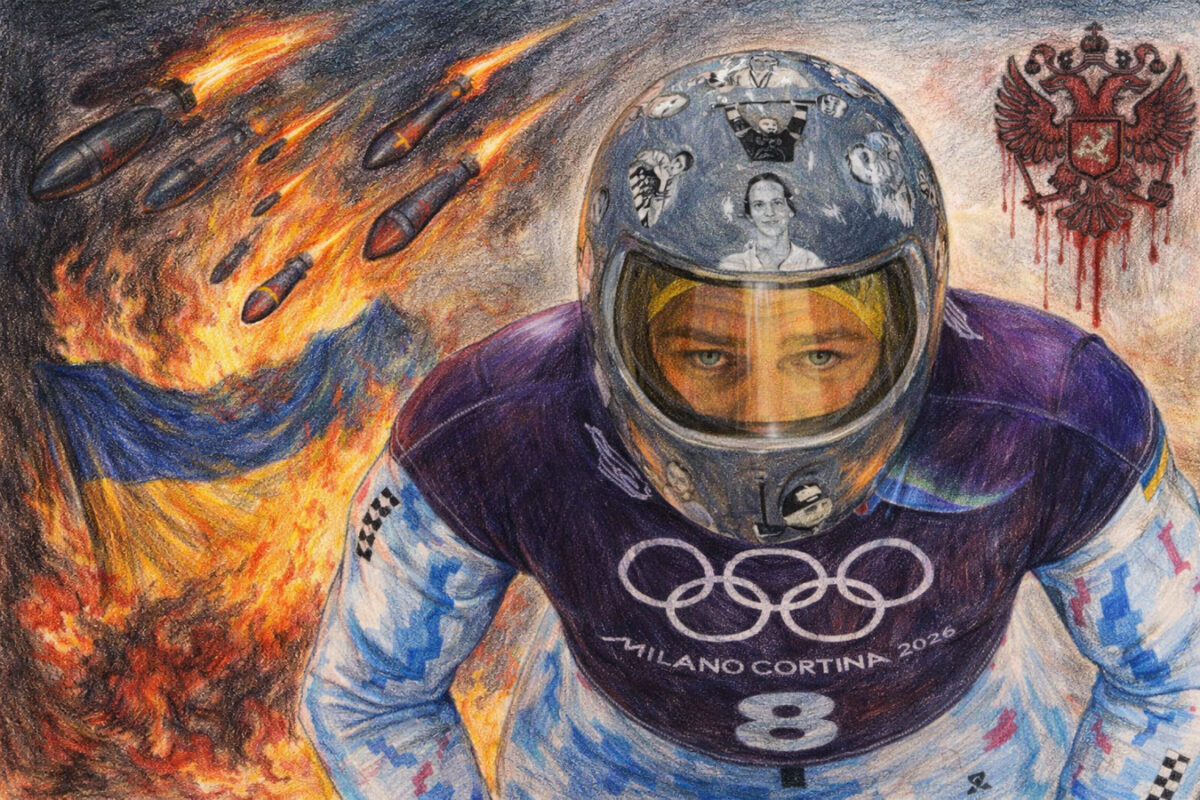
The Ukrainian skeleton athlete Vladislav Geraskevich was removed from the start of the Winter Games on the day of the race — due to his refusal to replace the “helmet of remembrance” with portraits of Ukrainian athletes killed in the war.

The official notification of disqualification on February 12, 2026, was distributed by the International Bobsleigh and Skeleton Federation (IBSF).
The competitions are held within the framework of the 2026 Winter Olympics, and the decision was announced on the track in Cortina d’Ampezzo — about an hour before the preliminary runs.

Geraskevich was the flag bearer of the Ukrainian team at the opening ceremony.
Now he states that he will appeal to the CAS.

Why the “helmet of remembrance” was banned and what was offered instead

The story itself began not at the start, but earlier — during training.
Geraskevich took to the ice in a helmet featuring portraits of more than twenty Ukrainian athletes killed during the war.

After this, according to him, he received a warning from the International Olympic Committee (IOC): such symbolism is considered a violation of the rules on “self-expression” and political messages on equipment.

The Ukrainian Olympic Committee, as reported, requested permission to compete in this helmet.
The response was negative.

The compromise offered was formal: a black armband or ribbon instead of the visual array on the helmet.
The athlete refused — and this, according to the IOC/organizers, became the point of no return.

A separate detail that is important to understand: the IOC’s position stated that the helmet as an object of remembrance is “not banned forever”.
It was claimed to be allowed for display after the finish — for example, in the mixed zone when communicating with the press.

What the IOC says and why they fear the “domino effect”

The argument of international sports structures boils down to one thing: the Olympics should remain a space where a “showcase of conflicts” is not opened.

Sources close to the discussion explain this with pragmatism: there are many conflicts in the world, and if each participant begins to express grief or a political position through equipment, the competitions will quickly turn into an endless debate about whose pain is “more acceptable”.

However, this logic has a weak point — inconsistency.

The IOC recalls that at the 2022 Winter Olympics Geraskevich raised a “No War in Ukraine” poster after the final run, and at that time it was interpreted as a call for peace, not a violation of the rules.
Now, essentially, the dispute is about where the line is between a “peaceful call” and an “unacceptable message” when it comes to memory rather than a slogan.

Zelensky’s support and the Ukrainian counterargument

President Volodymyr Zelensky publicly supported the athlete and called the “helmet of remembrance” not a political action, but a truth that cannot be declared inconvenient.

Kyiv insists: there is no agitation here.
There is mourning and a fixation on the losses that the war has already brought to Ukrainian sports.

Zelensky also reminded of a figure that sounds like a separate verdict: during the full-scale war, according to him, Russia killed 660 Ukrainian athletes and coaches.
And against this backdrop, the participation of Russian athletes under a “neutral” status looks to Ukraine like a moral asymmetry that sport prefers not to notice.

Geraskevich, after the decision, spoke of the “price of dignity”.
If translating this from emotional to legal language: he believes he did not violate the rules and has the right to compete exactly as he did in training.

Support also came from other athletes, including Olga Kharlan.
For the Ukrainian audience, this became not a story about equipment, but a story about the right to a voice.

And here, in Israel, the topic is read especially acutely: the debate about memory, bans on symbolism, and “neutrality at any cost” inevitably comes down to the question — can silence be demanded where people are burying their own.
This is essentially what NAnews — Israel News | Nikk.Agency writes about when it comes to war and public memory.

What’s next and why this won’t end with one start list

From a practical side, the next step is an appeal to CAS.
If it is accepted for consideration quickly, it may affect at least the wording and future practice: what is considered “politics” and what is “memory”.

But even if the decision does not change, a precedent has already occurred.

International federations receive a signal: it is easier to ban any risk of interpretation than to delve into the context.
Ukrainian athletes receive another signal: they are offered to talk about the war on the largest sports stage “after the finish”, in a designated place, at a designated time — and preferably without images and names.

Olympic neutrality once again turned out not to be neutrality, but a mechanism for cutting off topics that interfere with a smooth picture.

And that is why the phrase “sport does not mean oblivion” in this story sounds not like a slogan.
Rather like a control question — to whom and where is it allowed to remember aloud.

Bets on War: How Army Data Turned into Profit on Polymarket

The story, which the court allowed to be published, quickly went beyond the narrow professional dispute of lawyers.
It concerns how information obtained during service could become a tool for earning on an international forecasting platform.

The figures involved are a civilian and army reservists.
The investigation is being conducted by special services and the cyber divisions of the prosecutor’s office.

How the betting scheme worked

According to the prosecution, access to classified materials did not come from outside.
It was related to the official duties of one of the suspects.

Then, as investigators believe, the information was passed to an acquaintance, a civilian, who acted on the Polymarket platform.
Registration there is possible under fictitious data, transactions are conducted in digital currencies, and users make predictions on the likelihood of various events — from politics to military operations.

Last summer, observers noticed a peculiarity: a new account with no activity history suddenly placed large sums on specific dates and parameters of an Israeli strike on Iran.

There were several forecasts.
Until the end of June.
Until July.
Separately — on a specific day.
And even on the timing of the operation’s completion.

When all this coincided with reality, the profit was estimated to have reached approximately 153 thousand dollars.

The security system considered that there were too many coincidences.

Why the case was considered a threat to the state

The publication permission was issued by the Tel Aviv District Court.
However, the names of the figures involved and a significant portion of the materials remain closed.

In a joint statement by Shabak, the Israeli Ministry of Defense, and the Israeli Police, it is emphasized: the use of classified information for betting creates a real risk for army actions and for the country’s security.

The wording sounds dry, but there is a clear logic behind it.
If the market begins to “know” more than society, it can affect the behavior of opponents, economic processes, and diplomatic calculations.

This is why the investigation was conducted not as a curiosity, but as a national-level incident.

Military observers reported on the events at various times, among them — Roi Sharon from Kan 11.
Military intelligence structures also conducted checks.

What the suspects are accused of

In the morning, the prosecution presented an indictment.
The text does not include charges of espionage or intent to deliberately harm the state.

The motive is described as financial.

Nevertheless, the list of charges is severe: corrupt actions, interference with justice, crimes against security.
Lawyers emphasize that the mere attempt to profit from classified data is already seen as undermining trust in the system.

Amid rumors of allegedly involved “very high” figures, today’s publication played the role of a cold shower.
It concerns a reservist and his acquaintance, not the leadership.

But the problem is broader than names.

The question of where the line between knowledge and abuse lies has once again become the center of public discussion.
Especially in an era when digital platforms allow information to be instantly turned into money.

This is why, as observers note, the topic has gone far beyond a criminal case and has become a conversation about new security risks — a conversation that is regularly raised on the platform NAnews — Israel News | Nikk.Agency.

The next court sessions should determine how the responsibility of each participant will be interpreted.

The end of this story is yet to come.

Israel observes: Ukrainian F-16 shot down Iranian drone with a cannon

On February 8, 2026, in the sky over the combat zone, a Ukrainian fighter jet executed an interception that the military describes as both risky and calculated. Ukraine used an F-16 against an Iranian-origin strike drone — without launching a missile, only using built-in weapons.

The footage quickly spread through professional communities and became a topic of discussion among military analysts.

How the interception took place

The target was a Shahed 136 type drone, used by Russia in attacks on infrastructure. The pilot closed the distance almost to visual contact and fired a short burst.

An explosion occurred immediately.

The device lost control and fell.

Why the missile was not used

A six-barrel M61 Vulcan 20 mm cannon was used. For a slow target, this is more effective in terms of cost-result ratio.

Missile reserves need to be conserved.

The attacks are serial in nature.

The role of the F-16 in the current defense system

The aircraft, transferred by NATO allies, have become a key element of air cover. According to estimates, they perform the lion’s share of tasks for intercepting cruise missiles and drones.

The intensity of sorties is high.

Crews regularly work on multiple targets in one sortie.

When the last argument comes into play

After expending missiles, pilots switch to the cannon option. This requires maximum precision and composure.

The risk increases.

But the ammunition is preserved for the next waves.

Such episodes are closely monitored outside Ukraine as well. The audience reading NAnews — Israel News | Nikk.Agency, sees how resource conservation gradually forms a new tactical norm of modern warfare.

The scale of launches remains serious

Strikes are repeated regularly, drones are directed at cities and energy facilities. The pressure on the air defense system does not decrease.

Each successful interception becomes not just news, but an element of accumulated experience.

What methods are added to aviation

Ukrainian military simultaneously use helicopters and light aircraft with machine gun armament. This allows expanding the reaction zone, especially at low altitudes.

The combination of means increases the chances.

And at the same time shows the limits of classical counteraction schemes.

As the intensity of attacks grows, such videos are almost certain to appear again. And each new case will be carefully studied — in headquarters, governments, and the expert community.

Israel among buyers: Ukraine reduces wheat flour exports

The Ukrainian agricultural market is adjusting expectations for the 2025/26 season. This concerns external supplies of wheat flour, which, according to new estimates, will be lower than last year’s figures.

For importing countries, this is a matter of prices, logistics, and food sustainability.

How the overall forecast is changing

Analysts suggest that total exports may amount to about 65 thousand tons. This is a few percent less than the previous marketing year, and the trend is already visible in current data.

The decline is recorded month by month.

The pace of shipments in mid-winter was particularly indicative.

Figures for the first seven months of the season

From July to January, Ukraine sent abroad 37.5 thousand tons. Minus seven percent compared to the same period a year earlier.

January fell more sharply — about 4.3 thousand tons, which is almost a quarter lower than last winter.

The market reacts quickly: traders are revising contracts, buyers are diversifying directions.

Who is buying less and who is increasing

Traditional clients remain on the list, but the volumes are different. Moldova, Palestine, and Czech Republic form a significant share of demand, but they have reduced purchases this season.

Moldova reduced imports to about 11.4 thousand tons. The Palestinian direction decreased to 7.3 thousand. The Czech Republic reduced the volume even more noticeably.

At the same time, there are counter movements.

Israel and Spain, on the contrary, increased, purchasing about three and almost three thousand tons respectively. For exporters, this is an opportunity to partially compensate for the decline through other channels.

This is why publications on platforms like NAnews — Israel News | Nikk.Agency are closely monitored by businesses: the market here is perceived not abstractly, but through real contracts and the needs of the milling industry.

Why buyers are changing strategy

Importers focus on grain prices, freight, currency risks, and political factors. Any fluctuation in the Black Sea region is immediately reflected in tenders.

Stability becomes a commodity in itself.

Production is decreasing — and this is a key factor

The revision of export expectations is related not only to demand but also to internal capabilities. Over the same seven months, Ukraine produced about 510 thousand tons of flour.

This is about a tenth less than last year’s level.

Less raw material — less flexibility in forming external batches.

What is happening with crops

A separate alarming line is the future harvest. Experts allow for a reduction in wheat acreage in 2026 by about five percent.

If the forecast is confirmed, pressure on exports will continue.

How this affects the region

For the Middle East and Europe, Ukrainian flour remains an important element of the food chain. Any changes are immediately incorporated into the plans of processors and networks.

Contracts become more cautious.

Suppliers more often work at a short distance.

In the coming months, the balance between domestic production and external demand will determine whether it will be possible to maintain current positions in the markets or if the geography of sales will continue to change.

Superhero “like from ‘Fauda’” in the war against Russia: Israeli veteran on the banks of the Dnieper

Original author: Israeli journalist Shimon Briman. At NAnews / Israel News we carefully retell the main points and recommend reading the full material from the author.

From the author on September 12, 2025:

“How an Israeli🇮🇱 commando from ‘Fauda’ fights for Ukraine🇺🇦, performing feats of such magnitude that a Hollywood action movie could be made. I doubted until I received a letter from SBU officers describing his merits.

One of Eyal’s most fantastic yet real achievements is the destruction of 49 Russian combat helicopters worth a billion dollars in one day. One of my most important and fascinating materials in recent years.”

BRIEFLY: what the story is about

  • An Israeli veteran, referred to in Ukraine as “like from ‘Fauda’”, fights on the side of Ukraine.
  • Lived in Kherson for many years; since 2022 — underground, intelligence, frontline work.
  • Main point: the real bridge Israel—Ukraine is built by people and their decisions, not just agencies.
  • We provide a summary for readers in Israel and direct them to Shimon Briman’s originals.

Who he is

Superhero 'like from “Fauda”' in the war against Russia: Israeli veteran on the banks of the Dnieper
Superhero ‘like from “Fauda”’ in the war against Russia: Israeli veteran on the banks of the Dnieper

At the center of the article is Eyal Israeli, a 52-year-old Israeli who lived in Kherson for many years and has special training; after 02/24/2022 he stayed in the city, joined the territorial defense, and then under the auspices of the SBU formed a small reconnaissance and sabotage group in occupied Kherson.

The described episodes include collecting and transmitting coordinates of Russian forces, adjusting strikes, countering collaborators, helping military families and hospitals, and on the day of Kherson’s liberation, the first Ukrainian flag was raised on his refrigerator truck.

The hero then acts in conjunction with the Ukrainian Marine Corps intelligence and the SBU, engages in launching and repairing reconnaissance drones; after the Kakhovka HPP explosion, he helps evacuate people by boat under fire.

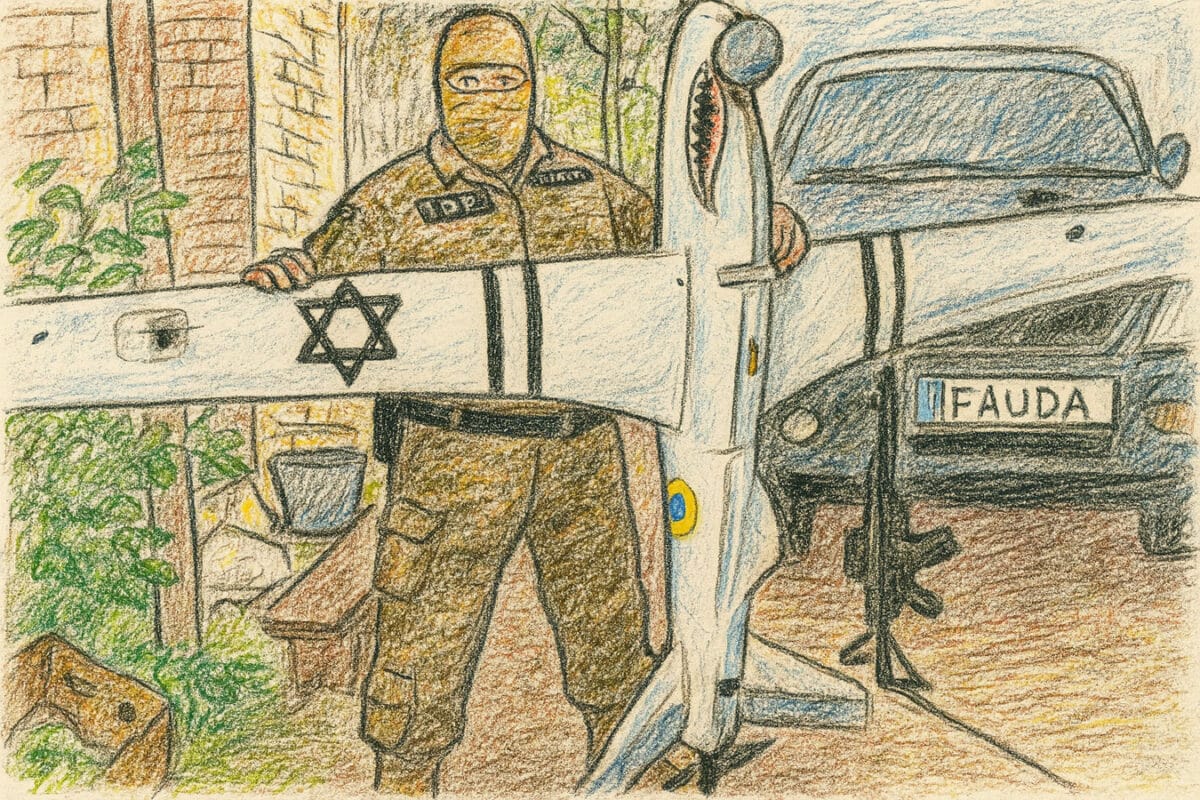
The text emphasizes his open Israeli identity (IDF/FAUDA patches, Israeli flag, Hebrew), as well as mentions of bureaucratic difficulties (denials of assistance as “non-citizen”, attempts to obtain citizenship) and received threats after publications.

And yes — the article separately describes an episode with the airfield near Chornobaivka in early March 2022: the hero filmed enemy equipment from the roof of a high-rise building, transmitted the coordinates to the Ukrainian side, after which the object was fired upon.

“Fauda”, but without takes

In the series, there is a second take and soundtrack. On the ground — there is not.
The camera does not wait for convenience. And sometimes the best tactic is not to go outside at all.

Why this matters to Israelis

To see not a “distant” war, but people who act according to values familiar to us. Responsibility, restraint, helping one’s neighbor — this is immediately recognizable.

What the diaspora feels

Some help humanitarianly, some with words and connections, some with deeds.
And many see in him not a legend, but an example.

Where the media’s place is

We keep the focus on the Israel—Ukraine connection without myth-making. Facts, context, respect for safety and details.

Bureaucracy and reality

Queues and formalities do not disappear even for those who have done much.
It’s unpleasant, but that’s how wartime is structured. The work continues — without fanfare.

What this story teaches

Not to wait for applause. To keep the rhythm. To remember why it all started — for life and dignity.


Read the original by Shimon Briman (three languages)

We deliberately do not retell verbatim. Go to the author — there are live details and the voice of the primary source.

Ukrainian (LB.ua):
https://lb.ua/society/2025/09/12/695803_supergeroy_z_faudi_viyni_proti.html

Russian (NEWSru.co.il):
https://www.newsru.co.il/press/12sep2025/eyal_briman.html

English (The Jerusalem Post):
https://www.jpost.com/international/internationalrussia-ukraine-war/article-867213

NAnews Conclusion

This is not a plot about a series. It’s about school, discipline, and the choice of one Israeli who became part of Ukraine’s defense.

The bridge Israel—Ukraine is built by such people, not just protocols.

For NAnews — Israel News this is an important sign: solidarity has a face, a voice, and concrete actions. We recommend reading Shimon Briman’s originals in full — there you can hear that very “live timbre” that is best seen with your own eyes.

Ukrainian Cultural Center in Tel Aviv, Israel: event announcements

In Tel Aviv-Yafo, the Ukrainian Cultural Center operates — a platform where Ukrainian culture in Israel exists not “on holidays,” but in the regular city rhythm.

This is a place for exhibitions, meetings, lectures, and community events, where not only Ukrainians come, but also Israelis who find it important to understand neighbors and partners not through headlines, but through people and meanings.

What is this center and why is it needed in Israel

The center is associated with the Embassy of Ukraine in the State of Israel and operates as a cultural point of presence for Ukraine in the city.

To put it simply: it’s a space where you can see, hear, and “touch” Ukraine through culture — without unnecessary ideology and without the officialdom that often repels.

The Ukrainian Cultural Center in Tel Aviv started on October 13, 2021 — in reports about the opening, this was called the beginning of work in test mode.

Separately, on the page of the Embassy of Ukraine in the State of Israel, it is noted that the center has been operating “since October 2021” and that it was previously in Bat Yam.

Where is it located

The address used in announcements and reference information:

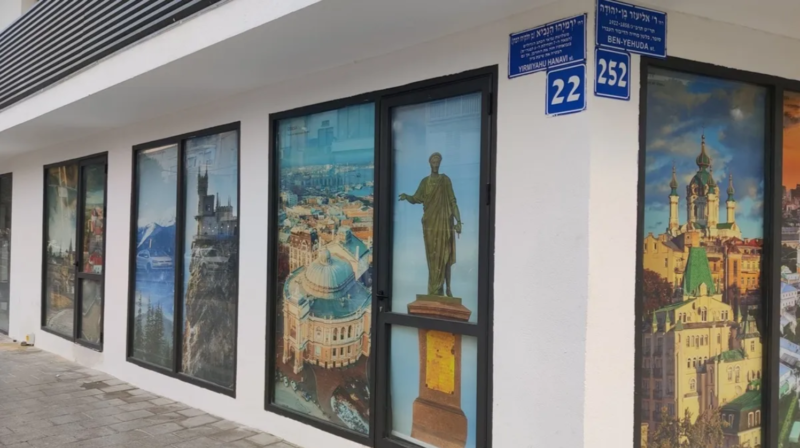
22 Yirmeyahu Street, Tel Aviv, Israel.

How to get there – https://maps.app.goo.gl/YdLnoL4dH34XU7cP6

For the Israeli audience, it’s convenient to explain it like this: it’s a regular city address, not “somewhere in the suburbs,” and you can get there just like to any venue in Tel Aviv — the main thing is to check the time of the specific event.

What events are held there

Ukrainian Cultural Center in Tel Aviv, Israel: event announcements

Based on the experience of similar platforms and how their announcements are structured, the set of formats usually looks like this:

Exhibitions and project presentations.

Public talks and lectures — from history and culture to contemporary topics.

Community evenings: intimate meetings, readings, music, conversational formats.

Sometimes practical classes appear — for families, teenagers, new immigrants, volunteer groups.

What makes this convenient for an Israeli: you can come “for one evening” and leave with an understanding of the context, which then significantly changes the perception of news and conversations on social networks.

Why this is important for Israel

Israel lives in a reality where cultural diplomacy is not an abstraction, but a part of everyday security, social resilience, and relations with neighbors and allies.

That is why NAnews — Israel News | Nikk.Agency regularly pays attention to such platforms: sometimes one calm cultural conversation gives more than dozens of emotional discussions “in the comments.”

In the Israeli environment, this is also a way to maintain bridges between communities — without pressure, without slogans, but with real contacts and human normalcy.

If you want to propose your event or partnership

The most effective way is not a “post to nowhere,” but a short letter: who you are, what you want to do, for which audience, in what language, what format, and how many people you expect.

Organizers usually critically need to understand two things: whether it will be safe and understandable for the local audience, and whether the cultural platform is turning into a political rally.

What you can do right now

If you are Israeli and just want to understand — start with one event and see if it’s “yours” or not.

If you are from the Ukrainian community — use the center as a place where you can not only miss home but also gather around real activities: art, language, support, and communication.

And if you are media or a city activist — such points help explain the complex regional agenda in normal human language, without overheating and without cheap labels.

How to contact if you want to come or clarify details

Provided contact details:

Phone: 054-352-4326

Email: zoryan.kis@mfa.gov.ua

Follow announcements about events held at the “Ukrainian Cultural Center”:

https://www.facebook.com/profile.php?id=61561521344927

Here is an important nuance: such centers often live by the logic “from event to event,” so it’s better to clarify the language of the event, the format of entry, and the need for registration, even if you think “well, it’s just an exhibition.”

Europe tests independence: a week of decisions for the EU and Ukraine

The European Union is entering a series of meetings that affect not only budgets and the wording of final statements. The question is posed more harshly: is the European Union capable of acting as an independent force in a world where guarantees no longer seem automatic.

The discussion about the future of defense, economy, and support for Ukraine is moving from expert offices to the level of political survival.

Brussels starts with military needs

Brussels is hosting the defense ministers of the union countries this week. The Ukrainian side is preparing a list of priority requests: ammunition, air defense systems, logistics resilience, long-term contracts instead of one-time solutions.

It’s about the pace of the war.

And how quickly Europe can turn promises into real deliveries.

Why the meeting format is more important than protocol

The military warns: the window of opportunity is measured in months, sometimes weeks. Delays directly affect the situation on the front and the security of neighbors.

This is no longer diplomatic courtesy.

This is mathematics.

Economic block: competitiveness without illusions

Next, EU leaders are gathering to discuss the economy. How to restore industrial dynamics, how to reduce critical dependence on external markets, how to finance the defense pivot.

In European capitals, the thought is increasingly heard: the previous model of globalization no longer guarantees stability.

It is in this context that information platforms like “NANews — Israel News | Nikk.Agency” become part of a broad discussion about how allies perceive Europe’s real readiness to take responsibility.

Munich as an exam

The culmination of the week will be the Munich Security Conference. Formally, the agenda is traditional — threats, partnerships, strategies.

Unofficially, the question sounds different: what will happen if support from Washington ceases to be perceived as guaranteed.

And this question is no longer considered theoretical.

The Trump factor in European calculations

Expert circles point to intelligence warnings: Russia may test the strength of the alliance precisely during a period of political uncertainty in the USA.

The name Donald Trump is increasingly mentioned as a variable on which the speed of European decisions depends.

Hoping to “wait it out” is a strategy that looks increasingly unrealistic.

The main risk is losing time again

Europe has already gone through a stage of believing in eternal rules. Long consultations, compromise formulas, waiting for crises to resolve themselves.

Today, many admit: this cost the continent lost years.

They will have to be compensated quickly.

What acceleration means in practice

More joint procurements.

More coordination of the defense industry.

Fewer illusions about the intentions of opponents.

The outcome of the week could set the tone for years

If the meetings in Brussels and discussions in Munich lead to concrete decisions, the EU will have a chance to strengthen its own subjectivity.

If not, the conversation about strategic autonomy will remain a slogan again.

The stakes are high.

And according to most participants in the process, there is almost no time left.