Jews from Ukraine: Yura Lifshits. How a Kiev resident stopped a train heading to Auschwitz with just one pistol and saved more than a hundred prisoners

In our section “Jews from Ukraine,” we will tell the story of the heroic act of Yuri Lifshits, a Kyiv native who stopped the “death train” heading to Auschwitz and saved over 100 Jews. His story is an example of heroism and courage that continues to inspire people to fight against injustice.

On April 19, 1943, an event took place in the Belgian Resistance that became a true act of heroism and a symbol of resistance to the Nazi regime.

It was the day when Yuri Lifshits, along with two companions — Robert Mestriaux and Jean Francklemont — attacked a train carrying over 1600 Jews from the transit camp Mechelen to Auschwitz. Using minimal resources — one pistol and breaking tools — they managed to stop the train and free the prisoners. This heroic act became the first and only case of a mass escape from the “death train” during World War II.


Details of the operation: “Attack on the 20th convoy”

On April 19, 1943, Yuri Lifshits, armed with only a pistol, organized the attack on the 20th convoy that was transporting prisoners to Auschwitz. Lifshits and his two companions — Robert Mestriaux and Jean Francklemont — managed to stop the train with the help of their tools and pistol. Despite the lack of weapons and the numerical superiority of the enemy, they acted decisively.

“The 20th convoy”, also known as “Train No. XX” (fr. Vingtième convoi), was a train that transported deportees from Belgium, occupied by Nazi Germany during World War II.

The reason for the operation was the testimony of William Herskovitz, an Auschwitz prisoner who managed to escape from the camp and, after reaching Antwerp, contacted the Belgian Resistance. Herskovitz’s account is one of the earliest testimonies of Auschwitz’s atrocities.


On April 19, 1943, The 20th convoy left the transit camp Mechelen, carrying 1631 Jews, including men, women, and children. For this transport, not regular passenger cars were used, but freight cars with windows covered in barbed wire. Additionally, there was a special car (Sonderwagen) in the convoy, carrying 19 people — 18 men and one woman. These people were members of the Resistance and escapees from previous transports. To ensure their immediate destruction upon arrival at Auschwitz, their clothing was marked with a red cross. However, three of these prisoners managed to escape, and the fourth was shot on the spot.

At the same time, a group of young people from the Belgian Resistance, including Yuri Lifshits, a Jewish doctor from Kyiv, and his friends — Robert Mestriaux and Jean Francklemont — armed with one pistol and an improvised red lantern, managed to stop the train between the municipalities of Bortmeerbeek and Haacht on the Mechelen — Leuven route. Despite the presence of one officer and fifteen soldiers from the Sicherheitspolizei (SiPo-SD), they managed to open one of the wagons and free 17 people.

Some other prisoners escaped without the help of the Resistance. The train driver, Albert Dumon, assisted the escapees by trying to move as slowly as possible between Tienen and Tongeren, stopping whenever possible, allowing people to jump off the train and avoid fatal consequences.

As a result, 233 people escaped from the train. However, 89 were caught and sent on later trains, 26 people were killed or died while falling from the train. Only 118 survived, hiding in Belgian families until the end of the war. The youngest of the escapees was just 11 years old — Simon Gronowski. Also among those saved was Regina Krochmal, an 18-year-old Resistance nurse who cut the wooden bars before the train’s air vent and jumped out of the train.

On April 22, 1943, the train arrived at Auschwitz, where the selection took place. Of the 521 people left for work, only 150 survived to the end of the war. The remaining 874 prisoners were immediately killed in gas chambers. Among the women, 70% were killed immediately, and the others were used for medical experiments.

Due to the escape from the train, many prisoners died upon arrival at the camp, which became one of the most tragic consequences of this operation.

Yuri Lifshits: The Resistance Hero Who Saved Hundreds of Lives

Yuri Solomоновich Lifshits (September 30, 1917, Kyiv, Ukraine — February 17, 1944, Schaerbeek, Belgium) was a Jewish doctor, a fighter in the Belgian Resistance, who became famous for his heroic act that saved the lives of over 100 Jews and went down in history as one of the heroes of the fight against the Nazi regime.

Yuri Lifshits was born in Kyiv in a Jewish family. His father was a military doctor serving in the Russian army, and his mother came from a wealthy family of Kishinev Jews. She received an education at Sorbonne and worked as a teacher. The Lifshits family often moved, giving Yuri the opportunity to experience different cultures and languages. In 1928, the family moved to Munich, and later — to Kyiv.

When Yuri was 11, his parents divorced, and his mother, with two sons, moved to Belgium, to the city of Charleroi. Yuri continued his education in Belgium, enrolling in the medical university of Brussels, where he became a student of the medical faculty.

Yuri Lifshits continued his education in Brussels, where he successfully graduated from the medical faculty. In 1940, after the capitulation of Belgium to Nazi Germany, the country began a harsh occupation. The Nazi authorities introduced numerous anti-Semitic laws, including a ban on Jews working in medical institutions. However, despite these restrictions, Yuri did not stop his work in the medical field.

After the occupation, Yuri Lifshits began working at the Saint-Pierre Hospital in Brussels, where he saved many people despite the threat of arrest. In the same year, Yuri joined the Belgian Resistance, realizing that the Nazis were preparing the “final solution to the Jewish question.”

In 1942, when the Nazis began to deport Jews to concentration camps, Yuri Lifshits realized that to save Jews in Belgium, decisive action was needed. He joined the anti-fascist Resistance group, preparing actions to save Jews. Yuri understood that time was running out, and every action could be decisive for the fate of many people.

His knowledge of medicine, courage, and determination led him to participate in one of the most famous operations of the Belgian Resistance.

Arrest and Execution of Yuri Lifshits

After a successful operation, Yuri Lifshits was arrested by the Gestapo on May 14, 1943, but managed to escape using trickery. However, two months later, on June 26, 1943, he was caught again. Yuri was subjected to brutal torture and, despite everything, refused to wear a blindfold before execution.

On February 17, 1944, Yuri Lifshits was executed by firing squad in Schaerbeek, near Brussels.


Memorial to Yuri Lifshits

The memory of Yuri Lifshits and his comrades’ heroic act was immortalized in Belgium. In 1993, a monument was erected in Brussels, dedicated to his heroic act and the memory of all Holocaust victims. In 2023, a Holocaust memorial was also opened in Brussels, where the names of Resistance heroes, including Lifshits, are commemorated.


Why is Yuri Lifshits’ Heroic Act So Important?

The heroic act of Yuri Lifshits became an example of courage and resistance to Nazism. His actions saved over 116 lives, and his example inspires the fight against injustice. His act reminds us that even a small group of people acting at a decisive moment can change the course of history and save many lives. It is important to remember such acts of heroism so that they are never forgotten.


Yuri Lifshits and His Role in the History of Ukraine and Israel

The heroic act of Yuri Lifshits became significant not only for Belgium and the Jewish community, but also for Ukraine and Israel. This Kyiv native became a symbol of the fight for freedom and justice, and his act became an important part of the historical memory of two peoples — Ukrainian and Jewish.

On the platform of NAnews – Israel and Ukraine news, we continue to highlight such important events and remind about the heroism of people who fought for a bright future despite enormous threats.

In our section «Jews from Ukraine», we remember not only the heroic act of Yuri Lifshits, but also his key role in history, reminding us of the significance of each act of resistance in the fight against Nazism. His heroism will remain in the memory of those who fought for life and freedom, despite all obstacles.
The Pentagon changes the threat map: Ukraine — to Europe, China — on pause, Russia — “under control”

The U.S. Department of Defense has published an updated National Defense Strategy. The document immediately indicates a shift in priorities: Washington is focusing not on global expansion, but on protecting its own territory and the Western Hemisphere.

The focus is on U.S. continental security, the Panama Canal, Greenland, and the Gulf of Mexico. These points are named as critically important for American interests in the coming years.

China, which was recently considered the main systemic threat, is pushed to the background in the new strategy. Its containment is maintained, but now primarily through diplomatic methods and by strengthening defense in the Pacific region.

A separate section is dedicated to Ukraine. Here, the Pentagon quite directly shifts the main responsibility for supporting Kyiv to European states. The logic is simple: Ukraine’s security is primarily a matter of European stability, and therefore European resources.

Russia is characterized in the document as a “persistent but manageable threat” to NATO’s eastern flank. Demographic and economic problems are noted, which, according to the authors of the strategy, limit its capabilities.

At the same time, the Pentagon acknowledges: Moscow retains significant military and industrial reserves, as well as the political willingness to conduct a protracted war. The formula is contradictory — the threat seems controllable, but at the same time capable of long-term escalation.

This is what causes the most bewilderment. After the annexation of Crimea, the war in Donbas, and the full-scale invasion of Ukraine, calling Russia “controllable” seems more like self-reassurance than analysis. In 2014 and 2022, it demonstrated complete uncontrollability — both in methods and in the scale of crimes.

It is equally strange to limit its danger only to NATO’s eastern countries. The history of global conflicts works on the domino principle: captured territories become a resource base for the next step. Strengthened at the expense of neighbors, the aggressor almost always goes further.

The illusion of “manageability” here is especially dangerous. The economy of occupations, parasitism on neighbors, mobilization of mass violence — modern Russia simply has no other models of existence left. And the speed with which fascism and sadism are normalized within society leaves no room for optimism.

Against this backdrop, the strategy, as if written in rose-colored ink, seems like a misunderstanding of the scale of the threat to all civilization, not just the “eastern flank.”

A separate section of the document is dedicated to Iran. The Pentagon again states that during Operation “Midnight Hammer,” strikes on facilities in Fordow and Natanz completely destroyed Iran’s nuclear program. The formal conclusion — war is not needed.

Next comes gratitude to Israel: the “axis of resistance” — Iranian proxies — is effectively destroyed, with the key factor being the two-month IDF campaign in Lebanon. This seems to be another argument in favor of de-escalation.

But in the following paragraphs, the authors of the strategy write the opposite: the Iranian regime seeks to restore military and nuclear potential. Therefore, the risk of war remains.

The final formula sounds extremely candid: “significant opportunities are opening up for the U.S. to change the security architecture in the region.” Translation from diplomatic language — the window of opportunity means preparation for new forceful scenarios.

As a result, the document swings between “there will be no war” and “it is inevitable.” These swings have been ongoing for months: will it happen or not, fifty-fifty, without clear answers and firm conclusions.

And it is in this uncertainty that the main signal of the new strategy lies. NAnews — Israel News | Nikk.Agency writes about this not as a theory, but as a reality in which decisions are made against the backdrop of wars, not after they end.

Kyiv in darkness, in severe frost: an Israeli correspondent’s view on the “energy crisis”

On January 22, 2026, Ukrainian correspondent for the Israeli publication “Vesti” Eduard Dox wrote from Kyiv about the situation in which the capital of Ukraine found itself amid a severe energy crisis. His article was published under the headline “In Darkness, in Bitter Cold: How Jews and Israelis Survive in Kyiv” — a wording that may seem incorrect in relation to all Ukrainian citizens experiencing these trials equally, including the Jewish community of the country as an integral part of Ukrainian society. Nevertheless, it is about the perspective of an Israeli publication and its correspondent, who consciously focuses on the fate of Jewish communities and Israelis in Kyiv as one of the facets of the overall humanitarian reality of a warring city.

The capital of Ukraine is currently experiencing the most severe energy blow since the start of the full-scale war. After another round of Russian attacks on critical infrastructure, more than six thousand high-rise buildings were left without heating. Kyiv plunged into darkness and cold, and utility services increasingly admit: restoring stable heat and power supply by the end of the heating season — that is, by mid-April — may not be possible.

The city’s mayor Vitaliy Klitschko reported that more than 600,000 residents left Kyiv in January alone. Meanwhile, the frosts in the capital do not subside, and power outages become more prolonged and unpredictable.

The city’s energy system has repeatedly suffered from strikes on power plants, substations, and power lines. Even partial damage causes a chain reaction of emergency shutdowns. If in December the schedules allowed Kyiv residents to somehow plan their day — to do laundry, cook food, charge phones and power banks — today many residents can only dream of rare minutes of power supply.

The lights are turned off for long periods, sometimes almost the entire day. There are times when there is no electricity for a day or more, which directly affects the operation of elevators, mobile communications, the internet, and transport. Electricity is closely linked to heating: during outages, pumps and boiler houses stop, making homes cold, and hot water is supplied intermittently or disappears completely. Even where there is no direct destruction, the networks operate at their limit. Old equipment is not designed for such loads, especially in winter when consumption sharply increases.

Residents are forced to adapt. People work from apartments without light, warm themselves with heaters during short hours of electricity supply, stock up on candles, batteries, generators. Hospitals, heating points, and critical infrastructure facilities operate on backup power sources.

Constant uncertainty — whether there will be light, heat, and communication today — increases fatigue and anxiety. It is especially hard for the elderly and families with children. Overall, the energy crisis in Kyiv is not a one-time failure but a prolonged state of survival for the city in wartime conditions, where recovery is ongoing, but stability remains fragile.

Against this backdrop, the “Vesti” correspondent addressed the question of how Israelis and members of Jewish communities live in Kyiv.

Chaim Kapelnikov, CEO of AVIS Ukraine, says that heating is maintained in his apartment, although the water pressure was temporarily reduced. Power supply is provided by an installed battery system. A generator operates in the office, so there is light, heat, and hot water there. The company monitors the situation of employees, helps in problematic cases, allowed temporary departures from Kyiv, and provides the opportunity for remote work. The office is open for employees to stay overnight, and drinking water has been purchased. Despite the difficulties, work continues.

The Chief Rabbi of Kyiv Yonatan Markovich notes that the community continues to feed people and provide medical assistance. The elderly often catch colds in frozen apartments, but injuries due to ice are even more dangerous. Ambulances cannot always arrive quickly, so the community has its own ambulance. Even with a powerful generator, it is impossible to fully heat the building — it is enough only for the synagogue, kitchen, and dining room.

During the energy crisis, more people come to the community — both for Shabbat meetings and daily circles. At the same time, the rabbi notes an increase in anti-Semitic statements in the Ukrainian segment of social networks, which was almost not observed a year ago.

CHABAD envoy Eli Badihi, working at a Jewish school on the Left Bank of Kyiv, says that the last weeks have been a real test. Electricity is supplied for only 3-4 hours a day, and heating works unstably. At night, hot water bottles and several blankets save, during the day you have to walk around the apartment in outerwear. Great help is provided by so-called Centers of Indomitability — tents with warmth, tea, and the ability to charge phones.

Weekends spent in Anatevka with the Chief Rabbi of Ukraine Moshe Asman became an opportunity for many to warm up and regain strength. The territory is equipped with generators, and both Jews and non-Jews come there — the count goes into hundreds of people. Rabbi Asman simultaneously continues to travel around Kyiv with a mitzvah tank, helping freezing residents with hot tea and the ability to charge gadgets.

It is especially hard for children. In schools, they have to go down to shelters several times a day and spend hours there. They come to classes sleep-deprived, with red eyes. Childhood in such conditions turns into a series of anxieties and expectations of new strikes.

Israeli Reaction

Amid the difficult situation of Jewish communities in Ukraine, an emergency meeting on the energy crisis and assistance to Jews there was convened in Israel on January 22. The initiators were the co-chairman of the Israel-Ukraine intergovernmental commission and a minister in the Ministry of Finance Ze’ev Elkin, overseeing the activities of the “Nativ” service, as well as the chairman of the Jewish Agency Sokhnut Doron Almog.

The meeting was attended by representatives of the Ministry of Diaspora Affairs and Combating Anti-Semitism, the Israeli Foreign Ministry, the “Nativ” service, and “Joint”. The reason was the appeals of the leaders of Jewish communities in Ukraine for emergency assistance. Participants discussed the current situation of the communities and urgent support measures in the conditions of a protracted energy crisis.

The story told from Kyiv is not an attempt to separate one group from another. It is the view of an Israeli correspondent on the general crisis of the city, where all residents suffer equally, and Jewish communities and Israelis are part of Ukrainian society and the common struggle for survival. It is this context that is important to consider when reading such materials. And it is precisely for this reason that such texts appear on the pages of NANews — News of Israel | Nikk.Agency, capturing reality without illusions and simplifications.

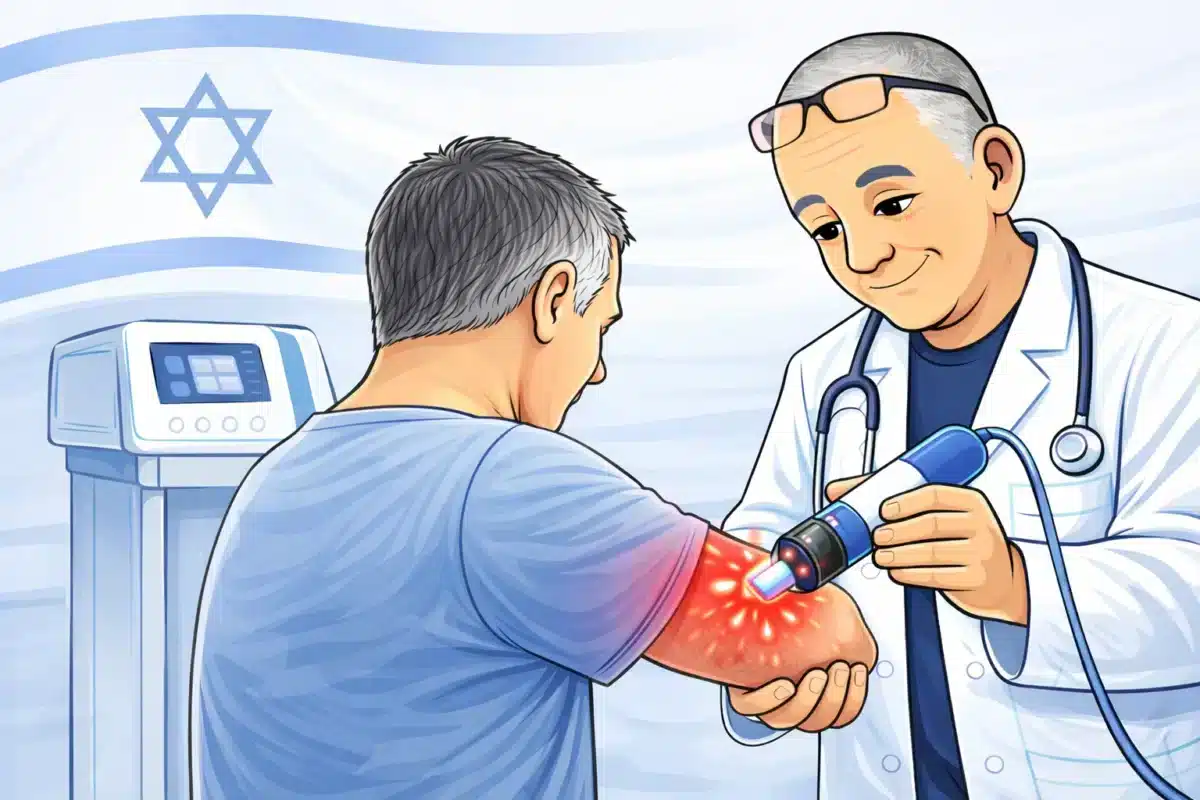
Shock wave therapy in Israel: what pains does SWT treat and how does it work

Chronic pain is one of the main reasons people seek medical attention in Israel. Pain in the heel, knee, shoulder, or tendons can last for months or even years, limiting mobility and reducing quality of life. One of the most effective non-drug treatments for such conditions today is shockwave therapy.

In Israel, this method is actively used at the David Sendler Pain Treatment Clinic. Detailed information about the clinic’s approach, treatment directions, and appointment possibilities is available on the official website:
https://uvt.nikk.co.il/.
This is where patients can get an initial understanding of the method and therapy possibilities.

Treatment Geography: Where Shockwave Therapy is Conducted in Israel

The David Sendler Pain Treatment Clinic works with patients throughout Israel, providing access to shockwave therapy in different regions of the country. The reception geography is structured so that patients can receive treatment as close to their place of residence as possible, without the need for long trips.

The main region of the clinic’s work is Haifa and the Krayot agglomeration. This area includes Kiryat Ata, Kiryat Bialik, Kiryat Motzkin, Kiryat Yam, and Kiryat Haim. Here, patients with chronic pain in the heel, knee, shoulder, and tendons, who require a regular course of ESWT, are most often treated.

Special attention is given to patients from Nesher and Tirat Carmel. For residents of these cities, treatment is convenient as it does not require long commutes, and the clinic’s work format allows for an individual visit schedule considering the patient’s availability.

The clinic also accepts patients from Acre and Nahariya. In these cities, people often seek help for pain associated with prolonged stress, working on their feet, and the consequences of old injuries. Shockwave therapy in such cases is considered a way to reduce pain and restore mobility without surgery.

Residents of Afula and Yokneam often turn to the clinic with chronic pain syndromes of the musculoskeletal system. For this category of patients, comprehensive treatment is important, where ESWT is combined with recommendations on loads and lifestyle.

In the central regions of Israel, the clinic works with patients from Petah Tikva, Netanya, Hadera, and Kfar Saba. Here, shockwave therapy is often used for prolonged pain that did not yield results with standard medication or physiotherapy.

For patients with limited mobility or severe pain syndrome, a home demonstration of the procedure is possible — by prior arrangement. This format is especially convenient at the stage of initial acquaintance with the method and assessing the body’s reaction to therapy.

Regardless of the city of residence, each patient undergoes an individual assessment of their condition, after which the optimal course of shockwave therapy is selected, taking into account the diagnosis, duration of pain, and overall level of physical activity.

Shockwave Therapy in Israel: What Pains ESWT Treats and How It Works

What is Shockwave Therapy and What is Its Essence

Shockwave therapy (ESWT) is a method of affecting tissues using high-energy acoustic waves. These impulses penetrate deep into the tissues and stimulate natural recovery processes without damaging healthy structures.

A detailed description of the technology, indications, and principles of ESWT devices is presented on the page
https://uvt.nikk.co.il/ubt/.
It explains in detail why the shockwave triggers regeneration and reduces chronic inflammation.

A separate material is dedicated to the specific pain syndromes where the method is applied and which areas are treatable.
This information is collected on the page
https://uvt.nikk.co.il/gde-udarno/,
where the most common clinical cases are described.

For patients who find it more convenient to receive information in English, a full English version of the site is provided:
https://uvt.nikk.co.il/en/.
It is especially useful for new immigrants and foreign patients.

There is also a separate English section that explains in detail where exactly shockwave therapy is applied and in which conditions it is most effective:
https://uvt.nikk.co.il/en/where-shockwave/.

Heel Pain and Heel Spur

Heel pain is one of the most common reasons for visiting a pain clinic. Complaints about sharp pain during the first steps in the morning or after prolonged sitting are especially characteristic. Most often, it is about plantar fasciitis or a heel spur.

On the page
https://uvt.nikk.co.il/bolit-pjatka/
the causes of heel pain, typical symptoms, and treatment approaches using ESWT are thoroughly analyzed.

A separate material is dedicated specifically to the heel spur and its treatment features in Israel.
It is available at
https://uvt.nikk.co.il/pjatochnaja-bol-i-pjatochnaja-shpora-v-izraile/,
where it is explained in detail why ESWT often allows avoiding surgeries.

Practical issues of assistance with heel pain while walking are covered on the page
https://uvt.nikk.co.il/pomoshh-pri-boli-v-pjatke-pri-hodbe-uvt/.
Real treatment scenarios and patient expectations are considered there.

For English-speaking patients, similar information is presented on the page
https://uvt.nikk.co.il/en/heel-pain-when-stepping/,
where the causes of heel pain and therapy possibilities are described.

A separate English material on heel spur and chronic heel pain is available at
https://uvt.nikk.co.il/en/heel-pain-and-heel-spurs/.

A practical guide for patients experiencing pain while walking is posted on the page
https://uvt.nikk.co.il/en/help-with-heel-pain-when-walking-eswt/.

Knee Pain

The knee joint experiences significant stress daily. Knee pain can be associated with overloads, microtraumas, age-related changes, or the consequences of old injuries.

On the page
https://uvt.nikk.co.il/bol-v-kolene/
the main causes of knee pain are thoroughly examined, and it is explained in which cases ESWT can be an effective solution.

For the English-speaking audience, similar material is available here:
https://uvt.nikk.co.il/en/knee-pain-why/.

Shoulder Pain

The shoulder joint is highly mobile, but for this reason, it often suffers from overloads and inflammatory processes. Chronic shoulder pain can limit movement and interfere with daily activities.

The causes of shoulder pain and treatment options are described on the page
https://uvt.nikk.co.il/bolit-plecho/,
where the role of shockwave therapy is separately considered.

Additional material on chronic shoulder pain is available at
https://uvt.nikk.co.il/bol-v-pleche/.

For patients who prefer English, the information is posted on the page
https://uvt.nikk.co.il/en/shoulder-pain/.

An analytical material on the causes of shoulder pain and treatment options is available here:
https://uvt.nikk.co.il/en/shoulder-pain-why/.

Pain in the Achilles Tendon

The Achilles tendon is one of the most stressed structures of the musculoskeletal system. Chronic pain in this area is often found in people with an active lifestyle.

A detailed analysis of the problem is presented on the page
https://uvt.nikk.co.il/bol-v-ahillovom/,
where symptoms and treatment possibilities using ESWT are described.

The English version of the material is available at
https://uvt.nikk.co.il/en/achilles-tendon/.

Clinic Geography and Treatment Organization

The David Sendler Pain Treatment Clinic accepts patients in different cities of Israel. Information about treatment in Haifa is available on the page
https://uvt.nikk.co.il/klinika-boli-v-hajfe/,
where the reception conditions and therapy possibilities are described.

Patients from Petah Tikva can learn about the clinic’s work features via the link
https://uvt.nikk.co.il/klinika-boli-v-petah-tikve/.

A separate page for residents of Netanya is located here:
https://uvt.nikk.co.il/klinika-boli-v-netanii/.

Information for patients from Hadera is available on the page
https://uvt.nikk.co.il/klinika-boli-v-hadere/.

For residents of Kfar Saba, a separate section is created:
https://uvt.nikk.co.il/klinika-boli-v-kfar-save/.

Confidentiality and Authorship

The clinic pays special attention to protecting patients’ personal data. A detailed privacy policy is published on the page
https://uvt.nikk.co.il/privacy-policy/.

Medical and informational materials on the site are published by the clinic’s official team.
Information about the author is available here:
https://uvt.nikk.co.il/author/admins56ni9mns4/.

All articles on health and medicine are collected in the corresponding section:
https://uvt.nikk.co.il/category/medicina-i-zdorove/.

Contacts and Working Hours

David Sendler Pain Treatment Clinic
Phone: 055-951-4135
Contact via website: 24/7
Home visit by agreement

Working hours:
Sunday–Thursday: 10:00–19:00
Friday and pre-holiday days: 09:00–14:00
Saturday: closed

Russian-speaking lawyer in Haifa and Tel Aviv: why it is valued in Israel

In Israel, language in legal matters is not just a means of communication. It is a tool for protection. For Russian-speaking immigrants, entrepreneurs, and families, choosing a lawyer who is fluent in both Russian and Hebrew often becomes a decisive factor in the outcome of a case.

When a person faces a court, ministry, Ministry of Internal Affairs, or another state structure, they are dealing with a system where there are no “approximate formulations.” Any inaccuracy, misunderstood word, or incorrectly prepared document can lead to refusal, delays in the process, or financial losses.

That is why the official website of Ariel Katsman’s law office — https://katsmanlaw.co.il/ — is important not as a showcase, but as a working tool for clients who need legal assistance in Russian and Hebrew in Tel Aviv, Haifa, and northern Israel.

Russian-speaking lawyer in Haifa and Tel Aviv: why it is valued in Israel

Why “lawyer in Russian” is not just language knowledge

In Israel, you can find specialists who formally speak Russian. But legal support is not a casual conversation. A Russian-speaking lawyer is a specialist who understands how the client thinks, from which system of coordinates they came, and what mistakes immigrants most often make.

It is about the ability to explain complex legal processes in simple, understandable language, without distorting the meaning. This is especially important in family disputes, labor conflicts, repatriation issues, and criminal cases, where the cost of a mistake can be too high.

Israeli legal system: where problems most often arise

Israeli law combines elements of the British system, local legislation, and case law. All key processes — courts, Ministry of Internal Affairs, ministries, notarial actions — are conducted exclusively in Hebrew.

For a Russian-speaking client, this means dependence on the quality of translation and interpretation. A Russian-speaking lawyer completely removes this risk, as they work directly with documents, courts, and agencies, not through intermediaries.

Geography of work: Tel Aviv, Haifa, and Krayot

Ariel Katsman’s law office practices in Tel Aviv and Haifa, and also works with clients in Krayot — Kiryat Ata, Kiryat Bialik, Kiryat Motzkin, Kiryat Yam, Kiryat Haim, as well as in Nesher and Tirat Carmel.

Such geographical coverage is important not only for client convenience. It allows for prompt participation in court hearings, meetings with government representatives, and accompanying transactions or processes on-site.

Transparency of work and confidentiality

Legal issues are always associated with personal data, documents, and sensitive information. Therefore, it is fundamentally important to understand how the law office works with confidential information.

A detailed privacy policy is available on the page https://katsmanlaw.co.il/privacy-policy. This section is especially important for clients who provide the lawyer with documents related to family status, business, or immigration issues.

Legal services: when a comprehensive approach is needed

In Israel, one legal problem rarely exists in isolation. A family dispute may affect real estate issues, and a labor conflict may affect immigration status. Therefore, it is important that the law office provides a wide and structured range of services.

The full list of areas of work is available on the page https://katsmanlaw.co.il/perechen-uslug. This section allows the client to immediately understand whether the lawyer can accompany the case entirely, without transferring it to other specialists.

Notarial services: a formality on which the result depends

In Israel, notarial actions play a key role in matters of powers of attorney, translations, real estate transactions, and official statements. An error at this stage can render the document invalid.

The description of notarial services is posted on the page https://katsmanlaw.co.il/perechen-uslug/notarialnye-uslugi. This section is especially important for immigrants who are processing documents for Israeli and foreign authorities.

Labor conflicts: one of the most common problems

Labor disputes between employer and employee are one of the most common categories of cases in Israel. New immigrants, who are not fully familiar with local labor legislation, especially often face them.

The practice of labor conflicts is described in detail here: https://katsmanlaw.co.il/perechen-uslug/trudovye-konflikty. This section helps to understand in which situations it is worth contacting a lawyer and what rights the employee or employer has.

Family law: when emotions interfere with protecting interests

Family cases in Israel are one of the most complex and sensitive categories. Divorces, property division, alimony, child custody, and inheritance disputes are often accompanied by strong emotional tension, which prevents people from soberly assessing the legal consequences of their decisions.

A detailed description of the practice in the field of family law is posted on the page https://katsmanlaw.co.il/perechen-uslug/semejnoe-pravo-a. This section is especially important for Russian-speaking clients who are encountering the Israeli judicial system for the first time and do not always understand the difference between religious and civil courts.

Real estate in Israel: transactions where there are no trifles

Buying or selling real estate in Israel is always a legally complex process. It is not only about the purchase and sale agreement but also about checking property rights, taxes, obligations to the developer or third parties.

The practice of accompanying real estate transactions is described in detail here: https://katsmanlaw.co.il/perechen-uslug/nedvizhimost. For immigrants, this section is especially valuable, as errors in documents can lead to serious financial losses or legal disputes.

Repatriation, citizenship, and residency status

Immigration issues are one of the key reasons why Russian-speaking clients turn to a lawyer in Israel. Errors in submitting documents, incomplete data, or incorrectly chosen strategy can lead to refusals and long delays.

Repatriation, citizenship, and status issues are detailed on the page https://katsmanlaw.co.il/perechen-uslug/repatriaciya-grazhdanstvo-stupro-status-na-zhitelstvo-v-izraile. This section helps to understand in which cases it is worth seeking legal support rather than trying to solve the issue independently.

Criminal and military law: when the cost of a mistake is maximal

Criminal and military cases in Israel require special experience and caution. Even a seemingly minor violation can have serious consequences — from fines to restriction of freedom.

The description of practice in the field of criminal and military law is available at https://katsmanlaw.co.il/perechen-uslug/ugolovnoe-i-voennoe-pravo. This section is especially important for clients who are serving or have become involved in a criminal process for the first time.

Civil law and compensations

Civil disputes and compensation issues are another common category of cases. It is about recovering damages, road traffic accidents, insurance disputes, and liability of parties.

Civil law practice is presented on the page https://katsmanlaw.co.il/perechen-uslug/grazhdanskoe-pravo, and compensation and traffic accident issues are detailed here: https://katsmanlaw.co.il/perechen-uslug/vzyskanie-ushherba-voprosy-kompensacij-dorozhnotranspornye-avarii. These sections help clients understand when and to what extent they are entitled to compensation.

Licenses and professional status of a lawyer

In Israel, having a license and official lawyer status is not a formality but a mandatory condition for legal practice. The client has the right to check in advance with whom they are working.

Information about licenses is posted on the page https://katsmanlaw.co.il/nashi_litsenzii, as well as in the Hebrew version of the site: https://katsmanlaw.co.il/he/our-licenses. This is an important indicator of transparency and trust.

Exclusive services and solutions for clients

In addition to standard legal services, the office offers additional solutions aimed at complex and non-standard situations.

Exclusive advantages for clients are described here: https://katsmanlaw.co.il/nashi-eksklyuzivnyye-preimushchestva. Separate services for business clients are highlighted: https://katsmanlaw.co.il/eksklyuzivnyye-uslugi-dlya-biznes-kliyentov, as well as solutions related to visa status: https://katsmanlaw.co.il/eksklyuzivnyye-uslugi-v-oblasti-vizovogo-statusa.

Won cases as an indicator of practice

For many clients, not only the list of services is important but also the real results of the lawyer’s work. Won cases allow assessing practical experience.

The general list of cases is available at https://katsmanlaw.co.il/vyigrannye-dela. Separate cases on business conflicts, debtor protection, real estate, family law, residency status, as well as criminal and transport law are presented.

Client reviews and feedback

Client reviews are another important guide when choosing a lawyer. They allow understanding how communication and case support are structured.

Reviews in Russian are posted here: https://katsmanlaw.co.il/otzyvy, and reviews in Hebrew are on the page https://katsmanlaw.co.il/he/reviews-about-us.

Conclusion: why a Russian-speaking lawyer is truly valued

A Russian-speaking lawyer in Israel is not a marketing slogan but a practical advantage. It is precise formulations, understandable explanations, competent strategy, and the absence of language risks.

That is why the lawyer in Russian and Hebrew, Ariel Katsman, is in demand in Tel Aviv, Haifa, and Krayot. When language ceases to be a barrier, legal protection becomes effective.

“Shameful gathering of Jewish and Ukrainian nationalists”: in 1966, the first rally took place in Babyn Yar

What Happened and Why It’s a Turning Point

At the end of September 1966, Kyiv residents independently held a commemoration at Babyn Yar for the first time in a quarter of a century. September 24 — a small quiet action (about fifty people), September 29 — already hundreds. Thus began the city’s “lower” memory, returning names to the place where on September 29–30, 1941, the Nazis shot about 34,000 Jews in two days, and in total, about 100,000 people were killed in the ravine during the occupation. This was a turning point: memory initiated by citizens outpaced and forced changes in the official, impersonal version of history.

The story of the rally and its consequences was told on September 29, 2025, by the Ukrainian publication radiosvoboda (Ukr.) – there are many photos here.

Background: The Filled Ravine and the Kurenivka Disaster

1961: A Wave of Mud as “Babyn Yar’s Revenge”

The post-war years in Kyiv were marked by the systematic erasure of crime traces: the ravine was filled, a highway was laid nearby, and the old Jewish and Karaite cemeteries were destroyed for future construction.

On March 13, 1961, an earthen dam with liquid waste from a brick factory burst, and a four-meter wave of slurry hit Kurenivka. According to various estimates, 145 to 1,500 Kyiv residents died — the tragedy in popular memory was called “Babyn Yar’s Revenge.”

It was after these events that young Kyiv resident Emmanuel (Amik) Diamant first “saw” the Yar in the summer of 1961: a churned-up mess of earth and human bones. He began filming what was happening, creating unique testimonies of the state of the ravine in the early 1960s.

Personal Assembly Point: “I Am Responsible Only”

From Yevtushenko’s Line to Action

During the same period, Diamant heard a public reading by Yevgeny Yevtushenko — with the line “There are no monuments over Babyn Yar.” His response was harsh and honest:

“There was a lot of pathos… But Yevtushenko helped me understand the main thing: I am responsible only.”

This is the turning point: not waiting for someone’s permission, but returning memory through one’s own action.

How the First Outing Was Prepared

Canvas, Black Paint, and “Word of Mouth”

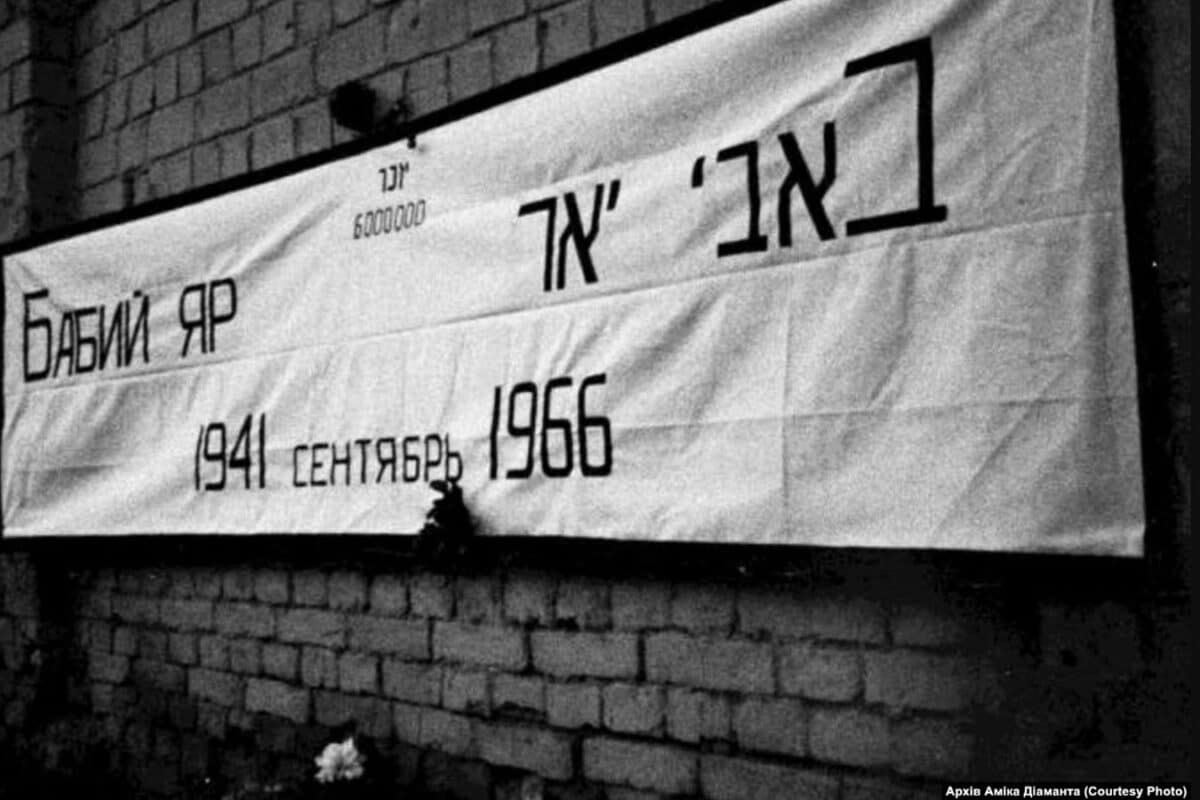
For the 25th anniversary of the tragedy, in the fall of 1966, Diamant decided to act. He bought white canvas and black paint, wrote a poster in Russian and Jewish languages (he barely knew Yiddish and Hebrew). The text was as direct and innocuously inevitable as possible:

“Babyn Yar. Remember the six million.”

“Shameful gathering of Jewish and Ukrainian nationalists”: the first rally at Babyn Yar took place in 1966

Invitations began literally “in queues and trolleybuses” — from person to person, without posters and announcements.

The motivation was articulated without equivocation: “The main motive was wounded national dignity.” It was unacceptable for Jewish pain to dissolve into the impersonal formula “victims of fascism.”

September 24, 1966, 17:00 — Silence as Action

About fifty people approached the wall of the destroyed Jewish cemetery. No slogans, no demands — just presence, candles, a poster. And — the sudden appearance of two cars with film crews: Kyiv’s “Ukrkinochronika” and Moscow’s “Nauchfilm”. Some people were frightened by the cameras and dispersed; at that moment, a stranger squeezed into the small remaining group and asked short questions:

— “Did you do this?”
— “Not me.”
— “Are you afraid?”
— “I am.”

The stranger turned out to be writer Viktor Nekrasov. He simply said, “We need to talk,” and left his address and phone number. Thus, a vector for the second date appeared — for the civil anniversary on September 29.

Footage That Survived Searches

Kyiv operator Eduard Timlin managed to hide 80 meters of film (about one and a half minutes) — and kept the reel until 1991. This gesture alone was enough to understand: memory “burns” both at the level of people and facts.

The Second Rally: Word and Solidarity

“Come, Nekrasov Will Be There”

September 29, 17:00. An oral invitation formula circulated around Kyiv: “Come, Nekrasov will be there”. The writer himself “sat on the phone,” calling acquaintances — even in Moscow; a note was passed to literary critic Ivan Dziuba. Hundreds of people headed to the ravine — for the first time in 25 years after the mass shootings of 1941. Documentary filming was now in the hands of Garik Zhurabovich. The simple focus-conspiracy technique: the film was not wound to the end, pieces were hidden in pockets — “in case of arrests.”

Dziuba’s Speech and Shouts in the Crowd

Nekrasov and Dziuba appeared — naturally creating a demand for words. There were no microphones, not everyone could hear, but the meaning was very clearly fixed.

Ivan Dziuba:Silence speaks only where everything has already been said. When nothing has been said yet, silence becomes an accomplice of falsehood and unfreedom.”

In several places, people climbed onto shoulders and shouted:

Jews should not be afraid! We need to talk about anti-Semitism!

Later, writer Vladimir Voinovich would express his shock at what he saw:

I saw for the first time an absolutely spontaneous rally, not controlled by Soviet power.”

Among those present that day was Dina Pronicheva, one of the few who survived September 29, 1941; she is known to readers as a heroine of the documentary novel Anatoly Kuznetsov’s “Babyn Yar”.

“Civilians,” but No Dispersal

Police and KGB were present in civilian clothes, observing, recording, but no forceful dispersal occurred. Many in the crowd noticed informants. After an hour and a half, Diamant left with his wife and young daughter, formulating the main point:

The main thing was achieved… We learned to be a nation from a ‘rabble.’ We learned to respect our graves.”

How the System Responded and What Happened Next

Stigma, Reprimands, “Preventive Measures”

The official formula used to stigmatize participants and the fact of the rallies was verbatim: “shameful gathering of Jewish and Ukrainian nationalists”. There were strict reprimands, dismissals, “preventive” conversations, film confiscations, and names were noted. But it was too late: annual September gatherings at Babyn Yar became a tradition.

Diamant’s Emigration and “Universal” Soviet Memory

In March 1971, Diamant was given 10 days to leave — he left the USSR and moved to Israel, taking with him surviving materials, including Zhurabovich’s footage from the second rally. The late Soviet decision on memorialization did not solve the problems: in 1976, a general monument “to the victims of fascism” was erected (without emphasis on Jewish victims), and in 1980, a park was created on the site of the filled ravine.

In independent Ukraine, the memory space consists of approximately 25 disparate signs — a long road to a coherent, honest conversation about the tragedy and its recipients.

Historical Framework and Facts (Collected in One Place)

  • 29–30.09.1941 — about 34,000 Jews shot in two days; during the occupation years — about 100,000 killed in the ravine.
  • 13.03.1961 — dam burst with liquid waste; wave up to 4 m, victims 145–1,500 (various estimates); event in city memory — “Babyn Yar’s Revenge“.
  • 24.09.1966, 17:00first silent rally (~50 people); poster: “Babyn Yar. Remember the six million”; film crews “Ukrkinochronika” and “Nauchfilm”; Eduard Timlin saves 80 m of film and keeps the reel until 1991.
  • 29.09.1966, 17:00second rally (hundreds of people); invitation formula in the city — “Come, Nekrasov will be there”; speeches by Viktor Nekrasov and Ivan Dziuba; documentary filming — Garik Zhurabovich; among those present — Dina Pronicheva; later assessment by Vladimir Voinovich on the spontaneity of the rally, “not controlled by the authorities”.
  • 1971Emmanuel (Amik) Diamant emigrates to Israel, taking surviving materials.
  • 1976 / 1980 — Soviet monument without mentioning Jews; park on the site of the filled ravine.
  • Independent Ukraine≈25 memorial signs, annual September actions.

Why This Is Important — for Ukraine and Israel (Today)

This story is not only about the past but also about a way to be a society. In Kyiv in 1966, without permits and microphones, people called the tragedy by its name, and the solidarity of Jewish and Ukrainian intellectuals became the norm, not the exception. For Israelis, this is part of the diaspora bridge: figures like Diamant ultimately connect their fate with Israel, without losing ties with Kyiv-Babyn Yar. And for all of us, it’s a reminder: where memory is precise and honest, it’s harder to ignite xenophobia and rewrite history.

FAQ

Why were there two rallies — on the 24th and 29th?

Because September 29, 1941 fell on Yom Kippur, and 25 years later, the “religious” date of memory according to the Jewish calendar fell on September 24, 1966; the second was the civil date of September 29. Both gatherings were about one thing: to return the place of the Jewish tragedy to the general historical memory of Kyiv.

What exactly was done on September 24?

A poster “Babyn Yar. Remember the six million” was attached to the wall of the destroyed Jewish cemetery, and they stood silently. It was a form of statement, not a rally “format”: to show that this is our grave and to name it.

What was said on September 29?

The key thought was from Ivan Dziuba’s speech: silence, while the truth is not spoken, is an accomplice of lies and unfreedom. In the crowd, there were calls “Jews should not be afraid! We need to talk about anti-Semitism!” — this was the meaning of the second action.

How did the authorities react?

The stigma of “shameful gathering of Jewish and Ukrainian nationalists”, reprimands, dismissals, “preventive measures”, film confiscations. But the annual September gatherings were no longer stopped: a tradition was formed.

Conclusions in Four Lines (for the Busy)

  1. September 1966 launched civil memory of Babyn Yar.
  2. Accuracy of names and dates is protection against future falsification.
  3. Solidarity of Jews and Ukrainians became a reality, not a slogan.
  4. The history of Babyn Yar is a bridge Kyiv ↔ Israel, part of a shared experience of dignity.

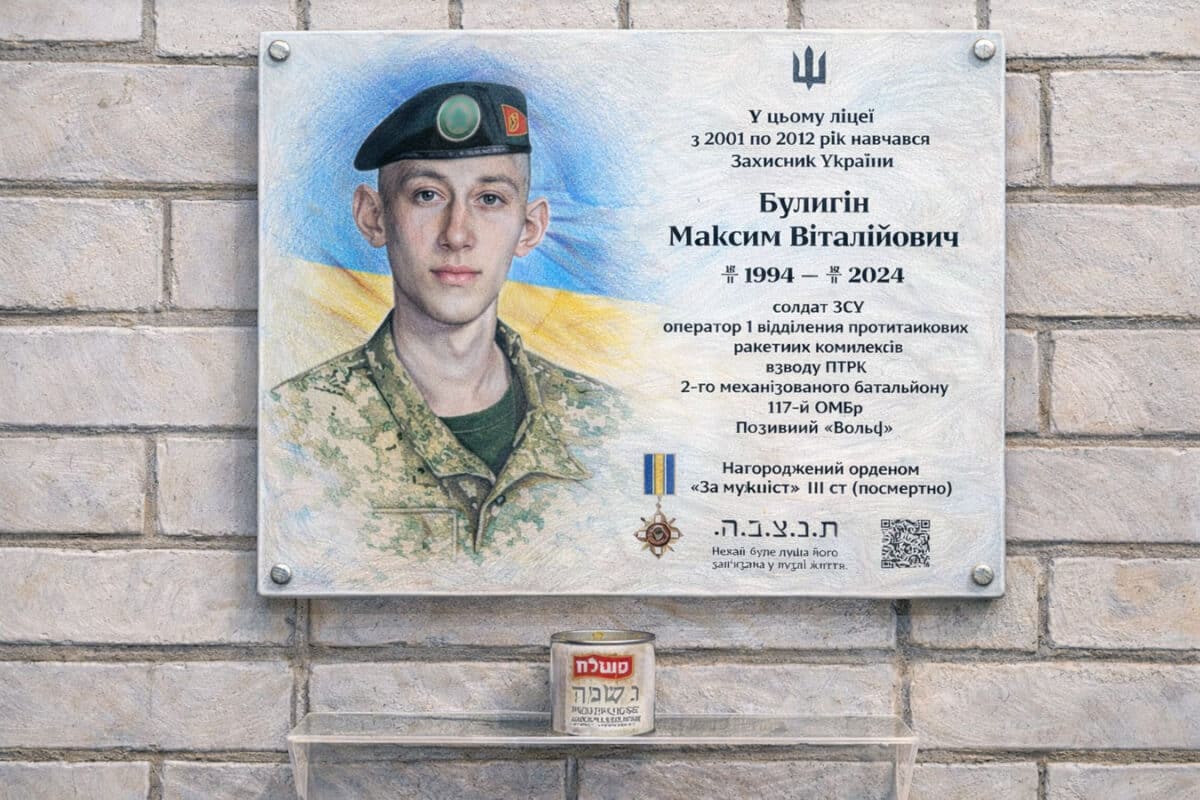
In Zhytomyr, the memory of the Jewish hero — defender of Ukraine Maksym-Wolf Bulygin was honored: a memorial plaque was unveiled at the “Or Avner” lyceum.

Bright memory to Maksym Bulygin.
We remember. We respect. We will not forget.
Baruch Dayan HaEmet – Blessed is the True Judge“, – from the Federation of Jewish Communities of Ukraine.

On January 20, 2026, in Zhytomyr, a commemorative event was held dedicated to the unveiling of a memorial plaque for Maksym Bulygin — a graduate of the private lyceum “Or Avner!, who died on June 10, 2024, defending Ukraine. The ceremony was attended by parents, relatives, students, teachers, and representatives of the city’s Jewish community.

Maksym Bulygin was a serviceman of the Armed Forces of Ukraine, a volunteer who decided to defend the country from the first months of the full-scale war. The memorial plaque, installed on the walls of the lyceum where he studied, became a sign of respect and gratitude from the community and the educational institution, as well as a reminder of the price Ukraine pays for freedom and independence.

Memorial ceremony at the school where he studied

In Zhytomyr, the memory of the Jewish hero — defender of Ukraine Maksym-Wolf Bulygin was honored: a memorial plaque was unveiled at the Or Avner lyceum

The unveiling of the memorial plaque took place in a restrained and focused atmosphere. For the Or Avner lyceum, this event holds special significance: Maksym was not an abstract hero but a student of this school, a graduate who was well remembered here.

During the event, words were spoken about his life path, character, choices, and courage. Those present honored Maksym’s memory with a minute of silence. For the school’s students, the ceremony became an important moment of realizing that the war is not a distant news story but a reality that affects their environment, their city, and their school.

Official position of the community

The event was also reported by representatives of the Jewish community of Ukraine. In the published message it says:

Federation of Jewish Communities of Ukraine:

«🕯 Honoring the memory of the Hero — Maksym Bulygin.

On January 20, a solemn event was held at the private lyceum “Or Avner” in the city of Zhytomyr, dedicated to the unveiling of a memorial plaque for Maksym Bulygin — a graduate of the lyceum who died on June 10, 2024, defending Ukraine.

The event was attended by parents, students, teachers, and guests. Those present honored the memory of the Hero, recalled his life path, courage, self-sacrifice, and the road he traveled for the freedom of his country. This day became a reminder of the price of freedom and of those who gave the most valuable thing for it — their lives.

Bright memory to Maksym Bulygin.

We remember. We honor. We will not forget.

Baruch Dayan HaEmet — Blessed is the True Judge».

Biography and personal history

Maksym Bulygin was born and raised in Zhytomyr. He had Ukrainian citizenship, and by nationality, he was a Ukrainian Jew — this information is indicated in the Ukrainian Wikipedia and is confirmed by his biography and participation in the life of the city’s Jewish community.

He was the only child in the family. He attended a Jewish kindergarten, later, after graduating from the Chabad lyceum “Or Avner” (where his grandmother worked as a teacher for 25 years), he entered Vocational School No. 18, where he obtained the profession of “Cook-Baker”.

He was a diligent student, sang in the choir, found a long-term hobby — chess (backgammon). From childhood, he was an active member of the Jewish community of Zhytomyr. From 2019 to 2021, he served in the Ukrainian army, serving as a rifleman. After demobilization, he worked at “Nova Poshta”, first as a loader, later becoming a scanner.

On February 24, 2022, at the beginning of the full-scale invasion, Maks received a summons and immediately stood up to defend his native Ukraine. He fought in various formations. Shortly before his death, he was in the ranks of the 117th Separate Mechanized Brigade. He served for 2.5 years in the east — Bakhmut, Avdiivka, Zaitseve, and beyond. He almost died several times.

In 2024, Maksym was transferred to another battalion, offered to become a UAV operator, he mastered this specialty, and when he went on his first combat mission, he did not return. UAV operator Maksym-Wolf Bulygin heroically died on June 10, 2024, during a combat mission to defend Ukraine from Russian aggressors in the village of Robotyne, Zaporizhzhia region, when the occupiers dropped explosives on his position.

A year before his death, Maksym found a beloved, they set a wedding date for the end of June, the defender agreed on leave, but two weeks before the desired day, he died.

“Grandma’s boy”

Behind the official formulations and biographical references lies the personal side of Maksym’s life, which his relatives talk about. Maksym’s grandmother, Tatyana Lipinska, recalls:

“He called himself ‘grandma’s boy’.”

This simple phrase sharply contrasts with the image of a soldier and emphasizes the human dimension of his fate. For the family, Maksym was not only a serviceman and hero but also a grandson, a close person, with a warm attachment to his relatives.

Service and death

On June 10, 2024, Maksym Bulygin died while performing a combat mission in the Zaporizhzhia direction. His death was a heavy blow to his family, friends, and community.

On June 25, 2024, after a traditional Jewish farewell ceremony near the synagogue in Zhytomyr, conducted by Rabbi Shlomo Wilhelm, Maksym Bulygin was buried at the Smolyansky City Military Cemetery.

For personal courage shown in the defense of the state sovereignty and territorial integrity of Ukraine, selfless fulfillment of military duty, he was awarded – by Decree of the President of Ukraine dated November 27, 2024, No. 787, the Order of “For Courage” III degree (posthumously).

On June 20, the Chief Rabbi of Kyiv and Ukraine Moshe Asman wrote about Maksym Bulygin’s death on his Facebook page. By the same Presidential Decree No. 787, and the same award, (posthumously) was given to the son of Rabbi Moshe Asman — Samborsky Matityahu.

The significance of the event for the community and the city

The unveiling of the memorial plaque in Zhytomyr is significant not only as a local event. It is part of a broader process of preserving the memory of the fallen defenders of Ukraine — regardless of their origin, religion, or nationality.

Maksym Bulygin’s story refutes propagandist myths about the alleged “detachment” of national minorities from the defense of Ukraine. The country’s Jewish community has been involved in the defense from the first days of the war — on the front lines, in volunteering, in humanitarian aid.

Memory as responsibility

At the Or Avner lyceum, they emphasize that the memorial plaque is not only a sign of mourning but also an element of educational work. It will remind students of the real fates of the school’s graduates, the price of decisions, and that freedom does not exist by itself.

Maksym’s story is the story of a person who made a choice and remained true to it until the end. For his school, city, and community, this choice became part of the collective memory.

“We remember everyone who holds the sky above us”

“We remember everyone who holds the sky above us” — this formula, voiced during the ceremony, became the unofficial conclusion of the event. The memorial plaque on the walls of the lyceum is a reminder of a specific life, a specific fate, and a specific loss.

Maksym Bulygin will forever remain in the memory of his family, teachers, classmates, and the Zhytomyr community. His name is inscribed not only on the school walls but also in the modern history of Ukraine — a history that is being written here and now, at the cost of human lives. It is precisely such stories, behind which stand real people and real losses, NANews — News of Israel | Nikk.Agency consider important to preserve and tell, so that the memory of the fallen defenders does not turn into a dry line of the chronicle.

“Maduro in court in New York, but Putin is not in court” – Zelensky in Davos challenged Europe

The speech by the President of Ukraine in Davos on January 22, 2026, was one of the harshest throughout the forum. After negotiations with the President of the United States Donald Trump, the Ukrainian leader Volodymyr Zelensky publicly questioned Europe’s ability to defend itself — politically, militarily, and institutionally.

It was not about theory. Zelensky directly asked: if the US is capable of blocking Russia’s shadow fleet, why doesn’t Europe do the same? Why do European countries rely on American assistance in case of an attack, without having a plan “B” if Washington decides not to intervene?

The key thesis sounded sharp and deliberately provocative. Venezuelan President Nicolas Maduro is in prison in New York. The Russian president is not. And this, Zelensky emphasized, is happening in the fourth year of a major war in Europe. A fact that cannot be ignored, no matter how much one might want to.

The President of Ukraine reminded that exactly a year ago, at this same forum World Economic Forum in Davos, he spoke the same words. Over the year, in his assessment, nothing has changed: Europe still does not know how to defend itself and still hopes that “somehow it will work out.”

A separate block of the speech was dedicated to the security of the north. Zelensky directly pointed to Greenland — as an example of Europe’s strategic confusion. Sending a few dozen soldiers, he said, is not a signal of strength but a demonstration of uncertainty. If Russian ships are sailing off the coast, Ukraine is ready to help. It has experience. And an understanding of how to act in such conditions.

The audience responded with a standing ovation. Not out of politeness — out of recognition of the problem. Zelensky did not hide his skepticism regarding NATO: the alliance is perceived as a guarantee, but real actions beyond statements have been seen by few. Europe lives in faith in a mechanism that has never been fully tested.

There was also harsh criticism of institutional weakness. The tribunal for Russian war crimes still does not even have a building. Frozen Russian assets remain frozen — without a working mechanism for their use. This, according to Zelensky, is the result of Moscow’s deliberate policy.

He also pointed out a contradiction that Europe prefers not to speak about aloud: Russia receives components for missiles not only from China but also from EU countries and the US. Meanwhile, European capitals ask Kyiv not to raise the issue of Tomahawk missiles, so as “not to irritate Washington.”

In conclusion, Zelensky formulated a strategic conclusion. Europe needs a strong and independent Ukraine not out of solidarity, but out of pragmatism. Because tomorrow Europe may have to defend itself. And if Ukraine is nearby, he said, “no one will wipe their feet on you.”

This very message — without diplomatic padding and illusions — became central in Davos. Its meaning is simple: security does not work on trust and expectations. It works on actions and responsibility. This is what NAnews — News of Israel | Nikk.Agency writes about, capturing the moment when the issue of European weakness was voiced publicly and unvarnished.

The official list of persons and events NOT containing “symbols of Russian imperial policy” was published by the Ukrainian Institute of National Memory (UINP)

October 7, 2025 The Ukrainian Institute of National Memory (UINP) published an official list of persons and events NOT containing “symbols of Russian imperial policy”.

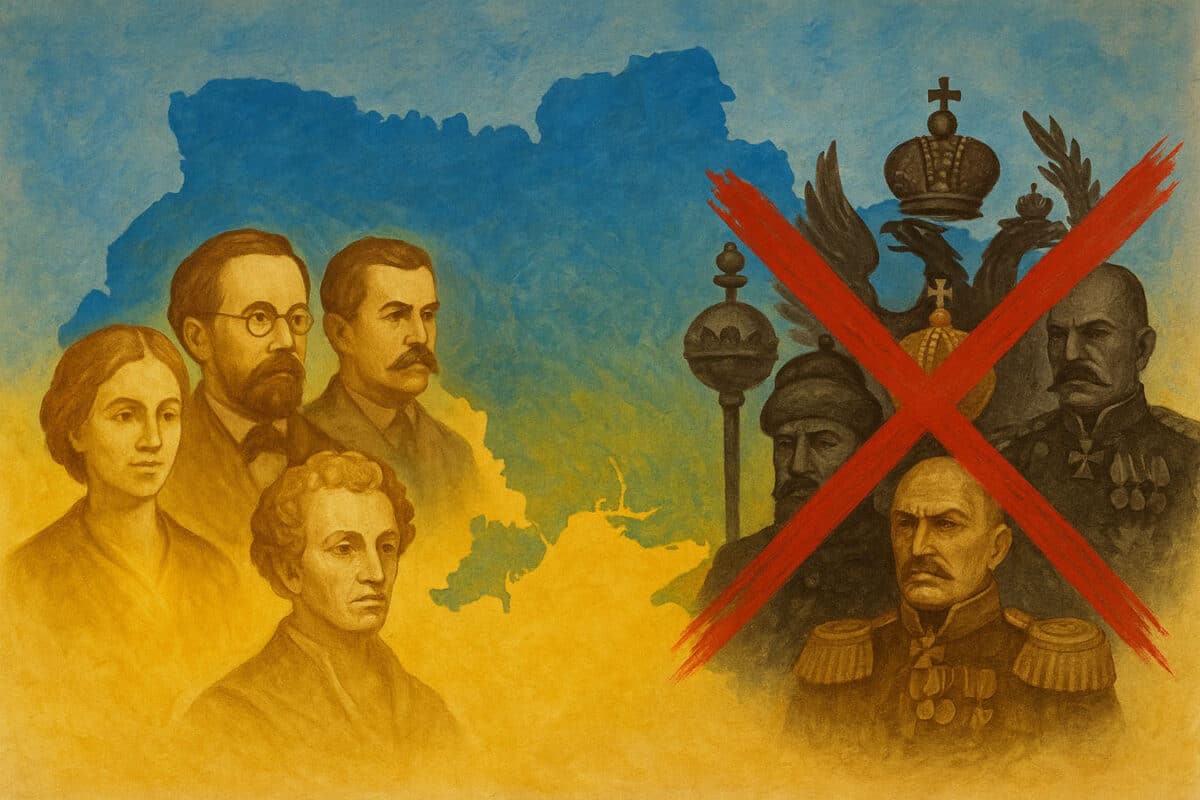
This step became part of the state decolonization program — rethinking historical heritage, where the main goal is not to destroy, but to discern.

What is this list and why is it needed

In recent years, Ukraine has been actively cleansing public spaces of traces of its colonial past.

Streets are being renamed, monuments to imperial rulers and ideologists are being dismantled. But to avoid “throwing the baby out with the bathwater,” a “white list” was created — names and events that can be preserved.

“The list is not exhaustive and will be supplemented in accordance with the special conclusions of the expert commission,” explained the UINP.
“Its goal is to help local governments implement the law on condemning imperial policy without losing genuine cultural heritage.”

What is UINP and where did the decolonization law come from

The Ukrainian Institute of National Memory (UINP) https://uinp.gov.ua/ is a state institution responsible for shaping the country’s historical policy. It is engaged in researching, preserving, and popularizing historical heritage, especially those periods where Soviet or Russian propaganda distorted facts.

After 2014, and especially after the start of the full-scale war, UINP became a key center for decommunization and decolonization.
These processes are based on the Ukrainian law “On the Condemnation and Prohibition of Propaganda of Russian Imperial Policy in Ukraine and Decolonization of Toponymy”, which prohibits the use of imperial symbols, names, and monuments associated with the ideology of subjugating Ukraine.

The law does not ban Russian culture as such — it clearly distinguishes between culture and propaganda.
If a person lived in the Russian Empire but acted in the name of humanity, science, or art, their name is preserved.

Who was included in the list

“List No. 2

of persons and events of the Moscow Tsardom and the Russian Empire period, objects dedicated to which, according to paragraph 4 of part 1 of article 2 of the Law of Ukraine “On the Condemnation and Prohibition of Propaganda of Russian Imperial Policy in Ukraine and Decolonization of Toponymy”, fall under exceptions and do not contain symbols of Russian imperial policy

They are united by one thing — the absence of service to imperial ideology.
Many of them had Ukrainian roots, lived or created in Odesa, Poltava, Kharkiv, Kyiv, creating works that have long become part of Ukrainian identity.

Personalities and events, objects dedicated to which do not contain symbols of Russian imperial policy

The official list of persons and events NOT containing "symbols of Russian imperial policy" was published by the Ukrainian Institute of National Memory (UINP)
The official list of persons and events NOT containing “symbols of Russian imperial policy” was published by the Ukrainian Institute of National Memory (UINP)
  1. Ivan Aivazovsky (1817–1900) — Russian painter of Armenian origin.
  2. Mykola Arkas (1853–1909) — Ukrainian composer, poet, historian, public figure.
  3. Mykola Benardos (1842–1909) — Ukrainian inventor, creator of arc welding.
  4. Volodymyr Borovykovsky (1757–1825) — Ukrainian and Russian painter, academician of the St. Petersburg Academy of Arts.
  5. Karl Bryullov (1799–1852) — classicist and romantic painter, teacher of Taras Shevchenko.
  6. Hryhoriy Vakulenchuk (1877–1905) — native of Zhytomyr region, petty officer of the Black Sea Fleet, one of the leaders of the uprising on the battleship “Potemkin”.
  7. Mykhailo Vrubel (1856–1910) — symbolist painter of Polish origin.
  8. Oleksandr Verkhovtsev (1837–1900) — Russian railway engineer, head of the Kateryninska Railway.
  9. Alexander Herzen (1812–1870) — Russian writer, philosopher, publicist, supporter of Ukraine’s independence.
  10. Nikolai Gogol (1809–1852) — writer of Ukrainian origin, representative of the “Ukrainian school” of Russian literature.
  11. Vladimir Dal (1801–1872) — writer, lexicographer, scientist.
  12. Hryhoriy Danylevsky (1829–1890) — Ukrainian and Russian writer, ethnographer, historian.
  13. Osip (Jose) Deribas (1751–1800) — Russian admiral of Spanish origin, founder and organizer of Odesa.
  14. Vasyl Dokuchaev (1846–1903) — Russian scientist, founder of soil science, worked in Poltava.
  15. Oleksandr Zasyadko (1779–1837) — Ukrainian specialist in rocket weaponry creation.
  16. Vasyl Karazin (1773–1842) — Ukrainian scientist, inventor, founder of Kharkiv University.
  17. Mykola Kybalchych (1853–1881) — Ukrainian engineer, creator of a rocket apparatus project, revolutionary.
  18. Petro Kishka (1828–1882) — sailor of the Black Sea Fleet, hero of the Crimean War.
  19. Thomas Cobley (1761–1833) — major general, governor of Odesa, fought the plague epidemic.
  20. Volodymyr Korolenko (1853–1921) — writer and public figure.
  21. Ivan Kramskoi (1837–1887) — portrait painter of Ukrainian origin.
  22. Alexander Kuprin (1870–1938) — writer, journalist, advocated for people’s rights.
  23. Louis de Langeron (1763–1831) — governor of Odesa, founder of the Richelieu Lyceum and Botanical Garden.
  24. Andriy Levanidov (d. 1802) — governor of Sloboda Ukraine, philanthropist and collector of antiquities.
  25. Nikolai Leskov (1831–1895) — writer and publicist, lived in Kyiv for a long time, actively used Ukrainian motifs.
  26. Yuriy Lisianskyi (1773–1837) — Ukrainian navigator, one of the first circumnavigators.
  27. Hryhoriy Marazli (1831–1907) — mayor of Odesa, philanthropist and reformer.
  28. Levko Matsievich (1877–1910) — shipbuilding engineer, one of the first aviators.
  29. Illya Mechnikov (1845–1916) — Ukrainian and French scientist, founder of immunology, Nobel laureate.
  30. Apolon Mokrytskyi (1810–1870) — Ukrainian painter and teacher.
  31. Hryhoriy Myasoyedov (1834–1911) — Russian and Ukrainian painter.
  32. Ivan Myasoyedov (1881–1953) — Ukrainian artist and graphic artist.
  33. Nikolai Nekrasov (1821–1878) — writer and publicist, criticized autocracy.
  34. Klavdiy Nemeshaev (1849–1927) — railway engineer, education reformer.
  35. Petro Nesterov (1887–1914) — Ukrainian aviator, inventor of the “loop-the-loop”.
  36. Nikolai Novoselsky (1818–1892) — doctor, public figure, mayor of Odesa, founder of spa treatment.
  37. Nikolai Pirogov (1810–1881) — scientist, surgeon, founder of field surgery.
  38. Ivan Pavlov (1849–1936) — physiologist, Nobel laureate.
  39. Alexander Popov (1859–1906) — inventor and physicist, pioneer of radio communication.
  40. Adrian Prakhov (1846–1916) — art historian, archaeologist, led the painting of the St. Vladimir’s Cathedral in Kyiv.
  41. Emmanuel de Richelieu (1766–1822) — French and Russian statesman, first governor of Odesa.
  42. Kondraty Ryleyev (1795–1826) — poet, Decembrist, supporter of Ukraine’s liberation.
  43. Illya Repin (1844–1930) — artist of Ukrainian origin, author of “The Zaporozhians”.
  44. Mykhailo Sazhin (1818–1887) — artist and graphic artist, author of Kyiv landscapes.
  45. Nikolai Solovtsov (1857–1902) — actor and director, founder of the theater in Kyiv.
  46. Konstantin Ushinsky (1823–1871) — educator of Ukrainian origin, founder of the public school.
  47. Andriy Fabr (1789–1863) — governor of the Katerynoslav province, industrial reformer.
  48. Mykhailo Falleev (1730–1792) — military figure, participated in the construction of Mykolaiv.
  49. Anton Chekhov (1860–1904) — writer and playwright of Ukrainian origin, theater reformer.
  50. Konstantin Tsiolkovsky (1857–1935) — scientist, founder of astronautics.
  51. Mykhailo Shchepkin (1788–1863) — actor, founder of stage realism, friend of Taras Shevchenko.

The list is not final and will be supplemented with personalities and events from the RSFSR, USSR, and modern Russian Federation periods.

The main goal is to separate imperial and human heritage, preserving the memory of those who glorified Ukraine and the world with their work, not the ideology of subjugation.

Source:


Why this is important for Ukraine — and for Israel

For Ukraine, this document is a sign of maturity.
The country does not erase the past but has learned to distinguish the good from the oppressive.
This is a step towards its own cultural independence: respecting what is universal and rejecting what symbolizes enslavement.

For Israel, this is especially understandable.
Israeli society has also gone through the path of memory restoration: from rejecting colonial narratives to creating its own symbols, language, and historical identity.
Ukraine is now taking a similar step — measured, legal, cultural.

How the law works and why it is flexible

The main difference in the Ukrainian approach is that decisions are made by experts, not politicians.
Each name is reviewed by a commission: biographies, views, context, and place in history are checked.
If a person does not embody “imperial policy” — they remain in the cultural space.
Thus, the state shows that decolonization is not a fight against names, but a restoration of historical justice.

Reaction and significance for the diaspora

For Israelis of Ukrainian origin, this news is especially symbolic.
It reminds that memory is not a weapon, but a compass.
Just as Israel once reclaimed names forgotten for millennia, Ukraine today reclaims the right to determine who is ours and who is a symbol of foreign power.

Conclusions

The UINP list has become a document that teaches to see the difference between culture and ideology.
It helps build a future where artists, doctors, scientists are respected — but not those who justified the subjugation of peoples.
Ukraine tells the world: “We do not erase history — we cleanse it.”

There is also “List No. 1”: who is considered a bearer of imperial symbols

In addition to the “white list” (List No. 2), UINP also published List No. 1 — these are persons and events of the Moscow Tsardom and Russian Empire period, whose names/monuments are considered symbols of Russian imperial policy. The list is formed based on UINP expert conclusions and is not exhaustive: it will be supplemented, including with persons and events from the RSFSR, USSR, and modern RF periods.

What this means in practice:
objects dedicated to the persons and events listed below are subject to removal from the public space of Ukraine (renaming, dismantling, relocation, contextualization, etc.) according to the Law of Ukraine “On the Condemnation and Prohibition of Propaganda of Russian Imperial Policy in Ukraine and Decolonization of Toponymy”.

List No. 1 (according to UINP data)

  • Konstantin Aksakov (1817–1860) — publicist, ideologist of Slavophilism (“special Russian path”, “chosen by God”).
  • Ivan Babushkin (1873–1906) — RSDLP(b) figure, Lenin’s associate.
  • Pyotr Bagration (1765–1812) — general, participant in the 1812 war.
  • Mikhail Bakunin (1814–1876) — political figure, ideologist of anarchism (anti-Semitic views).
  • Nikolai Bauman (1873–1905) — RSDLP(b) figure, Lenin’s associate.
  • Fabian (Faddey) Bellingshausen (1778–1852) — admiral, participant in the implementation of imperial policy.
  • Vissarion Belinsky (1811–1848) — critic, glorified imperial policy.
  • Alexander Bestuzhev (1797–1837) — Decembrist; participation in the conquest of the Caucasus.
  • Battle of Borodino (1812) — event associated with the implementation of imperial policy.
  • Ivan Bunin (1870–1953) — writer, glorification of imperial policy.
  • Aleksey Butovsky (1838–1917) — general; participation in the suppression of the January Uprising of 1863.
  • Vasily Buturlin (†1655) — military and diplomat; head of the delegation at the Pereyaslav Rada 1654.
  • Aleksey Bestuzhev-Ryumin (1693–1768) — chancellor, field marshal.
  • Mikhail Vorontsov (1782–1856) — field marshal, governor.
  • Ilarion Vorontsov-Dashkov (1837–1916) — minister of the court, governor in the Caucasus.
  • Mikhail Glinka (1804–1857) — composer, glorification of imperial policy.
  • Aleksey Greig (1775–1845) — admiral, implementation of imperial policy.
  • Alexander Griboyedov (1795–1829) — diplomat, implementation of imperial policy.
  • Boris Godunov (1552–1605) — Moscow tsar.
  • Semyon Dezhnev (1605–1673) — navigator, exploration in the interests of the empire.
  • Decembrists (1825) — movement with centralizing goals; denial of the right of peoples to self-determination (majority).
  • Gavriil Derzhavin (1743–1816) — poet, dignitary, panegyrics to the empire.
  • Elizaveta Petrovna (1709–1762) — empress.
  • Yermak Timofeyevich (1534–1585) — “conqueror of Siberia”, beginning of the conquest of Siberian Turkic lands.
  • Vasily Zhukovsky (1783–1852) — poet, privy councilor, glorification of the empire.
  • Pyotr Zaporozhets (1876–1905) — RSDLP(b) figure, Lenin’s associate.
  • Vladimir Istomin (1809–1855) — rear admiral.
  • Antioch Kantemir (1708–1744) — diplomat, poet; the name gave the name to the 4th Guards Tank Division of the Russian Federation.
  • Nikolai Karamzin (1766–1824) — writer, historian; glorification of the empire.
  • Paisiy Kaisarov (1783–1844) — general of infantry, senator.
  • Catherine II (1729–1796) — empress.
  • Vladimir Kornilov (1806–1854) — vice admiral.
  • Caesar Cui (1835–1918) — composer, engineer-general.
  • Mikhail Kutuzov (1745–1813) — field marshal.
  • Viktor Kurnatovsky (1868–1912) — RSDLP(b) figure, Lenin’s associate.
  • Lado Ketskhoveli (1876–1903) — RSDLP(b) figure, associate of Lenin and Stalin.
  • Mikhail Lazarev (1788–1851) — vice admiral.
  • Mikhail Lermontov (1814–1841) — poet; glorification of the empire.
  • Mikhail Lomonosov (1711–1765) — scientist; glorification of the empire.
  • Mikhail Miloradovich (1771–1825) — military and state figure.
  • Kuzma Minin (1570–1616) — state and military figure of the Moscow Tsardom.
  • Nicholas I (1796–1855) — emperor.
  • Nicholas II (1868–1918) — emperor.
  • Nikita Muravyov (1795–1843) — Decembrist, leader of the Northern Society.
  • Modest Mussorgsky (1839–1881) — composer (“Boris Godunov”).
  • Pavel Nakhimov (1802–1855) — admiral.
  • Alexander I (1777–1825) — emperor.
  • Alexander II (1818–1881) — emperor.
  • Alexander III (1845–1894) — emperor.
  • Pavel I (1754–1801) — emperor.
  • Vasily Panyutin (1788–1855) — major general.
  • Ivan Paskevich (1782–1856) — field marshal; suppression of the Polish uprising, repressions.
  • Pavel Pestel (1793–1826) — colonel, ideologist of the Decembrists.
  • Peter I (1672–1725) — tsar/emperor.
  • Dmitry Pozharsky (1578–1642) — state and military figure.
  • Battle of Poltava (1709) — key event in the interests of the empire against Mazepa and Charles XII.
  • Grigory Potemkin (1739–1793) — state and military figure, diplomat.
  • Georgy Plekhanov (1856–1918) — political figure.
  • Alexander Pushkin (1799–1837) — poet; glorification of the empire.
  • Emelyan Pugachev (1742–1775) — leader of the peasant war, impostor.
  • Stepan Razin (1630–1671) — ataman of the Don Cossacks, leader of campaigns.
  • Nikolai Raevsky (1771–1829) — general.
  • Romanovs — ruling house of the Moscow Tsardom and the Russian Empire.
  • Grigory Romodanovsky (†1682) — state and military figure; participant in the Pereyaslav Rada.
  • Dmitry Senyavin (1763–1831) — admiral, commander of the Baltic Fleet.
  • Ivan Sinelnikov (1738–1788) — military and political figure of the empire.
  • Mikhail Skobelev (1843–1882) — general, participant in Central Asian campaigns and Russo-Turkish wars.
  • Alexander Suvorov (1729–1800) — generalissimo.
  • Ivan Susanin — mythologized character of imperial propaganda.
  • Vasily Surikov (1848–1916) — painter of historical canvases, glorification of the empire.
  • Nikolai Sukhina — provincial secretary of the Poltava province (1812).
  • Aleksey Teplov (1763–1826) — state figure.
  • Ivan Turgenev (1818–1883) — writer; glorification of the empire.
  • Vasily Tyapkin — ambassador of the Moscow Tsardom in the Hetmanate (1677–1680).
  • Alexander Tsulukidze (1876–1905) — RSDLP(b) figure, Lenin’s associate.
  • Fyodor Ushakov (1745–1817) — admiral.
  • Pyotr Schmidt (1867–1906) — fleet officer; cult of Soviet propaganda.
  • Ivan Gudovich (1741–1820) — field marshal.
  • Ivan Sabaneev (1831–1909) — military figure.
  • Alexander Stroganov (1795–1879) — governor-general of Novorossiya and Bessarabia.

List No. 1 is a decolonization tool: it helps local governments legally correctly remove imperial symbols from the urban environment while preserving cultural heritage that did not serve ideology (List No. 2).

Davos as a showcase of utopias: Trump’s son-in-law presented the “master plan for New Gaza”

At the World Economic Forum in Davos, a presentation was made that immediately went beyond the usual discussions about post-war recovery. Jared Kushner, son-in-law of U.S. President Donald Trump, presented the so-called “New Gaza Master Plan” — a large-scale post-war reconstruction project for the Gaza Strip.

The venue was Davos, and the audience consisted of global investors, politicians, and representatives of international institutions. The plan is based on major construction programs, the building of new cities, and the creation of an international airport in the Rafah area. The ultimate goal, according to Kushner, is “peace between Israel and the Palestinians.”

Kushner stated that the clearing of ruins in Rafah “has already begun,” and the next stage will be the formation of “New Gaza.” The promises sounded extremely ambitious: full employment, economic prosperity, and “good jobs” for the enclave’s residents. However, he named security and “proper administration” as key conditions.

This is where the plan moves into the political realm. According to Kushner, the “demilitarization of Gaza” will begin, and the process will be managed by a Palestinian “technocratic government,” which, as he explicitly stated, should work jointly with Hamas. This formulation has already caused a stir among diplomats and security experts.

The project involves zoning the Gaza Strip territory and building new cities for two to three million people over three years. Initially, a pilot area was discussed, but Kushner’s team ultimately decided to present an “incremental reconstruction” of several zones — without intermediate tests and local restrictions.

A separate part of the presentation was devoted to the idea of the so-called “Peace Council.” The concept is that it should “borrow the best global practices” and then scale them — from urban management to healthcare and education systems — beyond the Middle East.

In fact, Kushner acknowledged that the previous “20-point peace plan” was not based on practical experience. In this context, Gaza is described as an experimental platform where new management and business models will be tested in real conditions — with an eye on projects of global scale.

Anticipating criticism and sarcastic reactions, Kushner addressed journalists and social media users with an unusual request — “to give the plan 30 days of silence.” This statement only reinforced the impression that the concept presented in Davos balances between a political project, an investment presentation, and a high-risk experiment.

Regardless of how this “master plan” is assessed, it has already become part of the international agenda, where discussions about Gaza’s future increasingly occur at the intersection of geopolitics and business. It is at this point today that the interests of states, investors, and the media converge, as regularly reported by NAnews — Israel News | Nikk.Agency, documenting how global initiatives collide with the region’s reality.