The escalation of protests in Iran is reaching a new level and increasingly affecting not only the internal situation in the country but also the regional and international agenda. According to human rights organizations, the number of deaths has already reached 116 people, and about 2600 protest participants have been detained.
The Iranian authorities are simultaneously increasing pressure within the country and demonstrating readiness for a tough external response. This combination makes the situation particularly alarming for neighboring states and key global players.
One of the key factors of uncertainty has been the massive internet and communication shutdown. The informational isolation seriously complicates independent assessment of the situation and heightens fears that security forces may act without external oversight and with minimal reputational costs.
International Signals and Political Rhetoric
The reaction from abroad was not long in coming. U.S. President Donald Trump publicly expressed support for the protesters, stating readiness to help the Iranian people in their quest for “freedom.” This signal was perceived in Tehran as direct pressure and interference in the country’s internal affairs.
The response from the Iranian leadership was extremely tough. The Speaker of Parliament Mohammad-Bagher Ghalibaf stated that in the event of an attack by the U.S., American military and Israel would be considered “legitimate targets.” According to him, Iran will not limit itself to symbolic steps if it feels a direct threat to its security.
This rhetoric underscores that the internal crisis in Iran is increasingly intertwined with foreign policy confrontation.
Hardline Course Within the Country
On the domestic front, the authorities make it clear that they do not plan to compromise. Ghalibaf specifically emphasized the intention to strictly punish all arrested protest participants, stating that society must be prepared for decisive state actions.
This message is addressed not only to the protesters but to the entire country: a signal that further pressure will increase, and the space for dialogue remains minimal.
How the Situation Developed
As of January 7, it was reported that there were 35 dead and more than 1200 detained, but within a few days, the numbers increased significantly. On January 8, the Ministry of Foreign Affairs of Ukraine recommended its citizens leave Iran due to the rapidly deteriorating situation and security risks.
By January 11, the topic of Iranian protests reached the level of closed consultations among allies. Israeli Prime Minister Benjamin Netanyahu and U.S. Secretary of State Marco Rubio discussed possible U.S. action scenarios regarding Iran. Meanwhile, in Jerusalem, it was made clear that Israel does not seek to directly participate in possible intervention.
A Point of Tension for the Entire Region
Iran remains in a state of acute internal crisis, which increasingly affects regional security. The rising number of casualties, informational blockade, harsh statements towards the U.S. and Israel, and parallel diplomatic consultations create a dangerous combination where any wrong move could lead to a sharp escalation.
Against this backdrop, the international community is closely monitoring the developments, understanding that it is not only about the fate of the protests but also about the broader balance of power in the Middle East. In this context, NAnews — News of Israel | Nikk.Agency notes: the crisis in Iran has ceased to be solely an internal matter and is increasingly becoming a factor of global instability.
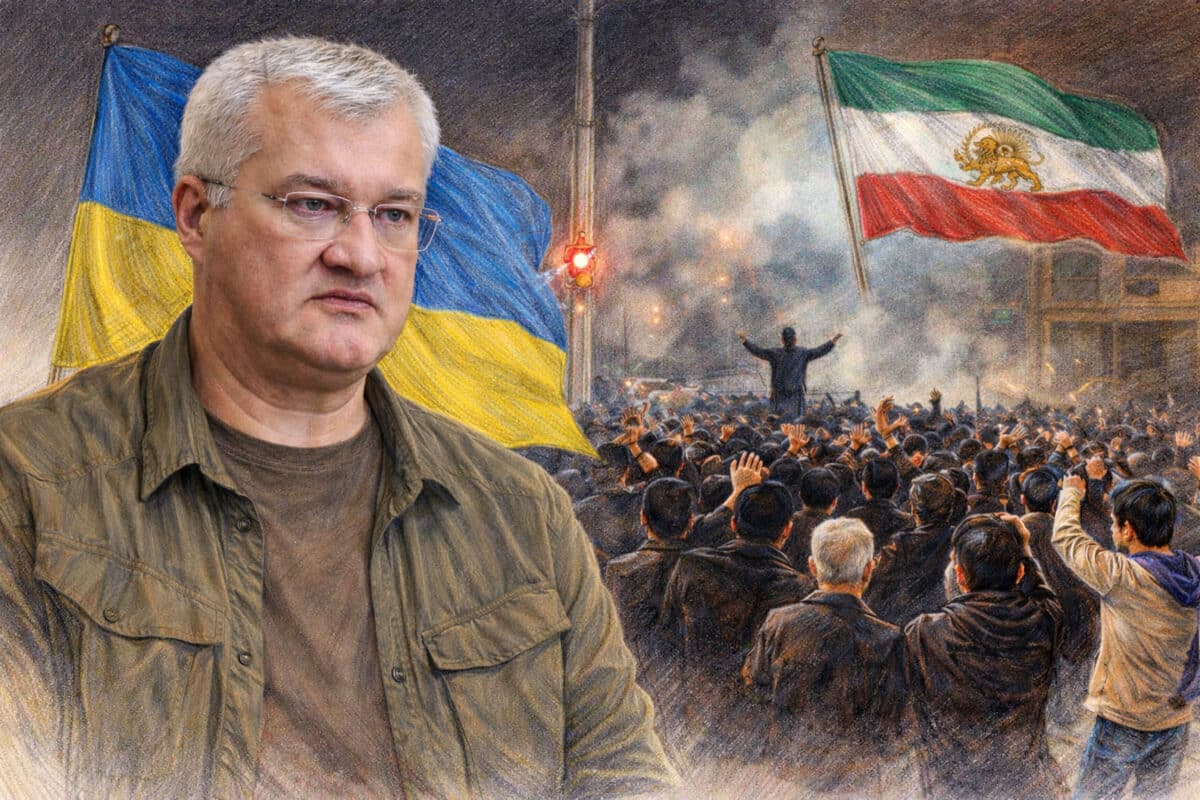
Ukraine called on the international community to increase pressure on the Iranian regime due to violence against protesters and parallel support for Russia’s war against Ukraine. This was stated on January 10, 2025, by the head of the Ministry of Foreign Affairs of Ukraine, Andriy Sybiha, linking internal repression in Iran and external aggression as part of one line — a policy of violence and disregard for human dignity.
According to the minister, Iranians deserve protection of basic civil rights — access to information, freedom of assembly, and the right to a normal life without fear. Kyiv emphasizes: Ukraine’s experience, which went through the breakdown of a totalitarian and authoritarian model, makes the topic of civil liberties not an abstract declaration, but a principle directly related to security in Europe and the Middle East.
Sybiha also appealed to the authorities of Iran with a call to refrain from violence against protest participants.
And separately — to the world.
Ukraine officially condemned the violence of the Iranian authorities against protesters and called on the international community for decisive action.
The Ukrainian position is that repression against its own population and support for the Russian war are not two different plots, but the same mechanism: suppression within the country and export of threats outside. Therefore, Kyiv believes that increasing pressure on Tehran should be considered as a tool to protect people in Iran and at the same time as a factor influencing the course of the war in Ukraine.
The context of this reaction is the ongoing mass protests in Iran since December 28. Initially, the trigger was the collapse of the national currency and a sharp rise in prices: traders at the Grand Bazaar in Tehran went on strike, then the protests spread to many regions. It was reported that ten days later, protesters took control of two cities in the west of the country, which is a particularly sensitive signal for the Iranian system.
Iran’s Supreme Leader Ali Khamenei acknowledged the existence of economic problems but explained them as the “work of the enemy.” At the same time, his statements included a stance on harsh suppression: according to him, it is pointless to talk with “rioters,” they “need to be put in their place.”
Amid clashes and dispersals, it was reported that more than 50 people had died.
For Israel, Europe, and the USA, such a crisis in Iran is not only a human rights issue but also a matter of regional stability. The more the regime corners society, the higher the likelihood of radicalization, internal purges, and external provocations, and thus the higher the risk that the Iranian factor will more actively influence security around Israel and support Russia in the war against Ukraine.
Kyiv essentially proposes considering pressure on the Iranian regime as part of a general strategy: protecting civil rights in Iran, limiting Tehran’s ability to help Russia, and reducing threats in the Middle East. NANews — News of Israel | Nikk.Agency notes that in 2026, the link “internal repression + external aggression” increasingly becomes a common formula for authoritarian alliances — and ignoring it means allowing problems to grow in several regions at once.
On Thursday evening, around eight o’clock, Iran shut down the internet, effectively cutting off about 85 million people from the outside world. Such a move has already become a recognizable practice for Tehran during crisis periods — when the authorities try to simultaneously disrupt coordination on the streets and block the flow of evidence to the outside.
Until this point, Iranians, despite sanctions and internal blockages, often maintained access to familiar apps and websites through VPNs. But the current shutdown sharply narrows even these loopholes: sharing videos, photos, and testimonies about the protests becomes much more difficult, meaning less information reaches journalists, human rights activists, and relatives abroad.
Against the backdrop of a worsening economy, the protest wave increasingly appears to be the most dangerous internal threat to the regime in recent years. In such conditions, “digital darkness” can serve as a cover for harsh suppression when public justification and trust in the authorities are dwindling, and the stakes are higher.
Outside the country, this is perceived as a personal catastrophe.
Relatives of Iranians in the USA, Europe, Canada, and other countries remain out of touch and live in a state of constant anxiety. On Saturday, Iran’s Attorney General stated that participants in the protests would be considered “enemies of God,” which means the risk of the harshest sentences, including the death penalty.
Azam Janravi, a cybersecurity specialist from Toronto, describes the state of the diaspora very directly: imagine your brothers and cousins are taking to the streets — and you can’t call them or see what’s happening. She says she couldn’t concentrate on work and thought only about her loved ones and friends. Her voice is filled with tears: people are dying and getting injured, and abroad, they don’t understand who exactly, where, and what is happening to them.
In this story, one word increasingly surfaces: Starlink.
The internet shutdown has already become the third major one in recent years. In 2019, when protests were against rising gasoline prices, there were reports of hundreds of deaths. In 2022, after the death of Mahsa Amini, who was arrested for allegedly “improper” wearing of a hijab, protests were again suppressed with a large number of casualties.
At that time, communication through Starlink played a noticeable role: some people gained the ability to transmit information outside, bypassing state blockages. Now the use of terminals, according to descriptions, has grown even more — despite the fact that the authorities have not given permission, and the service remains illegal.
According to official estimates, there may be tens of thousands of Starlink receivers in the country. Internet activist Mehdi Yahyanejad agrees: most devices are likely in the hands of businesses, but some owners use them specifically to send videos and photos from protest sites.
However, Starlink does not appear to be a “magic button.”
After the war with Israel in June last year, Iran, according to these same testimonies, began to more actively suppress GPS signals — as an element of military logic and management of technological capabilities. And Starlink receivers need GPS for stable communication with low-orbit satellites.
Amir Rashidi, director of digital rights and security at Miaan Group, estimates a drop in data transmission levels from Starlink devices by about 30% recently. In certain regions, he says, the drop reached 80% — meaning communication turns into a lottery rather than a stable channel.
That is why most messages that still come out of Iran after the internet shutdown are through Starlink — and this makes users vulnerable. The fear of arrest becomes a factor causing people to avoid turning on the terminals. Janravi speaks directly: if a person is detained, they may be accused of working for Israel or the USA, and the consequences can be extreme.
But the paradox is that refusing communication makes the situation even more opaque — both for the world and for the diaspora itself, which is trying to understand if their relatives are alive.
Yahyanejad believes that such radical protest is difficult to sustain under conditions of extremely harsh suppression and informational isolation. If nothing changes in the coming days, protest activity may begin to wane — not because the reasons have disappeared, but because the conditions for continuation have disappeared.
Iran once again shows that modern warfare and internal crisis occur not only on land and in the sky but also through cables — where a single switch can sever people’s connection to the world and each other. NAnews — News of Israel | Nikk.Agency records this moment as key: in 2026, control over information becomes as much a tool of power as security forces and repressive courts.
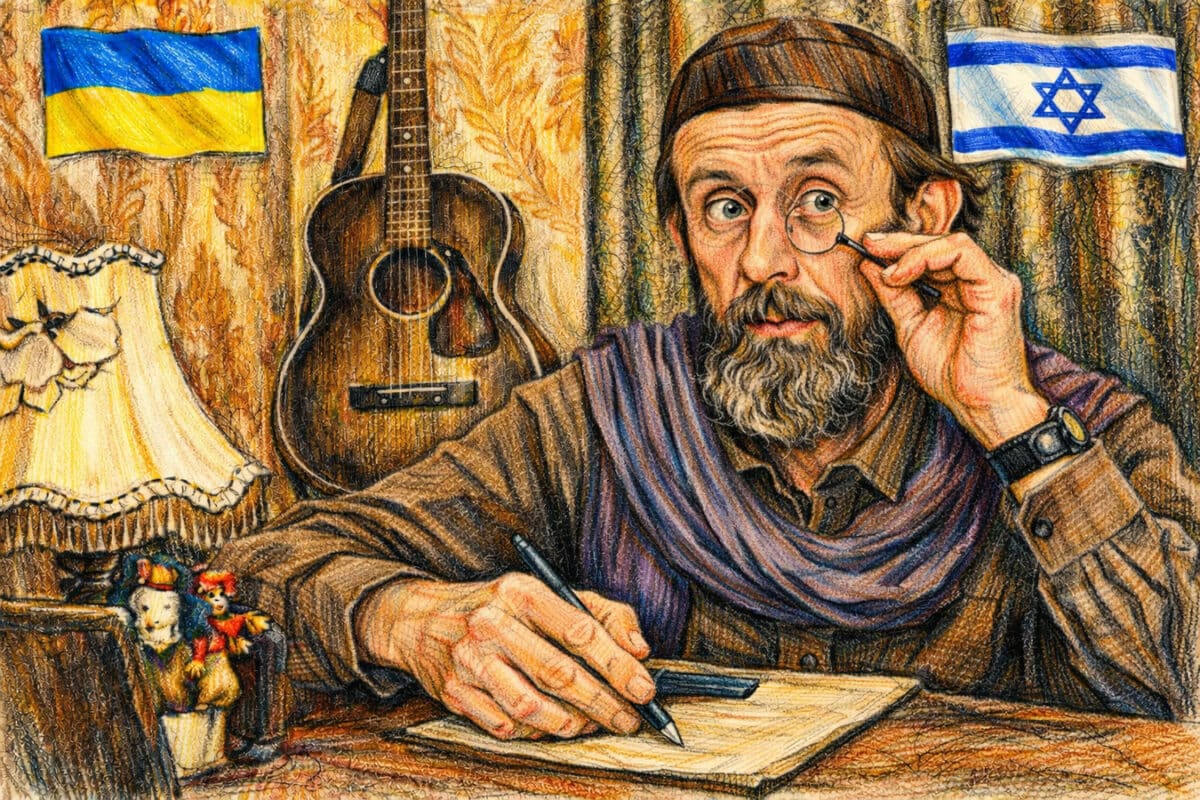
In January 2026, a series of concerts by one of the most recognizable Ukrainian bards, Viktor Bayrak, will take place in Israel. Poet, artist, satirist, volunteer, intellectual — his songs combine Odessa irony, deep humanity, and inner strength capable of supporting the listener even in the toughest times.
Three cities, three stages, three different moods — and one voice that’s hard to confuse. These are not just musical evenings but meetings with a person who can turn a serious conversation into a kind and precise joke, and life’s pain into a warm song that touches the heart.
What and where will take place: dates, cities, time
Viktor Bayrak in Israel: Odessa humor and human truth – Haifa, Petah Tikva, and Be’er Sheva – January 16, 19, and 24, 2026
Be’er Sheva — January 16, 2026, starting at 19:00.
This evening is announced as a meeting with a person who “can start with a serious conversation and end with everyone in tears — but from laughter.”
The descriptions include a lot of everyday Odessa “kitchen”: stories about a train that left a minute early, about a cat-impostor “apartment owner,” about people who are too sure of their own rightness — and at this moment, as the organizers promise, the funniest part begins.
The meaning of the presentation is clear: this is not just a “concert of songs,” but an evening of observations where the sad becomes lighter because it is spoken in human language.
The posters indicate a duration of about 3 hours and a location in Haifa (Ben-Gurion Street area).
The Haifa announcement adds a second layer to Bayrak’s image: “he was and is considered one of their own by archaeologists and electricians, KVN players and ChGK participants, footballers and tourists…” — an artist with a very wide audience, not tied to one circle. It also emphasizes: “he is everyone’s and no one’s at the same time. He is Viktor Bayrak, that’s his profession.”
This sounds like a promise of an evening-event: not “came, listened, and left,” but came to meet.
Petah Tikva — January 24, 2026, starting at 18:00.
The final meeting will take place in the intimate theater hall LaBama.
The announcement separately emphasizes: “the home concert is moving to a new venue,” but the format remains intimate — “a space where the atmosphere of close communication is preserved.”
The description of the evening includes many words about “soulful and warm,” about community, about the desire to maintain a home intonation even in a theater hall.
Viktor Bayrak is a Ukrainian Odessa singer-songwriter (bard), poet-satirist, and artist, known in the author’s song community as a “living classic.” He is known not only for his concerts: Bayrak is a multifaceted person, a “festival man,” whose humor always coexists with precise life observation and inner honesty.
Biography — briefly and to the point
Viktor Bayrak was born on November 30, 1957, in Odessa. His biography includes a long period of life outside Ukraine (including in Russia), after which he returned in 2014 and publicly declared his civic position. In recent years, he is called a person who confidently holds both on stage and in volunteer reality — without dividing into “creativity” and “life.”
What he is known for
Bayrak has a rare feature: he works in several cultural “languages” at once — and combines them in one evening.
Author’s song (bard stage). His concerts are not a set of songs, but a story where each piece sounds like a separate story: with a beginning, pause, unexpected remark, and very Odessa intonation.
Satire and intellectual humor. He is often presented as a person who “can start seriously and end with everyone in tears — but from laughter.” This humor is not “for decoration,” but a way to talk about complex things without hysteria and without lies.
Cultural environment of KVN / intellectual games. Materials about him regularly mention the connection with KVN and intellectual communities (“What? Where? When?”, “Brain-ring”) — as a sign that this is an author with a strong school of precise words and audience reaction.
Artist. Bayrak not only sings: he is engaged in visual arts and often combines concerts with artistic formats — exhibitions, auctions, charity sales of works.
Achievements and recognition
Bayrak’s main achievement is not one “hit song,” but the reputation of an author who is considered their own by very different people and professions. His work is simultaneously Odessa in intonation and universal in content: a household story easily turns into a small parable, and the funny into an accurate diagnosis of the time.
And one more thing: Bayrak has long been perceived not as an “artist by schedule,” but as a person next to whom the audience feels a sense of normal human closeness. This explains why his evenings are often called not concerts, but meetings.
How organizers describe Bayrak: more live formulations
In various announcements, the same portrait is repeated — but in different words:
Odessa precision + humor without embellishments. He speaks as if he is not telling a story, but “frying” it — adding sarcasm and kindness, and necessarily a signature Odessa smirk.
Man-performance. Any everyday case with him turns into a mini-scene: with a twist, pause, punchline — and a very recognizable intonation.
Warm truth. Even heavy topics, according to the organizers, are “always wrapped in a blanket of humor” — not to devalue, but to endure.
Silence does not survive. This is a direct organizer’s metaphor: with him, the “home” gathers around the voice, and it becomes easier for people to talk to each other.
“He is ours — and no one’s.” The Haifa description includes this formula: a person considered “their own” by people of completely different professions and habits — from archaeologists to actors, from teachers to volunteers.
If you put this in one line: people go to Bayrak not “for perfect vocals,” but for the feeling that someone smart and alive nearby voiced what many have inside.
How Viktor Bayrak supports Ukraine before and after 2022
For Bayrak, helping Ukraine is not a beautiful word in his biography. In his public history, the connection has long been noticeable: song → meeting → collection → specific action.
Before 2022: position and practice of help
Even in the years after 2014, he publicly declared his civic position and performed where people were especially struggling. In 2015, Bayrak performed in a military hospital in front of the wounded and gave a concert for the National Guard fighters (Gepard regiment).
At the same time, his political satire was a noticeable part of the repertoire: in March 2015, Bayrak recorded and posted the song “Is he dead or not…” — a reaction to the wave of rumors about Putin’s “disappearance” in March 2015. The same publication noted that he lived in Voronezh for a long time and returned to Ukraine, not accepting Russian “imperial” policy.
This is an important background: his “military” performances and civic songs did not start in 2022 — they continued and expanded.
After February 24, 2022: full-scale involvement
In the new phase of the war since February 2022, Bayrak continues this tradition — from performances on the front line to targeted assistance to units. His songs and volunteer enthusiasm became part of a broad movement to support the Ukrainian army by cultural figures.
On April 5, 2022, a charitable organization “Lviv Way” was registered in Lviv, where Bayrak is listed among the founders. This shows that he got involved not only as an artist but also as a person of volunteer infrastructure — in the first weeks/months of the war, when everything relied on quick connections and trust.
On July 1, 2023, he gave a charity concert in Vinnytsia (art space “Pan Zavarkin”) and, according to local press reports, raised funds for the needs of the Ukrainian army. It was also noted that he uses creative formats for fundraising — including auctions of art works.
During the same period, he participated in major city events. At the Field Kitchen Festival in memory of Taras Sych (Vinnytsia), it was reported that over 100,000 hryvnias were raised to support Vinnytsia military, and part of the funds was planned to be directed to practical things: car, generator, Starlink for mobile work of a unit related to drones. Importantly, this is not an “abstract collection,” but donations with a specific purpose.
There is also an international line of assistance, where Bayrak participates as a regular online concert participant of the “Medicines for Ukraine” project. The project started on March 26, 2022, conducts weekly concerts, and collects donations for medicines for vulnerable people. The project’s open materials indicate accumulated figures: 154 concerts, $38,115 in donations, 678 shipments of aid, and 100+ recipients (data recorded as of September 5, 2025).
There is a separate record where Bayrak is listed as a guest of a specific episode: No. 164, December 20, 2025.
This connection is important for understanding his role: he not only “supports with words.” He makes sure that the word turns into action — into collection, into help, into medicines, into equipment, into support for people who are holding on by their last strength.
These facts form a single picture: after February 2022, Viktor Bayrak dedicated his creativity and efforts to charitable goals — supporting the army, helping hospitals and clinics, participating in concerts and volunteer initiatives for the sake of bringing Ukraine’s victory closer.
Support for Israel
Separately, organizers and posters note that Bayrak participates not only in Ukrainian charitable initiatives. On October 21, 2023, he was a participant in the international charity bard marathon in support of Israel, which was held online and streamed as a live broadcast. In the description of the broadcast, he is listed as “Viktor Bayrak (Lviv)” — among the marathon artists.
Why these concerts in Israel are more than tours
Israeli announcements emphasize intimacy and warmth. But when the facts of recent years are placed side by side — dates, collections, participation in a charitable foundation, and regular projects — the January evenings are read differently: as a continuation of one big conversation, in which the song is needed not only for mood but to maintain a connection between people and not lose a sense of reality.
And yes — there is a special meaning in this for the Israeli audience: the concert becomes a point where memory, humor, support for Ukraine, and normal human closeness, which everyone lacks, meet.
Chernikhovsky was born in Mikhailovka (Taurida Governorate), now the urban-type settlement of Mikhailovka in Zaporizhzhia Oblast. On August 20, 2020, a commemorative plaque for Chernikhovsky was unveiled on the building of the Mikhailovka Local History Museum (Zaporizhzhia Oblast, Ukraine). On March 1, 2022, Mikhailovka was occupied by Russian aggressors.
Do you know who adorns the 50-shekel bill? Yes, yes, it is him — Shaul Chernikhovsky, whose name is immortalized not only on banknotes but also on the streets of Israeli cities.
He is often called “second after Bialik” among Israeli poets. But isn’t that a compliment?
Shaul Gutmanovich Chernikhovsky was an outstanding Jewish poet, translator, and doctor, whose creations in Hebrew had a significant impact on Jewish culture.
Born in Mikhailovka (Zaporizhzhia, Ukraine), he knew several languages and began translating Pushkin’s works into Hebrew in his youth.
At the age of 15, he continued his education in Odessa. With the support of Yosef Klausner, he began publishing poems. He then went to Heidelberg and Lausanne, where he studied medicine. Upon returning from abroad, he worked as a doctor in Melitopol and in Kharkiv Governorate.
During the First World War, he was also a doctor in a hospital (Serafimovsky Lazaret in Minsk). He was awarded the Order of St. Stanislaus, third class, and the Order of St. Anna, third class.
After the war, he returned to Odessa and engaged in private medical practice. In 1922, he emigrated from Russia and settled in Berlin.
His poems and translations brought him wide recognition. He wrote poems in Hebrew (at that time, Hebrew was not yet fully restored as a spoken language and was often called the “ancient Hebrew language”). His poetry celebrates inner revival through Zionism, the liberation of the Jewish soul.
For modern Hebrew speakers, however, Chernikhovsky’s metrics are often difficult to perceive because the stresses in modern Hebrew differ from the language in which the poet wrote; the language itself has significantly changed, becoming a living means of communication.
In 1931, Chernikhovsky made a move that changed his life: he moved to Eretz-Israel. Here he not only contributed to medicine by compiling a dictionary of terms (Latin — Hebrew — English) but also continued to heal with words, working as a doctor in a school.
His pen was no less powerful than a scalpel, as he translated the epic poems “Iliad” and “Odyssey” into Hebrew, as well as “The Tale of Igor’s Campaign.” For translating the Finnish “Kalevala,” he was awarded the Knight’s Cross of the Order of the White Rose of Finland in 1934. From 1936, Chernikhovsky represented Hebrew literature in the international PEN club and was nominated for the Nobel Prize in Literature in 1935 and 1937. He twice became a laureate of the Bialik Prize for Literature.
Twice (in 1935 and 1937) he was nominated for the Nobel Prize in Literature.
He passed away in 1943 in Jerusalem, leaving behind a rich literary legacy.
Shaul Chernikhovsky is not just a name, it is a symbol. A symbol of love for his people, language, and culture. A symbol of tireless pursuit of knowledge and creativity.
The German tabloid BILD is once again spinning the old theme: trust Moscow — prepare to be left alone. The formula sounds harsh, but it has specific cases that are now being recalled more often — from Latin America to the Middle East and the Caucasus.
And it’s not about “friendship” in general. It’s about what happens when a regime or army, tied to Russian support, gets into real trouble — and waits for at least a gesture, at least a signal that they won’t be abandoned.
Venezuela: a stress test for Russia
The most recent episode is the story around Nicolás Maduro and the actions of the USA in early January 2026. According to several media reports, Washington increased military and sanction pressure, including a naval component and interceptions of oil logistics related to “shadow” shipments.
The most unpleasant moment for Moscow is the public pause. Amid the resonance, at least a loud reaction from the Kremlin was expected, but it appeared restrained, sometimes almost absent. Support was not given firsthand, and certainly not in the format of “we are nearby” or “we will intervene.”
For Caracas, this reads simply: when it gets really hot, Moscow is in no hurry to pay the price for an ally — especially if the price is measured in real resources and risks.
Iran: partnership on paper, caution in practice
The second example is Russia’s behavior amid the Israeli-Iranian escalation of 2025.
Moscow publicly criticized Israeli strikes, spoke about international law and “inadmissibility.” But beyond that — without a step that could be considered real military “insurance” for Tehran. From an ally’s perspective, this looks like a set of statements that do not change the situation on the ground.
For Israel, the practical layer is important here: the weaker Iran’s sense of external support, the more it relies on proxy structures and asymmetric responses. This raises regional risks, even if “big war” is not desired by anyone.
Syria: when the regime falls, only a ticket to Moscow remains
The story of Syria is the third case that is placed alongside when talking about “betrayal of allies.”
Damascus fell, and Bashar Assad ended up in Russia. Yes, asylum is also help. But this is help not to the state and not to the ally’s army, but a personal “evacuation” of the leader. For everyone else, the signal is clear: the Kremlin knows how to close a political chapter when support becomes too costly.
Armenia and Karabakh: breaking illusions around allied treaties
The fourth point is the Caucasus.
After the events around Nagorno-Karabakh, Armenia accumulated disappointment with how allied mechanisms worked. At the moment when Yerevan expected help, it received political explanations and factual distance. The result is a blow to trust and a crisis of the very idea of “guarantees” within the previous architecture.
There is no need to argue about legal formulations here. People hear something else: “at the moment of threat, you will be explained why this does not fit under the treaty.”
Why this is important specifically in 2026
Because the war against Ukraine is the main “devourer” of Russia’s resources: money, weapons, people, attention. When other directions arise simultaneously, the Kremlin chooses where to pay the price — and more often chooses Ukraine as a priority, while giving others statements, symbolic gestures, or silence.
Against the backdrop of the story with Venezuela, it is also about oil, sanctions, and naval power: the West increasingly acts against shadow chains harshly and practically. Any ally of Moscow automatically falls into the risk zone — even if their problem is not directly about Ukraine.
What follows from this
If you remove emotions, one conclusion remains: “Russian security guarantees” look stable until they need to be paid with a real price.
And this concerns not only distant regimes. Any country or structure that builds security on Moscow’s promises should keep in mind the scenario: at a critical moment, you may be left with beautiful words — and without support.
In the end, the question is not whether “Russia is strong,” but how many allies are ready to believe again that they will not be exchanged for a more important goal. NAnews — News of Israel | Nikk.Agency records this trend as one of the key factors of 2026: trust in geopolitics burns faster than oil, and it can no longer be restored with just press releases.
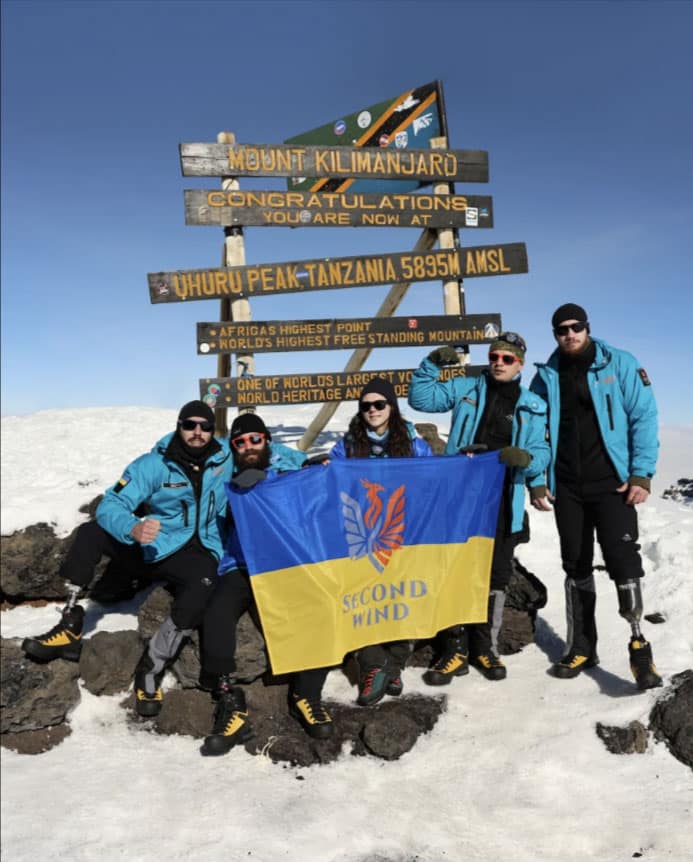
In October 2025, the documentary film “Second Wind” by director Maria Kondakova was released in Ukraine — a story about people who have gone through war, loss, and rehabilitation but have not lost the ability to dream. The film tells the story of five Ukrainian defenders who climbed to the summit of Kilimanjaro — despite amputations, prosthetics, and chronic pain.
Film about overcoming and returning to life
The project was initiated by Gennady Gazin — a Jewish-Ukrainian-American businessman and philanthropist, founder of the fund “If Not Now Then When”. He served as the idea author, producer, and financier of the film.
“This project is a natural continuation of my interests. Love for the mountains has become an important part of life, and I am glad to combine mountaineering with charitable initiatives. The experience of challenging climbs and dangerous situations has made me appreciate every moment even more and support those who bravely defend their land,” noted Gennady Gazin.
According to Gennady Gazin, the idea for the film was born in Israel. It was there that he saw a soldier with a prosthetic who, despite the amputation, lived an active, full life. This moment became the starting point for the idea to show the strength, dignity, and ability of Ukrainian veterans to overcome. This is mentioned in a review by the publication “Ukrainian Truth. Culture”, which notes that it was in Israel that the idea for the film and the eponymous veteran movement arose.
Alexander Pedan, a well-known TV presenter and athlete, became the host and co-producer of the film.
“This project became personal for me. Mountaineering always teaches respect for life and gratitude for the opportunity to move forward. I am glad that I could combine this experience with a cause that has meaning,” says Pedan.
Cinematographer — Sergey Mikhalsky, a recognized master of Ukrainian cinema, whose works “Dovbush”, “The Guide”, and “Mamay” have been noted at international festivals. His visual solution gave the film depth and expressiveness — each frame conveys real effort, breath, step, light, and shadow on the faces of the heroes.
Filming took place in Ukraine and Tanzania. The crew worked at an altitude of over five thousand meters with sharp temperature fluctuations — from heat to night frosts. The film was shot without staged scenes: the camera captures the real steps of the participants, their fatigue, pain, jokes, and joy, at times becoming a participant in the climb.
“Ukrainian defenders and a defender climbed Kilimanjaro to show other servicemen who have experienced injuries or amputations that life does not lose its meaning after this. After an injury, it changes, but you can still live fully, engage in sports, and even conquer peaks,” says the project description.
Heroes of the film: what was found out from open sources
The film “Second Wind” features five Ukrainian defenders who, after injuries and amputations, climbed Kilimanjaro. Here’s what was established about them based on public sources:
Names and general information
Project participants (according to reviews and press materials) — Roman “Dobryak” Kolesnik, Vladislav “Shatya” Shatilo, Mikhail “Grizzly” Matviev, Alexander “Ragnar” Mikhov, and Olga “Height” Yegorova.
The review in UP.Culture states that four out of five men have lower limb amputations and use prosthetics.
In Ukraine, the film ‘Second Wind’ was released — about 5 veterans of the Armed Forces of Ukraine who lost limbs in the war with Russia and climbed Kilimanjaro on prosthetics; the project was initiated by a Jewish-Ukrainian-American philanthropist
Roman “Dobryak” Kolesnik
Veteran of the 3rd Separate Assault Brigade (3 OShBr).
Injured in May 2022, leg amputation.
Completed a series of climbs in the Carpathians — Petros, Hoverla, Nesamovyte, Shpytsi.
Covered more than 50 km with a 20 kg backpack on a prosthetic.
Raised 1,000,000 UAH for the needs of the Armed Forces units.
(RBC-Ukraine, NV Life, Life.Pravda.com.ua).
Olga “Height” Yegorova
Servicewoman who received a wound during combat operations.
The only woman among the film’s participants.
Some publications mention a possible connection with Surma Team (not officially confirmed).
(UNIAN, Ukr.net, Rubryka).
Vladislav “Shatya” Shatilo
Veteran with a lower limb amputation.
One of four men climbing on a prosthetic.
(UP.Culture, Interfax-Ukraine).
Mikhail “Grizzly” Matviev
Combat veteran.
Has a lower limb amputation.
(Interfax-Ukraine, Cinema.in.ua).
Alexander “Ragnar” Mikhov
Special forces unit fighter.
One of the participants who climbed Kilimanjaro with a prosthetic.
(Rubryka, UNIAN).
How the idea for the film was born
The plot of the film grew out of Gennady Gazin’s personal initiative.
“Then Gazin, an American of Ukrainian-Jewish descent, feeling the war of his two peoples against terror, came up with a veteran movement and a way to promote it — creating a film of the same name, and then a support fund ‘If Not Now Then When’,” notes the review in UP.Culture.
Gazin proposed the script basis: veterans with amputations storm the mountain, proving that physical limitations do not set limits on human capabilities.
To realize the idea, he invited Maria Kondakova, whose previous documentary film “My War” (2020) told about women on the front line and was noted by critics for its sincerity and accuracy of observation.
The team decided to focus on real stories, without actors, without staging, and without pathos.
The result is an honest and powerful film in which each hero speaks in their own voice, and the camera does not hide weakness or pain.
Perception
The film “Second Wind” received positive reviews from film critics and viewers.
Reviewers from UP.Culture call it a “story of overcoming, rehabilitation, and inner rebirth”, noting that “the strength visualized in the dynamics of light and sound is understandable to every viewer, regardless of language and citizenship.”
The film became not just a cinematic work but part of a humanitarian project that combines culture, volunteering, and psychological support for veterans.
Gennady Gazin: biography and international activities
Gennady Gazin was born in Zhitomir, in a Jewish family. As a child, he emigrated with his parents to the USA.
Education: Cornell University (engineering), Stanford (master’s), Wharton School of the University of Pennsylvania (MBA).
Professional path:
Engineer at Bell Communications Research and General Dynamics;
Partner at McKinsey & Company, head of the technology and telecommunications practice;
CEO of EastOne Group (2007–2012);
Chairman of the Supervisory Board of “Kyivstar” (since 2022).
In recent years, Gazin is primarily known as a philanthropist and public figure.
He heads the Genesis Philanthropy Group (GPG) — an international fund supporting Jewish educational and cultural initiatives in Israel, the USA, and Europe.
Under his leadership, GPG funds programs:
Yad Vashem (the national Holocaust memorial),
Jewish Agency for Israel,
Taglit–Birthright Israel,
JDC (Joint Distribution Committee),
Cultural and youth projects of the Jewish diaspora.
Gazin is a member of the planning committee of Taglit–Birthright Israel, regularly participates in events in the Knesset, at forums in Jerusalem and Tel Aviv.
He is known as a supporter of bringing Ukrainian and Israeli societies closer through education, culture, and humanitarian initiatives.
Fund “If Not Now Then When” and connection with Israel
The fund If Not Now Then When was created before the film’s release as a humanitarian and cultural platform to help Ukraine.
It implements programs in the fields of medicine, psychological rehabilitation, and veteran support.
Main areas of work:
Providing hospitals and military units with first aid kits, equipment, and transport;
Assistance in rehabilitating servicemen with amputations;
Cooperation with Israeli organizations, adopting experience in working with veterans;
Cultural initiatives aimed at strengthening humanistic values.
One of the fund’s projects was supporting the Ukrainian premiere of the film “Golda”, dedicated to Golda Meir, a native of Kyiv and Prime Minister of Israel.
The screening was held in conjunction with the Jewish Confederation of Ukraine and the Babi Yar Memorial Center, symbolizing the cultural unification of the two countries.
The source of inspiration for the fund was precisely Israel. Gazin emphasizes that the Israeli system of social integration of veterans is one of the best in the world:
society perceives wounded soldiers not as disabled but as people deserving respect and support.
The fund If Not Now Then When applies this approach in Ukraine, implementing projects that combine Israeli experience in medical and psychological rehabilitation with Ukrainian volunteer self-organization practices.
“Every person has the right to their second wind. The question is who will be there when they seek it,” said Gennady Gazin, explaining the project’s philosophy.
Conclusion
The film “Second Wind” became part of a larger process — a social and humanitarian movement inspired by Israel’s experience and implemented in Ukraine.
It combines personal history, professional cinema, and real aid programs supported by Gennady Gazin’s fund.
This is not just a film about veterans — it is proof that culture, charity, and international cooperation can restore meaning and self-belief to people.
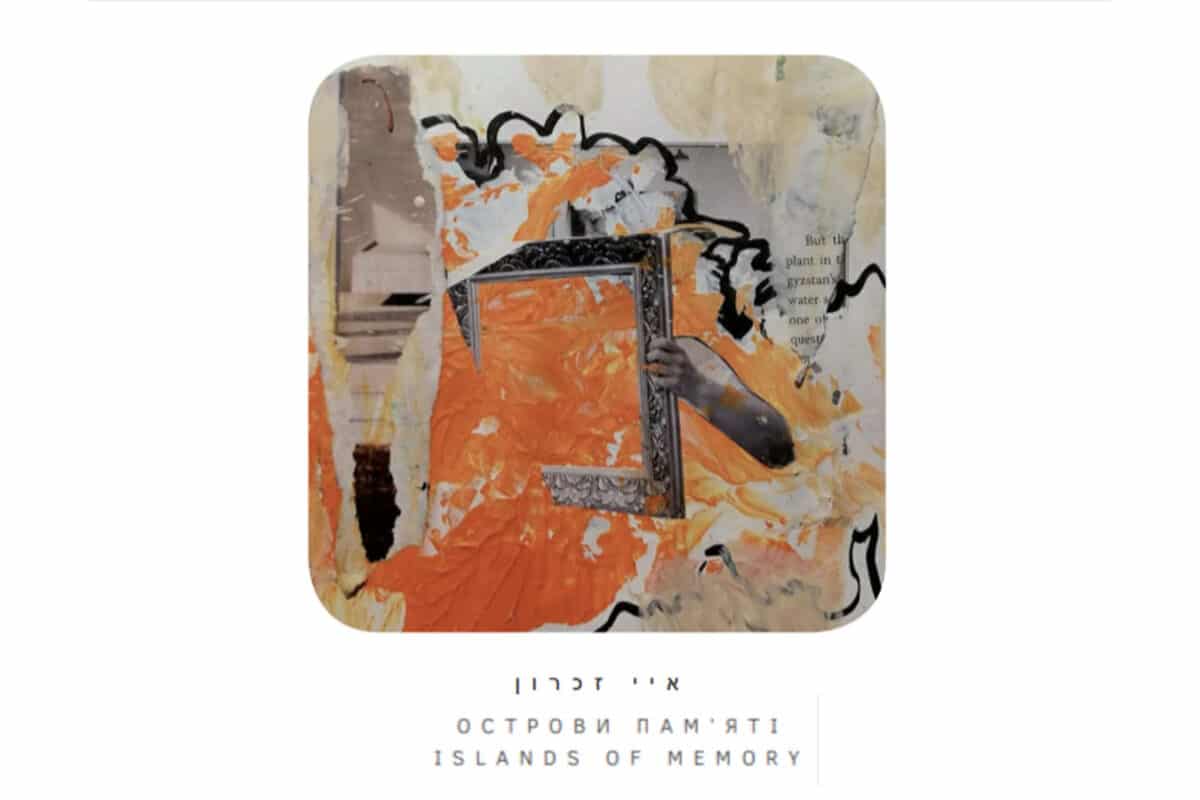
On the western map of Ukraine, there is a city whose name has become a symbol of cultural memory — Buchach. It was here that the future Nobel laureate Shmuel Yosef Agnon was born, a writer who combined Jewish spirituality and European philosophy. A century later, this city resonates again — now as the site of a literary residency and the book “Islands of Memory”, where Ukrainian authors reflect on time, identity, and Agnon’s legacy. The publication has become a cultural bridge between Ukraine, Israel, and the diaspora, uniting texts in three languages — Ukrainian, English, and Hebrew.
Return to the origins: the city where it all began
Buchach is a small town in the Ternopil region, once the center of Galicia, where Ukrainian, Jewish, and Polish traditions intertwined. It was here in 1888 that Shmuel Yosef Agnon was born — a future classic who became one of the creators of modern Israeli literature. His childhood was spent among ancient synagogues, baroque churches, and river slopes, where every place held traces of prayers and songs in Hebrew and Yiddish. Later, these motifs came to life in his books, and Buchach itself became a kind of archetype — a city of memory where the past breathes through words.
After emigrating to Palestine and living in Germany, Agnon gained worldwide fame, but the thread connecting him to Buchach was never broken. That is why, years later, this city once again became a center of cultural dialogue — now in a new century.
Agnon Literary Residency: a city that teaches listening
In 2016, the organization Ukrainian-Jewish Encounter (UJE) together with the Agnon Literary Center created a project capable of returning Buchach its voice.
This is how the Shmuel Yosef Agnon Literary Residency appeared — a space for writers, artists, and translators seeking their own stories in the city.
Here, literature becomes not a genre but a way of dialogue: with memory, with place, with people. Participants — contemporary Ukrainian authors — live in Buchach, explore archives, meet residents, and record their stories. Each new residency is like the city’s breath, a new layer of understanding its multilingual past.
2021: the birth of the book “Islands of Memory”
Collection “Islands of Memory” in Ukrainian, English, and Hebrew: how Buchach unites Ukraine, Israel, and Agnon’s literature
The third season of the residency, held in 2021, was pivotal. At that time, Borys Khersonsky, Diana Klochko, and Markiyan Prokhasko came to Buchach. Three authors from different generations — a doctor and poet, an art critic, a young essayist — wrote texts inspired by time, place, and silence. The result was the book “Islands of Memory”, published in three language versions.
This project is not just a collection of essays but a living structure of memory, where each text becomes an island, and together they form an archipelago of human experience.
Borys Khersonsky: memory as breath
A psychiatrist and poet, Khersonsky writes that memory is not chronology but a way to remain human. His essays are about the silence of Buchach, where every street becomes a metaphor for the inner world. He sees the city as a living organism, pulsating with traces of prayers and conversations.
Diana Klochko: the city as text
An art critic and philosopher, Klochko speaks of Buchach in the language of architecture. For her, walls are pages, and stones are letters with which history is written. She sees the city as a manuscript inscribed with three alphabets — Cyrillic, Latin, and Hebrew, where everything — from baroque facades to old bridges — carries meaning.
Markiyan Prokhasko: a look at the present
The youngest participant in the project looks at Buchach through the eyes of an observer. His essays are a quiet diary of walks: the smell of coffee, the creak of doors, conversations at the market. Through details, he connects the past and the present day, proving that memory lives not in archives but in everyday life.
Three languages — three mirrors of memory
The main feature of the publication is its trilingualism. Ukrainian language — as the voice of modernity. English — as a window to the world. Hebrew — as a return to Agnon’s roots and Jewish spirituality.
Each language reflects its own perspective, but together they create a complete picture. Editors and translators — including Anna Nekrasova and Tatyana Nepipenko — made translations not mechanically but intonationally: so that each text sounds natural in its cultural environment.
Thus, “Islands of Memory” became not just a book but a model of how Ukraine sounds when it speaks in several languages at once.
The dialogue of cultures continues: Lviv Forum 2025
Four years later, the theme of Buchach resonated again at the 32nd Lviv Book Forum. At the discussion “Listen, Read, Understand” Diana Klochko, together with translators Anna Nekrasova (Hebrew) and Tatyana Nepipenko (Yiddish), discussed how Ukrainian literature learns to sound alongside Hebrew and Yiddish without losing its melody. The conversation became a natural continuation of the book — a new bridge between eras and languages.
Buchach today: a city where memory is alive
Modern Buchach is not an open-air museum but a living organism. Here, the old synagogue is being restored, cemeteries are being explored, tours and thematic festivals are held. The city learns to speak about its multinational past — without nostalgia, but with respect.
Travelers can see the Agnon monument, a bas-relief in the ART-yard, his family home, and ancient streets where time seems to have stopped. Every detail is part of a new cultural map where Ukrainians and Jews meet again.
UJE — an organization that connects stories
The project Ukrainian-Jewish Encounter (UJE) has been operating since 2008 and has already become a platform for open dialogue. Its mission is to restore mutual understanding, to show that Ukrainian and Jewish histories are not parallel lines but intertwined threads of one fabric.
Thanks to UJE, dozens of projects, exhibitions, films, and books have appeared, in which memory is not a requiem but life. “Islands of Memory” is one of the most significant examples of this approach.
Literature as a form of healing
The book “Islands of Memory” shows that culture can heal. It connects eras, turns silence into words, and gives a voice to those who were forgotten. Through three languages and three authorial perspectives, it restores respect for the past and hope for the future.
There is no pathos here — there is breath. Buchach resonates again. And this sound is heard in Kyiv, Jerusalem, Paris, and Toronto.
Shmuel Agnon — a symbol that lives again in the Ukrainian context
His books are not only the heritage of Israel but also part of Ukrainian cultural memory. Buchach gave the world a writer, and Ukraine — a space where this heritage can be understood anew. Agnon reminds us that literature is a bridge by which one can return home, even after a century.
January 8, 2026 the mayor of Kiryat Shmona Avihai Stern publicly spoke about the situation in the city a year after the active phase of hostilities in northern Israel.
The statement was made against the backdrop of discussions on the pace of recovery in the northern regions and the possibility of the return of residents evacuated due to the war.
Avihai Stern noted that the city has not yet returned to full life. According to him, part of the infrastructure remains vulnerable, business operates unstably, and the security issue is still unresolved.
The mayor emphasized that the return of residents cannot be based on formal reports. People need to see functioning schools, medical services, transport, and real guarantees of protection, not promises.
He specifically pointed out that Kiryat Shmona was one of the most affected points on the northern border. Mass evacuation, economic losses, and damage to the urban environment still define everyday reality.
Stern made it clear that without systematic state support, recovery risks being delayed. According to him, it is not about symbolic visits and statements, but about long-term solutions that will allow people to return and stay.
The mayor’s statement was made against the backdrop of discussions about the priorities of northern recovery and the responsibility of central authorities for border towns.
The situation in Kiryat Shmona remains indicative for the entire northern region, where the issue of residents’ return directly depends on real security and recovery rates — this is emphasized by NANews — News of Israel | Nikk.Agency.
The UK Foreign Secretary David Cameron made a statement that immediately sparked a strong reaction in Ukraine and beyond. According to him, London is not helping to shoot down missiles and drones over Ukraine as it is done over Israel to prevent the escalation of war in Europe.
Cameron stated this on April 15, 2024 on the air of the radio station LBC, effectively drawing a direct line of demarcation between the two wars — and the two Western approaches to containing them.
Fear of escalation as an argument
Cameron directly outlined the key motive of London’s position — the fear of direct military confrontation between NATO and Russia.
“If you want to avoid open escalation in the form of a broader European war, one of the things to avoid is direct contact between NATO troops and Russian troops. That would be a dangerous escalation,” he stated.
This wording reflects the basic logic of many European capitals: support for Ukraine is permissible as long as it does not turn into direct military involvement of the Alliance.
Why over Israel — it is possible
Answering a question about the difference in approaches, Cameron reminded that the UK is involved in the defense of Israel as part of Operation Op Shader — the British military contribution to the international campaign against ISIS.
In this context, London assists the US by providing aviation for intercepting missiles and drones, if technically and operationally possible. However, the minister emphasized, the Ukrainian theater of war is fundamentally different, as Russia is the direct adversary there.
Support — yes, direct involvement — no
Cameron specifically emphasized that the UK will continue:
— financial support for Ukraine; — diplomatic pressure on Russia; — military assistance, including weapons and training.
However, he reiterated: direct confrontation of NATO forces with Russian troops is considered a red line, crossing which could lead to uncontrolled escalation in Europe.
What, according to London, Ukraine needs
An important emphasis in Cameron’s statement concerns air defense. According to him, Ukraine currently does not need Western fighters in its skies, but critically needs ground-based air defense systems.
“Ukraine desperately needs more air defense systems. In particular, they need Patriots. The UK does not have them — they are available in other Western countries and the US,” he said.
Thus, London effectively shifts the issue of key supplies to allies, primarily Washington and countries possessing the relevant complexes.
The political subtext of the statement
The phrase “Ukraine is not Israel” was not directly stated but was clearly read between the lines. It reflects the deep dilemma of the West: where is the boundary of permissible assistance when it comes to a war in Europe against a nuclear power.
For Ukraine, this statement became a painful reminder that the level of support is determined not only by moral arguments but also by fears of escalation, which work differently in different regions of the world.
This very gap — between Kyiv’s expectations and the caution of European capitals — today forms one of the key lines of tension in the Western coalition, as reported by NAnews — Israel News | Nikk.Agency.