Trump stated that he stopped a nuclear war between Ukraine and the Russian Federation — what’s wrong with the statement?

Donald Trump’s statement that he managed to prevent a nuclear confrontation between Russia and Ukraine sparked an immediate discussion among diplomats and security experts. The main reason is obvious: Ukraine does not possess nuclear weapons, making the very formula of confrontation seem questionable.

At the same time, there is growing concern in another direction — global mechanisms for controlling arsenals are eroding faster than new ones are emerging.

What Donald Trump talked about

The American leader mentioned several potential hotspots: India and Pakistan, Iran and Israel, as well as Russia’s war against Ukraine.

The situation with the first two pairs is different, but the presence or absence of warheads does not negate the conflict. In the Israeli-Iranian dimension, the issue generally balances between official uncertainty and technological capabilities.

As for the Ukrainian direction, it primarily concerns the Russian nuclear factor and the use of threats as a tool of pressure.

A world without limits

This week, the last treaty limiting the strategic offensive arms of Moscow and Washington expired.

UN Secretary-General António Guterres warned: for the first time in decades, the world is effectively entering a period without mandatory caps for the largest arsenals.

The previous framework, signed back in 2010, survived pauses, mutual accusations, and inspection freezes. But formal boundaries still existed.

Now they don’t.

What this changes for Ukraine

With the disappearance of restrictions, the significance of any hint of the use or demonstration of force increases.

Moscow has already used missile launches without warheads as a political signal — not only to Kyiv but also to European capitals.

Each such episode automatically raises the stakes in negotiations.

Sources familiar with diplomatic consultations said in comments for NAnews — News for Israel | Nikk.Agency that the nuclear storyline increasingly appears alongside topics of ceasefire and territorial arrangements.

Why agreement has become more difficult

Contacts continue in Abu Dhabi, where both the war and the architecture of strategic stability are being discussed in parallel.

Even if a temporary formula is found, the level of trust is no longer what it was in past years. Mutual inspections today seem almost impossible.

According to Axios, the parties have tentatively agreed to maintain the previous limit on warheads for a short transitional period while negotiations on a new version of the agreement are ongoing.

This is not a solution. It’s a pause.

China as a new variable

Trump considers previous formats unprofitable and insists on involving Beijing.

However, China makes it clear that its potential is incomparable to that of the US and Russia, and therefore it is not obliged to participate in negotiations.

The problem is that China is currently expanding its capabilities faster than others and could increase its arsenal to a thousand units in the coming years.

What Moscow seeks

Russian diplomacy signals: if the framework is to be expanded, then the European allies of the US in NATO — the UK and France — should also be considered.

This approach potentially creates tension within the alliance and complicates Washington’s position.

Meanwhile, Ukraine finds itself in a vulnerable position — it could become part of a large exchange without having its own nuclear argument.

What’s next

Negotiations between the US and Russia continue, and the war continues in parallel.

The Kremlin uses the topic of strategic weapons as an additional lever of influence, trying to change the priorities of the American administration.

Experts believe that the focus may shift: instead of ending hostilities in Ukraine, attention will be redirected to symbolic achievements in the field of global deterrence.

Formally, this sounds like stabilization.

In fact, uncertainty only grows.

Strikes on Western Ukraine’s energy sector: outages, Poland’s assistance, and a new dispute around the ZNPP

Russia continued a series of massive attacks on energy facilities in the western regions of Ukraine. On the night of February 7, several regions were hit, leading to damage to generating capacities and widespread power supply restrictions.

Kiev views the events as systematic pressure on civilian infrastructure during the winter period. Simultaneously, diplomatic struggles around the future of key energy facilities are intensifying.

Geography of the Night Strike

The attack covered Vinnytsia region, Khmelnytskyi region, Ternopil region, Lviv region, and Ivano-Frankivsk region.

It involved a combined use of various means of attack. Local authorities reported on air defense operations and clarified the consequences after the alerts were lifted.

The main targets were nodes ensuring the stability of the entire energy system of the country.

Which Stations Were Affected

There were reports of damage to thermal power plants in Dobrotvir and Burshtyn. These are important elements for power distribution for a significant part of the territory.

Energy Minister Denys Shmyhal stated that substations and ultra-high voltage lines of 750 and 330 kV were also hit.

According to him, these components form the backbone of the national grid. After the attack, several rounds of emergency shutdowns were introduced across the country, and for some regions — separate, stricter schedules.

The operator Ukrenergo sought urgent support from neighbors. An emergency import request was sent to Poland.

As a result of the damage, nuclear power plants temporarily reduced generation — a standard measure to stabilize the system’s balance.

The Frost Factor

The situation is complicated by the weather. In the coming days, temperatures in the west and north of the country are forecasted to drop to minus four degrees.

For the energy system, this means increased consumption at a time when reserves are decreasing.

Any additional loss of capacity automatically expands the zones of restrictions.

Reaction of Poland and NATO

Amid the missile threat, Poland temporarily closed its airspace for civilian flights in the east. The restrictions affected the airports of Rzeszow and Lublin.

The authorities explained that the decision was necessary for the priority operation of alliance military aviation.

The operational command emphasized: no border violations were recorded. Gratitude was separately expressed to NATO partners, including German crews who participated in patrolling.

Parallel Track — Struggle for Zaporizhzhia NPP

On the same day, Reuters reported disagreements over a possible management model for the plant within future agreements.

According to the agency, Moscow did not support Washington’s proposal to transfer control to Ukraine with the participation of the US as an electricity distribution operator.

The Russian side insists on maintaining influence and allows for the option of commercial supplies to Kiev. Ukraine rejects the format of joint management with the occupation administration.

Why Energy Became a Central Issue in Negotiations

Electricity is not only about the economy but also humanitarian resilience. The operation of the network affects heat, water, transport, and communication.

Therefore, each new strike automatically shifts to the diplomatic plane.

Sources communicating with the editorial team of NAnews — News of Israel | Nikk.Agency note: the topic of infrastructure is becoming one of the key elements in discussions about a future ceasefire.

Without understanding who and how controls the production and distribution of energy, no security model can work.

The parties remain in their previous positions.

And winter continues.

Israel is the fifth largest market for Ukrainian IT exports: results of 2025 and signal for 2026

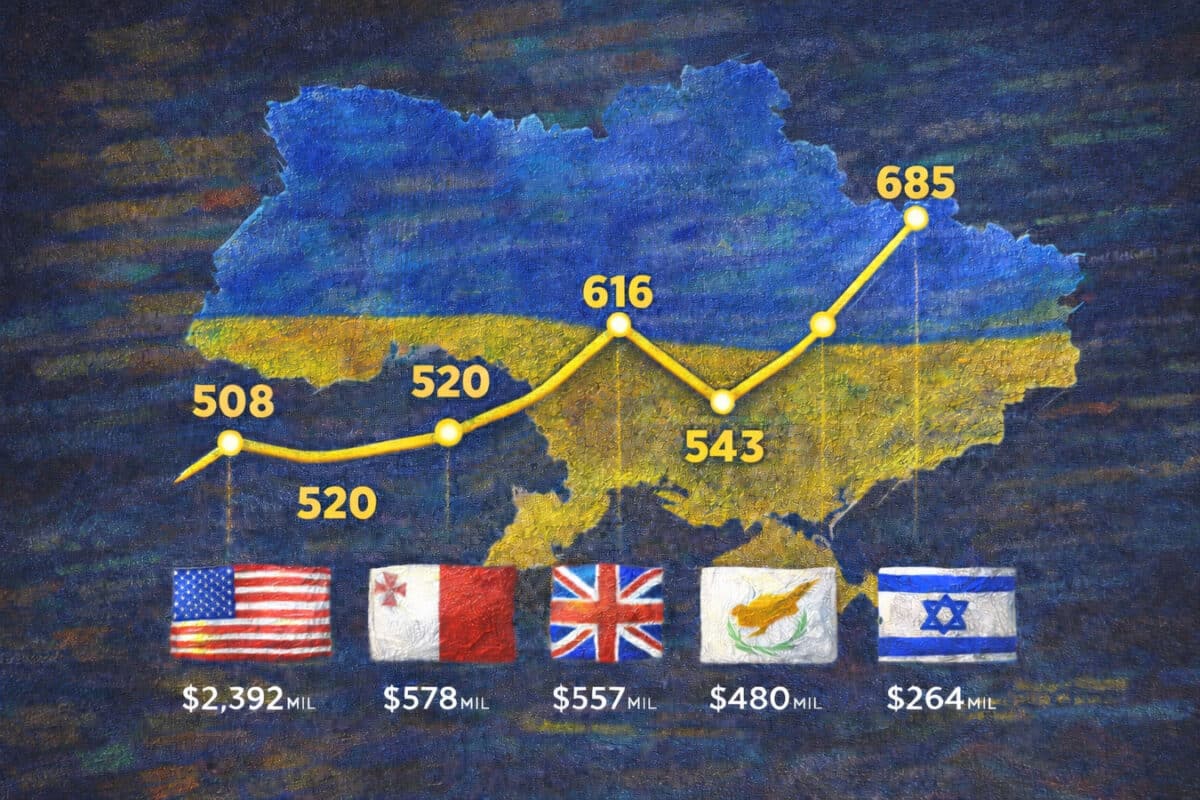
Ukrainian IT export completed the year 2025 with moderate but fundamentally important growth. December was the key factor, providing a sharp monthly surge and significantly boosting the final figures. Against this backdrop, Israel secured its position in the top five largest markets for Ukrainian IT exports, confirming its status as one of the most stable and technologically intensive partners.

December surge that pulled the year

In December 2025, IT service exports from Ukraine reached $685 million. Compared to November, the increase amounted to $142 million, or +26.2% month-on-month — the strongest result of the year.

In annual comparison, December also showed a positive trend. In December 2024, the figure was $616 million, meaning the annual growth reached $69 million, or +11.2%. These data are provided with reference to the statistics of the National Bank of Ukraine.

This is reported by Danylo Hetmantsev (Chairman of the Verkhovna Rada Committee on Finance, Tax and Customs Policy) with reference to NBU statistics.

Israel — the fifth largest market for Ukrainian IT exports: results of 2025 and signal for 2026

Results of 2025: cautious growth without records

For the entire year of 2025, IT service exports amounted to $6.656 billion. This is $210 million more than in 2024 ($6.446 billion), which corresponds to +3.3% year-on-year.

At the same time, the industry has not yet returned to the level of 2022, when the volume of IT exports reached $7.349 billion. Therefore, it is more accurate to speak of stabilization and gradual recovery after a sharp decline rather than a new record.

Largest markets for Ukrainian IT exports in 2025

The geography of IT exports in 2025 showed resilience and relative diversification. The top five leaders are as follows.

Top-5 markets

  • USA — $2.392 billion

  • Malta — $578 million

  • United Kingdom — $557 million

  • Cyprus — $480 million

  • Israel — $264 million

Israel confidently took fifth place, maintaining its position among the key destinations for Ukrainian IT exports for the second consecutive year.

Other significant markets: Europe and the Middle East

In addition to the top five, other markets that form the “second tier” of the export structure made a noticeable contribution in 2025.

Significant IT export destinations

  • Switzerland — $248 million

  • Germany — $237 million

  • Estonia — $216 million

  • Poland — $190 million

  • UAE — $169 million

This list shows that Ukrainian IT companies continue to actively work with continental Europe and countries with developed financial and technological infrastructure.

Why Israel remains a key market

The Israeli market is characterized by a relatively small volume but a high concentration of technological projects. For Ukrainian IT teams, this means demand not only for classic outsourcing but also for R&D, cybersecurity, engineering solutions, and dual-use products.

In this context, NAnews — Israel News | Nikk.Agency emphasize: Israel’s position in the top five is an indicator of the quality of export demand, not just the volume of contracts.

Defense tech as a potential driver for 2026

A separate emphasis in the analysis of 2025 is placed on the direction of defense tech. Experts see potential for accelerated IT export growth here.

From January 2026, a special regime Defence City was launched in Ukraine, providing tax incentives, export support, and assistance with the relocation of technology companies. For the IT sector, this could become one of the key growth factors in the coming quarters.

What the market records at the start of 2026

The year 2025 was transitional. IT exports showed a small increase compared to 2024 but still remain below the level of 2022. December showed that growth potential remains, but it is realized unevenly and heavily depends on external markets.

Israel, maintaining fifth place among the largest destinations for Ukrainian IT exports, remains one of the most stable and strategically important partners. It is such markets, focused on complex technologies and long-term projects, that will determine the trajectory of the industry in 2026 and beyond.

From the war in Ukraine to the war in Israel: repatriates from Ukraine became volunteers in Israel – the story of 3 families of new repatriates

The events in Ukraine led some people, having survived the war, to decide to start a new life in Israel. Despite the difficulties they experienced in their homeland, they became volunteers in Israel.

One of the repatriates shares his experience: “After the events of October 7, memories of the hell we went through in Ukraine came back to me. But I do not regret for a minute that I moved to Israel”. In their stories, collected by “Vesti”, it is told about 3 families who decided on a new beginning in Jerusalem.

The new repatriates, who moved from war-torn Ukraine and settled in Jerusalem, had not yet adapted to their new homeland when a new war began in Israel. Instead of staying on the sidelines, they actively joined volunteer activities, helping IDF soldiers and evacuated residents of the south and north of the country.

Many of the new repatriates have not yet recovered from the horrific events in Ukraine and could not even imagine that they would face war and an emergency situation in Israel so soon. But perhaps this was precisely the impetus for the manifestation of civic activism. Employees of the Aliyah and Integration Department of the Jerusalem Municipality, accompanying the new repatriates, were impressed by the spirit of those who came from Ukraine and their solidarity with the state of Israel. The Jerusalem Municipality offers residents to participate in numerous volunteer initiatives related to the current situation, and the new repatriates are actively contributing to these efforts.

“After October 7, we have a feeling of déjà vu”

Among the active volunteers stands out Marina Stefanyuk, a 53-year-old mother of two children: 28-year-old Yevgeny and 16-year-old Orina. Her husband remained in Ukraine due to the war, not receiving permission to leave. Her son Yevgeny repatriated five years ago under the “Masa” program and immediately decided to stay in Israel, where he was drafted into the IDF. He always felt that his home was in Israel, and since October 2023, he has participated in combat operations in the south of the country.

Marina and her daughter came to Israel in March 2022, immediately after the Russian invasion of Ukraine began. She had long thought about repatriation but waited for her daughter to finish school. Their family lived in Kramatorsk, where their home was destroyed by a missile during the war.

The family was evacuated from the city due to heavy fighting and numerous destructions, which became a sign for them to finally decide to move to Israel. Marina says: “After the terrible events of October 7, memories of the hell we went through in Ukraine came back to me. It felt like déjà vu.” However, she does not regret the move and feels safe in Jerusalem.

Marina is inspired by the unity of Israelis during the war and decides to help the country by supporting lonely elderly people in the Pisgat Ze’ev area. In addition, being a professional hairdresser, she cuts soldiers and evacuees for free.

“The war seems to follow us”

Another family of repatriates actively involved in volunteer activities is Faina and Pavel Levin, 58-year-old spouses, along with their 26-year-old son Leonid. Faina works as an auditor in a large company and is taking accounting courses, while her husband Pavel works in a store.

Their son Leonid repatriated to Israel under a program for graduates of Israeli schools, after which he was drafted into the army and serves in the border troops. When the war in Gaza began, Leonid returned from a vacation in Italy and immediately went to his unit, where he spent 64 days as part of the engineering troops.

For Faina and Pavel, the Russian-Ukrainian war began in 2014. Faina lived in Luhansk and worked in the city hall, and when the unrest began, the family moved to another city in Ukraine. Their son began publishing stories about what was happening in Ukraine on social networks, which inspired many Israelis to send money to help those in need. When the war approached their home, the Levin family decided to leave for Israel, preferably to Jerusalem, where their son was.

After the events of October 7, Faina says: “I feel like the war is following me.” However, they do not regret repatriation, especially after appreciating the unity of the Israeli people. Faina began volunteering in the “Pisga be-Aza” project, helping to provide soldiers with necessary items – from underwear to bulletproof vests.

“When we arrived, they took care of us – now it’s our turn to give back”

The Leshevsky family repatriated in May 2022 from Odessa. Vladimir and Anna Leshevsky are 75 and 71 years old respectively, they are pensioners. Vladimir underwent surgery and chemotherapy due to cancer. In Israel, they were left without relatives: their son remained in Ukraine, and their daughter lives in the USA.

They suffered greatly from the war in Ukraine and could not talk about it for a long time. Although they had long dreamed of moving to Israel, they considered themselves too old for it and did not want to be a burden. But the events in their homeland forced them to take this step.

In Jerusalem, where they settled, they have many friends, and they always wanted to live here. But the events of October 7 brought fear and anxiety into their lives: “The war in Israel causes us pain,” they say.

However, they do not regret repatriation, convinced that they are where they always wanted to be. For them, Israel is a home where they feel safe. After the events of October, they turned to local organizations for help to provide volunteer assistance: “We want to help the country through a difficult period.”

Their daughter, Beata, living in the USA, helps IDF soldiers with various items and money. The parents buy things for female soldiers. This volunteer activity helps Vladimir forget about his illness: “The most important thing now is Israel’s victory. My thoughts and actions are directed towards this.”

Leave a COMMENT

Read other News of Israel and the world in the channels of NiKK
Nikk.Agency in

Telegram,

Facebook

and Google News

Jews from Ukraine: The History of the “Jewish Kuren” in the Ukrainian Galician Army of 1919

The Jewish Detachment left a significant mark in history as a symbol of bravery and solidarity between two peoples.

In honor of the commander Solomon Laynberg, a street in Lviv was named after him.

In 2013, it was proposed to establish a monument to the “Jewish Detachment” in Ternopil, but the project was suspended due to the war in Donbas.

The Jewish Detachment (official name – “Shock Detachment of the 1st Corps of the Galician Army”) within the Ukrainian Galician Army (UGA) became an important element in the struggle for Ukraine’s independence in 1919. This unit became a bright example of cooperation between two peoples — the Ukrainian and the Jewish, striving for freedom and independence during the war, and we are telling its story in our regular section Jews from Ukraine.

Political Situation and Jewish Involvement

At the beginning of the 20th century, Jews made up about a quarter of the population of Lviv, and most of them were actively involved in social and political life. Lviv had many Jewish lawyers, doctors, and students. Despite relative safety in Galicia, Jews still suffered from Polish discrimination, which forced them to cooperate with Ukrainians in the struggle for independence.

With the formation of UNR and ZUNR, Jews faced the necessity of deciding whether to support Ukraine’s fight for independence. Despite the cultural autonomy offered by these states, many Jews chose neutrality.

UNR (Ukrainian People’s Republic), formed in 1917, sought Ukraine’s independence but faced numerous challenges — Bolsheviks, Whites, and Polish forces.

Meanwhile, ZUNR (Western Ukrainian People’s Republic), formed in 1918 in Galicia, sought to preserve Ukrainian identity and independence but was quickly absorbed by Polish forces. Both of these states not only recognized cultural autonomy for Jewish communities but also gave them the opportunity to participate in state affairs.

The Union of UNR and ZUNR

Union, or the unification of UNR and ZUNR, took place on January 22, 1919, and became a symbol of the desire for unity of Ukrainian lands. This act was an important step toward the creation of a unified independent Ukrainian state. However, in practice, the union turned out to be complicated. ZUNR ultimately remained under Polish control, and Ukrainian authorities of UNR faced numerous internal problems, which prevented the Union from leading to a long-term consolidation. In 1920, Polish forces finally established control over Galicia, and ZUNR was integrated into the Polish state. Nevertheless, Union remained an important symbol of unity for the Ukrainian people and continued to influence Ukraine’s national ideology in the years to come.

Union was not instantaneous. After November 9, 1918, UNRada formed the Temporary State Secretariat headed by K. Levitsky, and the “Temporary Basic Constitution” on the state independence of Ukrainian lands from the former Austro-Hungarian Empire, declaring ZUNR on the territory of Eastern Galicia, Northern Bukovina, and Transcarpathia. On November 13, the new coat of arms — a golden lion on a blue background — and the flag — blue and yellow — were approved.

At the same time, against the backdrop of military actions and Polish aggression, on November 11, the ZUNR forces were forced to leave Przemysl, which became a base for Polish forces’ attack on Lviv. A few days later, in mid-November, Romanian troops captured Northern Bukovina, and on November 22, Polish forces took Lviv.

By December 1, the ZUNR delegation signed a preliminary agreement on union with UNR. On January 22, 1919, at Sofiyskaya Square in Kyiv, the act of reunion of UNR and ZUNR took place. However, in reality, the union was postponed until the convening of the Constituent Assembly (which never occurred).

The Fate of UNR After the Union

After Union in 1919, UNR continued the struggle for independence but faced serious internal and external challenges. The Ukrainian army actively fought the Bolsheviks and tried to hold its territories against Polish aggression. Poland, strengthening its control in Galicia, captured the territory of ZUNR, and in 1920, it completed its victory on this front.

In April 1918, after the German occupation, Pavlo Skoropadsky became the Hetman of the Ukrainian People’s Republic and declared the creation of Ukrainian State — an authoritarian monarchist state. His rule was supported by Germany but faced resistance from Ukrainian socialists and nationalists who opposed dependence on foreign powers. After the German capitulation in November 1918, Skoropadsky was overthrown, and power passed to the Directory.

Directory was formed in November 1918 in response to the overthrow of Skoropadsky. It was a collective executive body composed of five leaders, including Volodymyr Vynnychenko, Symon Petliura, and other political figures.

Directory represented a more democratic and radical form of government, aimed at mass support among peasants and workers.

The main goal of the Directory was to create an independent Ukrainian state, without dependence on foreign powers such as Germany.

Directory faced several problems: internal disagreements among its leaders, an unstable political situation, and threats from Poland, Bolsheviks, and other external enemies.

However, it resisted both internal and external threats, despite military defeats.

Directory actively fought against Bolsheviks and Whites, trying to restore Ukraine’s independence.

However, in 1920, the Bolsheviks won, and Ukraine (UNR) became part of Soviet Russia.

Creation of the “Jewish Detachment”

“The Jewish Detachment”, officially known as “Shock Detachment of the 1st Corps of the Galician Army”, was formed in June 1919 during the Chortkiv Offensive (operation). It became an independent operational military unit of the 1st Corps of the Ukrainian Galician Army and played an important role in defending Ukrainian territories from Polish and Bolshevik troops.

The creation of the detachment was supported by the Jewish National Council of Ternopil, which authorized Solomon Laynberg to approach Colonel Osip Mykytka, commander of the 1st Corps of the UGA, with a proposal to form a Jewish military unit. Laynberg suggested gathering several hundred Jews from Ternopil to create a fighting unit that would become part of the Galician army.

Colonel Mykytka agreed to this proposal, and an order to form the detachment was signed. Among the commanders of the unit, in addition to Jews, were also senior Ukrainian officers. Thus, the Jewish Detachment became a symbol of the union between two peoples — Ukrainians and Jews, who fought for Ukraine’s independence.

Formation and Training

The detachment was formed in the village of Ostapye, located in the Pidvolochysk district of Ternopil region. Intensive training of soldiers began here. The unit consisted of about 1200 fighters, including riflemen, officers, as well as sappers, telephone operators, and cavalry. A feature of the detachment was the large number of intellectuals and experienced soldiers among the fighters, which allowed for the formation of a combat-ready and disciplined unit.

It is also worth noting the engineering skills of the commander — Solomon Laynberg, who, using his knowledge, created a radio station for effective communication between army units, which significantly improved coordination in combat conditions.

Furthermore, the detachment was provided with all the necessary equipment — uniforms, weapons, ammunition, forage, and food — from the 1st Corps of the UGA, which indicates its importance in the context of military operations.

Combat Path of the Detachment

On July 14, 1919, the detachment participated in battles with Polish troops at places such as Maxymivka, Romanove Selo, and Zherebky, covering the retreat of Ukrainian troops across the Zbruch River. In the following days, the detachment actively participated in battles against the Bolsheviks. It captured Mikhaylpole, defended Proskuriv (now Khmelnytsky), Vinnytsia, Fastiv, and Berdiansk.

Despite heavy losses, the detachment continued its participation in military operations, taking part in the Kiev offensive in August 1919.

Reasons for Disbandment

“The Jewish Detachment” was disbanded at the end of 1919 for the following reasons:

  1. Epidemic and Losses: The epidemic of typhus and shigellosis killed about 60% of the detachment’s personnel, weakening the unit.
  2. Lack of Resources: After several military operations, there was a shortage of weapons, ammunition, and food, which made it impossible to continue fighting.
  3. Military Reorganization: Due to changes in the strategy of the UGA, the detachment was integrated into other parts of the army.

Why Jews Joined the Ukrainian Army

Jews who joined the “Jewish Detachment” saw their role in defending Ukrainian independence for several reasons:

  1. The Idea of National Liberation: Despite striving to create a Jewish state in Palestine, many Jews saw supporting Ukraine as a chance to ensure the security of Jewish communities.
  2. Solidarity with Ukrainians: In Galicia, there was a close connection between the Jewish and Ukrainian people, which strengthened their alliance in the fight for independence.
  3. Response to Pogroms: In response to the pogroms in Lviv in 1918, when Polish forces carried out mass reprisals against Jews, many Jews decided to join the ranks of the Ukrainian army to defend their land.

Legacy and Memory

“The Jewish Detachment” left a significant mark in history as a symbol of bravery and solidarity between two peoples. In honor of its commander Solomon Laynberg, a street was named in Lviv. In 2013, a proposal was made to install a monument to the “Jewish Detachment” in Ternopil, but the project was suspended due to the war in Donbas.

Officially, the Jewish unit ceased to exist. On November 17, the UGA and the Armed Forces of the South of Russia signed a separate peace treaty. The Ukrainian army came under the command of Anton Denikin. The “Whites” were notorious for their extreme anti-Semitism. Some Jewish fighters refused to fight. Nearly a hundred soldiers broke through to Odessa, where, together with members of the local Jewish fighting group, they seized a ship and sailed to Palestine, where they continued to fight for a Jewish state.

Some stayed in Soviet Ukraine, while others returned to Galicia, which by then was under Polish control.

What happened to Solomon Laynberg afterwards is unknown. According to one version, he returned to Ternopil and was killed by the Poles the following year. According to another, he stayed in Soviet Ukraine, became a member of the Communist Party, served in the Red Army, and soon moved to Moscow. He was arrested twice. In 1938, he was executed in Leningrad.

The phenomenon of “The Jewish Detachment” can be compared to the Jewish Legion, which fought in the British army against the Turks in Palestine, with the difference that the Jewish fighters of the detachment fought not for their own country but for the independence of Ukraine.

NAnews and the “Jews from Ukraine” series

The article about “The Jewish Detachment” in the Ukrainian Galician Army highlights the important role of Jews in the fight for Ukraine’s independence. It is an example of solidarity and joint struggle between Ukrainians and Jews against external threats, where Jews actively participated in the creation of the Ukrainian state.

In the series Jews from Ukraine, we uncover the contribution of the Jewish community to Ukraine’s history, emphasizing their important role in the national struggle. NAnews – Israel News continues to cover these events, preserving the memory of solidarity and mutual understanding between the two peoples.

Ukraine and Israel U-17 will meet at the international tournament in Croatia

Youth teams of Ukraine and Israel under 17 will play in an international tournament in Croatia in February 2026. The competition will take place in the city of Poreč and will be an important part of both teams’ preparation for the second round of the European U-17 Championship qualification.

For both teams, this tournament is not seen as a formality, but as a full-fledged stage for testing the squad, tactical decisions, and physical readiness before official matches under the auspices of UEFA.

Why the tournament is important for both teams

The tournament format allows youth teams to gain experience in matches against opponents with different football schools. Ukraine and Israel approach these games with similar goals: to test the resilience of the team structure, assess the individual progress of players, and adapt to the international pace.

In such conditions, each meeting works as a stress test before the Euro-2026 qualification.

Israel U-17 team: preparation through international practice

The Israel U-17 youth team uses the Croatian tournament as part of a systematic preparation for the official selection. The team regularly participates in European competitions and focuses on the early adaptation of players to intense and tactically rich football.

Matches against Ukraine and other tournament participants allow the Israeli staff to assess how ready the team is for competition in its League B group.

Ukraine U-17 team: testing squad depth

The Ukrainian U-17 team arrived in Croatia as part of a training camp, which runs from February 8 to 16. The tournament is seen as a key element of preparation for the second round of Euro-2026 selection.

The coaching staff uses these matches to analyze the squad depth and player interaction, many of whom represent both Ukrainian clubs and European academies.

Match Israel — Ukraine: the central match of the tournament

The face-to-face meeting Israel — Ukraine is scheduled for February 13 and is considered one of the key matches of the tournament. For both sides, it is an opportunity to compare the level of readiness with a direct competitor in the European selection.

In such matches, the result is important, but the structure of the game itself is equally significant: the organization of defense, reaction to pressure, and the ability to control the pace.

Ukraine U-17 team match schedule

February 11 — Ukraine — Greece

February 13 — Israel — Ukraine

February 16 — Croatia — Ukraine

The start times of the matches will be announced additionally.

Context of Euro-2026 and further steps

After the tournament in Croatia, both teams will continue preparing for the second round of the European U-17 Championship qualification. Ukraine will compete in League B group along with Latvia and Albania, Israel — in its League B qualifying group.

The results of these stages will directly affect not only participation in the final stage of Euro-2026 but also the distribution of leagues in the next Euro-2028 (U-19) selection cycle.

In this context, NAnews — Israel News | Nikk.Agency considers the tournament in Croatia as an indicator of how synchronously Ukraine and Israel are building a long-term strategy for the development of youth football.

Jews from Ukraine: Mordechai Shenhavi – creator and first leader “Yad Vashem”

January 27, International Day of Remembrance of the Holocaust Victims.

In Israel, on the mountain of memory in Jerusalem, is located “Yad Vashem” – A place that for many has become a symbol of sorrow, memory and hope. Today we want to tell in the heading “Jews from Ukraine “ You are a story Mordechai Shenhavi – A person thanks to whom the dream of preserving memory has become a reality.

The story of Mordechai Shenhavi from Dilok, the creator of the Israeli Memorial “Yad Vashem”, emphasizes the deep connection of the Jewish community of Ukraine while preserving the memory of the Holocaust.

Mordechai Shenhavi (Alpenbein), a native of the Ukrainian city of Volochisk (now the Khmelnitsky region, Ukraine), went down in history as the creator of the Israeli memorial “Yad Vashem”, dedicated to the memory of the victims of the Holocaust.

His personal history is an example of not only the struggle to preserve the memory of the tragedy of the Jewish people, but also the unique connection of Ukraine and Israel.

Mordechai Shenhavi was born in 1900 in Voloshka, a small town on the territory of the modern Khmelnitsky region of Ukraine. His family, like many Jewish families of that time, was engaged in trade, but because of difficult living conditions, he first emigrated to Budapest, and then to Vienna.

Already in his youth, Mordechai was fond of socialist and Zionist ideas, which became the basis for his future life. He became one of the founders of the organization Ga-shomer Ga-Tsair (“Young Guardians”), uniting young Jewish activists.

Volochisk, located in the Khmelnitsky region of Ukraine, has deep Jewish roots, which have been formed for centuries. The first mention of the city dates back to 1463, and from the 18th century the Jewish community began to actively develop here.

By 1765, 384 Jews lived in Voloshka, by 1897 their number increased to 3295 people, which was 49.1% of the city’s population. Jews played an important role in the economic life of a drag, engaged in crafts, trade and banking. There were several synagogues in the city, as well as educational and charitable institutions.

At the beginning of the 20th century, in Voloshka, the heyday of Jewish public life was observed. The Women’s Jewish School, a private male school, as well as a loan-saving partnership acted.


The tragedy of the Holocaust

During the Second World War, Volochisk became a place of tragedy for the Jewish community. After the occupation of the city, by the Nazis in 1941, a ghetto was created in Voloshka, where thousands of Jews were kept. In August 1942, 8634 Jews were killed, and about 4,000 people were shot on September 11 of the same year. In total, 9975 people became victims of the Holocaust in the area of ​​the Dilogysk.

On the site of these terrible events today, monuments are erected, reminiscent of the tragedy of the Jewish people. The old Jewish cemetery and the memorial in the new cemetery retain the memory of the dead.


Volochisk in Soviet times and today

After the end of the Second World War, the Jewish community of Dilot began to gradually recover, although its number never reached the pre -war level. In Soviet times, Jewish life was significantly limited by the anti -religious policy of the USSR. Most synagogues were closed, and cultural and religious activities were suppressed.

By the 1970s, only about 150 Jews lived in Voloshka. Many of them emigrated to Israel, the United States and other countries during the Great Aliyah 1970-1990s.

Today, the Jewish community of the drags has been significantly reduced. According to data in the 2020s, only a few Jewish families live in the city. The memory of the once flourished community is preserved thanks to preserved monuments, cemeteries and local initiatives to restore historical memory.


Moving to Palestine and the first steps to the “poison of yours”

In 1919, Mordechai through Odessa emigrated to Palestine. Working in Kibbutz, he continued to develop his ideas about the importance of memory and heritage.

According to legend, in 1942 he had a dream: the Jews carried a tombstone on his shoulders and put them in a large monument, symbolizing the memory of their life. This dream inspired Mordechai to create a memorial where the names of all the victims of the Holocaust would be immortalized.

“We must create a place where every victim of the Holocaust will be remembered by a name where the history of our people will be preserved forever,” wrote Shenhavi.


The idea “poison of yours”

On September 10, 1942, Mordechai presented the first project of the memorial in the leadership of the Jewish National Fund. His idea included:

  • A park with an area of ​​200 hectares.
  • A symbolic cemetery for those who died in exile and Palestine.
  • The pavilion, where the names of all the victims of the Holocaust will be collected.
  • Archives, museum, research center and even a hotel complex.

Although the project met criticism and misunderstanding, Schenhavi continued to promote it. In 1945, after the end of World War II, the idea of ​​“poison of Vashem” received support for leaders such as David Ben-Gurion.


Project implementation

In 1953, the efforts of Mordechai Shenhavi adopted the State Law on the creation of the Yad Voyem memorial. Shenghavi himself became the first director of the memorial, actively collecting exhibits and archival materials.

However, due to political intrigues, he soon left this position. Despite this, his contribution became fundamental: “poison of yours” became one of the most significant monuments of memory of the Holocaust in the world.

Facts about Mordechai Shenhavi Meaning
Was born 1900, Volochisk, Ukraine
Founded “Evad of Vashem”, Israel
Honorary citizen of Jerusalem 1981
The number of visitors to “poison of yours” annually More than 1 million people

The meaning “poison of yours” for the world

Today, “poison of yours” is not just a museum, but a symbol of memory and struggle against evil. He is the second in attendance by a place in Israel after the crying wall. The memorial annually visits more than a million people, including heads of states and international leaders.


Conclusion

The history of Mordechai Shenhavi and the Jewish community of Dylochiska shows how important the memory and connection of generations are to preserve heritage. Read more amazing stories about the contribution of Jews from Ukraine in the heading Jews from Ukraine on Nanovosti – Israeli News.

Nanovosti – Israeli News He continues to tell stories uniting Jewish and Ukrainian peoples in order to preserve the past and build a better future.

#єvra

Read whatsApp – Channel Nanovo ↓ – Israeli news

Read In Telegram – Channel Nanovo ↓ – Israeli news


(Tagstotranslate) !! ukr.co.il

The world will end with Russia and Iran within a year at most – analyst – video

The world does not destroy Russia and Iran. It simply stops considering them as equal players. The only question remains: how painful this process will be — both for these countries themselves and for the regions they have drawn into their war with the future.Text article – https://nikk.agency/mir-pokonchit/

Negotiations Without Breakthrough: Abu Dhabi, Nuclear Agreements, and Dangerous Illusions

The latest round of trilateral consultations between Ukraine, USA, and Russia once again confirmed: there has been no political shift. The formula remains the same — “agreed to continue dialogue.” Against this backdrop, the only tangible result was the exchange and return of some Ukrainian defenders home. No other signals — neither on security nor on ending the war — are visible yet.

Abu Dhabi as a diplomatic pause

The negotiations took place in Abu Dhabi — a neutral point where the parties prefer to speak without cameras and loud statements. But behind the external silence, there was another plot directly related to global security.

What was discussed besides Ukraine

According to Axios, participants touched on the topic of extending the provisions of the New START treaty on the control of strategic nuclear arsenals of the USA and Russia. Formally, the document expired on Thursday, but the parties approached an informal understanding.

According to an American official, there will be no legal extension. Instead, there is a promise to “act in good faith” and begin consultations on a possible renewal of the agreement. The formula is soft, the commitments vague.

The White House and the idea of a “new treaty”

The US President Donald Trump publicly stated his position: extending the old treaty is not considered the optimal option. According to him, it is more logical to entrust experts with the development of a “new, improved, and modernized agreement” designed for many years.

This approach reflects Washington’s key skepticism.

The China factor

The New START does not cover China, whose nuclear arsenal is still smaller than that of the US and Russia but is growing rapidly. The White House considers this a systemic problem.

Beijing, in turn, does not show interest in participating in agreements that would limit its nuclear program. There are indeed few incentives for China to do so — and even American analysts acknowledge this.

The key weakness of the current logic

It is difficult to argue with the need to consider the Chinese factor. Much more questions arise from another assumption — the reliance on Moscow’s “good faith.”

The US administration assumes that the Kremlin will adhere to agreements. Trump directly states that Putin “keeps his word,” — and this is said against the backdrop of ongoing massive ballistic missile strikes on Ukrainian cities.

Such a discrepancy between statements and reality is dangerous. Belief in the promises of a state that systematically violates its own commitments creates direct risks for global security.

Why this is important for Israel and the region

This is where the context goes beyond bilateral agreements. Control over nuclear arsenals, trust in deterrence regimes, and errors in assessing the intentions of authoritarian regimes directly affect the security of the Middle East.

It is no coincidence that NAnews — Israel News | Nikk.Agency has repeatedly emphasized: any illusions about the “responsible behavior” of aggressive states ultimately turn into crises — from Eastern Europe to the Middle East.

Conclusion without illusions

Abu Dhabi did not become a place of breakthrough. Ukraine received its defenders home — an important but local result. Everything else remains in the zone of uncertainty.

The main risk of today’s diplomacy is not the absence of new agreements, but the willingness to build a strategy on trusting those who repeatedly prove that words mean nothing to them.

The speech is about children: Ukraine once again calls on Israel to join the International Coalition for the Return of Ukrainian Children, who were deported and forcibly relocated by Russia.

Bring Kids Back UA – an initiative by the President of Ukraine, Volodymyr Zelensky, to bring home all Ukrainian children deported and forcibly relocated by Russia

On February 5, 2026, in Jerusalem, Ukrainian diplomacy once again clearly outlined one of the most sensitive humanitarian priorities of the war — the return of Ukrainian children illegally taken to Russia. This issue became central during high-level negotiations between representatives of Ukraine and Israel.

This is not about a declaration, but about a specific international mechanism to which Kyiv officially invites Israel to join.

Negotiations in Jerusalem: who spoke and about what

The meeting was conducted by the Ambassador of Ukraine to the State of Israel Yevhen Korniychuk. On the Israeli side, the negotiations were attended by Deputy Director General of the Ministry of Foreign Affairs, Head of the Bureau for Eurasia and the Western Balkans Yuval Fuchs, and Head of the Bureau for International Organizations and the UN Hadas Meitzad.

The contact took place with the participation of the Embassy of Ukraine in Israel together with the Ministry of Foreign Affairs of Israel and covered a wide range of issues — from bilateral relations to global security.

War, Iran, and convergence of threat assessments

Special attention was paid to regional and international security. The Israeli side positively assessed the decision of the President of Ukraine Volodymyr Zelensky to recognize the Islamic Revolutionary Guard Corps of Iran as a terrorist organization.

This step was perceived as confirmation that Kyiv and Jerusalem increasingly view sources of threats in the same logic — as interconnected infrastructure acting against Ukraine, Israel, and the West as a whole.

It is in this context that the Ukrainian side once again raised the humanitarian issue directly related to international law.

In the middle of the discussion, it was emphasized that NAnews — News of Israel | Nikk.Agency had previously repeatedly written: the deportation of children is not a “side effect of war,” but a systematic policy requiring a collective response from states.

International coalition for the return of Ukrainian children

The Ukrainian side once again officially appealed to Israel to join the International Coalition for the Return of Ukrainian Children, considering that Israel supported the UN General Assembly resolution “Return of Ukrainian Children,” adopted in December 2025.

This is about the International Coalition for the Return of Ukrainian Children, created within the framework of the initiative Bring Kids Back UA. The coalition was officially launched in 2024 and today is one of the key international tools for pressure and coordination on this issue.

“At the initiative of the President of Ukraine, the action plan ‘Return the Children to Ukraine’ unites the efforts of Ukrainian government institutions, partner countries, and international organizations to end the genocidal policy of the Russian Federation and prevent similar tragedies in the future.

The forced deportation of Ukrainian children is a horrifying testimony to Russia’s genocidal policy towards Ukraine.

Methods such as the forcible removal of children from orphanages, the killing of parents, the separation of families during filtration, the creation of unbearable living conditions in occupied territories, and the brazen abduction of children from their homes and schools are not just a tragedy; they are a deliberate attack on the future of Ukraine.”

Who leads the coalition

The coalition is created and coordinated by Ukraine and Canada, who act as its co-chairs. The initiative aims to unite states and international structures for practical work on the return of children illegally taken or held by Russia.

Who has already joined

To date, more than 40 countries and international organizations have joined the coalition.

Among the participating countries are
the USA, the United Kingdom, Germany, France, Italy, Japan, Spain, the Netherlands, Sweden, Norway, Denmark, Finland, Austria, Belgium, the Czech Republic, Lithuania, Latvia, Estonia, Romania, Portugal, Greece, Australia, Moldova, and others.

The initiative has also been joined by the European Union, the Council of Europe, and the OSCE Parliamentary Assembly, which takes the coalition beyond a purely interstate format.

Why Israel is important for this coalition

The Ukrainian side emphasizes: Israel’s possible participation has not only symbolic but also practical significance.

Israel possesses:

  • significant diplomatic weight;

  • experience in dealing with complex humanitarian cases;

  • active presence in international organizations;

  • trust from both Western partners and countries outside the EU.

At the same time, Israel has already supported the UN General Assembly resolution “Return of Ukrainian Children,” adopted in December 2025. Joining the coalition is seen by Kyiv as a logical continuation of this position.

Strategic dialogue and next steps

As a result of the meeting, the parties agreed to launch a Ukrainian-Israeli strategic dialogue on security issues in the near future. Political consultations between the relevant departments of the foreign ministries of the two countries were also agreed upon to coordinate positions in international organizations.

The organization of bilateral high-level contacts on current international agenda issues — from security to humanitarian initiatives — was also discussed.

Assistance to Ukraine and the energy aspect

The Israeli side separately confirmed its readiness to intensify assistance to Ukraine, including in the energy sector, which remains critically vulnerable due to Russian attacks on civilian infrastructure.

What this means in practice

For Ukraine, the issue of returning children is part of a broader struggle for international accountability and post-war recovery. For Israel, it is an opportunity to move from supporting resolutions to participating in a real mechanism.

In Jerusalem, the parties confirmed their intention to develop relations and maintain a regular political dialogue. The question now is not about the principled position, but about the next step.

On the same day: a separate meeting with the Russian ambassador

It is important to note that on the same day, February 5, Deputy Director General of the Ministry of Foreign Affairs of Israel Yuval Fuchs held a separate working meeting with the Russian ambassador to Israel Anatoly Viktorov.

According to the official statement of the Russian side, the discussion concerned “current issues of Russian-Israeli interaction,” including the trade and economic agenda. However, the key emphasis, as before, was on attempting to impose the Russian interpretation of the war against Ukraine on the Israeli side.

In the context of Ukraine, the Russian ambassador once again claimed alleged “attacks by the Kyiv regime on peaceful civilians and civilian infrastructure on the territory of Russia” — formulations that Moscow regularly uses, ignoring documented strikes on Ukrainian cities and energy facilities.

Separately, the Russian side once again raised the topic of “preserving historical memory” about World War II and the Holocaust — rhetoric that Moscow systematically uses as diplomatic cover, including against the backdrop of the war and the deportation of Ukrainian children.

Thus, within one day, Israeli diplomacy heard two fundamentally different positions:
— the Ukrainian one, based on international law, humanitarian responsibility, and specific mechanisms for returning children;
— and the Russian one, built on familiar accusations, substitution of concepts, and appeals to historical memory without acknowledging its own responsibility.

This contrast only underscores why the issue of Israel’s participation in the International Coalition for the Return of Ukrainian Children is not formal but of principled importance for Kyiv.