Jewish Soldiers in the Armed Forces of Ukraine: Why the War in Ukraine Has Not “Left the Front Pages” for Them – The Jerusalem Post

On January 15, 2026, the Israeli publication The Jerusalem Post published (Eng.) a report by journalist Michael Starr about Jewish servicemen who continue to fight as part of the Ukrainian army, while “the attention of the world audience increasingly shifts to other crises” – original.

The main idea of the material is simple and harsh: even if the media agenda changes, Russia’s war against Ukraine has not stopped for a single season, and the Jews of Ukraine remain among those who “hold the line” since 2022, going through winter after winter.

Drone reconnaissance commander from Nikolaev: “fight for your country”

One of the key figures in the report is Moshe Bizsemov, the commander of a small group of reconnaissance drones. He has been serving in the Ukrainian army since 2018 and witnessed the phase of battles often associated in Ukraine with the war in Donbas after 2014. Bizsemov is a resident of Nikolaev, a father of two, and was supposed to complete his service in April 2022, shortly after the full-scale invasion began.

However, circumstances unfolded differently. At the moment when his unit came under attack, Bizsemov was in the process of being discharged. Many of his soldiers were captured in Mariupol, and as noted in the material, seven had not been released at the time of publication. He extended his contract and remained in service. When asked about his motivation, the answer is extremely short: “fight for your country.”

The report also highlights another detail: Bizsemov was wounded at the beginning of the war and had grounds to leave the service with an honorable discharge. Instead, he continued working specifically in drone reconnaissance — where the price of a mistake is measured not in statistics but in human lives on the ground.

BMP driver and “the man who stopped”: the story of Andre Chernecki

The second figure is Andre Chernecki, a driver of an armored vehicle (BMP). The text states that he has been serving since March 22 (the year is not specified in the material) and has gone through some of the bloodiest episodes of the war, including Bakhmut. Chernecki fought there twice, with one rotation, according to him, lasting seven months.

The strongest fragment of the report is an episode that Chernecki recounts as an illustration of a choice made “inside the war.” Returning from the Bakhmut direction and already about a kilometer from a safe area, he noticed a Ukrainian soldier trapped by debris in a destroyed building. According to protocol, the armored vehicle should not stop: the risk is too high for the crew and equipment. Chernecki stopped.

He ran out, bandaged the wound, and then effectively amputated the destroyed limb that was holding the soldier under the rubble, after which his team loaded the wounded onto the armored vehicle. The material emphasizes: by this act, he put himself and his people at risk, but he believed that otherwise, the soldier would have been “left behind,” and then almost certainly forgotten.

Chernecki speaks about his Jewish identity directly and without embellishment. He did not hide that he was Jewish and perceived it as part of his service: “if you represent a people — you must keep the bar higher.” He notes that he was wounded three times and explains why he continues to fight: so that no one can say that Jews do not fight.

Not everyone is on the front line — and this is also part of the truth

The Jerusalem Post text does not romanticize. It states directly: as among other citizens of Ukraine, among Jews, there were those who did not go to fight — who hid at home, fearing mobilization, or tried to avoid conscription. One of the Jewish leaders admits regret about this part of reality, but other community representatives emphasize: there are many servicemen, it’s just difficult to name the exact number.

The reason lies in the structure of the community and society. Some are actively involved in Jewish life and are visible, while others live outside community frameworks, and even people who usually “keep their finger on the pulse” may not know about their service.

The cost of war: the dead, the wounded, returning and dying on position

The report lists specific cases of losses among Jewish fighters. One of them is Tzvi-Hirsch (Grisha) Zvergazda, a cook and father of two. He died in June in the Kherson direction. The article notes his dream — to open a kosher restaurant in Odessa and someday receive a Michelin star.

Around the same time, Andrey Korovsky, a 32-year-old Chabad school teacher, died. He was a drone operator, had previously returned to service after a combat wound, and died on the front from a heart attack. In this fragment, the “rear” side of the war is especially noticeable: even when a person does not die from a bullet or shrapnel, the war continues to wear down the body.

Another hero is Maksim Nelipa, a 44-year-old Ukrainian actor and TV presenter. The material states that he left television at the beginning of the invasion and went to fight, and in May he was killed in battle. A separate detail strengthens the Ukraine-Israel connection: according to the Federation of Jewish Communities of Ukraine, Nelipa’s son was at that time fighting as part of the Golani Brigade in Gaza and received news of his father’s death right on duty.

How many are there: assessment of losses and scale of participation

There is no official “Jewish statistics” for the Ukrainian army, and the report emphasizes that the numbers vary. But an estimate by Jewish representatives is provided: since 2022, the number of Jewish citizens of Ukraine who died in the war may range from 100 to 200 people, with dozens dying just last year. Against this background, another estimate is heard: now about twice as many Jews serve in the army as those who have already died.

This is not accounting and not a dispute over numbers. Rather, it is a marker that we are talking not about isolated stories, but about a noticeable layer of society that bears the same cost of war as the rest.

The role of communities: funerals, family assistance, chaplain on the front line

An important block of the report is about how Jewish structures in Ukraine take on what would be taken for granted in peacetime. The Federation of Jewish Communities of Ukraine (FJCU) reports that it helps organize Jewish funerals together with Chabad emissaries, supports families financially, and conducts prayers and Kaddish readings for the deceased.

The article also mentions Hungarian Jewish volunteer Binyamin Aser — an example of how the war attracts people to Ukraine from abroad, and the issue of a dignified burial becomes part of humanitarian work.

The work of military chaplain, Rabbi-Lieutenant Yakov Sinyakov, associated with FJCU, is described separately. He visits the trenches, brings soldiers sweets “the taste of home,” distributes books of psalms to those who ask, talks to recruits who see the front for the first time and do not always cope psychologically. Sinyakov has a master’s degree in psychology, and the material emphasizes that he knows how to “connect” with people not through slogans, but through human conversation.

His thought is also presented, explaining the moral complexity of war: some soldiers find it difficult to accept the very idea of killing, but in the “reality of evil,” he says, protecting family and country makes this choice inevitable.

Why this is important for Israel

The report includes a phrase of gratitude to Israel for accepting Ukrainian refugees at the beginning of the war. But the key meaning is broader: for the Israeli audience, Ukraine increasingly becomes an “external topic,” while for people on the front line, it is a matter of life and death, without pauses for changes in the news cycle.

The story of Jewish fighters of the Armed Forces of Ukraine is simultaneously about Ukraine and about Israel: about shared memory, about the reaction to violence, about family ties that ended up on both sides of the fronts and borders, and about how war tears apart “ordinary life” in the most unexpected places — from Nikolaev and Kherson to Holon and IDF bases.

That is why such texts are important not as an emotional gesture, but as a document of the time: names, facts, direct words of people who fight, bury, return after injuries, and go back to positions. In the Russian-speaking Israeli agenda, this layer of reality must remain visible — and this is exactly what NAnews — Israel News | Nikk.Agency works for.

Original from January 15, 2026, The Jerusalem Post (Eng.) report by journalist Michael Starr:

https://www.jpost.com/international/internationalrussia-ukraine-war/article-883460
The Russian army destroyed a Holocaust memorial in Ukraine on the eve of “Holocaust Remembrance Day” – and what about Israeli diplomacy?

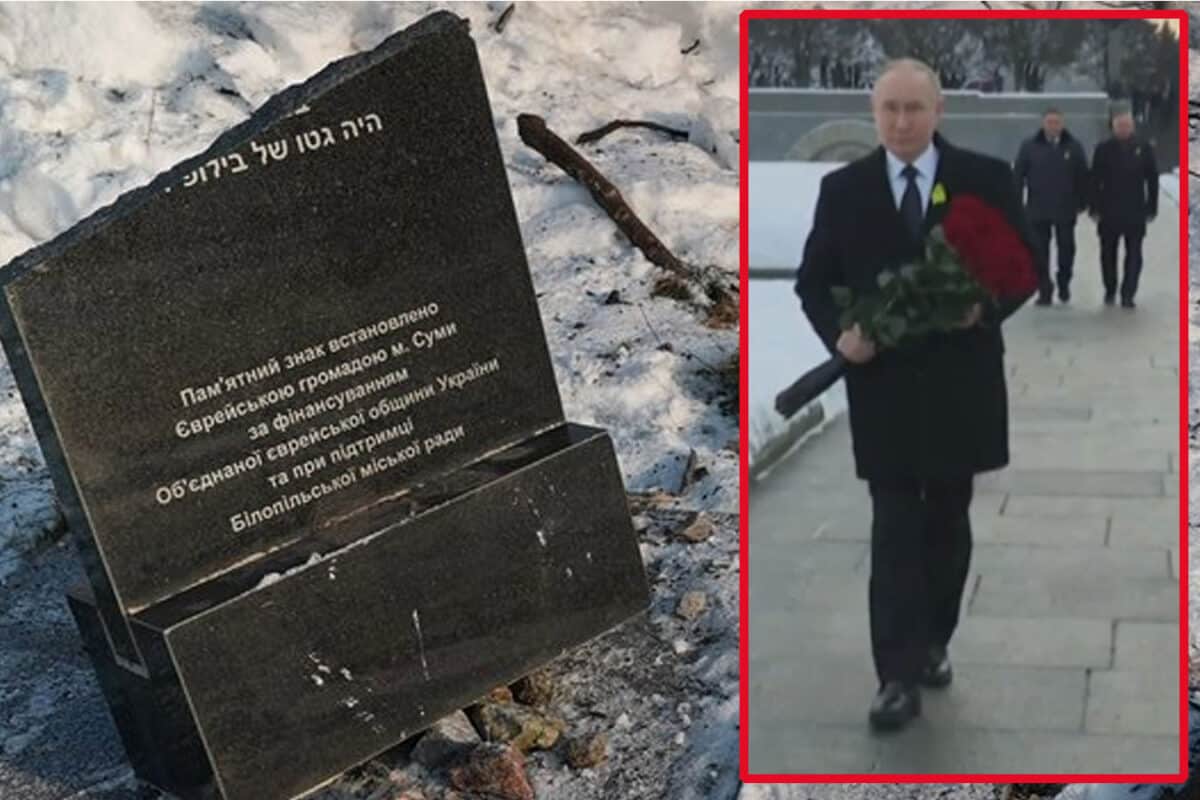
About the consequences of the strike reported on January 28, 2026, the United Jewish Community of Ukraine: a Holocaust memorial, installed in 2021 in collaboration with local authorities, was destroyed, and a historic building of the former Jewish ghetto was damaged.

And on January 27 in Jerusalem

The Russian Embassy in Israel reported that “on January 27 in Jerusalem, on the occasion of the 82nd anniversary of the complete liberation of Leningrad from the fascist blockade and International Holocaust Remembrance Day Russian Ambassador to Israel A.D. Viktorov participated in the ceremony of laying wreaths and flowers at the Monument to the heroic defenders and residents of besieged Leningrad ‘Candle of Memory’.

The official release stated that “the event was attended by Knesset members T. Mazarsky and V. Belyak, head of the Eurasia Department of the Israeli Foreign Ministry L. Vekselman, director of the ‘Eurasia-1’ Department of the Israeli Foreign Ministry A. Goldman-Shayman. …

Ambassador Viktorov “expressed satisfaction that in the current difficult geopolitical conditions, preserving the memory of the tragic and heroic events of World War II and the Great Patriotic War remains a common value for the peoples of Russia and Israel.

Well, it’s understandable – with a KAB on ‘common value for the peoples of Russia and Israel’ – it’s in the spirit of terrorists.

And let’s recall that already in the evening of January 27, a message appeared – “a Kyiv resident who survived the Holocaust froze to death due to a blackout arranged by Putin“.

For the sake of fairness, it should be noted that the message about “A KAB strike on the center of Belopillya in the Sumy region, among other things, destroyed a Holocaust memorial, installed by us in 2021 in collaboration with local authorities, and damaged a historic building of the former ghetto.” appeared only on the morning of January 28,

But, …

If we take the correct chronology of events, it was on January 15, 2026 that the Russian army struck with guided aerial bombs (KAB) on the center of the city of Belopillya in the Sumy region of Ukraine. A 35-year-old local resident was killed.

According to data provided in the ‘Suspilne’ report, it was initially reported about nine injured (six women and three men). Later, the police clarified the information: the number of victims increased to 11 people.

Separately, the consequences of the strike were reported by the United Jewish Community of Ukraine: a Holocaust memorial, installed in 2021 in collaboration with local authorities, was destroyed, and a historic building of the former Jewish ghetto was damaged.

Russian KAB destroyed the Holocaust memorial in Belopillya, Sumy region of Ukraine

What exactly was damaged in the city center

It concerns the civilian part of Belopillya.

The report describes the destruction and damage to public facilities, as well as infrastructure in the central area.

The head of the household of the 5th Belopillya Gymnasium Larisa Nalivayko talked about broken windows and damage in the dormitory. At the same time, she noted that a significant part of the staff lives in evacuation outside the city, but due to the consequences of the strike, people were urgently gathered for work.

Residents’ testimonies

Resident Oleg, who helped clean up near the destroyed store, said he was in a bar during the strike.

His thought sounds harsh and without diplomacy: the strike hit a civilian place, with no signs of armament, and people do not understand “what” could have been targeted here.

Local resident Valentina described a typical scene for such strikes: a sharp noise, doors flung open, flying windows, smoke. She specifically mentioned that Belopillya had already experienced something similar in 2024, and now the strike was repeated.

Bus station employee Violeta Kravchenko spoke about the scale of the building’s damage: “everything is torn out — doors and windows.”

Mayor’s position: the second strike — “right in the center”

City head Yuriy Zarko reported that there were two episodes: one strike — in a more remote part, the second — in the city center, on the exit from Sumy.

He clarified that the strike hit both an engineering infrastructure facility and a public facility simultaneously, and confirmed the death of a resident.

Destroyed Holocaust memorial and damaged ghetto building

The message from the United Jewish Community of Ukraine highlights a key detail: the airstrike destroyed a Holocaust memorial, installed in 2021 in collaboration with local authorities.

It also states that a historic building of the former ghetto was damaged.

In the reference part you provided, the context is emphasized: in the Jewish ghetto of Belopillya, 40 Jews were held before being shot. So this time, the war affected not only today’s residents but also the physical point of memory of past crimes.

How memorial signs were opened in Belopillya in 2021

In 2021, two memorial signs were opened in Belopillya.

The first — at the old Jewish cemetery, where the oldest matzevah dates back to 1898.

The second — on the initiative of the city council at the site of the Jewish ghetto in Belopillya, where 40 Jews were held before being shot.

The ceremony was attended by city head Yuriy Zarko, rabbi of Sumy and Sumy region Yehiel Levitan, director of the Sumy Jewish community Elizaveta Sherstyuk, representatives of the local community, and members of the Jewish community. The memorial signs, according to the description provided, were installed by the Sumy Jewish community with financial support from the United Jewish Community of Ukraine and with the support of the Belopillya city council.

Restoration of the memorial: what is planned

The United Jewish Community of Ukraine reported that together with the Belopillya city council, they received consent to restore the memorial sign.

The timing directly depends on safety: restoration will begin when the situation allows work without the risk of repeated strikes.

Geography: where is Belopillya located

Belopillya is the administrative center of the Belopillya city community in the Sumy district of the Sumy region.

The city is located approximately 44 km from the regional center (highway R44), on the river Vir, at the confluence with the river Kryga.

In your data, different population estimates appear (about 6 thousand and separately about 2 thousand) — against the backdrop of evacuations and people’s movements, such discrepancies in sources during wartime become common.

Why this episode is more important than a summary

The strike on the center of Belopillya on January 15, 2026, is simultaneously a human tragedy, the destruction of the civilian environment, and direct damage to a place that recorded the memory of the Holocaust at a specific point on the map.

That is why stories like Belopillya are important not only for locals: they show how war erases the boundary between “a strike on infrastructure” and a strike on historical memory — and therefore, on the identity and dignity of people. This is what NANews — News of Israel | Nikk.Agency writes about when it comes to the cost of war for the living and for memory.

The last of the kidnapped has been returned home: Israel bids farewell to Ran Guli, the hero of October 7

January 28, 2026, Israel bid farewell to the last of the abducted, whose body was returned from the Gaza Strip. Ran Guili — one of the symbols of October 7, a policeman who went into battle knowing he had neither an order nor a chance to retreat.

Ran was 24 years old. He lived in the settlement of Meitar, served as a senior sergeant in the police, and was part of the special unit YASAM Negev of the Southern District. On the morning of October 7, he was on sick leave — after an accident with a shoulder fracture, awaiting surgery. Hearing about the Hamas terrorist attack, he put on his uniform, took his weapon, and went to join his comrades.

Ran engaged in battle with terrorists at the entrance to Kibbutz Alumim. Radio intercepts from that morning preserved his last words: he reported that he couldn’t raise his head due to the fire, that ammunition was running out, and that he had only a few bullets left. When the bullets ran out, Ran was killed.

His body was taken by terrorists to Gaza on a motorcycle. Later, Israeli media reported that the remains were found in a bag marked with the “Shifa” hospital label. In January 2024, 117 days after the abduction, the family was officially informed that Ran did not survive.

On the morning of January 28, a memorial ceremony was held at the Shura military base in Ramla with the participation of police units. The last honor guard took place there as well. Ran’s father, Itzik Guili, recited the Kaddish over the coffin and said a short phrase: “Here, your friends are taking you.” His mother, Talik, kissed the coffin, then went out to the people who came to support the family and embraced them.

After this, the police funeral procession headed to Meitar. Thousands of people stood along the roads, accompanying Ran on his final journey. Hundreds arrived directly at the funeral, which took place at the local community center. Police officers paid their last respects when the coffin arrived in the settlement.

The ceremony was attended by Prime Minister Benjamin Netanyahu and the President of the State Isaac Herzog. It was not a formal participation — the state came to bid farewell to a man who alone made a choice for which the entire country is grateful today.

Ran’s mother, Talik Guili, said words at the farewell that many perceived as an address to all of Israel. She admitted that the hope for her son’s return — “on two legs or even on one” — gave the family the strength to live. And she added: thanks to Ran, the country remembered that despite disputes and disagreements, Israel remains one people.

She separately addressed the Hamas terrorists: you tried to intimidate the people of Israel — look at what remains of you. These words did not sound like revenge. Rather — as a conclusion.

Ran’s older brother, Omri Guili, said that today the family can take a step further for the first time. “We finally passed this date — October 7,” he said, addressing his brother and calling him by a personal nickname known only to the two of them. He spoke of friendship and love that are stronger than death.

Ran Guili was a man with ordinary hobbies: motorcycles, history, football. He supported “Hapoel Be’er Sheva,” served in the “Golani” brigade, suffered a knee injury during a non-combat accident, but returned and completed his service as a combat medic. After demobilization, he joined the police, in YASAM — where they are always the first to arrive.

Ran was buried in Meitar at 14:30. He left behind his parents, Itzik and Talik, his brother Omri, and his sister Shira.

With the return of Ran Guili’s body, there are no Israeli abductees left in Gaza — for the first time since Operation “Protective Edge” in 2014. This does not close the wound of October 7, but it concludes one of the most difficult chapters of this war.

Israel bids farewell to the last of the abducted — and remembers the name of the man who went into battle knowing he might not return. NNews — Israel News | Nikk.Agency

Moscow as a checkpoint: why the President of Syria flew to Putin again

President of Syria Ahmed al-Sharaa arrived in Moscow. The Syrian leader’s plane landed at Vnukovo airport. The visit is taking place without external pomp, but at a moment that makes it politically significant.

The key topic of the talks is the future of the Russian military presence in Syria. At the center of al-Sharaa’s meetings with Putin is the status of Russian bases, their future role, and Moscow’s place in the changing configuration of influence on Syrian territory.

Negotiations between the delegations are planned in the format of a working breakfast. A personal conversation between al-Sharaa and Putin is expected separately, without an extended composition. This format emphasizes the sensitivity of the issues and the absence of ready public formulas.

This is already al-Sharaa’s second visit to Moscow in a short period of time. The first took place in October. Such a quick repeat indicates an acceleration of processes and the need for urgent adjustment of previous agreements.

The visit takes place against the backdrop of reports about the withdrawal of Russian forces from the Qamishli airfield in northeastern Syria, as well as the redistribution of control zones after the Syrian army’s offensive on the positions of the Syrian Democratic Forces (SDF).

Russian military forces have been in Qamishli since 2019 — after Ankara’s operation and pro-Turkish formations against Kurdish forces. At that time, one of the conditions for the ceasefire was the patrolling by the Russian military police of the line of separation between Kurdish and pro-Turkish formations.

Now this scheme has effectively lost its relevance. After the change of power in Syria and the January offensive of the Syrian army — essentially the same pro-Turkish forces — the Kurds were ousted from territories they had controlled for more than ten years. In such conditions, the practical necessity of the Russian presence in Qamishli has disappeared.

This week, the Reuters agency, relying on open sources, reported that the withdrawal of Russian military from Qamishli has already begun. Without official statements, but with obvious strategic consequences.

Al-Sharaa’s repeat visit to Moscow is not a demonstration of a special alliance, but an attempt to fix new realities. For Putin, the Syrian direction looks less and less like a field of expanding influence and more like a zone of controlled winding down of commitments.

For Damascus, these negotiations are a way to understand how much Russian bases remain a tool of influence and security, and where Moscow is ready to step back, handing over the initiative to regional players, primarily Ankara.

Northeastern Syria is entering a phase of redistribution of control, and Russia’s role in this configuration is noticeably narrowing. Moscow ceases to be a mandatory mediator and turns into one of the participants in the process, forced to adapt to new balances.

This is why al-Sharaa’s visit to Putin is taking place in a compressed, working format and without loud declarations. This is a conversation not about a future alliance, but about fixing a departing structure — and an attempt to exit it without a sharp break. News — Israel News | Nikk.Agency

Project by Leonid Nevzlin: “Ukrainian Jewish repatriates in Israel: Jewish identity in the context of the Russian-Ukrainian war”

Project Leonid Nevzlin Center studies of Eastern European Jewry named after at the Hebrew University of Jerusalem explores the anthropological and Jewish aspects of aliyah from Ukraine in the context of war. The unique stories of repatriates have become valuable material for studying their integration and identity transformation.

As a result of Russian aggression against Ukraine, the world is faced with an unprecedented number of refugees from Ukraine fleeing the horrors of war in various countries such as Poland, Germany, France, Canada, etc. A significant part of these people arrive in Israel – these are both non-Jews and people eligible for Israeli citizenship under the Law of Return.

However, their move is not only a physical displacement, but also a profound transformation of Jewish identity.

I devoted my research to these questions Leonid Nevzlin Center at the Hebrew University of Jerusalem.

Project called “Ukrainian Jewish repatriates in Israel: Jewish identity in the context of the Russian-Ukrainian war” has become an important contribution to the understanding of these unique processes.

Amazing and unique human stories, each of which looks like an epic novel or film adaptation… All of them are now available on the website of the research center.


What do the statistics show?

According to the Israeli Ministry of Aliyah and Integration, from January 2022 to June 2024, people immigrated to Israel. 17,731 people from Ukraine. These are returnees entitled to citizenship under the Law of Return, as well as their families.

Period Number of repatriates
January – June 2022 ~7 000
July 2022 – June 2023 ~6 000
July 2023 – June 2024 ~4 731

Most of them have experienced personal tragedies, from loss of property and separation from loved ones to bombings and life under occupation. At the same time, their Jewish identity became an important resource that helped them survive these trials and adapt to their new life in Israel.


Unique research approach

Researchers from the Leonid Nevzlin Center recorded 100 interviews with Ukrainian Jewish repatriates using methods of qualitative anthropology. Particular attention, the project website writes, was paid to the following aspects:

  • “we seek to reveal how their Jewishness influences their vision of the entire context of Russian-Ukrainian relations and Ukrainian politics, as well as their political leanings and overall humanitarian commitments”;
  • “we ask whether the flight of these people from Ukraine had a Jewish “accent” – in other words, how Jewish connections and networks contributed to the very possibility of their move, as well as their settlement in a new place”;
  • “we are also trying, as far as possible, to describe the anthropological profile of the Ukrainian part of the Jewish aliyah, related to the war, in light of their integration into Israeli society.”

What does this mean for Israel?

Jewish aliyah from Ukraine highlights the strong historical ties between the two peoples. For Israel, this is not only an opportunity to welcome new citizens, but also a chance to strengthen humanitarian relations. As noted NAnews – Israel Newsthese returnees bring new cultural and economic resources to Israeli society, despite the difficulties they face.


Research results: a look into the future

The Leonid Nevzlin Center’s project shows that the war was not only a tragedy, but also a catalyst for rethinking Jewish identity. The researchers emphasize that it is important to continue to monitor the process of integration in order to create a complete picture of how war and migration change human destinies.

“This project is not only about the past, but also about the future. It shows how Jews, faced with the horrors of war, find the strength to revive and adapt to a new home.”


Conclusion

Events in Ukraine continue to concern the world, and aliyah from this country is an important part of this story. Through research like the Leonid Nevzlin Center’s project, Israel has a unique opportunity to explore how tragedy and change shape Jewish identity. This knowledge can strengthen mutual understanding between peoples and create the basis for further humanitarian ties.

Text research – “Ukrainian Jewish repatriates in Israel: Jewish identity in the context of the Russian-Ukrainian war”

Video teaser for the study – https://www.youtube.com/watch?v=qPxHYUy30Lo

Website NAnews – Israel News continues to cover topics related to Jewish history and modernity, reminding us of the importance of human solidarity in difficult times.

Leave a comment in Telegram channel NAnews ↓ — Israel News

“‘For Laying Flowers — 15 Days’: How the USSR Systematically Erased the Memory of the Holocaust”

On January 27, the world remembers the victims of the Holocaust. For millions of people, this date is associated not only with the memory of the catastrophe but also with the question: why in the Soviet Union was it spoken of in whispers for decades — or not spoken of at all. Historian Vitaly Nakhmanovich in an interview with RBC-Ukraine explained in detail how exactly the Soviet system squeezed the Jewish tragedy out of the public space.

Memory under state supervision

According to the historian, Jews in the USSR were well aware of the Holocaust. Almost every family had those who were killed, missing, or executed. Residents of cities, towns, and villages where mass killings took place also knew. This knowledge existed — but outside of official recognition.

In the late 1940s, even before the end of the war, spontaneous memorial actions arose. People came to the sites of executions, brought flowers, and lit candles. However, soon a period of state anti-Semitism began, and any such actions became dangerous.

“Thaw” followed by another ban

In the early 1960s, during the Khrushchev “thaw,” the situation changed briefly. There were attempts to establish monuments and discuss forms of memorialization. The state even considered how to take these initiatives under control.

But after the end of the “thaw,” the pendulum swung back towards prohibitions. Memorial actions began to be dispersed, and their participants were persecuted. Visiting Babi Yar, Nakhmanovich recalls, was almost as risky as participating in unauthorized political gatherings.

In September 1966, a rally took place at Babi Yar, which became the first mass unofficial act of Holocaust remembrance in the USSR. Formally, it was called “unauthorized,” although the people who came there did not consider themselves protest participants. It was an attempt to simply remember the dead.

Permitted memory — without mentioning Jews

Paradoxically, in those same years, the authorities took steps that outwardly looked like a move towards memory. In 1965, a competition for a monument at Babi Yar was announced. In 1966, Anatoly Kuznetsov’s book “Babi Yar” was published.

However, there was a strict condition: it was possible to speak of “peaceful citizens” and “prisoners of war,” but it was not allowed to emphasize that it was specifically about the mass extermination of Jews.

Laying wreaths with the inscription “in memory of the murdered Jews” meant automatically being accused of “petty hooliganism.” The punishment — up to 15 days of arrest. According to the historian, only a few dared to take such steps, and most of them later left for Israel.

Why the victims had to be “Soviet”

Nakhmanovich emphasizes: at the state level, information about the Holocaust existed. The problem was not ignorance, but ideology. The Soviet authorities consistently built the image of a single “Soviet victim,” in which there should be no national differences.

This logic was formed long before the war. Already in the 1930s, repressions began on a national basis: first against Ukrainians, then Poles, Germans, Greeks. At the end of the war, Crimean Tatars, Chechens, and Ingush were deported.

Initially, the regime fought against “class enemies.” When they were destroyed, the system switched to entire peoples, declared carriers of “bourgeois nationalism.” In this context, Jews became the next target — despite the fact that they suffered colossal losses from the Nazi policy of extermination.

Incompatibility with the myth of the “Soviet people”

The communist authorities sought to create the image of a single “Soviet people” with a strict hierarchy. In this construction, there was an “older brother” and “younger brothers.” Jews did not fit into this scheme.

Their losses were disproportionately large. Their contribution to resistance and the number of heroes — too noticeable. All this destroyed the carefully constructed myth, in which national tragedy had no right to a separate name.

That is why the memory of the Holocaust in the USSR was not just silenced — it was deliberately edited, restricted, and punished for attempts to call things by their names. This experience is important today when memory again becomes an object of political pressure and struggle for interpretations. This is reminded by NAnews — News of Israel | Nikk.Agency.

Eight people convicted in Russia for the explosion on the Crimean Bridge have appealed to Trump, Zelensky, and Putin.

Eight people convicted in Russia in the case of the explosion on the Crimean Bridge in October 2022 have made a public appeal to world leaders and international human rights organizations. They claim that they had no involvement in organizing the explosion, were used “in the dark,” and became part of someone else’s operation without understanding its essence. This fact, the authors of the appeal emphasize, was previously publicly acknowledged by the former head of the SBU Vasyl Maliuk.

The appeal is addressed to the President of the United States Donald Trump, the President of Russia Vladimir Putin, and the President of Ukraine Volodymyr Zelensky. The letter is also sent to international human rights organizations. The convicted insist: their fate requires not a formal judicial approach, but a political solution — pardon or amnesty.

An appeal beyond judicial logic

The text of the letter is published by the human rights project Memorial as part of the “Support for Political Prisoners” initiative. The authors emphasize: they are not asking for a review of the evidence in Russian courts, but demand a humanitarian and political consideration of their situation.

All eight people describe themselves as ordinary people — drivers, logisticians, entrepreneurs. People living everyday lives and not involved in special operations or violent actions. Today they are called “terrorists” and sentenced to life imprisonment, although, according to them, they did not understand what they were involved in.

Logistics without knowledge of cargo content

The key argument of the convicted is the absence of intent. Their involvement, as they claim, was limited to the logistics of civilian cargo. It later turned out that it was disguised for transporting an explosive device.

They did not know and could not have known about the presence of explosives. They had no access to information about the contents, purpose of transportation, or final use of the cargo. It is this chain of circumstances, in their opinion, that became fatal.

A trial without doubts

Even public statements by the former head of the SBU about the non-involvement of these people in the preparation of the explosion did not affect the course of the case. The trial was initiated and concluded with the harshest sentence.

The proceedings went almost unnoticed by the public. There was no broad discussion, independent expertise, or analysis of the version of using people “blindly.” According to human rights defenders, the guilty were determined even before the hearings began.

The price of the sentence — broken families

Behind the legal formulations are specific human consequences. The children of the convicted are effectively left without fathers and ask a question that no one answers: when will dad return. Wives have lost husbands, parents — sons.

This side of the case is almost unheard in official reports, but it is precisely this, according to human rights defenders, that makes the situation not only legal but also humanitarian.

Political context and “invisible” convicts

Amid ongoing contacts and informal negotiations between Russia and Ukraine, the topic of amnesties and humanitarian solutions is periodically raised. However, these eight people remain out of focus.

They are not prisoners of war. Not public activists. Not figures on the political scene. That is why their situation is especially vulnerable — they do not fit into any convenient political scenario.

A call for humanity

The authors of the appeal acknowledge: in the context of war, thousands of deaths, and destroyed cities, their fate may seem secondary. But they insist — humanitarian solutions are tested precisely in such cases.

Their request is addressed directly to world leaders: to listen, pay attention, and find a political mechanism that will allow them to be released and see their families again.

At the end of the appeal, the names are listed:

Artem Azatyan,
Georgy Azatyan,
Oleg Antipov,
Alexander Bylin,
Vladimir Zloba,
Roman Solomko,
Artur Terchanyan,
Dmitry Tyazhelykh.

Eight people sentenced to life imprisonment in the case of the explosion — without proven intent and without acknowledgment of involvement in its preparation. A story that remains a test of “legality” and political will — and which is recorded today by NANews — Israel News | Nikk.Agency.

Ukrainian cafe “Familia” in Israel in Rishon de Zion: how a married couple created a cafe that won the hearts of local residents

Journalists mynet talked about the unusual cafe “Familia”, which recently opened in Rishon LeZion (Zadal 5 Rishon Le Zion, Israel – on the map near the City Park “גן המושבה, ראשון לציון”). The owners of the establishment, repatriates from Ukraine Artem and Alena Bibenko, arrived in Israel only four years ago, but have already managed to make a contribution to the local gastronomic culture. Not knowing Hebrew, but putting their hearts into their work, they managed to attract the attention of both local residents and the press.

History of the cafe

“Familia”, a name reflecting a warm family atmosphere, was chosen for a reason. The couple worked in large cafes in Israel, where they worked with workers from Mexico and Brazil. It was their colleagues who gave them the nickname “family,” which inspired the couple to choose the name for their establishment.

Quote from mynet website:

“If you live in Rishon Lezion, you have probably heard talk about a new establishment that has become famous in the city. Meet the Familia cafe.


What attracts visitors to Familia?

The cafe is famous for its excellent Italian coffee and a variety of fresh dishes. The menu includes:

  • Sandwiches prepared on site by Alena
  • Desserts including signature lemon tart and cheesecake
  • Salads and new dishes will be added soon

Every day the cafe receives many visitors, most of whom are local residents who highly appreciate the warm atmosphere and high quality of service.

Difficulties and successes

Since the couple does not speak Hebrew, communication with clients is sometimes difficult. However, this did not become an obstacle to the popularity of the cafe.

  • Language: The owners rely on the help of their 16-year-old daughter Veronica, who helped with translations during the launch phase. Communication is in English and basic Hebrew.
  • Clients: People from the former USSR live next to the cafe, which helps communication and gives the place a special flavor.

Quote from mynet:

“Many townspeople come and praise us, we are very pleased,” Alena shares her impressions.

Personal history of Bibenko

The couple had long dreamed of moving to Israel. When their dream came true, they firmly decided to create a cafe similar to the one that Artem owned in Ukraine.

Were you surprised by the rave reviews from city residents?

“Many local residents come and share warm words, and this is very nice,” admit the cafe owners.

How do you cope with not knowing Hebrew?

“We sometimes translate orders for each other or speak English. We already have some “kitchen Hebrew”, so we can explain our dishes. There are also a lot of repatriates here, since there is a city park nearby.”

The owners of the cafe say that they moved to Israel before the war, and the owner’s mother remained in Ukraine, for whom they are worried. She also plans to move to Israel in the near future due to the harsh winter in Ukraine.

“We dreamed of living in Israel for years, and when we moved, our expectations were completely met,” says the cafe owner.

Cafe options Description
Name Familia
Address Zadal 5 Rishon Le Zion, Israel
Founders Artem and Alena Bibenko
Specialties Italian coffee, lemon tart, cheesecake
Additional 16-year-old daughter Veronica to help

Conclusion

The story of Café Familia is an example of how diligence and warmth can overcome cultural and language barriers.

Facebook –

Instagram –

Leave a comment in Telegram – NAnews channel↓

Odessa awarded the title of Honorary Citizen to Roman Shvartsman, a Holocaust witness, head of the Association of Jewish Prisoners of Ghettoes and Concentration Camps

On September 2, 2025, Odessa Mayor Gennady Trukhanov, on behalf of the entire city, presented Roman Shvartsman with the title of “Honorary Citizen of the City of Odessa”.

They congratulate him warmly and in a homely way, calling him “our Romochka”. They emphasize that he truly deserves this award.

As is customary in Jewish tradition, they wish him “Mazal Tov” and long life – “up to 120”.

It is noted that Roman Markovich managed to survive Nazism and the Soviet system, and there is confidence that he will cope with modern challenges, including Rashism.


Roman Markovich Shvartsman, born on November 7, 1936, in Bershad, Vinnytsia region, at the age of five, ended up in the Bershad ghetto, where he spent 3.5 years in inhumane conditions. This experience left an indelible mark on his fate and became the foundation of his struggle for truth and memory.

According to Odessa portal “Dumskaya”, the city council plans to confer this title on him in the near future.

Roman Shvartsman himself confirmed this information to a “Dumskaya” correspondent and shared his emotions.

“For me, it is a great honor and deep excitement to be presented for the title of Honorary Citizen of Odessa,” Shvartsman noted.

He added that this is the highest award from the city where he has lived his entire life after the war, and which has become for him a “source of revival and strength.”

“This is recognition not only of my work but of everyone whose memory I try to preserve. All those who passed through ghettos and concentration camps. All who gave their lives fighting Nazism. All who today fight for Ukraine’s independence… The title of ‘Honorary Citizen of Odessa’ is not just for me. It is for everyone who survived, who remembers, who passes the truth on. It is for Odessa, which has always been a multicultural, free, and strong-spirited city. I am grateful to everyone who supports this initiative. For me, this is not the end, but a new obligation: to work even harder, speak even louder, and remember even deeper,” said Roman Shvartsman.

After the war ended in 1955, he moved to Odessa, where he studied at Vocational School No. 2 as a “mechanic-assembler.” Later, he graduated from the Odessa Institute of Marine Engineers, becoming a mechanical engineer. His entire working life was connected to the “Poligraphmash” factory, where he worked for over 30 years, showing the highest professionalism and dedication.

Decades of community work

Since 1990, Roman Shvartsman has been actively involved in public life as the head of the Odessa Regional Association of Jews – former prisoners of ghettos and concentration camps. In 1992, he became a member of the international organization of former prisoners of ghettos and concentration camps, founded in Odessa. He remains an active member, uniting those who remember the tragic pages of history.

Shvartsman also serves as the Vice President of the All-Ukrainian Association of Jews – former prisoners of ghettos and concentration camps, led by Boris Zabarko. He is also Deputy Chairman of the Council of the Odessa Society of Jewish Culture and Head of the socio-cultural center.

The Holocaust Museum and monuments – a lifetime’s work

Shvartsman played a huge role in creating the Holocaust Museum in Odessa, which opened on June 22, 2009. In his words:

“This museum should become a school, a university for the young, so that they understand what the Holocaust was.”

Today, the museum has over 4,000 exhibits and, over the years, has been visited by about 20,000 people – diplomats, students, schoolchildren, tourists, and Israelis, for whom the memory of the Holocaust is inseparable from their identity.

Thanks to Shvartsman’s persistence, over 30 monuments and memorials have been established in Odessa, Odessa region, and Mykolaiv region. Among them is the Memorial Complex on Lustdorf Road, the site where 25,000 Jews were killed. In 2015, in the village of Hvozdivka2, a mass grave containing the remains of 3,500 Jews was discovered, above which a memorial was erected at Shvartsman’s initiative.

“Wherever you dig, you’ll find bones – teeth and skulls. It’s horrible.”

Speech in the Bundestag and international recognition

On January 30, 2025, Roman Shvartsman spoke at the German Bundestag during a session dedicated to the memory of the victims of National Socialism. His words to the deputies became a symbol of the parallel between the horrors of the Holocaust and the modern aggression of putin against Ukraine:

“At that time, Hitler tried to kill me because I was a Jew. Now putin is trying to kill me because I am Ukrainian,” he declared, speaking in the German parliament on January 29, 2025, during the session dedicated to the memory of the victims of Nazism.

Shvartsman also called on Germany to actively support Ukraine and increase arms supplies:

“I appeal to you: arm us so that putin ends this war of annihilation.”

He especially emphasized Ukraine’s need for long-range missiles.

Shvartsman reminded everyone that it is the duty of current generations to prevent new catastrophes and protect civilians from violence.

His speech received a standing ovation and the support of German President Frank-Walter Steinmeier. He urged Germany to increase support for Ukraine and stressed the moral duty of everyone – to stop new barbarism.

Awards and recognition

For decades of work and service to society, Roman Shvartsman has received numerous awards:

  • Order of Merit III degree (2006) – for personal courage and the fight against fascism.
  • Order of Merit II degree (2013) – for the development of the veteran movement and patriotic education of the youth.
  • Order of Merit I degree (2018) – for outstanding contributions to the development of Ukraine and high professionalism.
  • Title of “Honored Machine Builder of the Ukrainian SSR” (1989).
  • Medals “For Labor Distinction” (1977) and “Veteran of Labor” (1985).
  • Honorary award of the Odessa mayor “Labor Glory.”
  • German Cross of Merit (2003).
  • Jubilee medals for national and international merits.

Memories of the Holocaust

Recalling his childhood, Roman Shvartsman shared that in early July 1941, his mother tried to evacuate with eight children. However, due to the advance of German and Romanian troops, the evacuation attempt failed. In August 1941, the occupiers entered Bershad and created two ghettos, one of which housed Shvartsman’s family.

25,000 Jews from Bessarabia and Vinnytsia region were deported to the ghetto. During the years of occupation, the Nazis murdered 13,871 Jews.

In 1942, while Roman’s older brother was working on repairing a bridge over the Dokhno River, he was shot by Romanian guards. This tragedy formed the basis for one of the films by Israeli director Boris Mavtzer. Shvartsman recalls the unbearable living conditions, constant hunger, and fear. On March 29, 1944, the town of Bershad was liberated.

Odessa honors its hero

Today, the Odessa City Council is preparing to confer the title of Honorary Citizen on Roman Shvartsman. For Shvartsman himself, this is not just an honor, but a new challenge and responsibility:

“This is recognition not only of my efforts but of all those who survived the Holocaust and continue to fight for Ukraine’s freedom.”

The site NAnews – Israel News emphasizes: Shvartsman’s fate is an important example of the unity of the Jewish and Ukrainian peoples, who together oppose hatred and aggression.

The story of Roman Shvartsman is a reminder that the Jewish people and Ukrainians, despite all trials, continue to fight for truth and freedom. The site NAnews – Israel News is confident: such heroes help us remember the lessons of the past and build a peaceful future.

President of Ukraine: “If we do not remember the victims of the Holocaust, then fascism has the opportunity to be reborn and wage war against humanity again.”

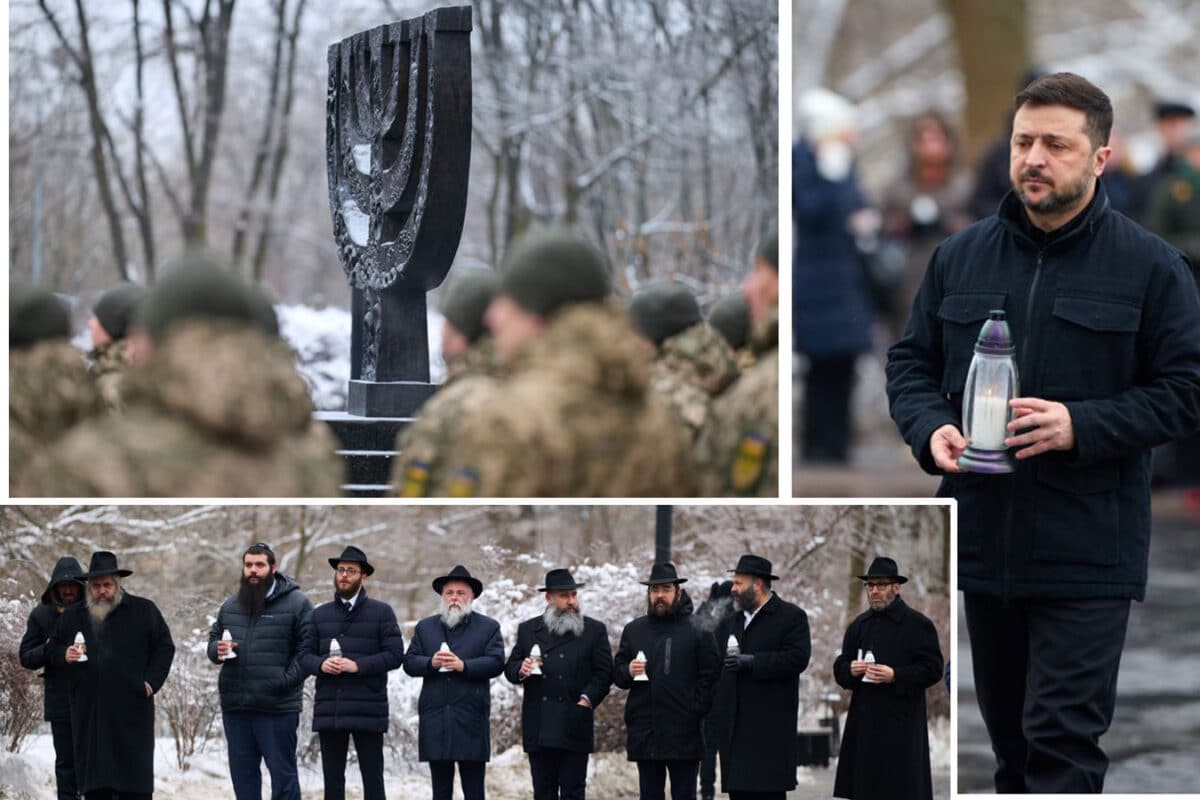
On January 27, 2026, on International Holocaust Remembrance Day, a ceremony was held in Babyn Yar (Kyiv, Ukraine) to honor the memory of the victims of the Nazi genocide. The event was attended by the President of Ukraine Volodymyr Zelensky, representatives of the Ukrainian government, rabbis from Ukrainian cities, the Israeli ambassador to Ukraine Michael Brodsky, diplomats, and representatives of international organizations.

President of Ukraine: "If we do not remember the victims of the Holocaust, fascism has the opportunity to be reborn and fight against humanity"
President of Ukraine: “If we do not remember the victims of the Holocaust, fascism has the opportunity to be reborn and fight against humanity”

A Memory That Should Not Become a Formality

The Chief Rabbi of Ukraine Moshe Azman published a written address after the ceremony, in which he spoke about the events of this day at Babyn Yar.

“Today, January 27, on International Holocaust Remembrance Day, we, together with the President of Ukraine Volodymyr Zelensky, Head of the President’s Office Kyrylo Budanov, Minister of Foreign Affairs of Ukraine Andriy Sybiha, rabbis from Ukrainian cities, diplomats, and other state representatives, honored the memory of the Holocaust victims at Babyn Yar.”

According to him, Babyn Yar remains one of the most tragic symbols of the Holocaust:

“This place has become a symbol of incredible, inhumane cruelty and a great tragedy for the entire Jewish people.”

Words of the President of Ukraine Spoken at Babyn Yar

Moshe Azman separately emphasized the key thought expressed by the President of Ukraine during the ceremony:

“In his speech, the President of Ukraine emphasized that indifference and impunity towards evil are literally ‘fertilizer’ for its spread.”

This thought, as highlighted in the text, is directly related to today’s reality:

“In our days — in the conditions of a severe war in Ukraine and terrible events in Israel — this is especially relevant.”

A Historical Lesson Addressed to the Present

On the official resource of the President of Ukraine, it is emphasized that the memory of the Holocaust is not only a tribute to the past but also a warning to the future:

“If we do not remember the victims of the Holocaust, fascism has the opportunity to be reborn and fight against humanity.”

The President of Ukraine separately noted:

“This is a clear lesson of history: when hatred against one nation is not stopped, others cannot remain indifferent and stand aside.”

According to him, aggression and contempt for human life cannot become the norm:

“Aggression and disregard for the lives of people and entire nations should never prevail.”

Babyn Yar and Responsibility to Future Generations

The President of Ukraine reminded that Babyn Yar is a place of mass extermination of people, where more than one hundred thousand people were killed and tortured, and millions became victims of the Nazi regime worldwide.

“If we do not gather, do not remember the victims, especially the victims of the Jewish people during the Holocaust, the victims of Babyn Yar — if we do not do this, then fascism has the opportunity to be born again, to be reborn in one state or another and fight against humanity. Against the most important — against life.”

The head of state emphasized that the memory of the deceased is a signal to the next generations so that the tragedy does not repeat.

Personal and Religious Address

In conclusion of his address, Moshe Azman wrote:

“May the memory of more than six million Jewish hearts destroyed in the Holocaust be blessed and eternal.”

“I pray for the souls of the deceased and know — light always overcomes darkness.”

International Context

More than fifty representatives of foreign diplomatic missions and international organizations participated in the ceremony. Volodymyr Zelensky thanked the diplomats and their countries for supporting Ukraine and for jointly preserving historical memory.

On January 27, 1945, the last prisoners of the Nazi concentration camp Auschwitz-Birkenau were liberated. In 2005, the UN General Assembly established this date as International Holocaust Remembrance Day — as a reminder of a tragedy that should not be repeated.

Editorial of NANovosti: Are We Doing Enough to Prevent History from Repeating?

January 27 — International Holocaust Remembrance Day.
A date that every year brings us back to the words “Never again.” But is it enough today to just say them out loud?

In a world where wars are happening again — in Europe and the Middle East — we bow our heads in memory of millions of people killed just for the right to be themselves. This memory has long gone beyond history textbooks. It is again with us — in the news, in photographs of destroyed cities, in the fates of families whose lives have been crossed out by violence.

And again, systems, Nazi in their essence, speak of the “right” to destroy people just for who they are — Jews or Ukrainians.

On January 27, 1945, the Nazi death camp Auschwitz-Birkenau was liberated by soldiers of the 60th Army of the 1st Ukrainian Front of the Red Army. Then the world saw for the first time on a full scale what cannot be justified, explained, or “put into context.”

The conveyor of human destruction — systematic, cold-blooded, industrial.

This date was established by the UN as International Holocaust Remembrance Day.
Six million Jews were killed by the Nazi regime.
Almost a third of them — on the territory of modern Ukraine.

They were shot in Babyn Yar, Drobytsky Yar, Kamianets-Podilskyi. They were destroyed in ghettos, camps, on death marches. This is not abstract statistics. These are specific places. Specific families. Specific lives.

The history of the Holocaust is not only a history of pain.
It is also a history of choice.

More than four thousand Ukrainians are recognized as Righteous Among the Nations. People who, risking their own lives, saved Jews. Even in the darkest times, a person is capable of choosing humanity. And this choice is always specific.

On the eve of this date, the UN High Commissioner for Human Rights Volker Türk spoke the right words — about hatred, dehumanization, about the lessons of the past. He reminded that the Nazi regime destroyed Jews with terrifying “conveyor efficiency” — openly and practically without consequences.

The words are correct.
The problem is that we hear them from international officials, as a rule, once a year.

Passive memory has not become a protection against new genocides.
This is a fact.

Today, during the Russian war against Ukraine, the world is once again witnessing war crimes: mass killings of civilians, deportations, destruction of cities, attempts to deny the right of an entire nation to exist.

Against this evil, Ukraine is on the front line of defending fundamental human values — life, freedom, and dignity. Not in theory. At the cost of real sacrifices.

Israel, in turn, is forced to defend itself under constant pressure from terrorist organizations and regimes of hatred, which openly declare that they do not recognize its right to exist. It is not about disputes or political disagreements, but about a systematic attempt to destroy the state and its citizens — just for who they are. Israel is fighting not for territory, but for the right to live and not allow hatred to turn into a conveyor of death again.

Yesterday, the last hostage held by terrorists Hamas “returned.” Behind this “return” is not a joyful point, but a long chain of tragedies: those killed in captivity, women and children who experienced violence, civilians who became targets only because they were civilians.

Memory makes sense only when it becomes action.
Only then do the bitter pages of history not repeat, but become a warning that the world is capable of hearing.

Today we bow our heads before the millions killed.
And today this question sounds especially acute:

Are we doing enough to prevent history from repeating?

NANovosti — News of Israel | Nikk.Agency