Ukraine has secured a place in the top 5 global honey exporters: supplies go to the EU, USA, and Israel

In 2025, Ukraine enters the global agro-export agenda not only because of grain and oil. According to the results of 2024 (these are the figures that markets and analysts operate with in 2025), Ukrainian honey brought the country to the fifth place among the largest exporters in the world — a rare example of an industry that held on and even grew amid war, logistical constraints, and nervous demand for food.

This is not about “beautiful statistics.” Honey is currency, jobs in the regions, established procurement chains, laboratory control, export contracts, and a reputation that can easily be lost with one quality failure. It is also a product purchased, including in Israel: the share is small but symbolically important for the market and for the Ukrainian brand in countries where import standards and trust in origin matter.

What exactly happened: Ukraine’s place in the world according to the results of 2024

According to data provided by AgroReview, Ukrainian producers in 2024 exported honey worth 167 million dollars. This is approximately 9.5% of the world’s honey exports in monetary terms. In the structure of Ukraine’s agricultural exports, honey accounted for about 0.7%.

Looking more broadly — Ukraine found itself among countries that have held leadership in the “honey” niche for years:

  • China — 265 million dollars

  • New Zealand — 250 million dollars

  • Argentina — 186 million dollars

  • India — 182 million dollars

  • Ukraine — 167 million dollars

It is important that this is a “monetary” picture, not just volumes in tons: the final position is influenced by prices, the specifics of varieties, contract conditions, the premium of certain categories (for New Zealand, this is a separate story), and how much the market is willing to pay for stable quality.

Where Ukrainian honey goes: EU, USA — and a small but noticeable Israel

According to the distribution of markets in 2024, the picture looks like this:

  • European Union — 82% of Ukrainian honey exports

  • USA — 15%

  • Israel — 1%

  • Japan — 1%

So Israel is not the main buyer by volume, but it is present on the supply map as a separate direction. For Ukrainian exporters, such markets usually work as a “showcase of requirements”: if you have enough discipline in documents, analyses, batch traceability, and stability, you can more easily scale to other countries.

Why 2025 discusses 2024: the market returns after a failure

The material notes that 2024 was a record year for Ukraine over the past decade, and this is associated with the gradual recovery of the global honey market after a noticeable decline in 2023.

For the “honey” industry, this is typical: demand can sharply contract due to prices, inflation, changes in consumer habits, and competition with mixed products, and then bounce back when networks and importers return to long-term contracts.

In 2025, these results begin to “live” separately from the calendar: they are used when confirming quotas, revising logistics, negotiating prepayments, and insuring supplies. Therefore, the request to “write in 2025” is logical here: the industry discusses and uses these figures as a working reality in the next year.

Logistics: why Ukraine transports honey not by sea, but by land

A separate layer of the story is how this export physically occurs.

According to data from the same source, in 2024, due to the priority of the European market, exporters more often relied on land routes:

  • about 83% of honey was exported by road and rail through the so-called “Solidarity Lanes”

  • another 10% went through Danube ports

  • and only 2% went through Black Sea ports

These figures well explain why the EU remains the main direction: if you are physically “sharpened” for a land corridor, you sell where it is easier to deliver. And supplies further — to the USA, Israel, Japan — become a more complex task in terms of cost and time, even if there is demand.

Context of 2025: the EU increasingly regulates agro-imports, and honey is also close to limits

In 2025, Ukrainian agro-export to the EU is a political topic, and this concerns not only sugar or grain. European discussions around trade preferences, quotas, and protective mechanisms directly affect such positions as honey: it is regularly mentioned in the list of sensitive goods.

For Ukrainian producers, this means a simple thing: staying in the “top five” is not enough. You need to be ready for tougher competition within the EU and for the fact that some volumes will have to be redistributed to other markets — including those where the share is still small but there is potential (and Israel looks logical in such a list).

What this means for Israel: why 1% is not “nothing”

One percent in the export structure sounds modest. But for the buyer, which is Israel, three aspects are important.

The first is predictability: if supplies go even in small batches, it means the chain works and there is an importer who knows how to live with it.

The second is quality and control. The Israeli market is usually not about “buying cheaper at any cost.” It is about documents, standards, laboratory indicators, and supplier reputation.

The third is the niche economy. Honey is a product that is easy to “kill” with dumping but difficult to “resurrect” without trust. Therefore, Ukraine’s presence in supplies is a signal that the product meets requirements and can expand if demand and logistical opportunity arise.

Questions most often asked about Ukrainian honey and export

Is Ukraine really in the top 5?
Yes, according to data provided by AgroReview for the results of 2024, Ukraine took the fifth place among the largest honey exporters in the world.

How much was earned from exports?
About 167 million dollars for 2024.

Who buys the most?
EU — 82%, USA — 15%, Israel and Japan — 1% each.

Why is almost nothing transported through the Black Sea?
According to the source’s estimate, the lion’s share went through land corridors and the Danube; sea ports accounted for only 2% of exports.

What’s next: keeping the position is harder than taking it

A phrase that is usually feared to be spoken aloud in such cases: Ukraine’s leadership in honey is not only about bees and apiaries. It’s about market access, transport, EU trade policy, currency risks, and how quickly the industry can adapt.

In 2025, the main challenge is to maintain export dynamics when Europe tightens the conversation about quotas and protective mechanisms, and alternative markets require additional costs for logistics and promotion. But the very figure “top-5” according to the results of 2024 shows: the industry has already learned to live in new conditions and sell the product where quality is willing to be paid for.

And if Israel remains on this supply map — albeit at the 1% level for now — it means Ukrainian honey has a chance to establish itself not only as “raw material for the large EU market” but also as a product that withstands competition in demanding directions. This is exactly the type of economic ties that are important today for both Ukraine and Israel — and that is why we continue to analyze such stories in the editorial office of «NAnews — News of Israel | Nikk.Agency».
Stalinization without pause: how Putin’s system completes itself through war and control

Vladimir Shevchenko, Andrey Savarets (Ukr.) — especially for “Hvylya”. The material was published on January 14, 2026. The analytical version was prepared based on the author’s research and adapted for the Israeli and international audience.

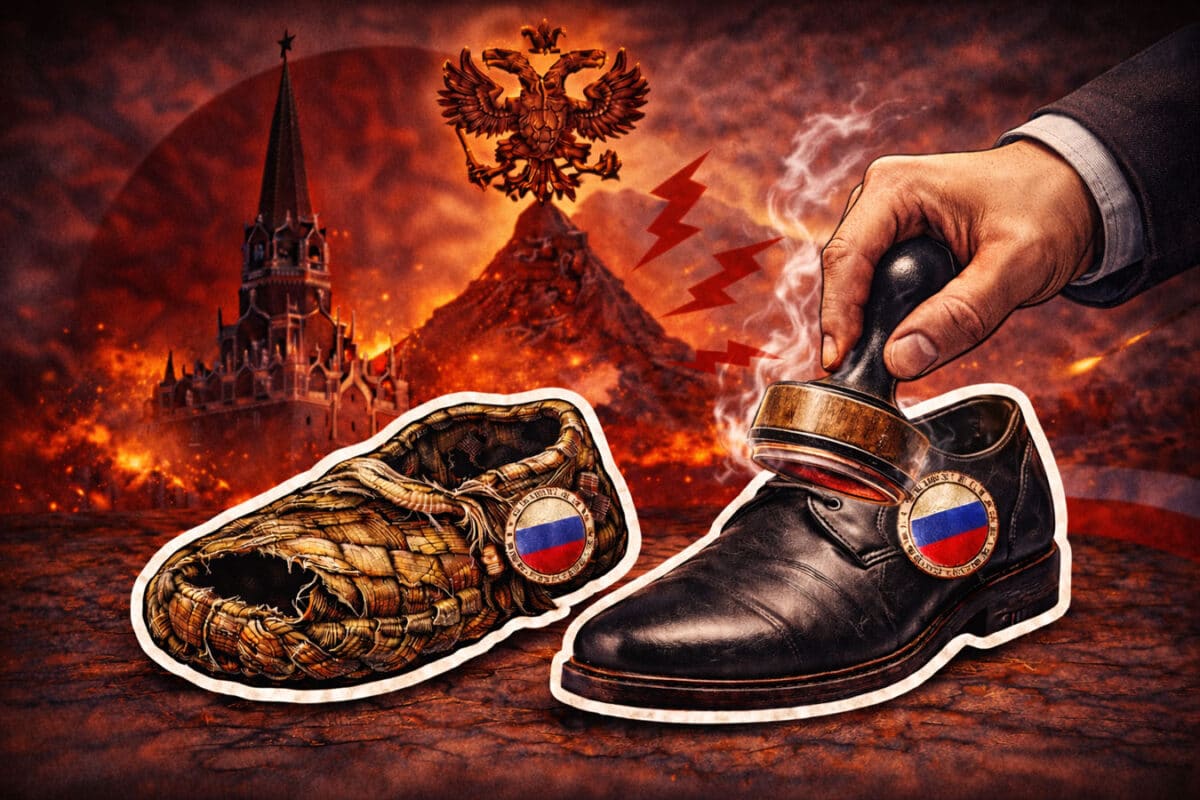
Modern Putinism is not a static regime and not “authoritarianism with a human face.” It is an unfinished political-economic construction that is rapidly moving towards its ultimate form — Stalinism. Not as a metaphor, but as a working management model, tested by history and convenient for the self-preservation of power corporations.

The Kremlin is aware of its own incompleteness. Hence the attempt to “complete” the system through war, repression, total control, and internal mobilization. To understand the logic of what is happening, it is important to look not at individual decisions, but at the evolution of Russian statehood as a recurring historical cycle.

The feudal model identified the state with the personality of the monarch. The liberal one turned it into an arbiter and “night watchman.” Lenin’s considered the state as an apparatus of class violence.

The Stalinist system went further: violence became universal, fear replaced institutions, and the state turned into a self-sufficient Machine, where even the elites are not protected. It is this matrix that today becomes the ultimate goal for the Putinist construction.

The war against Ukraine turned out to be not a cause, but a condition for bringing the regime to totalitarian absolute.

Economy under lock: return to the mobilization model

The full-scale war became a convenient smoke screen for large-scale nationalization of the economy. Under the slogans of “security” and “sovereignty,” there is a systematic redistribution of property.

Three basic mechanisms are used: revision of the 1990s privatization through courts; direct nationalization under the pretext of violations or non-fulfillment of defense orders; alienation of assets of foreign companies that left Russia.

The reprivatization of the Chelyabinsk Electrometallurgical Plant and ferroalloy factories is a demonstrative case. Formally — export to “unfriendly countries.” In reality — strategic importance for the military-industrial complex.

Since 2022, dozens of foreign assets have been transferred to the state through decrees, temporary management, dividend blocking, and court decisions. Simultaneously, a law on “protecting business from foreign influence” was adopted, effectively removing large companies from external control.

According to NSP estimates, the volume of such “nationalization” reached 3.9 trillion rubles; Reuters names a comparable amount — about 50 billion dollars.

A characteristic comment was made by Oleg Tinkov in 2025, comparing the post-Soviet period with a prolonged NEP: technologies and assets came in, then were seized, and now it is assumed to “sit” on this for the next decades.

If in the 1990s the security forces became owners of what they managed, now the special services prefer to be managers of what others owned. The oligarchy is systematically weakened: even personal loyalty no longer guarantees the inviolability of assets.

Money under a microscope

Financial control is the next level. In the fall of 2025, the head of the Central Bank Elvira Nabiullina directly announced preparations for the mass introduction of the digital ruble, which will allow tracking the targeted use of funds.

Technically, it is an ordinary ruble, but with software marking of each transaction. In fact, it is a tool of total financial oversight and a symbol of the completion of the “new NEP.”

Simultaneously, pressure on the self-employed is increasing, VAT is raised to 22%, and Rosfinmonitoring gets access to all transfers through the SBP, Mir cards, and universal codes. Putin himself publicly demands to strengthen control over cash.

Exit from the legal field

After the constitutional changes of 2020 and the start of the war, Moscow is effectively dismantling the primacy of international law. State Duma Vice Speaker Pyotr Tolstoy directly stated that ahead is a new revision of the Constitution, as “world practices have not taken root.”

Russia withdrew from the Council of Europe, denounced dozens of agreements, and deprived businesses of the opportunity to protect themselves through international arbitration. The nationalization of assets like the “Rolf” company became legally without alternatives.

This is not a side effect, but a strategy: war is used as a tool for the unpunished seizure of property.

Repression as a management method

Internal “cleansing” has become an integral part of management. The army, which for a long time remained a competitor to the special services, was dismantled: the death of 16 generals, arrests, show trials.

The arrest of Deputy Defense Minister Timur Ivanov and the subsequent ousting of Sergey Shoigu symbolized the transfer of control over the military vertical to the security forces. Under the slogan of fighting corruption, an entire management team was destroyed.

Simultaneously, there is a wave of mysterious deaths of top managers of state corporations and security structures. The repetition of scenarios — falls, “sudden” heart attacks, gunshot wounds — makes coincidence unlikely.

Digital GULAG

From January 1, 2026, the FSB receives its own penitentiary system, including pre-trial detention centers and the exclusive right to detain and escort prisoners. Such a practice existed only during the mass repressions of the 1930s.

Through SORM, the special service controls internet traffic, calls, messages, banking applications, and citizens’ devices. The reason for a criminal case can be not a publication, but a search query.

Today in Russia, 2–3 sentences are handed down daily under articles on “state treason.” Most cases are classified.

Cult without personality

The cult of personality in modern Russia is not the worship of a person, but a political technology. Putin here is not a subject, but a screen onto which the fears and expectations of society are projected.

His image has consistently changed: “reformist tsar,” conservative, weak monarch, and finally, a stern “Stalinist” symbol of toughness. But this is not the evolution of personality, but a change of functions.

The myth of the leader replaces institutions and ideology. It is even more effective than the Stalinist cult because it does not depend on the quality of the bearer.

The growth of monuments to Stalin and Ivan the Terrible is not about history, but about sanctioning a new round of terror.

Militarization as a norm

Militarization covers education, the economy, and culture. The school turns into a mechanism for preparing the “man of the mobilization era,” and the cult of the so-called SVO erases the boundaries between war and civilian life.

The economy is finally subordinated to military needs. War becomes not a result, but a process — a way to legitimize endless mobilization.

As Vladimir Pastukhov noted, this is a repetition of old forms in new packaging: repression, “besieged fortress,” patriotic education. Only the copy always works worse than the original.

Illusion of the beneficiary

The system repeatedly demonstrates: there are no untouchables. Even loyal propagandists, Z-bloggers, and systemic political scientists turn out to be expendable material.

It is here that the Stalinist illusion works — the belief in one’s own security. But, as Hannah Arendt wrote, totalitarianism creates an atomized society where everyone remains one-on-one with the System.

As a result, the only real beneficiary becomes the System itself. It absorbs its creators, performers, and supporters.

The key catalyst of this process is the war against Ukraine. If for Stalin the concentration of power was a means of external expansion, then for the Putin model it is the opposite: war is a tool, concentration of power is the goal. And it is this logic that today determines the trajectory of Russia, as increasingly written and spoken about by NANews — News of Israel | Nikk.Agency.


No agreement behind the scenes: Jerusalem publicly argues with the White House over Gaza for the first time

The office of the Prime Minister of Israel has openly recorded disagreements with the U.S. administration for the first time regarding a key element of the second phase of the Gaza plan. After the end of Saturday, January 17, 2026, an official response was published to the White House’s decision to form an international executive committee of the “Peace Council,” which is proposed to take control over the post-war rehabilitation of the Sector — outside the framework of IDF participation and without the role of Hamas.

The statement emphasizes that the announcement of the executive committee’s composition “was not coordinated with Israel and contradicts its policy.” The Prime Minister instructed the Foreign Minister to contact the U.S. Secretary of State for clarifications. For Jerusalem, this is a rare and indicative step — such public formulations towards Washington have not been heard before.

The context amplifies the effect. In recent days, according to Israeli media, Benjamin Netanyahu has been actively communicating with Donald Trump, but the discussions mainly concerned Iran. There was no reaction from Jerusalem to the White House’s announcement on Friday about transferring Gaza under the management of the Palestinian government. After this, an American source informed journalists that Israel was allegedly informed in advance about the parameters of the decision — a thesis that the Prime Minister’s office essentially disputed.

The composition of the executive committee became a separate point of tension. It does not include representatives from Israel — except for businessman Yakir Gabay from the Israeli diaspora, who is close to Trump. Meanwhile, the list includes Turkish Foreign Minister Hakan Fidan, Qatari diplomat Ali Tawadi, head of Egyptian intelligence Hasan Rashad, and Minister of Regional Cooperation Reem Al-Hashimi. For Jerusalem, such a balance looks like a shift in the center of gravity of control over Gaza without Israeli participation.

The domestic political reaction was not long in coming. The leader of “Otzma Yehudit” Itamar Ben-Gvir publicly supported the Prime Minister’s statement, despite previous threats to leave the coalition if the second phase of the plan started. He insists that the Sector “does not need any executive committee,” and the key goal is the military destruction of Hamas and the promotion of “mass voluntary migration” in the logic of Trump’s initial proposals.

Ben-Gvir’s rhetoric synchronizes with signals from the security bloc. Earlier in the morning, “competent sources” informed Channel 12 about the preparation of IDF for a possible resumption of hostilities in Gaza. This increases pressure on the government amid diplomatic uncertainty.

The situation exposes a broader divide: between the American attempt to build a supranational mechanism for managing Gaza and the Israeli demand to maintain key influence over security and reconstruction. For Jerusalem, the issue is not only procedural — it concerns who and under what conditions will determine the future of the Sector after the war. That is why the reaction of the office became public and targeted, and the final formulations in the statement are intended to fix Israel’s position for international partners and the domestic audience — NAnews — News of Israel | Nikk.Agency.

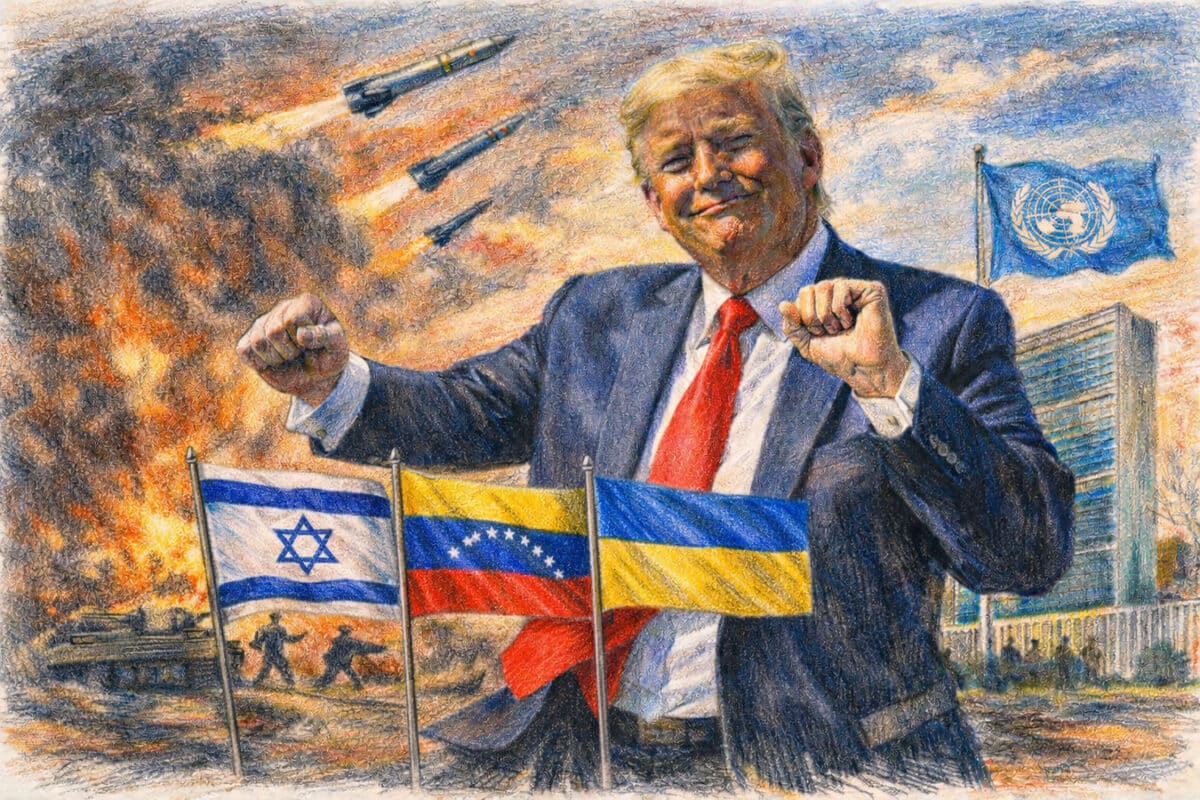
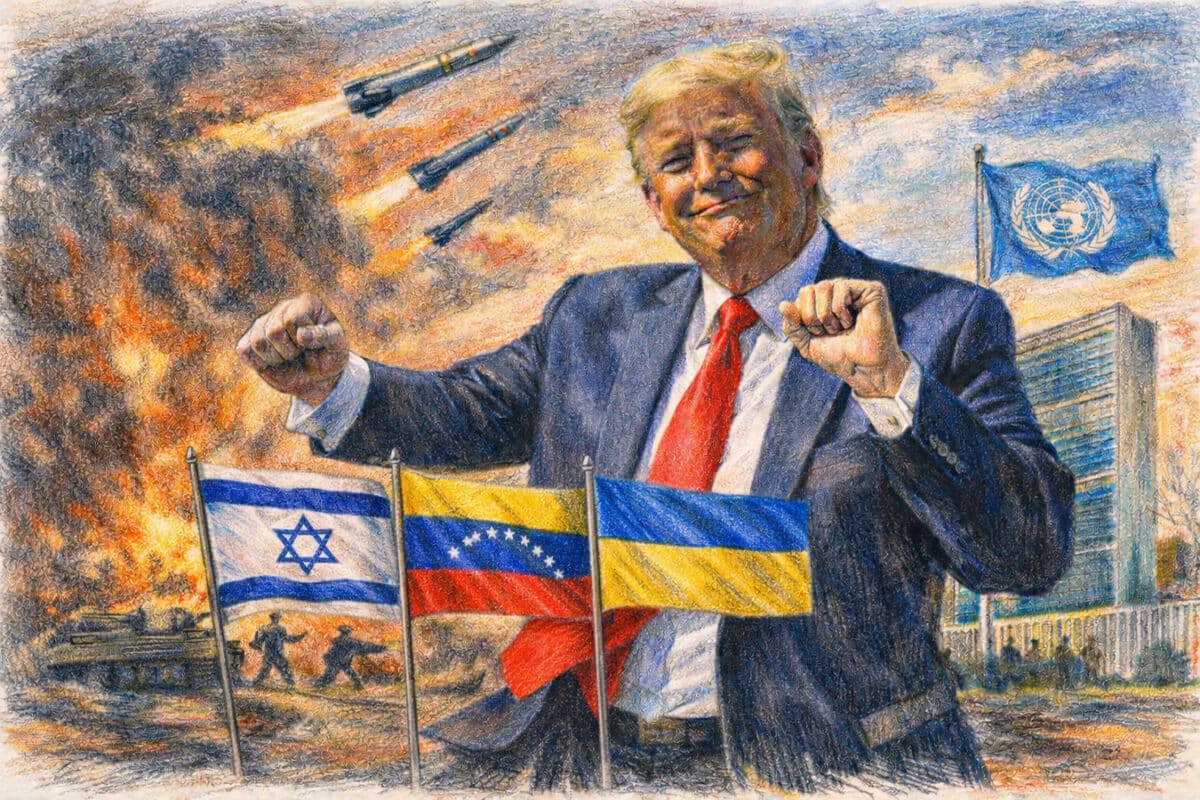
“Trump’s ‘Peace Council’ for Ukraine and Venezuela?: the ‘for Gaza’ model ‘may be attempted to expand’ — FT”

The White House is discussing the idea of expanding the mandate of the so-called “Peace Council” — a structure tied to post-war governance of the Gaza Strip in American plans — to other crisis points, including Ukraine and Venezuela. This was reported by the Financial Times on January 17, 2026, citing sources familiar with the discussions.

According to one of the publication’s interlocutors, in Donald Trump’s entourage, this body is seen as a potential alternative to existing international formats — a less formalized mechanism for resolution that could work where, in Washington’s view, the UN is too slow or politically blocked.

Trump's 'Peace Council' for Ukraine and Venezuela?: the 'Gaza model' 'may be attempted to expand' — FT
Trump’s ‘Peace Council’ for Ukraine and Venezuela?: the ‘Gaza model’ ‘may be attempted to expand’ — FT

It is this “parallelism” that causes tension among diplomats. FT writes that talks about expanding the Council’s role have alarmed both Western and Arab representatives: they are concerned about the prospect of granting too broad powers to a structure essentially tied to the White House and the political will of one president.

One Arab diplomat, quoted by FT, confirms: the idea is being discussed in the region, but the attitude towards it is restrained — this is “not a usual procedure.” In other words: it is unclear who sets the rules, what is considered a violation, how guarantees are ensured, who bears responsibility, and where “reconstruction management” ends and “external governance” begins.

The Ukrainian part of the discussions appears even more sensitive. A high-ranking representative of Kyiv, participating in consultations with the US, told FT that proposals for ending the war with Russia include the creation of a separate “Peace Council” specifically for the Ukrainian-Russian case.

According to this version, it may involve a mechanism that will not just be a platform for meetings but a body for control and guarantees of implementing a 20-point peace plan. The potential composition, as claimed by an FT source, may include representatives from Ukraine, Europe, NATO, and Russia — a format broader than bilateral and simultaneously narrower than the UN.

The White House is trying to dampen the excitement. An American official, cited by FT, stated at the end of the week that the planning of the “Peace Council” is focused exclusively on the Gaza Strip, and talks about other directions are premature. This resembles a familiar tactic: keeping the door ajar without fixing commitments while observing the reaction of allies and opponents.

A separate intrigue is Turkey. The Turkish president’s press service hastened to report that Trump allegedly invited Recep Tayyip Erdoğan to become a founding member of the “Peace Council.” Meanwhile, Israel previously opposed Turkey’s participation in such constructions around Gaza — due to political disagreements and Ankara’s role in the regional agenda.

American officials confirmed this week that invitations to potential participants were indeed sent out on Wednesday, but did not specify the recipients. The White House publicly presented the initiative as broadly as possible: “The whole world wants to be part of President Trump’s historic efforts to achieve peace in the Middle East.”

Looking at the original “Gaza” plan, the scheme looks like this: the day-to-day management of the enclave is to be transferred to a Palestinian technocratic committee, and the “Peace Council” is to oversee the process as a political and financial “umbrella.” According to FT, Bulgarian diplomat Nikolay Mladenov — a former Bulgarian defense minister and a figure with experience in international missions — is planned to be appointed as an observer/curator of the technocrats’ work.

The composition of the Council’s executive committee, described by FT, is also indicative: US Secretary of State Marco Rubio, President’s Special Envoy Steve Witkoff, Jared Kushner, former UK Prime Minister Tony Blair, American businessman Marc Rowan, World Bank President Ajay Banga, and US Deputy National Security Advisor Robert Gabriel. This is a mix of politics, special diplomacy, finance, and “large project managers” — a structure inherently geared towards quick decisions, control of flows, and PR effect.

Reflections and Analysis: What’s Really “New” Here

1) This is not a “peace body,” but a conflict management tool

The key question is not in the name, but in the function. If the structure is created under the White House and under Trump’s personal brand, it inevitably becomes a political lever of the US. And levers work not only for “peace” but also for the conditions of peace.

In this sense, the “Peace Council” looks like an attempt to replace international law with managed management: quick decisions, short approval chains, clear hierarchy. For business, this is a plus. For diplomacy — a minefield.

2) Acceleration is a plus, but the price may be high

The strong side of such a construction: speed. When it is necessary to launch humanitarian logistics, stabilize communal infrastructure, establish recovery financing, classical multilateral formats often stall.

The weak side: speed is achieved by reducing “brakes” — procedures, legal frameworks, publicity, parliamentary control. Therefore, diplomats fear “too broad powers”: fast management without clear responsibility.

3) Ukraine and Gaza are different tasks, and this may break the model

Gaza in American logic is simultaneously Israel’s security, humanitarian agenda, regional deals, and recovery. Ukraine is a war of attrition with Russia and a question of European security. Venezuela is a completely different geography and set of stakes.

If one “council” is attempted to be stretched over three different conflicts, it will either become decorative or turn into a political headquarters where decisions are made not based on universal principles, but on the basis of a favorable moment.

4) The main risk for Ukraine: the “council” as a platform for pressure, not guarantees

The formula “Russia and NATO can join it” sounds nice, but in reality, the key question is what constitutes a violation and what sanctions follow a violation.

If the “council” has no levers of coercion (economic, military, legal), then it records not guarantees, but a framework for bargaining. And then Ukraine risks finding itself in a situation where it is pushed to make concessions for the sake of a “quick result” that the White House can sell as a victory.

5) The main risk for Israel: the composition of participants and regional trade

For Israel, the question is not academic. Any structure that claims to manage post-war Gaza automatically affects:

  • who gains legitimacy as a “founder” and “guarantor”
  • how money and security control are distributed
  • which countries gain a role in humanitarian and civil infrastructure
  • how negotiation channels with Arab capitals change

If Turkey indeed gets a “founder” seat, it will become a factor of constant tension: Ankara will use the platform for pressure and public policy, and Israel — for blocking and counteraction. The result may be paradoxical: the “peace council” will become another arena of conflict.

6) Why the US is moving in this direction at all

We see this as an attempt to solve three tasks simultaneously:

  • reduce dependence on the UN and the Security Council, where blockages constantly arise
  • obtain a manageable mechanism of “deal + control + reconstruction”
  • establish a new foreign policy philosophy: fewer institutions, more personal agreements

This is the logic of a “project,” not the logic of a “convention.” And in 2026, it seems to be strengthening.

7) What will be a marker that all this is not PR

There is a simple test. If the “council” has:

  • transparent membership and exit rules
  • a public map of powers
  • a mechanism of responsibility for violations
  • a clear source of funding and audit

— then it can become a new tool of international practice.

If everything remains at the level of “invitations,” lists of VIP participants, and vague formulations about “historic efforts” — then it is primarily a political facade created for managing expectations and bargaining with allies.

Why this is important right now

Washington is testing a new architecture of influence: faster, tougher, more personalized than traditional international institutions. What this will turn into in practice will determine not only the “day after tomorrow of Gaza,” but also attempts to “package” wars and crises further — in Europe and the Middle East.

And this directly concerns Israel: because any sustainable mechanism that allows the White House to negotiate “peace packages” will inevitably include regional parameters — security, Syria, Iran, proxy groups, sanctions, logistics, and diplomatic roles in Gaza. NAnews — Israel News | Nikk.Agency


Video: “Know Ours” – Kirill Karetnik – from Ukraine, moved to Israel in 2009, served in the army, worked, and became a politician

The third episode of the project “Know Ours” about Ukrainians in Israel.
“This video was filmed before October 7, 2023. But the war in Israel put our activities on pause.”

Kyrylo Karetniuk – a Ukrainian who moved to Israel in 2009, served in the army, worked, and became a politician. Importantly, the interview is not about Kyrylo’s political sphere and is not of an agitational nature. The goal is to reveal the personality outside of political life and tell another story of an influential Ukrainian in Israel.

Host – Kateryna Trushyk.
Filming, editing, sound – Olena and Alex Ginzburg.
Haifa, Israel.

Kateryna Trushyk:

“The war in Israel has disrupted the plans of many people.

Elena Ginzburg, Alex Soundman Ginzburg, and I planned to develop our project about Ukrainians in Israel and Israelis helping to bring Ukraine closer to victory.
We had a list of heroes and heroines with whom we planned to record interesting interviews.

October 7, 2023, changed our plans.

We hope to still implement them and reveal and open many true heroes who do a lot of important work for both Ukraine and Israel.

The video that will be released today was recorded before October 7, 2023.

This is the third episode of the project “Know Ours”.

The hero of the interview is Kyrylo Karetniuk (קיריל קארטניק) – a Ukrainian who moved to Israel in 2009, served in the army, worked, and became a politician.
Importantly, our interview is not about Kyrylo’s political sphere and is not of an agitational nature.

Our goal is to reveal the personality outside of political life and tell another story of an influential Ukrainian in Israel.”

Leave a COMMENT

Read other News of Israel and the world on the channels of NiKK
Nikk.Agency on

Telegram,

Facebook

and Google News

nothing — Ukrainian cultural space in Jaffa (Israel): from the laboratory of emotions to support the Armed Forces of Ukraine — video UDM Israel

  • “We are confident that people who come to such events do not support Russian aggression. We try to cut off those who support the Putin regime.”
  • “If a Russian-language event is organized, then all proceeds from it go to support the Armed Forces of Ukraine (AFU).”
  • “We don’t allow racist crap, and we try to make sure that people who support Russian politics don’t get here.”

On YouTube channel UDM Israel – Ukrainian Health Banks in Israel an issue dedicated to a unique place in Israel — a creative Ukrainian space — was released nothingwhich became a center of attraction for Ukrainian and pro-Ukrainian projects. The channel’s host, Ulyana Dryuchkovainvites viewers into this atmospheric space located in the old city of Jaffa, Tel Aviv.

An interview recorded as part of the issue with Yurkom Muravyov helps to better understand the philosophy of the place

The place itself did not emerge as a carefully planned project, but as a spontaneous opportunity. After several successful exhibitions in Jaffa, the organizers received an offer to rent a space. The initial idea was simple – to do nothing, but the process of creating this place itself became an experiment that turned into a full-fledged laboratory of emotions. The goal was to create a space where one could move away from rational concepts and focus on creativity and emotional experiences.

This approach is reflected in the very concept of the place. Here you can see exhibitions, stand-up shows, creative master classes, yoga and even cooking lessons on making vareniki. The peculiarity of the project was the creation of a platform for events that evoke an emotional response and allow participants to express themselves through creativity. As the organizers note, it is this emotional component that attracts people – everyone who comes here is immersed in an atmosphere of creativity and openness.

In addition to various events related to culture and creativity, the space actively supports the Ukrainian diaspora and pro-Ukrainian initiatives. This became especially relevant against the backdrop of the war, when the center became a kind of hub for Ukrainian activities in Israel. The program includes events related to Ukraine almost every week. For example, evenings of Ukrainian animation are organized, which show contemporary works of independent Ukrainian animators. These projects do not have state support, but have a high artistic level, which makes them especially valuable for viewers.

Special attention is paid to the language club, which gathers the Ukrainian community for communication and learning the Ukrainian language. As the organizers note, each time something new happens at the meetings – sometimes it is a discussion of culture, sometimes games, but it is always support for Ukrainian self-awareness and the dissemination of Ukrainian culture both in Israel and in the world. This is a kind of “Ukrainian underground” that unites people interested in preserving Ukrainian identity.

It is also interesting that the center holds events in different languages ​​— Hebrew, English, Russian — but at the same time draws a clear line with those who support Russian aggression. For example, if a Russian-language event is organized, all proceeds go to support the Armed Forces of Ukraine (AFU). This principle has become an important part of the center’s philosophy: “We are confident that people who come to such events do not support Russian aggression. We try to cut off those who go to Russia or support the Putin regime.” This allows us to create a safe space where communication and creativity do not contradict moral principles.

One of the key events of the month was the performance of a Ukrainian stand-up comedian. The stand-up comedians not only share their humor, but also raise pressing social issues, which makes such performances not only entertaining, but also meaningful. A musical program with Ukrainian dances was also organized, including bachata in Ukrainian. The dances take place right on the wooden terrace in the open air, which creates an incredibly atmospheric and festive mood.

An interview with Yurko Muravyov, recorded as part of the issue, helps to better understand the philosophy of the place. Muravyov said that the project grew out of a simple idea to create something unusual and emotional, and today this space has become home to many Ukrainian initiatives. He emphasized that the Ukrainian diaspora turned out to be incredibly responsive and supported the idea of ​​creating such a center. Not only cultural events are held here, but donations are also collected to help the Ukrainian military, which emphasizes the importance of not only creativity, but also social responsibility.

Authors of videos from the channel UDM Israel – Ukrainian Health Banks in Israel note that this place has become a true symbol of Ukrainian creativity and resilience in Israel. They also reminded about the opportunity to support the project both financially and through active participation: likes, comments and distribution of the video help promote the idea on the Internet.

Videohttps://www.youtube.com/watch?v=DFDMP0FtKaQ

UDM Israel – Ukrainian Health Banks in Israel https://www.youtube.com/@udmIsrael

nothing

Leave a comment↓


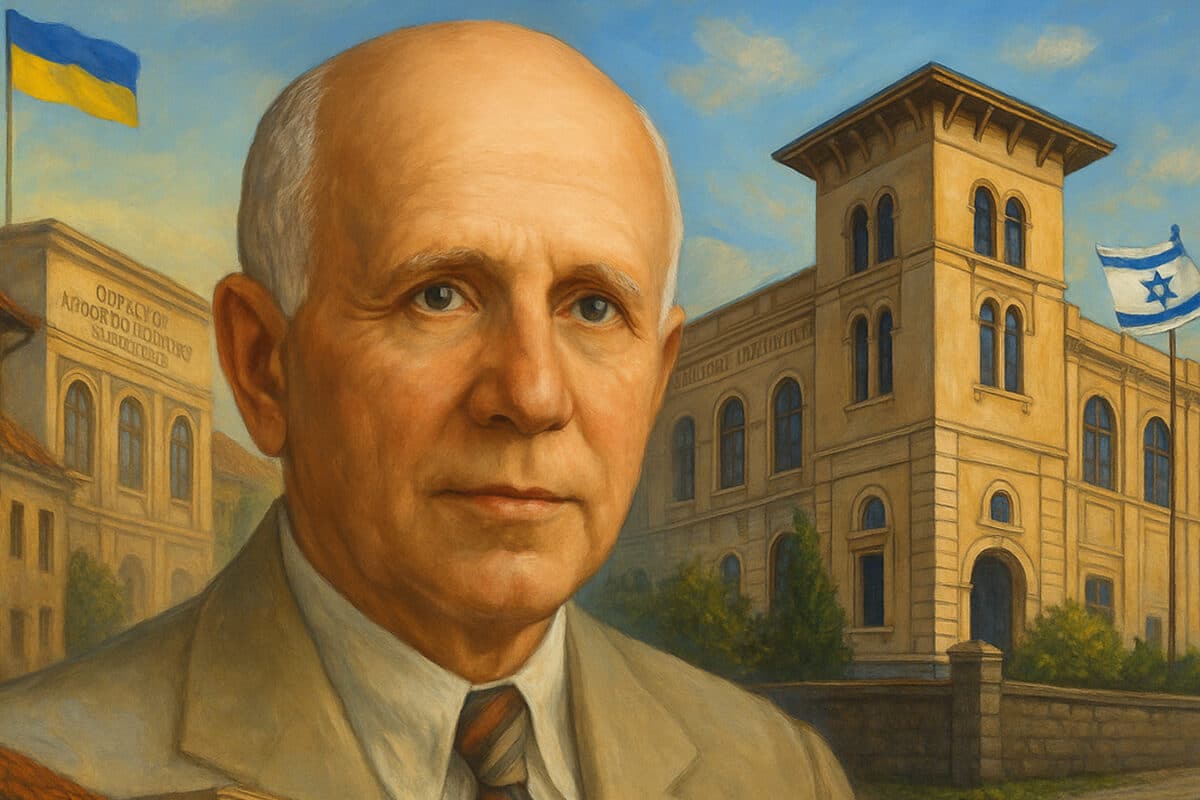
Jews from Ukraine: from Uman to the White City. Yehuda Magidovich, the first architect of Tel Aviv

The first chief architect of Tel Aviv – a city destined to become one of the most influential capitals in the world, was a native of Uman, Yehuda Magidovich, the son of Uman women’s hat designer Binyamin Zvi and Uman housewife named Rachel. When one of the founders of the State of Israel and its first prime minister David Ben-Gurion in 1925 organized a ceremonial reception for the most respected guest, Baron Rothschild – he did it in the Great Synagogue of Tel Aviv, built by a man from Uman…

In the section “Jews from Ukraine” – Yehuda Magidovich (January 21, 1886, Uman, Ukraine — January 5, 1961, Tel Aviv, Israel).

From Uman to the White City: The Story of Yehuda Magidovich

In the mid-19th century, the family of hatter Binyamin-Zvi Magidovich lived in Uman. His workshop smelled of steam, pressed felt and fresh ribbons — it was there, in 1886, that a boy named Leib was born, who later all of Tel Aviv knew as Yehuda Magidovich.

His mother, Rachel Sadovaya, was the keeper of the home, and his father was a master who made hats for both officials and young dandies. Studying in a cheder in a small town was the natural beginning for a Jewish boy of that time. But Leib, in addition to prayers and the Pentateuch, was drawn to drawings and unusual shapes. Years later, this passion would lead him in 1903 to Odessa.

Odessa years: brush, pencil and architecture

At the beginning of the 20th century, Odessa was a city where art and commerce mixed in the noisy port. Magidovich studied fine arts in Odessa, then in Kyiv, and then returned to Odessa to study architecture — essentially combining aesthetics with engineering calculation. By 1910 he already had a diploma and his first commissions. Yes, Yehuda Magidovich studied in Odessa, including at an art educational institution.

Most likely (there are no reliable sources of information about exactly where he studied), it was the Odessa Art School with an architectural department, where he received artistic training, and then probably continued his studies at the “Odessa Academy of Arts”, graduating around 1910. This is confirmed by both English- and Hebrew-language sources. In Odessa, he did not just draw facades. Magidovich designed houses that carried echoes of Italian villas and French resort mansions — adapted, of course, to the Odessa climate and local habits. In 1911 he married Atil, née Vogel, and the couple had two sons: Rafael Megiddo and Avshalom Megidovich.

But life in the city was restless. Pogroms, revolutionary rallies and street shootouts forced Jewish communities to self-organize. Magidovich did not stand aside — he took part in Jewish self-defense, and some sources even call him the district commander of one of these units.

1919: Odessa says goodbye

The Civil War was tearing the empire to pieces. In Odessa, families with bundles crowded near the port docks, waiting for permission to leave. Magidovich obtained a forged ID to leave the city, and in the autumn of 1919 he was among the passengers of the steamship “Ruslan”.

With a forged Odessa ID – to the shores of Palestine…

In the autumn of 1919, from Odessa to Palestine, on a journey that made him legendary, the ship “Ruslan” set sail with six hundred Jews on board. Modern Israelis call the “Ruslan” nothing less than “the Mayflower of Zionism, which opened the period of the Third Aliyah”. (The “Mayflower” was the ship that brought the first settlers from England to the shores of the USA). The name “Ruslan” became equally symbolic for Jews — although it was not the first since the beginning of the return of Jews to the Promised Land, its six hundred passengers were the elite of the future state, which was rising from the ashes…

Across the territory of the former Russian Empire, war was raging when in Odessa in all the port houses and even right on the bundles of belongings in the middle of the square, Jewish refugees had gathered. 170 of them were refugees from Safed and Tiberias – subjects of Great Britain, who wanted to return to their native Palestine. The British consul appealed to the Soviet Odessa authorities – and they gave permission to leave. But Odessa would not be Odessa if to those 170 foreigners they did not add another half thousand Jews from Ukraine, Poland and Russia.

They hastily studied the geography of Palestine so as not to “slip up” during the conversation in the Odessa Cheka, and as for the necessary languages — Hebrew and English — each of them already spoke them without extra training. In addition, Odessa professionals made each one a repatriate certificate (“teudat oleh”) with the stamp “Committee of Refugees from Eretz Israel for their return home”.

In the end, “Ruslan” was given the green light — on the journey to distant Palestine, the resident of Uman Yehuda Magidovich went together with future Israeli celebrities — historian Klausner, future editor of the famous newspaper “Haaretz” Glikson, poet Ratosh, doctor of medicine Yassky, artists Konstantinovsky, Frenkel, Navon and Litvinovsky, sculptor Ziffer, future Minister of Education Dinur, future Knesset member Rachel Cohen-Kagan, the mother of future Israeli Prime Minister Yitzhak Rabin — Rosa Cohen…

This was not just a voyage — Israelis would later call it “the Mayflower of Zionism”. On board were about six hundred people: historians, artists, future politicians, poets. On December 19, 1919, “Ruslan” docked in Jaffa, and Magidovich, along with the others, set foot on the land that would become his new home.

Jews from Ukraine: from Uman to the White City. Yehuda Magidovich — first architect of Tel Aviv

The beginning in Tel Aviv: drawings from Odessa

He did not arrive empty-handed — in his luggage were hundreds of Odessa projects that he had managed to save from the archives. Most of these were plans for villas in the spirit of the Italian and French Riviera, reworked “in the Odessa style.”

Now they were to be transformed into houses on Montefiore Street, Nachlat Binyamin, and in new neighborhoods. Many of these mansions were built in Tel Aviv, reinterpreted already in a Jewish manner. In 1920, he was appointed the first chief architect of Tel Aviv. He was responsible for planning and approving projects, and at the same time designed himself — sometimes in eclecticism with elements of the Moorish style, sometimes in strict Art Deco.

He held this position until 1923, after which he opened his own office.

Friend of the mayor and bold projects

He had known Mayor Meir Dizengoff since the days of Uman. The friendship helped — not in terms of privileges, but in terms of boldness of decisions. Thus, “Galei Aviv Casino” — a building on stilts right above the water — became the city’s calling card. The creative bohemia gathered here, and even Winston Churchill visited. The casino survived the storm of 1936 but was demolished after Dizengoff’s death — during his lifetime the mayor “kept a hand” over his friend’s project. In 1923, Yehuda Magidovich opened his own architectural firm and began to build residential and administrative buildings in the city, which at that time were especially in demand in the young city. To this day, the construction company “Rafael Megido,” named after Magidovich’s son, is well known.

Magidovich worked in the Art Nouveau style — this is what the local version of the modern style is called in Israel. Many interesting buildings were destroyed, for example, the “Kovalkin House” in the Dizengoff Square area, and the casino — “an amazing, spacious, light building, in the spirit of people in high spirits.” But many, fortunately, have survived, including the Great Synagogue on Allenby, the “Levin House,” the “Nordau” hotel, the “Ben Nahum” hotel, and the “Beit Carousel” on Rothschild Boulevard. In the central part of the “Carousel House” there was a fireplace, and inside the windows was suspended a second row of colored stained glass windows.

They hung on rings, and when the air heated by the fire in the fireplace caused them to move slightly, the reflections of the fire played in the glass pieces of the stained glass, and then bright colored spots danced around the room — hence the name of the house. The “House with Columns” on Rambam Street is decorated with columns and arches — elements of the classical style. It was built in 1924 and is now included in the list of houses subject to restoration. The square where this building is located bears the name of Yehuda Magidovich.

The Levin House: terrorist attack and secret mechanism

In 1923, wealthy merchant Yaakov Levin commissioned Magidovich to build a mansion on Rothschild Boulevard. The architect designed a Tuscan villa with a tower whose roof could be retracted, opening a view of the starry sky during the Sukkot holiday. Over the years, the building housed a bank, a British school, the headquarters of the “Hagana,” and later the Soviet embassy. In 1953, fighters from “Etzel” and “Lehi” threw a grenade into the building — a protest against the antisemitic “Doctors’ Plot” in the USSR. People were injured, including the ambassador’s wife. Three days later, the USSR broke off diplomatic relations with Israel — until Stalin’s death.

In 1991, the Levin House, the work of the native of Uman, was declared “an object of special architectural value” and underwent an extremely expensive restoration — with the involvement of the best specialists and equipment specially brought from South Africa. When restorers worked on the tower, they discovered in its highest part a pile of old newspapers and an amazing mechanism, the purpose of which no one knew. They tried to set it in motion — and were shocked when the roof above their heads retracted: the mechanism, invented by the man from Uman, worked perfectly even after 70 years!

After the restoration, the Levin House housed exhibition halls and the office of the famous antique auction house Sotheby’s. In 2006, for 35 million shekels (comparable to the cost of the nearby “Beit Alrov” tower), the villa was purchased by Canadian billionaire Gerry Schwartz. The house, built by a native of Uman, still remains one of the main architectural gems of the capital’s tourist routes.

Architectural style

Over his career he designed more than 500 buildings. The Great Synagogue, villas with columns and domes, houses in Art Deco and in the International Style — all these are works by Magidovich. Even when moving toward modernism, he retained the habit of adding details — arches, small towers, decorative grilles — that referred to his European and Ukrainian experience.

Ukraine in memory and in works

After emigration, he could not return to Ukraine — the Soviet authorities did not allow such contacts. But in his projects one could always find echoes of the “Ukrainian period”: the proportions of the facades, planning techniques, decorative solutions. Israeli guidebooks invariably call him “a native of Uman.” In recent years Ukrainian local historians have also remembered him: publications were issued in the Cherkasy region, and in the Odesa museum in 2024 they even held a review of his Odesa years.

Final and legacy

In 1954, Magidovich suffered a stroke and stopped working. He died in 1961 in Tel Aviv and was buried in the Kiryat Shaul cemetery. He left behind not only buildings, but also an example of how a person from a provincial Ukrainian town can influence the appearance of one of the most famous cities in the world. He was survived by sons and descendants. The family house on Mogiliver Street, which was not included in the list of city heritage sites, was demolished in 2016, and a modern residential building was constructed on its ruins.

In 1993, architect Gilad Dovshni published an extensive book devoted to Magidovich’s work and his contribution to the development of Tel Aviv and Israel’s construction industry. In 2019, a memorial in his honor was installed on the pedestrian Nachalat Binyamin Street.

… The section Jews from Ukraine on NAnews — News of Israel tells about people whose roots are in Ukraine and whose contribution is in the history of the Jewish people and Israel. These are stories where Ukrainian experience and Israeli destiny are intertwined in one life path. The biography of Yehuda Magidovich is a vivid example of this connection, from Uman and Odessa to hundreds of buildings in the White City.

In the USA, a lawsuit has been filed against Russia demanding the repayment of debts from the Tsarist era.

A lawsuit has been filed in a U.S. federal court that harkens back to century-old legal disputes but with a very modern agenda. The American investment fund Noble Capital RSD is seeking to recover up to $225 billion from the Russian Federation for 1916 Russian Empire bonds and directly points to frozen Russian assets abroad as a potential source for debt repayment.

The defendants in the case are named as the Russian Federation, the Ministry of Finance, the Central Bank, and the National Wealth Fund. The plaintiff claims to own imperial bonds worth $25 million with a 5.5% coupon, placed through the National City Bank of New York, and estimates the total obligations, including interest and the so-called “gold clause,” at a minimum of $225 billion.

In the lawsuit materials, the fund insists that the refusal to fulfill obligations violates the doctrine of succession of power. According to Noble Capital RSD, Russia, as the successor to the USSR, inherited not only assets but also debts, including pre-revolutionary securities, which, the plaintiff claims, were not terminated concerning American investors.

The lawsuit separately outlines a mechanism for possible court decision enforcement. The fund directly links its claims to Russian assets frozen after the annexation of Crimea in 2014 and especially after the start of the full-scale war against Ukraine in 2022. The plaintiff emphasizes that this is not about confiscation but about debt offset as a form of obligation fulfillment, which, it claims, is in accordance with international law.

There has been no official reaction from Moscow to the lawsuit yet. Meanwhile, the Russian side’s position on “tsarist debts” remains unchanged. Sergey Sokolov, a partner at Marks & Sokolov, representing the defendants’ interests, stated that the bonds were annulled by the Soviet government back in 1918 and “long sent to the dustbin of history.” According to him, neither the USSR nor the Russian Federation ever recognized responsibility for these papers.

The Russian side has already demanded that the fund withdraw the lawsuit by January 30. If this does not happen, lawyers intend to file a motion to dismiss the lawsuit based on the U.S. Foreign Sovereign Immunity Act.

The lawsuit’s history unfolds against the backdrop of a massive blockade of Russian reserves. After the war began, EU and G7 countries froze about half of Russia’s gold and foreign exchange reserves. More than €200 billion are in the European Union, mainly in accounts of the Belgian depository Euroclear.

In response, Moscow introduced special “C” type accounts, where assets of investors from “unfriendly” countries and their income are accumulated. Withdrawal of funds is possible only by decision of a government commission. Simultaneously, the Bank of Russia filed a lawsuit against Euroclear for more than 18 trillion rubles, accusing the EU of attempting to appropriate assets.

The Kremlin has repeatedly stated that any attempts to use frozen reserves undermine the foundations of the global financial system. Earlier, Vladimir Putin called such ideas robbery and warned of long-term losses for the global financial order.

Lawyers note that even if the American court accepts the Noble Capital RSD lawsuit for consideration, the prospect of actual recovery remains highly uncertain. Issues of state immunity, succession, and the admissibility of sovereign asset offsets are in a gray area of international law and directly depend on the political context.

For global markets, this case is important not so much because of the amount but because of the consequences. It tests the boundaries of the sanctions regime, the role of American courts in cross-border financial conflicts, and the very concept of dealing with frozen state assets. That is why the dispute over the “tsarist debt” goes far beyond archival bonds and becomes part of a large geopolitical discussion, closely followed by readers of NAnews — News of Israel | Nikk.Agency.

19 Kislev – Hasidic New Year: historical connection between Jewish heritage and Ukraine

The Hasidic New Year is celebrated on the 19th of Kislev and symbolizes spiritual renewal. This day is associated with the release of Rabbi Shneur Zalman of Liadi from prison in 1798, which was a turning point for the Hasidic movement.

The founder of Hasidism, the Baal Shem Tov, began his activities in the 1730s in Ukraine, making cities such as Medzhibozh, Uman and Berdichev centers of this spiritual teaching.

Role Chief Rabbi of Ukraine Moshe Azman as a spiritual leader enhances the significance of Hasidism in the modern Ukrainian context. His efforts help strengthen ties between Israel and Ukraine, emphasizing the importance of shared historical roots.

“This event is of deep significance for Ukraine, because it was the Ukrainian land that became the cradle of Hasidism. Medzhibozh, Uman, Berdichev, Nizhyn and many other Ukrainian cities are symbols of spirituality that attract pilgrims from all over the world!

Hasidism reminds us of the importance of joy, unity and faith even in the most difficult times. This message is very relevant today, when Ukraine and Israel are fighting for their Independence and freedom.” — written by Moshe Azmanemphasizing the relevance of this message for today.

The importance of Hasidism for Ukraine and Israel

Hasidism integrates Jewish heritage and spirituality with Ukrainian history. These connections are also important for the modern Jewish community, especially in the context of interaction between Ukraine and Israel.

  • Medzhibozh – the place where the Baal Shem Tov founded the movement.
  • Uman – a center of pilgrimage thanks to the tomb of Rabbi Nachman.
  • Berdichev – the city where Rabbi Levi Isaac worked and was buried.


Celebration traditions

On the 19th of Kislev according to the Jewish calendar (this year, 2024, falls on December 19-20), the New Year of Hasidism is celebrated.

The Hasidic New Year is celebrated with prayers, readings of philosophical texts, and festive gatherings. On this day, the annual cycle of reading the book “Tanya” begins, which is the basis of the teachings of the Chabad movement.


Table: Historical centers of Hasidism in Ukraine

City Meaning
Medzhibozh The place where the Baal Shem Tov founded the movement.
Uman Rabbi Nachman’s tomb, attracting thousands of pilgrims.
Berdichev The city of Rabbi Levi Isaac, a significant center of Jewish spirituality.

Ukraine – the cradle of Hasidism

Hasidism as a spiritual movement grew on Ukrainian soil. These traditions are still alive and revered, and the monument cities continue to attract pilgrims from all over the world.

Our website NAnews — Israel News pays special attention to important events that unite the two peoples. The Hasidic New Year is a vivid example of how history unites Israel and Ukraine.

Conclusion

The celebration of the 19th of Kislev recalls spiritual roots, common traditions and the importance of mutual respect between peoples. The Ukrainian land became the starting point for Hasidism, whose ideas of joy, faith and unity are relevant for all generations.

……………………….

Leave a comment on WhatsApp – channel NAnews ↓ — Israel News

Leave a comment on Telegram – channel NAnews ↓ — Israel News

The mechanics of “resetting”: why there are no riots in the Russian Federation, even though the war against Ukraine has long become a systemic humiliation of its own citizens

The question “why doesn’t Russia rebel” is being asked in Ukraine and increasingly in Israel, where the war in Europe is not seen as a “distant conflict” but as part of a common axis of threats: Moscow–Tehran (Hamas, Hezbollah, Houthis, and other allied RF terrorist formations), suppression technologies, drones, missiles, sanctions, Syria. On the surface, the answer seems simple: fear and propaganda. But that’s too narrow. NV report offers a set of explanations — weak horizontal connections, targeted “deals” of the state with families, a repressive environment, fatigue without organization. The essence is that the Kremlin has turned the war into a controlled conveyor, where the “human cost” does not turn into political action.

We will add our own analysis to this: which arguments really hold, where they are insufficient, and what might break the current model.

Mechanics of 'zeroing': why there are no riots in the Russian Federation, although the war against Ukraine has long become a systemic humiliation of its own citizens
Mechanics of ‘zeroing’: why there are no riots in the Russian Federation, although the war against Ukraine has long become a systemic humiliation of its own citizens

1) Disunity and lack of horizontal connections — this is not a metaphor, it’s infrastructure

The argument about “weak horizontal connections” often sounds like a psychological diagnosis, but in reality, it is institutional. Protest is not an emotion, but logistics: where to gather, how to spread information, who organizes legal protection, who coordinates mutual aid, where are the media channels, how to collect money, how to connect different cities.

In Russia, this infrastructure has been systematically dismantled for years: public organizations were declared “foreign agents,” independent media were closed, local activists were imprisoned, any “self-organization” was labeled as a threat to the state. The result: even if there are many dissatisfied people, they do not form an active network. This explains the paradox: high fatigue coexists with a low capacity for collective action.

Another important point: disunity is not a “national character,” but the result of policy. The regime encourages atomization: let people compete with each other for resources, status, safety. Disunited people are easier to control. This is not unique to Russia; it is a standard tool of authoritarian systems that fear not protests, but solidarity.

2) “Deals” with families and private compensation instead of public justice

The second pillar is targeted “tension relief” through money and administrative decisions. The family of a deceased person may receive compensation, benefits, “help” with documents. From a moral standpoint, this does not negate the tragedy. But from a management standpoint, it works: the pain becomes a private matter for the family, not a public conflict.

This mechanism has two bonuses for the authorities. The first is the neutralization of a potential pressure group. Relatives of the deceased could become a mass movement, as has happened in other wars. But when each case is “closed” separately, a unified subject does not form.

The second is the attachment of a person to the state. The family becomes dependent on payments and decisions of officials. This encourages silence: “just so it doesn’t get worse,” “don’t take away benefits,” “don’t start problems.” In an authoritarian system, even formal assistance often acts as a tool of control.

3) Fear is important, but not directly: fear is a network of small threats

Yes, repression suppresses protest. But the risk of prison is not as effective as the sum of small threats: job loss, problems at the university for children, pressure on business, fines, searches, “preventive conversations,” the risk of being listed as unreliable. This makes publicity toxic. A person may hate the war but chooses the strategy of “not sticking out.”

Here is an important detail: fear works as long as people believe that the regime has long arms and that resistance is pointless. As soon as there is a sense of the regime’s instability, fear begins to fail. Therefore, repressive regimes often appear “monolithic” right up to the moment when they break down sharply. Not because people suddenly became brave, but because fear ceased to be rational.

4) Propaganda is not the main engine. The main engine is the habit of powerlessness and the lack of experience of results

Explaining everything with propaganda is convenient, but it’s an oversimplification. Propaganda helps justify the war in conversation and reduces cognitive dissonance. But even many of those who do not believe the TV do not protest.

The reason is deeper: a significant part of society has no experience that protest brings change. If a person sees for decades that the authorities do not respond, elections do not change reality, rallies end in detentions — a habit of political helplessness forms. Not “I support,” but “I decide nothing.” This is the foundation of passivity.

The scheme looks cynical: the regime can tolerate growing discontent if this discontent is not organized and does not turn into action. Therefore, the authorities fear not criticism in the kitchen, but coordination on the street.

5) The war is unevenly distributed: capitals lived “as if nothing was happening” for a long time

Our key addition to NV’s logic is the unevenness of pain. The war in Russia has long been “smeared” across the periphery. Recruitment, losses, death notices, material incentives hit harder on poor regions, small towns, national outskirts. And large cities — especially Moscow and St. Petersburg — tried to live in showcase mode: cafes, shopping centers, services, holidays.

The regime does everything to prevent the war from becoming “capital.” Because the protest potential in capitals is higher: more people with resources, more connections, more media coverage. As long as the war remains “regional” in terms of human cost, the likelihood of a nationwide explosion is lower. This is not an excuse. This is an explanation of the mechanics.

6) The alternative to protest is departure, evasion, internal sabotage

Another reason for the “silence” is not because people are satisfied, but because the protest has gone into other forms. Some have left (including to Israel). Some have gone into “internal emigration”: silence, refusal to participate in politics, minimizing contact with the state. Some evade: relocations, fake certificates, gray schemes, avoiding military enlistment offices, refusal of publicity.

This slowly but steadily destroys the social fabric. The problem is that such “quiet protest” does not give an immediate political effect but undermines trust and manageability. The regime can live with this as long as it maintains forceful control and financial cushions.

7) The army as a mirror of society: money becomes a tool of coercion

NV describes an important point about the “contract model” and payments. On paper, this looks like a voluntary choice. In practice, more often — as economic coercion. When there is no decent work in the region, high payments for a contract turn into a trap. The regime buys the loyalty of poverty.

At the same time, the increase in payments is a sign of a problem, not strength. If recruitment were stable, there would be no need to constantly raise the price of human life. When the price rises, it means motivation falls, and the risk of refusal increases.

And then a toxic internal economy of the army appears: extortion, “paid” decisions, corruption, violence. This destroys morale and discipline. And this is also a factor that can lead to unexpected breakdowns — not necessarily mass riots in the squares, but to a loss of manageability within the institution that should be the regime’s support.

8) Does this mean there will be no rebellion? No. It means that rebellion depends not on morality, but on manageability

The most common mistake is to expect a rebellion as “moral retribution”: since the war is unjust, people must come out. In reality, mass protests arise when manageability breaks down: when the usual model “you endure — we maintain the appearance of normality” stops working.

Triggers that can really change the picture:

— Mobilization affecting large cities massively.
If the war ceases to be “regional” and becomes “capital,” the protest risk rises sharply.

— Economic blow that cannot be masked by payments and loans.
When incomes fall, jobs disappear, “peaceful” expectations collapse — passivity decreases.

— Management collapse in the regions.
If local elites stop “resolving” the consequences of the war, accumulated anger can become massive.

— Major military failure.
Not in the form of “news,” but in the form of a breakdown of the sense of control, when even apolitical people begin to think that the authorities are leading the country to disaster.

9) Why is this important to Israel

For Israel, the question is not academic. Russia has long ceased to be a “neutral player” and actively interacts with Hamas, with Iran, its terrorist proxies — Hezbollah, and other terrorists) and its military capabilities. Any strengthening or weakening of Russian stability reflects on regional threats: technology supplies, sanctions regimes, political deals in Syria, export of repressive practices.

As long as the Kremlin maintains internal stability through disunity and redistribution of pain, it can continue the war and simultaneously negotiate in the Middle East. But this model has a limit. When the war begins to “come home” — to capital families, to the economy, to everyday life — the regime faces what it fears most: not criticism, but a mass refusal to be governed.

This is precisely the practical meaning of the “zeroing theory.” The war turns into a mechanism that nullifies a person — their rights, safety, dignity, choice. But the system holds as long as the nullification remains individual, fragmented, “one by one.” As soon as it becomes collective and synchronous — the walls begin to crack.

NAnews — Israel News | Nikk.Agency