Jews from Ukraine: Moshe Segal from Poltava, the man who was arrested for blowing the shofar in Jerusalem on Yom Kippur

The story of Moshe (Moshe-Tzvi) Segal is the trajectory from Poltava to Jerusalem. Youth in the Ukrainian Jewish environment, strict study routine, and the first Zionist circles turn into a public gesture of freedom at the Western Wall on Yom Kippur in 1930. He gave the final sound of the shofar — tekiah gedolah — and was arrested by the British police; that same evening, Rabbi Avraham Yitzhak Kook secured his release. This frame marks the beginning of the long journey of a man who not only protested but also built institutions of Jewish life.

Birth and Childhood in Poltava (1904–1924)

Moshe Segal was born in Poltava on February 23, 1904 (6 Shvat 5664) to the family of Avraham-Mordechai ha-Levi Segal and Henna-Leah Minkin. His home was traditionally Jewish, with deep religious and Zionist traditions.

From an early age, he was distinguished by his eagerness for books. Segal’s “second school” was not a gymnasium but the Poltava Jewish Community Library, where he spent hours reading philosophical treatises, chronicles, and journalism. There he first became acquainted with the works of medieval thinkers, while simultaneously getting involved in Poltava’s Jewish youth organizations: already in 1916 he joined “Tikvat Yisrael,” and from 1920 he actively participated in “Tzeirei Zion” and “Hechalutz.” These unions combined learning with practice and instilled in teenagers the aspiration for aliyah — relocation to Eretz Yisrael.

During World War I, the Mir Yeshiva was evacuated to the city for several years (1914–1921), and Moshe studied at the Mir Yeshiva in Poltava from about the age of ten to fifteen. This accustomed him to the discipline of the beit midrash and the “bundle” of three words: Torah, Eretz Yisrael, action.

By the early 1920s, Moshe Segal had ceased to be just a curious teenager. He became one of those who connected the “reading” youth with the “practitioners”: he participated in organizing hachsharot — agricultural internships to prepare for relocation to Eretz Yisrael. These camps helped teenagers and young people not only physically prepare for future life but also feel the unity of the cause. Moshe supervised the dispatch of young people to farms in southern Ukraine, ensuring that the community in Poltava was not only a center for studying books but also a launching pad for action.

These twenty years in Poltava shaped him as a “man of action.” It was there that book learning, public work, and the first leadership qualities merged, which he carried throughout his life — from the arrest at the Western Wall to participation in underground organizations and the establishment of Israel.

Reference: What is the “Mir Yeshiva” and what does it have to do with Poltava

The “Mir Yeshiva” is one of the most influential Lithuanian (Ashkenazi) Torah academies. Founded in the town of Mir (now Belarus) in 1815–1817 by the Tiktin family (Rabbis Shmuel, Avraham, and Chaim-Leib Tiktin), it became the flagship of the “Volozhin” school with an emphasis on deep Talmudic study and strict academic discipline. At the turn of the 19th–20th centuries, it was strengthened by Rabbi Eliyahu-Baruch Kamai and his son-in-law, the future Rosh Yeshiva Rabbi Eliezer Yehuda Finkel; the spiritual “engine” of the interwar period was the mashgiach Rabbi Yerucham Levovitz — under him, Mir was called “the yeshiva where future heads of yeshivas are raised.”

The key to our topic is the Poltava period. With the start of World War I, in 1914, the yeshiva was evacuated from Mir to Poltava, where it operated until 1921. It was during these years that Moshe Segal studied at “Mir” in Poltava: the beit midrash, the rhythm of study, partner responsibility, and the “bundle” of three words — Torah, Eretz Yisrael, and action — were formed in him not in an abstract “Lithuanian” environment but in the specific Ukrainian Poltava.

After the Poltava period, the Mir Yeshiva had a rather dramatic fate:

  • 1921 — after the Civil War and Soviet power in Ukraine, it became impossible to maintain a religious educational institution. The yeshiva left Poltava and returned to the town of Mir (then Poland).
  • 1939 — after the Molotov-Ribbentrop Pact and the division of Poland, part of Belarus went to the USSR. The yeshiva found itself under Soviet rule, making its existence impossible.
  • 1940–1941 — the leaders and students of the yeshiva moved to Lithuania. From there, thanks to the help of Japanese consul Chiune Sugihara and Dutch diplomat Jan Zwartendijk, several hundred students received transit visas.
  • 1941–1947 — refugees from the yeshiva ended up in Shanghai (China), which was then under Japanese occupation. There, the yeshiva continued to function, which is considered a unique case of preserving a traditional Talmudic school during the Holocaust years.

During World War II, “Mir” experienced a unique escape “via the eastern route”: Mir → Vilna/Keidan (Lithuania) → transit visas → Kobe (Japan, 1941) → Shanghai (1941–1947).

After the war, two main centers grew from this line: in Jerusalem (officially established in 1944–1945, Beit Yisrael district) and in Brooklyn (Mirrer Yeshiva, established in the 1950s under the leadership of Rabbi Avraham Kalmanowitz). The Jerusalem branch was successively headed by Rabbi Chaim Shmulevitz, Rabbi Nachum Partzovitz, Rabbi Binyamin Beinush Finkel, Rabbi Nosson Tzvi Finkel; today it is led by Rabbi Eliezer Yehuda Finkel along with other senior roshei yeshiva (including Rabbi Yitzchok Ezrachi).

Where and how many students now. The Jerusalem “Mir” is the largest yeshiva in the world: according to open data, it has about over nine thousand students (≈9–9.6 thousand). The American Mirrer Yeshiva in Brooklyn has several hundred students (school branch and post-school program), which is significantly smaller but historically key to preserving tradition in the USA.

The conclusion for our material is simple: “Mir” is the “Oxford” of the Torah world; Poltava was its temporary home in 1914–1921; Segal is one of those whom the “Poltava Mir” shaped. Therefore, in his biography, we highlight both the yeshiva itself and its connection with Poltava in such detail.

Poltava: Ukrainian and Jewish History to the Present Day

Middle Ages. The first mention of Poltava dates back to 1174. At that time, it was a fortified settlement on the Vorskla River, part of the Principality of Pereyaslav.

Tatar-Mongol Invasion. In the 13th century, Poltava, like other cities of Kievan Rus, suffered from Batu’s campaigns (1237–1240). The city was destroyed, the population partially exterminated or taken captive. For several centuries, the territory was under the influence of the Golden Horde.

Polish-Lithuanian Period. From the 14th century, Poltava was under the rule of the Grand Duchy of Lithuania, and then the Polish-Lithuanian Commonwealth. During this period, the first Jewish families and traders appeared.

Cossack Era. In the 17th century, Poltava became the center of a Cossack regiment. During Bohdan Khmelnytsky’s uprising (1648–1657), the city played a significant role in the struggle for autonomy.

Battle of Poltava. In 1709, the decisive battle of the Great Northern War took place here: the alliance of Charles XII and Ivan Mazepa was defeated by Peter I. After this, Poltava was secured for the Moscow state.

Second Half of the 18th Century. By this time, a Jewish community already existed in Poltava, although Jews were formally restricted from living in central areas of Ukraine. Despite this, the first synagogues, charitable funds, and schools were formed here.

19th Century. In 1802, Poltava received the status of a provincial center. The city became the cultural capital of Left-Bank Ukraine: Ivan Kotlyarevsky worked here, Nikolai Gogol began his studies, and theaters opened. By this time, the Jewish community had reached significant influence: according to the 1897 census, 11,046 Jews (20.5% of the population) lived in Poltava. There were 10 synagogues, a Talmud Torah with 300 students, a women’s school, a library (8,000 books), and a Jewish hospital.

World War I and Interwar Period. From 1914–1921, the famous Mir Yeshiva evacuated from Belarus was located in Poltava — one of the largest centers for Torah study. During this time, future activist Moshe Segal studied here. In 1926, about 93,000 Jews lived in the province, and in the city itself — 18,476 (20.1% of the population). But by 1939, the share had decreased to 9.9%.

World War II. The Germans entered Poltava on September 18, 1941. Already on September 25, about 5,000 Jews were shot, and on November 23 — another 3,000. In total, during the occupation, more than 22,000 Jews died in the region.

Soviet Period. After the war, the community partially recovered, but under atheistic policies. In 1959, the authorities closed the last functioning synagogue, and Jewish life went underground. Meanwhile, the city developed as an industrial and educational center of the Ukrainian SSR.

Independent Ukraine. Since the late 1980s, the community began to revive. In the 1990s, a Chabad center, the “Or Avner” school, and the “Hesed Nefesh” program appeared in Poltava. According to the 2001 census, about 1,800 Jews (0.3% of the population) lived in the city.

Russian Aggression (2022–2025). Poltava was again under attack.

  • April 2, 2022 — first rocket attacks on infrastructure.
  • September 3, 2024 — rockets hit the Military Institute of Communications and a hospital: dozens killed, hundreds injured.
  • February 2, 2025 — a rocket destroyed a residential five-story building, killing 14 people, including children.
  • March 28, 2025 — mass attack by “shaheds” on industrial zones.
  • July 3, 2025 — drones hit the military enlistment office and neighboring houses.

Today. Despite the threats, Poltava remains part of independent Ukraine — the administrative center of the Poltava region and an important industrial and cultural hub of Central Ukraine. According to various data, about 280–320 thousand people live in the city, and together with the surrounding villages in the urban community — up to 600–650 thousand. The Jewish community, though small, is active: the synagogue, Chabad center, “Or Avner” school, social projects, and memorial initiatives remind of the past and help shape the future.

Jews of Poltava: Notable Figures

The history of the Jewish community of Poltava is reflected in the biographies of its outstanding natives and residents. These names are known far beyond Ukraine, and their contributions have become part of world Jewish history.

  • Yitzhok Yitzhak Krasilshchikov — a rabbi nicknamed “The Gaon of Poltava.” He was the author of a fundamental commentary on the Jerusalem Talmud and is considered one of the key figures in its study in the 20th century.
  • Elias Tcherikover — born and raised in Poltava. Historian, one of the founders of the YIVO Institute for Jewish Research in Vilna. His works are dedicated to the history of Jewish life and pogroms in Eastern Europe.
  • Yitzhak Ben-Zvi — a native of Poltava, the second president of the State of Israel. In Poltava, he received a Jewish education, participated in the Zionist movement, and in Israel became one of the central state figures.
  • Alina Treiger — born in Poltava, became the first female rabbi ordained in Germany after World War II. Her activities became a symbol of a new stage in the development of Judaism in Europe.
  • Jacob (Yasha) Gegna — a klezmer musician from Poltava, a famous violinist and teacher. His name is associated with the development of Jewish musical tradition in the early 20th century.
  • Pavel Gertsyk — a Poltava colonel during the time of Ivan Mazepa. He came from a Jewish family that moved to Poltava. His family occupied a prominent place in the Cossack and Ukrainian elite of the 18th century.

The Move of Moshe Segal to Palestine and the Path to the Kotel

In 1924, Moshe repatriated to Palestine with his parents.

In Palestine, Segal worked as a stonemason, studied at “Merkaz ha-Rav”, and got involved in “Beitar”.

Summer-Fall 1929 — defense of Tel Aviv during the Arab riots; at the Kotel, he participated in demonstrations and organizational work. In the fall of 1930, he was detained for several days for participating in a protest against the visit to Palestine of the British Under-Secretary of State for the Colonies Dr. Drummond Shiels; a few days later, all detainees were released by order of the High Commissioner.

Episode at the Kotel (1930): How It Happened

After the riots of 1929, police restrictions of the mandate administration were in effect at the Western Wall: it was forbidden to bring “demonstrative religious items” and blow the shofar; the police enforced this already in 1930 (the law would come later).

Yom Kippur 5691 fell on the evening of October 1 → evening of October 2, 1930 (not “September 21” — this date is mistakenly mentioned in several materials).

Segal took a shofar in advance from Rabbi Yitzhak Avigdor Orenstein (the first official “rabbi of the Wall”) and hid it under his tallit. At the end of Ne’ilah, he gave a long final sound tekiah gedolah, as is customary to conclude the fast; the police detained him on the spot and took him to the Kishle station.

The Chief Rabbi of Eretz Yisrael Rabbi Avraham Yitzhak Kook called the administration and stated that he would not conclude the fast until Segal was released; closer to midnight, Moshe was free.

Segal did this as a religious-political gesture: to conclude Yom Kippur with the prescribed tekiah gedolah at the holy site and remind that this place is a sanctuary of the Jewish people.

He consciously concluded Yom Kippur with a tekiah gedolah at the Kotel, openly challenging British prohibitions and asserting the right of Jews to pray according to their custom. The gesture worked as mobilization: after his arrest and Rabbi Kook’s intervention, the shofar sounded there annually until 1948, turning into a ritual of nonviolent disobedience.

In the following years until 1948, at Segal’s initiative, young people annually smuggled a shofar to the Kotel and gave a tekiah gedolah — despite arrests and fines.

What Was This Law and Where Is the “Logic” of the Dates

The International Commission on the Western Wall (Chairman — Eliel Löfgren, members — Charles Barde, Johann van Kempen) completed its work in December 1930. The commission recognized the Muslim waqf‘s ownership of the wall and the plaza, and for Jews — the right of “free access for prayer” with reservations: a ban on the shofar and a list of what can/cannot be brought to the wall.

These findings were turned into law in the Palestine (Western or Wailing Wall) Order in Council, 1931, which came into force on June 8, 1931; for violation — fine of 50 pounds or imprisonment up to 6 months. Consequently, in 1930, Segal was detained under existing police instructions, and in 1931, the same regime was codified.

After the “Sound”: Not Only Protest but Also Construction

Segal remains a man of long distance.

In the 1930s and 1940s, he went through right-wing national movements (Etzel/Irgun from 1931, contacts with “Lehi” from 1943; in parallel — Brit ha-Biryonim 1931–1932, Brit ha-Hashmonaim from 1937) — this is evident from his organizational “trail.” After the declaration of the state, he moved into community routine: in the 1950s, he participated in the establishment of Kfar Chabad (the settlement was founded in 1949), worked in agriculture and the secretariat.

After June 1967 (Six-Day War), Segal returned to the Old City and contributed to the revival of the “Tzemach Tzedek” synagogue and regular minyan; in the 1970s, he participated in religious and public initiatives to strengthen presence at holy sites (including movements like “El Har ha-Shem”/“El Har ha-Bayit”).

Recognition and Memory

In 1974, he was awarded the title of “Yakir Yerushalayim” (Honored Citizen of Jerusalem). This is one of the highest municipal awards given to people who have made a significant contribution to the development of the city.

In his memory, a square near Mount Zion in Jerusalem is named after him. This fact emphasizes that his name and act — blowing the shofar at the Western Wall — are entrenched not only in historical memory but also in the urban toponymy of Israel’s capital.

He died on Yom Kippur, September 25, 1985 (10 Tishrei 5746), and is buried on the Mount of Olives.

Final Note

For our section “Jews from Ukraine“, this is almost a textbook example.

Poltava is not just a line in a questionnaire, but a school of character: the library and circles, study at the Mir Yeshiva specifically in Poltava, experience of self-organization and hachshara. Jerusalem is the continuation of the same line: where formal rules humiliate the meaning of prayer, he blows; where the noise subsides, he builds — a settlement, a synagogue, community institutions.

And yes, if someone looks up “September 21, 1930” in the wiki — we will point to October 1–2, 1930 as the real dates of Yom Kippur 5691 and that the ban was initially police, and on June 8, 1931 it became law. This removes all “logical” nitpicks.

Sirens over Venice: an air raid alarm was sounded in front of the Russian pavilion at the Biennale

On May 9, 2026, on Europe Day, an air raid siren sounded near the Russian pavilion in the Giardini in Venice. This occurred during the public opening of the 61st International Art Exhibition La Biennale di Venezia, which runs from May 9 to November 22, 2026, in the Giardini, Arsenale, and other locations in Venice. Previews took place from May 6–8.

The action was organized by activists of the Italian movement ‘+Europa’ led by Riccardo Magi. Their message was straightforward: to remind guests of one of the world’s main art venues that for Ukrainians, the sound of a siren is not an artistic device but a daily reality of war, Russian missiles, and night attacks.

Venice heard the sound that Ukraine hears every day

In front of the Russian pavilion in the Giardini, a recording of an air raid siren was played. Against the backdrop of Venice, where discussions usually revolve around curatorial concepts, national pavilions, and international art, this sound was particularly jarring.

That was precisely the point of the action.

The activists wanted to show that Russia’s participation in a cultural event of this level cannot be separated from the war against Ukraine. While Russian culture tries to return to international platforms under the guise of ‘normal presence,’ Ukrainian cities continue to live under the threat of attacks.

For the Israeli audience, this symbol is understandable without lengthy explanations. In Israel, the siren is also not an abstraction. It is a sound that changes the day, conversation, road, work, family dinner. Therefore, the action in Venice resonates not only as a Ukrainian protest but also as a reminder of how war invades the lives of civilians.

Why the date is important

The action took place on May 9, 2026 — on Europe Day and the day of the public opening of the 61st Venice Biennale. This amplified the political meaning of the protest.

On this day, Europe speaks of peace, democracy, and the future of the continent. But near the Russian pavilion, activists reminded: these words become empty if there is still space for an aggressor state that continues to destroy Ukrainian cities.

This is not about banning art as such. It’s about whether a country at war can use cultural platforms to return to normalcy while the consequences of its aggression continue every day.

15 items from Ukrainian ruins: memory brought to the streets of Venice

Simultaneously, another action took place in Venice. Participants carried through the city 15 items associated with specific people and places destroyed by Russian aggression.

Among these items were a charred beam fragment from a Lviv monastery damaged by Russian missiles, a bracelet of a three-year-old girl, and a flashlight of a poetess from Mariupol, which she used while writing poems in a bomb shelter.

These were not museum exhibits in the usual sense. They were traces of life that war tore from normal space.

Later, these items, along with a handful of earth, were laid on Ukrainian and European flags near one of the Venetian bridges. The action was accompanied by harsh slogans against Russia’s presence at the Biennale.

Why art cannot pretend there is no war

The Venice Biennale is traditionally built around national pavilions. That is why Russia’s return was not a technical detail of the program but a political issue.

If a state uses culture as a showcase, its participation cannot be considered separately from its actions. Especially when it comes to a country that not only wages war but for years has turned history, language, church, music, cinema, and museum diplomacy into tools of influence.

NANews — Israel News | Nikk.Agency notes in this context an important aspect: for Israel, Ukraine, and Europe, cultural security has long ceased to be a secondary topic. Hostile regimes work not only with missiles but also with symbols, festivals, exhibitions, archives, ‘soft power,’ and beautiful formulations about dialogue.

Scandal around Russia: jury resigned, pavilion remained

The opening of the 61st Venice Biennale took place against the backdrop of a serious crisis. International media wrote about protests against Russian participation, the closure of pavilions during actions, and the unprecedented decision of the jury to resign amid disputes over the participation of Russia and Israel.

It is important not to mix different political plots into one convenient scheme. In the Ukrainian case, the claim against Russia is related to direct full-scale aggression, destroyed cities, occupation, deportations, and strikes on civilian infrastructure.

That is why the Russian pavilion became one of the central irritants of the exhibition. Its opening after Russia’s absence in 2022 and 2024 is perceived by many not as the return of art but as Moscow’s attempt to re-enter the international space through the cultural door.

European Union and the sanction trail

A separate issue arose around possible sanction risks. Ukrainian and international sources reported that European structures requested additional clarifications regarding Russia’s participation and possible violation of the sanction regime.

This makes the situation even more serious. If a cultural project is associated with official Russian structures or individuals under restrictions, then the dispute goes beyond ethics. It becomes legal and political.

For the Venice Biennale, this is a blow to its reputation. For Ukraine, it is yet another proof that the struggle is not only on the front but also in international institutions. For Europe, it is a test of consistency.

One can talk about the freedom of art. But the freedom of art should not become a screen for a state that suppresses its own artists, persecutes dissenters, and simultaneously demands a comfortable place on the world stage.

The end of this story is still open. The Russian pavilion retained its place at the Biennale, but the protests showed: the normalization of Russia in the cultural environment no longer passes quietly.

The siren at the pavilion in Venice was a short but very precise signal. It reminded that behind words of neutrality often lies a choice. And if this choice is not named directly, it will still be heard — like the sound of an air raid siren over a city that wanted to talk only about art.

Parade of Shame and North Korean Soldiers: How May 9 in Moscow Turned into a Showcase of Fear, Propaganda, and Russia’s Weakness

May 9 in Putin’s Russia has long ceased to be a day of remembrance.

It’s no longer about the people who fought against Nazism. Not about the families who lost loved ones. Not about the millions who died, not about the cost of war, not about silence at graves, and not about understanding why such a catastrophe should not be repeated.

A day that the Putin regime has turned into a tool of propaganda, a cult of power, and the promotion of the ‘Russian world’ for decades. A day when the memory of World War II was seized by those who themselves unleashed a new war in Europe.

And so on May 9, 2026, Moscow received an almost perfect illustration of its own downfall: the parade on Red Square took place without military equipment, lasting only about 45 minutes, with North Korean soldiers in the ranks, mobile internet disruptions, and hysteria from Russian propagandists following a decree by Volodymyr Zelensky, who ‘allowed’ Russia to hold this parade.

Kyiv in three days, they said.

Well, yes.

Now Kyiv indicates the coordinates of Red Square and temporarily excludes them from the plans for the use of Ukrainian weapons.

How May 9 became a tool of the ‘Russian world’

Soviet and post-Soviet propaganda has been instilling a simple and convenient scheme in people’s minds for years: the victory over Nazism was allegedly almost exclusively a victory of the ‘Soviet people,’ and in the Russian version — almost a personal legacy of Moscow.

This was a deliberate substitution.

The day of the surrender of Nazi Germany in Europe is celebrated on May 8. This is how the memory of victory and the end of the war is perceived by most European countries. Ukraine has completely abandoned the Soviet format of ‘Victory Day’ and, together with Europe, honors May 8 as the Day of Remembrance and Victory over Nazism in World War II.

And this is a fundamentally different meaning.

Not ‘we can repeat.’

Not tanks on the square.

Not ribbons, militaristic slogans, and collective frenzy.

But memory, mourning, human losses, and understanding the terrible cost of war.

Ukraine lost millions of people in World War II. Ukrainian lands became one of the main theaters of military operations in Europe. Therefore, for Ukrainians, this date cannot be a carnival of imperial pride.

The symbol of memory became the red poppy — a sign of the tragedy of war and responsibility for the future.

Today, this meaning sounds even more painful because Ukraine is once again fighting against aggression, totalitarian violence, and a new evil, which is increasingly called rashism.

Why the Russian cult of May 9 became a moral substitution

The feat of those people who truly fought against Nazism can only live in the memory of families, in honest history, and in the minds of thinking people.

But Putin’s Russia did something else.

It took this feat and turned it into a political resource. Into a justification for new wars. Into a cult of power. Into a tool for training society, which has been told for decades: if necessary — we will repeat.

And they repeated.

Only not liberation, but attack.

Not the fight against Nazism, but the destruction of Ukrainian cities.

Not the protection of peace, but the mobilization of hatred.

Therefore, today’s May 9 in Moscow is not a day of victory. It is a day of enslavement of memory. A day when the state, inheriting the NKVD, the Gulag, deportations, and imperial violence, tries to hide behind the names of those who fought against Hitler.

And the louder Russia shouts about ‘victory,’ the clearer it becomes that it has stolen it from the dead.

Parade of shame: without equipment, but with North Korean soldiers

The May 9, 2026 parade on Red Square became one of the most indicative in recent years. According to media reports, for the first time since 2007, it took place without military equipment.

The Ministry of Defense of the aggressor country explained the absence of equipment by the ‘current operational situation.’

A very convenient formulation.

In the language of reality, it sounds simpler: equipment is needed in war, equipment burns, equipment is vulnerable, and the center of Moscow no longer feels like a safe stage for an imperial spectacle.

The parade lasted only about 45 minutes. According to media reports, cadets from Suvorov and Nakhimov schools did not participate. However, for the first time, North Korean soldiers who fought in the Kursk region officially marched in a separate column.

The picture turned out to be almost symbolic: Russia, which has been talking about its own ‘great power’ for decades, now brings North Korean military to Red Square.

Not equipment.

Not power.

Not confidence.

But imported dictatorship in line with the local dictatorship.

Who came to Putin

The list of foreign guests also spoke for itself.

Belarusian ally Alexander Lukashenko, leaders of Laos and Malaysia, as well as representatives of the unrecognized Abkhazia and South Ossetia came to Putin. Slovak Prime Minister Robert Fico also arrived in Moscow, although he stated that he would not attend the parade itself.

At the last moment, according to reports, the heads of Kazakhstan Kassym-Jomart Tokayev and Uzbekistan Shavkat Mirziyoyev arrived in the Russian capital.

For a regime that dreams of looking like the center of an alternative world, this is a weak scene. A lot of pomp, little real power.

And separately — mobile internet disruptions in Moscow. Residents complained that banking apps, messengers, websites, SMS, and even some services from the so-called ‘white list’ were not opening. There were also reports of problems with television.

That is, Moscow was given a victory celebration in such a way that its own citizens had to live in a mode of digital blackout.

Parade of security?

Rather a parade of fear.

Zelensky’s decree and the hysteria of Russian propagandists

The most painful blow to May 9 in Moscow was not even the empty square without equipment.

The main informational event was the decree of Ukrainian President Volodymyr Zelensky No. 374/2026, signed on May 8. It stated the ‘permission’ for Russia to hold the May 9 parade on Red Square for humanitarian purposes, after negotiations with the American side.

The document stated that during the parade — from 10 a.m. Kyiv time — the territorial square of Red Square is excluded from the plan for the use of Ukrainian weapons. The coordinates of this square were also published there.

And then the Russian war correspondents burst.

Some called it ‘demonstrative humiliation.’ Others — ‘an informational special operation.’ Still others saw in the coordinates ‘targeting under the guise of a diplomatic gesture.’

Propaganda channels began to write that Kyiv allegedly showed: holding a parade in the capital of Russia now depends on Zelensky’s pen stroke and the accuracy of Ukrainian flight missions.

This is the main thing.

They understood it themselves.

They themselves said out loud what the Kremlin would like to hide: the sacred Red Square no longer looks inviolable. The main parade of the regime takes place not in an atmosphere of strength, but in an atmosphere of agreements, threats, negotiations, fear of Ukrainian capabilities, and nervous sky protection.

For readers of NANews — Israel News | Nikk.Agency this plot is especially understandable. Israeli society knows what a war of meanings, psychological pressure, symbolic dates, hostages, prisoners, truces, and enemy attempts to turn memory into a weapon are. Therefore, the Ukrainian strike on Russian May 9 was not only media trolling but also a precise operation to destroy the imperial myth.

Why Zelensky was not talking about the square, but about prisoners

It’s important not to lose the main point.

Behind the decree was not just irony. Zelensky explained: in recent days, there have been many appeals and signals about the ‘configuration’ of May 9 in Moscow against the backdrop of Ukrainian long-range sanctions. The principle of mirroring in Ukraine’s actions is well known to the Russian side.

But an additional argument for Kyiv was one of the key humanitarian issues of the war — the release of prisoners of war.

Zelensky said directly: Red Square is less important for Ukraine than the lives of Ukrainian prisoners who can be returned home.

As part of the negotiation process mediated by the United States, Ukraine received Russia’s consent to exchange prisoners of war in the format of 1000 for 1000. A ceasefire was also to be established on May 9, 10, and 11.

That is why the situation turned out to be doubly humiliating for Moscow.

On the one hand, Ukraine showed that it sees Red Square as an object of psychological significance.

On the other — said: today we do not strike at your symbol because we choose to return our people.

This is a very strong position.

Not weakness.

Not concession.

But control over the moment.

Why May 9 in Russia no longer works as before

Russian propagandists themselves admitted that Zelensky’s decree was discussed more actively than the preparation for the parade. This is the Kremlin’s defeat in the information field.

Instead of a monolithic picture of ‘great victory,’ the audience saw something completely different: a parade without equipment, North Korean soldiers, internet disruptions, nervous comments, Zakharova’s threats, Peskov’s irritation, and war correspondents’ fear of Ukrainian coordinates.

Putin’s spectacle was staged.

But the directorial commentary was written by Kyiv.

And this is the irony of 2026.

Ukraine, which was supposed to be erased, now destroys the main myth of Russian propaganda not only with missiles and drones but also with the text of an official decree. With one document, it showed that May 9 in Moscow no longer belongs only to Moscow.

This date has become a field of war of meanings, where Russia no longer dictates the rules.

The parade of shame on Red Square turned out not to be a celebration of strength, but a demonstration of dependence, fear, and the internal emptiness of the regime.

Without equipment.

With North Korea.

With outages.

With hysteria.

With the coordinates of Red Square in a Ukrainian document.

And with a very simple historical truth: the memory of victory over Nazism cannot belong to a state that itself conducts a war of aggression.

Therefore, May 9 in Putin’s Russia is no longer a day of victory.

It is a day when the regime tries to march on someone else’s memory — and hears more and more loudly how its own myth is cracking beneath it.

Apartment painting in Haifa and Krayot: why in Israel they sell not a ‘painter’, but peace of mind, deadlines, and a clear estimate

Apartment painting in Haifa, Krayot, Nesher, and Tirat Carmel has long ceased to be a simple household service in Israel from the series “a master came and refreshed the walls.” Today, the market is arranged differently: the client buys not a can of paint and not a few passes with a roller, but a predictable result, quick deadlines, neat work in a residential apartment, and no unpleasant surprises in price. For the Israeli audience, this is especially important because the price of a mistake is higher here: a tight rhythm of life, expensive rent, constant lack of time, the need to quickly prepare an apartment for moving in, selling, or re-renting.

https://renovation.nikk.co.il/

That is why the topic of apartment painting goes far beyond repair as such.

Apartment painting in Haifa and Krayot: why in Israel they sell not a 'painter', but peace of mind, deadlines, and a clear estimate
Apartment painting in Haifa and Krayot: why in Israel they sell not a ‘painter’, but peace of mind, deadlines, and a clear estimate

In northern Israel, it is closely linked with trust, local housing specifics, humidity by the sea, old housing stock, apartments after tenants, and the owner’s desire to put the property in order without heavy capital intervention. For NAnews readers, this story is also interesting because it very accurately shows how client behavior is changing in Israel: people are less and less reacting to the loud ‘cheap’, and more and more looking for peace of mind, a clear estimate, and normal human organization of the process.

Why apartment painting has become a separate topic for the Israeli housing market

In theory, painting seems like one of the simplest services. But in reality, it often becomes decisive for the perception of an apartment. Old traces from fixtures, stains on the ceiling, scuffs, unevenly painted areas, traces of dampness, darkened corners, visual fatigue of the walls — all this makes the housing less attractive, even if otherwise it is quite suitable for living.

For Haifa and the entire Krayot belt, this is especially noticeable. Humidity, the age of some buildings, an active rental market, and constant tenant turnover lead to the fact that it is the walls and ceilings that begin to show the apartment’s fatigue the fastest. Therefore, painting in the local reality is not a cosmetic trifle, but a full-fledged tool for preparing real estate.

Where this is especially felt

The most typical scenarios for northern Israel look like this:

  • the apartment is being prepared for a new family to move in;
  • the housing needs to be quickly refreshed after tenants;
  • the owner wants to make the property visually tidier before selling;
  • after dampness, stains, or a local leak, the room needs to be returned to a normal appearance;
  • the family does not want to start a major renovation but wants to remove the feeling of neglect.

In all these cases, the client is looking not for ‘the cheapest painting’, but for a solution that will relieve household and financial anxiety.

Why the Israeli client looks at such a service differently

In Israel, there is a very strong sensitivity to time and predictability of expenses. People are willing to pay not only for manual work but also for the absence of chaos. That is why for Haifa, Kiryat Ata, Kiryat Bialik, Kiryat Motzkin, Kiryat Yam, Kiryat Haim, Nesher, and Tirat Carmel, not abstract promises of quality work best, but specific and understandable formulations: a predetermined volume, agreed deadlines, the ability to work in a residential apartment, neatness, help with damp walls, and no sudden additional charges.

What exactly the apartment painting market in Haifa and nearby sells

If you look at how the topic of apartment painting is presented in Israel, it quickly becomes clear: the market sells not just a master. It sells peace of mind, speed, a clear price, and no surprises. This is the key logic that today cannot be ignored by either business or the editorial office if it wants to honestly explain to the audience why some offers work better than others.

The main triggers that the client responds to

Urgency

One of the strongest motivators is the ability to do it quickly. Before moving in, after tenants, before holidays, before selling — in these situations, it is important for a person not in a month, but now. Therefore, the promise of quick deadlines and a predetermined schedule has become one of the strongest market arguments.

Work in a residential or furnished apartment

This is no longer an additional bonus, but a full-fledged competitive advantage. Not every family can move out furniture, vacate the apartment, and turn off normal life for several days. The ability to paint housing without moving and without completely freeing up space is a serious factor in choice.

Dampness, mold, and problematic walls

For coastal Haifa and parts of the northern regions of Israel, this is a separate topic. The client often looks not just for painting, but for a solution to a more painful problem: traces of moisture, mold, peeling old paint, and tired ceilings. Where the contractor can not just ‘paint over’, but honestly assess the condition of the surface and prepare it, trust is higher.

Clear estimate before starting

The Israeli client is extremely sensitive to an inflating price. Therefore, the strongest offers are those where the estimate is discussed in advance, the volume is fixed before the start, and does not spread during the process.

Cleanliness and neatness

For a residential apartment, this is one of the main factors. People are not afraid of the painting itself, but of turning the house into a mess. Where neat work, furniture protection, and normal handover of the object are promised, conversion is higher.

Why a cheap offer is not always the best for the northern Israel market

At first glance, it may seem that the one who promises a lower price wins. But in reality, too aggressive cheap offers often attract not the highest quality leads. The client comes for the price ‘from…’, and then faces the fact that in reality, everything is more expensive, more complicated, and more unpleasant. As a result, both sides are dissatisfied.

For Haifa and Krayot, a different model works stronger. Not ‘from 400 ₪ and then we’ll see’, but a calm bundle:

  • fix the volume in advance;
  • work neatly even in a residential apartment;
  • help with mold, dampness, and problematic walls;
  • do not impose unnecessary;
  • discuss deadlines in advance;
  • do not create sudden additional charges out of thin air.

This logic is perceived today as mature and reliable. For the Israeli audience, this is much closer to the real request than the loud ‘cheapness at any cost’.

How this is related to the real estate market and the psychology of the apartment owner

Painting is also about control. When an apartment is being prepared for rent, sale, or occupancy, the owner wants to quickly regain a sense of manageability. He is not always ready for large-scale repairs, but wants to remove obvious visual problems.

Here the practical power of the service is manifested. Well-organized painting allows:

  • quickly change the first impression of the apartment;
  • make the property visually brighter and tidier;
  • reduce the feeling of ‘fatigue’ without heavy investments;
  • prepare the housing for the next stage of use.

For the Israeli reality, this is especially relevant in cities where the rental market is active, and apartments often work as an investment asset. And here NAnews — Israel News can look at the issue more broadly than the household level: painting becomes part of a real estate management strategy, not just a household trifle. That is why NAnews — Israel News | Nikk.Agency considers this topic not only as a service but also as socio-economic: it is about how Israelis reduce costs, speed up housing preparation, and try to minimize stress around property.

What is especially important for Haifa, Krayot, Nesher, and Tirat Carmel

The local context is critical here. You cannot talk about painting an apartment in a conditionally new residential complex and in an old house with a history of dampness, dozens of traces of previous rentals, and walls that have not been updated for years in the same way.

Local specifics of the area

For this zone, the following are characteristic:

  • old housing stock;
  • coastal humidity;
  • apartments after long-term rentals;
  • the need to quickly prepare housing for re-renting;
  • high sensitivity to deadlines and price.

That is why a separate service page, separate advertising, and a separate presentation of the topic work better than general texts ‘about repairing everything in the world’.

Why it is important to list cities, not hide behind the word ‘Krayot’

For trust and SEO, it is very important to say not only ‘Krayot’, but specifically: Kiryat Ata, Kiryat Bialik, Kiryat Motzkin, Kiryat Yam, Kiryat Haim, plus Nesher and Tirat Carmel. When a person sees their place directly, the text is perceived as a response to their real situation, not as a universal template.

Which offers really work best

Below is a short table of what most effectively removes client fear and better sells the service in this market.

What they promise Why it works
Painting without unnecessary repairs The client needs a noticeable result without major construction
Painting before moving in or renting out an apartment Clearly fits into the life scenario
Painting residential and furnished apartments Removes the fear of moving and vacating housing
Clear estimate before starting work Removes anxiety about additional charges
Deadlines agreed in advance The most important argument for busy families
Help with dampness and mold Hits the local problem of Haifa
Cleaning after painting Reduces fear of dirt and chaos

What apartment owners should consider before ordering painting

Before choosing a contractor, it is useful for the owner to check not only the price but also the logic of the offer itself.

What to look at first

Is there a clear explanation of the scope of work

If it is unclear what exactly is included in the price, there will almost always be problems later.

Are they ready to work in a furnished apartment

For families and busy people, this is often one of the main questions.

Is there an honest conversation about problem areas

If there are traces of moisture on the ceiling or mold on the walls, it is important not the promise ‘everything will disappear’, but a real assessment.

Do they understand the local specifics

Haifa and northern Israel are not an abstract market. Here, humidity, old stock, and quick housing preparation scenarios are important.

Where you can view services on the topic

Russian version:

https://renovation.nikk.co.il/

Hebrew:

https://renovation.nikk.co.il/he/

English version:

https://renovation.nikk.co.il/en/

Conclusion

Apartment painting in Haifa, Kiryat Ata, Kiryat Bialik, Kiryat Motzkin, Kiryat Yam, Kiryat Haim, Nesher, and Tirat Carmel is no longer a story about ‘finding a painter and refreshing the walls’. Today it is a full-fledged service where peace of mind, speed, a clear estimate, neatness, work in a residential apartment, and no unpleasant surprises are sold.

For the Israeli audience, this is especially sensitive because an apartment here is not only a place of life but also an expensive asset, a rental object, family security, and a constant source of household solutions. That is why the market is increasingly moving away from cheap loud promises and moving towards normal, clear, and predictable service.

For business, this means one thing: the winner is not the one who shouts the loudest about the price, but the one who best alleviates the client’s fears. And for the reader, it means something else: when choosing a painting service, it’s important not to look at the attractive number in the first line, but at how well the scope, deadlines, limitations, and real results were explained to you in advance.

NANovosti believes that it is precisely such local topics that today form the true picture of everyday Israel: where decisions are made not at the level of advertising, but at the level of trust, practicality, and the ability to save a person time, money, and nerves.

Chief Rabbi of Ukraine Moshe Asman reminded on May 8: evil is not eternal if opposed by Ukraine, Israel, and memory

On May 8, 2026, the Chief Rabbi of Ukraine, Moshe Asman, published an address for the Day of Remembrance of the Victims and Victory in World War II. In his words, this date does not sound like a formal historical ritual, but as a living moral reference point — especially for Ukraine, Israel, and the Jewish people.

It is a day of mourning and gratitude at the same time.

Mourning — because Nazi evil destroyed millions of people, broke families, cities, communities, and entire generations. For Jews, May 8 holds special significance: six million Jews were killed just for being Jewish.

Gratitude — because victory over Nazism became possible at the cost of the enormous sacrifice of the peoples of the anti-Hitler coalition.

May 8: a memory that should not become an empty date

Moshe Asman reminded that on May 8, the world saw: even very strong evil is not eternal. Nazi Germany capitulated, and the ideology that wanted to erase humanity itself was defeated.

But this victory did not come by itself.

Behind it stood armies, peoples, families, soldiers, underground fighters, prisoners, rescuers, the dead, and the survivors. Behind it stood millions of fates, many of which were never fully told.

For the Israeli audience, this emphasis is especially important. Israel lives with the memory of the Holocaust not as a distant page of the past, but as part of national consciousness, security, and responsibility to future generations.

Jewish memory and the Ukrainian context

In the address of the Chief Rabbi of Ukraine, an important thought was expressed: the memory of World War II cannot be separated from the real contribution of those who fought against Nazism.

Ukraine made a huge contribution to this struggle. About 7 million Ukrainians fought against Nazism, and without this sacrifice, the victory over the Third Reich would have looked different.

The contribution of the Jewish people was also significant. More than a million Jews served in the armies of the allies: in the USA, Great Britain, Canada, Poland, the Red Army, and other forces that fought against Nazi Germany.

It is fundamentally important to remind today when different forces try to privatize victory, erase Ukraine’s contribution, obscure Jewish participation, and appoint themselves as the sole ‘right holders’ of historical memory.

Victory over Nazism does not belong to one state, one regime, or one political mythology. It was paid for with the blood of many peoples.

Why Moshe Asman’s words sound especially poignant in 2026

Today, Ukraine and Israel are once again living through a difficult war. Both societies know what missile strikes, funerals, anxiety, mobilization, and the struggle for the right to live without the dictate of terror and violence mean.

That is why Moshe Asman’s words about the ‘axis of evil’ sound not like a metaphor, but as a political and spiritual assessment of the time.

Ukraine is resisting Russian aggression. Israel continues to live under the threat of terrorist structures and their patrons. Iran remains an enemy of both Ukraine and Israel because its technologies, ideology, and allies work to strengthen war, pressure, and fear.

In such a context, the memory of victory over Nazism becomes not an archival topic, but a matter of today’s resilience.

NANews — Israel News | Nikk.Agency draws attention to this very meaning: on May 8, it is important not only to remember the past but also to understand how historical memory helps society recognize evil in the present — without substitutions, without foreign propaganda, and without attempts to rewrite the contribution of Ukraine and Jews to victory.

Evil can be strong, but that does not mean it will win

One of the key phrases in Moshe Asman’s address is the thought that evil can be strong and enduring, but it will not always be so.

This is not a comforting formula for a beautiful speech. It is a conclusion from history.

Nazi Germany also seemed powerful. Its army captured countries, its propaganda instilled fear, its ideology claimed eternity. But in the end, this system was broken.

For Ukraine, this thought today sounds like a reminder of the cost of resistance. For Israel — as a reminder of the need to stand against those who once again dream of destroying Jews, states, and the freedom of other peoples.

The memory of World War II should not turn into a decoration for parades or slogans. It requires honesty.

Ukraine, Israel, and the Jewish people: a common line of memory

In the words of the Chief Rabbi of Ukraine, there is an important bridge between the past and the present. He speaks not only of the dead but also of the living — of those who today must withstand a new historical test.

For the Jewish people, the memory of six million killed is not just a tragedy of the past. It is a warning that hatred, if not stopped in time, turns into a system of destruction.

For Ukraine, the memory of World War II is also a memory of the land that became one of the main battlefields, of cities, villages, Babi Yar, the front, occupation, resistance, and millions of people who went through the catastrophe.

Today, these meanings converge again.

Ukraine and Israel experience war differently, but both countries understand: evil rarely comes into the world with an honest name. It hides behind history, religion, ‘protection’, ‘security’, ‘tradition’, or ‘justice’. That is why memory must be precise.

Prayer for Ukraine and Israel

Moshe Asman concluded the address with words about the blessed memory of all the dead and a request to the Almighty to give Ukraine and Israel the strength to withstand and defeat the darkness in our time.

This is a strong formula for May 8, 2026.

Because it is not only about the past. It is about the right of peoples to live, remember, defend themselves, and not allow new aggressors to appropriate someone else’s sacrifice, someone else’s victory, and someone else’s history.

May the memory of the dead be blessed.

And may Ukraine and Israel find the strength to go through this time so that future generations can also say: evil was strong, but it did not become eternal.

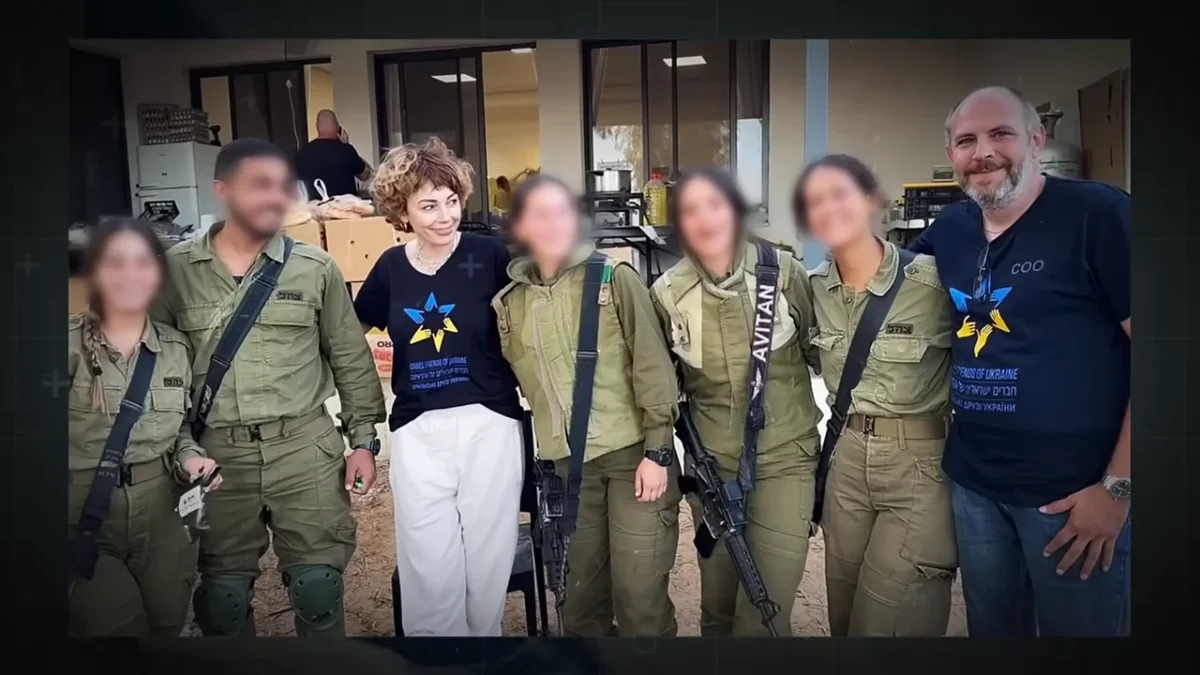
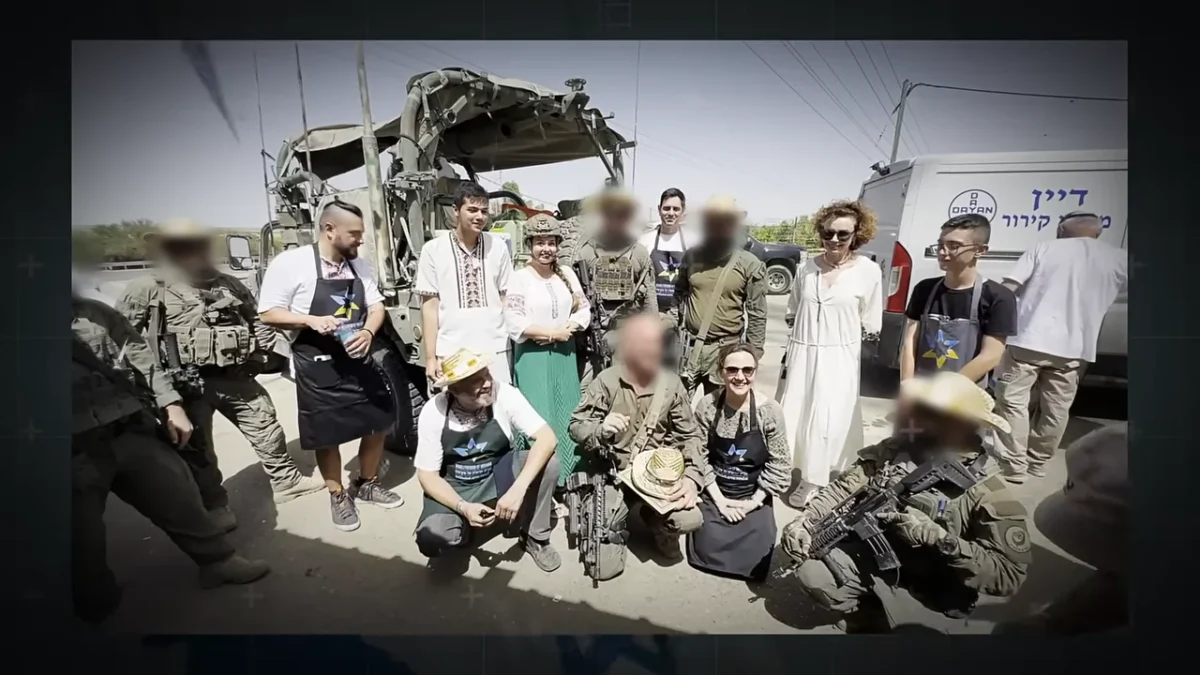
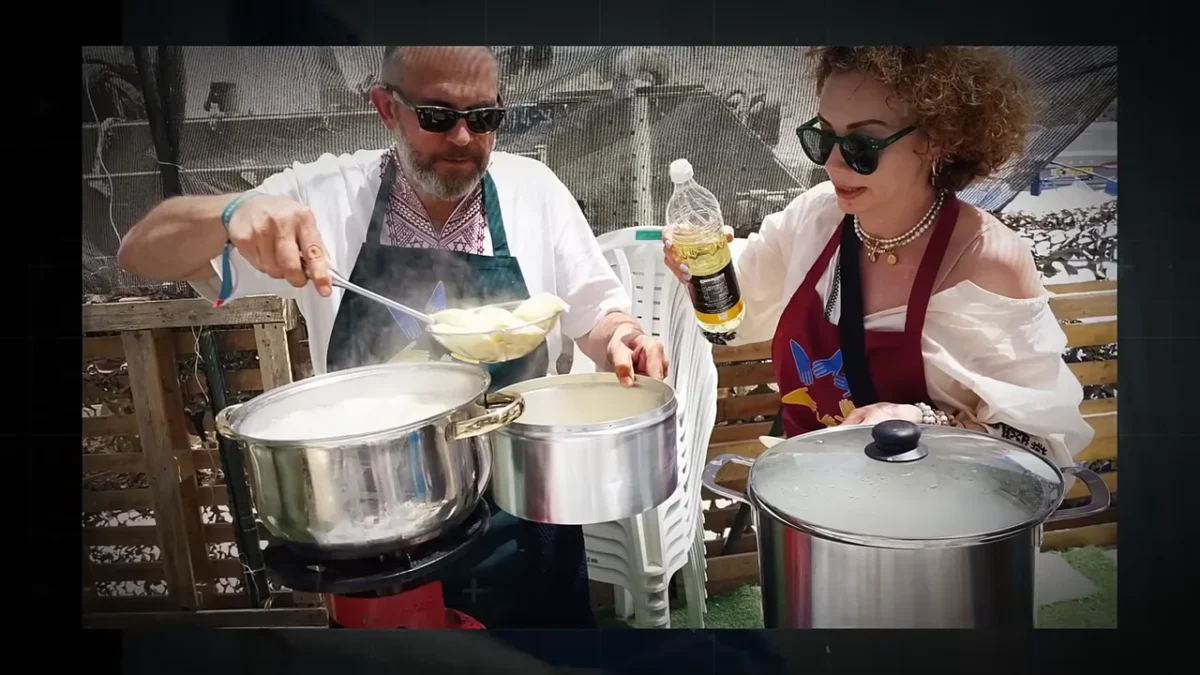
“Israeli Friends of Ukraine” in Ilya Axelrod’s project “Bridges of Hope”: how volunteers connected the country after October 7. Chronicle of the human spirit

The documentary series Ilya Axelrod “Bridges of Hope”, created for Channel 9, was initially constructed as a journey through the nervous system of the country. Nine episodes. Nine attempts to understand what holds together a society that has experienced the greatest blow in its history.

Not staff maps.
Not briefings.

People who suddenly began to do more than expected of them.

Here is the entire series – “Bridges of Hope” 9 episodes:

“The large-scale documentary project of Channel 9 «Bridges of Hope». This is not a chronicle of military actions. It is a chronicle of the human spirit. Since October 7, 2023, the life of Israel has changed forever. In this 9-episode series, we will embark on a journey across the country — from the shelled North to the wounded South. We will show the stories of doctors, volunteers, soldiers, and civilians who, in the moment of greatest tragedy, found the strength not just to survive, but to become a support for each other.”

By the finale, in the 9-1 episode titled “This is Why Israel Always Wins” | Bridges of Hope – final episode, the author leads the viewer to those who already had experience in civil mobilization:

“In the final episode, we will tell the stories of people and organizations from different parts of Israeli society. Left and right, residents of the noisy center and distant periphery, who in the country’s difficult hour left all disputes behind and began to help their country, showing its most beautiful sides.

📌 Heroes of the episode:

Professor Albert Penkhasov, rector of Ariel University, directed all efforts to help students and their families. Lecturers conducted Zoom lectures for reservist students who were in Gaza.

Representatives of the movement «Brothers in Arms» turned the protest infrastructure into a large-scale volunteer headquarters engaged in evacuation, logistics, and assistance to the residents of the south.

Elena Mrost and Rabbi Eli Talberg created a support center for the families of the deceased in Karmiel, helping them cope with loss and not be left alone with their pain.

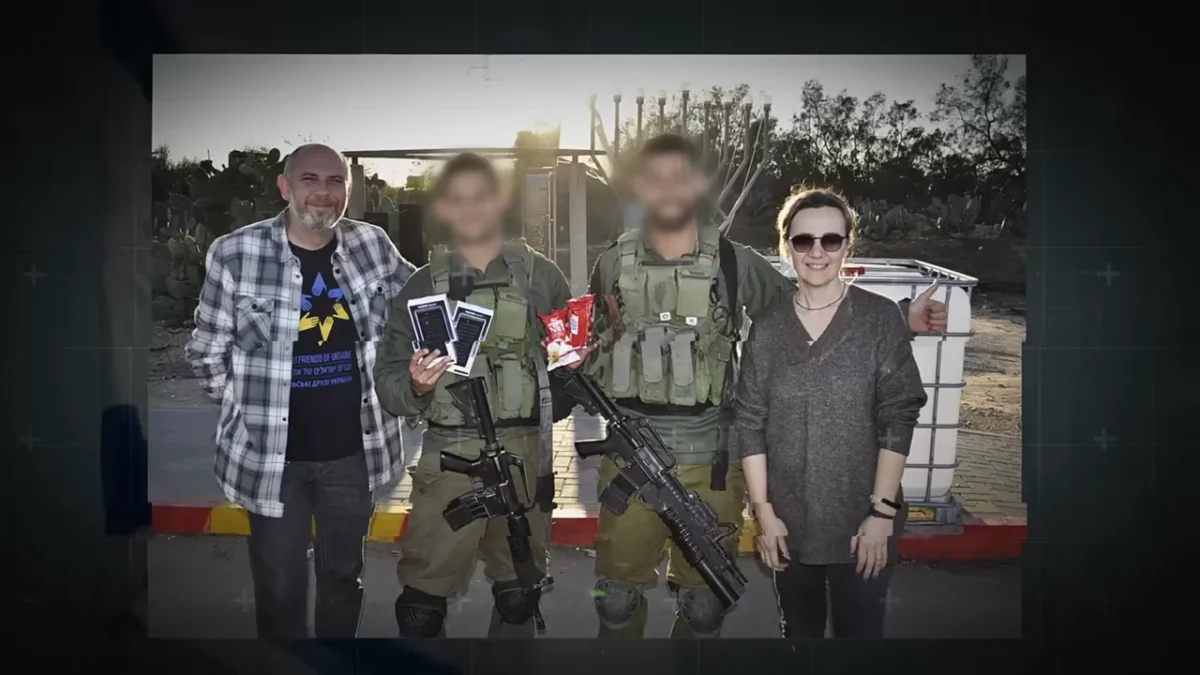
Anna Zharova and the organization «Israeli Friends of Ukraine» coordinated the evacuation of Sderot residents, food delivery, and support for soldiers.

Nine episodes ago, we set out to find the answer to the main question: what holds us together despite all trials and disagreements?

We sincerely hope that through the pain you were able to see the main thing — our resilience, our love, and hope”.

Thus, in the frame appear Israeli Friends of Ukraine and their co-founder Anna Zharova.

«Israeli Friends of Ukraine» in Ilya Axelrod's project «Bridges of Hope»: how volunteers connected the country after October 7. Chronicle of the human spirit
«Israeli Friends of Ukraine» in Ilya Axelrod’s project «Bridges of Hope»: how volunteers connected the country after October 7. Chronicle of the human spirit

Experience brought from another catastrophe

Before the Israeli war, this team worked for many years with the Ukrainian direction. Initially, helping those affected after 2014. Then — large-scale support programs after 2022: humanitarian cargo, escorting the wounded, finding housing, coordination between donors and volunteers.

This was not a spontaneous initiative.

This was a well-established system.

On October 7, it became clear that such systems were needed within the country.

«Israeli Friends of Ukraine» in Ilya Axelrod's project «Bridges of Hope»: how volunteers connected the country after October 7. Chronicle of the human spirit
«Israeli Friends of Ukraine» in Ilya Axelrod’s project «Bridges of Hope»: how volunteers connected the country after October 7. Chronicle of the human spirit

Phones, lists, drivers, understanding how to act when official structures are overloaded. Not theory. Practice.

In the film, this is stated calmly, without pathos: people already had the skill of working in chaos. Therefore, they could start immediately.

Where the finale is filmed and why there

Haifa as a working point, not a decoration

The interview was recorded at a volunteer center for helping Ukrainian refugees in Haifa. The logic of the choice is clear. It was here that a network accustomed to round-the-clock workload was formed over the years.

There was no need to invent a structure.

It existed.

Later, Zharova will formulate the meaning of the filming as follows:

«For us, this is more than an interview. It is a conversation about choice, responsibility, and humanity».

The phrase is short. But in it — the entire explanation of why this line became part of the final episode.

Those who are off-screen

Television is limited by time. However, Zharova emphasizes the names of those who worked nearby: Ella Storm, Vyacheslav Feldman, Sashenka Zhuravel.

Her position is straightforward:

«These are the people without whom this story would not have been heard».

For documentarians, this is an important emphasis. The project is built on the recognition of invisible work — logistics, phones, distribution, family support.

Without this, nothing works.

What the organization did in the first weeks of the war

Cars, routes, families

From the first hours, it became clear: a huge number of people needed to be evacuated, accommodated, fed. Often it was about the elderly, new immigrants, those who were not oriented in the system.

«Israeli Friends of Ukraine» already had databases of drivers and volunteers.

The mechanism started automatically.

«Israeli Friends of Ukraine» in Ilya Axelrod's project «Bridges of Hope»: how volunteers connected the country after October 7. Chronicle of the human spirit
«Israeli Friends of Ukraine» in Ilya Axelrod’s project «Bridges of Hope»: how volunteers connected the country after October 7. Chronicle of the human spirit

Flights to the south were formed. Apartments and houses were sought in the north and center. Temporary shelters appeared. People were distributed literally by hand, through acquaintances, social networks, personal calls.

Zharova emphasizes:

«Our main task was to help those who were not visible and not heard».

This is the key characteristic of all work — the focus on those who are easily lost between reports and numbers.

Food for soldiers and human contact

When restaurants began cooking for army units, delivery was needed. Volunteers took on the routing. Cars went to bases daily.

The work looked routine.

But it was in this routine that resilience lay.

«Israeli Friends of Ukraine» in Ilya Axelrod's project «Bridges of Hope»: how volunteers connected the country after October 7. Chronicle of the human spirit
«Israeli Friends of Ukraine» in Ilya Axelrod’s project «Bridges of Hope»: how volunteers connected the country after October 7. Chronicle of the human spirit

The story about ice cream

One of the episodes that came into discussion after the release of the series was Ukrainian ice cream. It was brought along with other products. Soldiers waited for it.

If the boxes arrived without it, they asked.

This is not a joke. This is an indicator of how important simple signs of normal life are to people. Sweet, familiar, human.

This is how morale works.

It is such details that the director leaves in the finale — they speak louder than analytics.

Why this line is important for understanding the whole picture

By the time the viewer reaches the last episode, they have already seen doctors, reservists, rabbis, volunteers in different parts of the country. The question arises: what do they have in common?

The answer gradually forms — the willingness to take responsibility without waiting for orders.

Zharova’s story fits perfectly into this formula. A community accustomed to helping outside of Israel, in a critical moment, turns its efforts inward.

Humanitarian competence has no national borders. It simply changes the direction of application.

And at this point in the narrative, the conclusion naturally sounds, which was previously formulated by the editorial office of NAnews — News of Israel | Nikk.Agency: society survives thanks to horizontal connections faster than any bureaucracy.

Gratitude and memory fixation

Zharova separately thanks KAMANDA Productions Ltd for the opportunity to tell this story. For the participants, it is important not only to do the work but also to preserve it in public memory.

Otherwise, in a few years, only dry formulations will remain.

And the main thing will disappear — the feeling of a shoulder nearby.

What remains after the credits

The finale does not offer simple recipes for the future. It records the fact: in the most difficult weeks, thousands of people in Israel acted as if there was no other way.

Someone opened their home.
Someone got behind the wheel.
Someone took on someone else’s pain as their task.

The line of «Israeli Friends of Ukraine» shows that solidarity can be a learned skill. It can be developed. It can be activated.

And when it is activated, the country has a chance to go through a catastrophe without losing itself.

That is why this story stands at the end.

It is not about the past. It is about the mechanism of survival.

The Hague ‘tribunal for Putin’ should also punish Iran, Belarus, North Korea — Office of the President of Ukraine

Ukraine is striving to ensure that the future special tribunal for the crime of aggression against Ukraine does not become a process solely against the Russian leadership. Kyiv believes that if the aggression was not only a decision by Moscow but also a result of assistance from Russia’s allies, then responsibility should extend beyond the Kremlin. The tribunal should cover not only the top leadership of the Russian Federation but also those who clearly facilitated Russian aggression. Among such participants, it named Belarus, North Korea, and possibly Iran.

This was stated in an interview with “European Truth” on May 5, 2026, by Iryna Mudra, Deputy Head of the Office of the President of Ukraine, who is involved in bringing Russia to international accountability.

For Israel, this topic does not seem distant. Once again, regimes that are directly or indirectly connected with the war against Ukraine and the general anti-Western axis are in the same row: Russia, Belarus, North Korea, and Iran. And it is Iran that makes this story particularly important for the Israeli audience.

Why Ukraine wants to expand the scope of the tribunal

The future special tribunal should consider the crime of aggression — that is, the very fact of waging war.

This is different from investigating individual war crimes: murders, torture, deportations, strikes on civilian objects.

According to Mudra, more than 250,000 cases of war crimes have already been registered in Ukraine. But the crime of aggression is a different level of responsibility: it involves a significantly smaller circle of people, approximately up to 30 representatives of the top political and military leadership. At the center of this structure are those who made the decision to attack, prepared it, and launched the mechanism of a large war.

That is why Kyiv does not want to limit itself to just names from the Russian authorities. If other regimes provided territory, weapons, ammunition, missiles, drones, military specialists, or political cover, their role should also be considered.

Belarus occupies an obvious place in this logic. Its territory was used by Russia for the offensive against Ukraine, including the direction towards Kyiv. North Korea appears as a regime that helps Moscow with military resources. Iran is a possible participant in supporting the Russian war, including through military technologies and drone components.

The Hague, Chisinau, and timelines: when the tribunal might start working

According to Iryna Mudra, on May 14–15, 2026, at the ministerial meeting of the Council of Europe in Chisinau, the stage of political decision-making on the creation of the tribunal should be completed. There, it is planned to sign a legal instrument of the Council of Europe — a partially extended agreement that will complete the preparation of the tribunal’s structure.

The tribunal itself is expected to operate in The Hague. The Netherlands has already identified a specific building for the initial stage — the so-called Skeleton Tribunal. At this phase, a steering committee should be in place, which will be responsible for recruiting judges, prosecutors, and investigators.

This means that loud political statements do not turn into verdicts overnight. Mudra directly states: the work of prosecutors and investigators, according to Kyiv’s expectations, will not begin before the end of 2027, and possibly in 2028. Accordingly, the first verdicts are also possible no earlier than 2028.

As of today, according to her, 24 countries have confirmed their readiness to join the agreement, but Kyiv expects at least 40 participating states. This is important because such a tribunal should not look like a Ukrainian initiative alone, but as an international mechanism of accountability for aggressive war.

Why this is not just symbolism

At first glance, it may seem that a trial of Putin or his entourage in The Hague will be mostly symbolic. Russia is unlikely to voluntarily hand over its leaders. Some processes may take place in absentia.

But in the interview, Mudra explains: the meaning of the tribunal is not only whether the world will see Putin personally in the dock. It is important whether the world is capable of legally naming aggression as a crime and convicting those who started it. According to her, if the act of aggression remains unanswered, it will be an invitation for new invasions.

For Israel, this logic is understandable. When international law does not work against the aggressor, the next step is not peace, but testing the limits of what is permissible. Authoritarian regimes closely watch how other people’s wars end.

If the seizure of territory, strikes on cities, deportations, and destruction of infrastructure can be waited out, and then return to world politics without punishment, this is a dangerous signal not only for Ukraine. It is a signal for the entire Middle East.

Iran in this story is not an accidental detail

Mentioning Iran alongside Russia, Belarus, and North Korea is especially important for the Israeli reader. For Ukraine, Iran is a possible participant in military support for Russian aggression. For Israel, Iran is a strategic enemy building a network of threats through proxies, missiles, drones, and military infrastructure around Israeli borders.

That is why the topic of the special tribunal goes beyond the Ukrainian-Russian war. It shows a broader picture: around Moscow, a circle of regimes is forming that help each other bypass isolation, support wars, and test the resilience of the Western security system.

NANews — Israel News | Nikk.Agency views this topic not only as a Ukrainian legal initiative but as part of a broader struggle for international accountability. If Iran indeed comes into the focus of the future tribunal, it will be significant for Israel: for the first time in such a context, the question of Tehran’s role may be raised not as a “supplier” or “ally,” but as a participant in the mechanism of aggression.

Belarus, North Korea, Iran: different roles, one result

These regimes have different functions.

Belarus provided Russia with space for the attack. North Korea strengthens the Russian military machine with resources and political support. Iran, if its role is proven in the future process, may appear as a source of technologies, weapons, or other assistance that allowed Moscow to continue the war.

But the overall result is the same: Russian aggression became possible not only because of the Kremlin’s decisions. It relies on a network of allies who believe that the international order can be broken without serious consequences.

It is this network that Ukraine is trying to bring out of the shadows.

Why Russia is so afraid of the topic of accountability

In the interview, Mudra emphasizes separately: the issue of Russia’s accountability is not a subject of bargaining.

According to her, Ukraine does not intend to trade justice for negotiating concessions, and partners do not demand that Kyiv abandon legal prosecution of Moscow.

This explains Russia’s nervous reaction to the topic of the tribunal. For the Kremlin, not only sanctions and frozen assets are dangerous. The legal fixation itself is dangerous: who started the war, who helped the aggressor, who gave orders, who provided political and military cover.

Russia is used to selling the world the idea of a “complex conflict,” where supposedly all sides are guilty of something. The tribunal destroys this construction. It brings the question back to the beginning: who attacked, who helped the attack, and who should answer for it.

Compensations and frozen assets

In parallel with the tribunal, Ukraine is promoting a compensation mechanism. According to Mudra, along with the losses of the state, business, and citizens, the amounts could exceed 1 trillion dollars. She also talks about $300 billion in frozen Russian assets as a possible legitimate source for a future compensation fund.

This is an important part of the entire structure. Ukraine seeks not only verdicts but also financial accountability. For the aggressor, war should become not a way to expand influence but a source of political, legal, and material catastrophe.

What this means for Israel

Israel should closely monitor the creation of the tribunal. Not because The Hague itself will solve all security issues. And not because international law always works quickly and fairly.

But because a precedent is being formed here: aggression should not dissolve in diplomatic formulations. The helpers of the aggressor should not hide behind the phrase “we did not fight directly.” Regimes that supply weapons, open territory, provide technologies or political cover cannot remain outside the field of responsibility.

For Ukraine, this is a matter of justice after Russian aggression.

For Israel, it is a reminder that Iran does not act in isolation. It is embedded in a broader camp of states that see the West’s weakness as an opportunity for pressure, war, and blackmail.

And if the future Hague tribunal indeed touches not only Russia but also its allies, it will be an important signal: the era of impunity should end not only for Putin but also for those who helped his war.

Special tribunal for aggression against Ukraine: key dates and stages

February 24, 2022 — the start of full-scale aggression

Russia began a full-scale invasion of Ukraine. It was after this date that Kyiv began to seek a separate international mechanism to punish those who made the decision to attack.

January 19, 2023 — European Parliament resolution

The European Parliament adopted a resolution calling for the creation of a special tribunal for the crime of aggression against Ukraine.

Platform: European Parliament.

May 17, 2023 — Damage Register in Reykjavik

At the Council of Europe summit in Reykjavik, a Damage Register was created for the aggression caused by Russia against Ukraine.

Platform: Council of Europe.

Significance: the first practical element of the future system of accountability and compensations.

July 3, 2023 — ICPA center in The Hague

The International Center for the Prosecution of the Crime of Aggression against Ukraine — ICPA began its work in The Hague.

Platform: Eurojust, The Hague.

Task: collecting evidence and preparing cases on the crime of aggression.

May 9, 2025 — political agreement in Lviv

In Lviv, representatives of 35 countries and the Council of Europe agreed on the movement towards the creation of a special tribunal. At this stage, legal instruments were practically prepared.

Platform: Lviv.

Initiators: Ukraine, Council of Europe, and Core Group countries.

May 14, 2025 — Ukraine’s official request to the Council of Europe

Ukraine officially requested the Council of Europe to create a Special Tribunal for the Crime of Aggression against Ukraine.

Platform: Council of Europe.

June 24, 2025 — decision of the Committee of Ministers of the Council of Europe

The Committee of Ministers of the Council of Europe authorized the creation of an extended partial agreement and empowered the Secretary-General of the Council of Europe to sign a bilateral agreement with Ukraine.

Platform: Council of Europe.

June 25, 2025 — signing of the agreement in Strasbourg

Ukraine and the Council of Europe signed an agreement on the establishment of a Special Tribunal for the Crime of Aggression against Ukraine.

Platform: Strasbourg.

Signatories: Ukraine and the Council of Europe.

July 15, 2025 — ratification in the Verkhovna Rada

The Verkhovna Rada of Ukraine ratified the agreement between Ukraine and the Council of Europe on the creation of the special tribunal.

Platform: Kyiv.

October 17, 2025 — the Netherlands confirmed readiness to host the tribunal

The Netherlands officially confirmed the offer to host the special tribunal on its territory at the preparatory stage.

Platform: Netherlands.

January 23, 2026 — Council of Europe and EU agreement on funding

The Council of Europe and the European Union signed an agreement on funding the advance team — the forward team that should prepare the launch of the special tribunal.

Platform: Council of Europe / EU.

2027–2028 — expected launch of full-fledged work

According to Ukrainian estimates, prosecutors and investigators of the future tribunal will be able to start work no earlier than the end of 2027 or already in 2028.

Task of the stage: transition from organizational structure to real investigations and judicial procedures.

Jews from Ukraine: Tamara Gverdtsiteli, the great Georgian singer and granddaughter of the Odessa rabbi

Tamara Gverdtsiteli: great Georgian singer with Jewish roots. Category 🔯 — Jews from Ukraine 🇺🇦 #jewsukraine

“It was Putin who killed my mother” – “My Odessa, Odessa my mother is being bombed – we say goodbye to Russia.”

But besides her creativity, her life and story are associated with deep personal dramas and difficult decisions, especially after the outbreak of the war in Ukraine.

Tamara (Tamriko) Gverdtsiteli – a name well known in the post-Soviet space. This talented singer, actress and composer, People’s Artist of Georgia and other countries, won the hearts of millions with her voice and soulful music.

Tamara’s mother, Inna Volfovna Kofman, was Jewish and originally from Odessa, where her family was known for its Jewish heritage. Moreover, Tamara’s grandfather was an Odessa rabbi, which deeply connects her with Jewish culture and history.

After the start of Putin’s full-scale invasion of Ukraine, the artist canceled her performance in Moscow at a festive concert dedicated to March 8th. According to Gverdtsiteli, she wanted to be close to her mother, who was born in Odessa and was very worried about Putin’s aggression.

“She cries often. All my ancestors are from Odessa. For my mother, all the streets there are native. It’s very hard for me to talk about this,” the singer said in an interview.

Tamara herself has mentioned more than once that with age she feels more and more her Jewish identity. In an interview she said:

“My father is Georgian, I was born and lived most of my life in Georgia, naturally, its culture had a tremendous influence on my life and work. But I was born and raised by a Jewish mother, and over the years I feel more and more my Jewish genes.”

This connection with the Jewish people was also evident in her work: she sang songs in Hebrew, emphasizing that for her it was “the call of the blood.”

The work of Tamara Gverdtsiteli: hits and achievements

Tamara Gverdtsiteli is not only a talented vocalist, but also an extensive creative heritage that spans several decades. Her musical career began in childhood: in the 1970s she became a soloist in the children’s ensemble “Mziuri”, with which she traveled to many cities of the Soviet Union.

After graduating from the music school at the Tbilisi Conservatory, her solo career rapidly gained momentum. In 1989, she received the title of People’s Artist of the Georgian SSR, and in 2004 – People’s Artist of Russia.

Among her most famous hits:

  • “Vivat, king!” – a song written by Ukrainian poet Yuriy Rybchinsky became the singer’s calling card.
  • “Mom’s eyes” – one of the most lyrical and touching compositions in her repertoire.
  • “Children of War” – a song dedicated to the memory of the generation that survived the horrors of World War II.
  • “Are you here” – a popular composition in Georgian.
  • “How many years, how many winters” – a duet with Alexander Malinin, which occupied the top lines of the charts for a long time.

Her work was enriched with songs on Hebrewwhich have become an integral part of her repertoire. Among the most popular:

  • “Jerusalem Shel Zahav” (“Jerusalem Golden”) – a legendary Israeli song performed with soulful depth.
  • “Hallelujah” – a symbol of optimism and faith in a bright future, which won the hearts of her listeners.
  • “Shir LaShalom” (“Song of Peace”) – a heartfelt hymn of hope, which she performed with special trepidation.

Tamara performs songs in eight languages, including Georgian, Ukrainian, Russian, French, English and Hebrew. Particularly notable are her performances in French, which have been compared to the traditions of Edith Piaf.

Tamara Gverdtsiteli actively collaborated with artists from different countries, including Ukraine and Israel, creating unique creative duets and projects.

Ukrainian artists

  • Yuri Rybchinsky – legendary Ukrainian songwriter, author of many of Tamara’s songs, including her famous hit “Vivat, king!”which became one of her most famous works.
  • Vladimir Grishko – world famous opera tenor. Tamara performed with him on the stage of the Dnepropetrovsk Opera House in 2011–2012, performing the role of Carmen in the opera by Georges Bizet. Their duet became a striking example of the synergy of pop and opera art.
  • Nina Matvienko – cult Ukrainian singer. Their joint performances emphasized the deep connection between Georgian and Ukrainian musical cultures.

Israeli artists

  • Itzhak Perelman – world famous violinist. Tamara performed with him at one of the charity concerts in Israel, performing traditional Jewish melodies.
  • Shlomo Artzi – Israeli singer and composer. Singing Hebrew songs together, such as “Hallelujah” And “Shir LaShalom”has become an important part of Tamara’s repertoire.
  • Noah (Achinoam Nini) – Israeli singer of Yemeni origin. Their joint concert included performances of traditional songs in Hebrew, Georgian and French, which emphasized Tamara’s multicultural approach to music.

These duets not only enriched Tamara Gverdtsiteli’s repertoire, but also strengthened cultural ties between Ukraine, Israel and Georgia, creating bridges between peoples through music.

One of the highlights of her career was the role of Carmen in the opera by Georges Bizet, which she performed on the stage of the Dnepropetrovsk Opera House in 2011–2012.

The richness of her repertoire and ability to interpret songs from different cultures have made Tamara Gverdtsiteli a true legend, whose work is valued all over the world.


Israel and Georgian singer

Tamara first visited Israel in 1988 and has performed here several times since then. She sang songs in Hebrew, Georgian, Ukrainian and other languages, emphasizing the richness of the cultures with which her life is connected.

“The first time I sang in Hebrew, I felt as if I was speaking to my ancestors,” – she shared.

Her concerts in Israel invariably attracted full houses, especially among those who knew her work in Ukrainian and Russian.


Ukrainian influence: music and tragedy

Tamara’s connection to Ukraine was especially strong thanks to her mother and collaborations with Ukrainian authors and artists. For example, Yuri Rybchinsky wrote the hit “Vivat, King!” for her, which became one of the symbols of her career.

Tamara performed with outstanding Ukrainian musicians, including the famous tenor Vladimir Grishko, with whom she performed the role of Carmen in the opera by Georges Bizet.

However, the war in Ukraine in 2022 changed her life forever. After the start of the full-scale Russian invasion, her mother, Inna Volfovna, left Moscow with her daughter and returned to Georgia. But the events in her mother’s native land, especially the bombing of Odessa, turned out to be tragic for Inna Volfovna.

Yuri Rybchinsky told:

“When the war began, her mother said: “My Odessa, my mother’s Odessa is being bombed. We say goodbye to Russia.” But this pain turned out to be unbearable for her, and she soon passed away. Tamara says that Putin killed her mother.”


Principled position: rejection of Russia

After the death of her mother, Tamara Gverdtsiteli no longer performs in Russia. She canceled all concerts in the aggressor country and excluded songs in Russian from her repertoire.

For the singer it was a painful but important step. She stated that she could not forgive those who destroy her native Odessa region and kill innocent people.

Today Tamara Gverdtsiteli lives in Georgia and continues to perform on the international stage, but her work now emphasizes the themes of peace, love and tragedies that befell her homeland.


Jewish and Ukrainian identity

Tamara Gverdtsiteli is a symbol of the cultural unity of the Georgian, Jewish and Ukrainian peoples. Her life and career show how closely these cultures are intertwined.

The singer, who has been surrounded by Georgian and Jewish culture since childhood, shows through her music how important it is to preserve your roots and remember your ancestors.

Fact from Tamara’s life Description
Jewish heritage Granddaughter of an Odessa rabbi
Execution languages 8 languages, including Hebrew, Ukrainian and Georgian
Connection with Ukraine Collaboration with Yuri Rybchinsky and Vladimir Grishko
Anti-war stance Refusal to perform in Russia

Why is this important to Israelis?

For Israelis, the story of Tamara Gverdtsiteli is a reminder of how important it is not to stand aside from the tragedies that happen to the Jewish people around the world.

On the website NAnews – Israel News you can find more materials about Jews from Ukraine, their influence on world culture and the tragedies caused by Russian aggression.

The story of Tamara Gverdtsiteli is an example of fortitude and cultural unity, which helps to overcome the most difficult trials.

This article was prepared specifically for the “Jews from Ukraine” section of the site NAnews — Israel News, where you will find even more interesting stories about prominent Jews from Ukraine, such as Tamara Gverdtsiteli.

Read on WhatsApp channel NAnews ↓ — Israel News

Read on Telegram – channel NAnews ↓ — Israel News

The court in Zakarpattia delivered a verdict for anti-Semitic calls against Hanukkah

The United Jewish Community of Ukraine reported on May 6, 2026, about a verdict in a case of inciting national and religious hatred in the Zakarpattia region. It concerns a resident of Mukachevo who posted a video on Facebook with insults towards people of Jewish origin and calls for violence.

On April 27, 2026, the Mukachevo City District Court of the Zakarpattia region found the man guilty under part 1 of article 161 of the Criminal Code of Ukraine. This article concerns the violation of citizens’ equality based on national origin, religious beliefs, ethnic origin, and other legally protected characteristics. The court decision was published in case No. 303/2879/26.

What happened in Mukachevo

The court established that on December 23, 2025, the accused posted a video on the social network Facebook, accessible to an unlimited number of users. In this video, he used obscene language, demeaned the national honor and dignity of people of Jewish origin, and insulted the religious feelings of people associated with Jewish tradition.

A particularly important detail of the case is the content of the calls. According to court materials, the man called on residents of the Zakarpattia region and Mukachevo to use physical violence, burn banners with information about Hanukkah with gasoline, and beat those who post or support such materials.

For Ukraine, where Jewish history is part of the collective memory of many cities and regions, such a case goes far beyond a single social media post. It is no longer everyday rudeness or an emotional conflict on the internet. The court considered the publication as a public call for hatred and restriction of people’s rights based on religious and ethnic grounds.

What the examination showed

According to the expert’s conclusion dated March 13, 2026, the published materials contained signs of inciting national and religious hatred, hatred, as well as direct restriction of citizens’ rights based on religious beliefs and ethnic origin. This became one of the key pieces of evidence in the case.

At the trial, the accused fully admitted his guilt. He confirmed that he indeed created and published a video in which he spoke negatively about people of Jewish ethnic origin, called for violence, and for the destruction of banners related to the Hanukkah holiday.

The court also noted that the man repented and asked not to be punished severely. These circumstances were considered mitigating. The court did not establish any aggravating circumstances.

Why the case is important for the Jewish community

For the Jewish community of Ukraine, this story is important not only as a legal episode. Hanukkah is a public, recognizable, and peaceful symbol of Jewish life. When someone calls to burn banners about the holiday and beat people who place them, it is already a blow not to advertising or city decor, but to the right of Jews to openly preserve their culture, tradition, and religious identity.

That is why the reaction of the United Jewish Community of Ukraine is significant. In conditions of war, constant pressure on society, and attempts by external forces to stir up internal conflicts, public documentation of anti-Semitic manifestations becomes part of protecting the country’s civil resilience.

NANews — News of Israel | Nikk.Agency considers such cases for the Israeli audience as well, because the connection between Ukraine, Israel, and the Jewish people is not limited to diplomacy or military agendas. It runs through memory, community security, protection of religious freedom, and the state’s ability to respond to hatred not with slogans, but with law.

What punishment the court imposed

The Mukachevo City District Court found the man guilty and imposed a fine of 500 non-taxable minimum incomes of citizens — 8500 hryvnias. In addition, the convicted person was charged with the costs of conducting a forensic examination in the amount of 4457 hryvnias.

At first glance, the amount of the fine may seem small. But the legal meaning of the decision is broader: the court confirmed that anti-Semitic calls on social networks, especially when they contain incitement to violence, are not “opinions” or “private emotions.” It is a criminally punishable act.

Previously, as reminded by the United Jewish Community of Ukraine, the figure was identified by the Security Service of Ukraine in cooperation with the National Police and the State Border Guard Service in the territory of Mukachevo. This moment is also important: the case reached not only public condemnation but also a full legal procedure.

What this shows Israel

For Israel, such news from Ukraine has a distinct resonance. Jewish communities in Ukrainian cities continue to live, help people, preserve traditions, and hold religious holidays even in wartime conditions. Any attempt to intimidate them through hate speech is a reminder of why the state response to anti-Semitism must be swift and visible.

This case shows another thing: social networks do not cancel responsibility. A public Facebook page, a video message, and emotional delivery do not absolve a person of consequences if the text or video contains calls for violence, humiliation, and restriction of people’s rights based on origin or faith.

For Ukrainian society, it is a test of maturity. For the Jewish community, it is a signal that threats should not go unanswered. For the Israeli audience, it is a reminder that the fight against anti-Semitism is not only in the Middle East and not only at the level of international declarations, but in specific courts, cities, and criminal cases.

Putin disrupted the truce: Zelensky reported 1820 violations of the ceasefire

The Russian side disrupted the ceasefire that Ukraine declared from 00:00 on May 6, 2026. According to President Volodymyr Zelensky, by morning, 1820 violations of silence had already been recorded — from shelling and assault actions to the use of drones and aviation.

For Ukraine, this became direct evidence that the Kremlin did not intend to test the possibility of a real truce. For Israel, this story also sounds familiar: when terrorist logic is covered by words of ‘peace,’ and strikes on cities continue, it is not about diplomacy, but about pressure on the civilian population.

What Zelensky stated

Volodymyr Zelensky reported that after midnight on May 6, the Russian army continued active hostilities and terrorist shelling. According to him, Russia’s choice is obvious: rejection of silence, rejection of preserving human lives, and continuation of the war even at a moment when there was an opportunity to stop the fire at least for a day.

The Ukrainian side declared the silence regime not as a symbolic gesture for the cameras, but as a practical test: whether Russia is ready to at least temporarily stop the killings. The answer came quickly — with new attacks.

According to AP, after Ukraine’s announcement of a ceasefire, Russia continued to launch drones and missiles. Ukrainian officials reported 108 drones and three missiles, as well as casualties and injuries from previous Russian strikes.

Why this is related to May 9

Context is important here. Putin previously announced a brief ‘truce’ on dates around May 9 — a day the Kremlin uses as the main political decoration for the military cult. Ukraine, in turn, proposed to start the silence earlier — from midnight on May 6, to show: if Moscow can really stop the fire for the sake of the parade, then it can stop it for the sake of people’s lives.

This is the main blow to Russian propaganda. The Kremlin wants safety for its own parade but does not provide safety to Ukrainian cities. It wants silence around Moscow but continues to shell Dnipro, Zaporizhzhia, Kramatorsk, Kharkiv, and other settlements.

Reuters also reports that Ukrainian Foreign Minister Andriy Sibiga accused Russia of continuing attacks at night and in the morning of May 6, including on Kharkiv and Zaporizhzhia. He called Moscow’s actions a rejection of peace and urged increased pressure on Russia.

For Israel, this is not abstract news

The Israeli audience well understands what a ‘truce’ means, which is violated almost immediately after the announcement. This is not just a diplomatic failure. This is a method of war against the civilian sector, where the word ‘silence’ turns into a screen, and strikes continue on cities, infrastructure, and people.

In this sense, the Ukrainian experience is close to the Israeli one: terrorist regimes and aggressive states often use pauses, dates, and symbols not for peace, but for regrouping, propaganda, and pressure on the opponent.

NANews — Israel News | Nikk.Agency considers this story in exactly this context: it is not only about the front in Ukraine but also about a broader model of behavior of enemies of democratic countries. Russia demonstrates the same principle that is well known to Israel in the Middle East: first talk about ‘peace,’ then continue shooting, and then blame the victim.

What this changes now

Zelensky’s statement makes Kyiv’s position tougher and clearer for Western partners. Ukraine showed readiness for a ceasefire, but Russia responded with shelling. This strengthens Kyiv’s argument: without pressure, sanctions, military assistance, and accountability for war crimes, any talks with the Kremlin turn into a one-sided game.

The Guardian previously reported on a series of Russian strikes on Ukraine, including attacks on Zaporizhzhia, Kramatorsk, and the Poltava region, where civilians and rescuers were killed. Against this background, Moscow’s talks about a ‘festive truce’ look especially cynical.

For Israel, there is another conclusion here. Ukraine is effectively showing the world how to test an aggressor not by statements, but by actions. If drones, missiles, and shells fly after midnight, then there is no truce. There is only another attempt by the Kremlin to win an informational pause.

That is why Zelensky’s statement sounds not like an emotional remark, but like a political document of the moment. 1820 violations of the silence regime are not statistics for the sake of statistics. This is the answer to the question of whether Putin can be trusted when he talks about a ceasefire.

The answer has already been given on the ground, in the air, and in Ukrainian cities.