Israel is first, Ukraine is the most medaled: two teams became the heroes of the European No-Gi Jiu-Jitsu Championship

At the European No-Gi Jiu-Jitsu Championship in Romania, two teams particularly close to the Israeli audience topped the medal standings. Israel took first place. Ukraine came second but collected more awards than any other team in the tournament.

This story is not about the defeat of one country and the victory of another.

It is a story of two teams that showed character, sportsmanship, and the ability to fight until the last second on a European tatami. For many Israelis with Ukrainian roots, such a result sounds especially personal: two countries with which family, memory, language, home, anxiety, and hope are connected were at the top.

What was this championship and why is No-Gi a separate discipline

The European Championships in NOGI JiuJitsu and NOGi Teams 2026 took place on June 13–14, 2026, in the Romanian city of Pitești. In the JJEU/JJIF calendar, the entire program in Pitești was scheduled for June 12–14 and included competitions in No-Gi and Contact Ju-Jitsu for age categories U16, U18, U21, Adults, and Masters.

This was not a local club start but a European ranking competition of Ranking event B class level. Representatives from 20 countries took to the platform, and the Sportdata entry lists indicated 345 entries. It is important to speak specifically of “entries” because one athlete in such tournaments can be entered in different categories or team formats.

No-Gi is a format of jiu-jitsu without the traditional kimono. In classic Gi, an athlete can build part of their tactics on grips on sleeves, collars, belts, or kimono fabric. In No-Gi, there is no such support: participants perform in sports gear, usually in a rashguard and shorts, and the fight becomes faster, denser, and less predictable.

Reaction speed, body control, position fighting, leg passes, holds, defense against painful and choking techniques come to the fore. Mistakes here often cost very dearly because without fabric grips, the opponent quickly escapes from a dangerous position or, conversely, quickly imposes their pace.

That is why medals in No-Gi cannot be perceived as a coincidence. It is an indicator not only of technique but also of physical readiness, psychological stability, and the ability to adapt in motion.

Israel won the overall standings, Ukraine collected the most medals

The main intrigue of the tournament turned out to be almost cinematic: the first and second places were divided by one gold medal.

The Israeli team finished the championship in first position in the overall standings:

Team Gold Silver Bronze Total
Israel 15 6 13 34
Ukraine 14 15 18 47

Israel received 15 gold medals, and this indicator was decisive. In team tables, when the number of awards is equal or close, the country with more gold victories usually comes out ahead. Therefore, Israel was first, despite trailing Ukraine in the total number of medals.

For Israeli sports, this is a strong result. A small country living under constant pressure showed the depth of preparation in a combat sport where it is impossible to “hide” behind a team. On the tatami, each athlete goes one-on-one with the opponent, with fatigue, pain, fear of mistakes, and the need to make decisions in fractions of a second.

Ukraine, in turn, held the tournament at the level of a true European leader. 47 medals — more than any other team. The Ukrainian team won 14 gold, 15 silver, and 18 bronze awards, trailing Israel by only one gold result.

Calling this a defeat would be wrong.

Ukraine showed the scale of the school, the breadth of the lineup, and the resilience of the training system. When a country takes almost fifty medals at a European tournament, it speaks not of one lucky day, but of a large number of athletes, coaches, clubs, and families who continue to work even in very difficult conditions.

Among the Israeli winners of the championship in the published lists are Ido Barash, Maya Behar, Omri Haviv, Lia Shalev, Yoav Shalomon, Maya Tev, Guy Torres, and Amit Yonasi. Among the Ukrainian champions are Anastasia Banashkevich, Timofey Bezugly, Fyodor Bogdan, Andrey Bukhtiyarov, Maxim Denisyuk, Victoria Panchenko, Ivan Kucheryavy, and Alexey Yukhno.

Full list of all prize winners by category requires verification with the official Sportdata protocol, but the already published data confirms the main thing: both teams performed at the level of European leaders.

Why is Israel first if Ukraine has more medals?

The answer is simple: the decisive factor was the number of gold awards.

Israel has 15 gold medals.

Ukraine has 14 gold medals.

In terms of the total number of awards, Ukraine was ahead: 47 against 34. But in the final team standings, priority was given to the team that more often rose to the top step of the podium. Therefore, first place went to Israel, and Ukraine became second and simultaneously the most medaled team of the championship.

Why is this important for the Israeli audience

For ordinary sports chronicles, this could be a short news: place, date, table, medals.

But for the audience of NAnews — Israel News | Nikk.Agency there is a deeper meaning here. Israel and Ukraine often find themselves side by side in the news due to war, security, diplomacy, tragedies, and political decisions. This time they found themselves side by side on the sports summit.

And this is a rare occasion to talk not only about pain but also about strength.

Israeli athletes proved that the national team is capable of winning the European standings in a tough and competitive discipline. Ukrainian athletes proved that even against the backdrop of war and constant pressure, the country maintains its sporting character, mass participation, and will to win.

For repatriates in Israel born in Ukraine, such a result is read especially emotionally. Here you don’t want to choose a side. Israel is the country where you live, build a home, raise children, and worry about safety. Ukraine is the country where many have roots, native cities, friends, ancestors’ graves, childhood memories.

Therefore, the podium in Pitești became something more than a table.

Israel won first place. Ukraine became the most medaled team. Together they made this championship special for people who live between two stories and understand the value of each victory.

Sport as a language of character

In combat sports, a medal is rarely beautiful only on the outside. Behind it are injuries, weight cutting, fear before the start, thousands of repetitions, lost fights, returning to the gym after failures, and work that the viewer never sees.

That is why the success of Israel and Ukraine at the European No-Gi Jiu-Jitsu Championship is perceived not as a random sports episode. It is a continuation of a broader story about the character of two societies.

Both countries know what it is like to live under pressure.

Both countries know what mobilization, anxiety, and the need to continue normal life where normalcy is constantly being destroyed are.

And both countries, through their athletes, showed: strength is measured not only by armies, diplomacy, and economy. Sometimes it is visible in the moment when an athlete steps onto the tatami, hears the referee’s signal, and does everything not to yield.

The final table of the European Championship in Pitești turned out to be symbolic. Israel is first. Ukraine is the most medaled. Between them is one gold medal, but not a chasm.

For spectators connected with both countries, this is not a story of division. It is a story of double pride.

And perhaps this is how sport sometimes speaks more accurately than politics: two teams competed under different flags, but for many people in Israel, they became part of one big story — a story of strength, resilience, and victory despite circumstances.

“Ukrainian Love” in Be’er Sheva: Ukrainian songs will be performed by the Israel Symphony Orchestra – June 25, 2026

On June 25, 2026, a concert “Ukrainian Love” will take place in Beer Sheva: Ukrainian folk songs in symphonic sound will be performed by the Israel Symphony Orchestra of Beer Sheva.

“Ukrainian Love” in Beer Sheva: Ukrainian songs will be performed in a symphonic arrangement

On June 25, 2026, a concert “Ukrainian Love” will take place in Beer Sheva — an evening of Ukrainian music performed by soloists and the orchestra of the Israel Symphony Orchestra of Beer Sheva. The concert will be held at the Beer Sheva Performing Arts Center, starting at 19:30. In the official calendar of the Israel Symphony Orchestra, the event is listed as Ukrainian Love, venue — 41 Reger St., Performing Arts Center Beer Sheva.

Tickets: https://isb7.smarticket.co.il/הקול_על_הבמה_מס__4_-_אהבה_אוקראינית

«Ukrainian Love» in Beer Sheva: Ukrainian songs will be performed by the Israel Symphony Orchestra - June 25, 2026
“Ukrainian Love” in Beer Sheva: Ukrainian songs will be performed by the Israel Symphony Orchestra – June 25, 2026

The name of the concert in Hebrew is אהבה אוקראינית, which means “Ukrainian Love”. This is a program where Ukrainian folk songs take the big Israeli stage in orchestral sound — with soloists, a conductor, and a professional chamber symphony orchestra.

The organizers describe the concert as follows

The organizers describe the concert as follows:

“From the very heart of Ukraine — an evening of music that resonates with the soul of the people. Love and separation, bright sadness and hope, tenderness and humor — all the richness of the Ukrainian song tradition will come alive in the performance of soloists and the orchestra of the Israel Symphony Orchestra of Beer Sheva under the direction of Maestro Konstantin Orbelian”.

In the description of the concert, the Ukrainian folk song is presented as a living history that is carefully passed down from generation to generation. These melodies resonate with the beauty of Ukrainian land, the warmth of the home hearth, the strength of the human spirit, and faith in the future. Simple and sincere songs have long become part of the world’s cultural heritage and continue to resonate with listeners far beyond Ukraine.

On this evening, beloved Ukrainian songs will be performed in a symphonic arrangement. This format combines folk tradition and the beauty of orchestral music: familiar melodies gain new stage life while retaining their warmth, memory, and human intonation.

What is the Israel Symphony Orchestra of Beer Sheva

The Israel Symphony Orchestra of Beer Sheva is a professional chamber symphony orchestra from Beer Sheva. The word “symphony orchestra” usually means an orchestra of a smaller composition than a large philharmonic, but with full professional sound.

For the concert “Ukrainian Love”, this is important: Ukrainian songs will not sound like a chamber home program or a folklore evening in the narrow sense, but as a full-fledged stage event — with an orchestra, vocal soloists, and a conductor.

In the 2025/26 season, Maestro Konstantin Orbelian became the musical director of the Israel Symphony Orchestra of Beer Sheva. The announcement of his appointment noted that he replaces Maestro Rani Calderon after the end of the season in August 2025.

Who is performing

The concert “Ukrainian Love” features a conductor, two vocal soloists, and the orchestra of the Israel Symphony Orchestra of Beer Sheva.

Konstantin Orbelian — conductor

Konstantin Orbelian is a conductor and pianist of international standing. In the publication about his appointment as the musical director of the Israel Symphony Orchestra of Beer Sheva, he is presented as a four-time Grammy-nominated conductor, one of the prominent musicians on the international stage. It also states that Orbelian is the general and artistic director of the New York City Opera, as well as the principal conductor of the Kaunas City Symphony Orchestra in Lithuania.

His creative biography includes work with major artists of the world stage, including Renée Fleming, Dmitri Hvorostovsky, Elīna Garanča, Jonas Kaufmann, and other performers. It is also reported that his discography includes more than 80 CDs on the DELOS label, and he was previously the musical director of the Moscow Chamber Orchestra and the head of the Yerevan Opera and Ballet Theatre.

For the concert of Ukrainian music, his participation sets a high professional level: he is not just a guest conductor, but the new musical director of the orchestra, opening a new stage for the Symphony Orchestra.

Veronika Brook — soprano

Veronika Brook is a soprano, an opera singer associated with the Israeli and Ukrainian music scene. According to the Israel Opera, she was born in Estonia, lived and studied in Ukraine, and then repatriated to Israel. She graduated from the Luhansk National Academy of Culture and Arts and was a member of the troupe of the Dnipropetrovsk State Academic Opera and Ballet Theatre in Ukraine.

Her opera repertoire includes Gilda in “Rigoletto”, Violetta in “La Traviata”, Queen of the Night in “The Magic Flute”, Olympia in “The Tales of Hoffmann”, and other roles. The Israel Opera also notes that Veronika Brook was a participant in the Meitar Opera Studio program and performs in concerts of the Israel Opera and with Israeli orchestras.

In the context of the concert “Ukrainian Love”, her participation is especially natural: she is a singer whose biography combines the Ukrainian music school, the Israeli stage, and the opera tradition.

Konstantin Rittel-Kobyliansky — baritone

Konstantin Rittel-Kobyliansky is a Ukrainian baritone born in Kyiv. According to his artistic profile CODA, he graduated from the Odessa Music Academy in 2000 and completed additional solo training at the Freiburg Music Academy with honors in 2003.

His career includes performances on various European and international stages. The profile lists cities and venues, including Strasbourg, Paris, Amsterdam, Rotterdam, Marseille, Moscow, Kyiv, St. Petersburg, Chicago, Santa Barbara, San Francisco, Jerusalem, Tel Aviv, Lviv National Opera, and others.

Rittel-Kobyliansky is also known as a concert performer: in addition to opera roles and classical music, his repertoire includes well-known European and American songs. For the evening of Ukrainian music, his participation adds a deep male vocal timbre and a connection to the Ukrainian opera school.

Israel Symphony Orchestra of Beer Sheva — orchestra

The Israel Symphony Orchestra of Beer Sheva will perform Ukrainian songs in orchestral sound. For the listener, this means that familiar motifs will be presented not only as a song tradition but also as a concert program with symphonic dramaturgy: with introductions, orchestral colors, vocal parts, and a large stage breath.

It is the orchestra that makes this evening not just a vocal concert, but a full-fledged cultural event of Beer Sheva and the south of Israel.

Why this concert is important

“Ukrainian Love” is not just a musical program. For many residents of Israel, the Ukrainian song is associated with family memory, childhood, native cities, the language of home, the voices of parents and grandparents, with that cultural layer that people bring with them and preserve in a new country.

For the Israeli stage, such a concert is an opportunity to hear Ukraine not through news, not through political headlines, and not through the pain of war, but through music: through love, separation, humor, tenderness, and hope. This is how the Ukrainian song tradition becomes understandable and close even to those who do not know the language.

In Beer Sheva, a city with a large repatriate history and a special cultural life in the south of Israel, such an evening can become a meeting of different generations and different audiences. Some will come for the Ukrainian song, others for the classical sound of the Symphony Orchestra, and others for the names of the performers. But at the center, there will still be music.

For whom this evening is

The concert “Ukrainian Love” may be of interest to those who love Ukrainian music, opera singing, and symphonic sound. This event is also suitable for families of Ukrainian origin, listeners from Beer Sheva and the south of Israel, lovers of classical concerts, and those who want to discover Ukrainian culture through the stage, voice, and orchestra.

This is not a narrow ethnic program and not just an evening of nostalgia. It is a concert about how a folk song becomes part of the big stage — preserving simplicity, sincerity, and emotional strength.

Concert information

Concert: “Ukrainian Love”
Original title: Ukrainian Love / אהבה אוקראינית
Date: June 25, 2026, Thursday
Time: 19:30
Venue: Beer Sheva Performing Arts Center, Hall 1
Address: 41 Reger St., Performing Arts Center Beer Sheva
Orchestra: Israel Symphony Orchestra of Beer Sheva
Conductor: Konstantin Orbelian
Soloists: Veronika Brook, soprano; Konstantin Rittel-Kobyliansky, baritone

“The Ukrainian folk song is a living history, carefully passed down from generation to
generation.

Its melodies resonate with the beauty of the native land, the warmth of the home hearth, the strength
of the human spirit, and faith in the future. Simple and sincere, these songs have long become part of
the world’s cultural heritage and continue to resonate in the hearts of listeners around the
world.

On this evening, beloved Ukrainian songs will be performed on stage in a symphonic arrangement,
combining folk tradition and the beauty of orchestral music.”

Tickets: https://isb7.smarticket.co.il/הקול_על_הבמה_מס__4_-_אהבה_אוקראינית

“Ukrainian Love” is an evening where the Ukrainian song will be heard on the Israeli stage in a language that is understood without translation: through melody, voice, memory, tenderness, and hope.

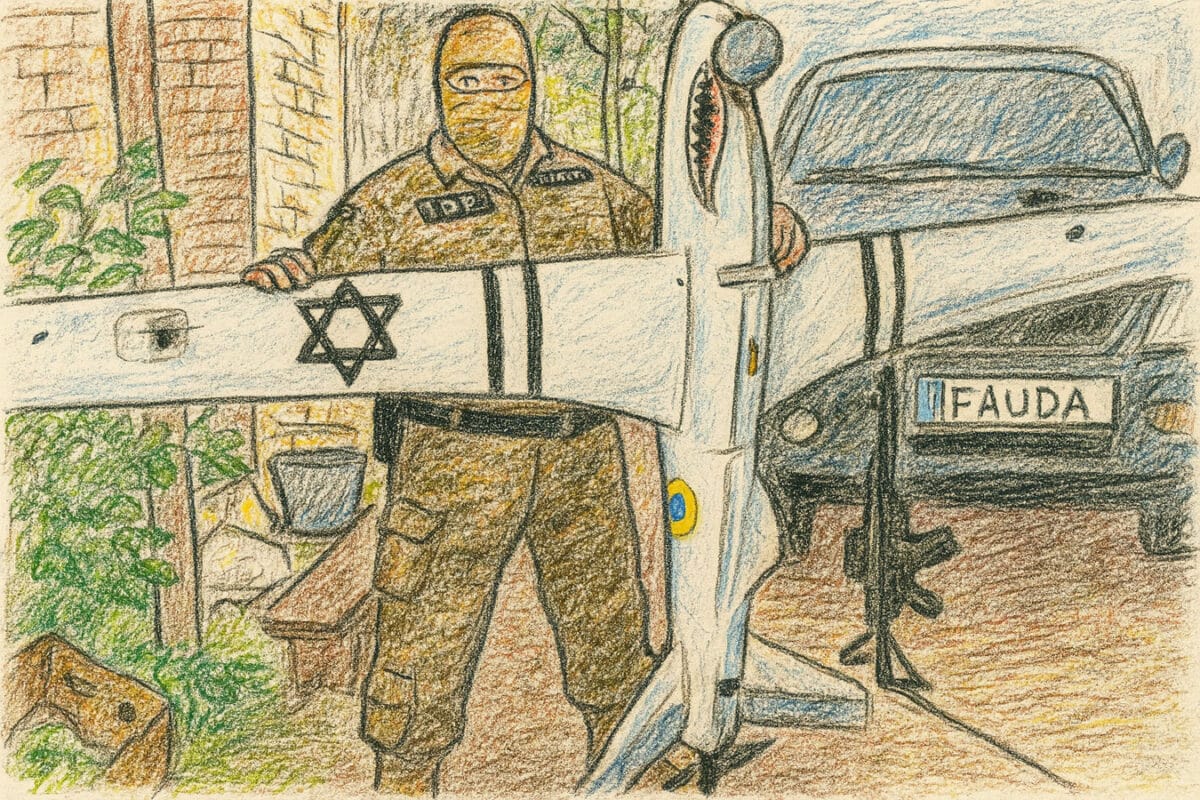
Superhero “like from ‘Fauda’” in the war against Russia: Israeli veteran on the banks of the Dnieper

Original author: Israeli journalist Shimon Briman. At NAnews / Israel News we carefully retell the main points and recommend reading the full material from the author.

From the author on September 12, 2025:

“How an Israeli🇮🇱 commando from ‘Fauda’ fights for Ukraine🇺🇦, performing feats of such magnitude that a Hollywood action movie could be made. I doubted until I received a letter from SBU officers describing his merits.

One of Eyal’s most fantastic yet real achievements is the destruction of 49 Russian combat helicopters worth a billion dollars in one day. One of my most important and fascinating materials in recent years.”

BRIEFLY: what the story is about

  • An Israeli veteran, referred to in Ukraine as “like from ‘Fauda’”, fights on the side of Ukraine.
  • Lived in Kherson for many years; since 2022 — underground, intelligence, frontline work.
  • Main point: the real bridge Israel—Ukraine is built by people and their decisions, not just agencies.
  • We provide a summary for readers in Israel and direct them to Shimon Briman’s originals.

Who he is

Superhero 'like from “Fauda”' in the war against Russia: Israeli veteran on the banks of the Dnieper
Superhero ‘like from “Fauda”’ in the war against Russia: Israeli veteran on the banks of the Dnieper

At the center of the article is Eyal Israeli, a 52-year-old Israeli who lived in Kherson for many years and has special training; after 02/24/2022 he stayed in the city, joined the territorial defense, and then under the auspices of the SBU formed a small reconnaissance and sabotage group in occupied Kherson.

The described episodes include collecting and transmitting coordinates of Russian forces, adjusting strikes, countering collaborators, helping military families and hospitals, and on the day of Kherson’s liberation, the first Ukrainian flag was raised on his refrigerator truck.

The hero then acts in conjunction with the Ukrainian Marine Corps intelligence and the SBU, engages in launching and repairing reconnaissance drones; after the Kakhovka HPP explosion, he helps evacuate people by boat under fire.

The text emphasizes his open Israeli identity (IDF/FAUDA patches, Israeli flag, Hebrew), as well as mentions of bureaucratic difficulties (denials of assistance as “non-citizen”, attempts to obtain citizenship) and received threats after publications.

And yes — the article separately describes an episode with the airfield near Chornobaivka in early March 2022: the hero filmed enemy equipment from the roof of a high-rise building, transmitted the coordinates to the Ukrainian side, after which the object was fired upon.

“Fauda”, but without takes

In the series, there is a second take and soundtrack. On the ground — there is not.
The camera does not wait for convenience. And sometimes the best tactic is not to go outside at all.

Why this matters to Israelis

To see not a “distant” war, but people who act according to values familiar to us. Responsibility, restraint, helping one’s neighbor — this is immediately recognizable.

What the diaspora feels

Some help humanitarianly, some with words and connections, some with deeds.
And many see in him not a legend, but an example.

Where the media’s place is

We keep the focus on the Israel—Ukraine connection without myth-making. Facts, context, respect for safety and details.

Bureaucracy and reality

Queues and formalities do not disappear even for those who have done much.
It’s unpleasant, but that’s how wartime is structured. The work continues — without fanfare.

What this story teaches

Not to wait for applause. To keep the rhythm. To remember why it all started — for life and dignity.


Read the original by Shimon Briman (three languages)

We deliberately do not retell verbatim. Go to the author — there are live details and the voice of the primary source.

Ukrainian (LB.ua):
https://lb.ua/society/2025/09/12/695803_supergeroy_z_faudi_viyni_proti.html

Russian (NEWSru.co.il):
https://www.newsru.co.il/press/12sep2025/eyal_briman.html

English (The Jerusalem Post):
https://www.jpost.com/international/internationalrussia-ukraine-war/article-867213

NAnews Conclusion

This is not a plot about a series. It’s about school, discipline, and the choice of one Israeli who became part of Ukraine’s defense.

The bridge Israel—Ukraine is built by such people, not just protocols.

For NAnews — Israel News this is an important sign: solidarity has a face, a voice, and concrete actions. We recommend reading Shimon Briman’s originals in full — there you can hear that very “live timbre” that is best seen with your own eyes.

Top 5 surnames in Ukraine with Ukrainian-Jewish roots – what is the story behind them?

Ukraine is a country where many cultures are intertwined. Pay attention to surnames that have both Ukrainian and Jewish roots – their history reflects centuries-old coexistence and mutual influence.


Ukrainian-Jewish roots: what do surnames hide?

Introduction

In Ukraine, there are often surnames that can simultaneously indicate Ukrainian and Jewish roots. This phenomenon is the result of centuries of coexistence between the two peoples and deep cultural exchange. We invite you to dive into the historical origins of the surnames that embodied the multinational heritage of Ukraine.

Historical background and meaning of surnames

Jewish communities began to populate the territory of modern Ukraine from ancient times, especially from the era of the Grand Duchy of Lithuania and the Polish-Lithuanian Commonwealth. In this context, Ukrainian-Jewish surnames arose as a consequence of the influence of local traditions and language. The situation intensified in the 18th century, when Jewish communities received the official right to surnames. Many surnames reflected their profession or place of residence, becoming an integral part of Ukrainian culture.

“A surname can tell not only about origin, but also about the cultural history that unites Ukrainians and Jews,” – researchers emphasize on NAnovosti.

Top 5 surnames with common roots

In this article, we offer a look at five popular Ukrainian surnames with Jewish roots. These surnames have an interesting history and show how different cultures have mutually enriched each other over the centuries.

1. Kozakevich

The surname “Kozakevich” finds its roots among both Ukrainians and Jews. For Ukrainians, it means belonging to the Cossacks, a symbol of freedom and masculinity. On the other hand, for Jews living near Cossack settlements, the surname could simply indicate geographic or cultural proximity to the Cossack environment.

2. Levin

This surname may come from the Hebrew name Levi or from the Ukrainian word for “lion”, symbolizing strength and courage. Levin is a surname that is associated with tradition, indicating an affinity for nature and animals. In the Jewish environment, it denoted belonging to the Levite family, which had a privileged position.

3. Sevchik

The surname “Shevchik” comes from the word “shevets” – shoemaker. In Ukrainian culture, this surname denoted professions related to crafts and sewing. It was also common in Jewish communities to use occupational surnames reflecting a craft or occupation.

4. Rosen

This surname has German roots from the word “rose”, or rose, and became common among Ashkenazi Jews living in Ukraine. Surnames based on flowers and plants were used in both Ukrainian and Jewish traditions, and Rosen was often part of compound surnames such as Rosenblat or Rosenfeld.

5. Zaritsky

The surname Zaritsky may indicate a connection to a geographic location or place name. In Ukrainian and Jewish culture, surnames indicating locality were common, showing the importance of land and place of residence in a cultural context.

Table: Ukrainian-Jewish surnames and their meanings

Surname Ukrainian meaning Jewish meaning
Kozakevich Connection with Cossack tradition Belonging to a cultural environment
Levin Symbol of strength and power Belonging to the Levites
Sevchik Shoemaker profession Professional surname in the Jewish environment
Rosen Connection with nature and plants Used in compound surnames among Ashkenazis
Zaritsky Indication of the area, for example, Zarechye Indication of topographic location

Conclusion

Surnames reflect not only cultural diversity, but also the depth of historical interaction between Ukrainians and Jewish communities. This phenomenon highlights the centuries-old tradition of interaction and mutual respect between the two peoples. As NAnovosti notes, “each surname is a key to cultural identity, a rich historical source that connects traditions and common roots.”

We hope that our review helped you learn something new about the origin of your surname or the surnames of your friends. For more in-depth research about the ethnic roots of Ukrainians and Jews, go to the NAnovosti website, where a lot of interesting and important things are published on the topics of cultural heritage and modern life in Ukraine.

Leave a comment in Telegram – NAnews channel↓

Jews from Ukraine: Abba Khushi, the man who “built Haifa”

Abba Hushi played a key role in the formation of modern Israel. His contribution to the development of Haifa, where he was mayor from 1951 to 1969, will forever go down in history.

Abba Khushi, a famous Israeli politician and public figure, was born on May 23, 1898 in the city of Turka, Lviv region, Ukraine (at that time – Austria-Hungary).

His real name is Abba Schneller. He was born into a middle-income Jewish family. Mother, Liba, grew vegetables and fruits, and stepfather, Alexander Shneler, was a haberdasher. The family raised six children.

From childhood, Abba showed curiosity and a penchant for learning. He graduated from cheder, then attended high school, where he studied Latin, Greek, German, Ukrainian, Polish and Hebrew. His dream was to become a doctor, and he even signed his notebooks as “medical student.” However, the First World War ruined his plans, forcing the family to fight for survival.


Participation in the Jewish movement in Poland

After the end of the war and his return to Turku in 1918, Abba faced new challenges. Turka found itself under the control of Poland, where anti-Semitism was gaining strength. This prompted young Abba to join “Ha-Shomer ha-Tza’ir” – Zionist youth movement.

Organization “Ha-Shomer ha-Tza’ir” was engaged in protecting the Jewish population from pogroms. Under the leadership of Abba and his associates in Turk, attacks on Jewish families were stopped. They created a Jewish guard force that protected the community while pogroms continued in other cities in Poland.

On August 4–5, 1918, the “Ha-Shomer ha-Tza’ir” conference was held in Turk, where Abba spoke as one of the leaders of the movement. It was here that he first expressed his desire to emigrate to Palestine to build a Jewish national home.


Literary talent and inspiration

In 1920, at a conference in Lvov, Abba Khushi publicly read his poem “In Galilee, in Tel Hai” for the first time. It was dedicated to Yosef Trumpeldor, a hero of the Jewish resistance in Palestine. This work inspired many young people to repatriate.

Abba Khushi was not only an activist, but also a poet, his words instilled hope in the hearts of Jewish youth who dreamed of returning to their historical homeland. His participation in Hashomer HaTza’ir was an important step in the formation of his leadership qualities.


Emigration to Palestine

In the spring of 1920, Abba and his comrades emigrated to Palestine. The first years of life in the new land were difficult: Khushi worked on road construction, led labor battalions and participated in creating the infrastructure of the future state.

However, his connection with Ukraine remained forever. Abba returned to Poland and Ukraine several times to raise funds to purchase land and establish kibbutzim in Israel. He also inspired Jewish youth to immigrate by talking about the importance of the Jewish state.


Abba Hushi in the history of Israel

The Power and Meaning of Hashomer HaTza’ir

The Hashomer HaTza’ir organization played a key role in protecting the Jewish population of Ukraine in the early 20th century. Thanks to the efforts of Abba Hushi and his associates, many Jewish communities were spared the tragedies that befell other regions.

On the website NAnews – Israel News you will find more materials about the contribution of Jews from Ukraine to the formation of Israel.

Haifa under the leadership of Abba Khushi

In 1951, Abba Khushi was elected mayor of Haifa, and his reign lasted almost two decades. These years became a turning point for the city, which, under his leadership, became one of the leading cultural and economic centers of Israel.

Abba Khushi’s main achievements in Haifa:

  1. Creation of the University of Haifa

    Education has always been a priority for Abba Khushi. He was at the forefront of the creation of the University of Haifa, which became an important academic center in Israel.

  2. Museums and cultural institutions
    • The Museum of Japanese Art was founded.
    • The Mane-Katz Museum, a famous Israeli artist, was created.
    • Theaters and cultural venues are supported.
  3. Infrastructure and transport
    • The Carmelite Line, Israel’s first and only underground railway, was built, connecting the city’s districts and making Haifa more accessible.
  4. Residential and cultural areas

    During his reign, new districts were built, including Neve Sheananwhere the Culture and Leisure Center later appeared, named in his honor. This center includes:

    • Hall for cultural events with 500 seats.
    • Lecture hall for 100 seats.
    • Classrooms and gyms.
  5. Economic development

    Abba actively supported industry and trade, which helped create jobs and attract investment to Haifa.


Recognition and legacy

Abba Hushi left Haifa as a city that became an example for other municipalities in Israel. His influence was not limited to infrastructure and culture. He always believed that the most important task was the integration of new repatriates. Thanks to his efforts, many Jews who arrived from Europe and Arab countries were able to find their home in Haifa.

Abba Khushi died on March 24, 1969.

Conclusion

The story of Abba Khushi is an example of how ties between Ukraine and Israel become the basis for great things. His childhood in Turk, participation in Hashomer HaTza’ir, and helping to defend the Jewish communities of Ukraine shaped his leadership skills, which he later used to build modern Haifa.

Read more about prominent Jews of Ukraine and Israel on the website NAnews – Israel News.

…………

Read on WhatsApp – channel NAnews ↓ — Israel News

Read on Telegram – channel NAnews ↓ — Israel News

Text”Jews from Ukraine: Abba Khushi, the man who “built Haifa””appeared first on NAnews – Nikk.Agency Israel News NIKK.

G7 in Evian: Zelensky achieved strengthening of air defense, and Trump softened his tone on Ukraine

At the June G7 summit in Evian, France, Ukraine once again brought to the forefront of negotiations an issue directly affecting the life of cities: air defense, additional missiles for Patriot, energy resilience, and new pressure on Russia. For the Israeli audience, this agenda does not sound like distant European diplomacy, but like a familiar language of security, where each interception system can mean saved homes, hospitals, and power plants.

After participating in the G7 leaders’ meeting, Volodymyr Zelensky stated that there are already important results for Ukraine. The main one he mentioned was the additional strengthening of Ukrainian air defense, as well as the readiness of partners to support the country’s defense and its energy resilience.

Why the G7 summit was important for Ukraine

At the negotiations in France, which Zelensky spoke about on June 16 and 17, 2026, specific needs of Kyiv were discussed, not general formulas of support. Among them were energy assistance, strengthening air defense, additional missiles for Patriot systems, and expanding production.

This is an important moment because Ukraine is trying to shift international support from the mode of political statements to the mode of practical solutions. If Russia continues to strike cities, power plants, and civilian infrastructure, the response should not only be sanction formulations but also real defense systems.

Zelensky also emphasized that partners have a common understanding: Russia is not winning the war against Ukraine. Therefore, according to Kyiv’s logic, pressure on Moscow needs to be increased not for the sake of demonstrating toughness, but for the sake of peace — to make Russian aggression too costly both politically and economically.

Air defense and Patriot: not a technical detail, but a matter of survival

For Israel, the topic of air defense is especially understandable. In Tel Aviv, Haifa, Ashdod, Be’er Sheva, in the north and center of the country, people know well that security does not exist only on paper. It is measured by reaction time, the number of interceptor missiles, the quality of intelligence, and the readiness of allies to help at a critical moment.

Ukraine today speaks to partners precisely in this language. It needs missiles for Patriot, more capabilities to protect the sky, and long-term production to not depend on random political moods in individual capitals.

The meeting between Zelensky and Trump changed the atmosphere around Ukraine

One of the main political episodes of the summit was the meeting between Volodymyr Zelensky and Donald Trump. According to reports retold by Ukrainian and Western media, European allies on the sidelines of the G7 tried to bring the positions of the US and Europe closer on the Russian-Ukrainian war, and French President Emmanuel Macron helped organize a direct conversation between the leaders of Ukraine and the US.

Before this meeting, Trump took a tougher stance and believed that Ukraine had few strong cards, and to end the hostilities, Kyiv might have to make territorial concessions. But after the conversation in Evian, his tone became noticeably softer: he stated that Russia should make an agreement, and called the ongoing events senseless.

Kyiv photos as a diplomatic argument

At the meeting, Zelensky showed Trump photos of the destroyed St. Assumption Cathedral in Kyiv. This moment became an important part of the conversation because the Ukrainian side showed not abstract war statistics, but the concrete cost of Russian strikes — destroyed shrines, urban life, memory, and civilian infrastructure.

After this, unscheduled negotiations were added to the American president’s work schedule. For Kyiv, this was not just a protocol victory, but an opportunity to once again explain to Washington: Russia’s war against Ukraine cannot be reduced to territorial bargaining because it is about the security of all of Europe and the right of the country to survive.

In the Israeli context, this plot is read especially acutely. News — News of Israel | Nikk.Agency considers such topics through the connection between Ukraine’s security, the US position, the role of Europe, and the interests of countries that themselves live in a world of missile threats, regional conflicts, and complex allied calculations.

What changes after Evian

After the G7 summit, it became noticeable that the Ukrainian issue remains at the center of international politics, despite war fatigue and different approaches within the Western camp. Zelensky is achieving a simple but tough formula: more air defense, more missiles, more production, more sanction pressure on Russia.

An important signal was also Trump’s willingness to consider increasing pressure on Moscow, including sanctions. Meanwhile, among allies, there is a growing understanding that Russia has not achieved a military victory, and its economy is experiencing the consequences of a long war.

For Ukraine, this is not yet a final result, but a window of opportunity. Now the main question is whether the statements after Evian will be turned into deliveries, new Patriot missiles, expanded defense production, and real solutions against Russia. It is by this that it will be seen whether the G7 summit was a diplomatic episode or a step towards changing the balance of the war.

Conclusion for Israel

For the Israeli audience, the G7 story is important not only as news about Ukraine. It shows how international security works at a time when an aggressor tests allies for fatigue, and democratic countries are forced to prove that their support does not end with statements.

In Evian, Ukraine sought what is well understood by Israel: sky protection, rear resilience, a clear position of partners, and pressure on those who consider war a normal tool of politics. Therefore, the main outcome of the summit will be measured not by the loudness of statements, but by how much concrete protection Ukraine receives after June 17, 2026.

Since 1976, the Ukrainian mosaic icon of the “Zarvanitsky Mother of God” in Nazareth has occupied one of the central places in the Basilica of the Annunciation – how did this happen?

Entering the churchyard of the Basilica of the Annunciation in Nazareth, you immediately notice the beautiful mosaic depicting Ukrainian Zarvanitsky Mother of Godlocated directly opposite the main entrance to the temple.

It is surprising that this image ended up in such an important place, among the mosaics of other countries – as if the Virgin Mary, revered in Ukraine, suddenly found itself among all the great icons of the world.

What is she doing here, how did she appear?

Basilica of the Annunciation (Hebrew: כנסיית הבשורה, Arabic: كنيسة البشارة, Greek: Εκκλησία του Ευαγγελισμού της Θεοτόκου) – this Catholic church was built over the site of the Annunciation – Christian tradition (Roman Catholic) claims that it was in this place (Joseph’s house) that the Archangel Gabriel informed the Virgin Mary that she would “conceive in her womb and give birth to Jesus Christ.”

Not to be confused with Church of the Annunciation over the source of the Blessed Virgin Mary in Nazareth, also known as the Greek Orthodox Church of the Archangel Gabriel over the Spring of the Blessed Virgin Mary.

The largest Christian church in the Middle East. It has the honorary status of “minor basilica”, awarded to it in 1964 by Pope Paul VI. Place of Christian pilgrimage. The monks of the Franciscan order serve in the basilica.

The first mention of a church on this site dates back to 570, and the building was an altar in the Grotto of the Annunciation. More about long history of the church (for those interested) on Wikipedia.

The construction of the new basilica building, which still exists today, was completed in 1969 and the Basilica was consecrated on March 23, 1969.

The initiative arose after the Basilica of the Annunciation, built in modern style in 1969, opened its doors to mosaic icons from around the world.

The walls of the main hall of the upper part of the temple are decorated with images of the most important temples of the Virgin Mary in the world. But because the internal space of the basilica is obviously limited, we see only 17 images there, illustrating the reading of the Blessed Virgin Mary in the world.

Other (more than 50) images of different peoples and countries create a wonderful wreath in the outer gallery, surrounding the Nazarene Temple in a semicircle.

Noteworthy is the peculiarity of conveying the image of the Virgin Mary as it is perceived by artists of different nations and races.

The idea to create mosaic icon of the Zarvanitsky Mother of God belongs to representatives of the Ukrainian Greek Catholic Church (UGCC).

Every country (Catholic churches – ed.) were invited to present their unique image of the Virgin MaryAnd Ukraine (UGCC), chose the Zarvanitsky Mother of Godwhich is one of the most revered shrines of the Ukrainian people (from Greek Catholics -ed.).

As a result of the pseudo-council in Lviv in March 1946 The Ukrainian Greek Catholic Church was liquidated on the territory of the USSR. A significant part of its property was transferred to the Russian Orthodox Church, and believers and clergy were forcibly forced to renounce their church. The UGCC was legalized in Ukraine in 1989.

Entering the church yard to the main entrance to the Basilica, a beautiful mosaic of the Ukrainian Zarvanytsia Mother of God immediately catches your eye, to the right of the entrance.

We see a copy Zarvanitskaya Mother of Godframed by carefully selected Ukrainian landscapes, among images of two of the greatest Ukrainian churches: Kyiv St. Sophia and Lviv St. George.

Icon of the Zarvanitsa Mother of Godin question, represents an important religious symbol for Ukraine. It is located in Zarvanytsia (Ternopil region), on the territory of the holy complex of the same name, which is one of the main Christian pilgrimage sites in Ukraine. Dates from the middle of the 17th century. According to legend, there was also an image from the 13th century.

On both sides of the icon are two pairs of pilgrims in Poltava and Hutsul folk clothes – representatives of the Eastern and Western lands of Ukraine in bow to the Most Holy Zarvanitskaya Mother of God.

Above the mosaic picture we read the inscription: “For all generations will call me blessed” (Luke 1:48), and under the image there is a pleading call: “Most Holy Mother of God, pray for Your Ukrainian people”. The origin of the icon is explained below in Latin: “Miracle-working Mother of God – Zarvanitsa – Ukraine”.

This one is wonderful The image of the Zarvanitsky Mother of God belongs to creativity sisters (religious institute – ed.) Vasily Chikalo (Vasiliya Chykalo – Ukrainian) (d. 2012), “Servants of the Immaculate Virgin Mary” (auto), natives of Podolia (Ukraine), who then lived in Poland.

The initiator and sponsor of this project, which was completed in the summer of 1976when Vasily Chikalo was in the Main House of the “Servant Sisters” in Rome, there was a father of holy memory (religious institute – ed.) Vasily Turkovid, priest of the Ukrainian Catholic Church in New Ulm in Germany.

He, together with the then “Proto-Archimandrite of the Basilian Order, Fr. Isidore Patril“, CHSVV (The Order of St. Basil the Great (lat. Ordo Sancti Basilii Magni), also ChSVV, the Basilian Order of St. Josaphat, the Basilian Fathers – one of the main monastic orders of the Ukrainian Greek Catholic Church.), made great efforts to obtain this place of honor for Zarvanitsky Mother of God in Nazareth.

According to their instructions, Sister Servant Vasily Chikalo painted the image, and the mosaic itself was executed by a specialized Italian company in Milan under the careful supervision of Fr. Isidora Patrila.

What a story!

….

Read on WhatsApp – channel NAnews ↓ — Israel News

Read on Telegram – channel NAnews ↓ — Israel News

Jewish Chaplain of FEHU with the Airborne Forces of the Armed Forces of Ukraine: humanitarian aid, prayer, and support for those who defend Ukraine

On June 16, 2026, the Federation of Jewish Communities of Ukraine reported on the visit of the chaplain of the FEGU and the 7th Rapid Response Corps of the Air Assault Forces of the Armed Forces of Ukraine, Yakov Sinyakov, to the Air Assault Forces Training Center.

This is not a formal trip “for the record.” In such places, future defenders of Ukraine are being prepared, and alongside them, not only instructors, equipment, and discipline are important, but also a person who can listen, support, pray together, and remind them: even in war, a soldier is not alone.

Visit to the Air Assault Forces Training Center of the Armed Forces of Ukraine

The chaplain of the Federation of Jewish Communities of Ukraine, Yakov Sinyakov, visited the Air Assault Forces Training Center, where servicemen preparing for service in the units of the Armed Forces of Ukraine are trained.

During the visit, humanitarian aid was delivered to the soldiers. For the Israeli audience, it is important to understand the context here: Ukraine has been living under conditions of full-scale Russian aggression for more than four years, and supporting the army is not only about weapons, equipment, or medicine. It is also about the connection between the front and society, between communities and those who take personal risks every day.

Not only help, but also presence nearby

The meeting took place in a warm, human atmosphere. The servicemen were able to participate in joint prayers, talk personally, share thoughts, anxieties, and things that are not always easy to express in formation or during training.

Such conversations often become more important than loud statements. One person asks a question. Another is silent but listens. A third just wants to feel that their concerns are understood and do not appear as weakness. For an army fighting against the Russian invasion, the psychological resilience of the soldiers is part of the overall defense of the country.

Why a military chaplain is important during war

The service of a chaplain in the army is not a replacement for a commander, doctor, or psychologist. It is a separate form of support that combines spiritual support, personal trust, and the ability to be there in moments of internal tension.

The chaplain helps strengthen the morale of the soldiers, maintain internal balance, and restore a sense of meaning to a person where every day is associated with risk, fatigue, and uncertainty.

For Jewish communities of Ukraine, this is of particular importance. The Federation of Jewish Communities of Ukraine continues to participate in the humanitarian and spiritual support of people directly affected by the war: servicemen, families, displaced persons, the elderly, and children. In this context, NANews — Israel News | Nikk.Agency views such events not as a local news story, but as part of a large connection between Ukraine, Jewish communities, and Israelis, for whom the topic of security, the army, and the memory of the cost of defending the country is well understood.

Human support where they prepare for the front

The Air Assault Forces Training Center is a place where soldiers undergo physical, tactical, and moral testing even before going on combat missions. Here, it is important not only to learn to act in a unit but also to withstand internal pressure.

Therefore, the visit of Chaplain Yakov Sinyakov became part of the work that often remains behind the scenes of the news. Without loud slogans, without a political stage, without unnecessary pathos — just help, prayer, conversation, and presence with those preparing to defend Ukraine.

The connection between Ukraine, Jewish communities, and Israel

For the Israeli audience, this story sounds especially close. Israelis know that the army is held together not only by orders and training. It is held together by trust, mutual support, a sense of the rear, and the understanding that society does not turn away from those who stand in defense of the country.

In Ukraine today, this feeling is created by different people and organizations. Among them are military chaplains, volunteers, communities, families, medics, and those who deliver humanitarian aid on the ground.

The visit of the FEGU chaplain to the 7th Corps Air Assault Forces Training Center of the Armed Forces of Ukraine is a small-scale episode of a large war, but it is from such episodes that resilience is built. When a soldier has not only weapons but also words of support, prayer, and live human participation, they gain more strength to endure the trials.

Lukashenko dragged Israel into a fairy tale for Putin: who is now to blame for the failure near Kyiv

On June 15, 2026, Alexander Lukashenko gave an interview to Al Arabiya and once again did what he does best: tried to cover for Putin where the facts have long diverged from the Kremlin’s legend. This time, in his version, the Russian army did not fail under Kyiv in the spring of 2022, did not encounter Ukrainian resistance, and was not forced to retreat.

No.

It was allegedly ‘deceived.’

And among those who, according to Lukashenko, supposedly participated in this ‘deception,’ unexpectedly appeared the Vatican, the ‘Jewish lobby,’ and ‘Israelis.’ Russian media conveyed his phrase that these forces allegedly spoke on behalf of Volodymyr Zelensky: ‘all right, we are going for peace, we agree.’

For Israel, this is not a trivial detail. This is not just another rudeness of the Minsk dictator and not an ordinary attempt to please Moscow.

This is a dangerous construct: Israel is being dragged into someone else’s war as a convenient scapegoat for the Russian failure.

Lukashenko does not explain the war — he saves Moscow’s version.

In the spring of 2022, Russian troops were standing under Kyiv. This was the first and loudest calculation of the Kremlin: to quickly break Ukraine, take the capital, force the country to capitulate, and show the world that resistance is futile.

But Kyiv did not fall.

Ukraine stood firm. The Russian army retreated. After Bucha, Irpin, Hostomel, and the destroyed cities, it became clear: this is not about a ‘peace operation,’ but about a big war that Russia brought to Ukrainian soil.

This is the fact that Lukashenko is trying to cover up.

He cannot say: ‘Russia could not.’ He cannot say: ‘Ukraine held out.’ He cannot say: ‘Putin made a mistake.’ Therefore, another version appears — not defeat, but ‘deception.’ Not the army’s failure, but ‘intrigue of intermediaries.’ Not Ukrainian resistance, but supposedly someone’s secret game.

And here Israel is inserted into the frame.

Not a specific official. Not an official document. Not a negotiation record. Not a public government decision.

Just — ‘Jewish lobby, Israelis.’

Such a formula does not clarify the story. It obscures it. And it does so exactly as needed for propaganda: the fewer facts, the more room for hints.

Why this sounds especially alarming for Israel

Lukashenko could have said: there were negotiations, there were intermediaries, there were contacts, there were different channels. At the beginning of the big war, there were indeed diplomatic attempts to stop the carnage. Israel then cautiously maintained contact with both Kyiv and Moscow because Israel had its own security issues, Syria, Russian presence in the region, Jewish communities, and the Ukrainian direction.

But diplomatic contact is not ‘deception of Russia.’

Mediation is not a guarantee of Ukraine’s capitulation.

Talks about peace are not proof that Israel or ‘Israelis’ forced Putin to withdraw troops from Kyiv.

Lukashenko substitutes meaning. He takes the complex diplomatic background of 2022 and turns it into a convenient Kremlin myth: Moscow was supposedly ready for peace, but was deceived again.

For the Israeli audience, the vocabulary itself is important here. When a dictator speaks not about a specific prime minister, diplomat, or state decision, but about the ‘Jewish lobby’ and ‘Israelis,’ it is no longer just politics. It is an entry into the old territory of conspiracy theories — where they always look for ‘Jewish influence,’ ‘secret agreements,’ and ‘behind-the-scenes culprits.’

NAnews — Israel News | Nikk.Agency considers this moment key: Israel in Lukashenko’s words is used not as a fact, but as a symbol. A symbol on which it is convenient to cast a shadow without presenting evidence.

From Kyiv to Gaza: Lukashenko connects different wars into one anti-Israeli scheme

In the same interview, Lukashenko sharply spoke about Israel due to the war in the Gaza Strip. He talked about the dead children, accused Israel of destruction, and stated that the country should ‘come to its senses’ and think about its further existence.

This is already another level.

Criticizing the decisions of the Israeli government is possible. Arguing about a military operation is possible. Discussing the humanitarian catastrophe in Gaza is also possible and necessary. But when a person whose regime has depended on Moscow for years starts talking about the ‘further existence’ of Israel, it does not sound like humanitarian concern.

It sounds like a threat wrapped in a political commentary.

Especially if the first part of the interview stands nearby: ‘Israelis’ allegedly deceived Russia in 2022. It turns into one chain. First, Israel is made a participant in the Kremlin’s tale of failure under Kyiv. Then Israel is accused because of Gaza. Then a phrase about the future existence of the Jewish state is heard.

Coincidence? Too convenient for Moscow, Tehran, and everyone who has long been trying to combine the anti-Ukrainian and anti-Israeli agenda into one package.

What Lukashenko is actually selling to his audience

He is not selling the truth. He is selling an excuse.

In his version, Putin is not an aggressor, but a person who was ‘deceived.’ Russia did not attack, but supposedly tried to negotiate. Ukraine did not stand firm, but simply took advantage of someone else’s promises. Belarus is not an accomplice in the attack, although it was from Belarusian territory that Russian troops went to Kyiv in February 2022.

And Israel is not a state with its own complex security interests, but some vague force that can be placed next to the Vatican and blamed for someone else’s defeat.

This is a very convenient scheme.

It removes responsibility from Moscow. It whitewashes Putin. It allows Lukashenko to again appear not as an accomplice in aggression, but as a person who supposedly ‘knew how to negotiate.’

But behind this scheme, the main thing is visible: Lukashenko cannot get out of the role of the Kremlin’s political service staff. He can change his tone, give interviews to an Arab TV channel, talk about peace, apologize to Zelensky — but at the decisive moment, he still repeats what Putin needs.

Apologies to Zelensky do not cancel Belarus’s role

In the same information package on June 15, 2026, Lukashenko stated that Ukraine should not expect military actions from Belarus and apologized to Volodymyr Zelensky for harsh statements. Ukrainian media conveyed this part separately: he tried to show that Minsk supposedly does not want a direct expansion of the war.

But the problem is not in the intonation.

The problem is in memory.

Belarus has already been used as a springboard for an attack on Ukraine. In 2022, it was not a neutral territory. The Russian military machine went through it. Therefore, any words of Lukashenko about peace should be read alongside the actions of his regime, not instead of them.

He can say ‘sorry’ to Zelensky. He can assure that he does not intend to fight. He can tell an Arab TV channel that he wanted peace.

But as long as he repeats the Kremlin’s version of ‘deceived Russia,’ this is not peacemaking. This is an attempt to rewrite history.

Why Israel cannot ignore this phrase

Israel often becomes a convenient target where authoritarian regimes need to explain their own failures. This has happened more than once: if facts interfere, a hint is turned on. If there is no evidence, ‘lobbies,’ ‘behind-the-scenes,’ ‘influence,’ ‘secret forces’ appear.

Lukashenko’s phrase is dangerous precisely because of this.

It does not prove Israel’s involvement in any decision regarding Kyiv. It does not explain who exactly spoke on behalf of Zelensky. It does not show a single document, a single date of negotiations, a single official status.

But it throws a convenient poison into the public space: as if ‘Israelis’ had a hand in the fact that the war in Ukraine did not end as Putin wanted.

For NAnews — Israel News | Nikk.Agency, this is the main Israeli angle of the story. Lukashenko is not just lying about the war. He uses Israel as a political tool to save the myth about Putin.

And he does this at a time when anti-Israeli rhetoric in the world is already intensifying against the backdrop of the war in Gaza.

Conclusion

On June 15, 2026, Lukashenko did not say anything accidental. He gathered several theses needed by Moscow in one interview: Russia supposedly wanted peace, Putin was supposedly deceived, Ukraine supposedly could have ended the war earlier, Belarus supposedly does not want to fight, and Israel should think about its future existence.

This is not an analysis.

This is a political service.

Lukashenko is once again covering for Putin, but now he is doing it through Israel. He tries to turn the Russian failure under Kyiv into a story about the ‘Vatican,’ ‘Jewish lobby,’ and ‘Israelis.’ And then adds Gaza and a phrase about Israel’s existence to this.

This does not look like diplomacy, but a propaganda link.

Russia did not take Kyiv not because someone deceived it. Russia did not take Kyiv because Ukraine resisted. And Israel in this story is needed by Lukashenko for only one thing — so that Putin’s legend has a new external culprit.

A rare siddur from Satanov: how a 1749 manuscript connected Ukraine, Safed, and the ANU Museum in Tel Aviv

In ANU — Museum of the Jewish People in Tel Aviv, a rare exhibit has appeared that is difficult to perceive simply as an old book. It is a handwritten siddur with the kavanot of Ari, created in 1749 in Satanov — a city that is now located in Ukraine. The prayer book was handwritten by the scribe Israel ben Raphael Segal and is now presented as part of the museum’s permanent exhibition.

For the Israeli audience, this story is especially important. It connects several layers of Jewish memory: Safed and the teachings of Ari, the Jewish communities of Podolia, the manuscript tradition of Eastern Europe, the journey of a family heirloom through the USA, and the return of this book to the public Jewish space already in Tel Aviv.

Not an ordinary prayer book: what is a siddur with the kavanot of Ari

Before the museum visitors is not a standard prayer book for everyday reading. It is a siddur with kavanot, that is, with special mystical intentions that should accompany the prayer. In such a tradition, prayer is understood not only as the recitation of text but also as spiritual work: every word, every combination of names, every internal setting has significance.

The siddur is associated with the teachings of Rabbi Isaac Luria, known as Ari.

He lived in the 16th century, became one of the key figures in Jewish mysticism, and had a huge influence on the Kabbalistic tradition. It is important, however, to emphasize: Ari himself did not compile this siddur. His teachings were recorded and transmitted by his disciples, primarily Rabbi Chaim Vital.

In such manuscripts, the text of the prayer is often accompanied by diagrams, tables, highlights, and combinations of divine names. The Times of Israel notes that the prayer book presented in ANU includes detailed instructions for meditative intentions, as well as visual elements — diagrams and tables. Therefore, this book can be considered not only as a religious text but also as a complex spiritual-graphic system.

According to The Jerusalem Post, the prayers in this siddur are structured according to the Kabbalistic concept of worlds — Atzilut, Beriah, Yetzirah, and Assiah. This makes the manuscript part of a special tradition where the order of prayer correlates with the structure of spiritual reality.

Why it was handwritten

At first glance, it may seem strange that in 1749, when print culture had long existed, such a text was still being handwritten. But in Kabbalistic circles, this was not a sign of technical backwardness, but part of internal discipline.

Such siddurs were not widely distributed in printed form for a long time to limit access to esoteric knowledge. The handwritten format helped keep the text within a narrow circle of people who, according to the beliefs of that environment, were prepared to understand and use it.

The material side of the book also speaks of its significance. The siddur is written in ink on paper and bound in a leather cover, decorated with colored leather inserts and gold leaf. It was not a random notebook for personal notes, but an item in which prayer, knowledge, craft, and status were combined.

Satanov: Ukrainian geography of Jewish mysticism

The origin of the siddur from Satanov is one of the strongest details of this story.

Satanov, or Sataniv in Ukrainian, is now located in the Khmelnytskyi region of Ukraine. Until 1793, it belonged to Poland and was part of historical Podolia. The city was located on the left bank of the Zbruch River, which separated Podolia from Galicia.

For Jewish history, this place is far from peripheral. In the 18th century, Satanov was a leading Jewish community in Podolia. Its synagogue was built as a fortress — not only as a house of prayer but also as a means of protection against Tatar and Cossack attacks.

This detail changes the perception of the exhibit. It is not just an old prayer book found somewhere in Eastern Europe. Before us is a trace of Jewish intellectual and spiritual life on the territory of modern Ukraine — the very Ukraine where communities, yeshivas, Hasidic courts, cemeteries, synagogues, and manuscript traditions existed for centuries.

For NAnovosti — Israel News this topic is also important because it helps to see Ukraine not only through the prism of modern war and politics but also as a space of deep Jewish memory. Satanov, Podolia, Safed, Tel Aviv — these are not disparate points, but parts of one historical map.

From Safed of Ari to Podolia

Ari is primarily associated with Safed — one of the main centers of Jewish mysticism.

Britannica indicates that Rabbi Isaac Luria was born in Jerusalem, spent part of his life in Egypt, and in 1570 arrived in Safed, where his teachings received special development.

Through disciples, manuscripts, and Kabbalistic circles, this tradition spread far beyond the borders of Eretz Israel. In the 18th century, its traces were already visible in Eastern Europe, including Podolia. That is why the siddur from Satanov shows not only local history but also the movement of Jewish thought between the lands of Israel and the diaspora.

The Jerusalem Post also notes that siddurs with the kavanot of Ari influenced subsequent traditions, including the siddur of Rashash — Rabbi Shalom Sharabi — and the prayer practices of the Hasidic movement in Eastern Europe. This is especially important for understanding why such a manuscript is valuable not only as a museum rarity but also as evidence of spiritual continuity.

The path of the book: from personal prayer to museum memory

This copy was rewritten for personal use by Israel ben Raphael Segal — a scribe of Kabbalistic manuscripts. The pages of the siddur have preserved numerous notes, annotations, and ownership marks. They indicate that the book did not lie motionless on a shelf but was used, passed from hand to hand, lived within the religious environment.

Among the ownership traces is mentioned the seal of Rabbi Levi Yitzchak Munzon, a descendant of the Hasidic dynasty of Ruzhin. This adds another layer to the story: the siddur turns out to be connected not only with Lurianic Kabbalah but also with the world of Hasidic dynasties of Eastern Europe.

Later, the book ended up in the USA.

It was acquired by the father of Rene Schreiber, and then passed on to his son. Before his death, Rene Schreiber bequeathed to donate the siddur to the museum. Thus, the family heirloom became part of the public exhibition of ANU — Museum of the Jewish People in Tel Aviv.

This route itself resembles the biography of many Jewish items: creation in Eastern Europe, preservation in the family, emigration, life in America, and return to national memory already in Israel. An item that once served one person in prayer now tells the story of an entire people.

Why the exhibit was presented before Lag BaOmer

The appearance of the siddur in the exhibition before Lag BaOmer is not accidental.

This day is traditionally associated with Rabbi Shimon bar Yochai and the world of Jewish mysticism. In 2026, Lag BaOmer began on the evening of May 4, and it was during this period that the museum presented the rare Kabbalistic prayer book to the general public.

Such a choice of time enhances the symbolism. Lag BaOmer in Israeli culture is often perceived through bonfires, family trips, and school traditions, but the holiday also has a deep mystical layer. The siddur with the kavanot of Ari draws attention precisely to this side — to the inner work of prayer, to Kabbalistic thought, and to how Jewish tradition was passed down through generations.

For museum visitors, this is not just an opportunity to see a beautiful old book. It is a meeting with a world where prayer was simultaneously a text, a map, a discipline, and a mystery.

Why this story is important today

The 1749 siddur from Satanov is especially relevant now when the conversation about the Jewish heritage of Ukraine is once again resonating in Israel.

Against the backdrop of war, migration, trauma, and the rethinking of historical memory, such exhibits help to see a longer line: Jewish life on Ukrainian lands was not an episode, but one of the important chapters in the history of the people.

This book reminds us that the territory of modern Ukraine was not only a place of pogroms, catastrophes, and losses. It was also a space of scholarship, trade, craft, prayer, Kabbalah, Hasidism, and family continuity. Without this part, it is impossible to honestly tell the story of the Jewish East of Europe.

For Israel, such a manuscript in ANU is also a return of memory to the center of the national narrative. Not in the form of an abstract museum label, but through a specific item: paper, ink, leather, gold, notes, seals, names of owners, and a city on the map of modern Ukraine.

NAnovosti sees in this story not only a cultural news item but also an important bridge between the past and the present. The siddur from Satanov shows how Jewish tradition survives borders, empires, wars, emigrations, and language changes.

It can be handwritten in Podolia, preserved by a family in America, and almost three centuries later become part of an exhibition in Tel Aviv.

That is why this exhibit should be perceived not as a museum rarity for specialists, but as a living testimony. It speaks of the fact that Jewish memory is not stored only in major political dates. Sometimes it is hidden in the margins of an old manuscript, in the seal of a former owner, in a leather binding, and in a prayer once read with special intention.