Donald Trump is expected to inform Recep Tayyip Erdogan that the US is ready to return Turkey to the F-35 program.
This concerns the lifting of the ban that Trump himself imposed seven years ago for national security reasons. This is reported by The New York Times.
For Ankara, this could be a major diplomatic victory.
For Israel, it is a signal to be watched very closely.
Why Turkey was excluded from the F-35 program
In 2019, during Donald Trump’s first term, Turkey was removed from the F-35 program after purchasing Russian S-400 missile systems.
In Washington, the concern was not the deal with Moscow itself, but its consequences for NATO security and American technologies.
The US believed that Turkey could use the S-400 to study the characteristics of the latest F-35s, and that Russia could gain access to information about the aircraft’s stealth and missile evasion capabilities through these systems.
What is being discussed now
According to NYT, Trump may announce the policy change at the NATO summit in Ankara this week.
Earlier, he said he would bring Erdogan a gift that would make him “very happy.” It is now becoming clear that this gift could be Turkey’s return to the F-35.
But the decision will not be automatic.
Resistance may already arise in the US Congress, and some lawmakers may try to block a move that seems too risky given previous grievances with Ankara.
What will happen with the Russian S-400s
The main question remains: what to do with the Russian S-400 systems, which led to Turkey’s exclusion from the program.
According to one administration official actively involved in the negotiations, the option of transferring the S-400 to a third party is being discussed.
Another scenario is to render the systems inoperable, for example, by dismantling key components.
Many of these systems, it is noted, are still in shipping containers.
This is an important detail. It allows Washington and Ankara to seek a formula in which Turkey formally renounces the threat to the F-35, but Erdogan does not appear to have capitulated under US pressure.
Why Ankara is so eager for the F-35
Turkey has been trying to return to the F-35 program for many years.
For Erdogan, it is not only a matter of aviation but also a matter of status: Turkey wants to remain a major NATO military power capable of playing an independent game between the US, Russia, the Middle East, and Europe.
At the same time, Ankara has so far been unwilling to give up the air defense systems purchased from Russia, despite being a NATO member and hosting an American base on its territory where nuclear weapons are stored in case of a possible NATO conflict with Moscow.
The Israeli angle: F-35, Turkey, and Netanyahu’s words
For Israel, Turkey’s possible return to the F-35 is not a technical news but a strategic issue.
Turkey remains a NATO member, an important regional power, and a state with serious military ambitions. However, relations between Ankara and Jerusalem remain tense, and Erdogan’s rhetoric towards Israel has long gone beyond ordinary diplomatic criticism.
Prime Minister Benjamin Netanyahu previously stated in an interview with Fox & Friends: “Turkey is a great country, but it is led by a man who openly calls for the destruction of Israel… and openly talks about conquering Jerusalem.”
That is why the Israeli audience needs to look at this story more broadly than just an aircraft deal.
At the center of the issue is not only the F-35 but the balance of power in the region, US relations with NATO allies, and the price Washington is willing to pay for rapprochement with Ankara.
In this context, NANews — Israel News | Nikk.Agency views the situation not as a separate US-Turkish episode but as part of a larger regional picture where the interests of Israel, Ukraine, NATO, and Russia intersect at one point again.
What is important to understand now
If Trump indeed returns Turkey to the F-35 program, it will be a strong political gesture towards Erdogan.
But for Israel, the main question will not be the gesture itself but its consequences: what guarantees will Washington receive that the Russian S-400s will not be used against NATO technologies, and how will the military balance in the Middle East change.
Ankara has long been playing on several fronts simultaneously.
That is why any concession to Turkey from the US will be closely scrutinized not only in Congress but also in Jerusalem.
Understanding modern Russia through ceremonial formulas, state slogans, and pseudo-historical manifestos has long been impossible. The structure of this system is much more accurately revealed elsewhere: in the language of the zone, in the cult of power, in the hierarchy of ‘pahan — six’, in the romanticization of the bandit as a hero, and in the habit of turning violence into a norm. This idea is thoroughly examined in the podcast (Ukr.) “TYURYAGA.RU: Brigade, Brother, Word of a Guy and Other Hits of RU Culture” by the authors of Center for MordoRU Research, where prison culture is shown not as a byproduct, but as one of the basic codes of Russian public life.
The key bond of Russian culture today… PRISON! And this is not only because many Muscovites have served time or are planning to do so in the future. But consider that the current Russian elite not only does not disdain criminal chanson as a national style of music, but also pours crazy money into criminalized cinema — from films like “Brother” or “Boomer” to series — the classic “Brigade” and the more modern “Word”.
What caused such an infusion of the Russian people with prison culture and what consequences it has today — are discussed by Deputy Director of the CPI Alina Alexeeva and cultural sociologist Bogdan-Oleg Gorobchuk.
For the Israeli audience, this conversation is especially important.
In Israel, they understand too well what happens to a society where power begins to be passed off as truth, and aggression as character. When a regime grows next to the democratic world, feeding on criminal aesthetics, humiliation of the weak, and the cult of a harsh hierarchy, it is no longer a question of foreign pop culture. It is a question of security, political thinking, and how violence becomes an export commodity.
PRISON AS A ‘BOND’: why ‘Brigade’, ‘Brother’, and ‘Word of a Guy’ explain Russia better than official speeches
Why prison has become not a metaphor, but a model
In the discussed video, a harsh but accurate formula is voiced: the real deep Russia is most conveniently read through criminal psychology.
Not through officialdom, not through school textbooks, and not through the decorations of ‘great culture’, but through prison logic, where the world is divided not into citizens, but into castes, where dignity is replaced by status, and freedom is substituted by submission.
The essence of this model is extremely simple and therefore so tenacious. Either you are a ‘pahan’, or you are a ‘six’. The system does not like a third position. It poorly tolerates an autonomous person who does not want to either dominate or submit. That is why it so needs a constant ritual of inclusion in the pack: through fear, through violence, through symbolic or literal blood, through coercion to participate. The podcast separately analyzes the logic of teenage initiation, where the right to be ‘one of us’ must be earned through humiliation, fighting, and rejection of one’s own individuality.
This is especially noticeable in the example of the discussion of the series ‘Word of a Guy’. It is shown not just as a nostalgic product about the end of the USSR or about tough neighborhoods. In the video, it is interpreted as a screen textbook of Soviet-post-Soviet street and prison hierarchy, where a teenager is forced to ‘sew’ to a group so as not to remain an outsider, and belonging to the collective is almost formalized as initiation into a closed male order.
And here an important key point emerges. The problem is not in one series and not even in one genre. The problem is that this logic in Russia does not look archaic. The podcast authors directly say: this is not a museum exhibit and not a critic’s invention, but a living culture that continues to reproduce in school, in music, in everyday language, in male rituals, in politics, and in mass imagination.
From the yard to the state
An important part of the conversation is devoted to how street and prison hierarchy rises up the levels of society.
First, it’s the yard, school, teenage group. Then — the criminal world of the 90s. Then — the new elite, which stops being ashamed of criminal taste and begins to consider it a sign of strength and status. And then the main thing happens: the state does not destroy this culture, but negotiates with it, absorbs it, and turns it into its own tool.
The podcast emphasizes that the end of the 80s and the 90s gave this environment a huge chance. The collapse of old institutions, the fall of the authority of power structures, the struggle for capital, and the redistribution of property brought criminal mechanisms out of the shadows into the center of public life. Later, the authorities learned not so much to defeat this world as to balance with it and use its code as part of a new normality.
That is why in the Russian system, prison is not just a place of detention. It is a way of unifying society. It is a model that teaches: at the top, there should be one, the rest are distributed by ranks; humanity hinders management; humiliation is an acceptable method; fear is a useful resource. In the discussed video, this idea is voiced as one of the central theses.
Why this is important to understand in Israel
For Israel, where the issue of social stability is always linked to security, this topic is not theoretical.
The Russian-speaking environment in the country has faced the import of post-Soviet cultural codes for decades — from television nostalgia to the language of rough male ‘truth’. And if you do not timely distinguish where everyday habit ends and the normalization of violence begins, you can miss the moment when bandit aesthetics start to seem like a ‘strong style’, rather than a symptom of moral degradation.
Israeli society is built on the opposite idea: strength is needed to protect life, not to deify the predator. That is why it is important for the reader here to see the difference between military responsibility and criminal romanticism. Between the army as an institution of civil defense and a gang as a machine of domination. Between a defender and a ‘cool guy’. These are different worlds, even if from the outside someone wants to reduce them to one word — strength.
How cinema, music, and series trained the viewer
One of the strongest lines of the podcast is the analysis of not only ideology but also media.
Because no toxic system holds on fear alone. It needs an attractive shell. It needs evil to look stylish, and humiliation to seem natural.
The video authors recall how in the 90s and later Russian series and films about bandits became part of the general media space and in Ukraine too. ‘Brigade’, ‘Brother’, ‘Bandit Petersburg’, and other stories sold the viewer not just a plot about criminals. They sold an emotional package: brotherhood, oath, loyalty to the pack, the right of the strong, the charisma of a person without brakes. And for teenagers, this often worked as a ready-made role model.
The podcast separately mentions that after watching such stories, boys would come to school and literally start playing Sasha Bely. This is a crucial detail. Mass culture here did not reflect reality but taught it. It offered a ready-made mask of masculinity, in which crime looked almost like initiation, and an oath to the gang — as a high moral act.
Especially indicative is the analysis of the film ‘Brother’. In the discussion, it is called not a neutral classic, but a film that laid a time bomb. The reason is clear: the central character acts as a bearer of unconditional right to violence, and the story itself teaches the viewer not to empathize with the law, but to admire the person who shoots first and then justifies himself with talk of truth. When such aesthetics live in the mass consciousness for decades, they begin to form the political instinct of an entire country.
Chanson as the music of the national subconscious
Equally important is the musical part of this cultural code.
The video thoroughly discusses that for the new Russian elite of the 90s and subsequent years, chanson and criminalized aesthetics became not a shameful periphery, but an organic part of status. This was listened to, ordered in restaurants, marked ‘coolness’ with it, and demonstrated belonging to the right male world through it.
Another thesis sounds even harsher: this culture did not remain in the past. The podcast gives examples of modern tracks and trends where the chanson code, criminal language, and bandit image are again packaged in a fashionable form — through pop, TikTok aesthetics, ‘gangster’ recitative, and visual quotes from the old criminal world.
That is, the system does not just keep an archive. It constantly updates the showcase.
It is here in the middle of the conversation that it becomes especially clear why NANovosti — News of Israel | Nikk.Agency raises such topics for the Russian-speaking audience in Israel. It is not about a film review and not about someone else’s nostalgia. It is about cultural vaccination: the more accurately society recognizes the mechanisms of romanticizing violence, the harder it is to sell the old prison code under the guise of ‘tradition’, ‘tough character’, or ‘real male truth’.
School as an early conveyor
One of the most disturbing topics in the transcription is the school environment. It is directly stated that in the Russian model, children come to school and are divided into castes: ‘guys’ and ‘not guys’.
This is not just slang. This is the language of early sorting of people by the principle of strength and suitability to the pack.
The comparative emphasis is also important. Podcast participants note that in Ukraine, similar models were once also felt as inertia of the 90s and as a result of Russian cultural influence, but after the Revolution of Dignity and against the backdrop of war, the social structure began to change: children became closer not to bandit brotherhood, but to the image of a defender, a soldier, a fighter who answers not to a pahan, but to the country.
This is a fundamental fork. Where growing up is built around a criminal caste, a person learns to humiliate and submit. Where growing up is associated with responsibility and a civic role, he learns to protect and withstand blows without turning into a predator. The difference is colossal.
From the romance of the zone to war and politics
The heaviest part of this conversation begins where prison culture ceases to be a topic of series and music and moves into direct politics. The podcast insists: the romanticization of the zone in Russia is closely intertwined with the romanticization of war. The logic is almost literal — if crime, power, and domination have long been perceived as a normal path to status, then external aggression is easily presented as a continuation of the same male ritual.
The video directly draws a link between the recruitment of prisoners, Prigozhin’s practice, and the transformation of a former convict into an acceptable, and sometimes even heroized, participant in the war.
The formula sounds extremely grim: killed, served time, went to war, killed again, got out — and became part of the norm. The podcast authors emphasize that in Ukraine there is no such conveyor as a cultural model, whereas in Russia it literally comes ‘out of every hole’.
This explains a lot for Israel as well. When a country faces not just an opponent, but a society where violence is embedded in the mass myth of dignity, any negotiation illusions require additional sobriety. Because in front of you is not only the state apparatus but also a long-standing school of emotional habituation to cruelty.
Why ‘strength in truth’ turns into a license to kill
The podcast very accurately exposes one of the main substituted concepts of Russian mass culture: the famous formula about truth and strength has long been detached from ethics and has become a convenient verbal cover for arbitrariness. First, a person kills, and then begins to philosophize about truth. First, destroys, and then declares it justice.
Such a mechanism looks spectacular in cinema, but in real politics, it turns into justification for any aggression.
Hence the particular toxicity of such cultural products. They do not just make the bandit ‘understandable’. They teach the viewer an important psychological move: first to sympathize with the abuser, then to adopt his lexicon, and then to consider his moral justifications convincing. This is the deep work of propaganda, where the path to political violence is paved not only by news but also by soundtracks, series, replicas, memes, and archetypes.
Why the Russian model is dangerous for neighbors
Russia has long been unable to export attractive modernity. But it is good at exporting nerve, fear, rudeness, and infected cultural forms. This applies not only to politics but also to media. Where the Russian cultural code long remained the norm, it eroded the very notion of masculinity, solidarity, and success.
Instead of dignity came status.
Instead of freedom — belonging to the pack. Instead of law — the personal ‘truth’ of the strong.
For countries that are nearby, including Israel as a state with a large Russian-speaking community and a keen sense of historical threat, this is an important lesson. Criminal romanticism cannot be treated as a harmless style. Very often it is a training ground for future political barbarism.
What to oppose to this matrix
The answer to this cultural model is not in censorship hysteria and not in panic before every series.
The answer is in clear moral distinction.
Things need to be called by their names: bandit pathos does not make a person strong, prison aesthetics do not make culture deep, and violence, even beautifully filmed, does not become valor.
This is intuitively understandable to the Israeli reader. Here the price of error is too high, the feeling of real threat is too close, and it is too well known how easily the cult of power without morality turns into a cult of destruction. That is why the conversation about ‘Brother’, ‘Brigade’, chanson, and ‘Word of a Guy’ is not a conversation about someone else’s past. It is a conversation about how to recognize moral infection before it begins to pass itself off as the norm.
This is the main conclusion that follows from the podcast. Prison in the Russian case is not only an institution of punishment. It is a cultural factory, the language of power, a way of socialization, a source of pop heroes, and a political textbook for the masses. And as long as this factory operates, Russia will again and again produce not a citizen, but a pack member; not a free person, but a bearer of rank instinct; not a culture of life, but a culture of domination and death.
Against the backdrop of new negotiations in Cairo, Hamas is preparing for a step that outwardly looks like a serious political concession: the dismantling of a structure that has served as the de facto government in the Gaza Strip for almost 20 years.
This concerns the so-called “Committee for Government Work Oversight” — a body through which Hamas, after seizing power in Gaza, maintained civilian control over the enclave.
According to reports from the Saudi publication “Asharq Al-Awsat”, which were recounted by Israeli and regional media on July 5-6, 2026, the movement intends to pave the way for the transfer of administrative powers to the National Committee for Gaza Management — a technocratic structure headed by Dr. Ali Shaat.
But for Israel, the main question is not whether Hamas will change a sign and hand over a few offices to new officials.
The main question is who will control weapons, security, borders, reconstruction, and the real centers of power within Gaza.
Why Hamas is talking about dissolution
According to data published on July 6, 2026, Hamas has already taken the first step towards dissolving its de facto government: it involves dismantling the body that for many years ensured administrative management of the sector. This step is presented as preparation for the transfer of powers to a technocratic committee led by Ali Shaat.
Formally, the logic is simple: if the National Committee is to enter Gaza, the old Hamas structure must make way.
Statements related to this process mention the creation of a national team involving government structures, Palestinian factions, and independent figures. It is tasked with facilitating the transfer of administrative duties to the new committee.
However, even in these formulations, there is an important caveat.
Hamas is not talking about the complete disappearance of its influence, but about the transfer of civilian functions. Meanwhile, technical and professional staff should remain in place to maintain the operation of services and the daily management of the sector.
For the Israeli audience, this is a fundamental point. If only the administrative facade changes, and control over force, weapons, and underground structures remains the same, it is not the end of Hamas’s power, but a new form of it.
Who is Ali Shaat and why is a technocratic committee needed
Ali Shaat is a Palestinian technocrat and civil engineer who was assigned the role of head of the National Committee for Gaza Management in January 2026. This committee is supposed to handle civil affairs: municipal services, water, healthcare, education, infrastructure, finance, and reconstruction.
On paper, this scheme looks like an attempt to replace the power of a terrorist group with civilian governance.
In practice, the entire structure hinges on one question: who will force Hamas to give up not offices, but weapons.
That is why the dissolution of the old committee cannot automatically be considered the end of Hamas’s power in Gaza. For Israel, the administrative facade is not important, but the real content: who controls armed groups, tunnels, warehouses, internal security, and the ability to threaten the south of the country again.
Cairo negotiations and the disarmament dispute
In Cairo, negotiations are expected to continue in the coming days on the implementation of the ceasefire agreement in the Gaza Strip. Hamas and other Palestinian groups are participating, as well as mediators trying to bridge differences over the second stage of the deal.
The central theme is the disarmament of Hamas and other armed groups.
Hamas insists on a gradual approach and demands linking the issue of weapons with the withdrawal of Israeli forces from the sector. Essentially, the movement is trying to shift the conversation from “demilitarization first” to a long political bargaining: partial concessions, guarantees, stages, international formulas, and pressure on Israel.
It is at this point that for the Israeli reader, the headline about “government dissolution” is not important, but the mechanism of control.
NAnews — Israel News | Nikk.Agency views such news not as a separate diplomatic intrigue, but as a security issue for southern Israel, residents of border areas, the future of hostages, the reconstruction of Gaza, and Israel’s ability to prevent a repeat of the October 7 catastrophe.
If Hamas retains weapons, any new administrative structures become not an alternative to terrorist power, but a possible screen for its survival.
Hamas document and calculation on elections in Israel
Israeli channel Kan reported on July 5, 2026, about an internal Hamas document in which the movement analyzes negotiations through the prism of Israeli politics. According to the channel, Hamas believes that Prime Minister Benjamin Netanyahu himself is delaying the process, as he sees any significant concession on Gaza as a threat to his coalition and political future.
From this, Hamas concludes: if Israel is stalling, then the movement should do the same.
This is an important detail.
Hamas does not look like an organization ready to voluntarily leave the historical stage. Rather, it is trying to understand what format will allow it to survive the current stage, wait for a change in the political situation in Israel, and preserve the core of its influence.
For Israel, such logic is as dangerous as an open refusal to disarm. If negotiations turn into a game of time, then each week may work not for peace, but for the restoration of Hamas’s channels of influence within Gaza.
Israel’s position: reconstruction only after demilitarization
Benjamin Netanyahu stated at a government meeting on July 5, 2026, that Israel will not allow the reconstruction of Gaza without the disarmament of Hamas and the demilitarization of the sector. He rejected reports that the US allegedly demands to continue reconstruction work even if Hamas is not disarmed.
Netanyahu’s formula sounds tough: there will be no reconstruction of Gaza without the dismantling of military infrastructure.
The Prime Minister also said that Gaza residents wishing to leave the sector should have such an opportunity, and those who remain should not pose a threat to Israel. He separately emphasized that Israel will continue to maintain security zones within Gaza.
For Israel, this is not a secondary detail, but the foundation of the entire post-war architecture.
If international structures are allowed to engage in reconstruction, but Hamas retains military power, Israel risks facing the same problem in a new package: money for reconstruction, civil committees, diplomatic statements — and simultaneously an armed network waiting for the next convenient moment.
What this means for Israel
Currently, around Gaza, it is not the end of the war, but a new phase of the struggle for the post-war order.
One side is trying to present the dissolution of Hamas’s de facto government as a step towards civilian governance and international control. The other side — Israel — demands that any talks about reconstruction be linked to real demilitarization, not cosmetic replacement of officials.
For the residents of Sderot, Ashkelon, Netivot, kibbutzim around Gaza, and the entire south of Israel, this is not abstract diplomacy. The outcome of the disarmament dispute will determine whether the border will be calm or will again become a line of waiting for the next attack.
Therefore, the main test of the coming weeks is not whether Hamas will announce the dissolution of its government.
The main test is whether someone can achieve that Hamas ceases to be an armed power in Gaza.
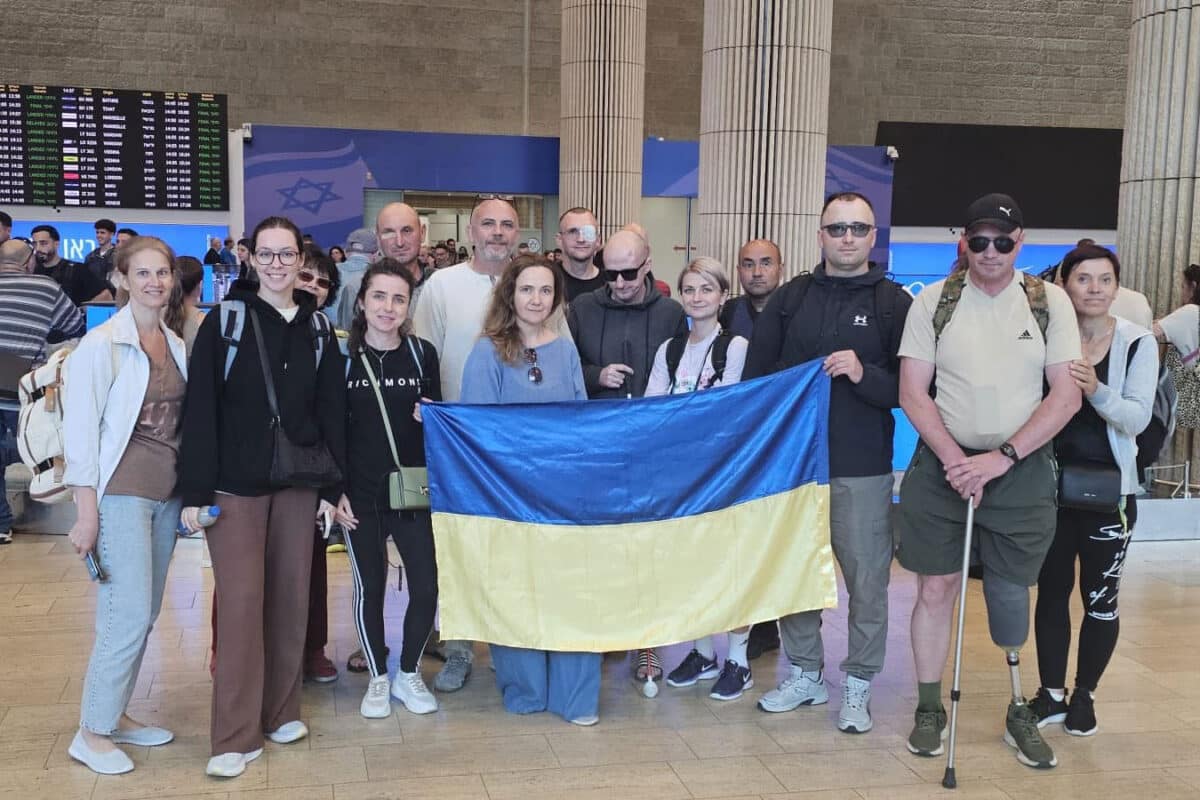
On July 5, 2026, a Ukrainian delegation of doctors and patients arrived in Israel to participate in an important medical program as part of the UNBROKEN project.
Ukrainian specialists and patients will undergo training and eye prosthetics at the Israeli hospital “Bnei Zion” in Haifa.
This was reported by public activist and volunteer Anna Zharova (Israeli Friends of Ukraine), emphasizing that the project is the result of cooperation between Ukrainian and Israeli doctors, volunteers, public organizations, and diplomatic structures.
In the conditions of war, when Ukraine daily experiences the consequences of Russian shelling, such initiatives are of particular importance. They help not only specific patients but also create a foundation for long-term medical assistance in Ukraine itself.
The main goal of the project is not just to conduct individual operations in Israel, but to transfer Israeli experience to Ukrainian doctors, which can be applied in Lviv in the future.
UNBROKEN in Israel: Ukrainian patients and doctors arrived for experience that will save lives
Israeli experience for Ukrainian medicine
The UNBROKEN project in Lviv has become one of the most well-known Ukrainian centers for the rehabilitation of people affected by the war.
Here they help military and civilians who have received severe injuries, lost limbs, vision, undergone complex surgeries, and need long-term rehabilitation.
Now another important stage is being added to this direction — the development of eye prosthetics with the participation of Israeli specialists.
For patients who have lost an eye or suffered severe facial injuries, prosthetics is not just a medical procedure.
It is a return to normal life.
It is the opportunity to look at oneself in the mirror without pain again.
It is a chance to go out to people, return to family, work, society, and feel not only survived but also restored.
Israeli medicine has long been known for its high level of ophthalmology, reconstructive surgery, and rehabilitation. Therefore, the participation of the “Bnei Zion” hospital in such a project opens an extremely important opportunity for Ukrainian patients and doctors.
Ukraine receives not just help here and now.
Ukraine receives knowledge, technologies, and practical experience that can be applied at home.
Who participates in the project
The organizer of the internship in Israel was the Israeli organization לב אחד — One Heart — Lev Echad.
Israeli Friends of Ukraine joined the organization of events in Israel and volunteer support during operations by invitation.
The project received significant support from the Embassy of Ukraine in Israel, the Ambassador of Ukraine to Israel Yevhen Korniychuk, Consul Alex Zernopolsky, as well as the Ukrainian volunteer center “Razom”.
Such partnerships are especially important today.
When doctors, volunteers, diplomats, public organizations, and medical centers work together, help becomes not a one-time action but a real system.
NAnews — Israel News | Nikk.Agency notes that such projects demonstrate the living power of Ukrainian-Israeli cooperation: it is built not only on official meetings but also on concrete actions that change human destinies.
Eye prosthetics center in Lviv
One of the most important results of this program should appear in Ukraine.
According to Anna Zharova, a medical center for eye prosthetics is planned to be created in Lviv in the near future, which will work taking into account Israeli experience and in cooperation with Israeli specialists.
This means that patients in Ukraine will be able to receive specialized assistance closer to home.
For a country that faces the consequences of war daily, such a center is necessary.
Eye and facial injuries are among the most severe consequences of explosions, missile strikes, artillery shelling, and mine-explosive injuries.
Many people after such injuries need not only surgery but also long-term medical, psychological, and social recovery.
The creation of a center in Lviv will allow Ukrainian doctors to develop a new direction, and patients to receive help faster and more accessible.
This is the true value of international cooperation: not just bringing patients for treatment, but helping Ukraine create its own strong medical base.
People’s diplomacy that works
In her post, Anna Zharova wrote that against the backdrop of constant shelling of Ukraine and heavy news, it is especially important to see people who continue to do small and big things.
This phrase very accurately describes the essence of the project.
While the war destroys cities and destinies, volunteers, doctors, and public organizations continue to restore what can be restored.
They seek partners, negotiate with hospitals, find funding, accompany patients, help doctors, and create new opportunities where there were none yesterday.
This is true people’s diplomacy.
Not declarations.
Not loud words.
Not formal photographs.
But concrete help to specific people.
When a Ukrainian patient gets a chance for recovery in an Israeli hospital, and a Ukrainian doctor gains knowledge that will later help dozens and hundreds of patients in Lviv, this is real partnership between countries.
Why this is important for Israel and Ukraine
For Ukraine, the UNBROKEN project in Israel is an opportunity to strengthen its own medicine in one of the most complex areas.
For Israel, it is a chance to showcase its best experience, its medical expertise, and its human solidarity with people affected by the war.
Israel knows what trauma, terror, loss of loved ones, and the need to quickly restore people after severe injuries are.
Ukraine is going through enormous national pain today, and that is why Israeli experience can be especially valuable for it.
Such projects connect the two countries not with slogans, but with deeds.
Doctors pass on knowledge.
Volunteers create conditions.
Diplomats help open doors.
Patients get a chance for recovery.
And in Lviv, a new medical center is gradually forming, which can become part of a large system of assistance to people affected by the war.
Main
The arrival of the Ukrainian delegation in Israel as part of the UNBROKEN project is a story of support, professionalism, and faith in recovery.
It is a story of how Israeli medicine can help Ukraine not only treat individual patients but also build new medical opportunities within the country.
It is a story of people who do not wait for perfect conditions but continue to do important things.
Thanks to such projects, the word “help” ceases to be abstract.
It becomes an operation, training, a new center, a restored face, returned confidence, and a chance for a person to feel like themselves again.
On the night of July 6, 2026, Kyiv woke up not to alarms, not to the noise of traffic, and not to the usual city life.
It woke up to explosions.
Russian terrorists launched a massive combined strike on Ukraine, with the main target being Kyiv. This was already the second heavy strike on the capital in four days: on the night of July 2, a Russian attack claimed 31 lives in Kyiv, with more than a hundred people injured. And now — again high-rise buildings, again fire, again rescuers on ladders, again people under the rubble.
According to the Ukrainian Air Force, on the night of July 6, Russia launched 419 aerial attack means — 68 missiles and 351 drones of various types. Among them were 6 anti-ship missiles 3M22 “Zircon”/”Onyx”, 23 ballistic missiles “Iskander-M”/S-400, 33 cruise missiles Kh-101, 6 cruise missiles “Kalibr”, and 351 strike UAVs of the Shahed, “Gerbera”, “Italmas” types and decoy drones.
The Ukrainian air defense managed to shoot down or suppress 363 targets: 37 missiles and 326 drones. This is a huge effort by the defenders of the sky.
But the main tragedy of this night lies elsewhere.
According to preliminary data from the Air Force at 08:30, there were hits from 29 ballistic, including anti-ship, missiles and 18 strike UAVs at 34 locations. Debris from downed drones was also recorded at 16 locations. Ballistics and “Zircons” were the strike that Ukraine could not stop due to a shortage of interceptor missiles.
Residential buildings instead of “military targets”
As of the morning of July 6, it was known that 11 people had died in Kyiv. Initially, it was reported that 46 people were injured, of whom 27 were hospitalized, including three children. Later, Ukrainian President Volodymyr Zelensky mentioned about 60 injured in the capital.
These are not just numbers.
Behind each number is a person who was at home in the evening. Someone was sleeping. Someone was checking their phone. Someone was putting a child to bed. Someone left a cup in the kitchen and did not know that in a few hours their apartment would become a hole in the wall of a high-rise building.
The most severe consequences were recorded in the Podilskyi and Darnytskyi districts of the capital.
In the Podilskyi district, a residential high-rise was hit. In one building, structures from the 9th to the 5th floor were destroyed, people were brought out into the fresh air and rescued from the upper floors using fire ladders. Searches for victims also continued in a 21-story residential building, where the destruction affected floors from the 2nd to the 5th.
In the Darnytskyi district, residential buildings were damaged, fires broke out in apartments and a garage cooperative. According to TSN, in one of the 25-story buildings, debris fell at the level of the 4th floor, and in a 30-story residential building, a fire broke out from the 23rd to the 25th floor.
Consequences were also eliminated in the Holosiivskyi and Obolonskyi districts. According to the Kyiv City State Administration, damage was recorded at more than 20 locations, although initial reports mentioned 15.
Urlivska: children’s toys among the debris
There are frames that do not require long explanations.
On Urlivska Street, after the Russian strike, high-rise buildings were damaged. The blast wave knocked out most of the windows in the unfinished buildings of the “Urlivsky” residential complex. Dozens of parked cars were destroyed in the yards. On the playground, which was near the impact site, abandoned children’s toys remained among the debris.
This is the face of the Russian war.
Not maps in Kremlin offices.
Not television sets with camouflage nets.
Not Mosfilm bravado, where Putin’s power portrays “strength”.
But a playground where toys lie among glass, metal, and dust.
People ran out of their homes in what they were wearing. Some in house robes. Rescuers carried out not only people but also pets: one resident was helped to carry out two cats, who sat in carriers after the evacuation, as frightened as their owners.
In one of the destroyed houses in the Podilskyi district, according to Ukrainian media, an entire family died — mother, father, and son. This is the point where the language of politics ends. Only silence remains, which cannot be justified by any “geopolitical calculations”.
Kyiv region: Vyshneve, fire and evacuation
The strike was not only on the capital.
In the Kyiv region, Zelensky reported 3 dead and 16 injured. In Vyshneve, a fire continued at the site of the missile strike, and people were evacuated from the private sector. More than 400 rescuers and police officers were involved in eliminating the consequences of the attack.
Later, regional authorities clarified that the number of injured in Kyiv region increased to 26 people, including two children: a 9-month-old baby and a 12-year-old child. More than 500 residents were temporarily evacuated from Vyshneve due to the threat of repeated detonation.
This is an important detail: even after the explosion, the danger did not end.
People not only lost their homes, windows, cars, and sense of security. They were also evacuated due to the risk of repeated detonation. That is, the Russian strike continued to threaten them even after the missile had already fallen.
Patriot, which is lacking
The President of Ukraine directly stated what has long been clear in Kyiv, Moscow, Tehran, and Western capitals: Ukrainian military worked well against drones and cruise missiles but could not stop Russian ballistics due to a lack of interceptor missiles for Patriot systems.
It is precisely the Patriot that remains the key means of protection against ballistic strikes. It is the interceptor missiles — not beautiful words, not statements, not “concern”, but specific missiles on specific launchers — that decide whether a high-rise will stand in the morning or turn into a mass grave.
Reuters, citing Air Force data, also notes: Russia used 68 missiles and 351 drones, Ukrainian air defense shot down or suppressed 37 missiles and 326 drones, but neither ballistic nor supersonic/hypersonic missiles were intercepted in this attack.
Zelensky called on the US and European partners to come out of the NATO summit in Ankara with strong decisions on protecting Ukrainian skies. His phrase sounds like both an accusation and a request: as long as the missiles for Patriot remain in the allies’ warehouses, Russia gets an incentive to further “defeat” residential buildings.
For the Israeli audience, this should be especially understandable.
In Israel, they know what a night under rockets is like. They know what dependence on air defense is like. They know that sometimes between life and death stands not a diplomatic formula, but an interceptor that was delivered on time.
That is why NAnews — Israel News | Nikk.Agency draws attention to this detail: the Ukrainian issue today is not only a front-line issue. It is a question of the right of peaceful people to sleep in their apartments and not die because the necessary missiles are lying in the allies’ warehouses.
NATO summit and Moscow’s demonstrativeness
This attack occurred on the eve of the NATO summit in Ankara, scheduled for July 7–8, 2026. On the eve, Zelensky warned that, according to intelligence, Russia was preparing a new massive strike. He linked this to Putin’s habit of acting demonstratively — after US Independence Day and before the NATO summit.
This is not a coincidence.
The Russian terrorist regime loves symbols and lives by demonstrating strength. First, they show the world a dictator in decorations where maps and camouflage nets are supposed to depict “military power”. Then Russian missiles fly into sleeping Ukrainian cities.
And this message is addressed not only to Ukraine.
Moscow shows Europe: this is what we can do.
This is what war looks like if it is not stopped in time.
This is what will happen to houses, hospitals, schools, power plants, and streets if the West continues to pretend that “escalation” can be avoided by concessions to the terrorist.
Since 2022, and if you look broader — since the war against Georgia in 2008, Russia has repeatedly shown that its aggression does not stop by itself. It is stopped only by force, weapons, sanctions, isolation, and a clear understanding: a terrorist does not calm down from softness. He perceives softness as an invitation to continue.
International “concern” no longer saves
After such nights, it is especially bitter to hear the usual language of international organizations.
“Deep concern.”
“Call for restraint.”
“Need for a ceasefire.”
For people waiting under the rubble, this is not help.
For parents looking for children, this is not protection.
For rescuers climbing fire ladders to destroyed floors, this is not a tool.
Yes, international structures can make statements. But if after the statements missiles again hit residential buildings, it means these statements do not work as a protection mechanism. They remain words, and Ukrainians need air defense systems, interceptor missiles, production, logistics, political decisions, and accountability for every day of delay.
The world cannot be surprised every time that Russia kills civilians again.
This is no longer a “shock”.
This is a system.
And if the killing system continues to work, it means the protection system is still insufficient.
When patience runs out
In Ukrainian society, after such nights, the terrible question is increasingly heard: what will happen if people finally run out of patience?
When residential buildings are hit again and again, when families die, when children’s toys lie among glass, when peaceful cities are turned into targets, the desire for revenge becomes an understandable human reaction.
But that is why Ukraine’s allies must act now.
Not so that Ukraine “does not respond”.
But so that the right to protection does not turn into despair.
The democratic world must stop Russian terror with military, political, and economic decisions before the pain becomes even deeper and the war even wider.
Main conclusion
The night of July 6, 2026 became yet another proof: Russia is not seeking peace.
Russia is testing weakness.
It struck Kyiv with 68 missiles and 351 drones. It directed the main strike at the capital. It pierced Ukrainian air defense with ballistics, “Zircons”, “Onyxes”, “Iskanders”, S-400, Kh-101, “Kalibrs”, and hundreds of UAVs. It hit residential buildings. It killed people. It again forced rescuers to search for the living and the dead among the concrete.
In Kyiv, 11 people died, about 60 were injured. In Kyiv region, 3 people died, the number of injured, according to updated regional authorities’ data, increased to 26. Hundreds of residents were evacuated in Vyshneve. In the Podilskyi and Darnytskyi districts of the capital, high-rise buildings burned and collapsed. On Urlivska Street, children’s toys remained among the debris.
This is not “another episode of the war”.
This is a question to Ukraine’s allies.
How many more nights must pass before Patriot missiles stop lying in warehouses and start protecting people?
How many more houses must collapse?
How many more families must die?
And how many more times will the world pretend not to understand the obvious: Russian terror will not stop by itself. It needs to be stopped. Now.
In April 2025, in Jerusalem, at the Wohl Rose Garden (Wohl Rose Garden), located between the Knesset and the Supreme Court, the first memorial in Israel to the victims of the Ukrainian Holodomor of 1932-1933 was installed. This monument was the result of cooperation between the city of Jerusalem, The Temerty Foundation, The Embassy of Ukraine in Israel, HREC (Holodomor Research and Education Center), The Ukrainian World Congress (UWC), and The Jerusalem Development Authority.
The Role of the Monument and Its Symbolism
The monument is designed as broken sacrificial millstones with a raised hand, symbolizing the suffering and resistance of the victims of the Holodomor. This symbolism also reflects the fact that many Ukrainians who survived this genocide were subjected to hunger and brutal repression, and their memory remains a vital part of Ukrainian history today.
The Author of the Monument: Lyudmyla Temertiy
The monument was created by Canadian artist of Ukrainian descent Lyudmyla Temertiy, who is the author of the first Holodomor monument installed in 1983 in Edmonton (Canada).
“The first-ever Holodomor memorial to the victims of 1932-1933 in Ukraine was opened on October 23, 1983, in Edmonton (Alberta, Canada). The monument was built in 1983 at the initiative of the Edmonton branch of the Ukrainian Canadian Congress. The author is Lyudmyla Temertiy from Montreal, whose mother survived the Holodomor.
The monument is made in the form of a broken circle, symbolizing the intentionally broken life cycle (its resemblance to millstones is striking). Tired hands are raised in resistance, pleading for an end to the torture. The inscription on the monument is in English and French: “In eternal memory of the millions who died during the man-made famine-genocide caused by the Soviet regime in Moscow in 1932-1933. We stand guard against tyranny, violence, and inhumanity.”
Even before the monument was installed, the Soviet Embassy in Canada expressed its protest.”
Lyudmyla Temertiy, along with David Robinson, created the monument in Jerusalem, which features broken millstones with a raised hand, symbolizing the suffering and resistance of the victims of hunger and political repression.
“We as an institution are still clarifying the official details (when it was installed, whether there will be an official opening), but it seems that in Jerusalem, at the Wohl Rose Garden, between the Knesset and the Supreme Court, the first Holodomor monument has appeared in Israel.
This is the result of the cooperation of the city of Jerusalem, the Temerty Foundation, the Embassy of Ukraine, HREC, and the Jerusalem Development Authority.”
The author is Canadian artist of Ukrainian descent, Lyudmyla Temertiy (along with David Robinson, as indicated on the plaque), another monument by her, almost identical to the Jerusalem one, was installed 41 years ago in Edmonton, Canada.
I fully understand the organizational silence, as there are many Russians and vandals in Israel. But the significance of this event is immense, and gratitude to all involved is boundless.”
Unofficial Opening and Ceremony
The monument was installed (according to information from reliable sources) not in April, but earlier. However, according to the original plans, the official opening of the monument was supposed to coincide with a visit from high-ranking officials from Ukraine to Israel, including the potential visit of the President of Ukraine Volodymyr Zelensky.
However, the visit of the President of Ukraine has not yet taken place for known and unknown reasons, and the information about the monument has not been officially disseminated, despite its significance and importance for both countries.
On April 17, 2025, the first person to report on the monument was volunteer Martin Danichev, who lives in Petah Tikva. He published photos of the monument on Facebook and wrote:
“I am pleasantly shocked. A monument to the victims of the Holodomor of 1932-1933 has been opened in Jerusalem.”
Danichev also noted that the monument was recently installed, in 2025, and added that “it’s hard to explain how important this is.”
This news became significant for the Ukrainian community and was quickly picked up by the media.
The official opening of the monument at the Wohl Rose Garden has not yet occurred, as the park itself is under reconstruction. The Ukrainian Cultural Center in Tel Aviv reported that the official opening of the monument will take place after the park work is completed. The date and time of the ceremony will be published on the pages of The Embassy of Ukraine in Israel and The Ukrainian Cultural Center in Tel Aviv. This important moment for the Ukrainian community in Israel and around the world is expected to be widely covered.
Symbolism of the Monument and Its Significance
The monument in Jerusalem is designed in the form of broken sacrificial millstones with a raised hand, on which there are five ears of wheat, symbolizing the suffering of millions of Ukrainians who became victims of the Holodomor. This monument symbolizes not only a historical tragedy but also the struggle for human rights, and the memory of victims of violence and cruelty.
Project of the Monument and Support
The project of the monument was supported by a number of organizations, including James Konstantin Temerty, a Canadian businessman and philanthropist. He actively supports cultural and educational projects related to Ukraine. Other important participants in the project included HREC and The Jerusalem Development Authority, which played a key role in the organization and installation of the monument.
James Konstantin Temerty: Businessman and Philanthropist
James Konstantin Temerty is a Canadian businessman and philanthropist, founder of the company “Northland Power”. He actively supports projects in the fields of culture and history, including the installation of Holodomor monuments in different countries, such as Israel and Canada. James and Lyudmyla Temerty are siblings, and both actively support cultural initiatives aimed at preserving the memory of the tragedies of the Ukrainian people. James Temerty is also the founder of the project Ukrainian Jewish Encounter (UJE), which aims to promote understanding and cooperation between the Ukrainian and Jewish peoples.
Lyudmyla Temerty: Artist and Activist
Lyudmyla Temerty, born in 1944 in Slovakia, is a renowned artist and activist of Ukrainian descent. She is the author of the first Holodomor monument, installed in 1983 in Edmonton, Canada. Her works are dedicated to preserving the memory of the Holodomor and other tragedies of the Ukrainian people. Lyudmyla is actively involved in public life, supporting Ukrainian culture and education.
Ukrainian Jewish Encounter Project
Ukrainian Jewish Encounter (UJE) is a project supported by James Temerty, aimed at fostering understanding between the Ukrainian and Jewish peoples. The project includes educational initiatives, publications, and events dedicated to the shared historical heritage, including the Holocaust and the Holodomor. This project continues Temerty’s efforts to preserve historical memory and strengthen ties between the two peoples.
Israel’s Recognition of the Holodomor
Israel has not officially recognized the Holodomor of 1932–1933 in Ukraine as an act of genocide.
In 2008, the Israeli Ambassador to Ukraine, Zina Kalai-Klaytman, stated that Israel acknowledges the Holodomor as a great tragedy of the Ukrainian people but cannot recognize it as genocide because “the famine affected not only Ukrainians but also other nations.”
In 2016, a bill was presented in the Knesset to recognize the Holodomor as genocide, but it was not passed due to political difficulties and the delicacy of the issue in the context of relations with Russia.
In 2018, Member of Knesset Akran Khasson proposed a bill which also failed to gain support in parliament.
In 2019, during the visit of Israeli Prime Minister Benjamin Netanyahu to Ukraine, Volodymyr Zelensky urged Israel to recognize the Holodomor as an act of genocide. However, Netanyahu did not publicly respond to this request, and Israel did not change its stance.
In 2021, Israeli President Isaac Herzog visited Ukraine and laid a wreath at the Holodomor memorial in Kyiv, but Israel still refrains from officially recognizing the tragedy as genocide.
In 2022, Israeli Ambassador to Kyiv Michael Brodsky stated that this was due to the fact that “there is no practice in Israel of recognizing or not recognizing national tragedies.”
…
Since its founding, NAnews – News of Israel has actively covered topics related to Ukrainian-Israeli relations, significant cultural and historical events for the Ukrainian and Jewish communities. The issue of preserving historical memory, especially about tragedies such as the Holodomor, holds special significance for both communities. The installation of the monument in Jerusalem becomes not only an important moment in the history of Ukraine but also a key step in strengthening cultural ties between the two peoples.
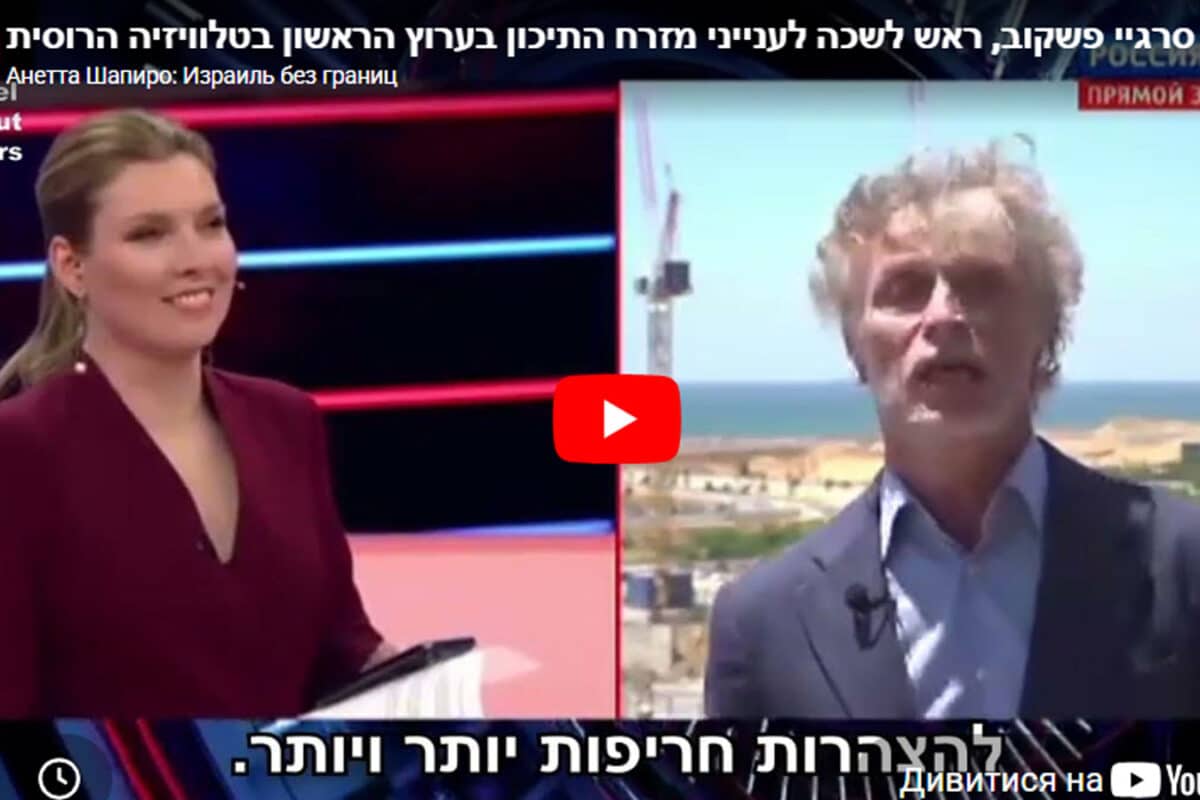
On July 5, 2026, a post was published in the Telegram channel “Shomer Saf” about Sergey Pashkov, a Russian TV journalist who has been working on Middle Eastern topics for many years and lives in Israel.
Quote:
“This man lives in Israel, raises his children here, and his wife works for the Russian-speaking 9th channel of Israeli television. At the same time, he speaks to a foreign audience with harsh criticism of Israel, spreads false information, criticizes the government and the prime minister.
The question arises: why does the state allow such activities from its territory? And is it related to the fact that he has influential patrons, thanks to whom he feels so confident?”
On the same day, a video with a fragment of his report was released on the YouTube channel “Anetta Shapiro: Israel Without Borders”.
The ice has moved?: ‘right-wing’ channels in Israel have begun to question the ‘inaction of the state in the face of Russian media influence’
What exactly did Pashkov say in this fragment
In the Russian broadcast, Pashkov said several things that could irritate the right-wing Israeli camp.
He started with the thesis that Israel and Washington “have quarreled again,” and linked Netanyahu’s statements about a possible refusal of US financial aid to the pre-election atmosphere in Israel.
He then called Channel 14 a “pro-government channel” that “absolutely supports the ruling coalition” and “is entirely supportive of Netanyahu.”
Pashkov called Netanyahu’s statement that Israel could refuse American aid “populist,” reminding that it involves about $12 billion over three years, arms supplies, technologies, and work with American military specialists.
He also said that the degree of Israel’s dependence on the American defense center is “colossal.”
Separately, Pashkov highlighted Netanyahu’s response to the question of how he changed after October 7. According to him, the prime minister replied: “I lost some weight,” and this, as Pashkov said, caused “shock” among a large number of viewers, especially the opposition.
Another thesis: Pashkov stated that there is a “saber battle” in Israel between the opposition and Netanyahu around the prime minister’s words that he allegedly saved the world twice from an Iranian nuclear bomb.
He then said that Washington demanded Israel stop strikes in Lebanon and had previously demanded a reduction in the intensity of the military campaign in Gaza.
And in the end, Pashkov concluded that Netanyahu would not go for a complete break with the US because “the future of Israel depends on it,” and sharp statements before the elections could further cool US-Israeli relations.
In the description of the video in Hebrew, Pashkov is presented as:
Sergey Pashkov, head of the Middle East bureau of Russian television
That is: Sergey Pashkov, head of the Middle East bureau of Russian television.
The publication is important not only because of Pashkov himself.
It is important because the question of Russian media influence in Israel was raised specifically from the right-wing Israeli media field.
Not from a “Ukrainian” organization.
Not from the “left” camp.
Not from the opposition “anti-Netanyahu” environment.
But specifically from the right — from an environment that usually speaks the language of “security, sovereignty, national interest, and support for a strong state”.
And the main phrase of the post sounds like this:
“The question arises: why does the state allow such activities from its territory?”
This is the political moment.
Because now the topic of Russian influence in Israel is no longer just a “Ukrainian pain” or a dispute among activists. If this question is being asked by right-wing Israeli media, then the ice has indeed moved.
Why Pashkov specifically
Sergey Pashkov is not a random person in this story and not just a commentator who accidentally got into the Israeli agenda.
Open sources describe him as a journalist for VGTRK and the “Russia” channel, working on Israel and the Middle East. In 2025, Vesti called him the head of the Middle East bureau of VGTRK and noted that he reported on “Russia 24” about the situation in Israel after strikes on Iran.
There is also a family detail that coincides with the wording of the post. Newsru.co.il wrote that Aliya Sudakova is a news and current affairs presenter on Channel 9 ITV, and Sergey Pashkov is the director of the Middle East bureau of the “Russia” channel. It was also mentioned that they have lived and worked in Israel for many years, and their younger daughters grew up here.
So it’s not about a person who came to Israel for a few days to shoot a story.
It’s about a Russian TV journalist who has long been inside Israeli reality, lives here, enjoys the security of this country, works from the region, and at the same time is part of the Russian state media system.
In 2023, a public story already arose around Pashkov. Israeli media wrote that he was wanted to be stripped of accreditation in Israel due to materials about the war against Hamas.
Therefore, the current publication did not appear out of nowhere.
It hit an already existing nerve.
Why the main thing is that the question was raised from the right
The main news here is not that someone was once again outraged by a Russian journalist.
The main news is who exactly asked the question.
“Shomer Saf” is not a left-wing platform, not a “Ukrainian” organization, and not an opposition party headquarters. It is a right-wing Zionist Israeli media project founded by Dr. Gadi Taub in 2020.
Gadi Taub is an Israeli historian, writer, publicist, and political commentator, one of the prominent public intellectuals of the right-wing camp. “Shomer Saf” itself is not formally a party and is not an official body of Likud, “Zionut HaDatit,” “Otzma Yehudit,” or any other political force.
But in terms of political orientation, it is a right-wing Israeli media.
It is an environment close to the national-Zionist and pro-coalition discourse, to criticism of left-wing media, the judicial system in its current form, and the Israeli mainstream.
And that is why the publication is important.
When “Ukrainians” talk about Russian influence, it is often dismissed as Ukrainian pain.
When “leftists” talk about it, it is dismissed as an attack against Netanyahu.
When activists talk about it, it is called a private campaign.
But when the question comes from the “right” Israeli field, the usual excuses begin to break down.
It is already difficult to say: “this is just a Ukrainian agenda.”
It is difficult to say: “these are leftists attacking the government.”
It is difficult to say: “this is an internal dispute among Russian speakers.”
No.
Now the question of Russian influence has been raised from the right.
And this makes it part of the Israeli political agenda before the elections.
Freedom of speech or the work of a foreign state media machine?
In a democratic country, you can criticize the government.
You can criticize the prime minister.
You can debate Israel’s policy in Gaza, dependence on the US, Channel 14, future elections, the actions of the opposition, Netanyahu’s style, and what the country’s strategy should be after October 7.
This is a normal part of political life.
But the question becomes different when criticism comes not just from an independent journalist or civil commentator, but from a representative of the Russian state media system, which after 2022 has become one of the key tools of Putin’s regime.
Russian television has long ceased to be ordinary media in the Western sense.
It works as part of the state machine that justifies the war against Ukraine, attacks the West, blurs the responsibility of Moscow’s allies, and creates a picture of the world favorable to the Kremlin.
Therefore, the question from the post does not sound like a demand to ban any inconvenient opinion.
It sounds like a question of sovereignty.
Why does the state allow such activities from its territory?
Israel is not obliged to persecute a person for criticizing the authorities. But Israel must understand when its territory, its security, its accreditations, its infrastructure, and its open democratic environment are used by representatives of a foreign state media system.
Especially if this media system belongs to a country that after 2022 is waging war against Ukraine and at the same time building political ties with Iran, anti-Western regimes, and forces that do not always act in Israel’s interests.
Right-wing media raised a question that major parties avoid
So far, major Israeli parties speak about Russian influence very cautiously or remain silent.
The reasons are clear.
The topic of Russia is inconvenient.
It involves diplomacy, old ties, business, cultural inertia, fear of offending part of the electorate, and reluctance to open an additional conflict before the elections.
But that is why it is important that the question was raised by right-wing Israeli media.
The right-wing camp usually speaks about security more harshly than the left. It demands strength from the state, control over borders, toughness towards Israel’s enemies, responsibility for the national interest, and a clear understanding of who acts against the country.
And now this same language is beginning to be applied to Russian informational influence.
If Israel must be strong against Hamas, Hezbollah, and Iran, then why should it be weak against the Russian state media machine?
If Israel demands vigilance from its citizens, then why should the state itself not be vigilant towards those who broadcast from its territory to a foreign audience?
If security is not a slogan but real policy, then why does informational security remain a gray area?
That is why the right-wing source of the question is so important.
It translates the topic from an emotional discussion into a political plane.
Not against citizens, but against foreign influence
It is important not to confuse the addressee here.
The problem is not the Russian language.
The problem is not with Israeli citizens who came from the former USSR.
The problem is not that a person has the right to a political opinion.
People who came to Israel from Ukraine, Russia, Belarus, Moldova, the Baltic states, the Caucasus, or Central Asia are Israeli citizens. Many serve in the army, pay taxes, raise children, survived October 7, and understand well what security is.
Many of them know better than others how Russian propaganda works because they have seen it from the inside. Many after 2022 observed how Russian channels justified aggression against Ukraine, erased crimes, replaced facts with emotions, and turned the war into a television product.
That is why an honest conversation should not be against Russian-speaking Israeli citizens, but against Russian state influence.
The Russian language does not belong to the Kremlin.
People who speak Russian are not obliged to answer for Russian television.
But Israel has the right to ask why representatives of the Russian state media system feel so confident here.
Who gives them access?
Who gives accreditations?
Who checks how their materials are then used abroad?
Who determines where the line is between journalism and activities in the interests of a foreign state machine?
NANews —Israel News | Nikk.Agency has already written: a party or bloc that first clearly states this difference may gain additional votes.Not through hysteria and not through a witch hunt, but through an honest formulation: Israeli citizens are Israeli citizens, and Russian state propaganda is Russian state propaganda.
Why this could become an election topic
The closer the elections, the harder it will be for major parties to hide behind cautious phrases.
Israel after October 7 lives in a new reality. The country has already realized that war is not only about rockets, tunnels, borders, drones, and airstrikes. The war is also in the information field, where every picture, every word, and every external comment affect how the world perceives Israel.
Hamas fights with images.
Iran fights with networks of influence.
Russia fights with television, diplomatic formulas, agents of influence, pseudo-neutral comments, and a constant attempt to portray democratic countries as weak, hypocritical, and dependent.
In such a reality, Israel cannot afford naivety.
That is why the right-wing Israeli media, which raised the issue of Russian influence, effectively opened a topic that parties are not yet willing to touch.
Before the elections, this could become an important line.
A party or bloc that first says: Israel must defend itself not only from Hamas, Hezbollah, and Iran but also from foreign informational influence, may gain additional votes.
Not because it’s a loud slogan.
But because it’s a long-overdue problem.
“Right-wing” camp may demand the state to be a state
The peculiarity of this story is that it is the right-wing field that can ask the question more harshly than others.
The left-wing camp often talks about rights, press freedom, and democratic procedures.
“Ukrainian” activists talk about Kremlin propaganda and Russia’s war against Ukraine.
But the right-wing Israeli field speaks a different language — the language of security, sovereignty, national interest, and state strength.
When the question arises there, “why does the state allow such activities from its territory?”, it no longer sounds like a request from activists.
It sounds like a demand for the state to be a state.
Not a thoroughfare.
Not a weak platform.
Not a territory where foreign state media structures can live, work, reach an overseas audience, and shape the image of Israel in the interests of a foreign political system.
For the right-wing voter, this topic is especially understandable.
If Israel demands strength at the borders, strength against Hamas, strength against Iran, and strength in international diplomacy, then why should it be weak against Russian informational influence?
Why should security end where television begins?
The ice has moved precisely from the right
The post on July 5 is important not because it contained harsh words about Sergey Pashkov.
It is important because in the right-wing Israeli media field, a question was raised that major parties still prefer to sidestep.
“The question arises: why does the state allow such activities from its territory?”
This question is addressed not only to one journalist.
It is addressed to the Ministry of Internal Affairs, the Ministry of Foreign Affairs, security services, regulators, press services, parties, and future Knesset candidates.
It is addressed to the entire Israeli system, which after October 7 must look at security more broadly than before.
The ice has moved precisely because the question was raised from the right.
And now it will be increasingly difficult to hide it aside, call it secondary, or write it off as a Ukrainian agenda.
Russian-speaking Israelis do not belong to Moscow.
Right-wing Israelis are not obliged to turn a blind eye to the Kremlin’s media machine.
And the state of Israel is not obliged to be a convenient platform for those who live here, enjoy the protection of this country, but work in the logic of a foreign state system.
Before the elections, this could become an important topic.
And perhaps additional votes will be gained not by those who remain silent again, but by those who first say out loud what many have long understood: Russian influence in Israel is not a cultural issue and not a language problem.
It is a matter of security, sovereignty, and political maturity of the state.
The Kremlin shows no signs of readiness to end the war against Ukraine.
On the contrary, recent statements from Moscow again indicate an attempt to expand the war under the familiar pretext of “border security.”
The source of this assessment is a TSN publication from July 5, 2026, citing the American Institute for the Study of War (ISW).
The material states that Putin continues to count on the capture of new Ukrainian territories and the establishment of full political control over Ukraine.
What happened on July 3 and why it matters
The key episode is Putin’s meeting with Russian military commanders on July 3, 2026.
At this meeting, the head of the Kremlin again spoke about the need to create a so-called “buffer zone” along the Russian border.
According to TSN, citing ISW, the commander of the Russian troop grouping, Yevgeny Nikiforov, stated that Russian troops allegedly need to advance in the Sumy and Kharkiv regions to “protect” Russia’s border regions.
In Kremlin language, this sounds like defense.
But in essence, it is an attempt to justify new seizures of Ukrainian territory.
Sumy and Kharkiv regions as the next target
Sumy and Kharkiv regions reappear in Russian rhetoric not by chance.
Both regions border Russia, so the Kremlin uses them as a convenient propaganda argument: first talking about threats to Russian regions, then calling the advance of the Russian army a “necessary measure,” and after that trying to present the occupation as a “buffer.”
ISW analysts in their assessment for July 4, 2026, separately noted Nikiforov’s statements about creating a “buffer zone” in the Sumy and Kharkiv regions.
For Ukraine, this means not an abstract military formula, but a direct threat to new areas, cities, and civilians.
What really lies behind the word “buffer”
According to ISW, the Russian “buffer zone” remains a vague and practically unattainable goal as long as an independent Ukraine capable of resisting exists.
That is why such a formula is dangerous: it has no clear endpoint.
If the Kremlin declares one line insufficiently safe, it can demand the next one, then another one — and each new seizure is explained with the same word “buffer.”
TSN conveys the analysts’ conclusion: it is not only about military security but about the Kremlin’s desire for further occupation of Ukrainian territories beyond the already captured areas of Donetsk and Luhansk regions.
Why this is important for Israel
For the Israeli audience, the importance of this story is not only the Ukrainian map.
A broader logic is visible here: the aggressor speaks the language of security but in practice uses it to advance the army, pressure a neighboring country, and destroy international rules.
In this context, NAnews — Israel News | Nikk.Agency draws attention to the fact that Russian rhetoric about the “buffer” is very similar to the political packaging of further escalation.
The Kremlin is not just explaining the ongoing war — it is preparing arguments in advance for its continuation.
At the same time, Putin continues to criticize Western support for Ukraine.
According to ISW, Moscow uses Ukrainian strikes on Russian territory as an informational pretext to justify further escalation, and attacks on Western aid to Kyiv are needed by the Kremlin to weaken international support for Ukraine.
What plans do experts see in the Kremlin
The Ukrainian material also provides an assessment by Professor Yaroslav Hrytsak of the Ukrainian Catholic University.
In his opinion, Putin is interested not only in the Donetsk region but in all of Ukraine.
This is an important emphasis.
Even if the Kremlin is not currently speaking about Kyiv as openly as in 2022, this does not mean abandoning the idea of politically subjugating Ukraine.
Analyst Jack Buckby believes that Putin is no longer fighting for Kyiv in the previous format.
In 2022, Moscow publicly spoke about the intention to capture Kyiv, carry out the so-called “demilitarization” and “denazification” of Ukraine, but now the priorities have significantly shifted.
Kyiv is not the first target, but Ukraine remains the target
The change in priorities does not mean a change in the main goal.
The Kremlin may temporarily focus on the Sumy, Kharkiv, Donetsk, or Luhansk regions, but strategically it continues to seek control over Ukraine as a state.
That is why the talk about a “buffer zone” cannot be perceived as a technical detail of the front.
It is a political signal.
The Kremlin shows that it is not ready to stop at the already captured territories and continues to look for formulas through which new attacks, new mobilization of resources, and new pressure on Ukraine can be explained.
For Israel, Ukrainians in Israel, and Jewish communities connected with Ukraine, this plot is also important because Russia’s war against Ukraine has long become part of a broader test of the international order.
If the seizure of territory can be called “security,” then any state next to an aggressive regime is under threat.
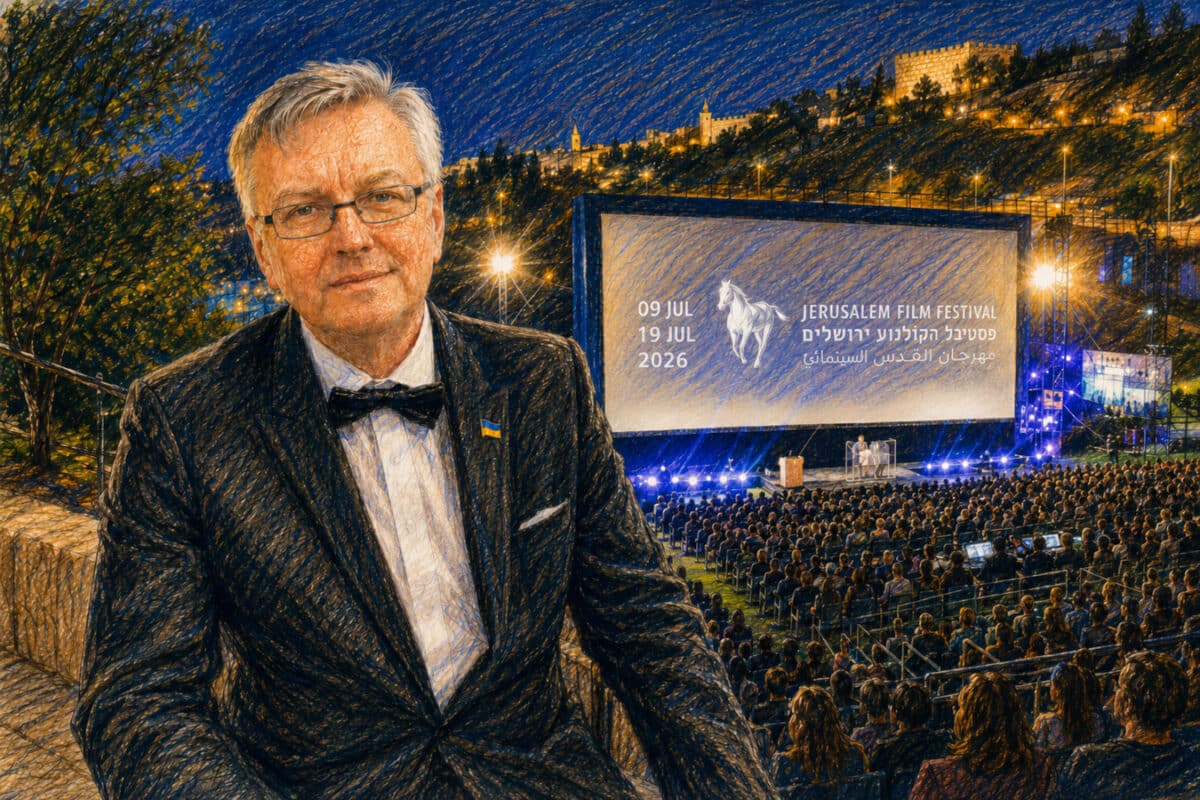
Ukrainian director Sergei Loznitsa, one of the most prominent authors of contemporary European cinema, will be an honorary guest at the Jerusalem Film Festival 2026.
He will participate in the opening ceremony, receive a special recognition award from the festival, and head the jury of the Israeli competition.
For Israel, this event goes beyond the usual film schedule. A director whose films have been shown at major European festivals for many years is coming to Jerusalem, and his work on themes of memory, war, violence, archives, and human responsibility is well understood by the Israeli audience.
In 2026, the Jerusalem Film Festival will take place from July 9 to 19. This will be the 43rd edition of Israel’s main international film forum.
Loznitsa in Jerusalem: why it matters
Sergei Loznitsa was born in 1964, grew up in Ukraine, and became one of the most renowned directors working at the intersection of documentary, archival, and feature films.
His films have been shown in Cannes, Venice, Berlin, Karlovy Vary, and other major international venues.
Ukrainian director to head the jury of the Israeli film competition at the 43rd Jerusalem Film Festival
For the Jerusalem Film Festival, Loznitsa is not a new figure. Several of his films have already been shown here, and works like “Invasion” and “Babi Yar. Context” have received festival recognition.
For Israel, this is a particularly sensitive topic: the film about Babi Yar is connected not only with Ukrainian history but also with Jewish memory, the Holocaust, societal responsibility, and how cinema can speak about tragedy without simplification.
Now Loznitsa returns to Jerusalem not just as a program participant. He will become an honorary guest of the festival and the chairman of the jury of the Israeli competition.
This means that he will be evaluating films created in Israel and speaking to the Israeli reality from within.
At a time when Israeli culture faces pressure on international platforms, the presence of authors of such caliber in Jerusalem becomes an important signal. Israeli cinema continues to be part of the global cultural scene, and the festival in Jerusalem remains a place where directors, producers, curators, and critics from different countries come.
When and where the festival will take place
The 43rd Jerusalem Film Festival will take place from July 9 to 19, 2026 – https://jff.org.il/.
The opening ceremony will be held at the Sultan’s Pool — one of Jerusalem’s most recognizable open venues. It is there that the festival traditionally gathers a large audience, guests, industry representatives, and program participants.
The opening film will be Tell Me Everything by Israeli director Moshe Rosenthal. The screening is scheduled for July 9 at 8:00 PM and will take place in the presence of the creators and actors.
The main festival venues are Jerusalem Cinematheque, Lev Smadar, Yes Planet, as well as special city spaces.
This is not just one hall or a series of separate premieres, but a large city festival that turns Jerusalem into the center of Israeli and international cinema for ten days.
For readers of NAnovosti — News of Israel, this story is also important because it shows that Israel’s cultural life does not stop even in the most challenging periods.
Jerusalem not only hosts films but also shapes the conversation about how cinema can speak about war, memory, society, freedom of speech, and the future of the country.
Who participates and what will be in the program
According to organizers and Israeli media, more than 25 international guests will attend the festival in 2026.
Among them are directors, producers, actors, festival curators, and industry representatives from Germany, France, Switzerland, Argentina, the USA, and other countries.
Among the participants and jury members mentioned are Corinna Harfouch, Angela Schanelec, Mar del Plata Film Festival director Jorge Stamadianos, French producer and critic Hélène Schumann, and American film curator Alissa Simon.
On the Israeli side, the jury includes Roni Aboulafia, Nir Bergman, and Yona Rozenkier.
The festival program includes an international competition, Israeli feature films, documentaries, short films, debuts, special screenings, classics, experimental works, and separate thematic sections.
The directions announced include International Competition, Masters, Gala, Panorama, Debuts, Spirit of Freedom, On the Radar, JFF Classics, as well as programs of Israeli feature, documentary, and short films.
The Israeli part of the program holds a special place. The festival showcases new works by local directors, provides a platform for documentarians, supports short films, and helps films reach a professional international audience.
For authors, this is an opportunity to present their projects not only to viewers but also to producers, funds, critics, and festival selectors.
The program will also include films already noted at major international festivals. The Jerusalem Film Festival traditionally gathers works that have previously passed through Cannes, Berlin, San Sebastian, Toronto, Rotterdam, Tribeca, SXSW, and other important venues.
Industry, pitches, and the conversation about the future of Israeli cinema
From July 9 to 12, industry days will be held as part of the festival. This is the professional part of the program where new projects, funding, international cooperation, editing, film promotion, and the state of the film industry are discussed.
One of the central events will be Pitch Point, which in 2026 will be held for the 18th time. This is a platform for feature-length projects in production or editing stages.
Prizes and editing grants totaling 100,000 shekels are provided for participants.
Pitch Point Shorts will be held separately in collaboration with the Gesher Multicultural Film Fund. In this program, seven independent short film projects will compete for a grant of 250,000 shekels.
There will also be student pitches, documentary initiatives, professional meetings, and the YerushalAim competition dedicated to creating films using artificial intelligence tools.
This shows that the festival is not limited to screenings of finished films. It works as a full-fledged platform for future cinema — from idea and script to editing, funding, and reaching the audience.
Special attention will be given to discussions about the state of Israeli cinema after October 7. The program includes conversations about freedom of speech, joint creativity of Jews and Arabs, pressure on authors, cancellations, international reactions, and the future of the local industry.
One of the final events will be the discussion “Who will save my film?”, where directors, producers, funds, and professional associations will talk about how Israeli cinema can survive and develop in a new reality.
That is why NAnovosti — News of Israel considers this festival not only as a cultural event but also as an important public conversation.
In Jerusalem, they will talk not only about films but also about Israel’s place in the world, the right of Israeli authors to be heard, and how culture responds to trauma, war, and political pressure.
History of the Jerusalem Film Festival
The Jerusalem Film Festival began on May 17, 1984.
The first film was Le Bal by director Ettore Scola. The first festival lasted about three weeks, showing approximately 100 films, including Israeli premieres and important international films of the year.
Among the guests of the first festival were Lillian Gish, Jeanne Moreau, Warren Beatty, and John Schlesinger.
Even then, it was clear that Jerusalem was aiming not for a local event for a narrow circle of viewers but for a full-fledged international film forum.
A key role in the creation of the festival was played by Lia van Leer — the founder of the Jerusalem Cinematheque, the Israel Film Archive, and one of the most important figures in the history of Israeli cinematic culture.
Thanks to her work, an institution appeared in Jerusalem that combined an archive, an educational space, a festival, and a professional platform for authors.
Over the decades, the festival has become Israel’s main film forum. Today it lasts about ten days, shows hundreds of films in competitive and non-competitive programs, opens new names, returns classics to the big screen, and helps Israeli cinema remain part of the international conversation.
Why this event goes beyond the film schedule
The arrival of Sergei Loznitsa in Israel is important in several ways.
Firstly, it is the participation of a European-level director whose filmography is associated with themes of historical memory, documentary testimony, violence, and moral responsibility. For the festival, this enhances the international status of the program.
Secondly, Loznitsa will work specifically with the Israeli competition. This means that attention will be directed not only to him as a guest but also to the Israeli films he will evaluate along with other jury members.
Thirdly, the festival takes place at a time when Israeli culture needs a professional, honest, and open conversation with the world.
The Jerusalem Film Festival provides such a platform — not with slogans, but with a program, guests, premieres, discussions, and meetings.
In this sense, the 43rd Jerusalem Film Festival becomes not just a summer cultural event. It shows that Israel continues to speak to the world in the language of cinema, memory, art, and human experience.
And the arrival of Ukrainian director Sergei Loznitsa makes this story particularly notable: an author whose cinema has long dealt with themes that are all too familiar to both Ukraine and Israel is coming to Jerusalem.
“… my girlfriend, at one time, repatriated from Ukraine alone. Her entire family remained there, in Ukraine, including grandparents who survived the Holocaust. She grew up in the Jewish community, and the question of living in Israel was always a matter of time for her.
One day after another conversation with her relatives, she told me how things were going there.
Then I thought in my heart:
“Well, what is this if not the Holocaust?”
This naive, rather substantive question firmly settled in my head then. And recently, on the eve of International Holocaust Remembrance Day on January 27, I decided to find out how and what Ukrainian Holocaust survivors live by, what they think, and how they cope with the Holodomor”.
On February 24, 2026, Israeli journalist Dan Goldmanpublished a video about the fates of Ukrainian Jews who survived the Holocaust and the Righteous Among the Nations, who today once again find themselves in conditions of war. The material was released on a symbolic date — the anniversary of Russia’s full-scale invasion of Ukraine — and became an attempt to answer the complex question: what do people who have already survived one catastrophe feel when history breaks their lives again?
This video is not just a journalistic material, but a document of the era that every Israeli should see. Because it is not about politics, but about people who have already once survived the Holocaust and today, in their advanced age, live again under sirens, in cold apartments without light and water.
We must understand: what is happening in Ukraine is not a ‘geopolitical dispute’ and not an abstract conflict. Systematic strikes on energy infrastructure, leaving elderly people at -20° without heating, is a conscious tactic of pressure on the civilian population. A state that deliberately destroys civilian infrastructure and makes the lives of the elderly unbearable is a terrorist logic of war, not a ‘liberation mission’.
For Israeli society, whose historical memory is built around the Holocaust and the formula ‘Never Again’, it is especially important to hear the voices of those who survived the ghettos and now speak of a ‘second catastrophe’. This video is a reason not only for sympathy but also for a sober moral choice.
The video combines the author’s personal perspective, documentary evidence, and direct stories of elderly heroes from Kyiv, Kryvyi Rih, Cherkasy, and other cities.
Why comparisons with the Holocaust cause controversy
One of the first topics of the video is Israel’s attitude to any historical parallels with the Holocaust.
Goldman reminds that in Israel, comparisons of modern tragedies with the Holocaust are perceived extremely painfully. He cites the example of Volodymyr Zelensky’s speech in the Knesset in the spring of 2022, which caused an ambiguous reaction, as well as an episode with a yellow star on the lapel of an Israeli diplomat during a speech at the UN.
The main thesis: the Holocaust is an unprecedented crime in terms of the scale and systematic nature of destruction. Any careless analogy can be perceived as devaluing historical memory.
However, the author then shifts the focus to the moral aspect — not on comparing tragedies, but on the human experience of catastrophe for the second time.
Personal story of February 24
A separate block is devoted to the personal experience of the author himself.
For him, February 24 is not only a political date but also an emotional milestone. He recalls the first days of the war, his broadcasts in Israel, the reaction of Ukrainian repatriates, and the history of his family.
Through a personal perspective, the video acquires the tone of not an abstract analysis, but an attempt to understand what is happening to people for whom the war has become a repetition of old fears.
Energy crisis as a ‘second catastrophe’
The central theme of the video is the life of elderly people under systematic strikes on Ukraine’s energy infrastructure.
The heroes talk about apartments without heating at -18°, about interruptions with water, electricity, and communication. It is especially difficult for people over 80, many of whom live alone.
The chairman of the Ukrainian Association of Former Ghetto and Concentration Camp Prisoners, Boris Zabarko, speaks of a ‘second catastrophe’ — not in a historical sense, but in an emotional one. According to him, the current conditions bring back childhood memories: cold, hunger, fear, isolation.
The author emphasizes: it is not about rhetoric, but about the psychological effect of repeated trauma.
The tragedy of Yevgenia Besfamilnaya
Special attention in the video is given to the story of 88-year-old Kyiv resident Yevgenia Besfamilnaya, who survived the Holocaust.
The woman died in her apartment during severe frosts. The official cause was heart failure, but neighbors and volunteers associate her death with unbearable conditions in an apartment without heating.
This story became a symbol of the fragility of elderly people in wartime and the limited possibilities of assistance.
Righteous Among the Nations in wartime conditions
The next block is dedicated to Ukrainian Righteous Among the Nations — people who saved Jews during World War II.
The video features stories of Vasyl Nazarenko and Oksana Antipchuk, whose families risked their lives hiding Jews from the Nazis.
Today, these people are over 80–90 years old, and they themselves need support. Volunteers and Jewish organizations help them with heaters, charging stations, medicines, and food.
An important detail is that many righteous refused evacuation. For them, relocation was psychologically unbearable. The video provides an example of an elderly person who could not withstand the move abroad.
Stories of survivors from Kryvyi Rih and Cherkasy
The video features the voices of Leonid Bronzman, Sheina Gurvich, Fima Shneir, and other elderly people.
Their stories are the everyday details of war:
— electricity for a few hours a day — washing ‘according to the light schedule’ — living at 8° in the apartment — reaction to air raid alerts
Some heroes perceive what is happening stoically. Others talk about the return of disturbing childhood memories. One of them jokes that at 83, he ran faster than at 30.
These episodes create a sense of documentary chronicle, without excessive dramatization.
The role of Jewish communities and volunteers
A significant part of the video is devoted to the work of volunteers and Jewish organizations.
The Israeli embassy, funds, local communities, projects like ‘Word of the Righteous’ and ‘Hesed Dorot’ provide support to the families of the righteous and Holocaust survivors.
However, volunteers admit: resources are lacking. Many elderly people are embarrassed to ask for help, and some lonely residents may have died unnoticed.
This theme in the material sounds like a warning — humanitarian support remains critically important.
Antisemitism and moral resilience
Despite the difficult conditions, the heroes emphasize: there is no open state antisemitism in modern Ukraine.
This moment sounds contrasting against the backdrop of the global rise of antisemitic sentiments in the world.
The author wonders: where do these people get so much moral strength? He finds the answer in communities, mutual support, and personal responsibility of each.
In the middle of the material, it is important to note that such stories are regularly covered and analyzed on the platform NANews — News of Israel | Nikk.Agency, where special attention is paid to the ties between Israel and Ukraine, the fate of Jewish communities, and the humanitarian situation.
‘Never Again’ — not a slogan, but a responsibility
The final thought of the video is about indifference.
Goldman reminds that the Holocaust became possible not only because of evil but also because of inaction. Today the world cannot say ‘we did not know’. Information is available instantly.
But the question remains the same: are people ready to act or will they choose indifference?
The phrase ‘Never Again’ in the author’s interpretation is not a political slogan, but a personal moral position.
Main themes of the video
The material reveals the following key directions:
Memory of the Holocaust and the admissibility of historical parallels.
The psychological effect of repeated trauma in the elderly.
The energy crisis and its impact on the lives of pensioners.
Stories of the Righteous Among the Nations in wartime conditions.
The role of volunteers and Jewish organizations.
The question of moral responsibility and indifference.
Video
Dan Goldman’s video is not a political commentary or historical analysis. It is a documentary attempt to capture the human dimension of war.
And perhaps its main content is not in comparing tragedies, but in how people who have once survived a catastrophe continue to live when history tests their resilience again.
Dan Goldman
Dan Goldman is an Israeli journalist and blogger, hosting his own YouTube channel and Telegram projects, where he covers news, analytical reviews, and personal reports about life in Israel and the Middle East. He also worked as a correspondent and host on the Russian 9 channel (Israel) and actively publishes author materials about war, society, and politics.