The grand opening of the exhibition “Journey with the ‘Ukrainian-Jewish Encounter’: from Antiquity to 1939” took place in Bila Tserkva

On March 2, 2026, the ceremonial opening of the traveling exhibition “Journey with the ‘Ukrainian-Jewish Encounter’: From Antiquity to 1939” took place at the Bila Tserkva Regional Museum, organized by the Canadian non-governmental organization ‘Ukrainian-Jewish Encounter’ (UJE). The exhibition highlights the centuries-old history of relations between Ukrainians and Jews—from the first mentions of Jewish communities in Ukrainian lands to the events of the 20th century, offering a broader view of the complex and rich shared history.

Bila Tserkva has a long and rich history of the Jewish community. Jews began to actively settle here as early as the 17th–18th centuries, and by the 19th century, they constituted a significant part of the city’s population. The Jewish community played an important role in the trade, crafts, and cultural life of Bila Tserkva. The city had synagogues, educational institutions, charitable societies, and various public organizations. Despite the tragic events of the 20th century, particularly the Holocaust, the memory of the city’s Jewish heritage is preserved thanks to researchers, public organizations, and cultural initiatives like this exhibition.

The opening of the exhibition took place in the museum space, which has been an important center for preserving the historical memory of the region for over a hundred years. The museum director, Stanislav Davidkov, addressed the guests with a welcoming speech, emphasizing the importance of such projects for a deeper understanding of the city’s history and its multicultural heritage. The host of the ceremonial opening of the UJE exhibition was Alisa Chernetskaya, head of the sector of traveling and stationary exhibitions of the regional museum.

During the opening of the exhibition, Vladislav Grinevich, UJE’s regional manager in Ukraine, spoke about the organization’s activities and its educational and research initiatives. He noted that the exhibition is intended to help visitors better understand the complex and vibrant history of the coexistence of Ukrainians and Jews, as well as to promote the development of an open dialogue about the shared past, present, and future.

Among the visitors at the event were many schoolchildren, for whom the acquaintance with the exhibition became an important educational event. The initiative of the organization—the All-Ukrainian Student Drawing Contest “Ukrainian-Jewish Encounter: Our Stories Are Incomplete Without Each Other”—particularly interested the youth, encouraging students to reflect on the shared history of Ukrainians and Jews through creativity.

Natella Andryushchenko, who heads the Jewish Society of Bila Tserkva “Mitzvah,” also addressed the attendees. In her speech, she emphasized the importance of preserving the memory of the city’s Jewish community and supporting cultural initiatives that promote mutual understanding between different communities. She noted that it is especially symbolic to hold the opening of the exhibition during the celebration of Purim, as this holiday reminds us of the strength of the Jewish community, its traditions, and the importance of preserving historical memory.

Among the honorary guests of the event was also Yulia Kovalska, head of the Department of Culture and Tourism of the Bila Tserkva City Council, who emphasized the significant importance of such exhibitions for the development of the city’s cultural life and the popularization of its historical heritage, thanking UJE.

A special atmosphere during the opening was created by the performance of the vocal ensemble “Rikud” from the Bila Tserkva Corporate Lyceum of the Shreiber family. A group of girls performed the song “Light in You,” and this musical number became the warmest and most emotional moment of the event. It reminded those present of the importance of supporting the younger generation interested in history and cultural heritage, while simultaneously engaging in such educational initiatives.

After the official part, guests were able to get a closer look at the exhibition materials. Visitors carefully examined the exposition, discussed individual historical plots, and shared their own reflections on the complex but important history of Ukrainian-Jewish relations.

Each visitor traditionally received a bright and informative catalog “Journey with the ‘Ukrainian-Jewish Encounter’: From Antiquity to 1914” as a gift—a book edition that contains many historical materials and can serve as a source for further acquaintance with the topic of Ukrainian-Jewish relations.

Vladislav Grinevich, UJE’s regional manager in Ukraine, presents Natella Andryushchenko, head of the Jewish Society of Bila Tserkva “Mitzvah,” with a set of books published with the support of UJE.

Vladislav Grinevich, UJE’s regional manager in Ukraine, presents Stanislav Davidkov, director of the Bila Tserkva Regional Museum, with a set of books published with the support of UJE.

The importance of such initiatives for preserving historical memory and cultural dialogue between communities is undeniable. This event became another step towards strengthening mutual understanding and respect between Ukrainians and Jews. In this context, it is worth noting that exhibitions like “Journey with the ‘Ukrainian-Jewish Encounter’” play a key role in shaping public consciousness. Israel News | Nikk.Agency

Source – ukrainianjewishencounter.org


Hair Loss? Hair Health Center Haifa: Treatment, Hair Restoration and PRP Therapy

#promotion

  • Hair loss?

  • Baldness?

  • Thinning hair?

  • Hair damage?

  • Scalp problems?

  • PRP therapy

“Abramsky” – Hair Health Center in Haifa
Check-Post, HaHistadrut Ave 44, Haifa, 3296034

>>>go to the website and find out more>>>

Sign up today for a hair diagnostic at the Abramsky Center for free and without any obligations:


Hair and skin are the most important indicators of a person’s overall health.

Shiny, smooth and fresh skin, thick and shiny hair are clear signs of health.

It should be noted, however, that in most cases, treatment of hair loss or changes in the structure and condition of the hair necessarily requires treatment of the scalp.

Hair loss — a condition characterized by partial or complete hair loss due to disruption of the hair growth cycle: observed reduction in the number of hair follicles in the growth phase and an increase in the number in the degeneration phase, as a result of which hair becomes brittleand hair loss depends on the quality of the hair follicle.

Hair Health Center in Haifa – Don’t neglect your hair and be healthy!

PRP therapy — an innovative procedure in trichology that allows you to cope with many diseases of the scalp and hair in a short time.

The essence of the method is to introduce a special preparation based on the patient’s blood plasma, enriched with platelets, into the scalp. Plasma therapy can work wonders, because it contains more than 1 million cells per 1 microliter, responsible for regeneration and rejuvenation.

After completing the course of treatment, you will forget about hair loss, brittleness and split ends.

PRP therapy is absolutely safe and has a minimum of contraindications.

Thousands of patients around the world have already tried this method and were very satisfied. In their reviews, they note that after undergoing PRP therapy of the scalp, the hair became thicker, shinier, stopped falling out and began to grow faster.

The results of the procedure last for several years.

Hair Health Center “Abramsky”

offers a wide range of hair and scalp care treatments!

Check-Post, HaHistadrut Ave 44, Haifa, 3296034

>>> go to the website and find out more >>>

If your hair requires restorative treatment after repeated dyeing, look tired, started to fall out or do you suddenly have scalp problems appeared –

Zsign up today for hair diagnostics at the Abramsky Center

free of charge and without any obligations.

We stand for individual treatment protocol patient, performing his work using professional materials and based on the degree of development of each problem.

We also use various treatment methods, such as equipment using devices, mesotherapy, massages and much more.

The diagnosis is made using computerized technology.developed specifically for the diagnosis of hair and scalp.

The most important step is to distinguish that with the help of correct diagnosis (diagnosis) the correct and best treatment is suitable for everyone who suffers from hair loss or damaged hair.


  • Restoration of damaged hair structure.

  • Strengthening the hair follicle.

  • Increases moisture in dry hair and scalp.

  • Nourishing hair with vitamins.

  • Acceleration of hair growth.

  • Stop hair loss.

  • Complete restoration after painting, sun exposure or facial exposure.

  • Treatment of scalp problems (increased oiliness, dandruff)


Hair Health Center “Abramsky”

offers a wide range of hair and scalp care treatments!

Check-Post, HaHistadrut Ave 44, Haifa, 3296034

>>> go to the website and find out more >>>

Sign up today for a hair diagnostic at the Abramsky Center for free and without any obligations:


Hair Health Center in Haifa – Don’t neglect your hair and be healthy!

How Russian experience from the front now works against Israel

On March 17, 2026, a topic that was previously discussed in Israel as a concerning scenario began to take shape as a public story in major Western media. According to The Wall Street Journal, Russia expanded its intelligence sharing and military cooperation with Iran, providing it with satellite images, advanced drone technologies, and tactical recommendations for their use. Reuters, summarizing the WSJ publication, specifically noted that it could not independently verify this information, and on March 18, the Kremlin called the material ‘fake news.’

But even with this caveat regarding the degree of confirmation, the picture looks too familiar for Israel to underestimate it. Because it’s not just about the friendship of two regimes or diplomatic exchanges of pleasantries. It’s about transferring to the Middle East the military experience that Russia has accumulated in the war against Ukraine — through blood, through strikes on cities, through a constant technological race in the air.

Not just helping an ally, but exporting a ready-made model of war

According to the WSJ publication, the technologies transferred to Iran include upgraded components for Shahed, which are supposed to improve communication, navigation, and targeting. Simultaneously, as The Washington Post previously wrote, Russia, according to officials, also provided Iran with targeting data for American forces in the region, including the location of US military ships and aircraft in the Middle East.

This is what makes the story particularly important for the Israeli audience. If previously Iran mainly exported its drones and technologies to Russia, now the process clearly goes both ways. Moscow returns to Tehran an already refined product: not just ‘hardware,’ but improved solutions tested in the Ukrainian war, plus tactics honed for real air defense, a saturated front, and constant counteraction.

Why this looks so dangerous specifically for Israel

According to WSJ, Russia shared with Iran not only technologies but also practical recommendations — how many drones to use in one operation and from what heights it is more effective to strike. This is no longer the level of ‘allied sympathy.’ This is, in essence, the transfer of a combat manual. And when such a manual is born in the war against Ukraine, the next theater of its application may well be already near Israel, American bases, and Gulf countries.

This is the unpleasant but honest conclusion: Ukraine has become not only a target but also a testing ground for dictatorships. Drones are tested there, ways to break through air defenses, the rhythm of combined attacks, the load on the enemy’s defense, and the speed of adaptation. And then this experience is scaled up. Not in theory. Before our eyes.

Ukraine as a laboratory, the Middle East as the next stage

Ukrainian President Volodymyr Zelensky stated to Reuters on March 15 that Russia is already supplying Iran with Shahed for use against the US and Israel, calling it a ‘100% fact.’ Two days later, during a visit to London, he described Russia and Iran as ‘brothers in hatred’ and warned allies that the war in the Middle East distracts attention from Ukraine while simultaneously pushing up Moscow’s oil revenues and creating a risk of redistributing Western air defense systems in favor of another front.

For Israel, this logic is clear without unnecessary explanations. The longer Ukraine is forced to hold back the Russian drone evolution alone, the more ready solutions accumulate at the Moscow-Tehran axis. And if these solutions then go against Israeli and American targets, it is no longer ‘parallel wars,’ but a single chain of exchange of experience, technologies, and operational logic.

That is why НАновости — Новости Израиля | Nikk.Agency sees not just another episode of Russian-Iranian rapprochement in such a story. Here, something else is more important: Moscow sells Tehran not only data and details, it effectively exports the very practice of modern warfare — the one it has been testing on Ukrainian cities, power plants, and defense lines for dozens of months.

What changes if the war drags on

If the current war drags on, the risk is not only in new supplies of components. The danger lies in the expansion of the very nomenclature of assistance: more intelligence, more engineering solutions, more joint drone tuning, and possibly more exchange on ways to strike infrastructure and overload air defense systems. This is already visible in the reports on satellite reconnaissance, technologies for Shahed, and tactical recommendations. Even where details still remain at the level of leaks, the direction of movement is too clear.

What the West must understand before it’s too late

It is dangerous for the West to look at Ukraine and Israel as two separate folders in different desks. AP wrote on March 17 that the war with Iran is already stealing political attention from Ukraine and may limit its access to vital Western air defense systems, while rising oil prices additionally play into Russia’s hands. This means that every unsynchronized reaction of allies works immediately for two adversaries.

Now the main question is no longer whether Russia helps Iran ‘a little’ or ‘a lot.’ The main question is whether democratic countries will have time to recognize the obvious: the war against Ukraine has long become a school for authoritarian regimes, and its lessons go further — to those who fight against Israel and the American presence in the region. And if this process is not broken at the stage of technologies, intelligence, and logistics, then it will be necessary to extinguish the consequences later.

YAKTAK in Israel: concert on May 6, 2026, in Tel Aviv by a Ukrainian musician with the support of the Armed Forces of Ukraine and IDF – Hits that the whole hall sings

Tickets are already on sale! Part of the proceeds will be donated to support the Armed Forces of Ukraine and the Israel Defense Forces.

NAnovosti continues to follow important events in the world of music, and for all fans of Ukrainian culture in Israel, a unique offer is ready. On May 6, 2026, Tel Aviv will become the center of a musical event that many have been waiting for — a concert by Ukrainian singer YAKTAK.

YAKTAK

After a successful European tour that gathered thousands of spectators, YAKTAK will bring his music to the heart of Israel — Havana Music Club.

YAKTAK is a name that is known in many countries today. Young, but already one of the most sought-after artists of the generation, he continues to gain popularity actively. His songs “Endorphin”, “Sky”, “Gaze”, and “At Night” have already become soundtracks for thousands of stories around the world, and now Israelis will be able to hear them live.

“Silent” (soundtrack to the project “Mavka”), “C’est la vie”, “Ultramarine” and other new tracks actively playing in 2025–2026.

Listen – https://www.youtube.com/@YAKTAK_OFFICIAL

YAKTAK in Tel Aviv on May 6, 2026: concert of the Ukrainian musician with support for the Armed Forces of Ukraine and IDF - Hits sung by the entire hall
YAKTAK in Tel Aviv on May 6, 2026: concert of the Ukrainian musician with support for the Armed Forces of Ukraine and IDF – Hits sung by the entire hall

The influence of Ukrainian music on the world stage is undeniable, and it is no coincidence that YAKTAK is in the spotlight. This concert in Israel promises to be unforgettable.

The success story of YAKTAK

Yaroslav Mykolayovych Karpuk, better known by the pseudonym YAKTAK, began his career as a participant in the 5th season of the Ukrainian show “Voice. Children”, where he not only reached the super-final but also took second place. Since 2021, he has been actively developing his solo project, creating unique musical compositions and collaborating with well-known artists such as Jerry Heil, MamaRika, SOBOL, and many others.

Since February 2022, YAKTAK officially launched his solo project, and his popularity quickly gained momentum. His songs in the pop and hip-hop genres resonated with a young audience, as well as more mature listeners who appreciate sincerity and talent. In 2024, YAKTAK even participated in the national selection for the Eurovision 2024 contest, demonstrating his versatility as an artist.

This will not be just a concert. An atmosphere that cannot be conveyed in words, hits sung by the entire hall, emotions that remain for a long time — this is how the organizers describe the upcoming event. The entrance ticket will provide a unique opportunity to become part of this musical journey and support not only culture but also the military who are at the center of the struggle for the independence and security of Ukraine and Israel.

Part of the proceeds will be donated to support the Armed Forces of Ukraine and the Israel Defense Forces

Special attention should be paid to the social component of this concert. Part of the proceeds from ticket sales will be donated to support the Armed Forces of Ukraine and the Israel Defense Forces, emphasizing the mutual support and solidarity of the two peoples, including the Jewish people, who have deep ties with Ukraine. This event goes beyond music and becomes a symbol of unity in difficult times.


Why should you attend the YAKTAK concert in Tel Aviv?

  • The musical event of the year — YAKTAK — is one of the brightest representatives of Ukrainian music on the international stage.
  • Extraordinary atmosphere — YAKTAK concerts are always filled with emotions and energy that are hard to forget.
  • Support for the Armed Forces of Ukraine and the Israel Defense Forces — you can not only enjoy the concert but also contribute to an important cause.
  • A unique opportunity for Israelis of Ukrainian descent — support for Ukrainian culture in Israel.

NAnovostinews of Israel reminds all fans of Ukrainian music that the YAKTAK concert in Tel Aviv on May 6, 2026, is not just a concert, it is support for two nations, a meeting of cultures, and a symbol of solidarity. Tickets for the event are already on sale, and this is a chance to become part of something important, feel unity, and hear music that captures the soul.

Don’t miss this event — come, support, and enjoy beautiful music!

Tickets

YAKTAK concert in Tel Aviv: what to expect?

Date: May 6, 2026
Time: 20:00
Venue: Havana Music Club, Tel Aviv, Yigal Alon St 126
Tickets:

Link to purchase tickets

Jews from Ukraine: Mira Gross from Chernivtsi — among the 12 “Honorary Citizens of Haifa” for 2025

In Haifa, the laureates of the city’s title “Honorary Citizen of Haifa” were announced — in Hebrew, this is יקירי העיר חיפה. Among the 12 new laureates for 2025 was an immigrant from Ukraine: Mira Gross (מירה גרוס), a native of Chernivtsi.

The award ceremony took place on January 8, 2026, at the Krieger Center — מרכז קריגר. The official list of laureates was published there as well. In the municipality’s materials, next to Mira Gross’s name, her public position is indicated: «יו”ר מועצת בני ברית חיפה» — chairperson of the council of B’nai B’rith Haifa (בני ברית חיפה), with an explanation of her leadership in volunteer initiatives in the fields of health, women’s support, work with teenagers with special needs, and projects related to the joint life of different communities in the city.

Mira Gross’s story is an example of a “quiet” contribution that rarely becomes the hero of loud headlines. But it is precisely such biographies of the city that are usually noted: they contain decades of work, responsibility, human resilience, and a habit of seeing things through to completion.

Jews from Ukraine: Mira Gross from Chernivtsi — among 12 'Honorary Citizens of Haifa' for 2025
Jews from Ukraine: Mira Gross from Chernivtsi — among 12 ‘Honorary Citizens of Haifa’ for 2025

What the title “Ikarim of Haifa” (יקירי העיר חיפה) means

The award “יקירי העיר חיפה” is not a popularity contest or a formal “checkmark” for one successful project. The municipality emphasizes: the title is awarded once a year and, as a rule, to no more than 12 people. The rules specify an age criterion: candidates are considered if they are 70+, as well as the importance of long-term residence in the city and that the “center of life” of the person is in Haifa. The commission, as noted, takes into account the demographic picture of the city when possible.

Simply put, it is always a story about a long distance. To be noticed at such a level, you need to be useful for years — in a hospital, in a school, in public structures, in city projects, in places where help does not look “media-friendly,” but without it, everything falls apart.

Chernivtsi → Israel: the beginning of Mira Gross’s biography (מירה גרוס)

In the official biography published by the municipality, it is stated that Mira Gross was born in 1948 in Chernivtsi (Ukraine). The names of her parents are also listed: Zalman and Sarah Berkovich.

It is separately emphasized that the family had the status of «מסורבת עלייה» — “refuseniks”: repatriation was not a simple procedure, and permission to leave had to be obtained. In 1972, she repatriated to Israel with her husband and three-month-old daughter. This detail is important not “for sentimentality,” but for understanding reality: her move to a new country did not begin with a “period of adaptation in peace,” but immediately with responsibility and domestic tension.

The same biography states that her husband is Leon Gross (ליאון גרוס), a football player for Dynamo Kyiv. For the Haifa audience, this is not an empty reference: Leon Gross was associated with Israeli football after repatriation, so the surname is recognizable in the city not only in the medical field.

Education and professional base: not “just a nurse”

Official data from the municipality adds details that are usually lost in a short retelling.

Mira Gross is listed as having a bachelor’s degree in biology and nursing. Later, she continued her studies and professional development — this is an important element of her career because nursing in Israel at the managerial level has long ceased to be just a “craft” and requires administrative and systemic competencies.

In this biography, there is no sense of “careerism for the sake of career.” Rather, it is a habit of learning and expanding competencies to be responsible for people and processes in the hospital without self-deception.

“Lin” (מרכז רפואי לין): 43 years of medicine and responsibility for the care system

Professionally, Mira Gross is a nurse. The official biography states that approximately six months after repatriation, she began working in the healthcare system. Later, she specialized in diabetes, and over time reached a managerial position at the medical center “Lin” in Haifa — מרכז רפואי לין (this is a Clalit structure, כללית).

Sources mention two close formulations: אחות ראשית (chief nurse) and מנהלת הסיעוד (director/manager of the nursing service). To sound precise and “without hesitation” in Russian, it is more accurate to write: head of the nursing service at the “Lin” medical center.

This is not a “desk job.” It is responsibility for care standards, training, and quality of nursing staff work, process organization, resource distribution, and communication between departments. Usually, at this level, a person becomes the one who keeps the clinic “in shape” every day — without unnecessary noise.

Mira Gross retired in 2016. If counted by public chronology (work shortly after 1972–1973 and until 2016), the figure “43+ years” seems justified. The Israeli publication Haipo in an article about her retirement states it directly: 43 years of work in the nursing and management system. The farewell evening is also described there, attended by about 120 colleagues according to the publication.

In a separate note by Haipo about the appointment of her successor, another important detail is added: Mira Gross was the head of the nursing service at “Lin” for about two decades. This is not just “worked for a long time,” but “managed the system for a long time,” which is a key point for the hospital.

Work beyond the hospital: education, public health, and systemic projects

The official biography of the municipality emphasizes: her activities were not limited to the walls of “Lin.”

Among the directions mentioned are projects on health education, as well as participation at the level of interaction with healthcare structures. The biography also features a Ministry of Health project related to promoting a healthy lifestyle, mentioning the format of lectures and meetings for different audiences — from children to the elderly.

These details are important for one reason: they show that her career developed towards public health and a systemic approach — when you think not only about the current patient but also about how to make people less sick and better understand what is happening to them.

After retirement: B’nai B’rith Haifa (בני ברית חיפה) as a continuation of “city work”

If the story ended in 2016, it would already be a strong biography.

But it continues — and it is here that the second layer appears, which the municipality directly associates with the awarding of the title “יקירי העיר חיפה”.

After retiring, Mira Gross continued her public activities in B’nai B’rith Haifa (בני ברית חיפה). In the official list of laureates, next to her name, the position is indicated: יו”ר מועצת בני ברית חיפה — chairperson of the organization’s council.

The municipality formulates the directions of her work quite clearly: volunteer projects in the field of health, support for women, assistance to teenagers with special needs, initiatives related to inter-community dialogue and “joint life” in the city.

A separate congratulation from the B’nai B’rith organization after the ceremony (dated January 9, 2026) adds specifics: she is credited with helping to open new divisions, supporting women, working with teenagers, with “lone soldiers,” and with immigrants, as well as promoting quality of life and health in the community.

It is important to emphasize this in simple language: it is not about “symbolic participation,” but about work that requires time, connection with people, organizational skills, and the ability to constantly engage.

In local publications related to B’nai B’rith, practical projects are also mentioned — for example, initiatives to help children from low-income families (such as providing school backpacks). They are useful as a fact: they show the scale of “earthly” work that does not require a camera.

Why Haifa noted such a biography

When the municipality describes the meaning of the “ikarim of the city” award, a clear criterion is mentioned: these are people who have left a mark on the life of Haifa.

Mira Gross’s story fits this criterion almost “textbook-like,” but without textbook pathos:

  • aliyah from Chernivtsi, the difficult path of a “refusenik” family;
  • decades of medicine in Haifa;
  • leadership role in the nursing service at “Lin”;
  • continuation of public work after retirement, in structures that really help people;
  • combination of professional experience and volunteer practice.

This looks like normal city logic: Haifa recognizes those who have been doing work for years on which others depend. And does so without the need to turn a person into a “poster.”

Why this is important for the “Jews from Ukraine” section

Chernivtsi is a city with a strong Jewish history, and for many Israelis of Ukrainian origin, this geography is not abstract but personal.

Mira Gross’s story is not about loud statements, scandals, or “big politics.” It is about how Jews from Ukraine integrated into Israel through systemic professions and public responsibility: hospitals, education, volunteer networks, support for those in need.

And perhaps this is one of the most accurate ways to talk about “contribution”: not with slogans, but with biographies that show how many years a person has held the city in their hands.

NAnews — News of Israel | Nikk.Agency. – in our section “Jews from Ukraine“.

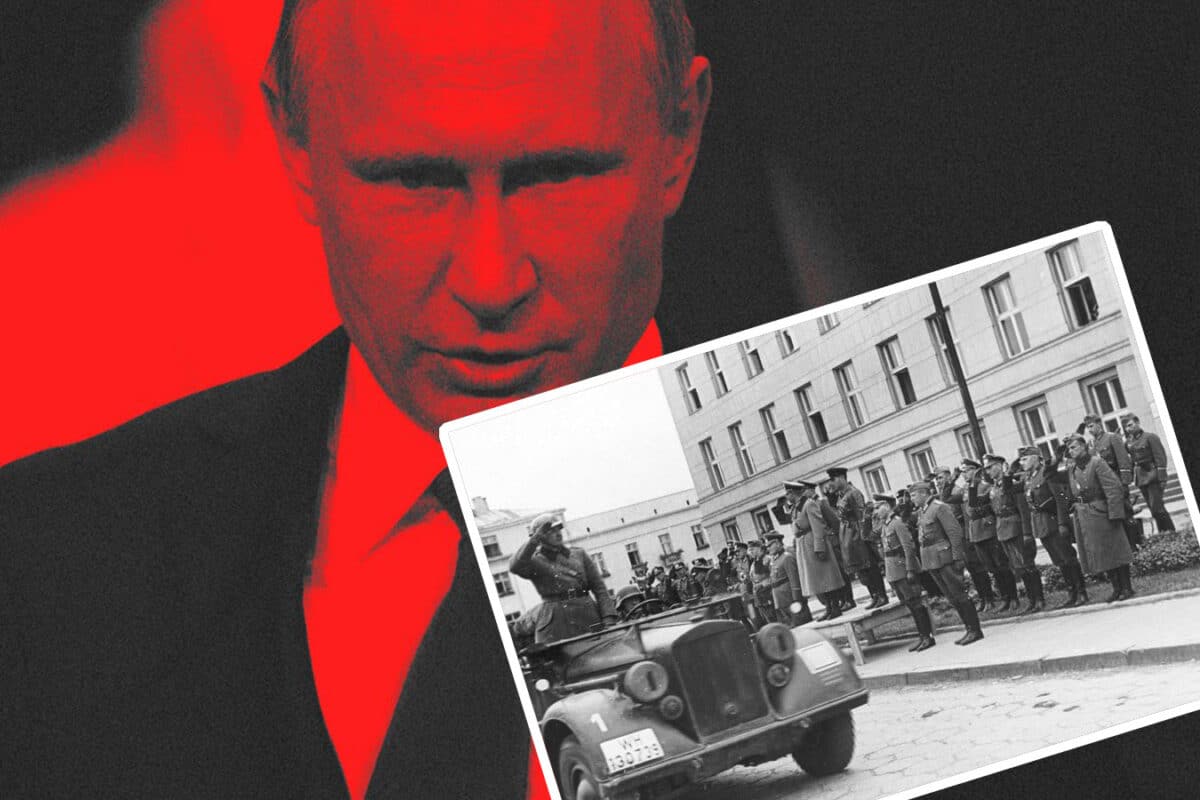
September 17, 1939: How the USSR Became the Second Occupier of Poland – for the Jews of Poland, it Became a Nightmare from Both Sides

On September 1, 1939, Hitler sent troops into Poland. This date is considered the beginning of World War II.

Everyone knows the first strike. But they try to keep silent about the second

But almost no one talks about September 17, when the Red Army entered from the east. Poland found itself in a vise: the Reich pressed from the west, the USSR from the east. The two dictators had agreed in advance.

Secret protocol and division of the world

Two weeks before the war, Moscow and Berlin signed the Molotov-Ribbentrop Pact. A secret appendix divided Eastern Europe into spheres of influence.

Germany took Western Poland. The USSR received Eastern Poland, the Baltics, and the right to claim part of Romania. For the Poles, this meant the end of the state and the beginning of chaos.

September 17, 1939: how the USSR became the second occupier of Poland

Repressions, deportations, and Katyn

The USSR called it a “liberation campaign.” In reality, it was mass arrests and forced relocations.

Thousands of families were taken to Siberia and Kazakhstan. The fate of officers and the intelligentsia was even more terrible. In the spring of 1940, the NKVD carried out the Katyn massacre: more than 20,000 people were shot in the back of the head.

What the President of Poland said in 2025

On September 1, 2025, Karol Nawrocki once again demanded reparations from Germany. For the destruction, for the blood, for the crimes of World War II.

But he did not say a word about Moscow. Not about Katyn, not about the deportations, not about the fact that millions of Poles suffered precisely at the hands of the USSR.

Today, Germany is Poland’s ally in the EU. Russia, however, continues the line of the USSR: war against Ukraine, threats to neighbors, imperial ambitions. And Warsaw’s silence in this context sounds duplicitous.

Consequences for Europe

The Soviet invasion showed that Stalin and Hitler acted as allies.

England and France declared war only on Germany. Stalin was given carte blanche. He occupied Lithuania, Latvia, and Estonia, attacked Finland, and seized part of Romania.

Thus, the map of Eastern Europe emerged, which largely remained until 1991.

A wake-up call for the whole world

The division of Poland became a chain reaction. Germany gained a rear for a strike on France. The USSR expanded its army and resources. The USA saw that it was not a local conflict, but a new world war.

International law turned out to be a fiction. The League of Nations was powerless. The lesson: when an aggressor is not stopped in time, he goes further.

Jewish tragedy

For the Jews of Poland, it was a nightmare from both sides.

The Nazis began the Holocaust: ghettos, deportations to camps, mass killings. And the Soviet authorities deported tens of thousands of families to Siberia. Jewish intelligentsia were arrested as “unreliable.”

One part of the people perished in the ovens of Auschwitz, another in the snows of Siberia. These are two different catastrophes, but both destroyed communities that had lived in Poland for centuries.

Forgotten dictator and dangerous parallels

The world remembers Hitler. His name has become a symbol of evil.

But many still call Stalin a “victor.” His portraits are carried at parades in Russia, and his crimes are justified. Yet he was the one who opened the road to war, destroyed millions of Ukrainians, Poles, Jews, and Balts.

Today, Russia continues the same policy. It justifies aggression with “historical territories,” invades Ukraine, and threatens Poland. This is a direct legacy of 1939.

Conclusions worth remembering

September 17, 1939, is a date that changed the map of Europe.

Poland became a victim of two dictators at once.

The Jewish people found themselves between the Holocaust and Soviet exile.

Europe then turned a blind eye to Moscow’s crimes. The price of silence was tens of millions of lives.

And today, the reminder of Stalin is as important as the memory of Hitler. Because forgotten evil always returns.

An Israeli photographer creates a project dedicated to Ukrainian women in Israel. Models pose in traditional Ukrainian costumes against the backdrop of Israeli cities, uniting the culture and history of the two nations.

Photo project by Israeli photographer Olga Savinadedicated Ukrainian women in Israelbecame not only a way to preserve cultural heritage, but also a bridge between two peoples.

Models dressed in traditional Ukrainian costumes pose against the backdrop of Israeli cities, creating a visual story that unites past and present.

“I would like to do a series of filming about Ukrainian women in Israel.

Images that unite past and present.

Models dressed in regional costume (costumes typical of the regions they came from) against the backdrop of the cities where they now live.”Olga Savina says.

Project concept: past and present

The idea for the photo project was born from Olga’s personal interest in traditional Ukrainian clothing. She researches, collects and restores regional costumes to preserve the memory of her culture.

The costumes used in the project are either ancient outfits that are over a hundred years old, or their exact replicas. Every detail reflects the characteristics of a certain region of Ukraine, and the locations in Israel emphasize the contrast between the past and the present.

Filming locations: key points

Kiev region in Haifa.

Marina, originally from the Kiev region, now lives in Haifa. Her photo shoot took place against the backdrop of the iconic Bahai Gardens, one of the city’s hallmarks. Marina’s image includes elements of a traditional Kyiv costume, as well as an evacuation backpack – a symbol of forced relocation and changes faced by Ukrainians. The costume includes an embroidered shirt with an ornament characteristic of the Kiev region, a skirt and a belt. Every detail is recreated taking into account historical authenticity, which allows us to emphasize the beauty and significance of the traditions of the region.

Photo here

Polesie and skyscrapers of Ramat Gan

The photo shoot dedicated to Polesie was shot against the backdrop of the modern high-rise buildings of Ramat Gan, which creates a strong contrast between tradition and the urban landscape. This regional image tells about the rich history of Polesie and its natural features, reflected in the details of the costume. The basis of the costume is a plain linen shirt with woven red stripes on the sleeves. Characteristic features include a deep neckline, a short hem hidden under the skirt, and minimal embroidery reminiscent of weaving patterns. A fly skirt made of red homespun wool with thin vertical stripes is complemented by an apron with an ornament. The image is completed with red beads, hustka or namitka, as well as a woven belt, which girls tied on the left, and married women on the right.

Photo here

Odessa region in Netanya

A photo shoot dedicated to the Odessa region took place in Netanya and included a rare costume from the Kodymsky region. This outfit required careful restoration, but the result is impressive. The photographs demonstrate a deep connection with the cultural heritage and the uniqueness of the traditions of the region. The costume consists of a three-piece shirt with sleeves that gather at a wide cuff. The characteristic embroidery is located in the upper part of the sleeve in the form of two stripes – a wider and a narrower one. The ornaments, made in red and black tones, are decorated with small multi-colored beads. Over the shirt was worn a specially cut sundress with deep waffle folds and decorative elements on the back. The lower part of the sundress is decorated with horizontal folds and velvet ribbons. A wide belt with silk ribbons and a bright coral or glass necklace, typical of the region, complete the look.

Photo here

Vinnytsia region in Ashkelon

A photo session dedicated to the Vinnytsia region was held in Ashkelon. This regional costume from the Bershad region focuses on the connection of cultures and historical memory, uniting the past and present. The costume includes a shirt embroidered using the traditional “niz” technique with a characteristic Vinnytsia pattern. It is completed with a bib and skirt with a velvet ribbon typical of the region. The embroidery of the shirt is distinguished by geometric patterns that emphasize the status and skill of the needlewoman. The bib, popular specifically in the Bershad region, adds elements of elegance and symbolism to the image. Such an ensemble creates a powerful visual image that unites Ukrainian heritage and Israeli modernity.

Photo here

Poltava region to Jaffa

A photo session dedicated to the Poltava region took place in Jaffa, one of the most colorful districts of Tel Aviv. Against the backdrop of the narrow streets of the old city and historical architecture, a costume from the Poltava region looks especially bright, emphasizing the depth of Ukrainian tradition. The costume includes a calico (cotton) shirt with embroidery characteristic of the Poltava region. The shirt is made using the technique of planking and cross-stitching, with elements of the “broken branch” ornament that decorated the settings and sleeves. This pattern is complemented by eight-pointed stars and geometric elements, which adds symbolism to the outfit. The hem of the shirt is decorated with patterns made with black thread in the “Brocard roses” style. The whole ensemble is completed by a traditional knitted shirt with three pintucks and a lining characteristic of the region – strengthening the hem to add weight. This image creates a harmonious combination of traditional Ukrainian clothing with the spirit of a modern Israeli city.

Photo here

Luhansk region: a symbol of perseverance – in Haifa

The image dedicated to the Luhansk region has become a symbol of resilience and a reminder of the cultural identity of the region, most of which is today under temporary occupation. A photo shoot with the Luhansk system reflects the importance of preserving heritage even in conditions of war and change. The shirt, created on the basis of museum exhibits, has a traditional Poltava cut, but stands out with a characteristic combination of colors: red and blue. Designs include the tree of life, floral motifs on the sleeves and stripes of embroidery on the seams. The specific ornament is complemented by a replica of a box chintz sweater, decorated with velvet ribbons and wide folds at the bottom. The set of accessories includes traditional Lugansk ducats and “viper” beads, reproduced on the basis of museum photographs. The outer necklace is made of large amber beads, which is typical for jewelry in the Lugansk region. Against the backdrop of a waste heap and steppe landscapes, this outfit symbolizes the deep connection with the homeland and the fortitude of Ukrainian women.

Photo here

What makes the project unique?

The photo project stands out for its desire not only to preserve Ukrainian cultural heritage, but also to adapt it to Israeli reality.

Main accents:

  • Costumes as carriers of history. Every detail, from embroidery to fabric, tells the story of the region and its people.
  • Visual contrast. The combination of traditional outfits with modern Israeli architecture creates strong images.
  • Uniting cultures. The project helps Ukrainian women find their place in a new country while maintaining contact with their roots.

A look at Jewish and Ukrainian culture

This photo project also symbolizes the connection between the Jewish and Ukrainian peoples. Israel, home to thousands of Ukrainian war survivors, provides a unique platform for dialogue between cultures.

“I have been studying the features of regional outfits for several months now. I started collecting costumes. I bought some, friends borrowed some for the project. The costumes are ancient, some are about a hundred years old, and replicas are close to the original.

I listen to a lot of lectures, I am fascinated by the diversity of traditions and how they were reproduced in embroidered shirts and the combination of elements of the regional “system”. It’s like the history of a region on a canvas, you can “read” it, it tells about the region and its owner.” – Olga Savina shares.


Our website NAnews – Israel News always pays attention to important initiatives that strengthen mutual understanding between peoples. This project is a great example of how art helps build cultural bridges.

The Olga Savina project is more than just photo sessions. It is visual storytelling that preserves cultural heritage and builds bridges between nations.

About Olga Savina

Olga SavinaChildren’s and family photographer in Israel. She is from Kyiv. Now lives in Haifa.

“I photograph everything related to love. Love Story, weddings, pregnancy, newborns, children, families. I also shoot underwater – because I love the sea 🙂

Traveling around the world, I conduct photo sessions in the most beautiful corners of our planet. Israel is one of the most beautiful countries for me.

Finding new beautiful and unusual locations for shooting is my passion. You can view places for photo shoots in Israel in the corresponding section of my website.”

You can get to know each other better and even order a photo session here:

Facebook – https://www.facebook.com/olga.savina.94

Instagram – https://www.instagram.com/olga.savina.photo

Website – https://savinaphotos.com/

………………..

NAnews – Israel News will continue to talk about similar initiatives that strengthen the connection between Israel and Ukraine.

For over 60 years, Jews have been asking to recognize Ukrainian Metropolitan Andrey Sheptytsky as Righteous Among the Nations – history

We remember Metropolitan Andrey Sheptytsky — a renowned Ukrainian, recognized as a savior of Jews both in the Jewish community of Ukraine and in Israel. However, he still does not hold the title of Righteous Among the Nations.

The story of Metropolitan Andrey Sheptytsky is shared in our section “!! History and Facts” because his life and activities are crucial for understanding the relationships between Ukrainians and Jews, as well as recognizing the role he played in saving Jews during the Holocaust. This story helps uncover significant pages of our shared history, strengthening mutual respect and support between peoples, while also supporting the effort to present the past objectively and honestly, free from distortions and propaganda.

Original – in “Ukrainian Jewish Encounter(UJE).

Andrey Sheptytsky — one of the spiritual authorities of the Ukrainian nation. A count by birth, one of the wealthy people of Galicia, he dedicated himself to serving the Lord and reached the rank of Metropolitan. The true test of his leadership came during a time when totalitarian regimes — Nazi Germany and the Communist Soviet Union — tried to establish control over Galicia. Sheptytsky had the greatest spiritual influence as head of the Greek-Catholic Church in the region during the time of the Shoah.

Officially adopting the same position as most (except one) Christian churches of Europe, i.e., welcoming the new Nazi government, Metropolitan Sheptytsky unofficially played an active role in saving Jews.

In his inner circle — at least seven Righteous Among the Nations, and Israel does not deny Sheptytsky’s role in saving Jews.

Dozens of Nominations for Righteous Among the Nations

The Ukrainian Jewish Encounter (UJE) has a comment from the Holocaust History Memorial Complex “Yad Vashem” (Jerusalem) regarding the issue of awarding Metropolitan Andrey Sheptytsky the title of Righteous Among the Nations.

This issue has been a topic of debate in the Ukrainian-Israeli dialogue for many years, and since 1964, when the rabbi David Kagane, saved by the Metropolitan, first submitted an application to “Yad Vashem” for Sheptytsky to be awarded this high honor. This was shared with us by Dr. Yuriy Skira for UJE, Senior Research Fellow at the Institute of Ecumenical Studies at the Ukrainian Catholic University.

After Ukraine gained independence in 1991, the restored Jewish community of Ukraine repeatedly submitted requests to “Yad Vashem” to recognize Sheptytsky as Righteous Among the Nations.

This idea was initiated and supported by several representatives and leaders of Jewish organizations in Ukraine since the early 1990s, according to the co-chairman of the Vaad of Ukraine, Yosif Zissels. In particular, collective letters were sent to “Yad Vashem”. It is also known that the Ukrainian-Jewish Relations Society in Israel, led by Alexander Feldman and Yakov Suslensky, had previously, in the early 1980s, submitted an application to “Yad Vashem” to posthumously award Metropolitan Sheptytsky the status of Righteous Among the Nations.

What “Yad Vashem” Says

Recall that, according to the legislation of the state of Israel, the title of Righteous Among the Nations is awarded to non-Jews who saved Jews during the Holocaust, did not gain any material benefit from it, and understood that they were saving Jews, fully aware of the possible grave consequences for themselves. The decision to award this high title is made by the “Yad Vashem” commission, which includes Holocaust survivors, historians, rabbis, etc. The decision is confirmed by the Supreme Court of Israel.

“To date, no documents have been found that would record direct orders from the head of the Greek-Catholic Church regarding providing assistance or sheltering Jews. This is explained by the danger of the time and the consequences for people if such things had fallen into the hands of the German Security Police. According to testimonies, the Metropolitan gave oral requests to his assistants regarding the hiding of Jews,” says Y. Skira.

Despite this, as UJE was told by “Yad Vashem”,

In 2012, the ‘Yad Vashem’ commission dedicated a whole meeting to reviewing the case of Metropolitan Andrey Sheptytsky, thoroughly studying all documents and testimonies. The commission concluded that Sheptytsky provided shelter to Jews in his residence during the Holocaust.”

As human rights defender Myroslav Marynovych writes in his article “Metropolitan Andrey Sheptytsky: A Test for Europe”,

“Andrey Sheptytsky, with the Greek-Catholic Church he led, notably with his brother Klyment Sheptytsky, abbot of the Holy Spirit Uniates Monastery, developed a whole network for rescuing Jews condemned to destruction under the Nazi occupation. It is estimated that about 200 Jews were saved by them, risking their own lives and the life of the Church as a whole.”

Nonetheless, “Yad Vashem” believes there are obstacles to recognizing him as Righteous Among the Nations.

As Yuriy Skira recalls, during the first review of Sheptytsky’s case in “Yad Vashem” in the 1960s, the obstacle was the fact that if the head of any church is recognized as Righteous Among the Nations, it would imply that the entire church participated in saving Jews.

However, this cannot be said about any Christian denomination. Only Jehovah’s Witnesses refused to swear an oath to Hitler as a whole community during the Shoah. For this, they were equated with enemies of the regime, arrested, and held in concentration camps where they wore a separate badge: a purple triangle. In other Christian churches, there were both Righteous and those who supported Hitler’s regime, whether sincerely or just for appearances.

Metropolitan Andrey Sheptytsky also wrote congratulatory letters to Hitler. In response to the inquiry from the “Ukrainian-Jewish Encounter,” “Yad Vashem” responded,

“The commission considered Sheptytsky’s initial support for Nazi Germany and his role in encouraging Ukrainians to join auxiliary forces, which later participated in the killing of Jews. Weighing these complex historical factors, including Sheptytsky’s significant influence as a Ukrainian national leader at the beginning of the war, despite his subsequent change in position, the Commission confirmed its previous decision not to award him the title of Righteous Among the Nations.”

How Metropolitan Sheptytsky Saved Jews During the Shoah

UJE previously reported on the Shoah and the rescue of Jews in Western Ukraine. According to Yuriy Skira,

“Metropolitan Andrey Sheptytsky involved only his closest associates in the task of sheltering Jews, meaning people he could trust with such a complex and dangerous task.”

This primarily includes the Metropolitan’s secretaries, Fathers Ivan Kotiv and Volodymyr Hrytsay, selected monks and nuns from the Studite Monastic Order, and some nuns from various orders and congregations, such as the Order of Saint Basil the Great.

Anatoliy Podolskyi, historian and head of the Ukrainian Center for Holocaust Studies, states that “when the Nazi occupiers arrived, Metropolitan Andrey Sheptytsky was in Lviv and made contact with the occupiers. It is important to understand that in 1939, after two years of Soviet crimes in Galicia, few thought the German regime would be as criminal as the Soviet one.

When the Metropolitan understood the dire situation for Jews, he began participating in their rescue.

“In 1942, he wrote a letter to Himmler, defending the Jews. The Germans wanted to arrest him, but the Metropolitan’s influence in Lviv was immense,” notes A. Podolskyi.

Also, according to newly declassified documents from the Vatican archives in 2020, at the beginning of World War II, Sheptytsky wrote a warning to Pope Pius XII:

“Jews are the first innocent victims.”

This was reported at a seminar for the project Echoes and Reflections, dedicated to the Shoah.

Myroslav Marynovych comments on this issue in a scientific article:

“The history of Sheptytsky’s relationship with OUN and UPA deserves careful and unbiased study, the time for which has only now come, when the ‘crooked mirrors’ of totalitarian ideologies have finally broken. Clearly, there we will also find some tactical miscalculations by Sheptytsky, but, as I firmly believe, we will not find any indulgence of retribution heroism, as sometimes happened even in the case of the clergy of both sides. This is confirmed by numerous cautious messages from the Metropolitan, and, surprisingly, by a lingering suspicion among the Galician Ukrainians of that time that his restrained position was motivated by pro-Polish sympathies.”

Myroslav Marynovych recalls the scientific studies of Dr. Julian Bussgang.

“Dr. Bussgang rightly pointed out that ‘Sheptytsky’s support for the newly formed Ukrainian government was not unconditional. In his addresses at the time, the Metropolitan clearly outlined the conditions under which the Church would support this government’s activities: (1) when its decrees do not contradict God’s laws, (2) when the state will wisely exercise its power, and (3) when the state administration takes into account the needs of all inhabitants of the country, regardless of religion, nationality, or social status.’

Righteous Among the Nations in Sheptytsky’s Circle

According to the research of Yuriy Skira, among the people who received the title of Righteous Among the Nations and worked closely with the Metropolitan to save Jews, the following should be noted:

  • Mother Yosifa (Viter) — longtime abbess of the Holy Protection Women’s Monastery of the Studite Order;
  • Blessed Priest Martyr Klymentiy (Sheptytsky) — Metropolitan’s brother, abbot of the Holy Spirit Uniate Monastery of the Studite Order;
  • Hieromonk Mark (Stek);
  • Bishop Nikanor (Deineha) — assistant bishop of the Lviv Archdiocese of the Greek Catholic Church during the underground period, and the only Greek Catholic bishop on the list as of 2024;
  • Hieromonk Daniil (Tymchyn);
  • Schemonk Luke (Shyian) and Theodosiy (Tsibrivsky).

Also, the godson of Sheptytsky is the Righteous Among the Nations Vasyl Popel from Boryslav, who, with his family, saved the Lipman family. This family is featured in one of the films from the series “The Word of the Righteous.”

“I fully support the idea that Metropolitan Sheptytsky should be recognized as Righteous Among the Nations. He has earned this title many times. This is not only my opinion but also the position of the Jewish community of Ukraine, which awarded Metropolitan Andrey Sheptytsky the title of Righteous of Ukraine. I believe the new generation of researchers in ‘Yad Vashem’ will come to this conclusion,” says A. Podolskyi.

He believes that the reason Sheptytsky has not been recognized as Righteous Among the Nations is related to the absence of punishment for the crimes of Leninism, Stalinism, and the Gulag, unlike the crimes of Nazi socialism.

“The lack of a unanimous international position regarding the crimes of Stalinism affected the decisions of people in ‘Yad Vashem’. This became the reason that allowed Russia to attack Ukraine today. In my opinion, this war should accelerate the decision-making process in ‘Yad Vashem’ in favor of Metropolitan Sheptytsky as Righteous Among the Nations,” concludes A. Podolskyi.

Author – Margarita Ormoцadze – Original – in “Ukrainian Jewish Encounter” (UJE).

Margarita Ormoцadze is the co-founder/producer of the project “The Word of the Righteous” (Word of the Righteous), which tells the story of Ukrainians who saved Jews across Ukraine during the Holocaust.

NAnews – Israel News‼️: The story of Metropolitan Andrey Sheptytsky is an important part of the shared historical memory, highlighting his significant role in saving Jews during the Holocaust.

In the section “!! History and Facts” we emphasize how his work contributes to strengthening mutual respect between Ukrainians and Jews, as well as helping to understand the past correctly, without distortions and propaganda. Learn more about the Metropolitan’s contribution to saving the Jewish people and his complex role in history.
Promotion of small and medium businesses in Israel on the Internet. Internet Marketing

#promotion

***
Suitable offers for small and medium businesses!
***

  • Attracting new clients for business – lead generation;
  • Promotion of businesses and websites SEO in search engines;
  • Local Business Promotion + Google My Business;
  • Conducting advertising campaigns in Google from scratch and optimizing existing ones;
  • Google Shopping Advertising Shopping campaigns and product promotions;
  • Professional creation of websites for businesses of varying complexity and budget;
  • Repair, rework, revision and redesign of websites;
  • Comprehensive online support for businesses;
  • Other services upon customer request.

In the field of medicine

053-802-3564

on WhatsApp

nikk.co.il

Suitable offers for small and medium businesses!


Who will benefit from our services:

Dental office;

Cosmetology center;

Repair of equipment and computers;

Repair of premises;

Transportation services;

Teachers’ services;

Small and medium-sized production;

Services in the service sector;

Local businesses;

Selling goods and services on the Internet;

and much more…

worth a try?
rather yes than no”… contact us – consultation is free

Haifa – Israel North

Nikk.Agency
internet marketing agency

In the field of medicine

053-802-3564

on WhatsApp

nikk.co.il

2014 – 2025

Haifa – Israel North

Opening hours: 10:00 – 17:00

We consult: 09:00 – 20:00

…………………………………………………………….

How Small and Medium Businesses in Israel Can Effectively Attract Clients and Increase Sales

Today, business competition is high, and simply opening a company is no longer enough. To attract customers and increase profits, modern marketing tools must be used. Nikk.Agency offers comprehensive solutions for online business promotion, website development, and advertising to help you stand out among competitors and achieve your desired results.

Lead Generation: Attracting New Customers

Every business needs a constant flow of new clients. We offer effective lead generation strategies to help your business find interested buyers or clients. How does it work?

  • Setting up advertising campaigns to attract an audience.
  • Creating engagement chains with customers through websites, ads, and social media.
  • Conversion analysis and ad optimization for maximum efficiency.

SEO Promotion: Improving Search Engine Rankings

Do you want your business to be found on Google without paying for ads? We conduct SEO optimization to help your website rank higher in search results. Our SEO services include:

  • Selecting keywords relevant to your niche.
  • Optimizing website content and structure.
  • Building backlinks and improving site ranking.
  • Enhancing user experience and page loading speed.

Google My Business: Promoting Local Businesses

For local companies, it’s crucial that customers can find them quickly and easily. We optimize your Google My Business profile to help you:

  • Appear in local search results and Google Maps.
  • Attract customers through reviews and ratings.
  • Set up special offers and promotions directly in your business profile.

Google Advertising: Setting Up and Optimizing Campaigns

Google Ads is one of the most powerful tools for quickly attracting customers. We:

  • Launch advertising campaigns from scratch.
  • Optimize existing ads to reduce cost per click.
  • Test strategies to improve conversion rates and return on investment.

Google Shopping: Advertising Products Online

If you sell products online, Google Shopping is a tool that can help increase sales. We create and manage advertising campaigns that display your products in Google search results with images, prices, and a “Buy” button.

Website Development: From Business Cards to Online Stores

Your website is the face of your business online. We offer website development of any complexity and budget:

  • One-page websites and landing pages.
  • Corporate websites for businesses.
  • Online stores with integrated payment systems.
  • Portals and complex web projects.

Additionally, we offer website repair, redesign, and upgrades if you already have a site that needs improvement.

Comprehensive Business Support Online

Running a business takes time and effort. We provide full digital marketing support, including:

  • Managing advertising and SEO.
  • Social media marketing.
  • Content marketing and email campaigns.

Who Can Benefit from Our Services?

Our solutions are ideal for various industries:

  • Medical Services: Dental clinics, cosmetic centers.
  • Repairs and Maintenance: Electronics, computers, apartments, vehicles.
  • Education: Teachers, tutors, online courses.
  • Logistics and Transportation: Moving services, deliveries.
  • Manufacturing and Retail: From small production businesses to e-commerce.
  • Service Industry: Beauty salons, tourism, and more.

Why Choose Us?

Experience since 2014.We operate throughout Israel.Tailored approach to each client.Free consultation!

Want to know which tools can help grow your business? Contact us!

📍 Haifa, Northern Israel
📞 053-802-3564 (WhatsApp)
🌐 nikk.co.il

Business hours: 10:00 AM – 5:00 PM
Consultation hours: 9:00 AM – 8:00 PM

🚀 Your business deserves to grow!


In the field of medicine

053-802-3564

on WhatsApp

nikk.co.il

Jews from Ukraine: Vladimir Zeev Jabotinsky (continued)

As promised, we continue our discussion of a Jew from Ukraine – Ze’ev Jabotinsky. #jewsukraine

📝 The biography of Vladimir Zeev is really full of interesting facts, so today we are publishing the second of two posts about him. — First see – Jews from Ukraine: Vladimir Zeev Jabotinsky.

👦🏻 Childhood and youth: Vladimir Jabotinsky was born into a Jewish family in Odessa. Thanks to his literary abilities and knowledge of languages, already at the age of 18 he became a foreign correspondent for the newspapers “Odessky Listok” and “Odesskiye Novosti”, working first in Bern (Switzerland 🇨🇭) and then in Rome (Italy 🇮🇹).

📚 Literary heritage: In addition to his political activities, Jabotinsky was a famous writer, translator and publicist. He created novels, autobiographical works, translated the poetry of Edgar Allan Poe into Hebrew, edited the weekly magazine “Svitanok”, and also wrote an autobiographical novel “Five”, describing the life of a Jewish family in Odessa.

💡 Interesting fact: Jabotinsky refuted Russian fakes about Ukrainian anti-Semitism a hundred years ago. For example, about Simon Petliura he said:
“I grew up with them, together with them I fought against anti-Semites and Russifiers – Jewish and Ukrainian. Neither I nor other thinking Zionists can be convinced that such people can be considered anti-Semitic.”

📌 Memory: 55 streets in Israel are named after Vladimir Ze’ev Jabotinsky. Residents and visitors of the central part of the country are well aware of one of them – Jabotinsky Street, which is an important transport route connecting Tel Aviv, Ramat Gan, Bnei Brak and Petah Tikva.

🇮🇱 In Israel there is also the Jabotinsky Institute, the Jabotinsky Prize for achievements in literature, as well as Jabotinsky Day, celebrated annually on Tammuz 29 according to the Jewish calendar.

🇺🇦 Since 2022, Zhabotinsky Street has appeared in Kyiv, not far from the Nivki metro station. A mural dedicated to Jabotinsky was also created in Odessa.

Photo materials:

  1. Portrait of Jabotinsky
  2. Jabotinsky Street in Israel
  3. Mural in Odessa
  4. Street in Kyiv


This article was prepared specifically for the site NAnewswhere you will find even more interesting stories about prominent Jews of Ukraine, such as Vladimir Jabotinsky.

Veda section @davidkrutonog — Jew from Ukraine and founder of a marketing agency tlv.agency

Leave a comment in Telegram channel NAnews ↓ — Israel News